Category Archives: Poetry

Fly

20130724_120046

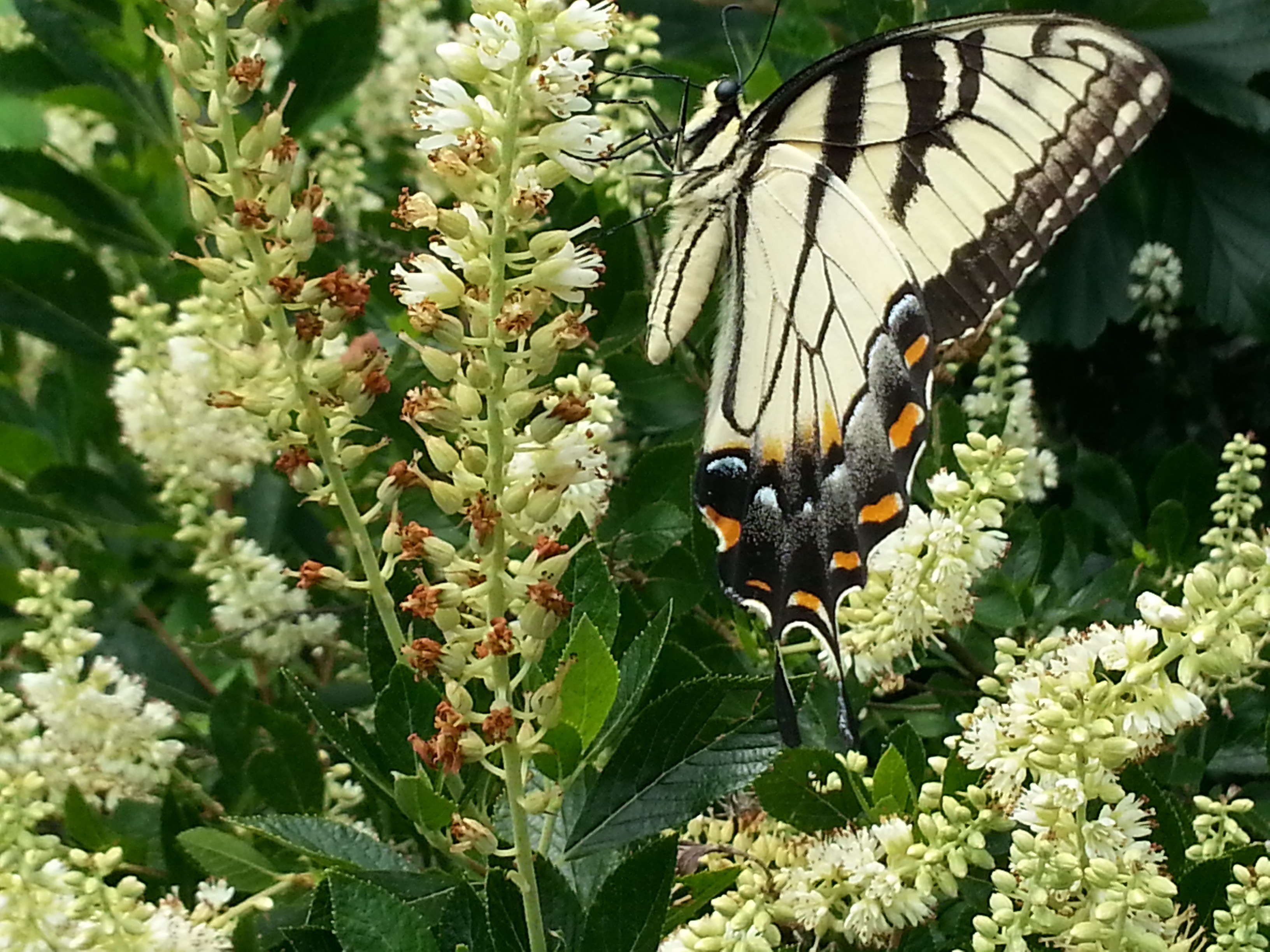
I watched a battered Tiger Swallowtail fly awkwardly from flower to flower, clinging precariously from its remaining feet, its tails cracked and broken.  How sad, I thought, that this usually stunning butterfly has lost its beauty.  Only later did it occur to me that the swallowtail had lost nothing of real beauty.  It lived on, though battered by storms, by would-be predators.  What it had lost in glamour it had gained in strength and nobility.  And it still commanded the air.  It still indulged in the sweetness of life.  This poem celebrates the swallowtail.

FLY

Today you limp
on air:
wings faded,
edges serrated,
tails broken off.
Still, flowers
beckon
you to push awkwardly on,
to cling with three barbed feet.
Uncurl your coil
to taste the sweetness
of the flowers
today.

In My Veins

1341952862970

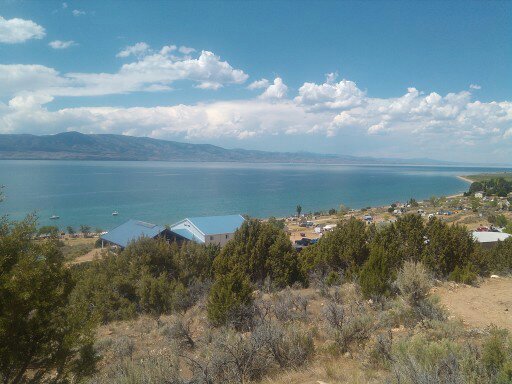
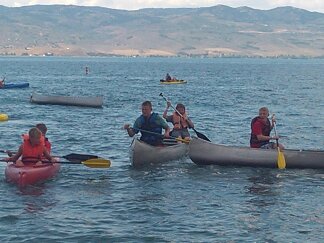
Sitting on the shore of Bear Lake watching my boy scout troop, including my own sons, swimming and canoeing, I grew contemplative about the nature of water and the currents of my life.  The boys laughed and squealed as they frolicked in the cold lake.  They were clearly enjoying scout camp at Bear Lake Aquatics Base.

 1342036427864

The scene caused me to remember my own scouting days canoeing down the rapids of the Delaware River, across the lakes of New York’s Adirondack mountains, and over placid colonial New Jersey canals fishing for catfish.  This poem began to take shape as I continued to watch the water and happy boys so clearly enjoying it.  Good for you, I thought.

The river of my life continues to flow, with strange twists and turns, and not a few eddies and submerged snags.  But I paddle on.

IN MY VEINS

This water does not seem to move,
rather sleeps contentedly,
still, glistening the yellow sun.
Trees on each bank reach
skyward and riverward,
into air and water.

This river slumbers except
where my canoe prow tickles
up a wake and green sides
send slow ripples
that lazily lap the banks.
I do no injury.

If I slow my canoe, if
I drop my paddle and stop,
leave no trace,
I see:
the boat still advances
in quiet current
past the bank-bound trees.
The river does not sleep,
I see:
it creeps forward
inexorably, taking me
from whence to where,
from then to what will be.

I am part of the river.
My childhood passed a stone
upstream, a green-speckled hegemon
lording from the bank,
aged with orange and black lichens.
The river’s mouth, yawning to the eternal
ocean, will swallow me some day, draw me
into swirl and flow forever.
Here, today, the river is
the liquid in my veins.

I seek neither headwaters nor sea:
they were and will be, and always are.
Here is where I am.
Kingfisher knows this,
watching me from arching bow.
Great Blue Heron knows this,
winging downstream
to a place where I am not
yet.  River knows this, too,
expiring in oceans even
while birthing from melting snows.

The river is always
awake, every part of it:
River knows.
Rock knows.
Tree knows.
Only,
I am slow to see.
Sky knows.
Earth knows.
Wind knows and whispers
to me across the water.
Only,
I am slow to hear.

Consecration

20140216_171051

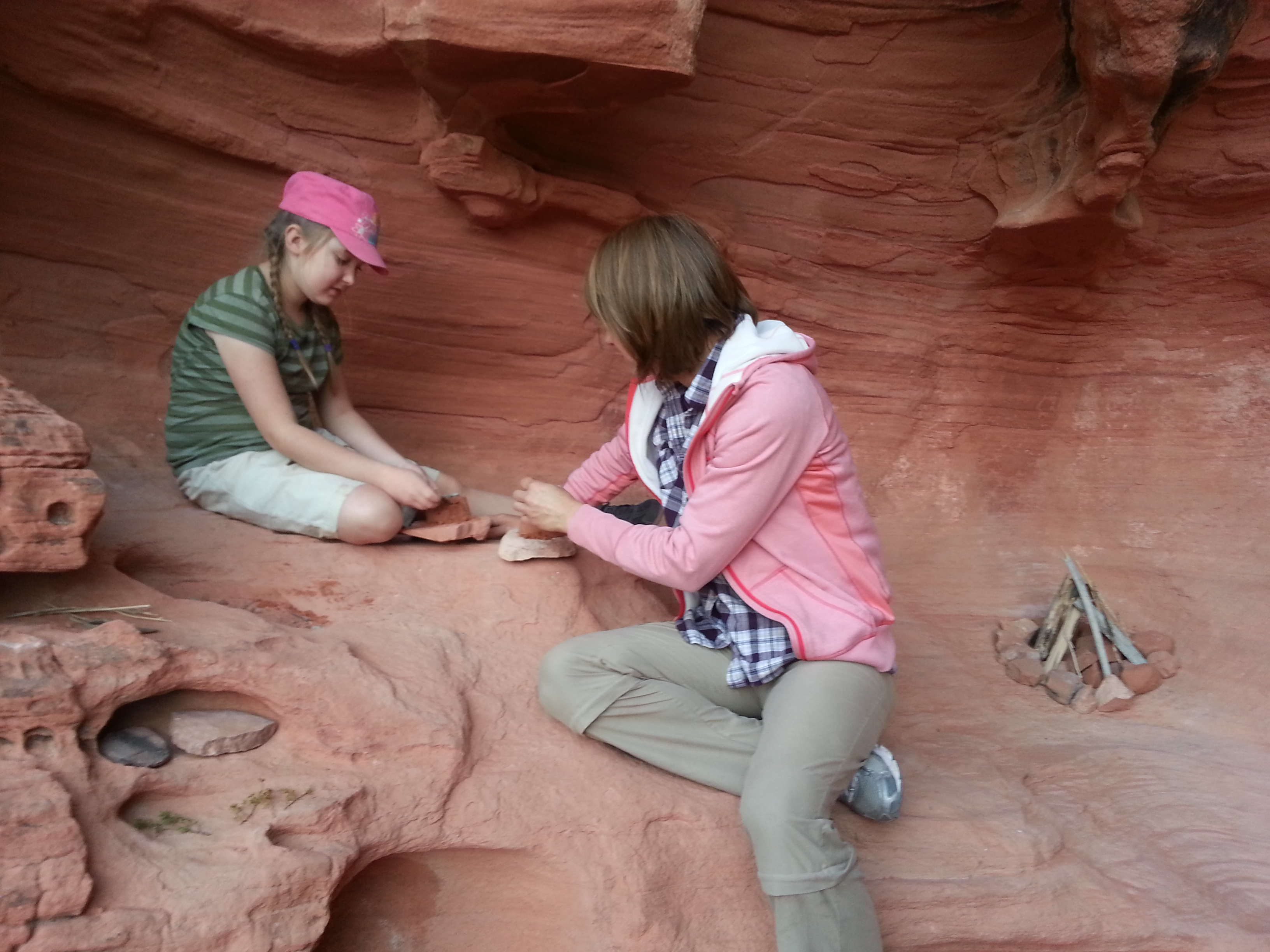
Wandering and sand and rock trails of southern Utah’s desert gems, I have often wondered about the ancient peoples who made the inhospitable terrain their home, and have admired the dedicated labor that were required to survive.  Snow Canyon state park, near St. George Utah, and Valley of Fire state park in northern Nevada, are two of my favorite places. The beauty of each place–carved by wind, rain, sand, and flood–causes me to marvel at indigenous ingenuity, persistence, and stamina.  This poem imagines the efforts of one young American Indian woman preparing a meager meal for her family.  The meal is much more than food.  The meal is her life’s sacrifice.

CONSECRATION

Kernels of corn
on the metate:
yellow and red,
shriveled and dry,
hard, nearly,
as the grinding stones.
Fingers grasp the mano:
cracked skin and cracked nails
press and roll
to crack and crush
the corn, grind it
to meal, to be
mixed with water,
salt, and sage,
baked in small cakes
on searing rocks.

New corn kernels
on the metate
under the weighty stone.
Mix the meal again, with drops
of sweat, tears dripped
from her chin.
Stoke the coals.
Cook and consume
your consecration.

(Previously published in Panorama and Utah Sings, publications of the Utah State Poetry Society.)

This photograph shows my daughter Hannah, with her mother, in her pretend “Indian kitchen” in Valley of Fire state park.

20140216_165140

Hawks Nest

20151014_173052

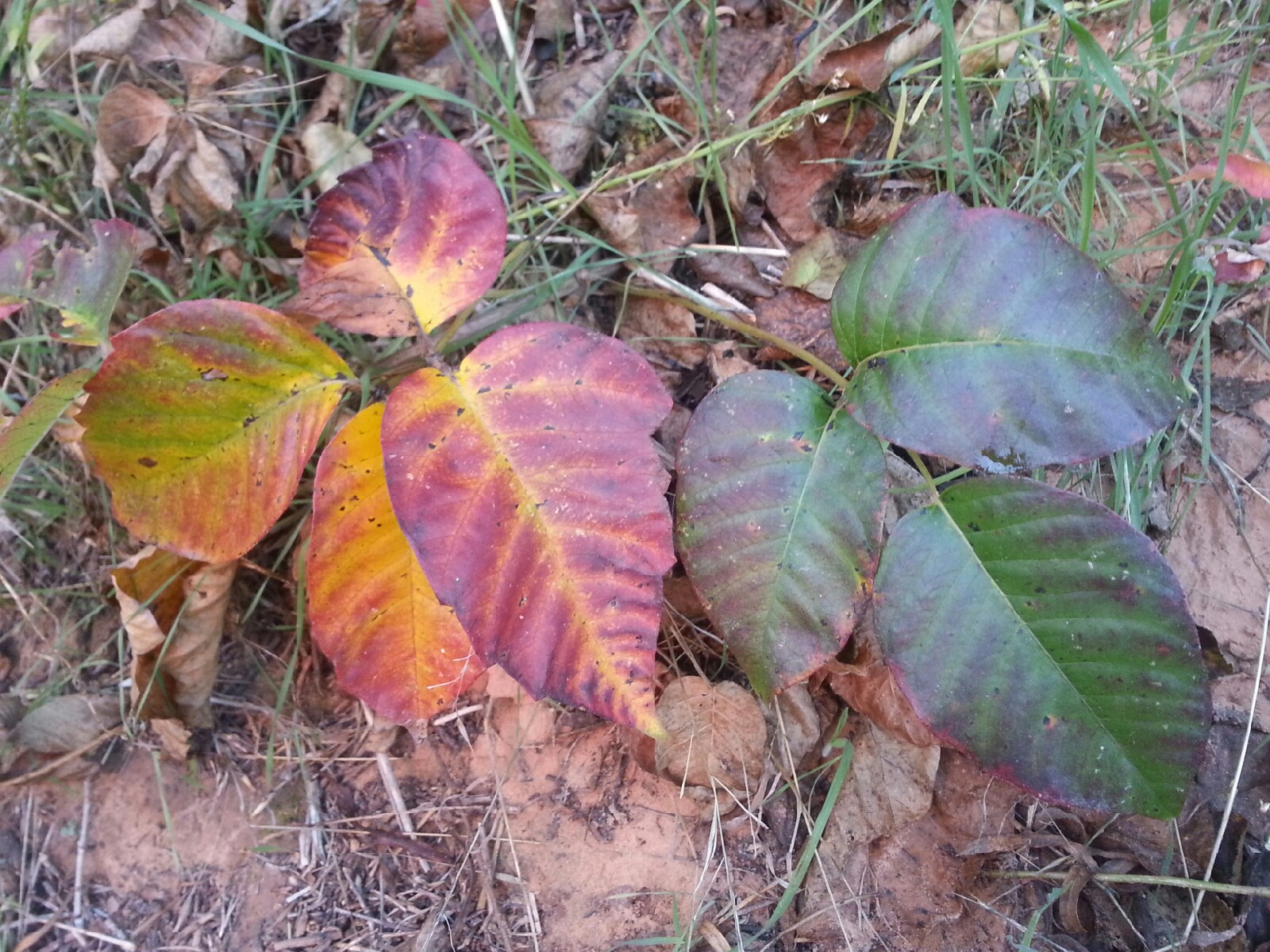
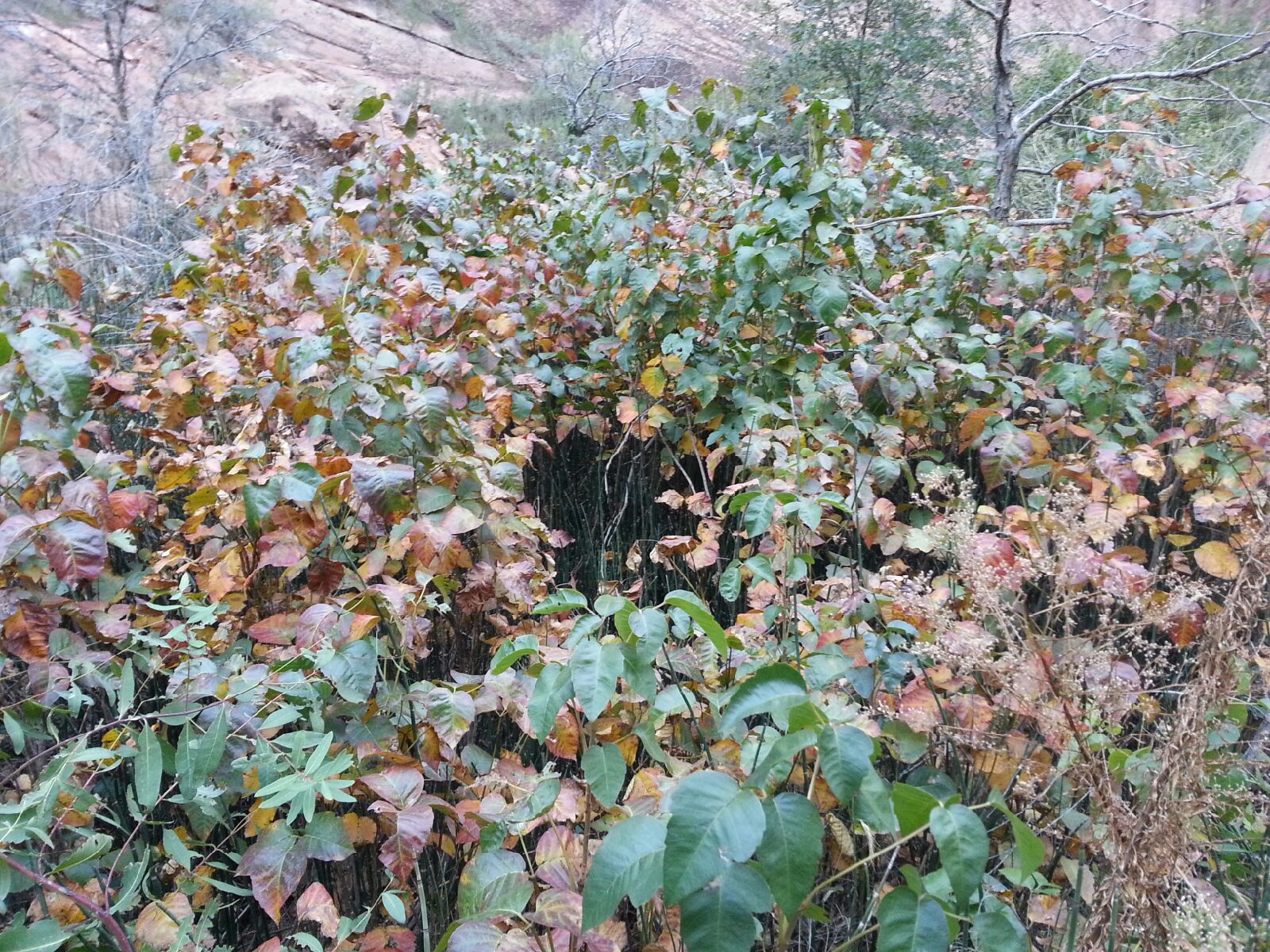
Upon moving to our New Jersey home in 1971, my father spent a Saturday eradicating huge vines and stands of poison ivy from our trees and yard.  He wore gloves, long pants, and a long-sleeved shirt, but the poison ivy dust and oils pierced his clothing and infiltrated his lungs.  His reward for his effort was several days in the hospital with severe rashes and swelling.  I learned vicariously the power of poison ivy.

20151014_173126

I rarely encounter poison ivy in arid Utah.  But I discovered lush poison ivy growth in Negro Bill Canyon, named after William Granstaff, an African-American who settled near Moab, Utah in 1877.

20151014_182310

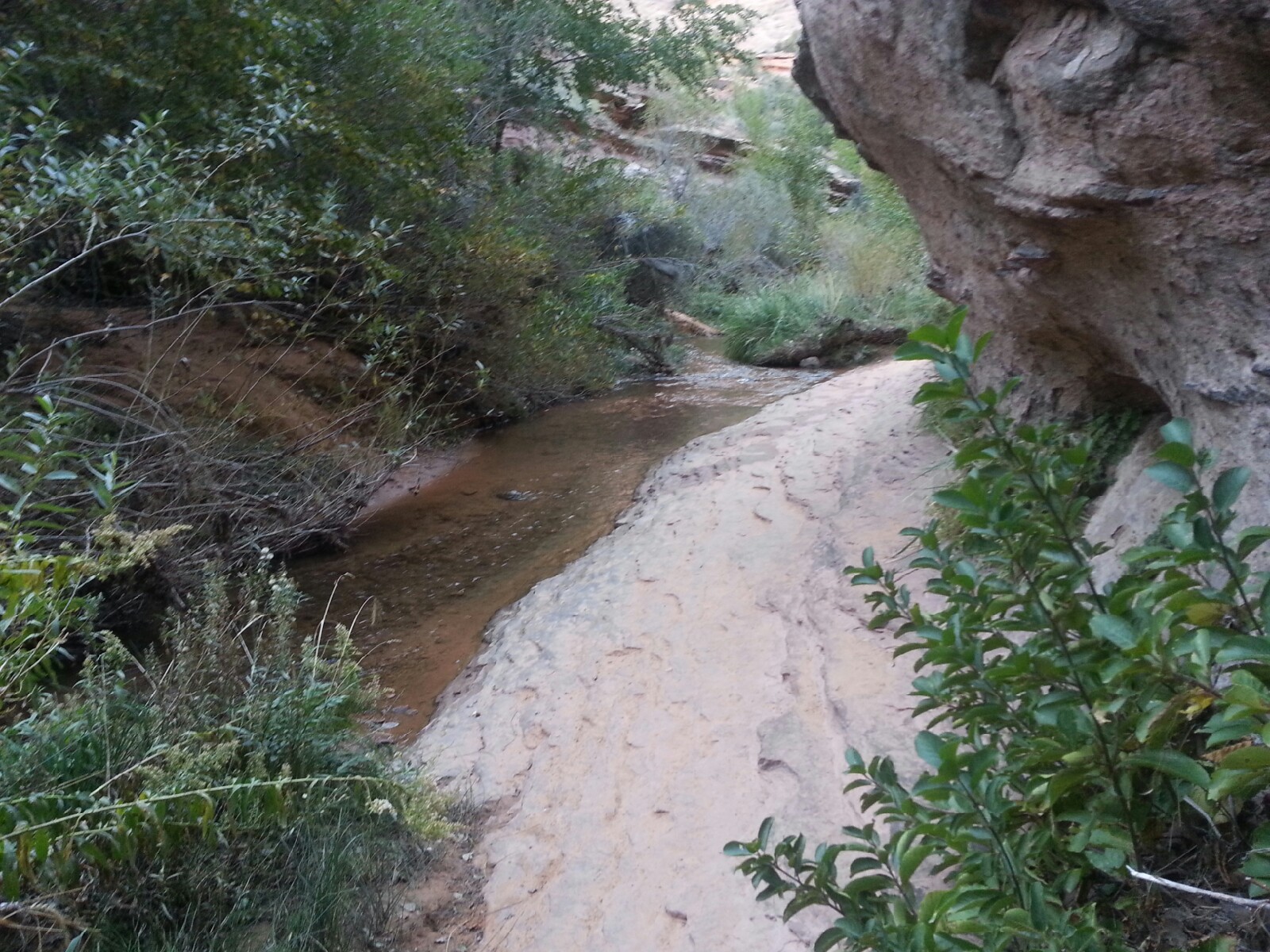
A 4.5-mile BLM trail follows a stream up the narrow canyon to Morning Glory Bridge, with a stunning 243-foot span.  The stream gurgles out from cracks in the sandstone cliff behind the bridge.

20151014_183533

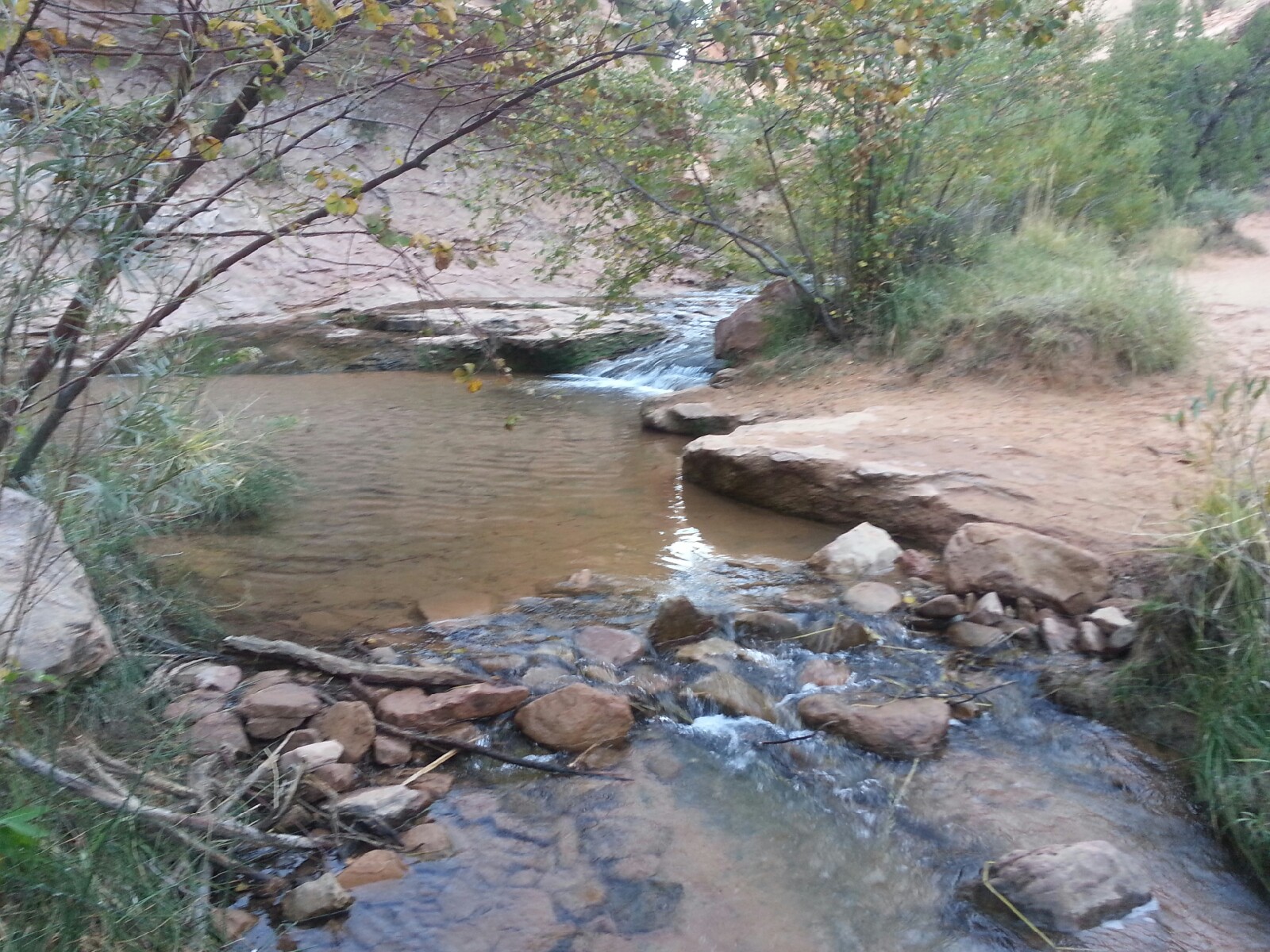
This is a favorite hike of mine for trickling water, vividly-colored wildflowers, aromatic sage, and dense greenery set against towering patina-stained red rock cliffs, and eleven stream crossings.

20151014_173748    20151014_174142

And poison ivy is everywhere.  The characteristic shining green in these Negro Bill Canyon photographs is yielding to the reds and yellows of fall.  Beautiful, to be sure, but don’t touch.

20151014_182147

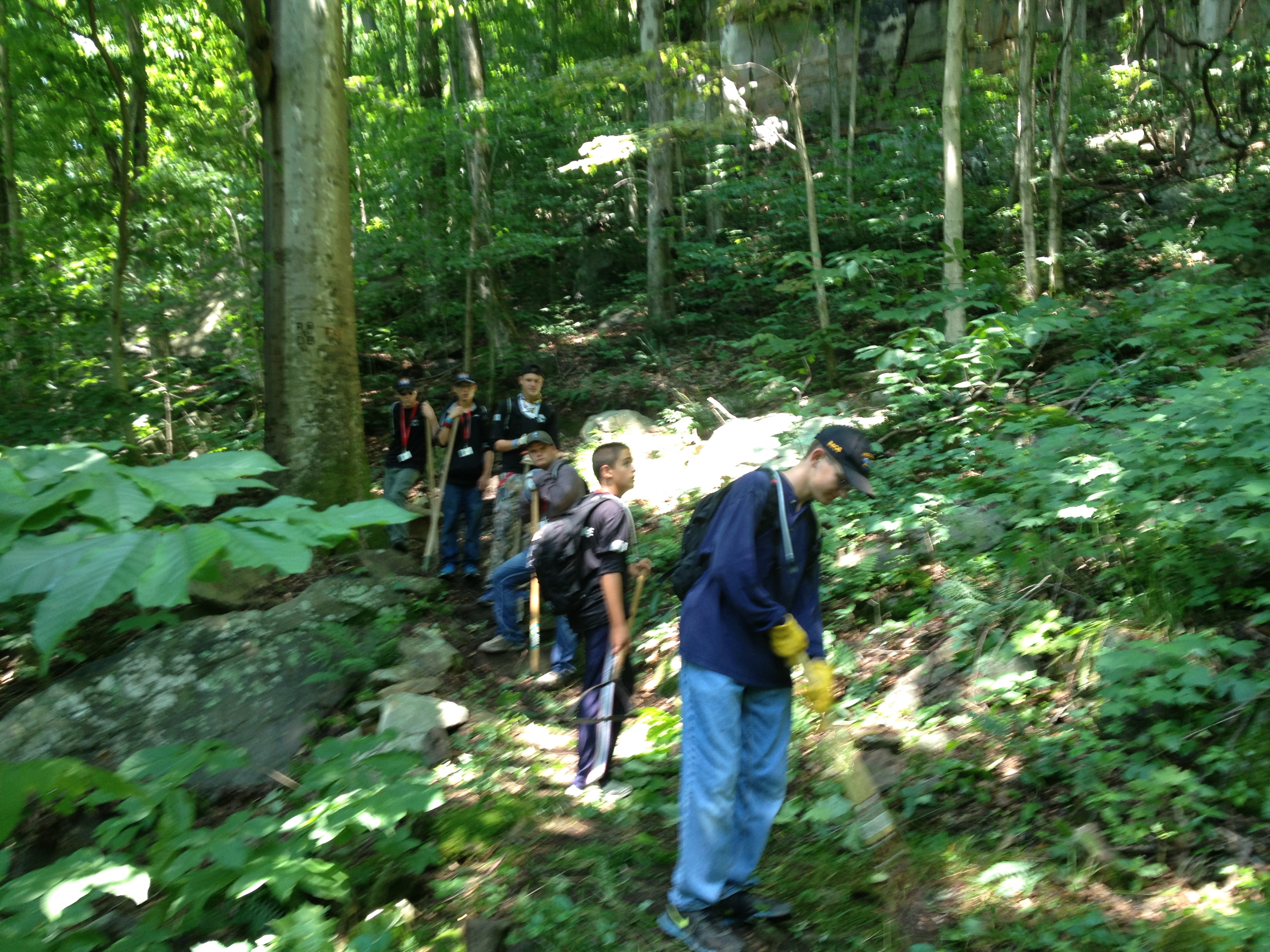
As part of the 2013 National Boy Scout Jamboree, my troop of 36 boys gave a day of service in Hawks Nest state park, West Virginia.  We cleared and improved park trails under dense hardwood canopies and abundant poison ivy bushes, grape vines, and ripe-fruited raspberry and blackberry bushes.

IMG_0307

After being away from eastern forests for so long, I thrilled to be walking through the forest again, and was even glad to see the poison ivy, thus prompting this poem.  Can you guess why I described poison ivy as being faithful or a friend?  Leave a comment if you have an idea.

HAWKS NEST

Hello, poison ivy, my faithful friend.
I have missed your glistening green.
My respect is rooted in recollection.

Vines—wild grape—thick
as a strong man’s arm,
chuckle at gravity,
entwine in tulip poplar tops.

Red oak leaves
large as elephants ears
shade me.

Morning

20130724_164623

At a recent Thanksgiving Day after-dinner gathering of my extended family, my father expressed his tender feelings for my mother.  With tears in his eyes and voice tight with emotion, he told of gazing at her as she lay sleeping one morning, the suns rays streaming through the window, and feeling that he loved her with all his heart.  That is as it should be, I thought, and wrote this poem.

MORNING

Warm sun in winter
hurtles white-capped
peaks and rushes through
wide windows
to halt and hover
over a head of tousled white
hair, aged, peaceful
upon her pillow.

Sing To Me

20150904_152449

During a separation some years ago, I often wondered if life were worth living.  I was not suicidal, but I lacked a desire to live.  Lying in my bed in the dark of night, I would whisper to the ceiling, to the universe, Give me a reason to live.  Of course, there are many reasons to go on living in spite of our physical, emotional, and spiritual suffering.  Listing them is an easy exercise.  But in suffering’s crucible these reasons can be hard to discern, let alone appreciate.  In this poem I identify a few reasons that just merely hoping for gave me an ounce of strength to go on living and caring, to arise with each new day, during a lonely and unhappy time.

SING TO ME

Give
me a reason
to live.

Smile at me softly.
Sing me a melody.
Touch your lips to mine.
Receive my song.
Condescend.

Give
me a reason
to live.

(I took the above photograph of a Milbert’s Tortoise Shell in September 2015 at Butterfly Lake in Utah’s High Uinta Mountains.)

I Waited for You

20150529_205730

Some of us wait silently to be loved, wait expectantly for our needs to be met.  Others of us demand to be loved with stomping feet and a sharp tongue.  The fortunate among us have learned to express their needs in ways that the listener understands, respects, and responds.  We are all different in how we approach life and love, yet we all want and deserve love.  My hope is that, rather than waiting for love or demanding love, we will learn to seek love in healthy, positive ways.  Beyond this, my prayer is that we will first offer love and kindness to others, thus inviting love and kindness to come back to us.

This poem personalizes one seemingly ill-fated approach to finding love.  What do you think the poem’s speaker could have done differently?  Should the speaker have done anything differently?  Was the speaker’s approach unreasonable?  Consider posting your answer in the comment section below.

I WAITED FOR YOU

I waited for you:
Waited for you to come to me.
But you did not.
I waited for you
Like the crimson clouds after the tired sun drops behind the mountains.
When you came to me at last,
I had faded and gone.

I waited for you:
Waited for you to touch me.
But you did not.
I waited for you
Like a dry, dusty leaf under a charcoal sky when the soothing rain won’t fall.
When you reached for me at last,
I had withered and gone.

I waited for you:
Waited for you to smile at me.
But you did not.
I waited for you
Like a famished infant yearning to suck from her mother’s ripe, fragrant breast.
When you smiled at me at last,
I had drifted and gone.

Violin

20151002_233105

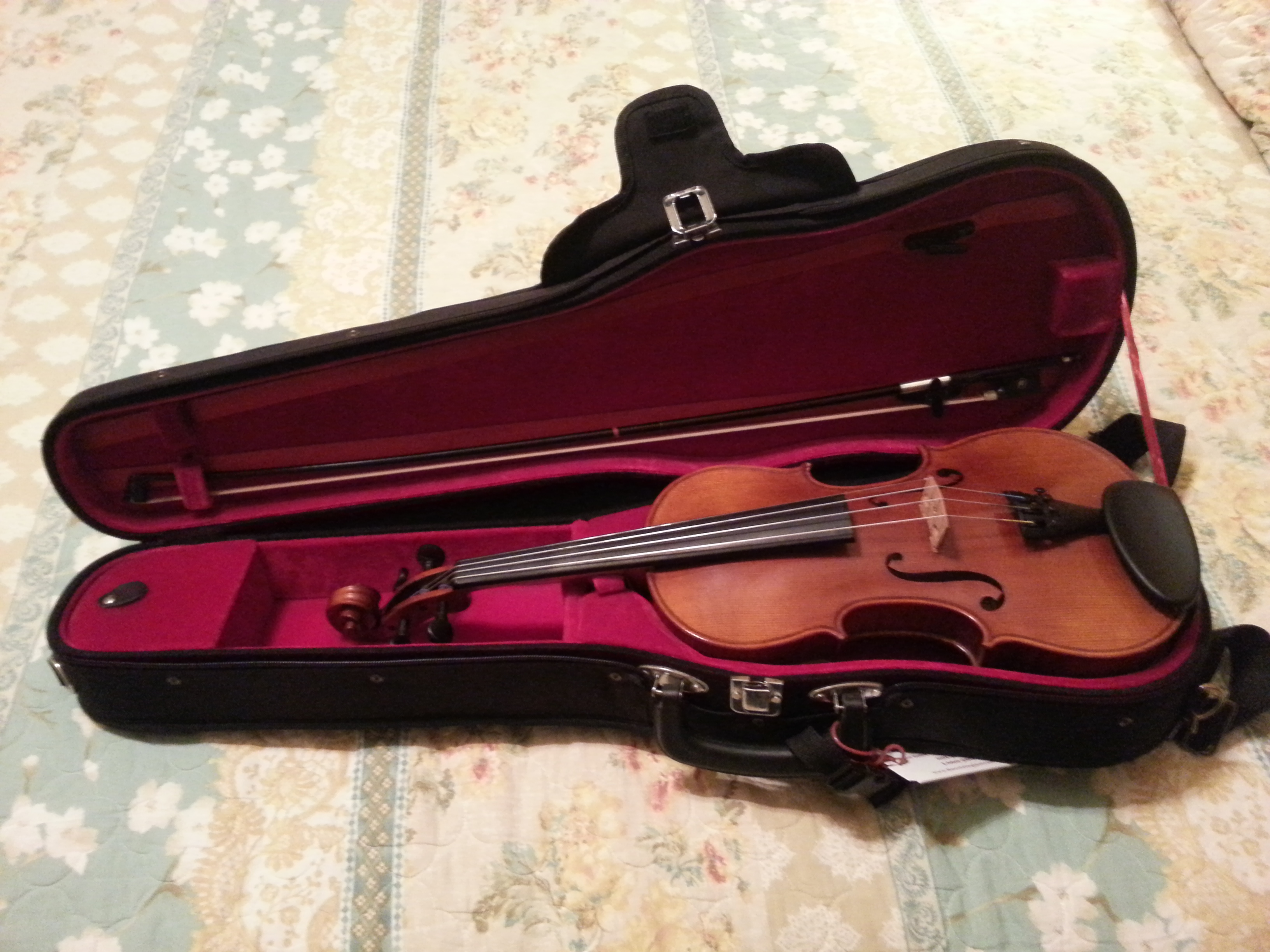
On summer evenings as the desert heat dissipated, we would open all the windows in the house to let in the fresh, cool air.  As I sat on the porch, or weeded in the garden, or fed the hens, the sounds of Erin’s violin would pour gently from her window, hovering above the quiet countryside.   Her music was like the smell of perfume from a Purple Robe Locust, or the flash of blue from a Western Bluebird, or the taste of ripe mango.  I haven’t heard Erin play her violin for several years due to her being away at university and missionary service.  But I can still hear the music in my memory and feel the soothing sensation of my mind and body loosening their many knots.  I miss her playing.  I miss her.  This poem brings Erin and her music back to me.

VIOLIN

Notes dance through the window:
cheerful young notes
tip-toeing prettily upon the air,
swirling soft, slow pirouettes above
Fall sunset’s deep-green grass;
a blanketing balm
come to rest upon
a tired brow,
a twitching muscle,
an anxious heart.

Youthful hand and hopeful heart
send the bow searching the strings,
like a songbird upon the breeze,
like a breeze along the tree branch,
like tree roots through the earth.

Cleanse me.
Lift me.
Bring me through.

Not Today

20150929_214300

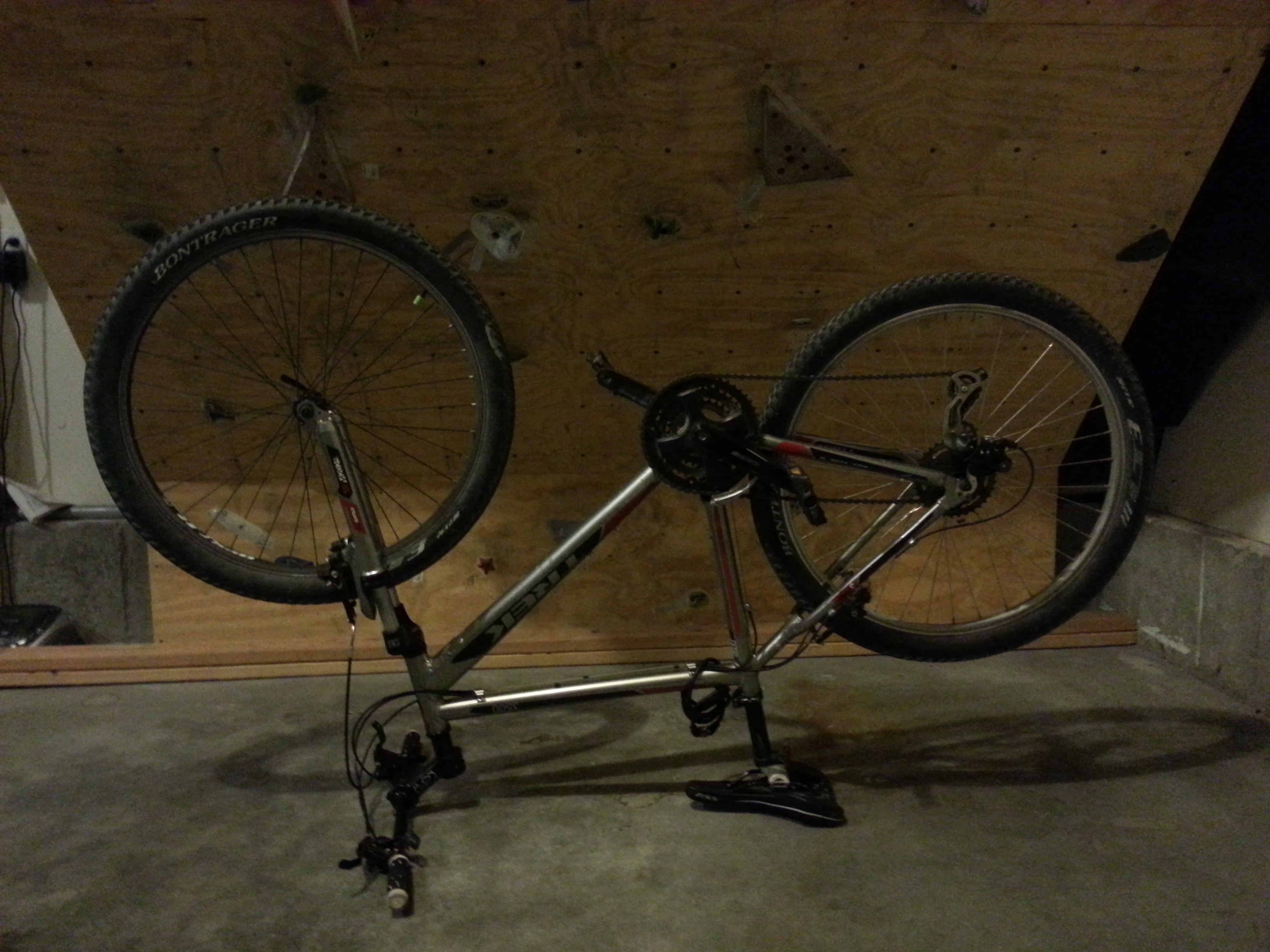
More than any other child, Caleb’s bicycle tires always seems to go flat.  I would patch an inner tube one hour and have it be flat the next.  Those awful three-pronged “goat-head” stickers were his bane.  Caleb was too young to patch his own inner tubes, so he was constantly asking me to do so.  “Dad,” he would ask, “can you fix my bike?”  I grew weary of his frequent requests, and often put him off.  Each time I avoided the task, however, I could see the disappointment in his eyes and hear it in his voice: “OK, Dad.”  I would come around eventually, but my delinquency deprived him of many days of happy riding.  When I began to realize what I was doing to him, and to our father-son relationship, I started patching his tires more quickly, began to teach him to patch his own tires, and wrote this poem as a reminder to myself to exercise patience and love with my children.  (Note: each stanza diminishes by one line in length, symbolizing Caleb’s diminished faith in his father.)

NOT TODAY

On Saturday Caleb said, “Hey, Dad!
I ran over a sticker,
and my bike tire’s flat,
so I can’t ride my bike.
Can you patch it for me today?”
Dad sighed and then replied,
“Not today, son, can’t you see?
I’ve far too much work to do.
Maybe tomorrow.”
And Caleb said, “Thanks, Dad.”

On Sunday Caleb said, “Hey, Dad!
My tire’s still flat,
so I can’t ride my bike.
Can you fix it for me today, please?”
Dad sighed and then replied,
“Not today, son, don’t you know?
On the Sabbath day I cannot do such work.
Tomorrow would be a much better day.”
And Caleb said, “Thanks, Dad.”

On Monday Caleb said, “Hey, Dad.
I still can’t ride my bike at all.
Please, can you fix it, maybe, today?”
Dad sighed and then replied,
“Not today, son, I’m all tuckered out;
I’ve worked so hard all day.
Maybe tomorrow, or next week, sometime.”
And Caleb said, “OK, Dad.”

On Tuesday Caleb said, “Hey, Dad.
I’d really like to ride my bike.
Could you help me, sometime, fix my tire?”
Dad sighed and then replied,
“Goodness gracious, son, how you pester me so.
I told you I’d do it sometime. Not today.”
And Caleb said, “OK, Dad.”

On Wednesday Caleb said, “Hey, Dad.
Today’s probably not a good day, huh?”
Dad sighed and then replied,
“I’m afraid you are right, son, not today.
Today is definitely not a good day.”
And Caleb said, “OK Dad.”

On Thursday Caleb said, “Hey, Dad.
Do you think, maybe, tomorrow?”
Dad sighed and then replied,
“Sure thing, son—maybe tomorrow.”
And Caleb said, “OK, Dad.”

On Friday Caleb said, “Hey, Dad.
Tomorrow’s Saturday, right?”
Dad replied, “Last time I checked.”
And Caleb said, “OK.”

On Saturday Caleb said, “Hey, Dad.”
And Dad replied, “Hey, Son.”
And Caleb walked away.

Vales and Shadows

20150522_193352

I listened, straining to understand, as the young man struggled through a severe speech impediment to deliver his brief address from the pulpit.  Sitting in my regular church pew, I admired his courage.  Would I have the courage, I wondered, to face a congregation and speak, knowing that I could not speak clearly?  The strength of his conviction carried through even if the words of his message were garbled.  Later, staring at the night ceiling, I imagined him reciting Psalm 23, feeling his vale of sorrow, and taking comfort in his strength, his comforter, his shepherd.  And I imagined the response of the rapt congregation.  Then I wrote Psalm 23 as he may have recited it, not in derision, but out of utmost respect for the strength of his courage and conviction.

VALES AND SHADOWS

Tha Laws ma shepr;
Ishl nawan.
He make me to ladan
in grin pasht:
He led besa sti was.
He sto mso:
He lead me in pa righchne
foris nem sek.
Yeah, though wa valla
shada de
I feena evil:
for Thar wivme;
Tha ra an tha staff
they comfme.
Tha prepa taba fome
in prence ma enmy;
Tha noin ma hea voil;
ma cup runova.
Shu good mercy
fo me all day mlife;
and I dwell nouseof Law
fever.

(loud clappings . . . happy smile . . . weepings)

Fall

Tooele T crop1

Fall.  It has come early.  I bask in cool breezes, comforting after Summer’s heat, but knowing, also, that Winter will too soon chase its way in.  This mountain between Middle Canyon and Pine Canyon in the Oquirrh range of the Rockies sports the yellow leaves of Quaking Aspen trees, the reds of Gambel Oaks, and the evergreen Junipers, Pines, and Spruces.  I snapped this picture from the roof of City Hall, knowing I might need forgiveness after failing to ask permission–I just couldn’t resist.  Note the white “T” plastered on the mountain, for Tooele (too-i’-la) high school.

FALL

Fall has become
in my advancing years
a sweet season
sending forth
a settling sense
of things slowing down
preparing to rest
under white blankets
that warm and moisten
against year’s end.
Nights are cool
and days are sunny and cool.
Rows of dry corn
sheaves rasp each other
in the evening air.
Geese wave
a noisy farewell
overhead on their way away.
Greens melt
to candy yellows and reds
smelling earthy sweet
drifting down to become
the richness in the soil
where sleeping segos and tapertips
wait for Spring.

Brown Oak Leaf

100_3360

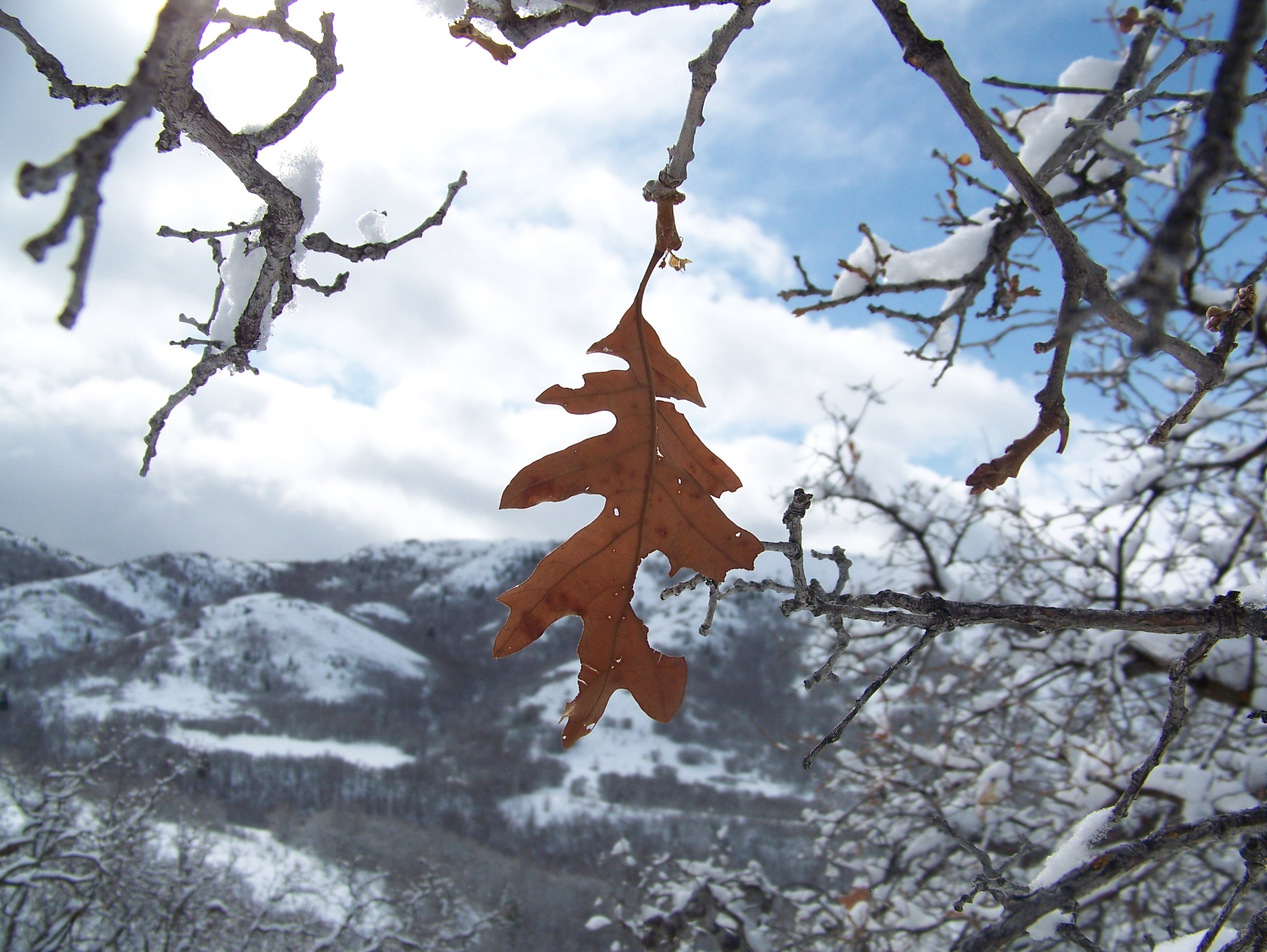
Several years ago I joined an expedition of older boy scouts, including my son, Brian, for a winter campout between the Christmas and New Year holidays.  At the top of Settlement Canyon, we spread insulating straw over the snow-covered tent sites, then shoveled out a foot of snow around the edge of the tents so we could sink the steel tent stakes in the hard ground.  I grew restless after eating my tin-foil dinner and visiting with the others for an hour or so, and set off for a winter walk.  Though the sun had long set, the moon and stars shown through the leafless Gambel Oaks and Mountain Maples to reflect brightly on the white snow.  The utter beauty of my surroundings suddenly washed over me transcendently.  Later in the night, in my tent, bundled up against near zero-degree weather, I turned on my headlamp and scratched out this poem.

BROWN OAK LEAF

A brown oak leaf
dangles from a stray gossamer string,
spinning like a winter whirligig,
reaching down to her sisters,
intercepted in her journey
to the resting place of all deciduous foliate life.
The cool air caresses the brown oak leaf
with the sweet fragrance of powder-green sage
and the sweet fragrance of the fallen-leaf loam
that rests, decomposing,
yielding to the hard earth
its fertile essence
to bless Spring’s
purple taper tip onion,
elegant sego lily, and
infant leafy-green canopy.
The dry leaf’s mother oak,
dressed in velvety orange-green lichens,
clings with tangled roots,
like the tentacles of ten octopi,
sinking their tendril tips into the high stream bank.
She joins her bare branches
to a thousand denuded tree tops,
waving randomly like
the up-stretched arms of
so many entranced worshippers
flexing toward their god.

(“Brown Oak Leaf” was previously published in the Summer 2007 edition of Avocet: A Journal of Nature Poems.)

100_3359

20151031_12083920151031_123855 20151031_132720

Maple Leaf

20150829_161249

I sometimes walk the neighborhoods near city hall during the lunch hour, trying to calm my mind from the troubles of the office.  On one such walk I beheld, on the ground, a beautiful maple leaf in the process of transforming from Summer’s green to Fall’s crimson hues.  I regarded her as the quintessence of natural beauty, and could not resist both scooping her up and writing this poem.

MAPLE LEAF

A leaf,
a many-pointed Maple,
demanded
that I look down
and see her,
her splashes of swirling colors,
laying with feigned humility
on a bed of matted elms,
paper-bag-brown.
She lay unspeaking,
satisfied to be admired,
to not be drab,
satisfied that I was tempted
to stoop and handle her,
satisfied with my sighs.
I could not walk away
and not take her with me.

(I did not have a camera with me as I walked, but the maple leaf pictured above is an acceptable substitute, found during a walk in Ophir Canyon.)

Good-Bye Clementine

20150901_070930

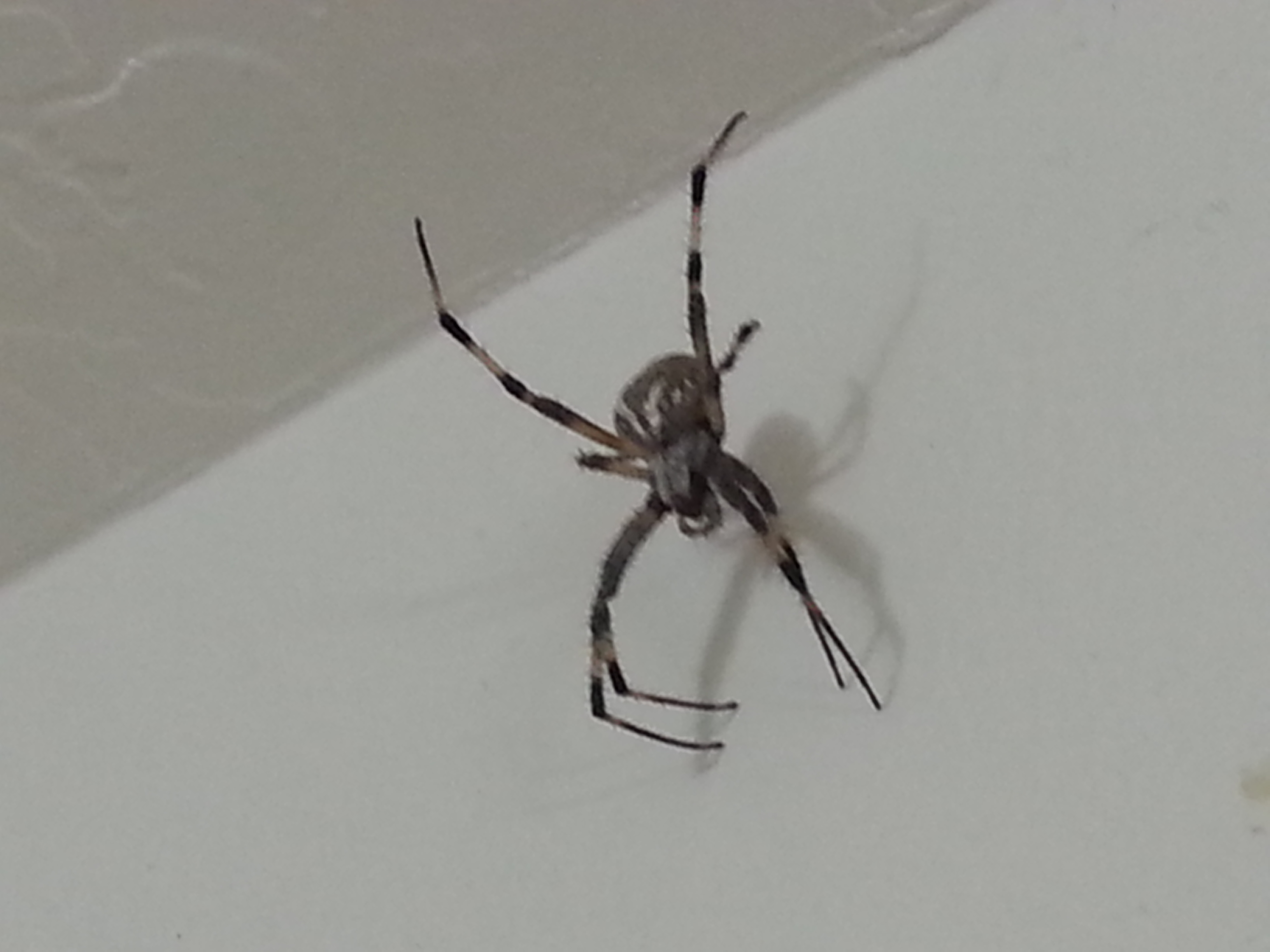
Clementine returned, thankfully.  And Boris moved out (or was eaten), thankfully.  Though Clementine’s company had been, in some sense, comforting to me, our dissimilar natures dictated that our relationship was not to last.  Sealing our fate was the fact that, after living with Clementine for three months, I had to move out in favor of paying tenants.  Moving from this drab little apartment felt traumatic to me because I had become accustomed to my situation and surroundings.  And I had found a silky, spindly-legged companion.  Clementine showed no emotion when I left, but hung unmoving, as always, in her corner.  I walked out, shut the door, and surrendered my key, leaving Clementine behind.

GOOD-BYE CLEMENTINE

Good-bye, Clementine.
I have to leave:
paying tenants, naturally,
take precedence. No doubt:
they will disinfect your corners,
wipe away your suspending threads;
they will squash you without
thought, flush you out
with swirling sewage.

What? No. You cannot come
with me. This is where you belong,
while you belong anywhere.

(Incredibly, the above-pictured spider appeared in my bathroom, in a corner of the ceiling near the shower, in the midst of my posting these Clementine poems.)

Clementine: A Scare

20150920_142229

When I came home from work one evening, Clementine was nowhere to be found.  But Boris hung in a corner of the shower insert.  He looked smug, and I immediately suspected him of foul play.  Fear and anger mixed as I both worried about Clementine and jumped to the conclusion that Boris was responsible for her disappearance.  As I said earlier, I didn’t like him from the start, and had no reason to trust him.  But something caused me to withhold the hand (and toilet tissue) of judgment and wait awhile to see if Clementine’s absence was temporary, and if I had misjudged.

CLEMENTINE: A SCARE

Boris?
Boris.
What have you done
with Clementine?

Clementine Brings a Friend

Clementine 06

(Photo by Laura Baker)

One day I discovered that Clementine had brought a friend to my shower stall.  Slightly smaller but of the same species, he hung in a corner not farm from Clementine’s habitual hangout.  I called him Boris, partly because I didn’t like him.  The name Boris morphed on my tongue into “boorish.”  I felt unabashedly jealous of this usurper, this intruder upon what I had naively assumed was the exclusivity of my relationship with Clementine.  I wanted Boris gone, but needed to be polite for Clementine’s sake.  All this was tongue in cheek, of course, but made for fun imagining, and a poem, during a melancholy time.  Boris didn’t stay long.  Perhaps Clementine ate him.  That suited me.

CLEMENTINE BRINGS A FRIEND

So, Clementine—
you have brought a friend—
And you are . . .
Boris?
Bo’-ris.
(You’re rather small.)
Of course, you can
visit for awhile.
Is there anything I can get
you, Bo’-ris?
Curds and whey? Well,
I’ll certainly see what I can do.
Won’t you
make yourself comfortable,
Bo’ris?
(Um, Clementine . . . )

Clementine: Gone

Clementine 03

(Photo by Laura Baker)

My last poem Clementine: Return would have made more sense had I first posted the poem Clementine: Gone.  Oh, well: I goofed.  As I suggested in my last post, when Clementine disappeared, I felt an intensified loneliness.  My only companion was gone, who knew where.  I hoped she would return, even though I thought it unlikely.  Clementine’s departure felt permanent, and I could not trust in the possibility that she would return.  Now you may understand better the ebullient tone of the previous poem, welcoming her upon her return.

CLEMENTINE: GONE

Spindly-legged spider—
I cannot see
where you have gone;
the corners are empty
in every room.

Clementine: Return

Clementine 02

(photograph by Laura Baker)

Clementine would disappear for days, and then reappear in the same or a different corner.  I could not see any web against the whiteness of the shower insert, but I knew a web must be there, for Clementine didn’t walk on the wall but seemed to walk in air close to the wall.  I wondered what she ate, for she was slow, spun no web to catch insects, and there were no insects (that I could see) for her to catch.  When she left I felt her absence, like after you say good-bye to a friend who has come to visit.  Her return always brought a strange sense of relief.

CLEMENTINE: RETURN

Welcome, Clementine!
I am glad
for your visit!
How I have hoped
you were well.
And here you are,
looking well!
Can you stay
awhile?
You left without notice
(you know),
and equally came.
But I am glad
for your visit!
Please, stay
awhile.
I am needing to go
to town this morning,
though. You’ll wait here
till I return?
Oh, good.
So glad
for your visit!

Hello Clementine

Clementine 01

(photograph by Laura Baker)

Some years ago, during a very dark time in my life, I lived alone in a small apartment.  In the bathroom the wallpaper border was peeling from the old paint, and mildew grew on the ceiling.  My clothes sat in neat piles on the floor inside a big duffle bag.  Parts of my life had crumbled despite my best efforts to hold everything together.  The weeks and months dragged on as I laid staring at the ceiling night after night, wondering how I had come to be here and where I was going.  I felt utterly alone.  But during the early weeks I discovered a quiet companion in a corner of the shower: a spider.  My Charlotte to her Wilber.  I called her Clementine.  I could have casually killed her to avoid her silky creepiness, for I don’t care for spiders.  Instead, in my loneliness, I greeted Clementine fondly each morning and evening, and missed her when she disappeared for a day or two.

This and the next five poems I post will chronicle my brief relationship with Clementine.

HELLO CLEMENTINE

A spindly-legged spider
hovers upside-down
above me, in the corner—
I don’t know what she eats
in this tidy little shack;
it’s only the two of us—
she faces away, but
I know she is only pretending
to not watch me.
Part of me squeams
to squash her:
three squares of toilet tissue
would do. But,
she is quiet and harmless;
this is her shack, too.
And, it’s only the two of us.

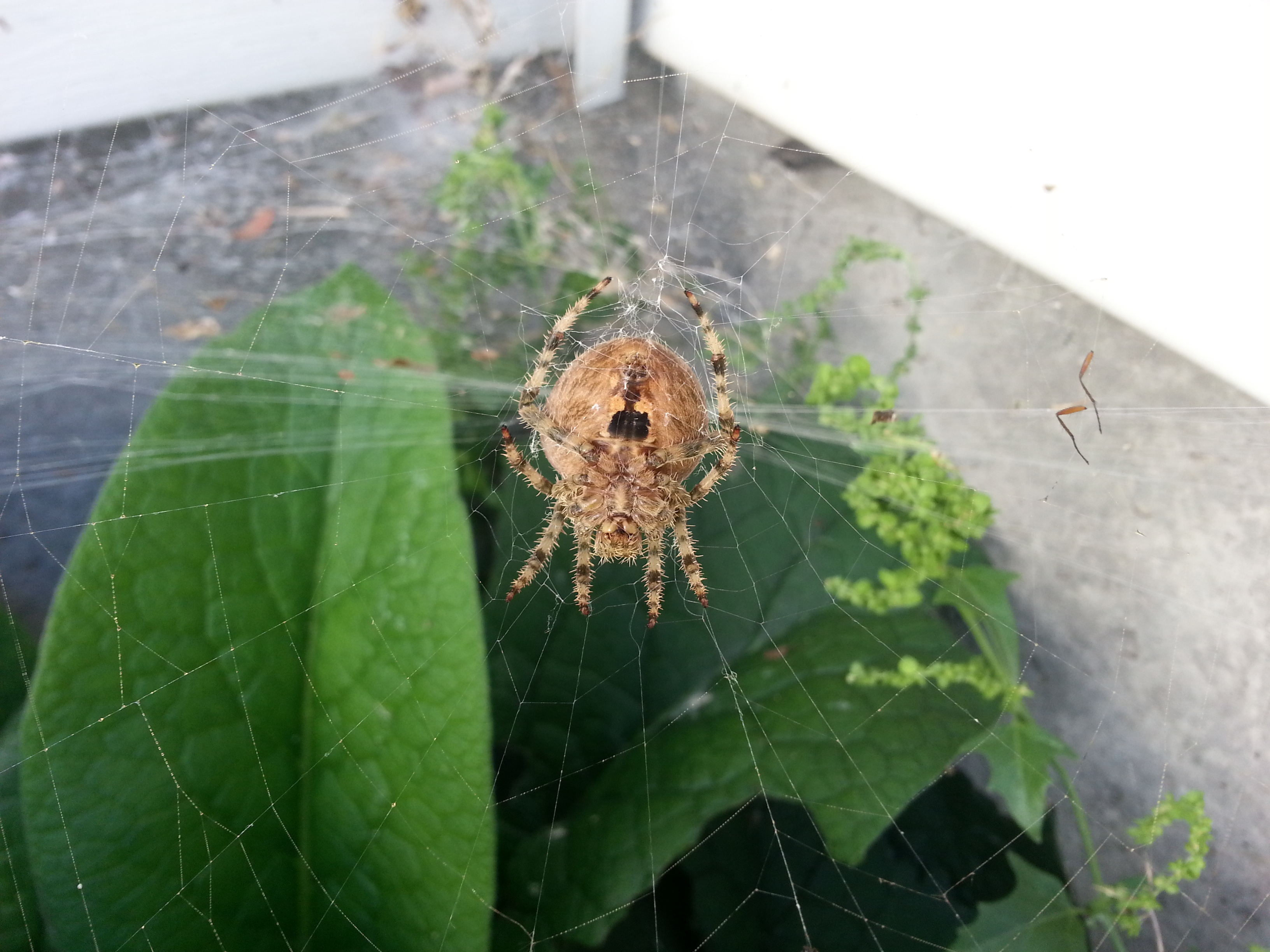
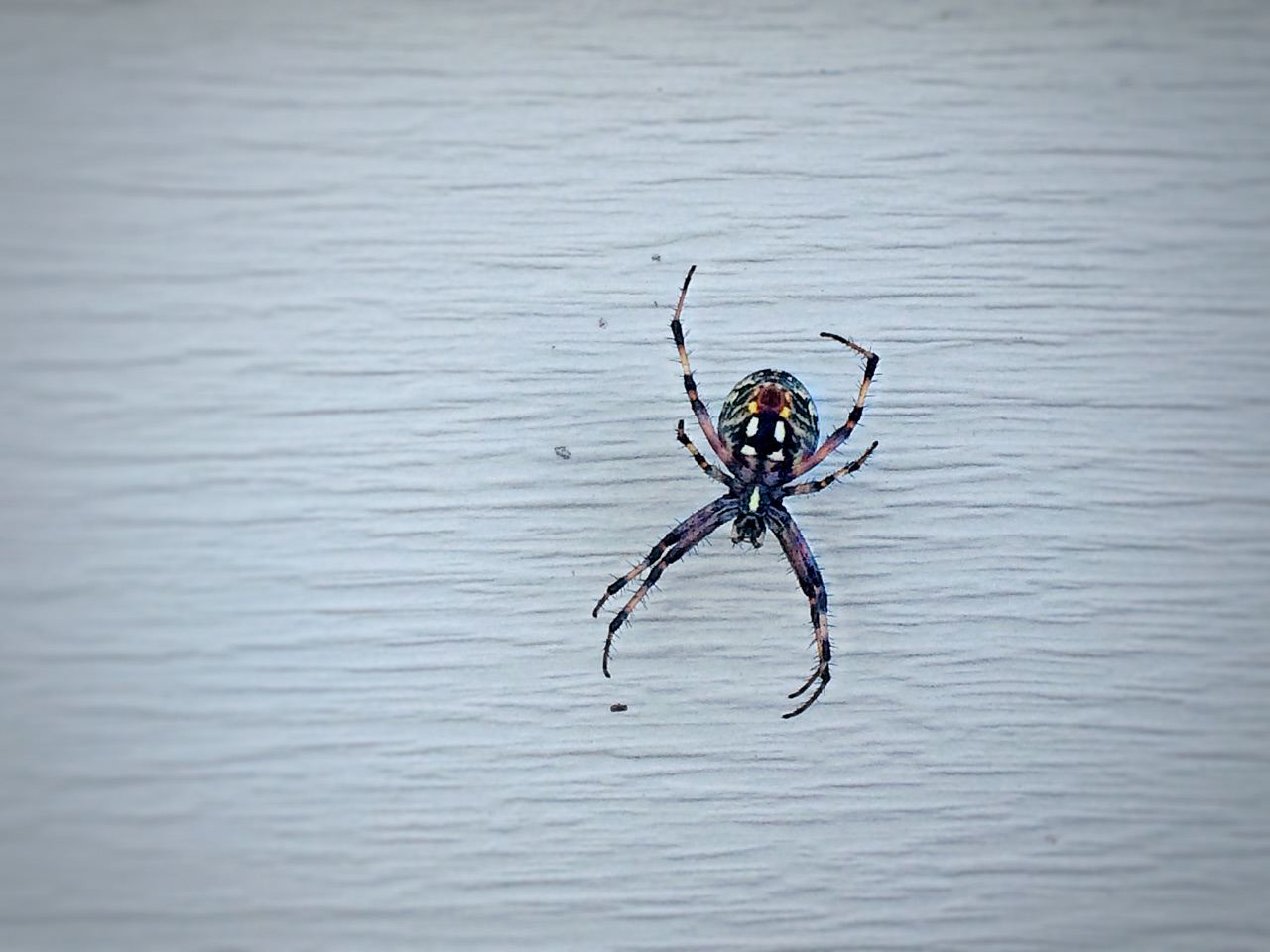
(Unfortunately I never took a picture of the real Clementine.  My daughter, Laura, took this and subsequent spider photographs of garden spiders around our house.)

Thistle Seed

20150516_115742

I love wild birds.  Each visual and aural encounter with a bird inspires me, lifts my spirit somehow, and causes me to stop what I’m doing and to watch and listen.  “Do you hear that?” I’ll ask my children as we walk on Rabbit Lane.  “That’s the cry of the Red-shafted Northern Flicker.  Now every time you hear that lonesome call, you’ll know who it is, and can watch.  See?  There he goes?”  The Meadowlark sings the most beautiful and complex melody.  Common Sparrows twitter chaotically, wooing mates in the tree branches.  Red-winged Blackbirds whistle and dive in for a sunflower snack.  Mourning Doves coo softly and sadly.  I hope you enjoy this prose poem about some wild birds in the Rabbit Lane neighborhood.

THISTLE SEED

Small striped Siskin grasps a high twig with black-wire feet, glancing repeatedly downward, wishing someone would fill the hanging thistle seed bag.

Two Red Tails sit close on a high bare branch watching the fields together for a mouse or a vole or a gopher that might poke its snout up through the snow. Which one will fly?

A thousand yellow-shafted Northern Flickers crowd a copse of gambel oaks and mountain maples, each of the thousand chatting earnestly to the other nine-hundred ninety-nine. The red-shafted flies alone, flapping then gliding close-winged, after sounding a solitary cry.

Kestrel finds its way into the coop, with no room to dive and where the chickens are ten times its size, and cannot see the way out. Brian grapples it with leather gloves and sets it free to fly, not before noticing the beautiful markings on its face, the scalpel beak, and the black glossy gleam in its eyes.

Bald Eagle came only once to our cottonwoods and stared down at me as I stood stupefied.

Kingfisher

Kingfisher by Caleb-jpg0002

(Belted Kingfisher by Caleb Baker-2015)

Driving to church one morning, I noticed a Belted Kingfisher perched on an electric wire suspended over Stansbury Lake.  What a strikingly beautiful bird.  I wondered about his perspective on the world from that perch.  All through church I thought more about the kingfisher and what he saw than I did about the sermons and what they taught.  I wondered what he saw, what he felt, what he thought about, what it must be like to dive like a missile into the water, then rise with a writing minnow.  Sitting in my pew I wrote this poem.  My family thought I was taking copious notes on the sermons.  (Thanks to my son Caleb for this excellent drawing of a Belted Kingfisher.  The smudge is from the best of many scans, not his pencil).

KINGFISHER

Kingfisher,
watching from your high-wire perch,
looking down upon the world,
upon the water—
what is it that you see?

Kingfisher,
diving from your elevated view,
wings folded,
a yellow-beaked torpedo—
what was it that you saw?

Kingfisher,
fluffing your feathers dry,
back at your vigilance place,
the minnow having slid down your gullet—
what was it that it saw?

Kingfisher,
flying on your blues and blacks from your high-wire perch
into the nook of a sheltering tree,
the waning sun still warming—
what will you see tomorrow?

At Midnight

Waves

(Lamp by Roger and Hyrum Baker-2014)

We may think that as parents we have plenty of opportunities to shape and affect the lives of our children.  And we would be right.  But some opportunities, when missed, cannot be recaptured.  They are lost, and we cannot know what we have missed or how we may have helped another.  The best we can hope is that we won’t miss the next indispensable opportunity.  This poem is about opportunities gained and lost, and hints at the need for making a commitment to make the most of them when they arise.  Our children need us.

AT MIDNIGHT

I lay on my back
at midnight
and wondered if I should
go to his room,
where his light still shone,
and talk to my son,
a young man.
I lay on my back and wondered.
I lay on my back and thought.
But when I at last arose,
I found his light too soon turned off.

(Note.  This poem is not about suicide.  But it could be.  If we suspect that our child is depressed or sad or lonely or wanting to take their own life, we need to take a moment to reach out, to express love and support, and to ask the hard questions that will help pave the way to safety.   QPR training–Question, Persuade, Refer–is a useful tool for all.)

Rooster

20150801_181955

I have raised roosters both tame and mean.  One white rooster is so gentle we can hold him and stroke his long white feathers while he softly chortles.  Give a rooster a harem of hens, however, and he becomes jealously protective.  My roosters never crow only at sunrise.  They crow at all hours of the day and night.  That same white rooster crows every time he wants our attention, like a dog barking for someone to play with or a cat meowing for a fur stroke.  Here is a little poem I wrote about roosters that do crow at dawn.  (For more on roosters in Rabbit Lane: Memoir of a Country Road, see these posts: Chapter 15: Of Foxes and Hens; Chapter 46: Of Boys, Pigeons, and an Evil Rooster; and, Round Shells Resting.)

ROOSTER

Rooster
Stretches from talon to beak
As he calls to the dawn,
“Welcome Today!”

Rooster
Squeezes from tail feather to crown
As he greets the new day,
“Good Morning!”

Dove Season

100_3741

In September I hear the plinking of low caliber (but still lethal) rifles through Erda’s country neighborhoods as hunters harvest pretty Mourning Doves and Eurasian Collared Doves from where they sit perched on power lines, fence posts, and tree branches.  I find it hard to believe that the State and County governments allow and even license such hunting.  I find it hard to believe that people still go to the trouble of making pigeon pie.  I believe the birds are simply killed.  To these hunters I say, please leave my pretty doves alone.  Let the hawks and falcons do the harvesting.  This poem further expresses these sentiments.  (See the post Of Boys, Pigeons, and an Evil Rooster for more on doves and pigeons.)

DOVE SEASON

A soft crying floats down
from the cottonwoods and power lines
to mingle with the morning mist:
a penetrating, mysterious cooing,
haunting calls of ghosts in the trees.

Pushing off from tree branches and the tops of fence posts,
doves’ gray tails fan wide with white-border bands,
wings beat powerfully with percussive whirring.

A .223 rifle cracks, pop, pop-pop,
plinking doves off power lines like cheap arcade prizes.
A shotgun shouts its BANG!
obliterating delicate birds in a whirl of flying
feathers twisting in air as they fall.
Another open season
to “harvest” my pretty mourning doves.

I think that I may write to the County government,
ask my elected officials why:
Most Honorable Commissioners:
Is there such an overabundance of doves,
as to create an unbearable nuisance,
as to pose an unarticulated threat,
that you feel compelled to countenance this slaughter?
Or do you dispense merely a license to kill,
a tolerance found in pioneer history that
modern man delights to perpetuate?
Please consider
shooing the rifles off our roads,
chasing the guns from so near our homes.
Please consider
letting the harmless doves alone
to grace my morning walks
with their woeful cries that take me
to the edge of somewhere sweet and tender,
laced with loss and mystery.
Sincerely, your humble constituent (voter).
I may write.

Mornings seem quieter than they ought to be
September-time.

Vultures on a Fence Rail

20150329_095848

I looked southward from where the wind had brought the brief summer rain, and was astonished to see a row of about two dozen turkey vultures perched atop a fence rail, their featherless heads almost glowing red above their black-feathered bodies.  A sight strange enough to inspire a poem.

VULTURES ON A FENCE RAIL

Vultures on a fence rail,
Heads bent low,
Sitting still and bundled
Through a fierce summer squall.

Vultures on a fence rail,
Heads pointed high,
Wide wings spread and warming
To the rainbow and the sun.

20150804_095617

Pavement

20150510_201826

Paving Rabbit Lane changed the nature of the country road so totally and quickly that my mind and emotions struggled to adjust.  Gone were the gravel, hard-pack dirt, and potholes.  In their place lay milled asphalt, the detritus of some other road mixed with new oil and laid roughly to rest on Rabbit Lane.  Some chunks still showed patches of yellow striping, so disjointed as to be of no use to the traveler, pointing in no direction and every direction.  As I saw it, the County had strangled the life out of Rabbit Lane.  I, also, found it harder to breath.  This poem portrays my early perspectives of this black-oil change.  (See the Chapter 38: Black-Oil Pavement post on the Rabbit Lane: Memoir page of this blog for a related discussion.)

PAVEMENT

It happened sooner than I expected.
ROAD CLOSED barricades appeared at either end.
They had paved Rabbit Lane.
They had paved Rabbit Lane with roto-mill from some other road’s temporary demise,
mixed the black rubbish with new oil
and plastered it flat upon the hard, living earth.
Now, after rain, Rabbit Lane reveals nothing,
no tracks of the earthworm pushing perilously slowly across the road,
no paw or claw prints of raccoons or pheasants.
No more wet pot holes for the children to ride their bicycles through with a whoop.
Instead, oil leaches invisibly into the ditch
to water cattle and crops some place too far away for accountability.
Pink-flowered milkweed and wispy willow bush cling to the asphalt fringe.
They transformed Rabbit Lane from a dirt farm road with country appeal
to another icon of the American Nowhere, with all the charm of a parking lot.
Rabbit Lane, of course, neither knows nor cares about the change.
But I know, and I am saddened.

100_1909

Apple Tree

100_4761

Old things fill me with such deep feelings of nostalgia.  It is as if they contain an essence of goodness and profundity that has somehow become lost and forgotten.  They are voices of lives and things far away but not diminished in value for their distance.  This poem highlights some of these, trying to catch that uncatchable essence.

APPLE TREE

The tree has grown
unpruned
for some seasons now. Golden
apples hang unpicked,
falling one by one
as breezes blow
and neighbors jostle, to cider
in the soil, enriching
first yellow jackets,
then slugs and worms and grass
still green in Fall.

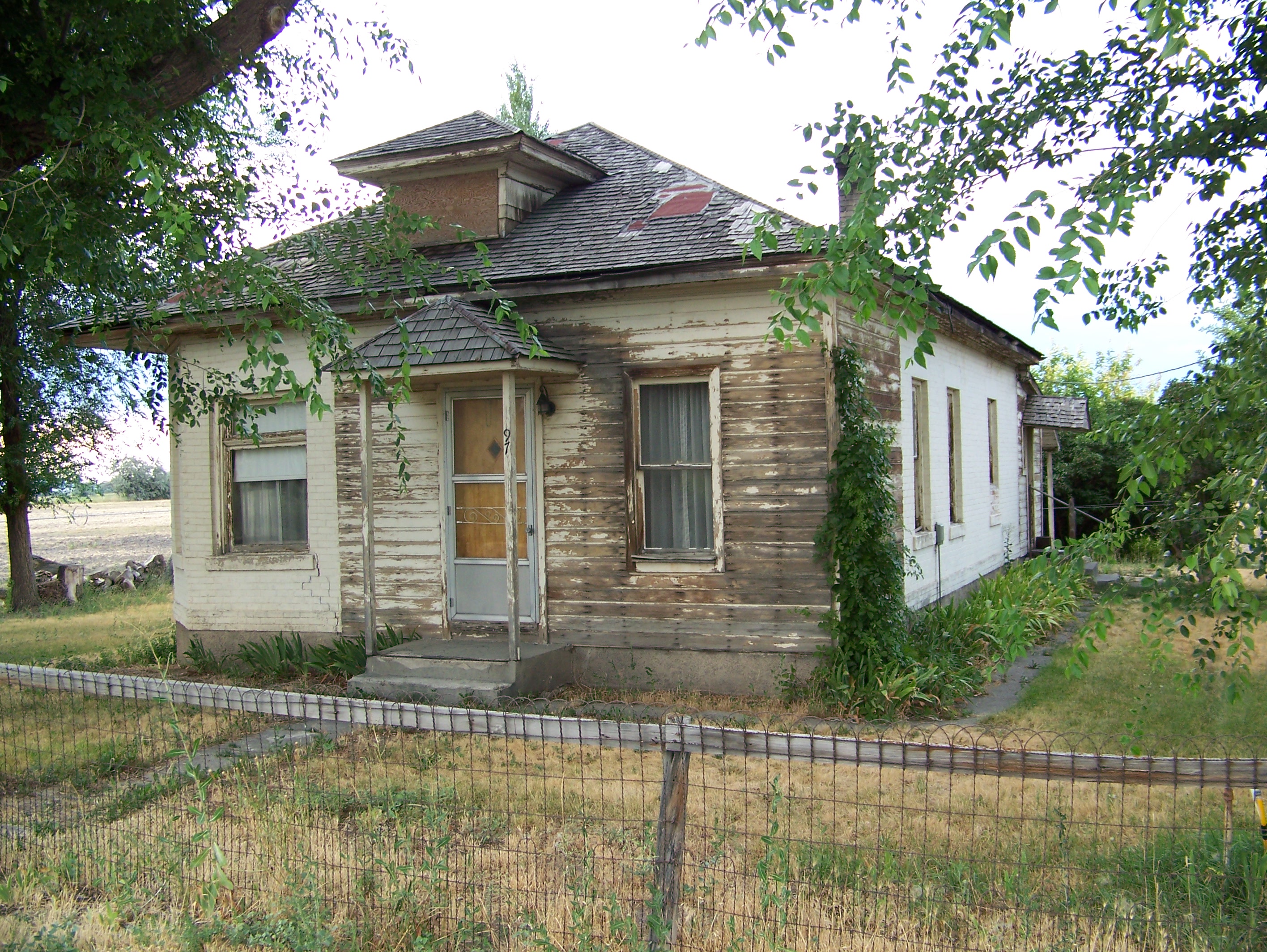
The old brick bungalow,
white paint peeling,
has gone unlived in
for many years now. The smoke
is stilled, and the chimney soot
is old and cold. She was
born here, birthed
in her mama’s brass bed.
She played in the ditch,
munched raw oats, picked
nosegays of daisies and asters,
and planted pips
from a golden apple
in a secret spot of soil.

The misted vase has sat
empty upon the table
for so very long now. Dust has settled
into stem and petal etchings, caught
upon dry, white mineral rings. Outside,
beside bungalow brick,
hyacinths, daffodils, tulips,
irises rise in rows
to bloom each Spring,
bidden only
by sun and warm soil.

20150515_154709

Almost

20150531_094255

Sometimes, in the evening, I like to sit in the chicken coop, in a corner on a stool, and just watch my hens.  They scratch around and peck at this and that, keeping a wary eye on me.  They don’t exactly come when I call, but neither do they seem anxious, rather, just aware of my presence.  As with my children, I have especially enjoyed the young chicks for their beauty and willingness to be coddled and petted and spoken softly to.  Yes, I confess to talking adoringly to my chicks.

ALMOST

Almost
they believe
I am one of them—
close enough for calm.
They, gold-feathered, look up at me
blankly, peeping softly,
let me stroke the feathers
on the tops of their heads,
across their backs,
accepting me best
under their yellow beaks
and down their bristly necks
to billowy young breasts.
The others, blacks and barred,
peck and scratch
comfortably at my feet,
sense me from a disinterested distance,
but run cackling to the corners
at my reaching hand,
as if I were
suddenly some monstrous enormity,
which, of course, I am,
but guileless and doting
despite my alien countenance.
I shelter them from skunk and fox.
I feed them and water them
each day. We visit,
me on my cinderblock stool.
They will grow and repay me with eggs,
and with soft peepings,
condescending to my gentle hand.

Wind (Poem)

100_1866

Summer winds rip through the funnel of the Stockton bar and down across the Tooele valley floor where we live.  Or they fly in from the north across the Great Salt Lake.  Either way they tear at the siding and roof shingles and rattle the house, making sleep impossible.  Frightened children wander to the foot of our bed hoping to be welcomed up to sleep with us, happy even to sleep on the floor curled up in their quilts.  This poem describes how nothing frightens me like the wind.

WIND

Nothing frightens me like
Wind:
a million whispers rushing
through a million forest leaves,
coalescing into crescendo and
a horrifying howl,
a gusty, sibilant scream,
a prolonged and violent accusation.
Wind
rattles my home,
shakes my bed,
shivers my nerves.
Wind
disturbs my well-gelled image,
exposing me: unkempt and scattered.
Wind
bellows dirt into my eyes and nose and throat;
I squint and cough and curse.
Wind
batters and tears as
I fight for footing.
Wind
whips up the storms
that stir the deep and hidden things,
monsters that slink mysteriously about,
revealing themselves in
cursings and covetings, in
lashings and lustings.
Give me
driving Rain,
booming Thunder,
sizzling Lightning,
desiccating Sun:
I embrace them.
But keep away the
Wind.

100_1865

Sorting Socks

20150510_200418

My wife and children and I crammed ourselves into a small hotel room in southern Utah where I was attending a legal conference for a few days.  At three months pregnant, my wife should not have been having contractions, but she was having contractions–bad ones.  Soon they became unbearable.  We knew what it was and headed for the rural hospital, leaving the children in the care of their oldest sibling.  This poem weaves together that horrific experience with others to address our attempts to deal with physical and emotional pain.

SORTING SOCKS

You bend with a wince and whisper that
the pain has come again,
the pain in your side above your left hip,
the pain that halts your thoughts and your speech and your steps,
makes you breathe in short and sharp.
That pain again.

The pain began after your last child’s birth,
two years and eleven months ago.
It comes and it goes with caprice,
making a shouting arms-flung-wide appearance,
interrupting your reading and your cooking and your puzzle-piece placing
until it steps off its box and fades into the conquered crowd for awhile.

She did the ultrasound from inside.
I’m glad I wasn’t there.
“It wasn’t so bad,” you said, but
I’m glad I wasn’t there.

The technician warned she could see a shadow,
a shadow on the organ that wombed seven children,
and several more that came early or deformed
or not at all, like when in that tourist town clinic
you screamed for pain killers; you,
steadfast as a hundred-year oak in a hurricane; you,
determined as a heifer facing a driving snow; you,
who pushed out seven babies with not a pill or a shot;
you begged and moaned on the gurney
for something to make the pain go away.
The nice doctor made you babble and moan, and said to me,
“Don’t worry, I’ve done this once before.”
He brought you the baby that wasn’t, in a bottle,
and you sobbed and shook when he took it away.

After a gray week of waiting they said
you were fine: no growth, no shadow of a growth.
No reason for that pain.
You called me and cried, you felt stupid:
all that for nothing. If you had to go through all that,
at least it could be something instead of nothing.
I offered to cheer you, and told you that,
with my Trasks on my desk, I discovered
I had on one blue sock and one black.
You mumbled, “. . . stupid. I sort the socks.”
I meant to be cheery
but made you feel dumb.
That pain again.
I didn’t care how the socks were sorted—they were clean.
Next day I wore one black sock and one blue,
but thought it best not to mention it.

Birds

20150516_115752    20150515_155341

One of my greatest life’s pleasures is seeing birds in all their colors, hearing birds of all songs and calls.  Though my grapes never grew, I am happy that the birds have come to my arbor.  These Red-winged Blackbirds and House Finches are happily cracking black oil sunflower seeds in the simple feeder Caleb made as a Boy Scout for his Nature merit badge.  I wrote this poem about feeding the birds.

BIRDS

Bird feeders swing empty from nails pounded in the arbor.
After years of compost, fertilizer, water, and iron,
the vines still grow sickly and yellow, vines that grow no grapes.
I once dreamed of the arbor covered in a dense green,
with plump, hanging clusters of white and purple grapes.

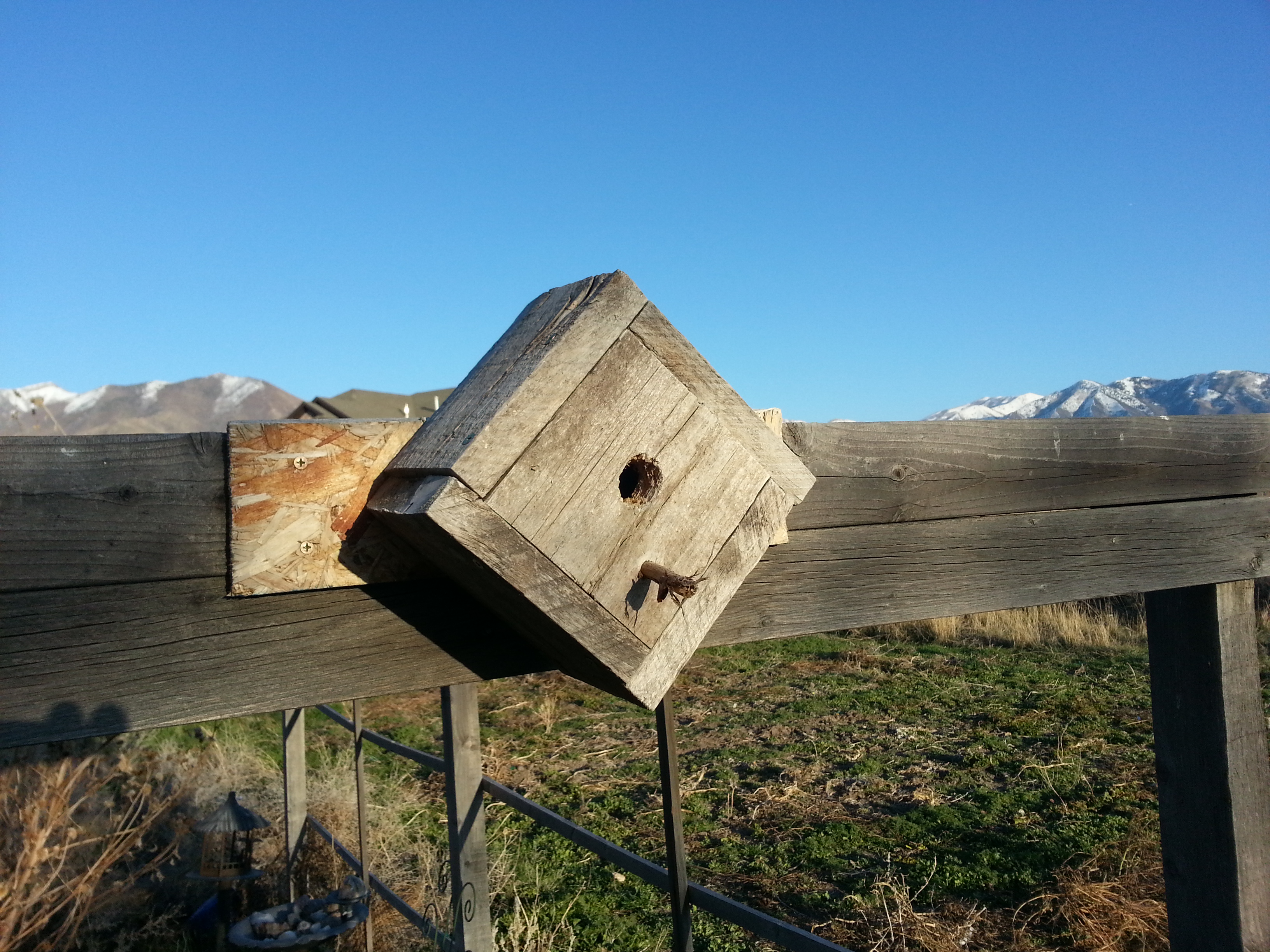
Bird houses nailed to the arbor sit vacant,
the entrance holes too large or two small, too high or too low,
or too exposed to climbing cats,
vacant but for teaming yellow jackets that relish dark nooks.

The finches prefer the spiny blue spruce nearby.
Who knows where the sparrows and blackbirds live?
But they visit by the hundreds, chirping and chasing, cracking at shells.

I must fill the swinging feeders
for the little birds that descend to my empty arbor.

20140322_184804

Snipe

20150529_205730

As an older Boy Scout I thought that a Snipe was an imaginary creature which younger scouts were sent to hunt in the Snipe Hunt hoax.  As a younger Scout myself, I never found a Snipe, whatever a Snipe was.  It was not until I was about 35 year old that I learned that a snipe was a real creature, a fairly small water bird with long legs and beak.  It spends its time meandering the irrigation ditch along Rabbit Lane, rising with indignant “peeps” as I trudge by on my walks.  I also learned that the Snipe was responsible for the eerie, haunting reverberating sounds I heard hovering like a fog over the fields at night.  Harvey told me to look up high for the source of the sounds: a Snipe, a brown speck in the high sky, diving and allowing the air to thunder through its wings.  I wrote this poem about this mysterious little creature.

SNIPE

Summer sun settles on high mountain peaks,
igniting heavy cumulus over a burning great salt lake.
A ghostly echo begins to move,
invisible, taunting,
low over twilight’s deep green fields
of pasture grass and alfalfa hay;
a lonely laughter
approaching then receding,
soaring then plummeting,
tumbling, veering,
in sunset’s golden glint,
in late night’s moon-glow,
to vanish at the new sun’s rising—
seen only by those who know whence comes
the haunting, moving echo of the snipe in the evening sky.

Lucille

100_1018

Fifteen years ago we fended off the rerouting of State Road 36.  It would have cut through farms, a pioneer cemetery, wetlands, and historic homes.  It was in this context that I met Lucille, an 80-year-old Erda native with an undeserved reputation for orneriness.  She was, in point of fact, mild and sweet.  This poem tells of my brief but lasting intersection with Lucille.  (See the post Chapter 36: Shirley and Lucille for more about Lucille and her sister Shirley.)

LUCILLLE

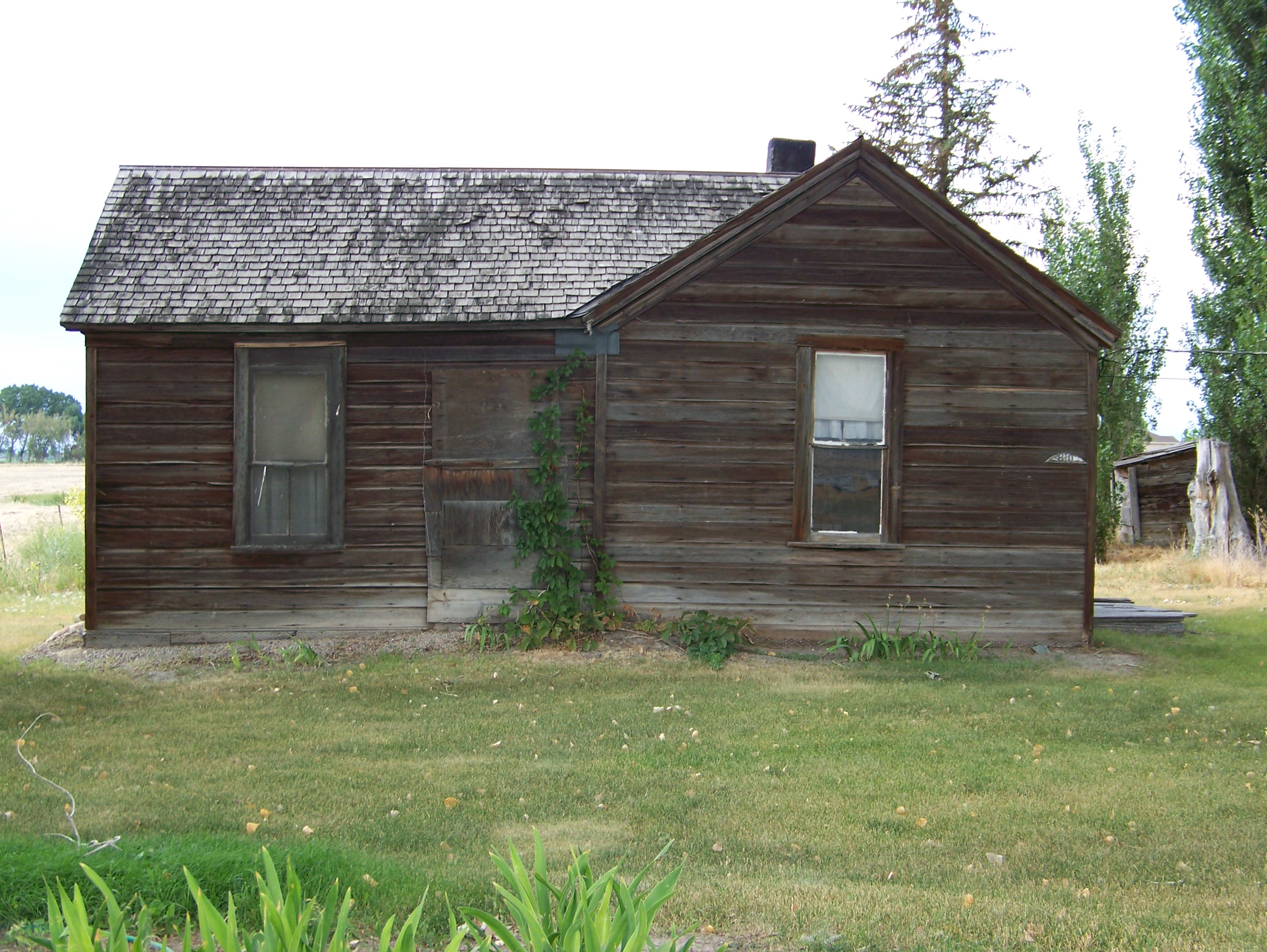
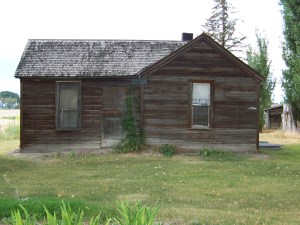
Her cottage sits small
in the big shade of three
old cottonwoods that now, late
Spring, release bushels of cottony
seeds that ride the breeze,
settling in wispy blanketings
on roads and lawns, houses, and fields.
churned up by cars
in swirling white clouds
that float off to land where they will:
on the ground again,
on trees and flowers,
on barbed wire prongs,
and in my hair.

In the shade
the cottage’s weathered clapboards
glower dark, as if soaked
in creosote, matching the nearby privy
planks. A lifetime of bundling
up, kicking through feet
of newly-fallen snow, to sit
on the icy privy seat.
Firewood leans tired
against the cottage clapboards,
log ends covered in dusty spider webs.
The blackened chimney top
misses Winter’s fires.
New grass covers
the privy pathway.

Lucille did have running water.
I saw the chipped enamel sink once,
from the porch,
when she answered the door.
Water dripped steadily
from the rusted faucet head.
Her bed huddled in the corner,
a thin mattress pressing rusty coils,
opposite the sink
in the two-room shack.

Lucille hunched in the doorway,
against the frame,
her unkempt hair streaked gray and white,
matted from undisturbed sleep.

“We’re having a meeting tonight, about
the road.
You’re welcome to come,
if you want.
I wanted you to know.”

“Are these your children?”
Her hairy chin-mole moved
a little as she smiled,
revealing toothless gums.

“Yes, ma’am, these are my children.”

“You have beautiful children,” she crooned.

“Thank you, ma’am,” I offered meekly.

“Thank you,” she softly offered in-kind,
withdrawing gingerly,
with my letter and maps,
into the shadows of her home.

The new state road, I feared,
would destroy her old cottage,
would tear through the oat fields
that her nephews farm.

I regret
never visiting Lucille before.
I regret
listening to the neighbors
about how ornery and crotchety she was,
about how curmudgeonly she was
toward visitors.

We knocked on her door
and asked if she wanted to
buy some Girl Scout cookies
and she practically chased us
away scolding, ‘I don’t want any
cookies’ they had said.

As it turns out,
Lucille was just as nice as could be,
simply old and tired and lonely.
Perhaps she wished that someone
would come visit her,
someone that didn’t want
anything,
someone that might say,
Hello, Lucille.
It’s a beautiful day.
And how are you getting along?
I regret
that I never saw Lucille again.
She died and was buried before I knew.

We held the community meeting about
the road,
at my house.
Most of the neighbors came
and talked for hours.

“The road
will desecrate
an unmarked pioneer cemetery,”
one neighbor asserted.
“My grand-daddy told me once
where he thought it was.”

“The environmental assessment for
the road
is totally inadequate and entirely suspect,”
a man declared.
“It fails to account for wetlands and species mitigation,
and fails to identify potential alternate routes.”

“This is Erda!”
bemoaned an old farmer’s wife.
“We’ve been cultivating our ground
for generations.
The road
will take that all away.”

“It’s no use bickerin’,”
cranked a cynical old rancher.
“The State will put
the road
where the State damn well wants to,
and there’s nothin’ we can do about it.”

The old ranchers and farmers,
and the new-comers, too,
designated me their voice,
to write to the Governor about
the road.
He had proclaimed, after all,
this year to be
the year of the Utah farmer.
The new road,
as planned, would decimate
some of Erda’s best farmland.

I received no gubernatorial reply—
but Lucille’s cottage still hides
in the cottonwood shadows.
Some kin replaced
the weathered wooden door
with a new door painted white,
like a gaudy, too-big bandage
on a fairly minor bruise.
Otherwise, the cottage withstands time.
The little No Trespassing sign clings
crookedly to the rusty field fence;
the house gate long since fell off.
Artesian water squirts feebly
from the rusty yellow sprinkler,
lying always in the same spot,
growing a circle of lush green
against the adjacent dormant brown.
In the front lawn,
the finned ’56 Ford station wagon
has kept patient watch for decades.
Weeds climb past its flat, cracked whitewalls
and faded blue-sky paint.
The rear window is shattered still;
the others remain intact.
And after every Spring thaw,
the crocuses, daffodils, and tulips
rise through the turf by the thousands,
waiving yellow, red, pink, and purple,
perfuming the air and
bringing life and color
to the empty cottage
where Lucille lived.

100_1014

Chapter 36: Shirley and Lucille

100_1023

–Please help us to not be mean.–
(Hannah-3 to God.)

Lucille, in her 80s, still lived in the tiny clapboard shack in which she had birthed her children, surrounded by her family’s historic grain fields, next to the small brick house in which she herself had been born.  The shack’s “facilities” were to be found in a one-seater outhouse 30 feet behind the house.  One very cold morning after an even colder night, a neighbor found her sprawled on the icy ground, her body frozen.  She must have slipped or tripped returning from the outhouse, was unable to get herself up from the ground, and slowly went to sleep as the overpowering cold seeped into her warm body.  Continue reading

On Tuesday

20150318_124628

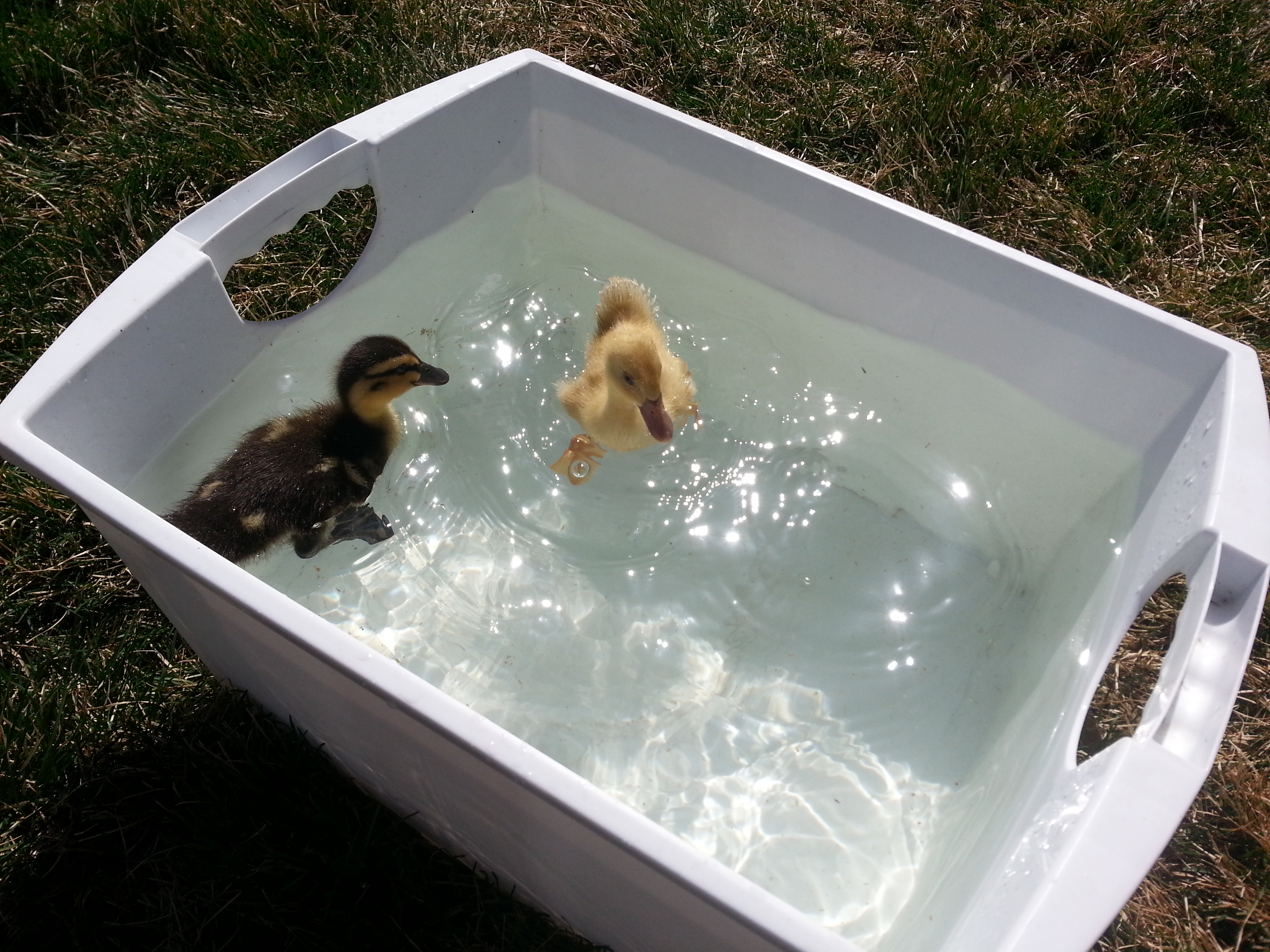
The arrival of new animal life brings incomparable happiness to children, both exhilaration and tenderness, as this poem portrays, written from the perspective of my then 8-year-old daughter Laura.  The ducklings pictured above are being raised as I post by Hannah, my youngest (with a little prodding from Dad).

ON TUESDAY

On Tuesday
Dad brought home the chicks:
six day-old ducklings
in a little cardboard box:
2 yellow-green,
2 green-brown, and
2 black.
And 2 turklings!
Dad says we’ll eat the turkeys
when they’re grown,
so I’m not allowed to name them.
But the ducklings are my very own.
Already I have named them:
Pumpernickle and Blackbeak,
Wingers and Fuzzles,
Nester and Dandylion.
They paddle prodigiously in the bathtub,
with water not too cold and not too warm.
They shiver and protest at
being wrapped up tightly in a towel.
They huddle under the heat lamp
and peep when I approach.
They bustle about my feet as
I sit in their pen on a cinderblock stool.
They don’t complain when I pluck them up,
but nestle comfortably up under my chin,
as if I were their mamma.
My ducklings are my friends.
They tell me they like me
with their peeping peep peeps.
They tell me they accept me
as they cuddle and becalm.
They tell me they’ll miss me
by the way they look at me
as I walk away for the night.
“Don’t worry, little ducks,” I tell them.
“I’ll be back
Tomorrow.”

Sprinkled with Rose Petals

20150510_204402

This poem is written from the perspective of my daughter, Laura (then 9), who lost her special duck Wingers to marauding dogs.  Other beloved creatures succumbed, like her kitten, Diamond.  Laura and I somberly buried each in the garden, resting them on beds of green grass, and covering them with loosely sprinkled rose petals.  Each funeral was tender, both sad and sweet.

SPRINKLED WITH ROSE PETALS

Wingers was my special duck.
I raised her from a day-old chick.
But she died when the neighbor’s dogs roved over
In the middle of the night.

Diamond was my precious kitten.
I watched her being born.
I stroked her fur when she lay sick.
I gently stroked her fur.

I found a yellow-breasted song bird:
Her feathers scattered on the grass;
Her wings stretched out;
Her beak upturned, eyes staring at the sky.

I laid them all in garden graves,
On beds of soft, cool grass,
Wrapped in soft, white cloth.
I sprinkled them with rose petals,
Red and pink and white.

Listen!

20150510_202901

At virtually any time of the day or night on Rabbit Lane, I can hear birds singing or cawing or screeching or chirping.  This evening, as the sun set over the Great Salt Lake, I heard Ravens, Red-winged Blackbirds, an American Kestrel, House Sparrows, and House Finches.  Opening our ears to the sounds of birds is enriching enough, but opening our hearts to their beauty is a meditation, an uplifting of the soul, a catharsis.  Do you listen to the birds singing around you?

LISTEN

Listen!

A robin! A robin!
Chirping on the branch.

A king bird! A king bird!
Whistling on the fence post.

A finch! A finch!
Twittering on the feeder.

A lark! A lark!
Singing in the meadow.

A dove! A dove!
Cooing in the morning.

A snipe! A snipe!
Tumbling through the evening sky.

An owl! An owl!
Screeching from the snag.

Can you hear them, too?

Here Come the Geese

20151010_111427 (crop-01)

Gaggles of Canada Geese flying in “V” formation are a quintessential site over Erda.  The geese fly from Canada to the Great Salt Lake shore land preserves and Fish Springs conservation area, continuing on south.  Some stay all winter long.  I am happy to see them at any time of the year.  And seeing them always comes with hearing them, for they all honk to each other as they fly.  This short poem celebrates these geese.  (See the post Chapter 34: Of Ducks and Geese for more on geese and Rabbit Lane.)

HERE COME THE GEESE

Here come the geese
in noisy, rough formation,
beaks pointed and necks outstretched
in determined expectation,
pushed on by shorter days and cooler nights,
singing their single purpose,
to flee the north for warmer climes.

100_1864

Away I Must Fly

100_1906

I thrill with each dash of color, each beating wing, and each trilling song from Rabbit Lane’s abundant bird life.  I admire the Red-tailed Hawk couple regarding me with nonchalance as they mind their nest.  Barn owls shooting from their tree holes at sunset fill me with mystery.  The tweets, chirps, and twitters of little songbirds never fail to lift my spirits.  At times I regard their cheerfulness and freedom with envy.  I wish I could flit and fly and sing like they do.  This little-boy yearning, coupled with man-sized troubles, inspired the following poem.

AWAY I MUST FLY

Away
I must fly,
sang the restless little bird,
Away
I must fly.
Away.
Only for a moment.
Only for a day.
Only for a season.
Then back I’ll fly,
to stay.
But today,
sang the restless little bird,
I must fly
Away.
Away.

A Spot of Soil

2013-05-28_19-03-37_332

With Spring come thoughts of gardening.  I would not say that gardening is blissful.  In fact, gardening is work.  But working with the soil and tending to plants bring rewards both within yourself and for your dinner table.  The earth is my garden.  I am both the seedling and gardener.  The soil is mine to work, to nourish, as I determine.  I will grow, with twists and knots and bends, to be sure, deformed here and there, but whole.  I will grow and become myself, as I was in the beginning, as I will be when I move on.  I am me, after all, and you are always you.  You will know me, by the fruit I bear.  And thus will I, too, know you.  (This poem relates to the post entitled Chapter 29: Gardens of the Rabbit Lane: Memoir page of this blog.)

A SPOT OF SOIL

A spot of soil:
a patch of earth:
a garden.
It draws me, pulls me in,
to bend and kneel,
to press my fingers into
the cool, moist, humic ground,
to lift out handfuls—
like a child
in a sandbox or the seashore surf—
and let it sift through slowly opening fingers.
I plunge again, retrieve, release.
Again.
And again.
I am overcome with wonderment.
From this seemingly inert substance
springs all leafy life,
that sustains animal life—
my life.
With sharp steel implements
I dig and hoe and till and rake,
work the soil,
giving it what strength I can with
compost and manure and care.
With innocent expectation
I place the seeds,
so small,
like lifeless gravelly grains,
in furrows and mounds,
wishing for immediate fulfillment,
but understanding that
hope requires patience, that
faith rests in an abiding stillness, that
I cannot force the course of life,
but only prepare the way,
bring together a few essential ingredients,
and allow life to live,
as it determines,
while I attempt to nourish.


My Child

100_4760

When small children are feeling hurt–on the inside or on the outside–they need to know that they can turn to someone for comfort, acceptance, and love.  They need to know that there is someone they can trust.  With our big-person problems, it can be challenging to find patience for a little child’s hurt.  But we must.  We must show our children that they can trust us and that we will be here for them when need us.  Otherwise they turn to others, often less trustworthy, or attempt to bury their pain deep inside, where it festers.  I wrote the poem “My Child” when Erin first went to a church nursery class at 18 months old.  I sat on the floor in the corner of room, keeping as low a profile as possible while she interacted with the other children and adults.  Erin came to me a time or two when her anxiety overcame her tranquility.  When she felt safe, she ventured off to play again.  She has now ventured off into the wide world, though she checks in once in awhile.

MY CHILD

Small child
clinging to me.
Soft cheek against my roughness,
delicate arms draped over my drooping shoulders.
Soothe your fears.
Let your tears fall and
wet my sleeve.
Let your love flow and
seep into my craggy heart.

Soon healed, your troubles forgotten,
release and turn away to play,
a smile on your small-child face,
a greater love in me.

Songs of Spring

100_1054

How delightful are the sights and sounds of Spring.  Winter has lain upon the land so long that we have almost forgotten the sounds of warm-weather life.  With the melting snow, the greening grass, and the budding trees, we know that Spring is coming.  Best of all, the migrating birds are returning and singing their beautiful, unique songs.  The yellow-breasted Meadowlark is a favorite, with its complicated melody.  I hope you enjoy this poem about the songs of Spring.

Songs of Spring

Ice and snow begin
to yield to a longer sun.

Meadowlarks have returned
singing melodies:
sogladwearetobeback!
arentyouhappytohearus?
sogladwearetobesingingandsingingandback!

A hundred little blackbirds
in a bare tree top prattle,
zippatappazaptap!
zikkatikkazakkatat!

Robin hops quietly
in the greening grass,
stops to reconnoiter,
searching,
one eye for juicy brown earthworms,
the other for the cat.

Life Ethic

IMG_0003

To me, the butterfly is the most beautiful of all the earth’s creatures.  To me, the butterfly represents the height of beauty, virtue, and innocence.  Still, I once hunted butterflies.  I collected one of every species I could find.  I knew their names, colors, diets, habitats, and flight patterns.  (I never knew their Latin names.)  I collected them, as I understand now, in an attempt to grasp and bring into myself their beauty.  Of course, over time they disintegrated into dust.  Now I thrill to watch them fly.  Now I understand that I cannot find beauty by killing it and displaying it on a wall.  Beauty exists outside of us in creatures like butterflies, and arises from within us as we are kind and true.  This poem is about my son’s choice, from the beginning, to let the butterflies live.

Life Ethic

“I caught it! I caught it!” cried the boy
over the weed-whacker whir
after waving his pole-clamped pillowcase
across the sky.
Two wide eyes and a victory smile
raced to the porch where
two trembling hands
coaxed the delicate creature
through the screened bug-box door.
A bundle of awe,
the boy sat still and stared
at this astonishing bringing-together
of color and form,
at this life.
Father watched from the garden rows,
remembering his own youth’s hunt
for small, helpless prey,
whose fate was to rot
with a pin through the thorax,
and a tag with a name and a date.
But the magical fluttering rainbows had faded
fast behind their showcase.
“Nice catch, son,” father admired
with a pat and a ruffle.
“What are you going to do with him?”
“Well, I think I’ll watch him for a while, and
then I’ll let him go.”
Good boy, father sighed, as
a boy released his heart’s hold and
a captive rainbow again
graced the sky.

Silenced

20130724_164623

I found myself the last person in the courtroom, still sitting at counsel table after a rogue jury delivered a $22 million verdict against my client in a $7 million dollar case.  How could this have happened?  It was so wrong.  In this the greatest legal system in the world, truth had not prevailed.  This moment of courtroom despair triggered the still poignant memory of when, 15 years earlier, another jury acquitted the man who had murdered his wife and three children.  I thought of their voices, silenced and unable to tell their story, to speak the truth, to persuade the jury.   I wrote this poem alone in the courtroom to honor their voices and their lives.  It was my 45th birthday.

(This poem relates to the blog post Chapter 28: Away with Murder also found on the Rabbit Lane: Memoir page of this blog.)

SILENCED

She lies, undressed,
on the shining steel table,
her voice mute as the metal,
white skin washed clean of red
blood that once ran warm.
Bloodless wounds tell her story
to the inquiring examiner. But
the story of the living spoke
louder than the tale of the dead,
and the jury acquitted her killer,
the man who once said “I do”
and slipped a gold band on her finger.

Her white flesh lies cold
on the steel, her black hair flowing
over the edge toward the floor,
hair that hides where
the hammer crushed her skull.
Her screams have fled
into walls, into paint and plaster.
Her sobs have dripped, drowning,
into shag, soaked
into plywood and joists.
They would tell her sad story
to any who would listen, but
the living spoke louder than the dead.
Dog (Poem)

100_1040

From 100 yards away the neighbor’s dog howls in the night.  I don’t know how they sleep–I sure am not sleeping.  For extended periods he barks, a deep bellowing boom.  Though I am enjoying the cool night air of early Summer, I have to shut the windows and shove orange plugs into my ears to block out the noise.  It would be silly (I find myself thinking) to call Animal Control–this is the country, after all.  And I am too fearful to confront them.  After months and months, the dog moved away.  I’m sure he was a dutiful dog, but it was not a tearful parting.
DOG

The neighbor’s dog—
an underachieving, if dramatic,
German Shepherd—
has a great deal to say
most nights, at 01:13, or 04:22, or 05:41. Continue reading

Shoes 2: Son on Sunday

20150311_211535

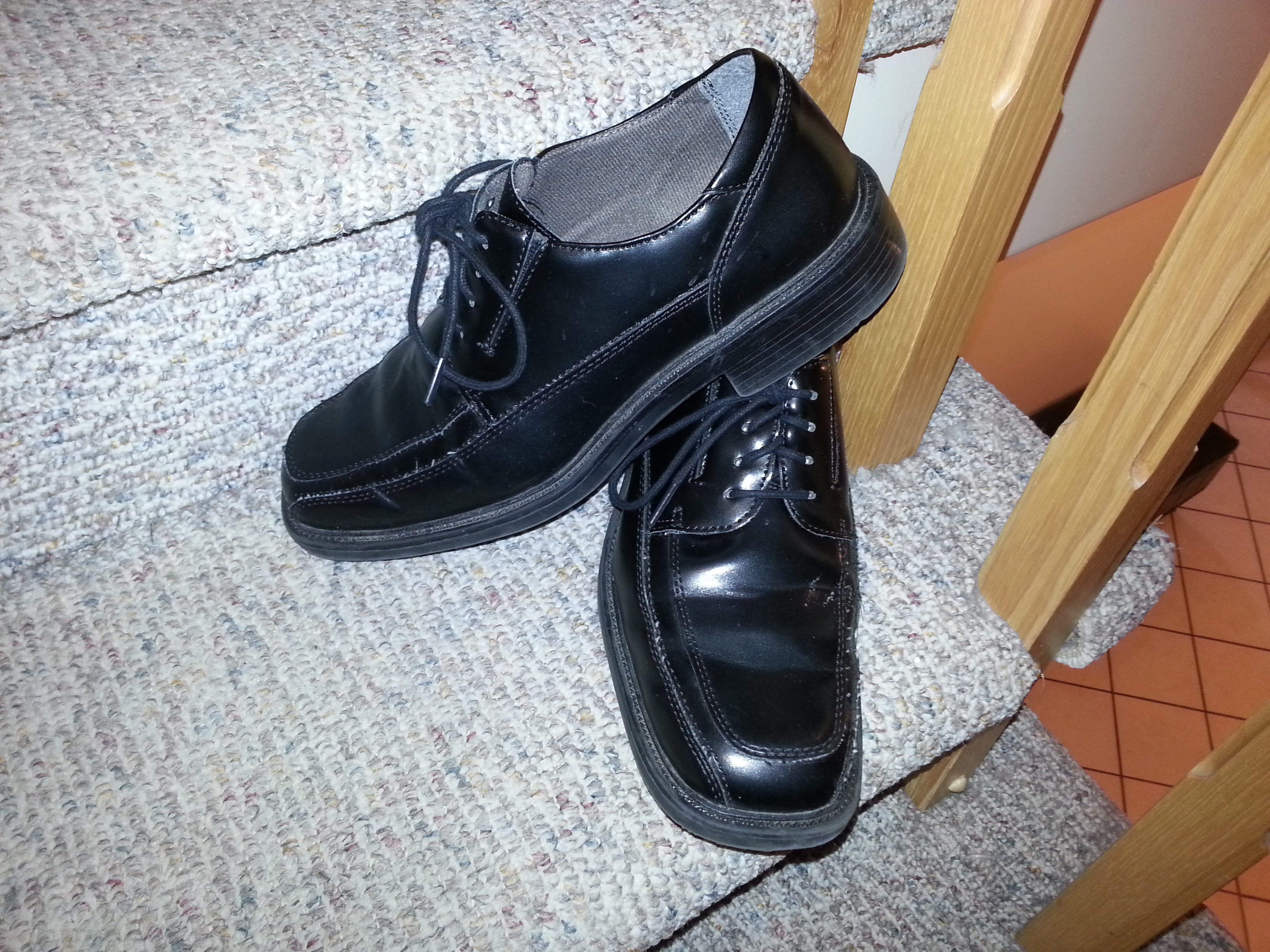
An empty, dusty pair of shoes has seen nearly every step of the life of the wearer: Sunday services, basketball games, dinners at home and away, airports, bedrooms, offices, funerals, weddings, and the resting place of all shoes, the closet.  Seeing my son’s dress shoes one Sunday afternoon prompted me to reflect on the boy he was and the man he was quickly becoming.  I ached and hoped for him as the days trudged on and the years flew by.

SHOES

Black dress shoes, slightly scuffed,
stand on the bedroom floor,
purposefully aligned:
size 4½.
The house is empty now;
so, the shoes.
Each once possessed
a boy—once eight—
who laughed and ran,
who sparred with wooden swords and sound effects,
who worked in the garden along side his dad.
Each once held a blond-haired, blue-eyed boy,
with a noticeable underbite,
who wanted only to please,
only to be favored
with a warm smile and a twinkling eye.
The house is silent now;
so, the shoes.
Each once held a boy.

Shoes 1: Dancing Daughter

20150307_144057 (crop)

My children leave their shoes everywhere: on the stairs, under the dinner table, in the hallway, shoved under the couch.  For a time one of our young daughters kept her shoes in the windowsill in our room.  Gazing at them one day, I imagined that they were watching me, remembering being walked in and danced in, and wondering where that little girl had gone.  The shoes became a metaphor for everything in her that delighted her daddy.  Now she is grown and gone, as are her little shoes.

SHOES

They watch me
from the glossy cream tile windowsill,
three pairs of little shoes:
one of tan suede with embroidered smiling sunflowers,
one of shining black plastic with velcro straps and pasted buckles,
one of weathered white leather, the bowed laces too long.
They stare at me, unwavering, and interrogate:
Where is the little girl that once danced and twirled and skipped in us?

Summer Corn

100_4742

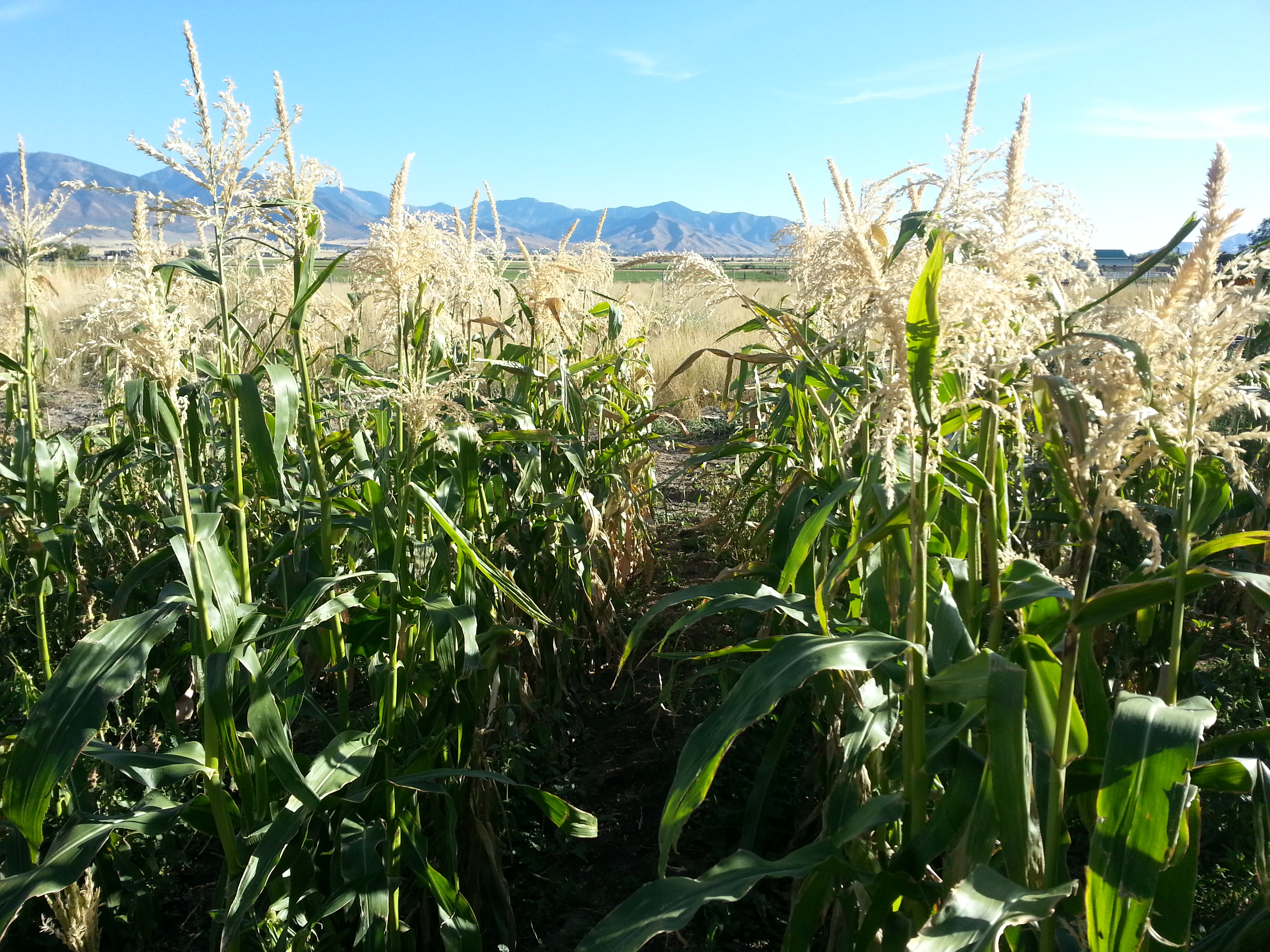
On many a summer evening, as the dry air began to cool, the children found me in the garden sitting on a picnic chair hidden between rows of corn stalks, munching on cobs of raw sweet corn.  That is as close to bliss as I’ve ever come.  One day I yielded to the impulse to lie on my back in the dirt between the corn rows, close my eyes, and just listen.  It took me years to put the experience into words, but I finally managed (hopefully) with “Summer Corn.”  As the poem seeks to share with an anonymous companion, so now I share with you.

20150919_172240

Summer Corn

Lie with me between the rows of summer corn.
Don’t speak, yet.
Listen:
to the raspy hum of bees gathering pollen from pregnant, golden tassels,
to the hoarse soft rubbing of coarse green leaves in the imperceptible breeze,
to the plinking rain of locust droppings upon the soft soil.
Listen:
to the neighbor’s angus wieners bemoaning their separation,
to the pretty chukars heckling from the chicken coop,
to the blood pulsing in your ears, coursing through your brain.
Don’t speak, now.
Reach to touch my hand.
Listen to the world
from within the rows of summer corn.

Summer Song

100_4743

I could hear them as I approached the north end of Rabbit Lane.  Ka-swishhh ka-swishhh ka-swishhh ka-swishhh–swika swika swika swika swika.  With the blue sky above, the fields and pastures all around, and the butterflies and bees winging in warm air, the sound of the ground-line sprinklers was true music.  A summer song.

Summer Song

Ground-line sprinklers in the green alfalfa hay
make such pretty music,
like the field song of crickets and katydids
on a hot, summer evening.
Cows’ tails swishing in the tall, dry grass,
and the breeze fluttering stiff poplar leaves,
add apropos percussion
to the sublimity and song.

Voices

old fashioned edited

Areas of my ramshackle chicken coop are filled and covered with odd-and-end antiques.  I don’t buy them; they just seem to find me, in ditches, from neighbors and friends, at thrift stores.  I love them for their shape, color, and design.  More deeply, they speak to me of people and times long faded.  My book Rabbit Lane: Memoir of a Country Road is partly about the voices of the peoples and cultures that have died, giving way to the young and new.  The young and the new, however, find much of their substance in the past, whether they care to acknowledge it or not.  When I want to feel the voices, I walk on Rabbit Lane, or retreat to roost in my coop.  (See Chapter 15: Of Foxes and Hens for a description of how my chicken coop was built.)  This poem is about my chicken coop antiques and the voices that still whisper.

VOICES

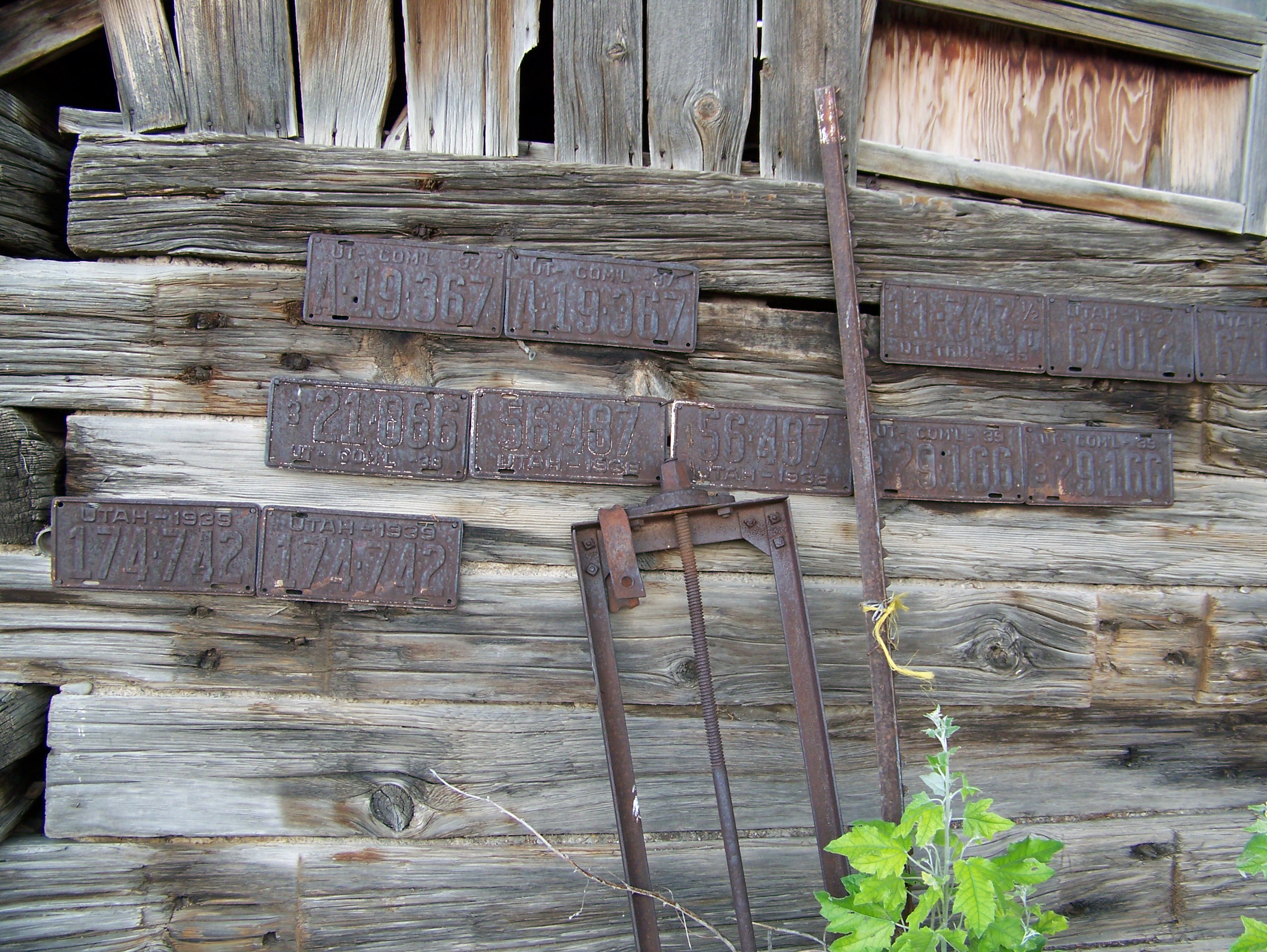
Reaper’s rusted scythe screwed to weathered wood.
Glass milk bottles glazed with powdered cobweb.

I have surrounded myself
with old things
that gather dust to cover rust.

Springy sheep shears that built bulky forearms.
Blue-green power line insulators.

I bring them inside walls
of bricks and unplaned planks
and windows of rainbow leaded glass
that once walled and windowed others’
houses and living rooms and bedrooms and kitchens,
and sit with them.

Buckboard step that lifted a long-dressed lady.
Sun-bleached yolk with cracking leather straps.
White skull of an ox.

Filigree voices whisper
the virtues of old ways,
without judgment of me
or my time or my ways,
in gratitude for not forgetting
altogether.  I prefer their voices
to the bickering blogs
and testy tweety texts
of now.  They tell me they were
practical get-it-done devices
with no axe to grind or soul to skewer.

Brown-iron horseshoes open upward
to catch the luck, nails bent and clinging.
Vestiges of sky-blue on the rickety bench
I sit upon.