Author Archives: Roger Baker-Utah

Unknown's avatar

About Roger Baker-Utah

By profession a 28-year municipal attorney, my real loves are story, poetry, music, and nature. My publications include Rabbit Lane: Memoir of a Country Road (non-fiction), and A Time and A Season (poetry). My most recent writing projects include Reflective Essays, and vignettes about aging and elder care my a new page, Courage at Twilight. And I cannot forget Amy's bearded dragon lizard, Sunshine. I hope you enjoy!

Chapter 41: Of Marriage, Lies, and Promises

20140322_184718

–Marriage is a long, clumsy dance, with frequent stepping on toes.–

I sat on the couch next to Angie while she held baby Hyrum over her shoulder.  Feeling romantic, I put my arm around her neck and shoulders.  My hand alighted upon a cold, wet spot of vomited breast-milk on the burp cloth draped over her shoulder.  She laughed at how “romantic” it was.  I joined in the chuckle after a momentary shiver of “ew.” Continue reading

Wind (Poem)

100_1866

Summer winds rip through the funnel of the Stockton bar and down across the Tooele valley floor where we live.  Or they fly in from the north across the Great Salt Lake.  Either way they tear at the siding and roof shingles and rattle the house, making sleep impossible.  Frightened children wander to the foot of our bed hoping to be welcomed up to sleep with us, happy even to sleep on the floor curled up in their quilts.  This poem describes how nothing frightens me like the wind.

WIND

Nothing frightens me like
Wind:
a million whispers rushing
through a million forest leaves,
coalescing into crescendo and
a horrifying howl,
a gusty, sibilant scream,
a prolonged and violent accusation.
Wind
rattles my home,
shakes my bed,
shivers my nerves.
Wind
disturbs my well-gelled image,
exposing me: unkempt and scattered.
Wind
bellows dirt into my eyes and nose and throat;
I squint and cough and curse.
Wind
batters and tears as
I fight for footing.
Wind
whips up the storms
that stir the deep and hidden things,
monsters that slink mysteriously about,
revealing themselves in
cursings and covetings, in
lashings and lustings.
Give me
driving Rain,
booming Thunder,
sizzling Lightning,
desiccating Sun:
I embrace them.
But keep away the
Wind.

100_1865

Chapter 40: Wind

20140322_182944

— I know what makes the wind. Trees!–
(Laura-3)

The big wind came in the night.  I awoke suddenly to hear the chicken coop’s sheets of corrugated metal roofing flapping and grinding as if under torture, while asphalt shingles beat on the roof over my head with the steady staccato of automatic weapons fire.  It felt like an earthquake, not mere air, shook my bed even as it shook the house.  Violent gusts of wind flung buckets of rain against my bedroom windows.  The house shuddered as each new gale struck, lashing it with rain.  Sleep was impossible. Continue reading

Chapter 39: Erda

20140312_180944

–Erda: the good earth.–

The weekend cowboy had neglected to secure the trailer gate as he drove down Church Road.  Arriving at Russell’s arena, he put his truck in park and hopped out, stopping stunned at the horror of what he saw behind.  Continue reading

Sorting Socks

20150510_200418

My wife and children and I crammed ourselves into a small hotel room in southern Utah where I was attending a legal conference for a few days.  At three months pregnant, my wife should not have been having contractions, but she was having contractions–bad ones.  Soon they became unbearable.  We knew what it was and headed for the rural hospital, leaving the children in the care of their oldest sibling.  This poem weaves together that horrific experience with others to address our attempts to deal with physical and emotional pain.

SORTING SOCKS

You bend with a wince and whisper that
the pain has come again,
the pain in your side above your left hip,
the pain that halts your thoughts and your speech and your steps,
makes you breathe in short and sharp.
That pain again.

The pain began after your last child’s birth,
two years and eleven months ago.
It comes and it goes with caprice,
making a shouting arms-flung-wide appearance,
interrupting your reading and your cooking and your puzzle-piece placing
until it steps off its box and fades into the conquered crowd for awhile.

She did the ultrasound from inside.
I’m glad I wasn’t there.
“It wasn’t so bad,” you said, but
I’m glad I wasn’t there.

The technician warned she could see a shadow,
a shadow on the organ that wombed seven children,
and several more that came early or deformed
or not at all, like when in that tourist town clinic
you screamed for pain killers; you,
steadfast as a hundred-year oak in a hurricane; you,
determined as a heifer facing a driving snow; you,
who pushed out seven babies with not a pill or a shot;
you begged and moaned on the gurney
for something to make the pain go away.
The nice doctor made you babble and moan, and said to me,
“Don’t worry, I’ve done this once before.”
He brought you the baby that wasn’t, in a bottle,
and you sobbed and shook when he took it away.

After a gray week of waiting they said
you were fine: no growth, no shadow of a growth.
No reason for that pain.
You called me and cried, you felt stupid:
all that for nothing. If you had to go through all that,
at least it could be something instead of nothing.
I offered to cheer you, and told you that,
with my Trasks on my desk, I discovered
I had on one blue sock and one black.
You mumbled, “. . . stupid. I sort the socks.”
I meant to be cheery
but made you feel dumb.
That pain again.
I didn’t care how the socks were sorted—they were clean.
Next day I wore one black sock and one blue,
but thought it best not to mention it.

Chapter 38: Black-Oil Pavement

100_4766

–Hold on by letting go.–

Toward the north end of Rabbit Lane, the ditch crosses the road through a 36-inch culvert pipe, where the water flows diagonally across Charley’s pasture in a shallow channel.  Charley was losing too much water through the informal channel and decided to install a new culvert a hundred yards or so further south.  He cut a new crossing in Rabbit Lane with his backhoe, dropped in a new section of black pipe, and backfilled around the pipe, restoring the road.  The water now flowed directly west in a deeper channel following a fence line. Continue reading

Birds

20150516_115752    20150515_155341

One of my greatest life’s pleasures is seeing birds in all their colors, hearing birds of all songs and calls.  Though my grapes never grew, I am happy that the birds have come to my arbor.  These Red-winged Blackbirds and House Finches are happily cracking black oil sunflower seeds in the simple feeder Caleb made as a Boy Scout for his Nature merit badge.  I wrote this poem about feeding the birds.

BIRDS

Bird feeders swing empty from nails pounded in the arbor.
After years of compost, fertilizer, water, and iron,
the vines still grow sickly and yellow, vines that grow no grapes.
I once dreamed of the arbor covered in a dense green,
with plump, hanging clusters of white and purple grapes.

Bird houses nailed to the arbor sit vacant,
the entrance holes too large or two small, too high or too low,
or too exposed to climbing cats,
vacant but for teaming yellow jackets that relish dark nooks.

The finches prefer the spiny blue spruce nearby.
Who knows where the sparrows and blackbirds live?
But they visit by the hundreds, chirping and chasing, cracking at shells.

I must fill the swinging feeders
for the little birds that descend to my empty arbor.

20140322_184804

Snipe

20150529_205730

As an older Boy Scout I thought that a Snipe was an imaginary creature which younger scouts were sent to hunt in the Snipe Hunt hoax.  As a younger Scout myself, I never found a Snipe, whatever a Snipe was.  It was not until I was about 35 year old that I learned that a snipe was a real creature, a fairly small water bird with long legs and beak.  It spends its time meandering the irrigation ditch along Rabbit Lane, rising with indignant “peeps” as I trudge by on my walks.  I also learned that the Snipe was responsible for the eerie, haunting reverberating sounds I heard hovering like a fog over the fields at night.  Harvey told me to look up high for the source of the sounds: a Snipe, a brown speck in the high sky, diving and allowing the air to thunder through its wings.  I wrote this poem about this mysterious little creature.

SNIPE

Summer sun settles on high mountain peaks,
igniting heavy cumulus over a burning great salt lake.
A ghostly echo begins to move,
invisible, taunting,
low over twilight’s deep green fields
of pasture grass and alfalfa hay;
a lonely laughter
approaching then receding,
soaring then plummeting,
tumbling, veering,
in sunset’s golden glint,
in late night’s moon-glow,
to vanish at the new sun’s rising—
seen only by those who know whence comes
the haunting, moving echo of the snipe in the evening sky.

Chapter 37: Of Caterpillars and Birds

20140322_184804

–The Goldfinch is a splash of brilliant yellow against the white snow and brown earth.–

The ant hill is the sign of a delicate and sophisticated society, mostly unseen for its largely underground order.  The individual ant is tiny but far from delicate.  It is both formidable worker and fearsome enemy, taking on burdens and adversaries many times its size.  Yet its civilization is vulnerable to destruction by the careless shuffle of a shoe.

* * *

Every year we find Tomato Hornworms on our tomato plants.  The surest worm signs are bare branches, stripped of leaves, and large, barrel-shaped droppings.  When I find a fat caterpillar, I always call the children over to see.  Because of their tomato-leaf-green color and subtle markings, the hornworms are very difficult to see, even though they grow fatter and longer than my index finger.  Tracking them by dung and denuded branch is the quickest way to find them.

My grandfather Wallace, a part-time tomato farmer, detested these pests and hunted them doggedly.  Not needing to make a living from my tomatoes, I can afford to not mind a bare twig here and there.  In my garden, a bare branch is an occasion for excitement: a hornworm hides nearby.  The hornworms, earning their name from the stiff pointed horn on their tail end, don’t eat the tomatoes.  The children think the “callerpittars” are amazing, otherworldly creatures.  John (3) bravely held one in his open palm for a moment, then suddenly exclaimed, “He loves me!”

Unlike many moth and butterfly larvae, tomato hornworms dig into the earth to pupate.  They lie in the ground all Winter long and emerge in the Spring as tomato hornworm Hawk Moths.  Finding a hornworm, I have the children help me to prepare a shoe box with about two inches of loose, moist soil in the bottom.  We feed the caterpillars tomato leaves until their swelling, green bodies disappear to become dark-brown pupae in the soil.  We leave the box outside in a sheltered spot (where the cats won’t dig).  Occasionally we drip a little water on the soil to keep it from totally drying out.  In Spring, with the appearance of the first flowers, we put the box where it can warm in the sunlight, and we watch every day for the hawk moth to emerge.  To escape its pupa shell, the moth emits a liquid substance that dissolves a hole in the shell.  The new moth crawls out and spreads its wet, wrinkled wings and vibrates them rapidly in the sun’s warmth.  The vibrations pump blood from the moth’s body into the wing veins, causing them to spread open and smooth.  The wings quickly dry.  If this procedure is not completed successfully, the moth will never fly.

Hawk moths flit from flower to flower, sometimes chasing each other.  Their wings beat so fast that you see only the vague blur of wings.  The large moths look much like small Hummingbirds, and also enjoy the name Hummingbird Moth.  They feed while flying, like Hummingbirds, uncoiling their long, tubular, hollow proboscis to suck nectar from flowers.  Tomato hornworm moths are particularly striking, with soft red bands on their underwings.

We found a Hummingbird Moth floating in the children’s little wading pool.  We thought for sure that it was dead.  Putting a hand under it and lifting it from the cold water, I found that it moved its legs weakly.  We placed it on the sidewalk in full sunlight.  After a few moments, its wings dried and began to vibrate, circulating blood through the wing veins and warming the body.  The moth was a miniature, self-contained solar heating unit.  It suddenly rose from the sidewalk and flew away in search of nourishment.  We felt a hint of happiness at helping to revivify the moth.

I once gave a large Tomato Hornworm larvae, and a box with soil, to my nephew, Thomas (3).  Months later, he reported to me sadly that his moth had hatched.  Asking him why he was unhappy, he said, “I like the moth, but I miss my caterpillar.”

* * *

The children came running to me with alarm in their faces.

“A hummingbird . . . in the garage!” they gasped, trying to catch their breath.  Following them, I found the double-door up, the garage entirely open, yet the Black-chinned Hummingbird confounded and trapped inside.  Apparently, its instincts drove the tiny bird to fly always upward.  It buzzed around the garage with its beak to the ceiling, and could not see the obvious way out.  It stopped frequently to rest on the highest object it could find.  The bird looked at us nervously as we paced around the garage, but still could not discern the way to freedom.

I could see the hummingbird’s fatigue and hoped that, if I could catch it, it would have sufficient strength to fly away to find food and not fall easy prey to an opportunist cat.  I grabbed the long-handled butterfly net that stood in the corner of the garage.  The net was new enough to have survived active children chasing chickens and cats with it.  I raised the net and cautiously approached the hummingbird.  It jumped from its perch and flew to another resting place.  I quickly followed.  After repeating this for several minutes, I began to get a sense of its evasion pattern, remembering my old butterfly catching days.  Anticipating its next jump, I swung the net ahead of the bird, flipped the net to prevent the bird’s escape, and brought the net quickly but carefully to the cement floor.

Reaching my hand into the net, I wrapped my fingers around the bird tightly enough to keep it from flying away but loosely enough to avoid injuring the delicate creature.  The terrified bird peeped weakly and tried to flutter its trapped wings.  Bringing the tiny bird out from the net, I held it up for the children to see.

“That’s so cool!” one child exclaimed.  Then they all began to clamor, “I want to hold it!  I want to hold it!”

“Go ahead, touch it,” I invited, instructing them how to carefully stroke the iridescent, green feathers and to touch the wiry, black feet.

We walked out of the garage into the Summer sun.  Each child placed their hands under mine, and on the count of three we released the little bird.  It hovered erratically for a moment, then, gathering its bearings and new strength, it flew off to the south.  The hummingbird stopped for a moment at the feeder hanging from the arbor, full of sweet liquid, then flew high into the sky until we could no longer see it.  The children (and I) were thrilled at having touched and seen up close such a tiny, wild, beautiful creature.  We felt happiness inside knowing that we had rescued it and set it free.

* * *

An injured Western Kingbird flopped wildly on the pavement of Church Road near the intersection of Rabbit Lane.  It must have been struck by a passing car.  As I bent to pick it up, it opened its black beak wide and squawked in terror in a desperate but feeble attempt to protect itself from what it could only perceive as the attack of a giant predator.  I carefully folded the injured wing and cradled the bird inside my jacket as I carried it home.

I awoke Laura (9) and invited her help to dress the bird’s injuries.  We swabbed the wounds with disinfecting peroxide.  The bird still pointed its open beak at our awkward fingers, but had stopped verbalizing its protests.  We then wrapped the bird so that both wings were gently pinned against its body.  When the bindings were removed, we reasoned, the strength in the mended wing would match the strength of the good wing.  The wings would gather new strength in concert.  Satisfied that this was the best chance the bird had to heal, we carried it outside to a small, protected pen and set it down upon its feet in the straw.  We hoped we would be able feed and water the bird long enough for it to recover.  We would have to catch bugs, since its diet did not include seeds.

Releasing the bound bird, it immediately fell over onto its face.  The bindings had rendered it completely helpless, like you or I would be if wrapped from head to toe with only our toes exposed for mobility.  It needed its wings for balance as well as for flight.  Discouraged, Laura and I removed all of our careful wrappings and did our best to splint the broken wing.  This less invasive treatment allowed the bird to stand and walk about, but the bandage wouldn’t stay on for the difficulty of attaching it to the wing feathers.

Despite our well-intentioned but fumbling efforts, the Kingbird died after three days.  Still, I was glad we had rescued the bird and attempted to nurse it back to health.  The thought of leaving the frightened bird in the roadway to be smashed by the next passing car saddened me.  Also, handling the small but proud creature, and working to heal it, had worked a change in us.  We felt a greater awe in nature’s wild things and a deeper grief at their loss.

* * *

An old Warbler nest hangs, swaying, from a low willow branch like a balled up, gray woolen sock.  It clings to the branch through the strongest of winds.  Gusts topping 80 miles per hour have neither torn it apart nor pulled it from its suspending branch.

100_1902

A lone Crow flies south behind a V-formation of Canada Geese.  It caws loudly despite a large parcel in its beak, defiant toward the fable of the fox and the crow.  This seems to be a smarter, more talented Crow.  Is this Crow lonely or content in its aloneness?  Do the geese communicate, or do they merely find comfort in their raucous propinquity?

A cock Ring-necked Pheasant croaks unseen in the tall grass, nervous at my approach.  When I stop to search with my eyes, he seems to suspect me of bad intentions, and flaps inelegantly into a tree, landing clumsily in its top branches, his feathers thrashing against leafy twigs.  On Rabbit Lane, feathers from a Pheasant hen lay scattered about, chestnut brown barred with beige.  Nearby sits a pile of spent red plastic shotgun shells with brass caps.

When the Robin appears, pulling at worms, I know that Spring is near.  Hummingbirds whir and zoom looking for early flowers.  They light in me a tiny spark of joy that has lain smoldering all Winter.

The Killdeer scream at me, draw me away from their spare nests that lie hidden in the rocks and gravel, flapping their striped wings as if injured.

In a chaotic, white cloud of winged, shrieking voices, whirling and churning around me, charging my senses, thousands of California Gulls descend upon a newly ploughed field next to Rabbit Lane.  I perceive no order in their loose, gregarious grouping, unlike flocks of geese following a leader in formation.  Milling around in search of upturned earthworms, the flock calls raucously, sounding like a thousand tuneless New Year’s Eve noisemakers.  Despite their awful sound, the birds are beautiful: sleek white feathers with gray tips, a red dot on each side of the creamy yellow beak.  In flight, their streamlined bodies and powerful wing beats propel them through the air, with their black webbed feet tucked into their downy white undersides.

At Boy Scout camp at Lake Seneca, New York, the older boys sent me to ask another troop for a left-handed smoke-shifter, then took me on a snipe hunt.  I found neither the device nor the creature.  Only after moving to Erda did I learn that the Snipe is a real creature, a water bird.  Smaller than an Avocet, the Snipe roams the ditches and wetlands, poking its beak into the mud for insects and small crayfish.  On many an evening I strained to discern the source of a soft, ghostly, reverberating sound moving over the farm fields.  But I never found it.  Explaining this mystery to Harvey one afternoon, he told me to look high into the sky whenever I heard the sound.  There, I would see a small dot, the ventriloquistic Snipe.  Flying high, the Snipe turns to dive and roll at breakneck speeds toward the ground.  Wind rushing through its slightly open wings creates the haunting sound.  The Snipe throws the sound somehow from those heights to hover foggily over the fields.  I hear it less and less as the years pass.

The water from Rabbit Lane’s ditch crosses Charley’s pasture diagonally, bogging at the northwest corner.  Twenty or more striped Wilson’s Phalaropes cackle harshly at me as I walk by, their long legs sunk in the bog and their long beaks searching for insects and invertebrates.

Birds twitter in the willow bushes by the irrigation ditch.  Birds sing from the Russian Olive trees.  Birds call and screech and chirp from bushes and branches, from the tops of cedar fence posts and in flight.  How does one describe the song of a bird?  My National Geographic field guide to North American birds assigns all manner of syllabic writing to bird songs and calls, none of which words approach a satisfactory description of the music.  In English, the Crow is synonymous with the “caw.”  These meager descriptions are like saying a note played on the piano sounds like plink, like a model-T horn shouts ba-OO-ga, like a baby’s cry is waaaa.  No euphemistic reduction does justice to the genuine song.  Thanks to Cornell University’s ornithology lab, new bird books allow the reader to push a button and hear each bird’s unique song, sometimes a humble peep, sometimes a glorious, frenetic melody.

The Western Kingbird’s song resembles chaotic, unpatterned electronica.  A Bullock’s Oriole splashes its ember-orange on a canvas of blue-green Russian Olive.

The Western Meadowlark sings frequently from the tops of cedar tree fence posts.  Even driving at 60 miles per hour with the window cracked, I can hear its piercing but beautifully melodious song.  Attempts to whistle the tune bog it terribly down and omit half the notes, each critical, resulting in a sometimes recognizable but always shabby imitation.

A Black-chinned Hummingbird perches on a strand of stiff barbed wire, surveying vast fields of grass.  Its black beak points as straight and as sharp as the silver barbs, yet the bird possesses a softness and a beauty incongruous with the hard wire stretched tight.

A Field Crescent flits from place to place on Rabbit Lane’s asphalt, flying a low dance around my walking feet, making momentary spots of brightness against the ubiquitous gray.

Lucille

100_1018

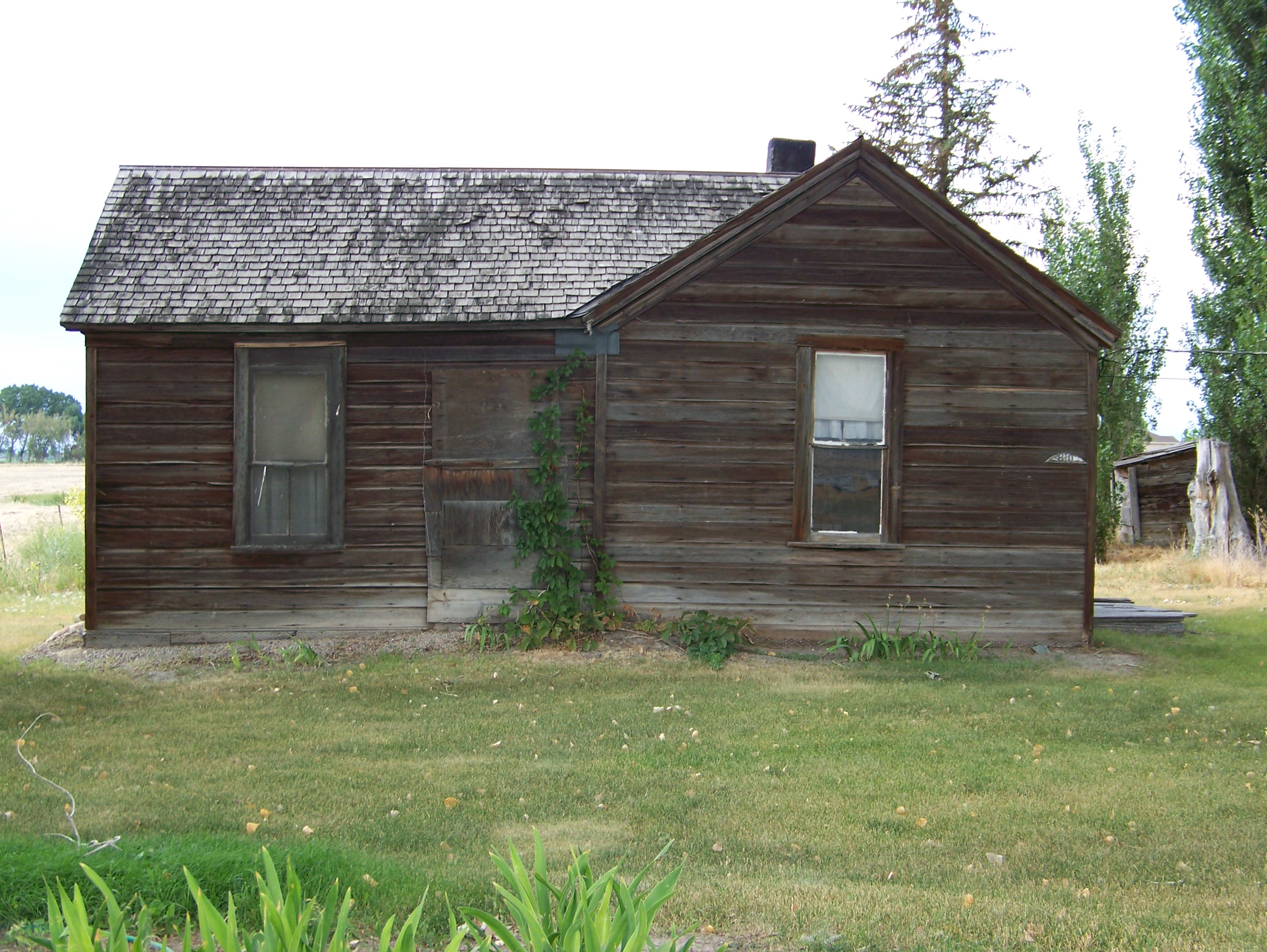
Fifteen years ago we fended off the rerouting of State Road 36.  It would have cut through farms, a pioneer cemetery, wetlands, and historic homes.  It was in this context that I met Lucille, an 80-year-old Erda native with an undeserved reputation for orneriness.  She was, in point of fact, mild and sweet.  This poem tells of my brief but lasting intersection with Lucille.  (See the post Chapter 36: Shirley and Lucille for more about Lucille and her sister Shirley.)

LUCILLLE

Her cottage sits small
in the big shade of three
old cottonwoods that now, late
Spring, release bushels of cottony
seeds that ride the breeze,
settling in wispy blanketings
on roads and lawns, houses, and fields.
churned up by cars
in swirling white clouds
that float off to land where they will:
on the ground again,
on trees and flowers,
on barbed wire prongs,
and in my hair.

In the shade
the cottage’s weathered clapboards
glower dark, as if soaked
in creosote, matching the nearby privy
planks. A lifetime of bundling
up, kicking through feet
of newly-fallen snow, to sit
on the icy privy seat.
Firewood leans tired
against the cottage clapboards,
log ends covered in dusty spider webs.
The blackened chimney top
misses Winter’s fires.
New grass covers
the privy pathway.

Lucille did have running water.
I saw the chipped enamel sink once,
from the porch,
when she answered the door.
Water dripped steadily
from the rusted faucet head.
Her bed huddled in the corner,
a thin mattress pressing rusty coils,
opposite the sink
in the two-room shack.

Lucille hunched in the doorway,
against the frame,
her unkempt hair streaked gray and white,
matted from undisturbed sleep.

“We’re having a meeting tonight, about
the road.
You’re welcome to come,
if you want.
I wanted you to know.”

“Are these your children?”
Her hairy chin-mole moved
a little as she smiled,
revealing toothless gums.

“Yes, ma’am, these are my children.”

“You have beautiful children,” she crooned.

“Thank you, ma’am,” I offered meekly.
“Thank you,” she softly offered in-kind,
withdrawing gingerly,
with my letter and maps,
into the shadows of her home.

The new state road, I feared,
would destroy her old cottage,
would tear through the oat fields
that her nephews farm.

I regret
never visiting Lucille before.
I regret
listening to the neighbors
about how ornery and crotchety she was,
about how curmudgeonly she was
toward visitors.

We knocked on her door
and asked if she wanted to
buy some Girl Scout cookies
and she practically chased us
away scolding, ‘I don’t want any
cookies’ they had said.

As it turns out,
Lucille was just as nice as could be,
simply old and tired and lonely.
Perhaps she wished that someone
would come visit her,
someone that didn’t want
anything,
someone that might say,
Hello, Lucille.
It’s a beautiful day.
And how are you getting along?
I regret
that I never saw Lucille again.
She died and was buried before I knew.

We held the community meeting about
the road,
at my house.
Most of the neighbors came
and talked for hours.

“The road
will desecrate
an unmarked pioneer cemetery,”
one neighbor asserted.
“My grand-daddy told me once
where he thought it was.”

“The environmental assessment for
the road
is totally inadequate and entirely suspect,”
a man declared.
“It fails to account for wetlands and species mitigation,
and fails to identify potential alternate routes.”

“This is Erda!”
bemoaned an old farmer’s wife.
“We’ve been cultivating our ground
for generations.
The road
will take that all away.”

“It’s no use bickerin’,”
cranked a cynical old rancher.
“The State will put
the road
where the State damn well wants to,
and there’s nothin’ we can do about it.”

The old ranchers and farmers,
and the new-comers, too,
designated me their voice,
to write to the Governor about
the road.
He had proclaimed, after all,
this year to be
the year of the Utah farmer.
The new road,
as planned, would decimate
some of Erda’s best farmland.

I received no gubernatorial reply—
but Lucille’s cottage still hides
in the cottonwood shadows.
Some kin replaced
the weathered wooden door
with a new door painted white,
like a gaudy, too-big bandage
on a fairly minor bruise.
Otherwise, the cottage withstands time.
The little No Trespassing sign clings
crookedly to the rusty field fence;
the house gate long since fell off.
Artesian water squirts feebly
from the rusty yellow sprinkler,
lying always in the same spot,
growing a circle of lush green
against the adjacent dormant brown.
In the front lawn,
the finned ’56 Ford station wagon
has kept patient watch for decades.
Weeds climb past its flat, cracked whitewalls
and faded blue-sky paint.
The rear window is shattered still;
the others remain intact.
And after every Spring thaw,
the crocuses, daffodils, and tulips
rise through the turf by the thousands,
waiving yellow, red, pink, and purple,
perfuming the air and
bringing life and color
to the empty cottage
where Lucille lived.

100_1014

Chapter 36: Shirley and Lucille

100_1023

–Please help us to not be mean.–
(Hannah-3 to God.)

Lucille, in her 80s, still lived in the tiny clapboard shack in which she had birthed her children, surrounded by her family’s historic grain fields, next to the small brick house in which she herself had been born.  The shack’s “facilities” were to be found in a one-seater outhouse 30 feet behind the house.  One very cold morning after an even colder night, a neighbor found her sprawled on the icy ground, her body frozen.  She must have slipped or tripped returning from the outhouse, was unable to get herself up from the ground, and slowly went to sleep as the overpowering cold seeped into her warm body.  Continue reading

On Tuesday

20150318_124628

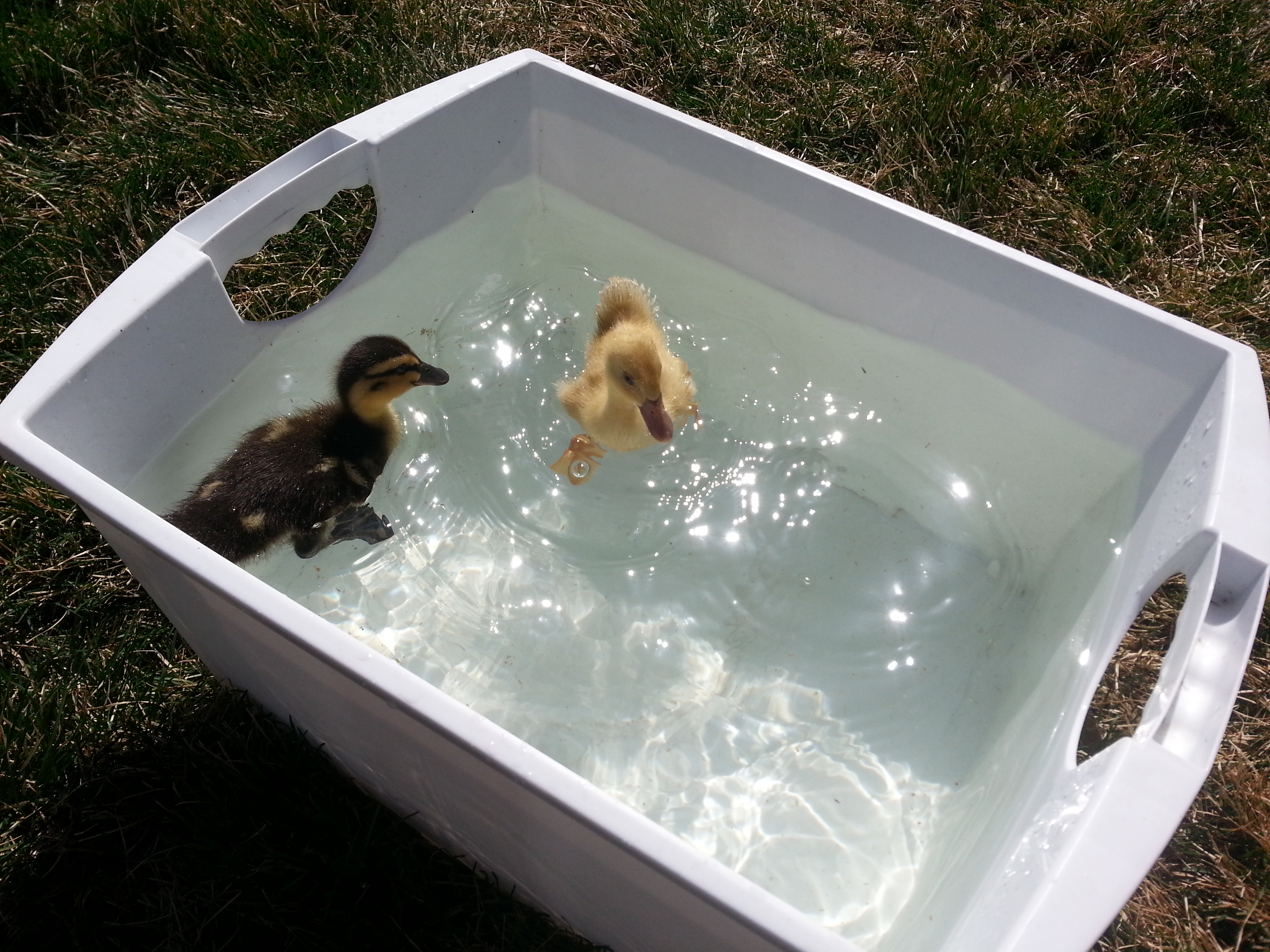
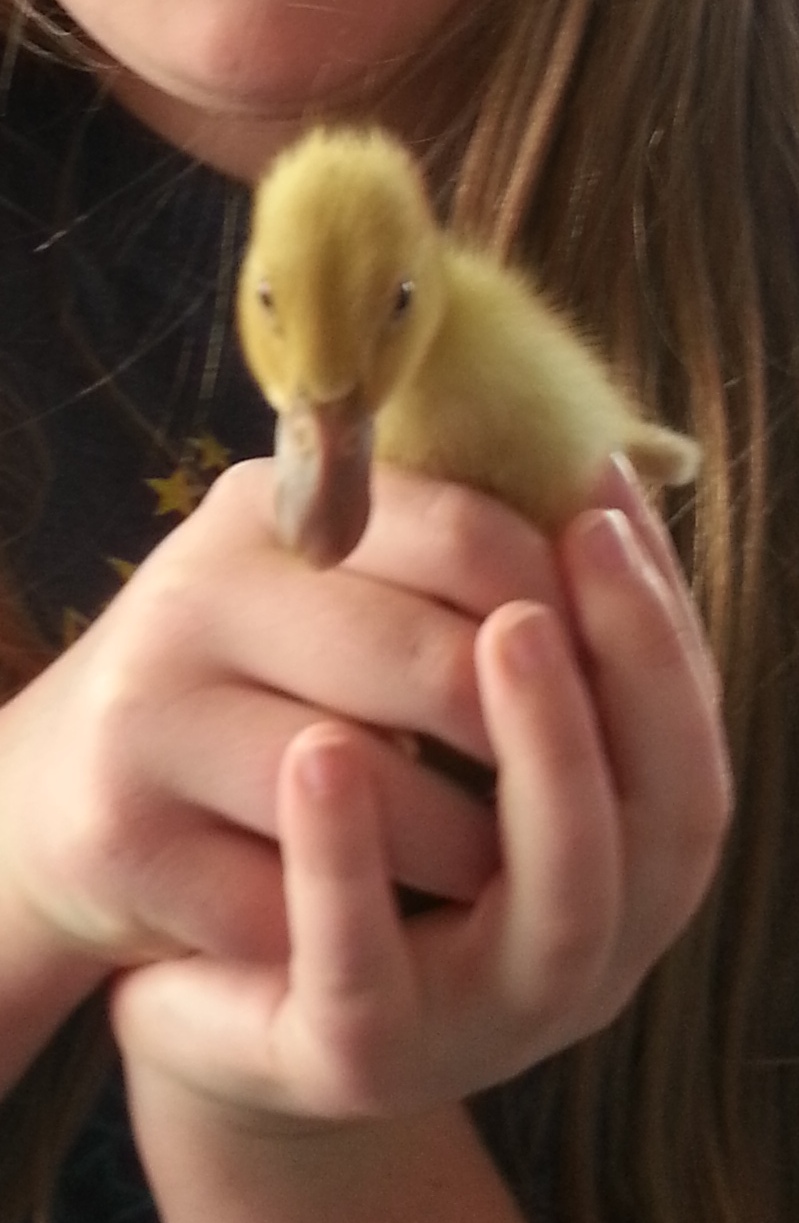
The arrival of new animal life brings incomparable happiness to children, both exhilaration and tenderness, as this poem portrays, written from the perspective of my then 8-year-old daughter Laura.  The ducklings pictured above are being raised as I post by Hannah, my youngest (with a little prodding from Dad).

ON TUESDAY

On Tuesday
Dad brought home the chicks:
six day-old ducklings
in a little cardboard box:
2 yellow-green,
2 green-brown, and
2 black.
And 2 turklings!
Dad says we’ll eat the turkeys
when they’re grown,
so I’m not allowed to name them.
But the ducklings are my very own.
Already I have named them:
Pumpernickle and Blackbeak,
Wingers and Fuzzles,
Nester and Dandylion.
They paddle prodigiously in the bathtub,
with water not too cold and not too warm.
They shiver and protest at
being wrapped up tightly in a towel.
They huddle under the heat lamp
and peep when I approach.
They bustle about my feet as
I sit in their pen on a cinderblock stool.
They don’t complain when I pluck them up,
but nestle comfortably up under my chin,
as if I were their mamma.
My ducklings are my friends.
They tell me they like me
with their peeping peep peeps.
They tell me they accept me
as they cuddle and becalm.
They tell me they’ll miss me
by the way they look at me
as I walk away for the night.
“Don’t worry, little ducks,” I tell them.
“I’ll be back
Tomorrow.”

Sprinkled with Rose Petals

20150510_204402

This poem is written from the perspective of my daughter, Laura (then 9), who lost her special duck Wingers to marauding dogs.  Other beloved creatures succumbed, like her kitten, Diamond.  Laura and I somberly buried each in the garden, resting them on beds of green grass, and covering them with loosely sprinkled rose petals.  Each funeral was tender, both sad and sweet.

SPRINKLED WITH ROSE PETALS

Wingers was my special duck.
I raised her from a day-old chick.
But she died when the neighbor’s dogs roved over
In the middle of the night.

Diamond was my precious kitten.
I watched her being born.
I stroked her fur when she lay sick.
I gently stroked her fur.

I found a yellow-breasted song bird:
Her feathers scattered on the grass;
Her wings stretched out;
Her beak upturned, eyes staring at the sky.

I laid them all in garden graves,
On beds of soft, cool grass,
Wrapped in soft, white cloth.
I sprinkled them with rose petals,
Red and pink and white.

Chapter 35: Canoe Trip

20150511_175239

–Being accomplishes more than doing.–

Our fast-paced society places so much emphasis on getting things done.  We often base our self-esteem on the completion of routine tasks.  I say to myself, “I had a good day: I got so much done.”  But what did I really accomplish?  Did I make a meaningful contribution to the world? Continue reading

Listen!

20150510_202901

At virtually any time of the day or night on Rabbit Lane, I can hear birds singing or cawing or screeching or chirping.  This evening, as the sun set over the Great Salt Lake, I heard Ravens, Red-winged Blackbirds, an American Kestrel, House Sparrows, and House Finches.  Opening our ears to the sounds of birds is enriching enough, but opening our hearts to their beauty is a meditation, an uplifting of the soul, a catharsis.  Do you listen to the birds singing around you?

LISTEN

Listen!

A robin! A robin!
Chirping on the branch.

A king bird! A king bird!
Whistling on the fence post.

A finch! A finch!
Twittering on the feeder.

A lark! A lark!
Singing in the meadow.

A dove! A dove!
Cooing in the morning.

A snipe! A snipe!
Tumbling through the evening sky.

An owl! An owl!
Screeching from the snag.

Can you hear them, too?

Here Come the Geese

20151010_111427 (crop-01)

Gaggles of Canada Geese flying in “V” formation are a quintessential site over Erda.  The geese fly from Canada to the Great Salt Lake shore land preserves and Fish Springs conservation area, continuing on south.  Some stay all winter long.  I am happy to see them at any time of the year.  And seeing them always comes with hearing them, for they all honk to each other as they fly.  This short poem celebrates these geese.  (See the post Chapter 34: Of Ducks and Geese for more on geese and Rabbit Lane.)

HERE COME THE GEESE

Here come the geese
in noisy, rough formation,
beaks pointed and necks outstretched
in determined expectation,
pushed on by shorter days and cooler nights,
singing their single purpose,
to flee the north for warmer climes.

100_1864

Away I Must Fly

100_1906

I thrill with each dash of color, each beating wing, and each trilling song from Rabbit Lane’s abundant bird life.  I admire the Red-tailed Hawk couple regarding me with nonchalance as they mind their nest.  Barn owls shooting from their tree holes at sunset fill me with mystery.  The tweets, chirps, and twitters of little songbirds never fail to lift my spirits.  At times I regard their cheerfulness and freedom with envy.  I wish I could flit and fly and sing like they do.  This little-boy yearning, coupled with man-sized troubles, inspired the following poem.

AWAY I MUST FLY

Away
I must fly,
sang the restless little bird,
Away
I must fly.
Away.
Only for a moment.
Only for a day.
Only for a season.
Then back I’ll fly,
to stay.
But today,
sang the restless little bird,
I must fly
Away.
Away.

Chapter 34: Of Ducks and Geese

20150317_160746 crop

–Away I must fly.–

From over a hundred yards away, I hear the enormous sound of what surely is a hundred geese cackling in loud cacophony.  I cannot see them in the pre-dawn darkness.  But in the growing light of my return walk, I make out the small gaggle of only a dozen very loud domesticated white geese as it mills under the venerable Cottonwood in Craig’s pasture, making its only-as-a-goose-can-do honking. Continue reading

A Spot of Soil

2013-05-28_19-03-37_332

With Spring come thoughts of gardening.  I would not say that gardening is blissful.  In fact, gardening is work.  But working with the soil and tending to plants bring rewards both within yourself and for your dinner table.  The earth is my garden.  I am both the seedling and gardener.  The soil is mine to work, to nourish, as I determine.  I will grow, with twists and knots and bends, to be sure, deformed here and there, but whole.  I will grow and become myself, as I was in the beginning, as I will be when I move on.  I am me, after all, and you are always you.  You will know me, by the fruit I bear.  And thus will I, too, know you.  (This poem relates to the post entitled Chapter 29: Gardens of the Rabbit Lane: Memoir page of this blog.)

A SPOT OF SOIL

A spot of soil:
a patch of earth:
a garden.
It draws me, pulls me in,
to bend and kneel,
to press my fingers into
the cool, moist, humic ground,
to lift out handfuls—
like a child
in a sandbox or the seashore surf—
and let it sift through slowly opening fingers.
I plunge again, retrieve, release.
Again.
And again.
I am overcome with wonderment.
From this seemingly inert substance
springs all leafy life,
that sustains animal life—
my life.
With sharp steel implements
I dig and hoe and till and rake,
work the soil,
giving it what strength I can with
compost and manure and care.
With innocent expectation
I place the seeds,
so small,
like lifeless gravelly grains,
in furrows and mounds,
wishing for immediate fulfillment,
but understanding that
hope requires patience, that
faith rests in an abiding stillness, that
I cannot force the course of life,
but only prepare the way,
bring together a few essential ingredients,
and allow life to live,
as it determines,
while I attempt to nourish.


Chapter 33: Shooting Stars

20140330_195219

–Be kind.  Always.–

Turning from north to south at the half-way point on my Rabbit Lane walk, I look southeast toward the mountain peaks still sleeping under the early-morning sky.  A star rises from behind a peak and continues in its slow journey toward zenith.

To the east of where I walk, strings of lights move slowly in the distance, white lights crawling forward, red lights inching away, two parallel lines of progress making their way to and from the offices and factories and stores of wares.  They send forth a collective engine-and-tire hum to hover over the fields with the fog.  A Union Pacific train’s whistle flows out gently over the valley from its tracks on Lake Bonneville’s fossil bank.  In the west, the lighthouse, itself out of sight, emits soft sweeping beams: white-green-white-green.  The beams penetrate Winter’s ice-crystal air to trace slow arcs across the gray belly of the sky, a ceiling above me, above Rabbit Lane.  The universe of stars—the heavens—are out there, somewhere farther above, hanging mostly hidden by clouds.  My fingers, toes, ears, and nose ache from the crystalline cold. Continue reading

My Child

100_4760

When small children are feeling hurt–on the inside or on the outside–they need to know that they can turn to someone for comfort, acceptance, and love.  They need to know that there is someone they can trust.  With our big-person problems, it can be challenging to find patience for a little child’s hurt.  But we must.  We must show our children that they can trust us and that we will be here for them when need us.  Otherwise they turn to others, often less trustworthy, or attempt to bury their pain deep inside, where it festers.  I wrote the poem “My Child” when Erin first went to a church nursery class at 18 months old.  I sat on the floor in the corner of room, keeping as low a profile as possible while she interacted with the other children and adults.  Erin came to me a time or two when her anxiety overcame her tranquility.  When she felt safe, she ventured off to play again.  She has now ventured off into the wide world, though she checks in once in awhile.

MY CHILD

Small child
clinging to me.
Soft cheek against my roughness,
delicate arms draped over my drooping shoulders.
Soothe your fears.
Let your tears fall and
wet my sleeve.
Let your love flow and
seep into my craggy heart.

Soon healed, your troubles forgotten,
release and turn away to play,
a smile on your small-child face,
a greater love in me.

Chapter 32: Snow Angel

20140312_181127

–Sweetness: that which induces a slow rolling of the tongue, a gentle closing of the eyes,
and an escape from the lips of a sensuous, sighing, “ahh.”–

Two young girls rode their bicycles down Church Road coming from the direction of Rabbit Lane.  Working in the yard, I looked up just as one bicycle, ridden by the younger girl, slid on a gravelly patch, and she fell face forward onto the asphalt.  I ran toward the crying girl, about six years old, with my concerned children following close behind.  Blood oozed from abrasions on the girl’s knee and elbow and cheek, and a tooth was broken. Continue reading

Songs of Spring

100_1054

How delightful are the sights and sounds of Spring.  Winter has lain upon the land so long that we have almost forgotten the sounds of warm-weather life.  With the melting snow, the greening grass, and the budding trees, we know that Spring is coming.  Best of all, the migrating birds are returning and singing their beautiful, unique songs.  The yellow-breasted Meadowlark is a favorite, with its complicated melody.  I hope you enjoy this poem about the songs of Spring.

Songs of Spring

Ice and snow begin
to yield to a longer sun.

Meadowlarks have returned
singing melodies:
sogladwearetobeback!
arentyouhappytohearus?
sogladwearetobesingingandsingingandback!

A hundred little blackbirds
in a bare tree top prattle,
zippatappazaptap!
zikkatikkazakkatat!

Robin hops quietly
in the greening grass,
stops to reconnoiter,
searching,
one eye for juicy brown earthworms,
the other for the cat.

Life Ethic

IMG_0003

To me, the butterfly is the most beautiful of all the earth’s creatures.  To me, the butterfly represents the height of beauty, virtue, and innocence.  Still, I once hunted butterflies.  I collected one of every species I could find.  I knew their names, colors, diets, habitats, and flight patterns.  (I never knew their Latin names.)  I collected them, as I understand now, in an attempt to grasp and bring into myself their beauty.  Of course, over time they disintegrated into dust.  Now I thrill to watch them fly.  Now I understand that I cannot find beauty by killing it and displaying it on a wall.  Beauty exists outside of us in creatures like butterflies, and arises from within us as we are kind and true.  This poem is about my son’s choice, from the beginning, to let the butterflies live.

Life Ethic

“I caught it! I caught it!” cried the boy
over the weed-whacker whir
after waving his pole-clamped pillowcase
across the sky.
Two wide eyes and a victory smile
raced to the porch where
two trembling hands
coaxed the delicate creature
through the screened bug-box door.
A bundle of awe,
the boy sat still and stared
at this astonishing bringing-together
of color and form,
at this life.
Father watched from the garden rows,
remembering his own youth’s hunt
for small, helpless prey,
whose fate was to rot
with a pin through the thorax,
and a tag with a name and a date.
But the magical fluttering rainbows had faded
fast behind their showcase.
“Nice catch, son,” father admired
with a pat and a ruffle.
“What are you going to do with him?”
“Well, I think I’ll watch him for a while, and
then I’ll let him go.”
Good boy, father sighed, as
a boy released his heart’s hold and
a captive rainbow again
graced the sky.

Chapter 31: Hurry Up and Play

IMG_8399

–I’m rich!–
(Caleb-3, upon finding two pennies.)

Though running late for work one morning, I felt a determination to take my walk on Rabbit Lane.  Quickening my pace on the crunching gravel, I found myself thinking: If I hurry, maybe I can finish my 30 minute walk in 20 minutes.  The absurdity of my thought struck me instantly.  I chuckled to myself, but could see that my thinking deserved further study.  I might as well have said, If I hurry, maybe I can short-change myselfContinue reading

Moonlight

100_1045

Caleb (2) and I, lying together on his bed, looked out the window at the moon, talking quietly.  He asked rather suddenly, “Would you write me a song about the moon?”  Well, I thought, I guess I could try.  The notes came quickly, and soon I was humming a tune to him with occasional key words rising up.  As the song came together, I imagined the moon and the stars being living entities giving their light to the universe under the direction of benevolent gods that also watch over sleeping children.  Here is the link to the sheet music for Caleb’s lullaby, Moonlight.  (See this lullaby referenced in the post Chapter 30: Good-Bye Harv in the Rabbit Lane: Memoir page of this blog.)

Baby Zebra

100_1024

I composed the little song “Baby Zebra” to help baby John go back to sleep, laying spread-eagle on my chest, when what he really wanted was for his mother to nurse him back to sleep.  He asked me for a “be-be ze-ba” song: Baby Zebra, and I obliged.  The animal “zebra” can be replaced by most any other land animal, including elephant, ostrich, horse (horsie), or pig (piggie).  Change a few words around and it can work for birds and dolphins, too.  I hope you enjoy the song.  Here is a link to the sheet music to Baby Zebra.  (This song is referenced in the post Chapter 30: Good-Bye Harv of the Rabbit Lane: Memoir page of this blog.)

Chapter 30: Good-Bye Harv

20140330_195948

–To change the world, we must first change ourselves.–

Harvey had to leave.  He lost everything he owned.  He moved out to the West Desert to live with a mountain man friend who lives in a teepee.  He said he would do fine, but worried about staying warm enough and getting enough to eat in the freezing winters.  I worried for him, too.  I did what I could to help Harvey, examining legal documents, but it was too late. Continue reading

Look Out the Window

IMG_8429

In a safe environment, a child can see the world with wonder.  He or she encounters the smiles and waves of a parent, loose garden soil between the toes, butterflies on flower blossoms, and being tucked into bed with a story or a lullaby.  I wrote the song “Look Out the Window” after one of my children called to me from an upstairs window while I worked in the garden.  She was happy to see me–“Hi Daddy!”–and raced down the stairs to join me in the garden.  Every child deserves to be safe and to be loved, and to see the world with wonder.  Here is the link to the sheet music to Look Out the Window.

Chapter 29: Gardens

2013-05-28_19-03-37_332

–Knock, knock.–
–Who’s there?–
–I got up.–
–I got up who?–
(Hyrum-4 with Dad)

Despite the bright blue sky and the sun’s brilliance dazzling from millions of ice crystals in the fresh skiff of snow, I felt crushed by life’s burdens as I trudged alone along Rabbit Lane.  The burdens of being a husband and provider and father to seven children.  The burdens of being legal counsel to a busy, growing city.  The burdens of maintaining a home, of participating in my church, and of being scoutmaster to a local boy scout troop.  The burdens of being human.  While the sky above me opened wide to space, these responsibilities bore down heavily upon my heart.  They seemed to darken my very sky. Continue reading

Silenced

20130724_164623

I found myself the last person in the courtroom, still sitting at counsel table after a rogue jury delivered a $22 million verdict against my client in a $7 million dollar case.  How could this have happened?  It was so wrong.  In this the greatest legal system in the world, truth had not prevailed.  This moment of courtroom despair triggered the still poignant memory of when, 15 years earlier, another jury acquitted the man who had murdered his wife and three children.  I thought of their voices, silenced and unable to tell their story, to speak the truth, to persuade the jury.   I wrote this poem alone in the courtroom to honor their voices and their lives.  It was my 45th birthday.

(This poem relates to the blog post Chapter 28: Away with Murder also found on the Rabbit Lane: Memoir page of this blog.)

SILENCED

She lies, undressed,
on the shining steel table,
her voice mute as the metal,
white skin washed clean of red
blood that once ran warm.
Bloodless wounds tell her story
to the inquiring examiner. But
the story of the living spoke
louder than the tale of the dead,
and the jury acquitted her killer,
the man who once said “I do”
and slipped a gold band on her finger.

Her white flesh lies cold
on the steel, her black hair flowing
over the edge toward the floor,
hair that hides where
the hammer crushed her skull.
Her screams have fled
into walls, into paint and plaster.
Her sobs have dripped, drowning,
into shag, soaked
into plywood and joists.
They would tell her sad story
to any who would listen, but
the living spoke louder than the dead.

Chapter 28: Away with Murder

20130724_164623

–People who destroy are people who have not created.–

Rabbit Lane is a peaceful place.  The water trickling through Watercress in the deep ditch, the exotic purple and yellow blossoms of the Bitter Nightshade vines, the gently waving and rustling fields of ripe oats, the deep green of the ripe alfalfa.  The solitude.  After a few minutes on Rabbit Lane, all of this works together to settle my turbulent mind.  Usually.

On occasion, though, troubling memories from a piquant past press themselves upon the serenity of the present.  Images of a mother and her three children sometimes appear, without apparent cause, from many years earlier.  I have tried to forget these images, but cannot.  I also cannot forget how a guilty man got away with murder. Continue reading

Chapter 27: Sparring Skunks

100_1885

–I heard the sun and waked up!–
(Caleb-3)

The Stansbury mountain range is a succession of high peaks, some above 10,000 feet, each a lighter hue of gray proportionate to its distance.  In the moments before sunrise, the clouds and sky form a sea of swirling scarlet, orange, red, and pink.  The western face of the Oquirrh range once boasted thick pine forests.  But over-harvesting, together with decades of settling particulate pollution from the now-defunct Anaconda smelter, denuded the mountain slopes of their forests.  They now show mostly fault-fractured bedrock.  With the smelter gone, the trees are slowly returning, starting from deep within the canyons and creeping back onto the slopes. Continue reading

Dog (Poem)

100_1040

From 100 yards away the neighbor’s dog howls in the night.  I don’t know how they sleep–I sure am not sleeping.  For extended periods he barks, a deep bellowing boom.  Though I am enjoying the cool night air of early Summer, I have to shut the windows and shove orange plugs into my ears to block out the noise.  It would be silly (I find myself thinking) to call Animal Control–this is the country, after all.  And I am too fearful to confront them.  After months and months, the dog moved away.  I’m sure he was a dutiful dog, but it was not a tearful parting.

DOG

The neighbor’s dog—
an underachieving, if dramatic,
German Shepherd—
has a great deal to say
most nights, at 01:13, or 04:22, or 05:41. Continue reading

Chapter 26: Of Dogs and Cursing

20140330_180703

–Kind words counter the world’s cruelties.–

Quiet is a rare luxury at our house.  If not the cows or dogs or pumps, I can usually count on my children to fill my quiet moments.  But not all noise is unpleasant.

One day Hyrum (2) said sternly to his big brother Brian (14), “Brian, don’t keel anyone.  OK?  Because it’s dangerous.”

He was dead serious, as if in grown-up conversation.  It was apparent that the word kill had only a vague meaning to him.  It didn’t equate to the loss of life, but related more closely to roughhousing or child’s play, as in “Bang!  Bang!  You’re dead!”  Continue reading

Shoes 2: Son on Sunday

20150311_211535

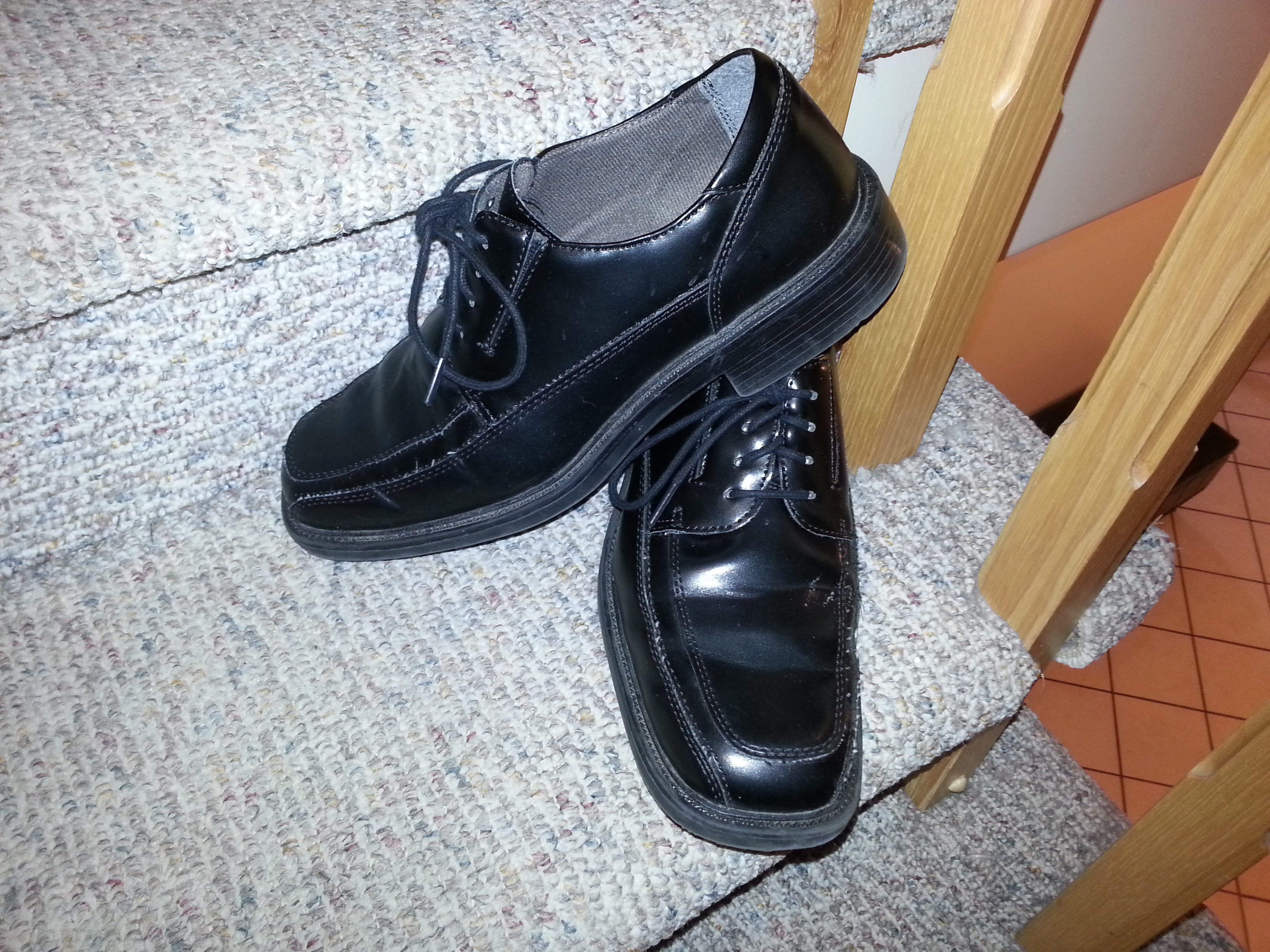
An empty, dusty pair of shoes has seen nearly every step of the life of the wearer: Sunday services, basketball games, dinners at home and away, airports, bedrooms, offices, funerals, weddings, and the resting place of all shoes, the closet.  Seeing my son’s dress shoes one Sunday afternoon prompted me to reflect on the boy he was and the man he was quickly becoming.  I ached and hoped for him as the days trudged on and the years flew by.

SHOES

Black dress shoes, slightly scuffed,
stand on the bedroom floor,
purposefully aligned:
size 4½.
The house is empty now;
so, the shoes.
Each once possessed
a boy—once eight—
who laughed and ran,
who sparred with wooden swords and sound effects,
who worked in the garden along side his dad.
Each once held a blond-haired, blue-eyed boy,
with a noticeable underbite,
who wanted only to please,
only to be favored
with a warm smile and a twinkling eye.
The house is silent now;
so, the shoes.
Each once held a boy.

Shoes 1: Dancing Daughter

20150307_144057 (crop)

My children leave their shoes everywhere: on the stairs, under the dinner table, in the hallway, shoved under the couch.  For a time one of our young daughters kept her shoes in the windowsill in our room.  Gazing at them one day, I imagined that they were watching me, remembering being walked in and danced in, and wondering where that little girl had gone.  The shoes became a metaphor for everything in her that delighted her daddy.  Now she is grown and gone, as are her little shoes.

SHOES

They watch me
from the glossy cream tile windowsill,
three pairs of little shoes:
one of tan suede with embroidered smiling sunflowers,
one of shining black plastic with velcro straps and pasted buckles,
one of weathered white leather, the bowed laces too long.
They stare at me, unwavering, and interrogate:
Where is the little girl that once danced and twirled and skipped in us?

Chapter 25: Shining Shoes

20140406_220428

–Knock, knock.–
–Who’s there?–
–Shampoo.–
–Shampoo who?–
–Made you look! Made you look! Made you eat your underwear!–
(Caleb-3 to Dad)

As a four-year-old, Caleb loved cowboy boots, though he didn’t have any of his own.  Somewhere he found some hand-me-down boots, one brown and one black, different sizes, both for the left foot.  He wore them everywhere, without socks, running in shorts and a t-shirt around the yard, whooping and hollering, digging in the garden, shooting his stick rifle, tromping in the pig pen.

My dress shoes hold their shine quite well for several months.  But eventually the time comes when I need to polish them.  Shining my shoes quickly becomes a family affair.  It seems that the moment I open the can of polish, the strong smell runs throughout the house, as if summoning the children, and they in turn come running, each with at least one pair of their own shoes.  They watch me patiently for a minute or two.

“Can I help you shine your shoes, Dad?” they each ask.  Next, “will you help me shine my shoes?”  Then, “Can I shine my own shoes?”

In the 1970s, before I can remember him doing it, my father made himself a wooden shoeshine box.  He made one for me at the same time, with my initials carved artistically in one end: REB.  The ends of the shoe box are shaped like broad spades; the sides slant inward and down to form a narrow bottom.  The wide lid is hinged, and a cross bar connects the tops of the two spade handles.  The box is stained a rich walnut.  Inside the box sit various cans of polish: dark brown, light brown, tan, cordovan, ox blood, white, and two cans of black.  The black polish gets used up the quickest, because I use it on every shoe to dress up the sole and heel edges.  Mixed in with the cans are various old gym socks and toothbrushes.  My favorite item is the wood-handled horse-hair brush made in Israel.  Over more than 30 years of polishing shoes, the horse hairs have slowly shortened to about half their original length.  But the hairs remain just soft enough and just course enough to give a perfect shine.

I formerly used the old gym socks, wrapped around my fingers, to apply the polish.  But I grew tired of dark stains on my fingertips where the polish seeped through the socks.  Now I use old toothbrushes to wipe the thick polish out of the can and work it into the leather.  When I’m done, the toothbrushes go into the socks to keep the box clean.  The polish dries and flakes inside the toothbrush bristles, so I vigorously work the bristles back and forth against the inside of the sock, both when putting the brushes away and when retrieving them for the next job, so that I don’t scatter specks of dried polish that stain my clothing and the carpet the next time I pull them out to polish.

I usually have enough patience to polish three pairs of shoes.  The number reduces to two if the children are clamoring to help.  Allowing a child to participate in shining shoes complicates the process significantly.  I place the can carefully on a rag so that the helping child doesn’t smear polish on the carpet or furniture.  I make sure he doesn’t scrape too much polish onto the brush to prevent globs from falling onto the carpet.  I see that she doesn’t fill the crevices and holes in the leather with polish, like putty.  I double check that every bit of leather has a film of fresh polish.  I let them help with the polish for a little while.  What works best is for me to apply the polish and to let them shine the shoes with the horse-hair brush.  Nothing can go wrong with shining.  Shining works best by placing one hand inside the shoe and passing the brush over the shoe with even, swinging strokes with the brush hand.  The in-shoe hand turns and angles the shoe to allow the brush to shine every part of the shoe.  I show the children how, then hand them the shoe and the brush.  Their little hands don’t fill the shoe like mine, making it harder to hold the shoe steady in the face of the swinging brush.  But when their hands grow, they will know how to hold the shoe steady for the best shine.  Their feet will grow, too, and their hearts and their minds, and will fill larger shoes than mine.

Many times after church and our mid-day meal we take a family walk on Rabbit Lane.  I sometimes forget (or am too lazy) to change out of my newly-polished shoes.  Back from our walk, I see that fine dust from the dirt road has settled upon my shoes, covering the polish.  A few strokes with the horse-hair brush usually restore the shine.

I find myself shining my shoes less and less over time.  As my shoes age, I feel less motivated to keep them looking nice.  I wear them scuffed, unpolished, and old.  Some lawyers I work with never seem to shine their shoes.  If the polish gets significantly scuffed, they simply buy new shoes.  I wear mine until they are worn out, polishing them (or not) for years.  Even an old shoe assumes new respectability with a fresh coat of polish.

I like the pungent odor of shoe polish: it reminds me of my childhood home and the aroma of my father’s regular shoe polishing.  He kept his wooden shoe shine box in his walk-in closet, with his initials carved in the side: ONB.  But not everyone enjoys the strong odor.  I fret that if I polish my shoes in my closet, it will smell up my wife’s clothing.  Maybe I should polish my shoes on the porch, or in the tool shed, or in the chicken coop, where the smell won’t bother anyone.

Remembering the Day (Lullaby)

IMG_9987

As Angie helped each child wind down to go to sleep over the years, she would sit on the side of their bed and ask, “What was your favorite part of the day?”  They would talk about watching a Monarch butterfly emerge from its chrysalis, a picnic at the park, rollerskating, or a trip to see grandparents.  That question seemed the perfect opening line of a lullaby.  Walking on Rabbit Lane, I played around with a tune, and settled on beginning with my favorite interval, the octave (or perfect 8th).  The melody and lyrics came as the weeks and months clocked by.  This song celebrates all of the end-of-day conversations between parents and children about their special moments together.  Sing it alone to your child or as a parent-child dialog, with you and your child taking turns singing portions of the song to each other as indicated in the score found at the link below.  (For more on this song, see the post Chapter 24: Remembering the Day of the Rabbit Lane: Memoir page of this blog.)

Remembering the Day

Chapter 24: Remembering the Day

20140330_195219

What I like best is being with you.

The hour was 10 p.m., long after the children’s bed times.  I had come home late from city council meeting, and had settled into the sofa with cookies and cold milk, Grandma Lucille’s crocheted afghan over my lap, and a book of Sherlock Holmes mysteries in my hand.  Finally, it was time for a little quiet enjoyment. Continue reading

Summer Night (Lullaby)

20141209_072807

Nature’s creatures make beautiful music, especially on a Summer night, whether it be crickets or katydids, Canada Geese in formation or a clucking hen settled on her eggs, the wind in the leaves or the rain tapping on the rooftop.  And lullabies comfort the sleepless, fretting child.  My Hannah turns nine years old today.  In honor of her birthday, I am posting her favorite of all my songs (so far), called “Summer Night,” which celebrates nature’s music in a lullaby.  Sing it to your children or grandchildren, or just hum it to yourself, and let me know how you like it.  Here is the link.

Summer Night

Summer Corn

100_4742

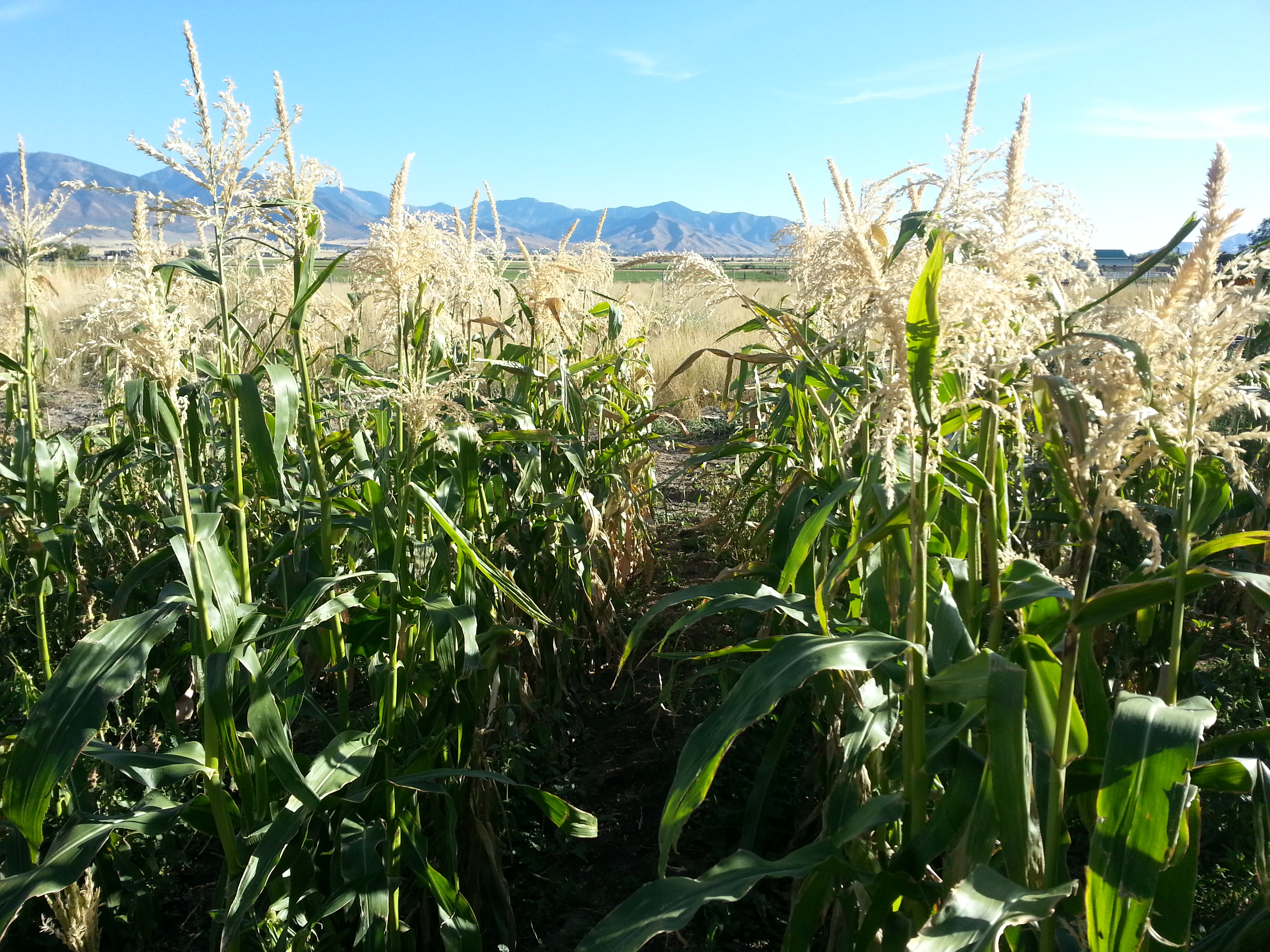
On many a summer evening, as the dry air began to cool, the children found me in the garden sitting on a picnic chair hidden between rows of corn stalks, munching on cobs of raw sweet corn.  That is as close to bliss as I’ve ever come.  One day I yielded to the impulse to lie on my back in the dirt between the corn rows, close my eyes, and just listen.  It took me years to put the experience into words, but I finally managed (hopefully) with “Summer Corn.”  As the poem seeks to share with an anonymous companion, so now I share with you.

20150919_172240

Summer Corn

Lie with me between the rows of summer corn.
Don’t speak, yet.
Listen:
to the raspy hum of bees gathering pollen from pregnant, golden tassels,
to the hoarse soft rubbing of coarse green leaves in the imperceptible breeze,
to the plinking rain of locust droppings upon the soft soil.
Listen:
to the neighbor’s angus wieners bemoaning their separation,
to the pretty chukars heckling from the chicken coop,
to the blood pulsing in your ears, coursing through your brain.
Don’t speak, now.
Reach to touch my hand.
Listen to the world
from within the rows of summer corn.

Summer Song

100_4743

I could hear them as I approached the north end of Rabbit Lane.  Ka-swishhh ka-swishhh ka-swishhh ka-swishhh–swika swika swika swika swika.  With the blue sky above, the fields and pastures all around, and the butterflies and bees winging in warm air, the sound of the ground-line sprinklers was true music.  A summer song.

Summer Song

Ground-line sprinklers in the green alfalfa hay
make such pretty music,
like the field song of crickets and katydids
on a hot, summer evening.
Cows’ tails swishing in the tall, dry grass,
and the breeze fluttering stiff poplar leaves,
add apropos percussion
to the sublimity and song.

Chapter 23: The Day’s Song

100_1047

–The music is everything.  Can we hear it?–

Erda and Rabbit Lane lie in the low lands of the Tooele valley.  Still, we are high enough to see the silvery ribbon of the Great Salt Lake lining the horizon.  The northerly breeze often brings with it the smell of salt in the air as it brushes over the enormous lake, transporting me through the darkness to days of my youth spent beach combing and sailing near New Jersey’s Sandy Hook, looking across the bay to the iconic twin towers that exist now only in memory and in mourning, and in old photographs. Continue reading

Chapter 22: Reza

100_1027

–Good men and good women make great differences in the world.–

My Persian friend, Reza, joins my family on occasion for Sunday dinner.  Over several Sunday visits, he told us parts of his life story, including how he left his homeland of Iran.  Reza had been a wealthy industrialist in Iran: young, educated, and ambitious, with millions of dollars invested in an industrial complex fabricating modular housing units.  Then the Ayatollahs overthrew the Shah and began their reign.  The new regime did not at first seem to pose a threat to Reza or his industrial operations.  Soon, however, they began to appropriate the proceeds of his operations while at the same time demanding that he continue to incur all his operating costs. Continue reading

Voices

old fashioned edited

Areas of my ramshackle chicken coop are filled and covered with odd-and-end antiques.  I don’t buy them; they just seem to find me, in ditches, from neighbors and friends, at thrift stores.  I love them for their shape, color, and design.  More deeply, they speak to me of people and times long faded.  My book Rabbit Lane: Memoir of a Country Road is partly about the voices of the peoples and cultures that have died, giving way to the young and new.  The young and the new, however, find much of their substance in the past, whether they care to acknowledge it or not.  When I want to feel the voices, I walk on Rabbit Lane, or retreat to roost in my coop.  (See Chapter 15: Of Foxes and Hens for a description of how my chicken coop was built.)  This poem is about my chicken coop antiques and the voices that still whisper.

VOICES

Reaper’s rusted scythe screwed to weathered wood.
Glass milk bottles glazed with powdered cobweb.

I have surrounded myself
with old things
that gather dust to cover rust.

Springy sheep shears that built bulky forearms.
Blue-green power line insulators.

I bring them inside walls
of bricks and unplaned planks
and windows of rainbow leaded glass
that once walled and windowed others’
houses and living rooms and bedrooms and kitchens,
and sit with them.

Buckboard step that lifted a long-dressed lady.
Sun-bleached yolk with cracking leather straps.
White skull of an ox.

Filigree voices whisper
the virtues of old ways,
without judgment of me
or my time or my ways,
in gratitude for not forgetting
altogether.  I prefer their voices
to the bickering blogs
and testy tweety texts
of now.  They tell me they were
practical get-it-done devices
with no axe to grind or soul to skewer.

Brown-iron horseshoes open upward
to catch the luck, nails bent and clinging.
Vestiges of sky-blue on the rickety bench
I sit upon.

Winter

100_1890

Come February I truly begin to tire of Winter’s weary landscape.  Everything is brown.  I want the trees and roses to bud.  I want the bulb flowers to rise.  I want the peach and apricot trees to blossom.  I want to feel the renewal of life.

WINTER

Winter has lain
long and heavy
on the landscape,
pressing pliable grass blades,
weighing down supple apply boughs.
Too long
has the sky hung
gray overhead.

Chapter 21: Cricket Chorus

100_4967

Hyrum, you’re my little bug.

Under low, heavy clouds and a light, misty rain, the lighthouse beam shines in a shaft for miles as it slowly sweeps the sky. Continue reading

Open Eyes

100_4739

The more I walk on Rabbit Lane, the more I notice the nuanced environment around me, in the hay fields, the trees, the flowers, the birds, the cows.  And with each step I ponder the meaning of things, of what I see and feel.  I begin to understand more about the worlds both without and within myself.

OPEN EYES

when
we open our eyes
the places we walk
will show us
wonderful things
but also hard
heart-wrenching things
beauty and sorrow
sometimes each alone
often all together

The Calf

100_1078

Snow fell lightly in the early-morning darkness as I walked on Rabbit Lane.  Just past Ron’s house, I found a newborn calf lying in the shallow swale beneath the barbed wire fence.  Flakes of snow flecked its black fur.  This newborn had somehow lost its mother and was dying in the cold of the ditch.  I groaned as I hefted the heavy calf and staggered to Ron’s back door.  Ron soon came, taking the calf into his warm house with a “thank you.”  The experiencing of finding and rescuing the newborn calf moved me deeply, and I wrote this poem.

THE CALF

The calf
lay beneath the rusted barbed wire fence
by the side of Rabbit Lane:
a lonely, black puddle in Winter’s whiteness,
salted with slowly settling snowflakes.
Death’s sadness reached into me,
a dull ache in my empty stomach.
It drew me to the calf.
I came near and reached out
to touch the black fur.
The small, black head lifted weakly,
turning big, moist eyes
to meet mine,
speaking to me
a simple, sad story:
of wandering from its mamma,
of slipping between the loose, rusty strands,
of learning it was lost,
of growing cold and weary,
of knowing fear,
of slumping down to die.
I strained to heave the newborn from the snow,
and trudged with my burden to
the dilapidated farmhouse.
I knocked shyly, a stranger,
whispered at the back door,
transferred my quivering bundle
to the thankful farmer,
to the warmth of a coal fire and a tender expression,
to warm bottled milk,
to a promise:
to find a mother,
to restore the proper order of things.