Tag Archives: Memoir

Courage at Twilight: Echoes of Anguish

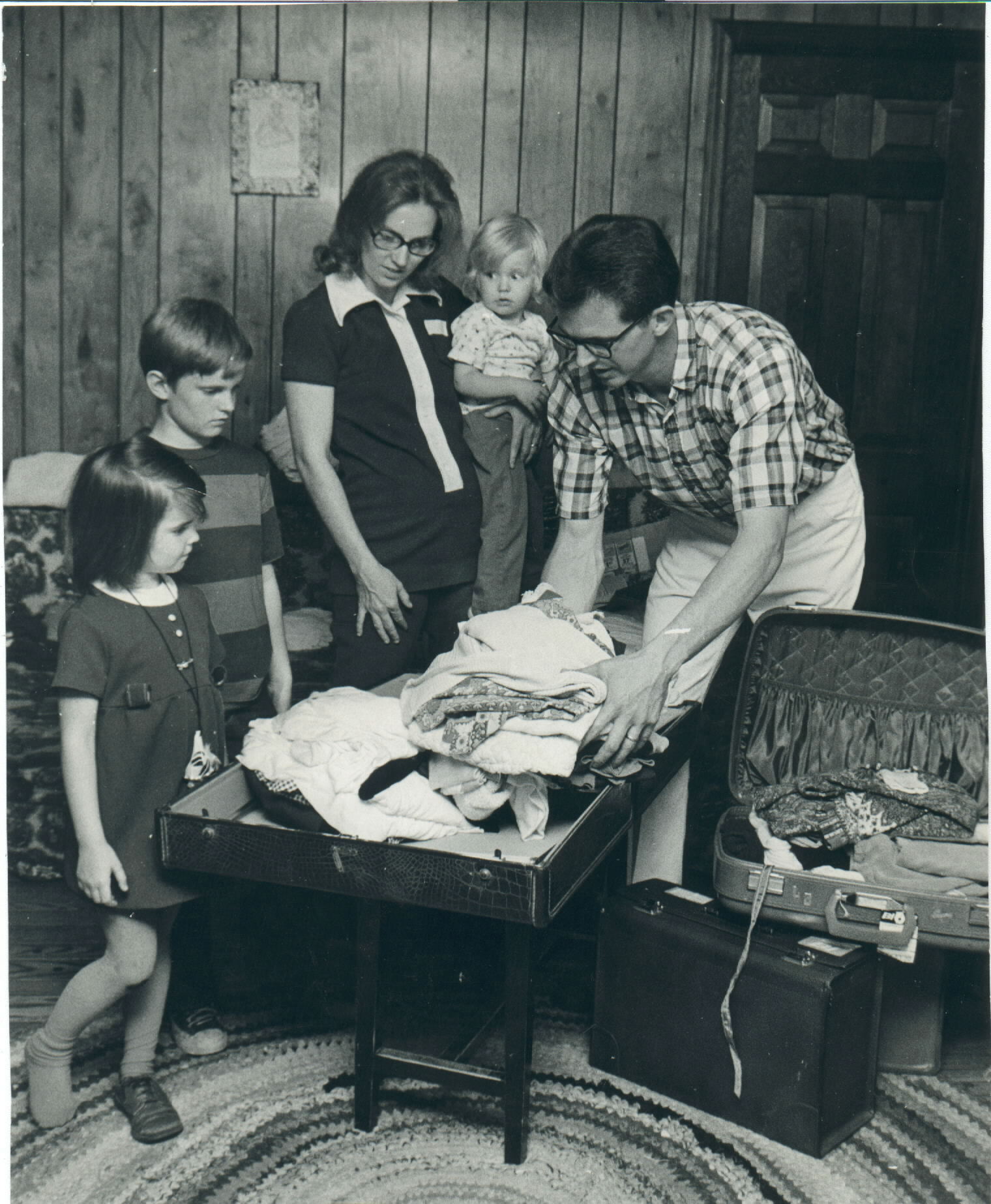
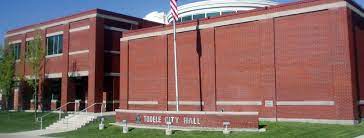
Snow fell and temperatures plunged as I stood before the Planning Commission into the night instructing on the Utah laws of conditional uses and open and public meetings.  Brian and Avery had offered me their guest room should I decide to stay the night, sometime.  Well, sometime was tonight.  I texted Mom and Dad, and drove the three miles from City Hall to Brian’s apartment, which had been my apartment for the six years preceding his arrival, the apartment to which I moved when divorce drove me from my home.  The walls of that apartment watched six years of pain and coping and enduring and learning to live instead of aching to expire—of figuring out how to flourish.  Entering that home tonight and making my bed and eating and bathing and sleeping there felt surreally strange.  My little girl was nine years old when I moved out.  I told her mother that our divorce would rip the little girl’s heart out.  “She’ll be fine.”  No, she won’t be fine: this will tear her heart out.  “She’ll be fine….”  A young woman now, her little girl heart still yearns for reconciliation, and I am unable to tell her why it cannot be—she has lost those dreams, compelled to make her own.  Brian and Avery were so kind to me, with dinner and conversation, bedding and a towel, and snacks.  And little Lila rejoiced as I stepped through the door and hugged her and read books and played blocks and Hot Wheel cars and watched Mr. Rogers snorkel and tell the world why we need to protect our oceans, both for the exquisite ocean life, and for ourselves.   Driving the short distance to work the next morning, in ice and snow, I realized how much I preferred my one-hour commute with its biographies and histories and meditations over these familiar three miles with their echoes of anguish.

(Pictured above: my apartment, a blessing, built for the manager, but rented to me.)

Courage at Twilight: Getting the Socks Started

Every day at noon, Dad’s breakfast hour, he calls “Lucille!” for her to help him start his socks.  He can no longer reach his toes to start pulling on his socks.  When Mom was away one day, he called for with, “Hey, Rogie, will you help me get my socks started?  You mom’s not here.”  I scrunched the left sock up and covered his toes.  “I can get it from there,” letting me do only what he absolutely could not do for himself.  Next the right foot.  I have offered to help at other times—chagrined, he responds that he wants Mom do help him.  I understand.

(Image by bernswaelz from Pixabay.)

Courage at Twilight: A Motley Assortment

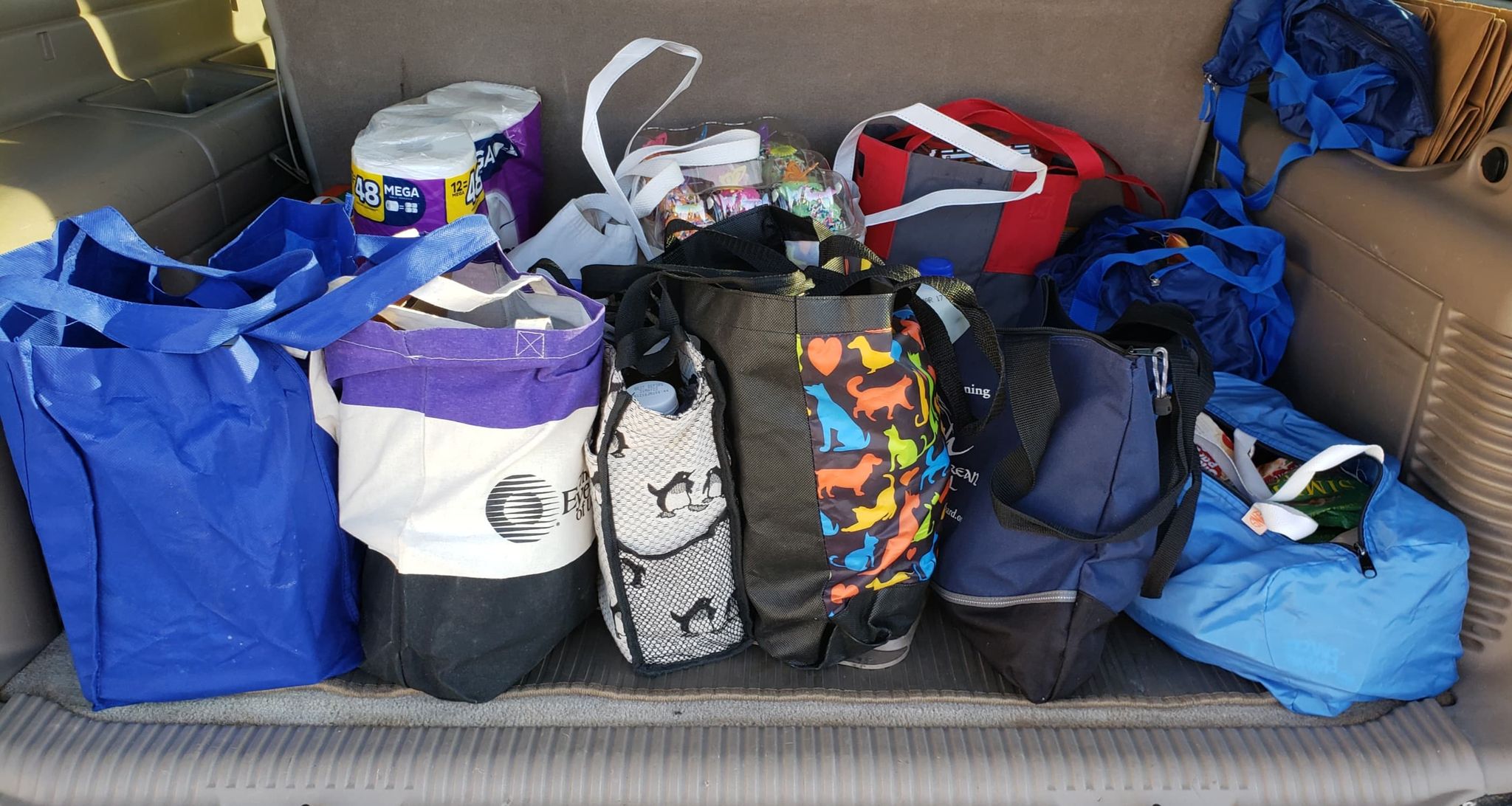
Home from the grocery store each week, I am appalled at the number of plastic grocery sacks that enjoy single-use lives of less than one hour, only to be discarded.  Sometimes the baggers put only one item in a bag.  At least we take them back to the grocery store to be recycled instead of sending them to the county dump.  Penn State says Americans throw away 100 billion plastic grocery bags per year!  “You know, Mom,” I ventured, “we could take reusable bags.”  She quickly warmed to the idea, and remembered her stack of such bags on a shelf in the garage, where they had sat for 20 years waiting to be useful.   Mom grabbed the stack and threw it in the back of the faithful suburban so we would not forget them the next time we shopped.  At the grocery store the following week, she filled my cart with the dozen sacks, a motley assortment, from Intermountain Hospitals, Public Broadcasting System (Mystery!), Utah Shakespearian Festival, Consumer Reports, and an old canvas bag from Dad’s employer Johnson & Johnson.  Several were small unmarked duffels, and one was printed with red hearts and an assortment of colorful cats and dogs.  These dozen bags held as much as thirty or forty plastic bags would have held, and were easier to carry.  “I’m so proud of us,” Mom crowed as we unloaded the groceries at home, having used not a single plastic grocery sack.  Back to the faithful Suburban I took the bags, ready for shopping next week and every week thereafter.


Courage at Twilight: Remember When?

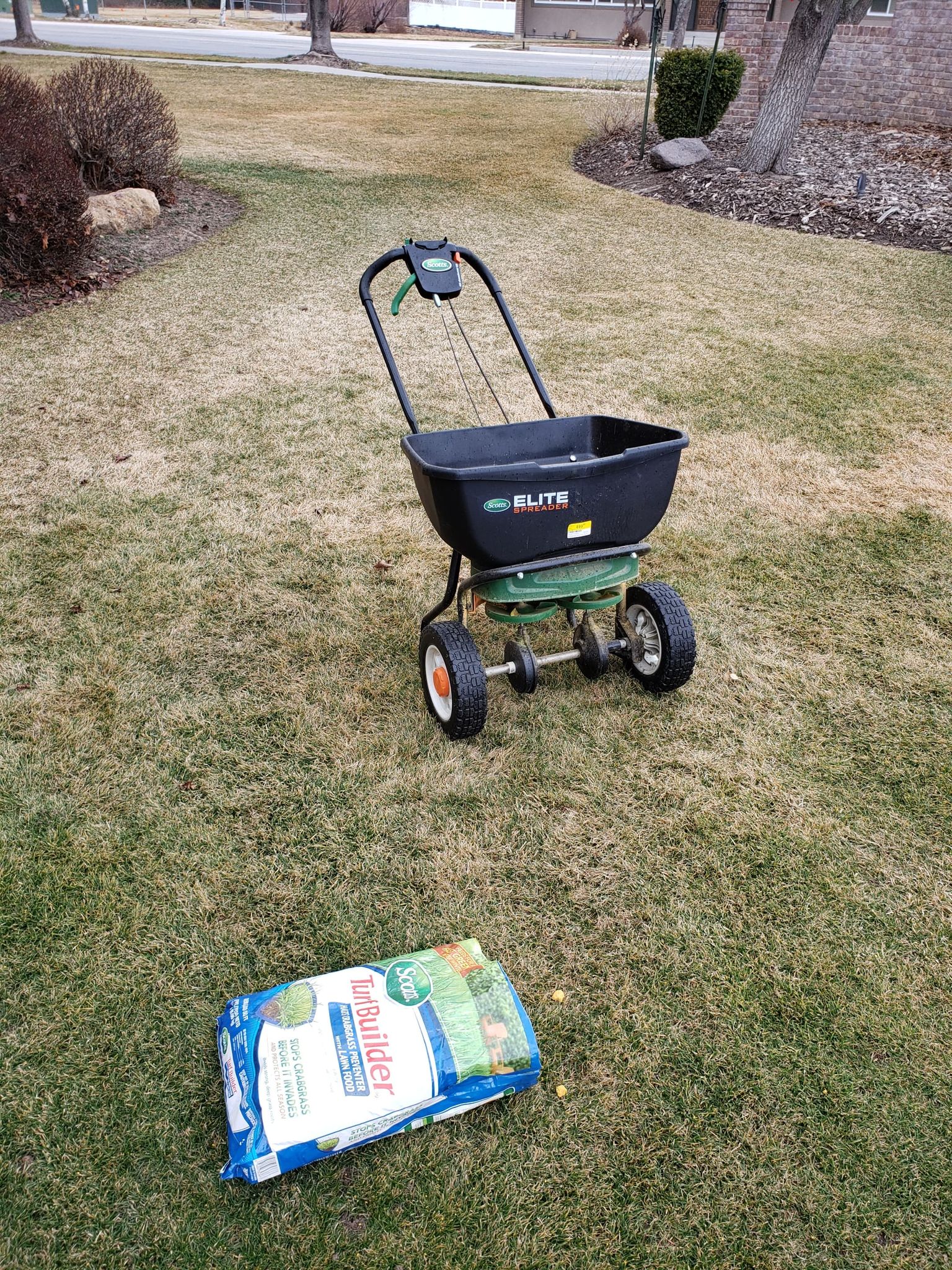
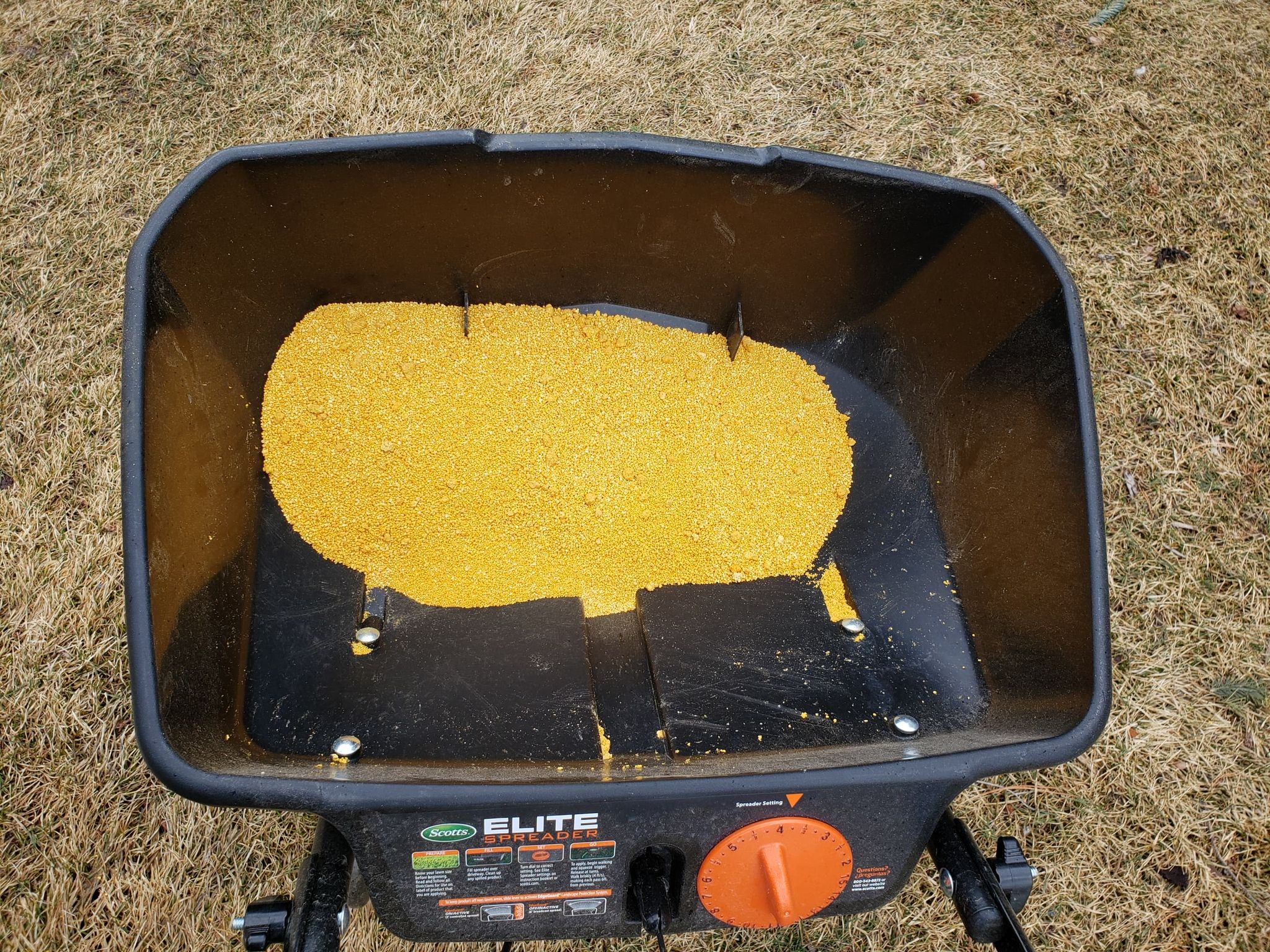
“Remember when you spread the fertilizer on top of new snow and the whole yard turned yellow?” Dad asked me, chuckling.  Yes, I remembered.  Pushing the spreader through six inches of heavy wet snow took all my strength.  Dad had commented then that “It looks like a whole herd of deer peed in my yard!”  Yes, it did.  Now it was early March, and more snow was coming, and Dad wanted the lawn fertilized before the snow fell, and Mom asked if I could do it since Dad could not.  The day before, Dad had started up his riding mower, dropped the blade to the lowest setting, and set off around the yard sucking up pine needles and the thatch of dead grass.  “No problem,” I said, anxious to get back to my rising bread dough.  “It will only take me 15 minutes.”  Pouring the bag of yellow fertilizer into the drop spreader, dozens of hard chunks fell out, too hard to crumble with my fingers.  An hour later I was still wrestling with the smaller chunks that clogged the drop holes.  I repeatedly jolted the spreader to clear the apertures, spreading fertilizer in uneven spurts.  I delivered a frustrating report to Dad, and found him pounding fertilizer stones with a rubber mallet, reminding me of an older prisoner tasked for years with breaking rocks.  But these yellow rocks would not break.  “I think we should take this bag-full of hard chunks back to the store and ask for a new bag,” I suggested.  But he did not want the fight, and I remembered that it is his privilege to choose his battles, not mine.  So, I let the matter go, spread the fertilizer that would spread, dropped the bag of chunks in the garbage, and stomped into the kitchen, where I found the ciabatta dough fermenting nicely.  And I began to look forward to our dinner of homemade gorgonzola, ham, and tomato-cream pizza.

Courage at Twilight: Grandpa Wally’s Whiskers

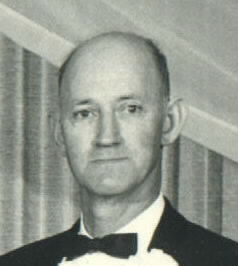
“My daddy had a thick black beard,” Mom recalled when I apologized for my three-day scruff, though he did not let it grow long.  As a child, she loved sitting on her father’s lap and rubbing her soft little hands on the prickly stubble of his weekend beard.  I learned this because she said to me one Saturday afternoon, “Come here—I’ll show you what I used to do to my daddy when I was a little girl.”  Then she rubbed her soft old hands on my prickly weekend stubble.  I shave on days one and three because on day two there isn’t quite enough to comfortably shave.  I wore a full salt-and-pepper beard to Brian’s college graduation.  But I looked old and heavy and worn in all the photos.  So, I decided to lose weight and lose the beard.  One less beard and 40 less pounds later, I feel better and look younger (relative).  Besides, I could no longer endure the never-ending itching against the pillow.  And I cannot imagine a woman wanting to kiss a man’s lip hair, so I shave my lip on principle.  I shaved my beard one time because a coworker said it looked like an armpit.  Nope—no more beards for me.  I think we will not make a habit of Mom rubbing her hands on my whiskery face.  But she blows me a kiss every night as I wander up to bed and she finishes the nightly news.  “Hey Baby,” she calls.  “I sure love you.”  And I blow her a kiss back.

Pictured above: Wallace “Wally” Bawden c. 1962.


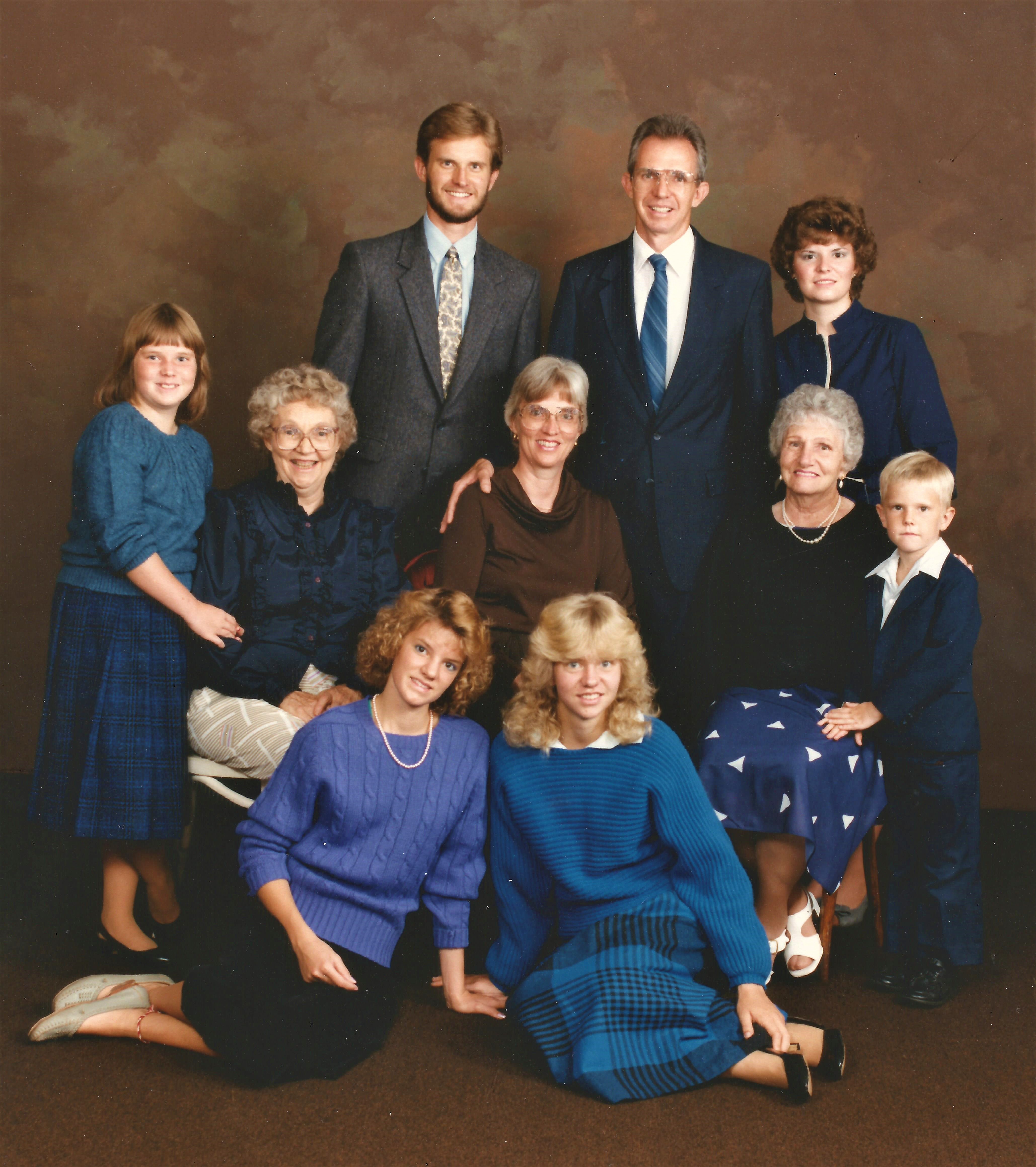
The Baker clan c. 1986 with a bearded Yours Truly.

Courage at Twilight: Motorized Shopping

After Luana’s chewing out, Dad agreed to use a motorized shopping cart at the grocery store. He took to it naturally, like a soaring eagle riding an updraft above the wilderness far below—a bit too dramatic?  He took to it naturally, like an earthworm in moist dirt.  Instantly my stress levels have fallen off, since I do not have to worry from moment to moment when his strength will give out and when I might find him splayed on the floor in the cold cereal aisle waiting for an ambulance.  And his own distress has diminished, being able now to enjoy the shopping experience.  In fact, he may be enjoying it too much.  While I use my shopping list to target exactly what groceries we need, he glides leisurely down each aisle dropping into his basket whatever tickles his whim.  In checkout lane, Luana stated more bluntly than she meant, “I see you obeyed my orders.”  He smiled up at her from the driver seat and changed the subject: “Aren’t these eggplants beautiful?”  Dad rode his cart all the way to the car door, happy and with a little energy left, instead of the customary staggering and leaning against me and gasping, “I’m not going to make it, Rog.”  Life just got better for us both.  The only problem is that we have a month’s supply of fresh spinach.  But I am not complaining about the chocolate pudding cups he snuck past Mom, or the yogurt pretzels she snuck past Dad.

Courage at Twilight: Handyman Gabe

Gabe came over on Saturday just as I was rolling out the pie crust dough for quiche shells. He watched me roll the dough onto the rolling pin, unroll it over the quiche pan, and tuck the dough carefully down into the pan.  “I want to bake!” he declared.  “I want to bake banana chocolate chip muffins—with you, Uncle Roger!” like we had done once before.  “I get the bananas!”  No matter how cheerily bright his eyes shone, I could not pivot to baking with him after spending an hour mixing and shaping the dough, and preparing the quiche mix.  And the raw shells had to go into the preheated oven, right now, for seven minutes filled with aluminum foil and ceramic baking beads, and three more minutes without.  He retrieved a green mixing bowl and placed it on the counter, letting me know he was ready.  “Nope,” I begged off, empty of patience and tact.  “I’m not starting another baking project.”  Gabe looked crestfallen.  “But look at all this extra pie dough,” I offered him a ray of hope.  “We can make cinnamon pie-crust cookies.”  I showed him how to roll some of the buttery dough into a ball, press the ball onto the cookie sheet, and poke a depression into the cookie with his thumb, followed with a spoonful of Dad’s cinnamon-Splenda mix.  Gabe was a pro, and soon had most of the dough formed into cookies, which we baked after the quiche shells came out slightly browned, partially baked—they would compete their bake with the ham, cheese, egg, and cream filling.  When I had arranged the hot finished cookies on a plate, Gabe ran up expectantly for one.  “Nope,” I stopped him.  “Before you eat a cookie, you need to take this plate and serve everyone else a cookie.”  The four-year-old, surprised by this important responsibility, took the plate first to Mom, then to Dad—Gabe’s great-grandparents—inviting them to take and taste one of his cookies.  He looked enormously proud and pleased.  The cookies were quickly consumed, and he brought me the empty plate, wearing a big smile.  “Good job,” I praised.  “Now, come with me—I have another job for you.”  Dad had purchased a new showerhead, and had asked me to install it.  Gabe carried the crescent wrench up the stairs into the bathroom, while I talked him through how to change a showerhead.  I removed the broken showerhead and hose, and told him they needed to be thrown away.  “Can I throw them away?!” he asked hopefully.  The deed happily done, I hoisted Gabe up in my left arm, joining my right hand with his small hands to thread on the new showerhead, over a strip of Teflon tape wrapped tight.  “Turn it good and tight,” I instructed, and he did.  I turned the water on, and Gabe pressed his face against the glass where the water pounded.  “Now, go tell Grandpa.”  Gabe raced down the stairs and reported to Dad that the he had thrown Dad’s old showerhead away and put the new one on—and it worked!  I felt pleased at his sense of accomplishment.  “What are we going to do with the rest of the pie dough?” I asked him.  “Do you want to make a strawberry pie?”  He nodded eagerly, and I helped him shape and roll the dough.  His dad helped him spoon strawberry jam into the center of the circle, then bring one side of the dough over the jam to form a semicircular turnover.  I sealed the edges with fork tines, and slid Gabe’s pie into the oven.  When the turnover came out, nicely browned, Gabe glowed.  He let his pie cool, then cut it and took pieces to Mom and Dad, and Sarah and Tracy, who raved and praised, much to Gabe’s delight.  “You did a lot today, Gabe,” I reminded.  “You made cinnamon pie crust cookies, you put on a new showerhead for Grandpa, and you baked a strawberry pie!”  “Thank you, Uncle Roger,” he sighed, self-satisfied, knowing he had learned important new skills.  “Next time,” I offered, “let’s bake banana chocolate-chip muffins.”

(Pictured above: Gabe’s strawberry pie.)

Courage at Twilight: The Permanence of Canes

Dad’s aluminum cane is covered with blue-and-white flowers.  Its use around the house is no longer optional.  I thought he might like a more “manly” or “classy” cane, and suggested we procure a genteel wood cane.  “I don’t think so,” he declined.  Later in the evening he explained, “In my own mind, a wooden cane embodies permanence, and I am not ready for this to be permanent.”  I suddenly understood, and apologized, not having meant to suggest his permanent need, only the enjoyment of something refined.  Thus esteemed, he acknowledged that he is not likely to turn back the clock and not need his cane.  I admire his courage to look the future in the face, to stare hard at its reality.  I admire his long fight for a flourishing life.  His fighting spirit has not dimmed.  He will win the prize—indeed, has already won.

(Image by julianuc from Pixabay.)

Courage at Twilight: Grandpa Darwin

My children’s other grandfather is dying from his fourth attack of cancer. Tumors like softballs stud his chest and torso.  Prior cancers removed his lower jaw and all but a thin fold of vocal cord.  Family group texts to my children kept me informed of his worsening condition and of the many tender family visits from his eight children and thirty-six grandchildren and twenty-eight great-grandchildren.  Though I have not been his son-in-law for six years, I love and respect the man, and I knew it would be right for me to say good-bye.  Sitting at his bedside, we fist-bumped and we talked and reminisced and we shared our hopes for our families’ futures.  He expressed his love and admiration for my seven wonderful children.  I conveyed Mom’s and Dad’s expression of love and admiration and respect—“Right back at ‘em,” he chimed.  He told me stories of his early life, like when he was a little boy and he and his cousins laid on their grandmother’s down-tic mattress listening to her tell stories of their Mormon pioneer ancestors.  “She was barely 4-foot 10-inches tall,” he marveled.  “We loved her.  But you didn’t want to make her mad!” like when the children tried to ride the sheep.  When I asked what he most looked forward to on the other side, he listed reunions with his father, Charles, who died by train in the shunting yard in 1961, and his mother, Jessie, who died of a stroke the year I married (1988), and many other family members, like his brother Kay, who died of the hardships of homelessness.  I told him I felt very sorry that things had not worked out for his daughter and me, but that I loved him.  “You are family,” he assured me in exhausted whispers, “and I love you.”  He squeezed my hand hard, then let me know he was so tired and needed to sleep for a while.  He stopped eating five days ago—he made it to March 1—everyone has said good-bye—I have said good-bye and god speed.

Courage at Twilight: Beginning to Forget

The photographic mind of my 86-year-old father is slowing its shutter speed, narrowing its F-stop, and the images emerging are beginning to blur. I am accustomed to him telling me the details of prominent lives based on his reading over many decades, the names, dates, relationships, events, places, and joys and tragedies.  Stories still flow, but the names occasionally disappear or bungle.  I always allow a long, respectful pause before supplying a name, if I know it.  And when he insists on Middlesex County College (in New Jersey) instead of Salt Lake Community College (in Utah), I do not correct.  What would be the point—to remind him of his and all humanity’s persistent deterioration?  To try (in vain) to appear as smart as him?  That would be cruel and arrogant of me.  On each occasion when I do supply a name, I find that he is the one that originally supplied me with the name.  So much of what I know comes from him telling me neverendingly about his readings and experiences.  When he is gone, I will feel bereft of my teacher.  I am reading a great deal in an attempt to open my brain on my own, but I observe with chagrin that the names and dates and events already do not stay in my memory—they have fled almost by the time I finish the book.  What do remain inside me are the impressions, emotions rolled up with images my brain has supplied, and admiration and love for the humanity of each person I read about.  While I may not be a useful repository of information, yet I trust my soul has stretched and grown by bringing those people into myself.  These I never forget.

(Image by Peggy und Marco Lachmann-Anke from Pixabay.)

Courage at Twilight: Joyce Kilmer’s Trees

Joyce Kilmer - Wikipedia

Mom poked her head shyly into my home office and asked, “Have you heard of Joyce Kilmer?”  I had not.  “Well, I thought you might like to make a post about him sometime.”  As I listened to her story, I thought, Indeed, I would.  She held up a piece choir music, Kilmer’s 1913 poem “Trees” set to song in 1922.  In the late 1960s, Mom sang with a group of church ladies who called themselves the Singing Mothers (“a stupid name” Mom lamented) from congregations all over New Jersey.  They rehearsed in the Piscataway church building, the Hightstown high school building, and elsewhere in northern and central Jersey.  Mom sometimes dragged me and baby Megan along to rehearsals, though I was too young to remember.  During one rehearsal, Megan had a slight fever, from a cold, and Mom had put a bottle of children’s aspirin in her purse.  These were the days before Tylenol (acetaminophen) and Motrin (ibuprofen)—aspirin was the fever-reducing miracle medicine of the time—and before child-proof caps.  The baby pawed through Mom’s purse, opened the aspirin bottle, and chewed up the whole bottleful of aspirin.  Mom rushed Megan to the hospital where nurses pumped the baby’s stomach.  On occasion, our Church held conferences in Manhattan, and for one conference the Singing Mothers were invited to sing.  Mom hopped on the train to New York City and joined in the performance of Joyce Kilmer’s and Oscar Rasbach’s “Trees.”  While some consider “Trees” overly sentimental, the poem became popular and beloved across America.  An American poet, Joyce Kilmer earned a one-paragraph entry in World Book Encyclopedia (1990 ed.).  New Brunswick, New Jersey, where Kilmer was born, and where Dad later worked for Johnson and Johnson for 30 years, boasts a Joyce Kilmer Avenue.  Kilmer died in 1918 in France in The Great War, by a sniper’s bullet.

TREES

I think that I shall never see
A poem lovely as a tree.

A tree whose hungry mouth is prest
Against the earth’s sweet flowing breast;

A tree that looks at God all day,
And lifts her leafy arms to pray;

A tree that may in Summer wear
A nest of robins in her hair;

Upon whose bosom snow has lain;
Who intimately lives with rain.

Poems are made by fools like me,
But only God can make a tree.

Alfred Joyce Kilmer – Rutgers University Alumni Association


(Images from Wikipedia and Rutgers University.  Used pursuant to the Fair Use Doctrine.)

Courage at Twilight: My Parents’ Prayers

The Bible teaches that God knows what we will pray for before we pray. The value of prayer, therefore, cannot be to inform God of our desires and thoughts and needs, for he already knows them.  Rather, the value must come in the act of turning our hearts heavenward, expressing our needs either in fury or humility, mustering gratitude for blessings in spite of adversities, and exerting faith in the impossible and unknown.  Still, prayer has never come easily to me.  My scattered thoughts bounce off the walls of my brain until my short patience is spent.  Based on the example of the Lord’s Prayer, I do manage to acknowledge God and express love and respect for him, and I thank him for bringing his kingdom to the earth and allowing me to be a small part of slowly building it.  Then I launch into what I want and what I need, which usually devolves into begging on behalf of my children and family for their growth and well-being.  Emerging from my bedroom to brush my teeth one night, I heard Mom talking to herself in her bedroom.  But then I overheard some of her words: “Roger is not feeling well.  Please bless him to sleep soundly.  Please bless him to get better.  Please bless him to be able to go to choir practice and to church tomorrow.”  I had already decided I did not want to go to choir practice or to church, but to sleep and rest.  But now someone sweet and loving was beseeching God on my behalf, and I could not allow laziness and apathy to prevail over her sincere prayer.  So, I willed myself to get out of bed and be the answer to her prayers, and I confess to asking God to helping me answer her prayers on his behalf.  Against expectations, I ended up enjoying choir and church, and feeling a little better.  When Dad awakes after his late-night reading, he shuffles to his sofa, covers himself with a quilt Mom sewed, closes his eyes, and points his heart and mind and silent words to God in prayer, and he stays there until he feels he has been heard and answered.  I have walked in on him a time or two, thinking he had dozed, but he looked at me and exclaimed, “Rog!  Come in!  I was just talking with Jesus.”  I have come to believe that prayer is not delusional or wasted effort, but rather a powerful expression of the hope of faith, and the necessary exercise of the muscles of faith, faith that works change within us and nudges us toward goodness, love, and light.  Given that, I keep at it.  Maybe prayer will come naturally to me someday.  Maybe this essay is my prayer.

(Image by reenablack from Pixabay)

Courage at Twilight: Just One-Half Hour

Comfort-eating has taken sinister hold of me.  I seem powerless to resist.  I conquered hunger a year ago, imposing discipline, and losing 40 pounds.  With 10 pounds still to go, I moved, and hunger pounced on me and conquered.  Fasting had been a key element to my success, not for the diminished calories but for learning not to be afraid of hunger.  And there is an element of religious spiritual practice, looking to the Divine to consecrate my fast to help me obtain personal spiritual objectives.  After shopping for the evening’s boeuf bourguignon—I had company coming—and approaching the end of my day’s fast, I determined to spend one-half hour walking in nature, in the Dell.  Stepping through the trail’s new snow, I felt lean, my belly taut and my mind exhilaratingly clear and controlled.  I had forgotten my walking stick, again, but found an old one leaning against a tree trunk, and helped myself.  I relished being alone in nature in the crisp air as occasional flakes fell.  My 15-minute turn-around timer sounded—the apricot brioche was done rising.  “Bike up!” announced a cheerful woman on an expensive mountain bike with enormously “fat” tires, perfect for riding in snow, sand, and mud.  She wore all the right gear, head to toe, for the weather, including goggles.  “Have fun!” I called after her.  A leash-less blue pit bull approached me, its owner explaining, “she’s gentle.”  Being a city attorney who sees dozens of dog-bite cases a year, I become irritated when owners do not leash their dogs, and I countered, “You may know she’s gentle, but no one else on this trail knows it.”  He muttered something about me knowing it now, and a little voice chided me for introducing darkness into the world and for failing to share light, to impart goodness, to lift another.  The voice continued the instruction: even when irritation might be justified, choose to be kind in spite of the justification.  Alright, I will, I promised, chastened.  I can’t fix it this time, but I will do better the next.  Immediately a huge black Labrador trotted toward me, his owner 50 yards behind.  Another leash-less dog! I whined to myself, but to the owner I gave a friendly “Good morning!”  The face that barely looked up at me was so sad and downtrodden and depressed—I was glad he had his dog-friend with him on a walk in the Dell in the snow, and I was glad I had not further darkened his day.  I set the walking stick against the tree trunk for the next forgetful hiker.  Climbing to the parking lot, two morbidly obese men with disheveled beards smoking cigarettes wearing greasy ball caps sauntered down the trail, obviously father and son, following their remote-control Hummers.  “That looks fun!” I called cheerfully.  “Good times,” Dad hissed past his cigarette.  And I could see that father and son, indeed, were creating a good time, together.  Half a day of cooking later, the boeuf bourguignon, stewed with red wine and beef stock, topped with braised shallots and sautéed mushrooms, triumphed, enjoyed by Mom and Dad, and by Solange and Ana, my two Brazilian friends, who thought the meal marvelous, and who listened with genuine interest as Dad and Mom told story after story about the family and Brazil.

A stand of Oregon Grape

Courage at Twilight: Cheese Monger

In our class at church, the coordinator asked the men for two volunteers to work a shift at the church dairy.  No one raised their hand.  But after church I was able to clear my calendar, and signed up.  Gordon, a retired orthopedic surgeon, picked me up the next morning and we drove to the dairy processing plant of the Church of Jesus Christ of Latter-day Saints in Salt Lake City, Utah.  The plant is one of 18 facilities on Welfare Square that produce 143 food items, including peanut butter, powdered milk, honey, beef, canned fruit, cheese, bread, pasta, and staples (wheat, rice, oats).  These products stock the shelves of about 129 Bishops’ Storehouses and are available at no cost to needy Church members and others.  Gordon and I were assigned to work in the cheese plant.  Forty-pound blocks of cheese, aged in the cooler for a month, slid across rollers and through slicing harps.  The result: 40 one-pound blocks of cheddar ready to be packaged in plastic, labeled, weighed, stamped with expiration date and batch number, and rolled up the conveyor belt to yours truly, decked out in blue hair net, yellow face covering, and black gloves.  Frequent volunteers, Scott and Kent instructed me in my job: loading 20 blocks into each box, running the boxes through the tape machine, and stacking the boxes on a pallet.  Each pallet held five rows of 18 boxes, or 1,800 cheese blocks.  We filled four pallets, for over 7,000 one-pound blocks of cheese in one day—3.5 tons!  The dairy receives about 128,000 gallons (1.1 million pounds) of milk every week, which is bottled as well as transformed into chocolate milk, cheddar cheese, sour cream, yogurt, cottage cheese, powdered milk, hot cocoa mix, and butter, all made there at the modern, gleaming, clean facility.  The Church’s “Welfare” program came into being when Church members were unemployed and hungry during the Great Depression, as a way for the Church to take care of its own rather than turning to government assistance.  The whole program is funded by the financial contributions of Church members, who also clock millions of volunteer hours a year (like my five hours today).  I grabbed and boxed blocks of cheese as quickly as I could to keep up with the conveyor flow.  After several hours of packing thousands of cheese blocks into boxes in a 40-degree room, my shoulders and back grew fatigued and sore from the repetitive reaching and lifting.  I welcomed two breaks fueled with cheese remnants and chocolate milk.  After our shift, the volunteers were permitted to purchase dairy items at market cost—you better believe I brought home a gallon of the amazing chocolate milk, plus five pounds of butter to feed my baking habit.  Leaving the dairy, I felt exultant.  I learned yet again how joy comes from working to help others.  And how proud I felt to be a small part of the ambitious Welfare Square endeavor to help humankind.

(Pictured above: dairy products I purchased after working at the Church’s dairy processing plant.)


Dairy plant poster.


40-pound blocks of cheddar cheese.


The finished one-pound package.


A full pallet.


Yours truly, incognito.

Courage at Twilight: Valley of Fire

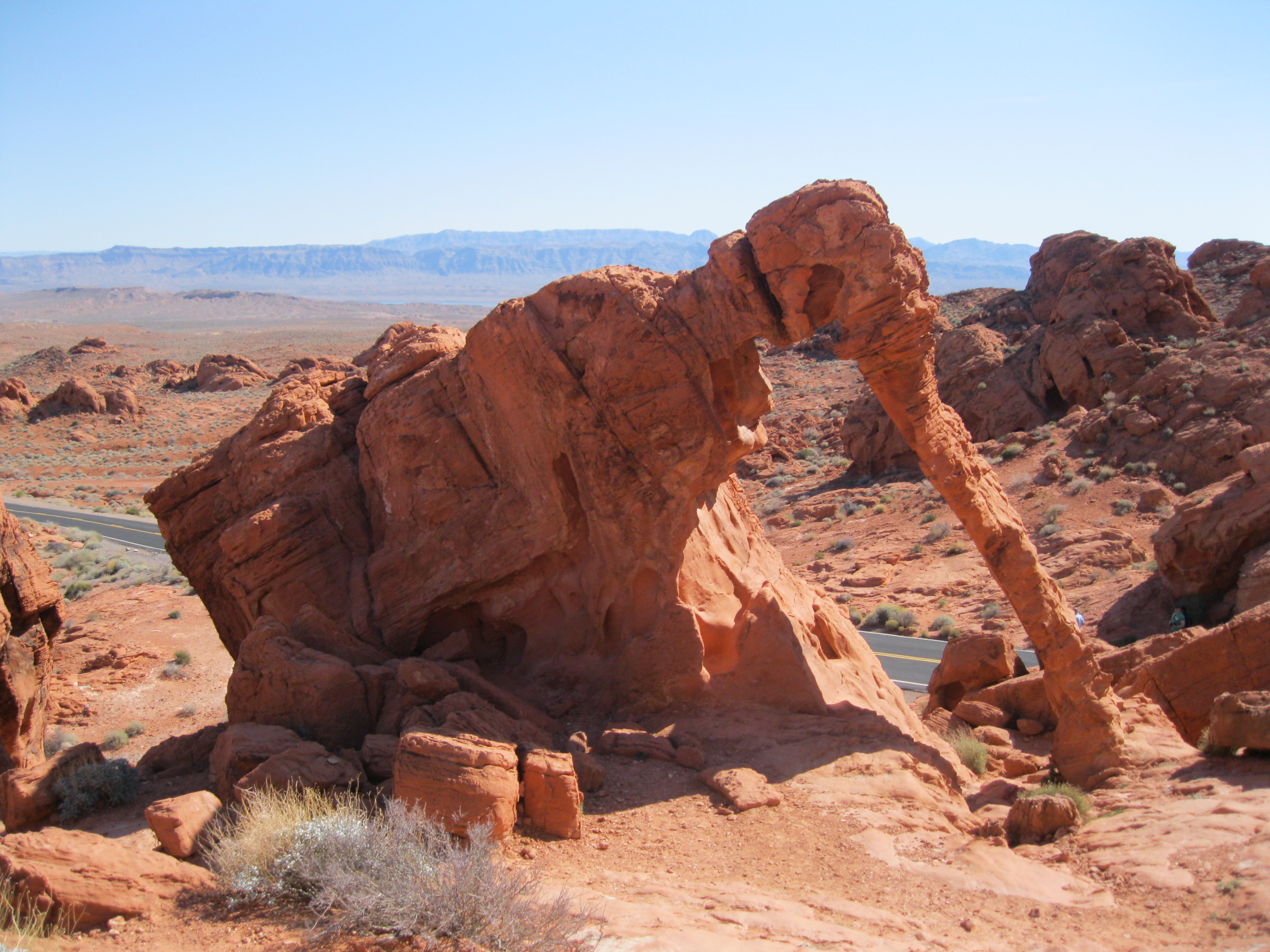
She announced early in February that she was taking the children camping in Nevada where the sun shone warm and the sky vibrated blue and the sandstone grottos would shelter their tent in shimmering desert solitude and beauty.  How wonderful and fun, I thought, but she announced this trip was for her and the children and I was not invited.  So they went camping and I went to work those gray snowy foggy days in February.  The still sandstone dunes radiated rainbow stripes of pinks and rusts and creams with occasional dripping springs and mystic hoodoos and ancient cryptic bat woman petroglyphs and piles of petrified wood and iron-spiked barrel cacti and mellow bighorn sheep and scurrying blue-throated lizards and deep trails of rust-red sand.  These filled and enthused the returning children, who told me brightly all about their wonderful fun adventure, not knowing anything was the matter.  It is February again, and they are there.

(Pictured above: Elephant Rock in Valley of Fire State Park, Nevada)
Courage at Twilight: First-Generation MRI

MRI machines are everywhere today.  Not so in the early 1980s.  Johnson & Johnson, for which Dad worked as international legal counsel, owned the company that developed magnetic resonance imaging.  The technology opened up a new world of medical diagnosis and treatment.  But sale of the technology to other countries was severely restricted by the U.S. government, both to protect American technology from theft and to prevent abusive repurposing of American technology.  A Chinese medical institution approached J&J about purchasing an MRI machine for its hospital, and the question of whether J&J could do it came to Dad.  He consulted with U.S. customs and security officials, who determined the only way to safety (and legally) sell the MRI machine, even for a legitimate medical purpose, was to first dip the machine’s complex circuit boards in clear epoxy, allowing the machine to function but not be reverse engineered.  “Do you still want the machine, even encased in epoxy?” Dad inquired.  “If the machine malfunctions, it cannot be repaired.”  When the Chinese insisted, J&J prepared and delivered the machine, complete with its innards frozen in a block of plastic, with U.S. government approval.  With today’s ubiquitous MRI procedures, such measures may seem clumsy.  But industrial espionage was and remains a major economic and national security threat.  Hopefully that first-generation MRI machine helped the Chinese hospital and its doctors and patients for a good long time.


(Image by Michal Jarmoluk from Pixabay.)

Courage at Twilight: Yellow Roses

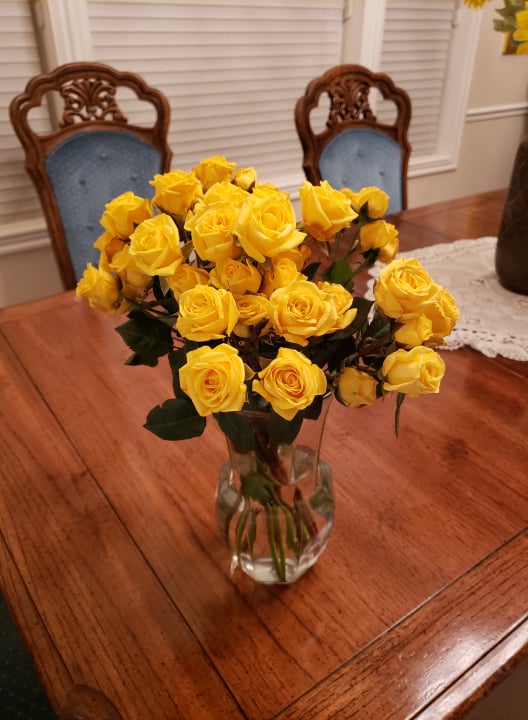
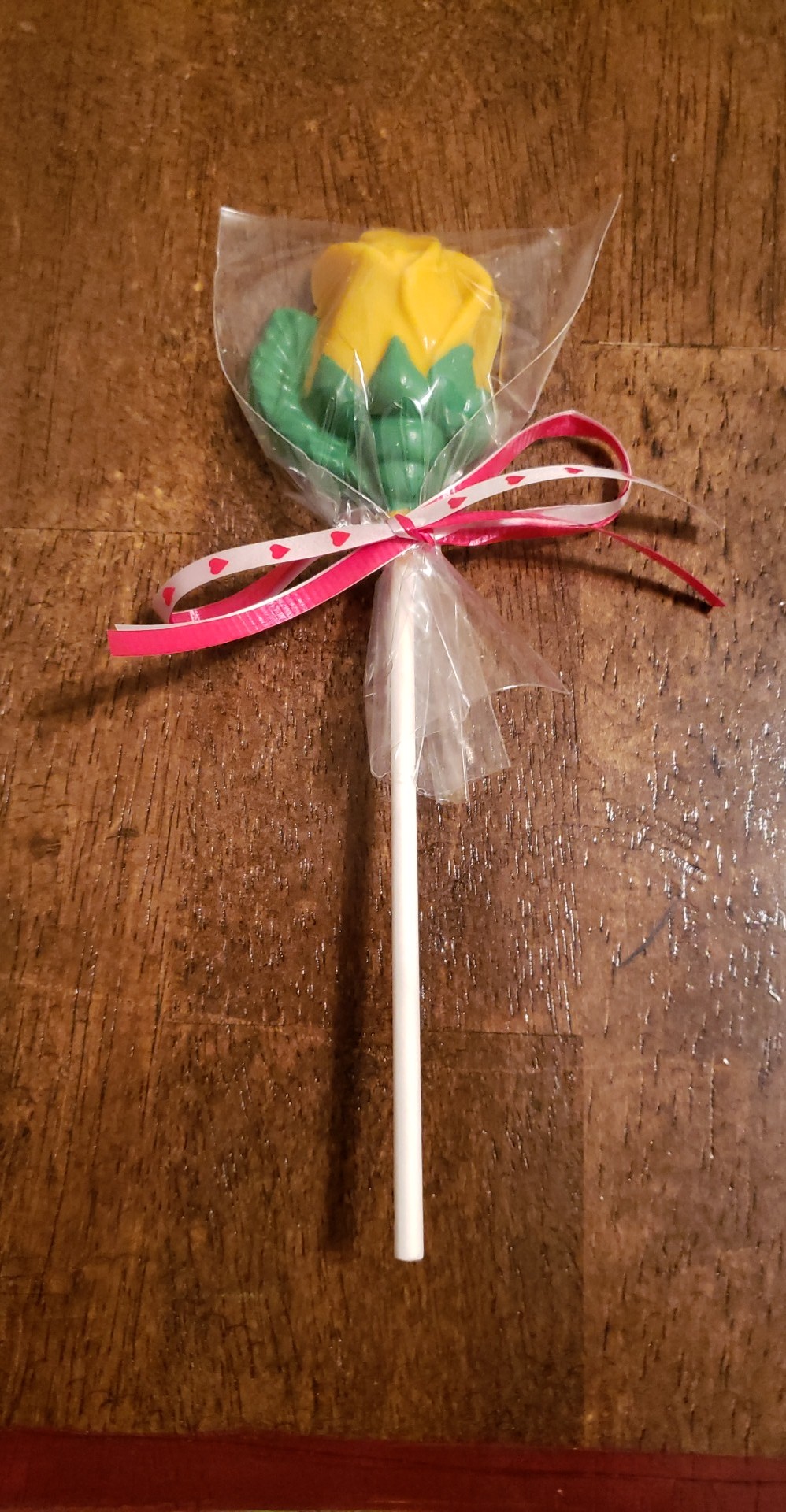
Valentine’s Day is not my favorite holiday: too many painful memories and unrealized dreams.  Though many couples are successful, for me, at 57, the intimate romantic logical vulnerable safe knitting together of two lives seems like an impossibility.  The fabric feels always dangerously close to fraying.  But Mom and Dad have made it work for 63 years, including their courtship.  To celebrate the day, they teetered to the chocolate cottage down the street and bought each other some goodies—for Dad, a box of sugar-free chocolate cherries—for Mom, a one-pound log of rocky road!  Dad also brought home two dozen yellow roses for Mom, her favorite color.  Mom called me at work to wish me a happy Valentine’s Day and to invite me to go to dinner with them. “This is your romantic day,” I demurred.  “You and Dad should enjoy dinner for two.  I’d be a third wheel.”  “Nonsense,” she rebuffed.  “We’d love to have you with us.  We’re a family!”  In the end, I proved useful, carrying plates and drinks and silverware, helping Dad into and out of his seat.  A cheerful vibrant pony-tailed server about my age waited on us.  I could not help but wonder about her circumstances.  Ever friendly, Mom asked her if she had children.  “I have six!” the woman enthused.  Her oldest is serving our Church as a missionary in Costa Rica.  Several of my children served such two-year missions, in Oklahoma, Florida, California, and Mozambique (in Portuguese-speaking southeast Africa).  We had that in common.  I do not know if she is married, but she was waiting tables, and I was being waited upon, and I was with my parents, and we were surrounded by scores of listening people.  Enjoying our meals, Dad reminisced about when his mother worked as a waitress and janitor.  She worked at night cleaning the Kearns building downtown Salt Lake City during World War II.  As a seven-year-old, Dad would accompany her and empty the waste baskets.  The foreman arrived to give Dora her pay.  Dad informed the man he had worked too, and where was his pay?  Without meanness, the man picked up a pencil from a desk and handed it to Dad: “Here’s your pay, little man.”  Dad had thought it “chintzy” pay for the work.  Not to be chintzy in turn, he left a nice tip for the cheerful vibrant mother of six.  “She has a family to support.”  Walking slowly to the car, Mom thanked me for taking her and Dad to dinner.  “I should be thanking you,” I answered.  “Thank you for including me in your Valentine’s Day.”  Back at home, I climbed the stairs to my home office.  On my laptop rested a yellow chocolate rose lollipop, with a ribbon bow, a gift from my vibrant cheerful mother.

Courage at Twilight: Wild Asparagus

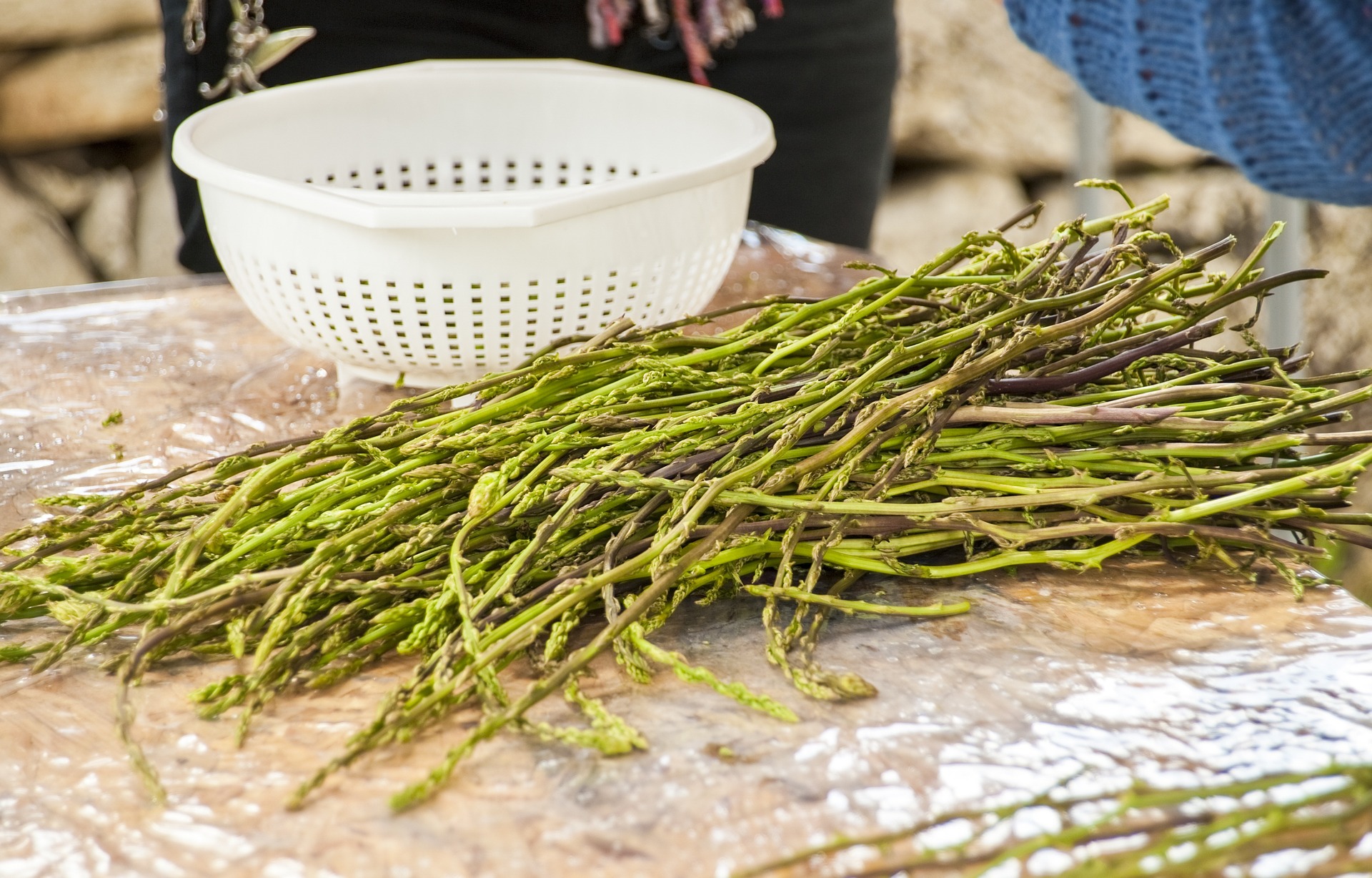
Dad stood hunched over the kitchen sink snapping the bases off the thick asparagus stalks, tossing them in the pan.  I cannot see asparagus without remembering the walk through the woods to the grassy field between the forest and the highway in New Jersey where the wild asparagus grew.  Mom carried the basket.  We children searched randomly for the thin green three-foot monoliths and snapped the stalks at the base and laid them tenderly in her basket.  Mom had trained our eye.  And I cannot remember that asparagus field without remembering the thick blackberry thickets along the same highway in New Jersey where we picked blackberries by the bucketful and took them home to boil with sugar and pectin, straining out the infinitude of stony seeds, pouring deep purple goo into pint jars, topping each with a quarter-inch of hot paraffin wax to seal the jars against pathogens.  That black blackberry jam tasted so delicious on crispy English muffins toasted brown in the broiler.  And I cannot remember that blackberry jam without remembering the asparagus walk and how we came home covered in ticks and never again took that wild asparagus walk.  I still love blackberry jam.

(Image above by Christian Bueltemann from Pixabay.)

Wild asparagus in long and spindly:

(Image by DianaRuff from Pixabay.)

Courage at Twilight: Fig and Date Bread

Burt Brothers called to tell us what the repair would cost. We had worried the cost would be higher.  When I poured the windshield wiper fluid in the reservoir the afternoon before, the fluid gushed out onto the driveway.  I struggled to remove the heavy battery so I could see the reservoir and its tubing, and found both tubes (to front and rear wipers) broken in the same place.  I left small pieces of my finger behind reinstalling the battery.  The service project the next morning had caught my eye on Facebook, on the page I follow about the Jordan River, where I kayak and cycle.  But the event appeared to not catch many other eyes, for only two volunteers came, plus the Jordan River Commission Executive Director, who dispensed gloves, trash bags, and garbage pincers.  Our goal was to bag all the garbage at the river-side park before the wind blew it into the river.  I have kayaked around huge floating masses of flotsam on the river, some growing their own vegetation.  The Director thanked me for coming, dispensed some tips about good kayak launches for avoiding dams and portages, and handed me trail mix and fruit snacks.  Returning home, Mom and Dad and I drove two cars to drop off Dad’s faithful Suburban at the garage to repair the tubes, and we continued on in Mom’s trusty Legacy to the grocery store for the weekly shopping.  I felt happy as we arrived at Smith’s, but left the store an anxiety-ridden wreck.  I lost Dad in the store—he was not sitting at the deli where I usually find him when I have finished shopping.  I found him with Mom funneling into Luana’s check-out line—she is their favorite checker, and she always orders me to “take good care of them.”  “I’ll do my best,” I always promise.  Dad began trembling behind his cart—“I’m not going to make it, Rog,” he said.  “I need to sit down—now.”  Luana sent a bagger running for a chair he could not find, while another bagger drove up with a motorized cart onto which Dad collapsed.  “Nelson,” Luana chided (partly on my behalf, since she could get away with it), “the next time you come, you either will use this motorized cart, or you will not come at all!”  Dad nodded and smiled sheepishly, relieved just to be sitting.  He took to the cart naturally, motoring easily to the car.  Unloading the week’s groceries, Burt Brothers called to say Dad’s car was already fixed.  With Dad sitting in his recliner eating his onion and Swiss on multi-grain bread, Mom and I raced off to retrieve the faithful Suburban, good as new, and for a fair price, before the store closed at 5:00.  Mom crowed that she and I were the heroes of the day for retrieving the repaired Suburban.  We celebrated with pizza, salad, and Paul Hollywood’s beautiful fig and date bread.

Courage at Twilight: Three Old Cars and a Pocket Watch

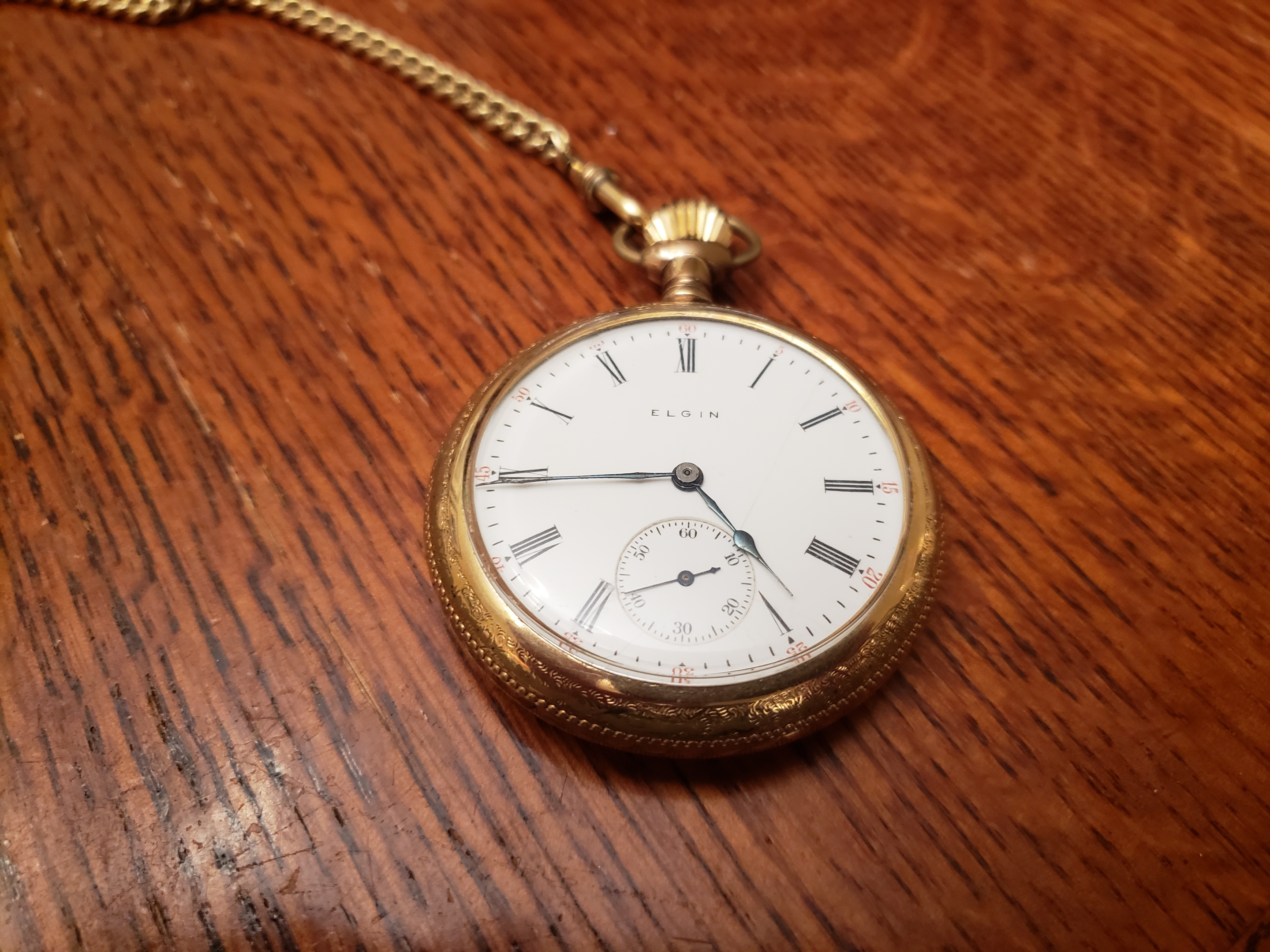
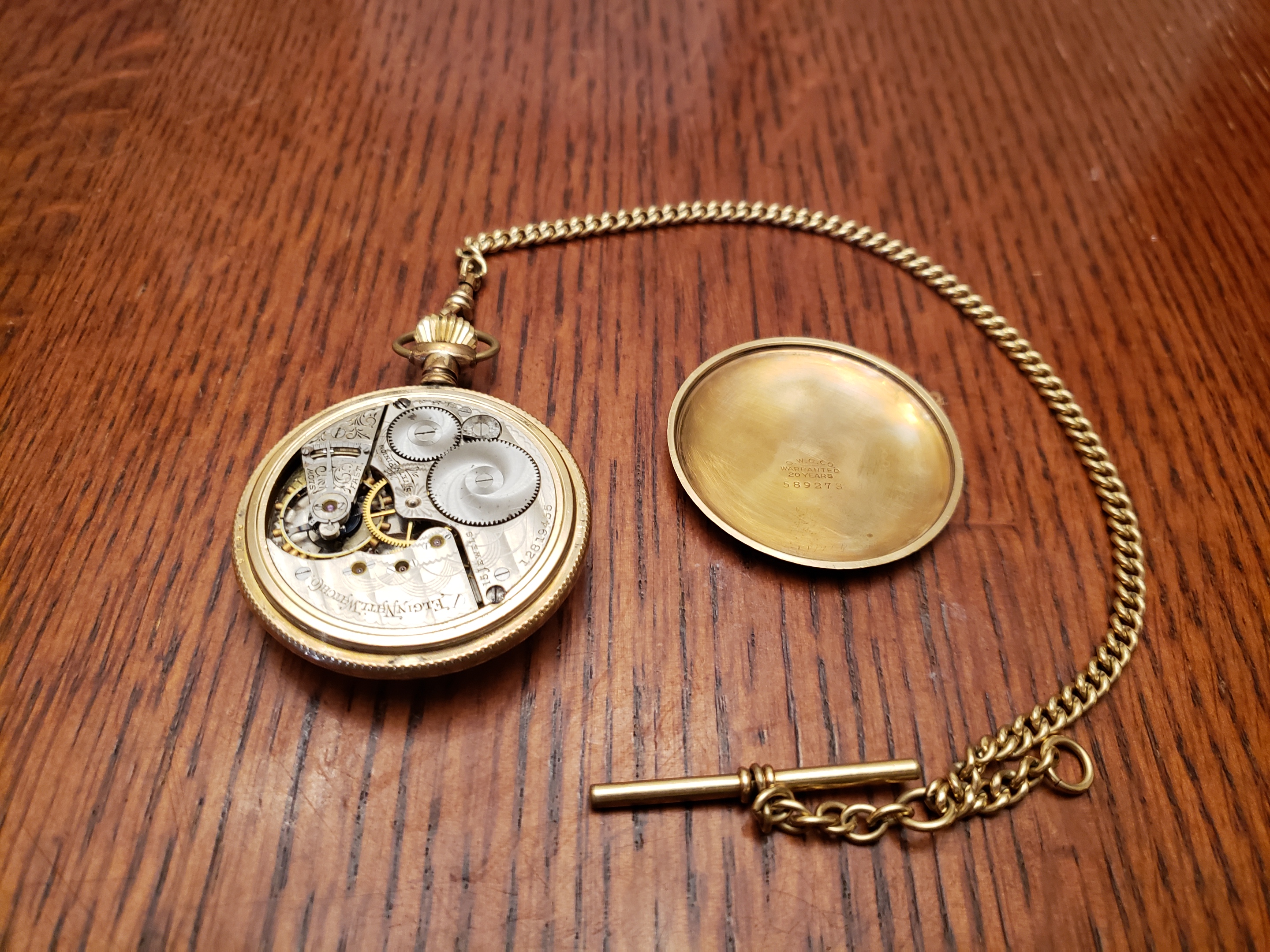
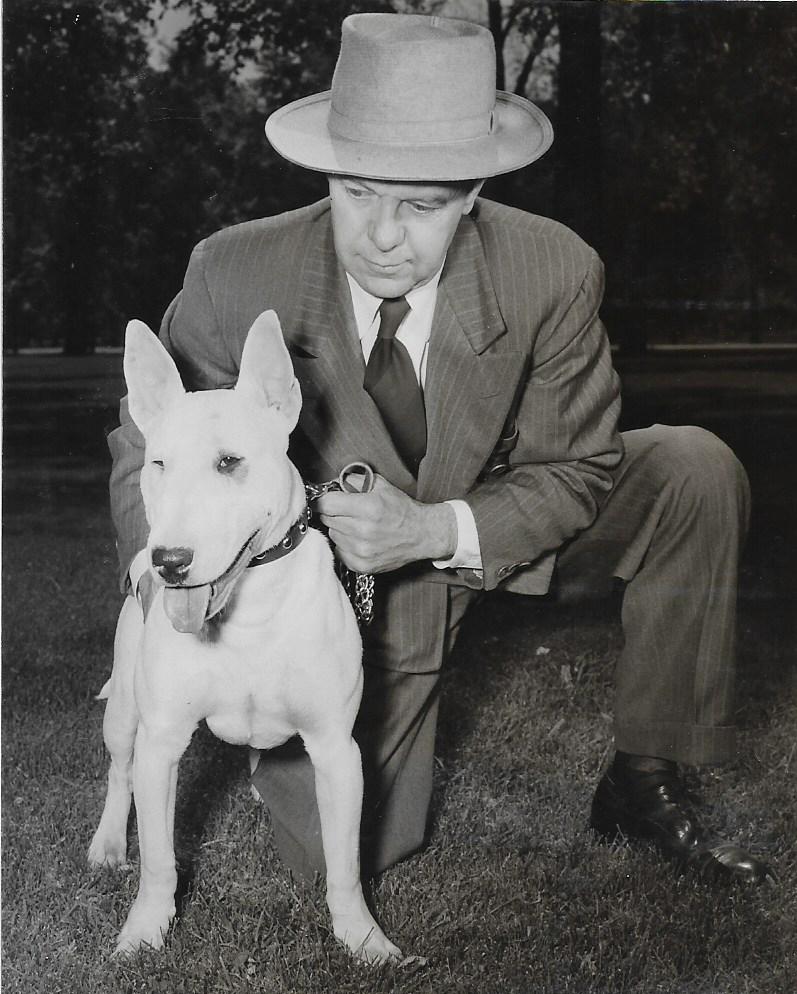
Dad went to his father Owen’s house soon after Owen died.  Living so many years alone, Owen had accumulated hordes of stuff which filled the house in choking piles and stacks.  Dad emptied and cleaned the house, taking truck load after truck load to the dump.  He felt that cleaning the house was a way to give his father deserved dignity after death.  Owen’s brothers had told Dad that the house and everything in it belong to them, not to Owen or his children.  Dad had acceded without argument, and had asked if it were acceptable for him to clean the house, to which they agreed.  Owen did not have a will, so Dad appointed himself personal representative of the paltry estate.  Owen had a small life insurance policy, the proceeds of which Dad gave to his mother to pay delinquent utility bills.  Owen had owned three old cars.  Probate law at the time allowed for the disposition of one car without going through probate.  Dad spoke with the clerk of the probate court, explained that Owen’s only assets consisted of these three junk cars, and asked if he really needed to go through probate court to get rid of them.  After a moment’s reflection, the kindly court clerk suggested the law could be read to allow for disposition of all three cars without involving probate, so long as the cars were disposed of one at a time.  So, dad quietly sold the cars.   A new law student, Dad mentioned this procedure to a law professor, who thought it a novel legal interpretation.  Owen’s horse Bomber and prize-winning bull terriers had long since been sold.  Left to Dad was Owen’s 1907 Elgin pocket watch.  I have seen and held that watch—it is a work of art.  Left to us now of Owen are the photos and the stories, which I am grateful to have.  Though grandpa Owen died three years before I was born, I love him through those stories and photos.


Courage at Twilight: A Single Tear

I sat on the edge of Mom’s bed. She was 35 years old.  And I was 10.  A single tear coursed slowly down her cheek as she confided to me in that quiet private place that her father had died.  My grandfather Wallace.  We had lived with Wallace and Dorothy a scant two years earlier, where I started 3rd grade while we waited three months for our lagging visas.  Dad had been “called” by our church to “serve” as a “mission president” in Brazil.  Translation: Mom and Dad had been invited to work on a volunteer basis leading a group of younger volunteer proselyting missionaries sharing the Gospel of Jesus, as representatives of the Church of Jesus Christ of Latter-day Saints.  Dad took a three-year leave of absence from a generous Johnson and Johnson, and Mom and Dad and three young children, including me, made the long voyage to São Paulo, Brazil.  It was October 1972.  We left behind the tear-stained face of grandpa Wallace, locked in mortal battle with non-Hodgkin lymphoma.  Dorothy had tried every healing remedy she heard of, including a grape juice diet—after two weeks, her sick husband threw the offered juice across the kitchen in disgust.  Wallace fought hard to stay alive until Mom returned home to Utah, and he almost made it.  He passed away in April 1975, and we returned in July.  Mom did not travel to the funeral, deciding instead to dedicate herself to the mission and to her young family, which then included a new baby.  As I sat on the edge of Mom’s bed and watched the lone tear drip down her face, I felt the peaceful warm elixir of great sadness mixed with great hope, the sadness of love and loss, and the hope of healing in Jesus and the promised reunion of resurrection.  During his 62 years, Wally (as his friends called him) had organized the construction of church buildings by church members, had led a congregation of thousands as a lay minister, had driven a milk truck and school bus and hay wagon, had picked tomatoes and peas and sugar beets for church welfare storehouses, had been “daddy” to my mommy.  Though I last saw his face when I was eight years old, I do not remember his tears of knowing good-bye, but rather his gentle playfulness, his chicken coops and carrot rows and hand-pumped well, and his scruffy smile at me upon his lap.

Pictured above: my grandpa Wally in 1962.


My family preparing to leave for Brazil in 1972.


My grandma Dorothy in 1962.

Courage at Twilight: A Can of Stew

Dad’s father, Owen, retired early from Utah Oil Company. He lived in his parents’ home, an old, run down, small shack of a shelter.  He paid rent to his siblings.  The house had few amenities.  It had no water heater, so he bathed in cold water.  The stove did not work, so he cooked on a hot plate.  Only the top oven element worked, so he baked under the broiler.  The toilet water tank was broken, so he flushed by pouring water from a bucket into the bowl.  He had no clothes washer or dryer.  The heat for the house came from a coal boiler, which worked only after building a fire hot enough to burn the coal—often, the house had no heat.  Owen lived alone.  He made all his own meals, which included no fresh vegetables or fruits.  He washed his underclothing and socks in a bucket of cold sudsy water agitated with a toilet plunger; his shirts he took to the dry cleaner.  In his early 20s, Dad visited his father one afternoon, and Owen asked if Dad had any money with him.  Yes, Dad said, some.  Father asked son to go to Safeway, please, and buy him a can of stew, confessing he had not eaten for three days, for he had no money.  He had eaten only oatmeal for days before that, until the oats ran out, and he had not eaten anything since.  When he did have money for food, his staple diet consisted of bacon and eggs and canned goods.  (Where were Owen’s well-to-do brothers? I wondered with a trace of anger.)  As a result of these privations and habits, Owen’s health deteriorated.  One afternoon, he called Dad to take him to the hospital—he felt very poorly—where the doctor ordered a chest x-ray.  “Take a deep breath and hold,” the radiology nurse instructed.  Owen growled back, “What the hell do you think I’m here for?!”  He was at the hospital because he could not do exactly what the nurse wanted him to do: breathe deeply.  He felt he could hardly breathe at all.  Dad got his father settled in the hospital that night, and told him he would be back the next morning to check on him.  Ten minutes after arriving at home, the hospital called: his father, Owen, was dead.  Owen was only 59.  Owen’s father, Nelson, died at age 62, also of heart disease.  Dad and his brother Bill sat in the hospital room with their father’s body, late into the evening.  They both felt a spirit presence in the room, and commented softly to each other about it—somehow, they knew their father had stayed with them in that room in their grief.  In a moment, they sensed that Owen had left to go where the spirits of all good, humble, broken men and women go.  After graduate school, Dad took up jogging, and ate nutritious foods, so he would not have to die at age 60 of heart disease.  Now, at age 86, he remarked to me sadly, “I feel sorry for my father.”  I shudder to remember that I am the same age as Owen when he died.  How grateful and fortunate I am to have my father still alive, still a pillar of strength and love for the family.

Pictured above: My grandfather Owen with Dad (b. 1935; this photo c. 1939)


My grandfather Owen Nelson Baker, Sr. (1901-1960)


My great-grandfather, Nelson Baker (1871-1933)

Courage at Twilight: A Thousand Wednesdays

Almost every Wednesday night for the past 27 years I have spent attending city meetings: City Council, Planning Commission, Redevelopment Agency, Building Authority, and Water District.  This calculates to about 1,350 Wednesday meeting nights.  This schedule shifted my mental paradigm from a Sunday-to-Saturday week to a Wednesday-to-Wednesday week.  I planned my work weeks around Wednesdays, preparing resolutions, ordinances, staff reports, memoranda, and exhibits in time for meeting deadlines, and presenting them to the elected and appointed city officials.  I have worked for 5 elected Mayors, 25 elected City Councilpersons, and dozens of Planning Commissioners.  In my early days, officials with big egos kept the city staff hostage in contentious discussions until long after midnight.  And one Mayor cruelly insisted on having staff meeting with his department heads the next morning at 7:00 a.m.  My hour-long commute during those years contributed to growing exhaustion and anxiety.  City Council meetings now begin at 5:30 p.m., enabling us to conduct most of our informal discussions prior to the business meeting at 7:00, instead of after—most weeks I can leave by 9:00 p.m.  Arriving at home around 10:00, Mom and Dad ask me for meeting reports.  The biggest crowd I ever saw at a City Council meeting was when the Council considered an ordinance to prohibit pit bull dogs—while pit bulls can be sweet, bad owners make some of them bad and dangerous dogs.  Furious pit bull enthusiasts packed the Council chambers and lashed out at the proposal—and the Council backed down.  The smallest attendance I have seen at a City Council meeting was, well, zero.  Even the annual budget meetings draw scant crowds, unless a tax increase is proposed.  In hundreds of closed-door meetings, I have advised and strategized and wrangled with the Council about difficult litigation, property acquisition, and personnel matters.  I have long since adjusted to spending every Wednesday evening at work, standing before the City Council presenting policy proposals, providing training, and introducing agenda items, sometimes with angry eyes boring into my back, sometimes with verbal jousts with those on the dais.  All in a Wednesday week’s work.  One day I will have Wednesday nights off, and won’t know what to do with myself.  Just kidding—I always have plenty of projects to do.

Courage at Twilight: A Lawyer Not A Spy

“You know, that reminds me of something strange….”  Dad worked in the international legal department of Johnson & Johnson from 1965 through 1998.  His responsibilities included knowing what products could and could not be shipped to and from many countries, from Columbia to China, Brazil to Scotland, Tobago to Iran.  Continue reading

Courage at Twilight: Pianos

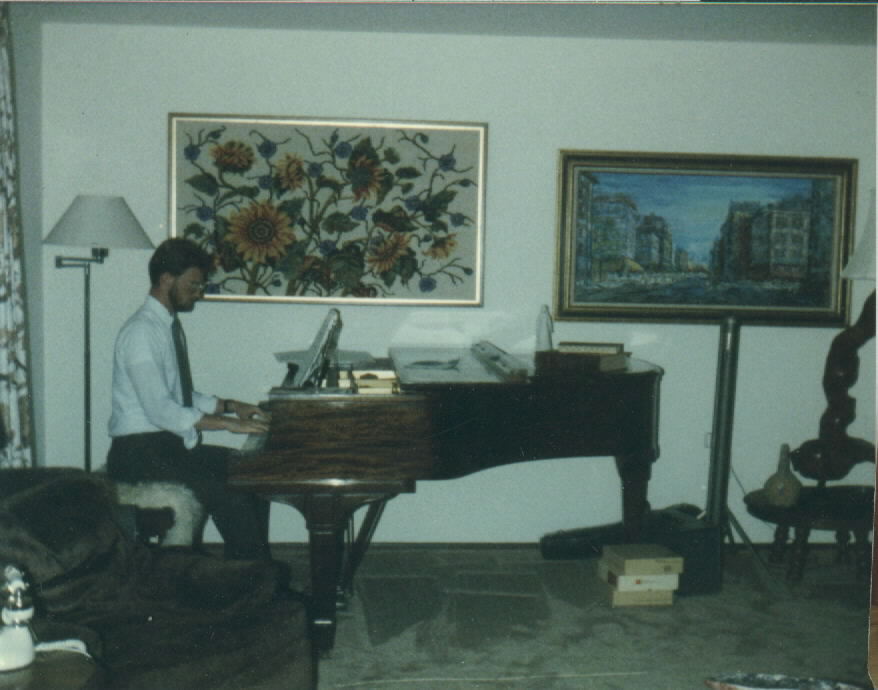
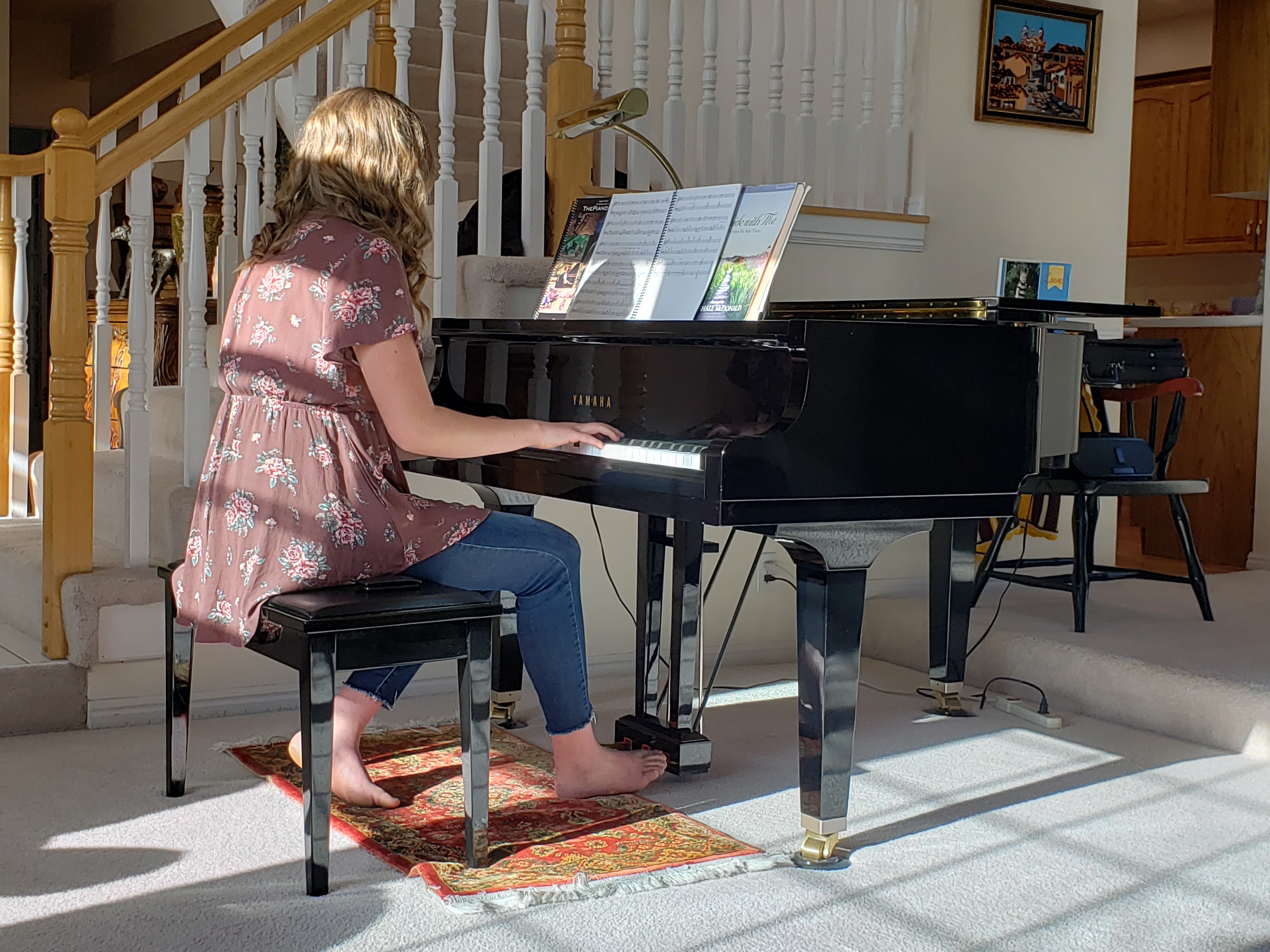
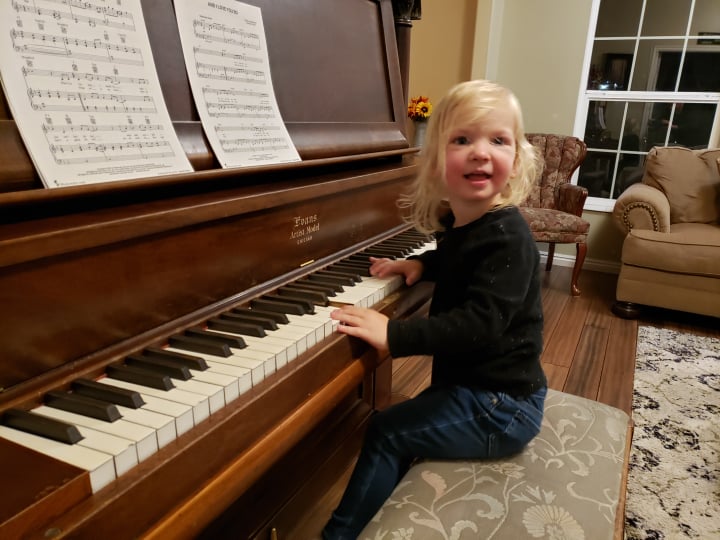
My daughter Hannah came to stay the night with Mom and Dad and me. We baked mince pies and banana chocolate chip muffins; we watched an episode of the delightful new All Creatures Great and Small; we birthday shopped around the valley; she played Mom’s baby grand piano.  When she began to play on Friday evening, Mom and Dad both quietly stood from their family room recliners and shuffled into the living room to hear her play, so beautifully, Clair de Lune, by Claude Debussy.  Her touch and phrasing added to the piece’s natural sublimity.  After baking on Saturday morning, Hannah played piano variations of our Church’s sacred hymns.  Dad, stepping down the stairs in time to give her a good-bye hug, praised her: “I heard and loved every single note you played: so pretty.”  I took piano lessons until I was 17, mastering Debussy’s Girl with the Flaxen Hair, another of history’s most beautiful compositions.  Practicing on the New Jersey baby grand was sometimes painful for the other family members as I struggled hundreds of times through difficult passages.  Hannah’s mother found a 1911 upright grand, which had survived a fire and been dropped on a corner, for $500, and I plunked its keys for over 20 years.  On that piano I dreamed up dozens of lullabies: gifts to my children.  I have told the story of their composition elsewhere on this blog.  Living now with Mom and Dad, for some reason I do not play the piano.  Perhaps the thought of creating music is a gray shadow of older years when my heart carried music.  Perhaps I have lost my touch and talent.  Perhaps I am emotionally empty.  But one evening Mom asked me to play.  I felt somewhat startled, both at the thought of playing, and at realizing I had not played for six months.  I sat down with my lullaby book and played and sang the old songs that opened my heart then and now.

Pictured above: Yours Truly playing the piano in about 1986.

Pictured below: Hannah and Lila recently playing Mom’s baby grand.  My grandmother Dorothy played the piano, as does Mom.  If Lila learns, she will be the fifth generation of pianists in the family.

Courage at Twilight: Skiing

Utah boasts the “greatest snow on earth.” I hear people avow it.  They come from all over the country and the world to ski Utah’s slopes, some moving here.  My first ski adventure was in New Jersey, in 60-degree weather, in freezing rain, and I fell when my skis slid into a mud patch oozing up through the slush.  An inauspicious beginning, as they.  I never skied again, sticking instead to the plastic sled at the neighborhood park.  But several of my children have taught themselves to ski and snowboard, and they love the slopes.  Dad told me he tried skiing once, in the early 1950s, with a group of friends.  One friend lent him a pair of jumping skis—very long, very wide, and grooved on the bottom—made for skiing straight down and off the ramp.  Beginning his descent, he found he could not turn, of course.  As he quickly picked up speed, he knew the only safe course was to not crash.  A voice belched from the loudspeakers mounted on poles along the slope.  “Skier, you need to slow down.”  Dad heard the instruction, but did not know how to comply.  Moving really fast now, the voice became urgent: “Slow down!  Slow down!  Slow down!”  Dad would have liked nothing more than to obey the order, but was powerless against the jumping skis and gravity and ice.  Finally, the voice frantically appealed to everyone else at the Solitude resort.  “Watch out for that skier!  Get out of his way!  Let him through!  MOVE!!”  The skiers standing in line for the ski lift looked up and separated as Dad sped through.  The throngs trudging from the parking lot to the lodge looked up and scrambled as Dad zoomed through, past the lodge, and across the sparsely occupied parking lot, where a short rise on the far side finally slowed him enough for him to topple safely sideways and end the harrowing run.  He felt so relieved and grateful he had not hurt anyone and had not died crashing into a building or a car.  Dad never skied again.  He, too, became an enthusiast of the plastic sled.


(Image by Wokandapix from Pixabay.)

Courage at Twilight: Quotidian

Quotidian: a word embracing that collection of ordinary and mundane activities and events which one experiences on a routine or daily basis.

“Here you are!” Mom exclaimed as I entered the house after work and sat with her and Dad in the family room.  “Tell me about your day?” I invited.  Mom recounted how, the day being cold but sunny and bright, she and Dad had decided to run some errands.  She drove her Subaru with Dad to pick up her newest needlepoint from the dry cleaner where it had been blocked, then to take it and three other newly-blocked needlepoints to the frame shop and selected frames—they’ll be done in about a month—then to the Burger King drive-through for Impossible burgers and fries and Diet Cokes, and while waiting for their food watching as police officers from three patrol cars placed a man in handcuffs and searched his car in the Burger King parking lot, then came home and fell into their recliners to watch NCIS and eat their Impossible burger meals.  “We’re pooped!” she exclaimed.  Mom then reminisced about Lynn Freeman from her University of Utah days who was a good friend and who had dwarfism and who was on the university swim team and who became a first-rate painter—I have admired his two paintings on their walls for five decades—Lynn gave her one painting as a wedding gift in 1962.  I told them a bit about my work day, and the new book I’m “reading” during my commute: Leadership, by Doris Kearns Goodwin, about the qualities that made Abraham Lincoln, Teddy Roosevelt, Franklin Roosevelt, and Lyndon Johnson such pivotal leaders in American history, being connected in a line of admiration and mentorship back to George Washington.  As stood to go to my rooms, Mom told me they had just ten minutes left of the last episode of the last year of 18 years of NCIS.  She owns all 18 seasons on DVD.

Pictured above: Still Life, by Lynn Freeman.

Pictured below: Scene of Old Park City, by Lynn Freeman.

Courage at Twilight: A Questionable Vote

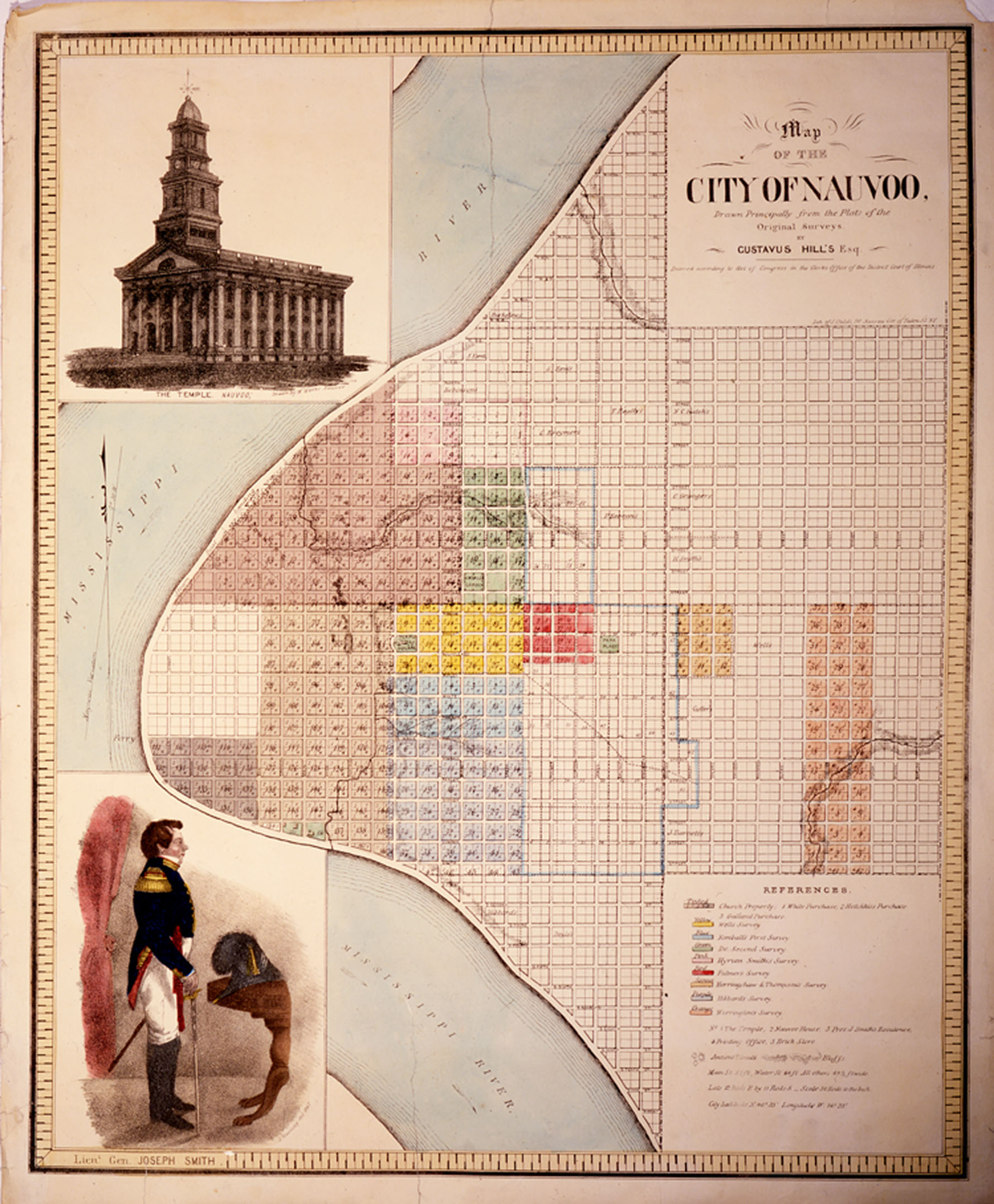
I managed to keep my job today.  A subdivision plat came before the City Council for its approval.  Dissatisfied with the particulars, the Council voted against it.  This plat comprised one piece of a larger development plan already approved by the City, and was simply the first platted phase.  But the Council thought the first phase should contain some of the master plan’s promised amenities instead of consisting only of residential lots.  “Did the Council just deny approval?” I whispered to the Mayor.  The Council had, she confirmed.  Even as the frantic developer raised his hand to object, I gently intervened to express my sympathy for their concerns, but reminded the Council of their prior approval of the development master plan, and of the law in Utah that requires approval of subdivision plats if they comply with City ordinances (which this plat did), and that the Council, actually, was required to approve this plat.  I explained that their rejection of the plat certainly would be challenged by the developer, and that the City would lose the challenge.  I walked the Council through the proper parliamentary procedure to approve a motion to reconsider the prior rejection, then to present a motion to approve the plat.  All of this I said with a sort of frozen apologetic smile.  Actually, I was tensely walking a long legal tightrope: in general, elected officials do not appreciate being told in public that their vote is questionable, or that they are required to vote contrary to their inclinations.  What’s worse, this whole exchange was broadcast to the world on Facebook Live.  To my great and immediate relief, all the Council members thanked me for helping them understand the law and for walking them through the corrective process.  Driving my hour-long commute late that night, listening to the Chernow’s Hamilton, I felt so grateful to be working with reasonable, intelligent, ethical people—and to have kept my job.  Mom and Dad were equally grateful, and relieved, when I recounted to them the event.

(Pictured above: 1844 Town Plat of Nauvoo, Illinois, by Joseph Smith, Jr.  Source: Church of Jesus Christ of Latter-day Saints.  Used pursuant to the Fair Use doctrine.)

Courage at Twilight: Sleds and Toboggans

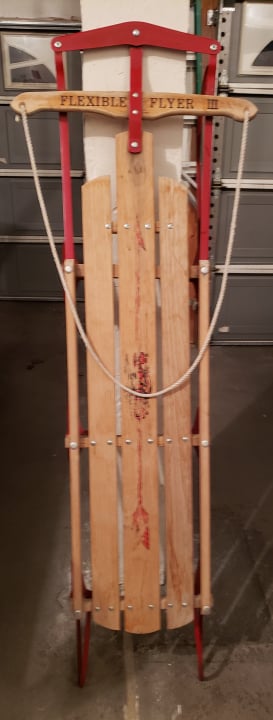
On Christmas Eve 1941, Dora shooed Nelson (barely turned 6) and his siblings, Louise (7) and Bill (4) up to bed: “Santa will not come until after you are in your beds asleep.” After sleeping for some time, Nelson awoke and, thinking it was morning, woke his siblings: “It’s Christmas morning,” he whispered.  “It’s time to go downstairs.”  In fact, Nelson had awoken after being asleep for a very short time, perhaps one-half hour.  The children stepped quietly down the stairs to see the presents Santa had left for them under the Christmas tree.  Instead, they saw their mother putting presents under the tree.  The main object they observed was a new Flexible Flyer sled.  Dora turned from the tree and saw the children spying from the stairs.  “You get back upstairs and go to sleep!” she bellowed.  When morning had really come, the children came down the stairs to see their new sled.  Christmas night had brought new snow, which the morning’s cars had packed down on the Millcreek Canyon road.  Dora bundled the children up and drove them to the top of a straight portion of the inclined road.  She instructed the children that she would drive to the bottom of the hill and signal when they could safely launch.  From the bottom of the hill, after the several cars had passed, she waved at the children, and they took turns flying down the icy road on their new sled.  Whichever child had sledded down would pull the sled back up the road.  Bill, being small, had the benefit of sliding down on each run and being pulled back up the hill by his older sister or brother.  Sometimes a car would begin to drive up the road after the sled run had begun, and the rider would have to steer off the road to avoid the car.  Thirty years later, Mom and Dad bought a Flexible Flyer for my siblings and me, and we passed many shrill happy hours racing down the hill at Johnson Park, in Piscataway, New Jersey.  Whether sitting or prone, we could twist the cross-bar to navigate handily around tree trunks, though once Dad took us down the hill on an old wood toboggan that did not steer well and he crashed us into a tree.  We all tumbled off, thrilled with the adventure and mishap, but sad for the cracked toboggan.

Pictured above: the Baker Flexible Flyer, still in use after 50 years.

Courage at Twilight: Lemon Cupcakes with Kids

Two loaves of bread were rising—different recipes—and the oven was preheating to 425. My son Brian had brought his family for a weekend visit; he and Avery are both delightful adults.  And of course, my granddaughter Lila is one of the great joys of my advancing life.  Gabe (age 3) had come over to play with Lila (age 2) for a couple of hours.  After playing Legos and blocks and hide-and-seek for a while, he importuned, “Can we bake?”  I already had two bakes going, and did not think I could handle a third.  But Gabe asked so sweetly and sincerely that I could not say no.  “Okay,” I said seriously, “but we can’t make two cupcake recipes—we can’t make real cupcakes from my recipe book and your cupcakes from your imagination.  If we’re going to bake cupcakes, we’re going to follow the recipe.”  Sensing my resolve, he nodded his consent.  He and Lila sat on bar stools at the kitchen island.  They each measured out and poured into the bowl the various ingredients, with my hands guiding theirs: flour, sugar, lemon zest, baking powder, milk, melted butter, and eggs—Gabe cracked the eggs expertly, with not a speck of shell escaping.  He did politely insist on one imagination ingredient, which actually mixed in perfectly: colored confectionary sprinkles.  Gabe and I held the mixer together, but Lila declined, not liking loud machines like vacuum cleaners and blenders and electric beaters.  But they wanted to be, and were, involved in every step, including licking the beaters and spoons.  Mom and Dad looked on in amusement and adoration.  After the children placed the cupcake liners into the tin cups, we carefully dolloped the batter into the liners and slipped the tray into 350 degrees.  While the cupcakes baked, we mixed the icing, made from a lot of powdered sugar, a little milk, and the juice of one lemon.  How proud the children were of their iced cupcakes, excitedly licking the tangy icing off the multi-color cakes before biting in.  Mom and Dad and I enjoyed our cupcake, too.  An hour prior, I had thought I did not have the energy or patience to bake cupcakes with two little children while simultaneously baking break.  With the cupcakes done and decorated, and devoured, I realized that the increased tenderness I felt for them, and my lifted happy spirits, would have gone tragically unexperienced had I demurred.  As it is, I will always remember baking lemon cupcakes with Lila and Gabe, and I hope they will remember baking lemon cupcakes with me.

Courage at Twilight: A “New” Bicycle

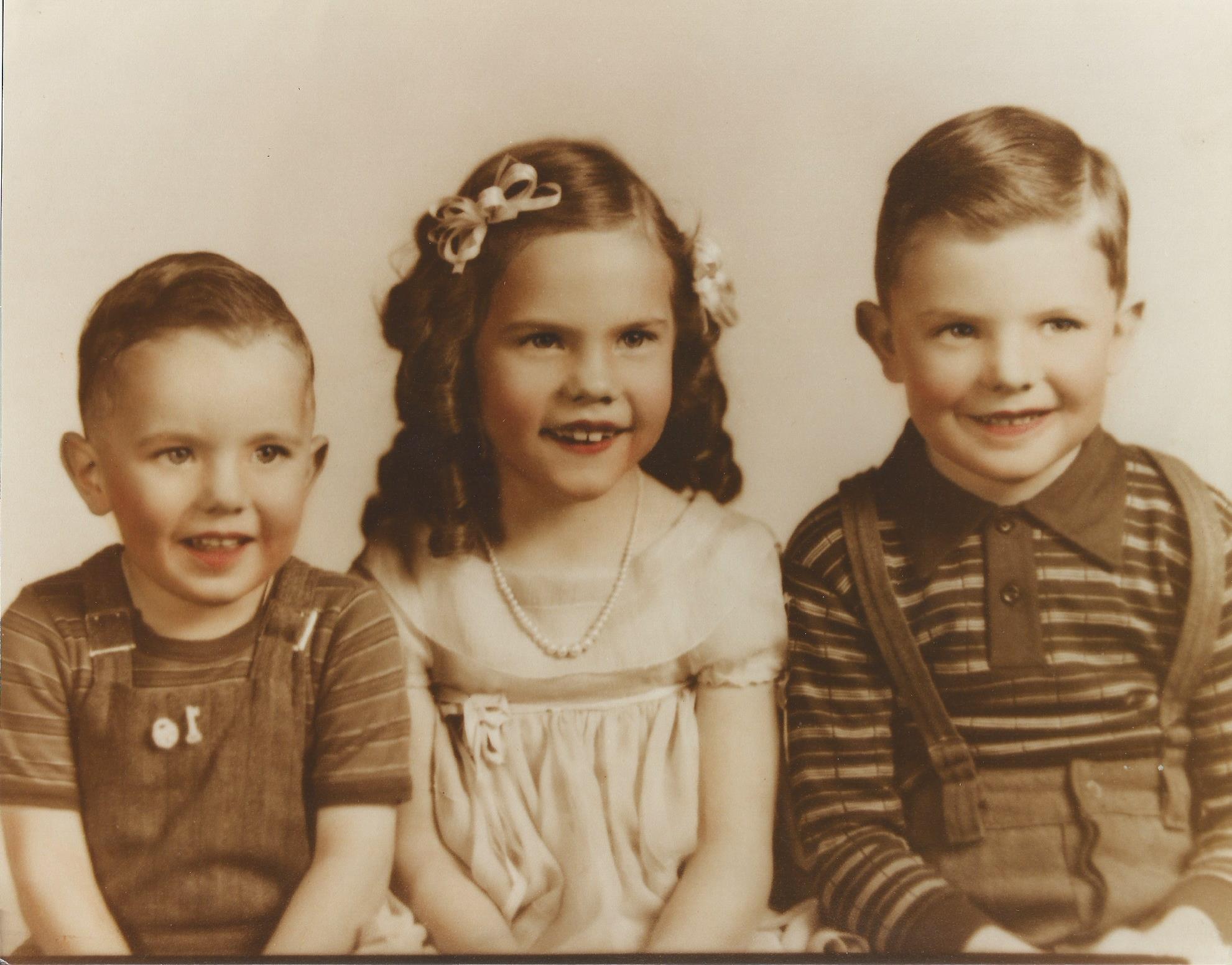
Dad and his sister Louise and brother Bill had been telling their mother, Dora, that they wanted a bicycle for Christmas.  Other children in the neighborhood had bicycles, but Dad’s family did not have a bicycle, so they asked their mother for one.  Dora acquired an old bicycle for their Christmas, but she told them they could not ride it until they painted it, because she did not want anyone to know that it was used.  They rode it anyway that very Christmas day.  But later they did paint the bicycle from a small can of bright red paint.  The man at the paint store told them to stir and stir and stir the paint, which they did obediently for a long time.  With the children’s paint job, the bicycle still did not look new—but it certainly was red.  Soon after they started riding the bicycle, something punctured an innertube, and the tire went flat.  The children walked the bicycle to the service station and asked the attendant how to pump up a bike tire.  The man took the nozzle of the air compressor and showed them how to push it onto the stem of the inner tube that poked out from the rim.  But he neglected to tell them how long to pump the air.  When the man left, they put the compressor nozzle on the stem and simply held it there, air pumping all the while.  They held the nozzle in place until the tire suddenly exploded.  Dejected, they walked the bicycle home and told their mother that the tire blew up.  “What do you mean the tire blew up?” she barked.  Of course, she helped them find another tube for the tire.  Dad taught Bill how to ride the bicycle, but he did not think to teach Bill how to stop the bicycle.  Dad got Bill going down the inclined street, and Bill rode faster and faster on his right-angle approach to the busiest road in town: State Street.  “How do I stop?  How do I stop?!” Bill began hollering.  Fortunately, Bill rode into a fence and fell over, unhurt, instead of riding out into certain death on State Street.

(Pictured above, right to left: Dad, Louise, Bill, circa 1950.)
Courage at Twilight: Dreaded Haircuts


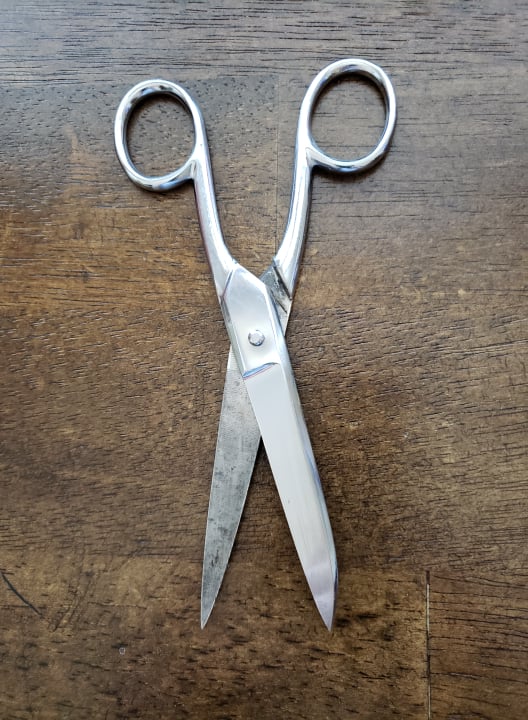
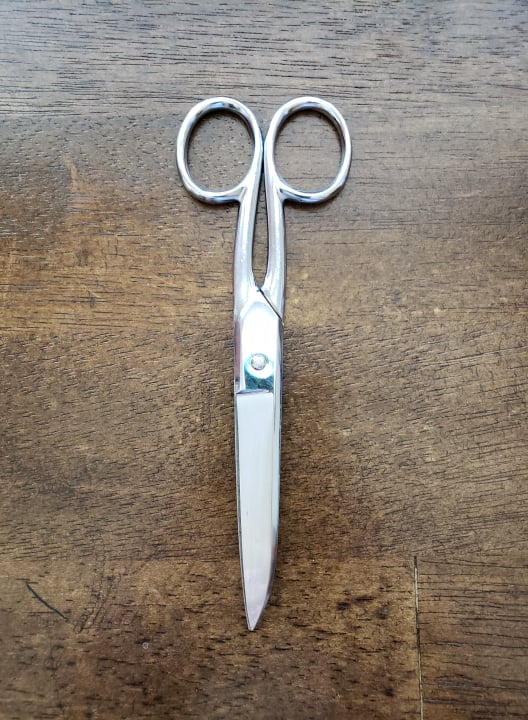
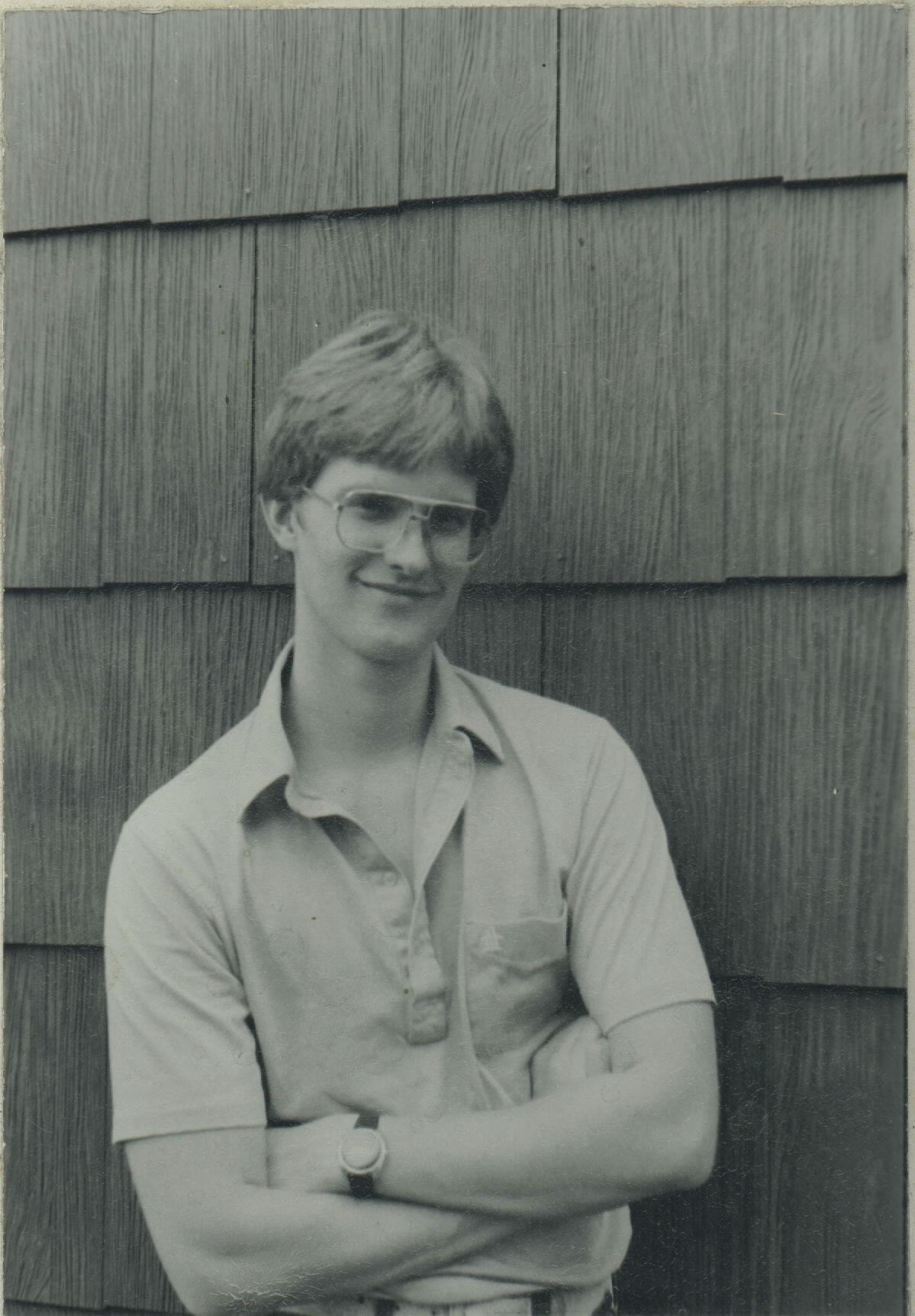
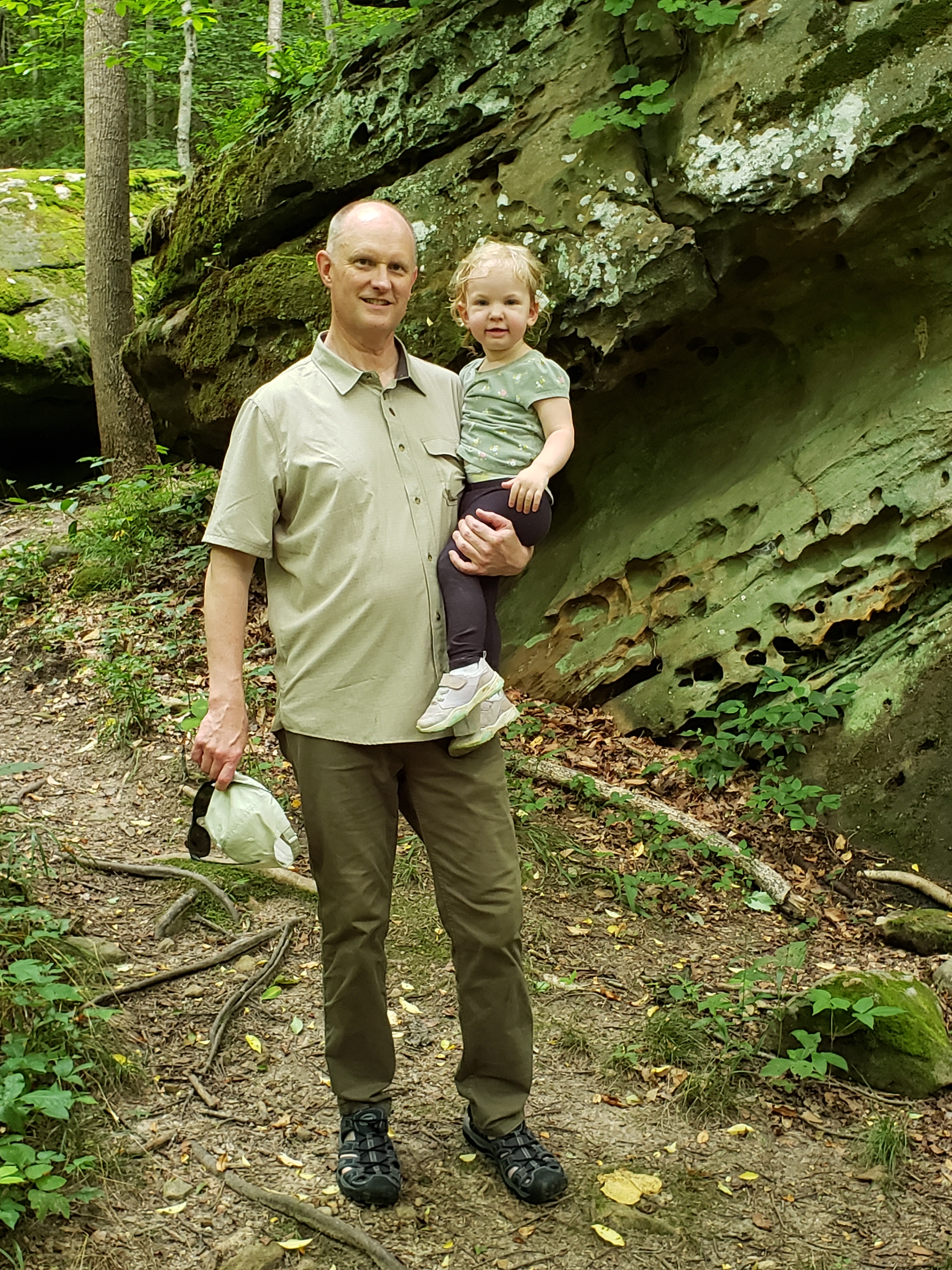
Dad took me to a barber for a hair cut when I was a little boy.  I felt terrified, for reasons long forgotten, and cried and cried and cried, until Dad gave up and took me home.  I am sure he felt thoroughly frustrated, though he did not punish me.  Well, perhaps he did.  From that day on, Dad cut my hair, with scissors and electric clippers.  Inevitably, the clippers nipped painfully at my ears and the scissors caught and pulled my hair and the cut hair went down my back and stuck to my face and the whole experience was humiliating misery.  I came to dread getting my hair cut, but having pitched a fit, I could not really complain.  All through junior high school and high school Dad cut my hair.  I wanted cool hair, like the popular kids, parted down the middle, and long (it was the late 70s after all)—and I did NOT want Dad, or anyone, cutting my hair.  Of course, not being the cool kid but wanting cool long hair so badly translated into an ungovernable mop, with its occasional mediocre hair days.  When my brother Steven came to visit before Christmas, he noticed the steel sheers on my desk.  “I know those scissors!” he exclaimed.  How could you possibly know those scissors, I thought.  I have been using them for decades; they have been my truest and sharpest scissors.  “Dad cut our hair with those scissors!”  Somehow, I had unwittingly inherited them, using them for all my paper cutting needs.  “Don’t you remember how our hair always got caught and pulled in the hinge?”  Oh yes, I remember.  Looking back these decades, Dad was quite a skillful barber.  He did a great job on an insecure adolescent who wanted to look a certain way and feel a certain way but did not know to even begin approaching the subject successfully.  So, not knowing how else to go about it, I submitted to Dad’s haircuts.  Steven, younger and feistier, was not so tolerant, and soon left home for his haircuts.  Now, of course, I am bald and the whole matter is moot.  Just put the clippers on #2.

Me, circa 1980.


Me in 2021

Courage at Twilight: Cleansed and Renewed

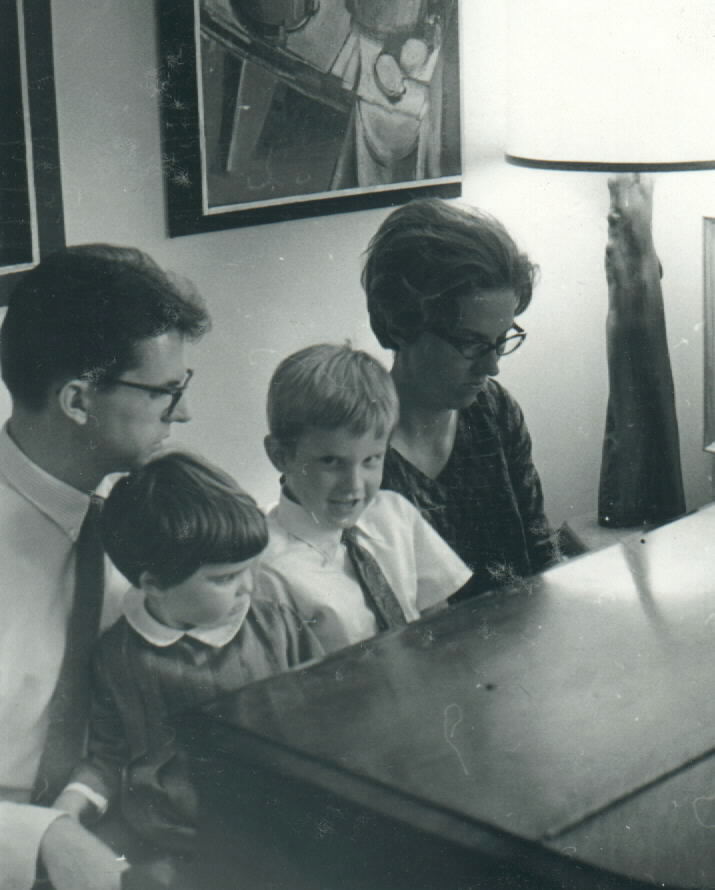
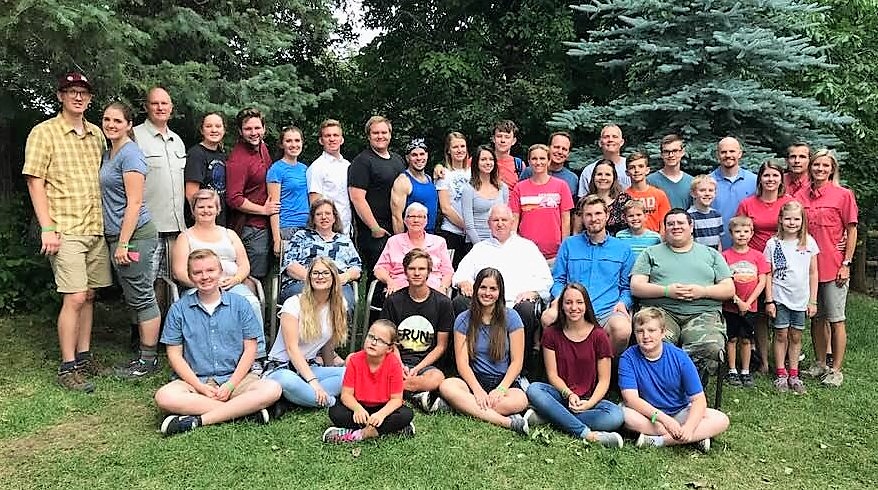
Every conscientious parent knows what it is like to feel exhausted and empty from continual grinding parenting, whether you’ve one child or ten. I remember feeling mind-numbingly tired, and seeing the dinner dishes still needing to be washed, and washing them, and it is close to midnight, and the baby is sick and crying and throwing up.  And I am worried to death about the baby, and about my children having friends and finding God for themselves and learning to drive, and about the $200 million lawsuit waiting for me the next morning, and every morning, for years, and though the claims are specious, I still have to fight like my life depends upon it, for years and years.  And somehow we make it through, and suddenly we are attending high school graduations and weddings and birthday parties for pure little grandchildren just learning to smile and to walk and to talk, and the children are moving away.  I have raised seven children—and, of course, parents are never done being parents to their children.  My mother raised six children, at the time of this 2022 writing aged 57 to 41, and at age 82 she has not stopped being a mother.  Observing her children struggle with the challenges of parenthood, Mom related to me one late night in New Jersey, when she was still doing her household chores.  The television was on, broadcasting a PBS symphony orchestra concert, Gustav Mahler’s Symphony #1.  The beauty of the music and the performance—the first movement—suddenly gripped her and washed through her, and she wept and wept as the music played beautifully on.  She has forgotten the particular pains and worries of that day, but does remember that life was hard, and that she was feeling tired and overwhelmed and discouraged.  But after this experience of being moved by music, she felt cleansed, renewed, strengthened, happier, and better able to carry on.  The loads remained just as heavy and tiresome, but her ability to carry them had increased.  Perhaps nothing is more important for a child than having parents who know how to renew their energy and strength so that they can again put on the parental yolk and redouble their efforts on behalf of those children.  And in the meantime, crank up the Mahler.

(Pictured above: the Baker family, circa 1969, with yours truly at the keyboard.)

(Pictured below: a more recent gathering of the Baker clan.)

Courage at Twilight: Columbian Drug Cartels

“That reminds me of something,” Dad chuckled.  For many years, Johnson & Johnson’s companies in Central and South America were Dad’s responsibility.  He had to know each country’s peculiar manufacturing, corporate, and import/export laws, and advise company officials on staying within those laws.  J&J subsidiaries in the various countries manufactured many products, which were shipped between countries in locked and sealed steel shipping containers.  On one occasion, a J&J subsidiary in Mexico received a shipment from a J&J subsidiary in Columbia.  Shipments from Columbia were subject to strict procedures, which included inspections of the shipping containers, and container locks and seals.  If a container arrived with a broken seal, company representatives were to summon police authorities prior to unlocking and opening the container.  Upon breaking the seal on one shipping container from Columbia, unlocking the lock, and opening the container, J&J personnel found a large shipment of cocaine, along with the legitimately imported hospital and pharmaceutical supplies.  The subsidiary general manager called Dad with a frantic, “What do I do?”  Dad first instructed him that the drug cartels had bigger and more guns than J&J security, to leave the container unlocked, without guard, and to move all company personnel as far from the container as possible in case cartel agents came to collect their property.  Dad then instructed him to call federal law enforcement, state law enforcement, and local law enforcement, to inform them of the situation, and to arrange for all three police agencies to arrive at the same time to investigate.  The general manager did exactly so, and the police agencies arrived simultaneously, removing the cocaine without incident.  Dad learned later that the cartels had developed a mechanism and method to lift and remove shipping container doors as a unit without breaking the door seals, adding to or removing drugs from the shipments, and replacing the container doors, leaving the seals intact and with no indication of the containers having been disturbed.  Something had apparently gone awry with this particular shipment.  Dad’s protocol kept company personnel safe, protected Johnson & Johnson’s legal standing, deprived the cartel of its drugs, and minimized the potential for corruption by involving three competing police agencies.

(Photo by Guillaume Bolduc on Unsplash.)

Courage at Twilight: A New Doll

After Mom turned six, in November 1945, her mother and father informed the children that there was no money for Christmas presents that year. The parents were sorrowful and resigned, while the children—Mom being the oldest—naturally felt disappointed.  Still, they were used to not having many material things, so the news was not a shock or a trauma, just a disappointment.  Though they were poor, they did not think of themselves as poor.  They did not have many possessions, but they were tender and loving with each other and enjoyed the richness of home and family, church and community, music and literature.  With this radiance, the children rapidly reconciled their disappointment and looked forward to Christmas morning nonetheless.  Christmas was still a happy, hopeful season.  Sauntering slipper-footed into the living room on Christmas morning, Mom saw a new doll in the corner, meant for her.  She joyfully picked up the doll, not having expected any gifts at all, and began to love it and play with it.  Soon, however, she discovered, with a sinking feeling, that the new doll was in fact last year’s doll, made up to look new.  Mom’s mother, Dorothy, had clipped locks of her own auburn hair and sewn them to a band, which she stitched to the doll’s head, concealing the band with a new little bonnet.  After her realization, Mom regrouped and was happy about her new doll, feeling gratitude for her mother’s efforts during a challenging era to provide for her and her younger siblings.  The orange and peanuts in her stocking added a measure of pleasure to the day.  Knowing Dorothy so well (she passed away at age 96), I was moved, thinking of her cutting off lengths of her own hair to make a gift for her little girl.  Of course, this was only one of infinite sacrifices Dorothy made for her children.  My mother, in turn, made infinite sacrifices for her children, as I have done for mine, and as my children are beginning to do for theirs.  And so it goes.

(Image by Christiane M. from Pixabay.  Sadly, no photo of Mom’s doll is known to exist.)

Courage at Twilight: Defending the Little Guy

Johnson & Johnson executives tended to use Dad as their personal attorney for their legal troubles. He settled one executive’s divorce.  Another asked Dad to get him acquitted from a mandatory-suspension speeding ticket.  Dad quickly got the lay of the night court land, and announced to the tired judge that his client wished to plead guilty, without trial, to speeding one mile per hour below the mandatory suspension speed.  The judge readily agreed, but the executive was furious at the guilty plea, until realizing that Dad had saved his driver license and only a fine was due.  Another executive had employed a maid for many years, who by this time was retired and widowed, living in a run-down project in New Jersey.  She opened her power bill one day to find an invoice for several tens of thousands of dollars.  She did not know what to do, so did nothing, and the power company shut off her electricity, with winter coming fast.  Her former boss asked Dad to see what he could do about the situation.  Dad discovered, upon investigation, that all of the building’s tenants had connected their power lines to the woman’s meter.  The entire building’s electrical usage was being billed to the poor woman.  When the power company shut off her power, the whole building went dark, and cold.  Dad wrote to the power company, summarized the situation, and asked them to forgive the bill.  At first the company refused: the woman’s meter showed that she had used that much power, so the bill had to be paid.    And they would not restore power until the entire bill was paid.  Dad wrote again to the power company, this time explaining the situation in detail, including the woman’s age and frailty, her poverty, the prospect of her facing winter without electricity, how the other tenants had stolen electricity, etc.  He told the company that their posture over the situation, which was none of the woman’s making, would surely result in her untimely death.  In exchange for forgiving the bill, Dad offered to have the woman pay $1 per month toward the excessive power bill for as long as she lived there.  The power company accepted her offer, restored her power, and corrected her meter situation.  Soon after, Dad helped his new friend move to a retirement community, where she lived happily with her friends for the rest of her days.  I am proud of Dad for standing up for the little person against the corporate bully, and making a difference for the one.

Photo by Ralph (Ravi) Kayden on Unsplash

Courage at Twilight: Works of Art and Treasure Maps


Nearly two years after immersing myself in Mastering the Art of French Cooking, by Julia Child, and cooking many dozen delicious and beautiful dishes and desserts, I received as Christmas gifts two new baking cookbooks, which I had been not-so-secretly coveting.  The first is Baking with Mary Berry.  The second is Paul Hollywood’s 100 Great Breads.  You may recognize both names from The Great British Baking Show, to which my daughters introduced me a few years ago.  We have watched, with pleasure and intimidation, Great Britain’s expert amateur bakers, glad the hosts’ withering critiques were not aimed at us.  With no judges but myself and my admiring parents, I spent January making several recipes a week.  Hollywood’s first bread recipe is for a “wheat sheaf loaf.”  He promised if I can bake that, I can bake anything in his book.  Well, I did succeed in making a beautiful loaf.  (Beware: cut the insane volume of salt by at least half.)  Each of Mary’s recipes fits on a single page, faced with gorgeous photos.  They have all turned out wonderfully so far: magic lemon pudding cake; magic chocolate pudding cake; white chocolate muffins with strawberry jam centers; double chocolate muffins; French pancakes; and, oat-butter-crunch “flapjack” bars (nothing like American pancakes).  But the most beautiful so far is her orange-chocolate mousse cake, which I offered at Hyrum’s birthday.  I heard on National Public Radio that millions of people have taken up the baking hobby due to Covid pandemic cabin-fever isolation.  For me, the motivation is different.  I love the metamorphic magic of taking an assortment of powders and liquids and combining them to create an edible work of art.  Not to mix metaphors, I consider each recipe as a treasure map, some harder to follow than others, but all leading eventually to an unexpectedly delightful treasure.  I hope I my cartographic talent is steadily growing.  Mom and Dad are happy for me to practice on them.


Mary Berry’s Orange-Chocolate Mousse Cake


Paul Hollywood’s Wheat Sheaf Loaf

Courage at Twilight: A Warm Blanket and a Smile

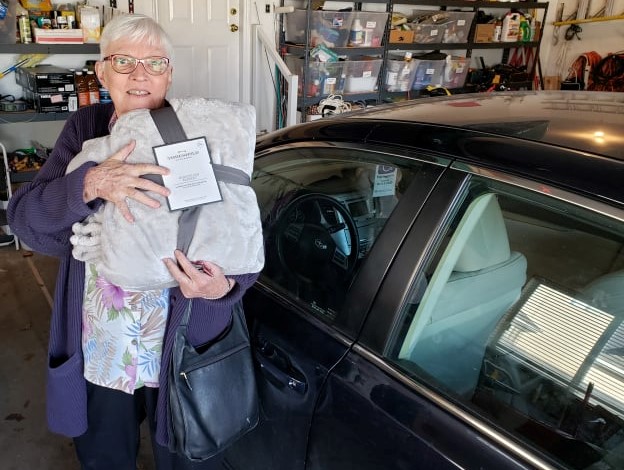
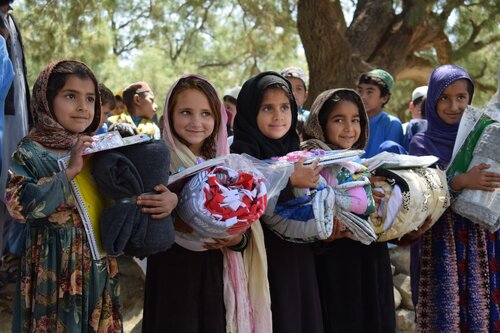
You may remember our homemade greeting cards made from pressed leaves and flower petals, with the message “You Are Loved” artistically rendered inside.  The cards were included in humanitarian hygiene packages sent to refugees around the world.  The same NGO, Lifting Hands International, combined with our local Church leaders to organize a blanket drive.  On a Saturday from 11:00 a.m. to 1:00 p.m., we could drop off new blankets, which would be distributed to refugees the world over.  After Mom announced told Dad and me that she wanted to participate, she and Dad drove off to Target.  Leaning heavily on their shopping carts, they shuffled the miles and miles to the back stacks of the bedding section.  Mom picked out a fluffy gray fleece, queen-sized, wrapped in a charcoal ribbon, and brought it home with a smile.  Before the day of the drive arrived, the community had already dropped off over 100 blankets.  At 11:00, Mom trundled off to her trusty Subaru, hugging her blanket, and drove off to make her contribution.  I felt very proud of her.  A blanket is a small thing.  A thousand blankets are a thousand small things.  And every small thing matters.  But there is nothing small about my mother’s heart.

Afghan refugees with their new warm blankets.

(Photo from Lifting Hands International.  Used pursuant to the Fair Use doctrine.)

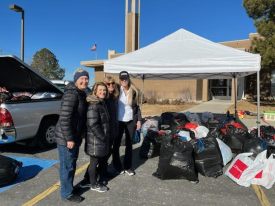
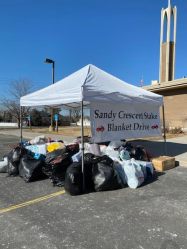
Blanket Drive Update: Lifting Hands International received 414 blankets from Mom’s community for Afghan refugees.  Here are photos of the drive organizers and blankets, used with permission.

Stake Blanket Drive2    Stake Blanket Drive1

Courage at Twilight: Meager Meals

I emerged from my sick room, double masked, to figure out a mid-day meal, and opted for summer sausage slices, gouda cheese cubes, Wheat Thin crackers, and sliced apples. A pleasant snack.  Mom commented from her corner recliner, “What a perfect snack!  Isn’t it nice to have so many good foods to choose from?  I feel so blessed.  I feel so grateful.  I thank Heavenly Father in my prayers.  I was often hungry as a child.”  I stood stunned at the thought of my mother being hungry as a child, and asked her about it.  She explained that her family had been poor.  They ate healthy foods they grew in their own garden, but their meals were meager.  She told me about thinning the carrot and beet rows, of squashing the tomato hornworms, of gathering the eggs from protective hens, and of dunking dead chickens in scalding water to pluck their pungent feathers.  Her father was a junior high school teacher, and worked odd jobs during the summers, as a milk truck driver, supervisor at a pea vinery, county roads crew member, school bus driver, laborer at a munitions factory, and custodian.  He kept taking classes at the University of Utah, and eventually made a better salary as a junior high school guidance counselor.  But as a younger child, a skinny, slight child, there were no snacks between small simple meals, and Mom’s stomach often growled as she lay in her bed at night.  As I munched my lunch in sick-room isolation, I pondered my mother not having had enough to eat, and likewise thanked my Heavenly Father for our bounty.

Pictured above: Mom with her father, mother, and little sister.  Circa 1944.


Mom’s house, built in her birth year of 1939.


Mom’s house in 1957.


Mom in the family farm fields with her father and little sister.  Circa 1942.


Mom in the wagon while dad cuts the grass.  Circa 1940.

Courage at Twilight: Butch Cassidy and the Sundance Kid


Whenever Dad says, “That reminds me of something,” I know a story is coming—a story I have heard many times before—a story as good on its fifth telling as on its first.  Some of my favorites are of his maternal Grandpa Greene.  William T. Greene, an immigrant from England, lived in Utah’s Great Basin in the first decade of the 20th Century, on a ranch on the Ute Indian Reservation, near the town of Vernal.  He was a sheriff there, and his philosophy toward outlaws was to make peace or make arrest.  If the outlaws would agree not to cause trouble in his jurisdiction, he would leave them alone.  If they made trouble, they went to jail.  Grandpa Greene knew Butch Cassidy and the Sundance Kid, but he never arrested them because they never caused him any trouble, and were even friendly to him.  In his old age, Grandpa Greene lived in the Salt Lake valley, in a two-room shack with no plumbing and no electricity and a wood stove for cooking and for heat.  Dad loved his grandpa.  As young boys, Dad and his brother Bill would ride their one bicycle, with Nelson pedaling, from 1700 South to 5900 South on 900 East—more than 40 city blocks—to see their Grandpa Greene.  He was their friend, and treated them as equals.  Dad had heard his sheriff-grandpa was good with a six-shooter pistol, and asked him about it.  Grandpa Greene answered, “You bet I was good.  When I was younger, I could shoot a silver dollar right out of the air.”  Dad’s uncle Forrest was an eye witness: Grandpa Greene would have someone flip a silver dollar high into the air, and he would draw and shoot a hole through it.  A true story.  Grandpa Greene taught Dad how to catch trout with his bare hands from the stream meandering through the meadow near the shack.  The technique involved wading quietly upstream, gently feeling under the bank for the tails of the trout.  Pointed upstream, the fish did not spook at the touch of Dad’s fingers.  He slowly moved both hands into position under the trout, and suddenly lifted it up against the bank’s underside, slipped his fingers into the gills, and brought the fish out, tossing it flopping onto the grass.  Dad grew so good at this technique that he once caught two trout at the same time, one in each hand.  His brother Bill was there, and affirmed the story.   A game warden stopped by one day and barked at Dad and Bill about what they were doing, and threatened to haul them off to jail for poaching.  It turns out he was a friend of Grandpa Greene, who had told the warden to give Dad and Bill a good scare as a practical joke.  One day, Dad caught an enormous fat native Brook trout, and ran proudly to show it to his grandpa.  Grandpa Greene exclaimed, “Hey!  Now that’s a trout!  Let’s cook it up for our breakfast!”  And he started a wood fire and fried the fish in butter and salt in his iron skillet.  That every child had a Grandpa Greene.


(Photo courtesy of the Conserve Wildlife Foundation of New Jersey.  Used pursuant to the Fair Use doctrine.)

Courage at Twilight: The Joy of Violins

Mom’s elementary school music teacher Mr. Jeppesen hosted a music open house to which he invited all the children and their parents. One by one the teacher brought each child, including Mom, a 4th grader, to the piano where he sat.  “He was an older man, shorter, kind of hunched over.  He was a very good pianist, and he was very kind to me,” Mom remembered with fond appreciation.     Jeppesen plunked a few notes on the piano, and asked Mom to sing them.  The teacher then told Mom and her parents that she should play the violin.  Her father, Wallace, agreed, and took Mom to the music store to buy a very used violin, still at considerable expense for the struggling family.  Mom was a slight child, and the music store employee suggested a half-size or three-quarter-size violin.  Wallace said they would take a full-size violin, which is what Mom learned to play on, and grew into.  “We lived way out in the country, with no cultural advantages,” Mom explained about her joy to be playing the violin.  Sometime later, when Mom needed a better violin, Wallace found her one.  This is the violin she grew up with, played at the University of Utah, and took to Brazil in 1972 when she and Dad led a group of about 100 Church missionaries for three years.  At the end of their mission, they packed the violin in a shipping crate with other belongings, but upon opening the crate in New Jersey, the violin was gone.  The family pooled resources for Mom to purchase another violin.  With that instrument, she played in several community orchestras, including Highland Park (NJ), Bound Brook (NJ), Washington Square (NJ), and Murry (UT).  Covid-19 canceled rehearsals and concerts, and put an end to Mom’s public career.  She pulls out her violin once in a while, like during the Christmas holiday.  My granddaughter’s parents suggested Lila might like a violin, so I made one for her out of a cracker box, a yard stick, packing tape, spray paint, thumb tacks, and string.  And she loved it.  Pretending to stroke her strings with a red soda straw, Lila stood entranced as Mom played her real violin to her little great-granddaughter.  Mom just may have inspired another generation of Baker violinists.

Courage at Twilight: When Mom met Dad

At a family party, we asked Mom how she and Dad met. She related how she met him at an Institute dance in late 1959.  Institute is the name given by my Church for an organized opportunity for religious instruction and for social interaction, mostly for young single adult members of the Church.  Mom was about 20 years old, a freshman at the University of Utah.  She remembers, “He was standing there, leaning against a door frame, looking very cute in his navy-blue suit.”  It was the suit he wore on his mission to Brazil (1956-1959), and was well used, but “still looked great.”  Mom’s friend, Dolores, whispered to her, “That’s Nelson Baker.”  Dad asked Mom to dance, and before the evening ended, asked for her phone number.  The very next day he called her on the phone, and came to visit her at the bungalow-style house her father built for her mother in 1932.  Mom and Dad went out a lot, to the movies, to dances, to visit with Dad’s mission friends, to the Frost Top for shakes and fries.  Dad drove her every morning to the University of Utah, where they both graduated with bachelor degrees.  “Your mom was very beautiful,” Dad boasted.  Sitting in his music appreciation class one day, on the third floor of the David Gardner building, he looked out the window to see Mom standing on a street corner waiting for a bus, to go to her elevator job.  Seeing her there filled his heart with sweet feelings.  They married on April 5, 1962, in the Salt Lake Temple of the Church of Jesus Christ of Latter-day Saints, and will celebrate this year their 60th wedding anniversary.  Of course, they can get on each other’s nerves, but they are eternally devoted and kind to one another.  Now, that’s love.

Salt Lake Temple, in Salt Lake City, Utah

Courage at Twilight: To the Edge

Mayo Clinic

Dad contracted polio in the early 1940s—so we believe—a mild case.  His left leg developed with smaller muscles and no ligament support in the arch of the foot.  Without thick homemade orthotics, he walks with his ankle bone on the floor.  Ouch.  Still, with resolve and grit, he compensated and persevered, taking up jogging as a health-hobby.  He typically ran seven miles during his lunch break at work, and often 20 miles on Saturdays, for two decades.  He clocked 13 marathons, and one 50-mile ultra-marathon (“I never got tired!”).  For years, his resting heart rate was about 35 bpm.  In his eighth decade of life, however, even walking has become nearly impossible.  And not just due to the weak leg and foot, or from age, but from post-polio syndrome.  No matter his exercise level, he cannot seem to strengthen, but continues to deteriorate.  The Mayo Clinic says post-polio syndrome is characterized by progressive muscle and joint weakness and pain (check), general fatigue and exhaustion with minimal activity (check), and muscle atrophy (check).  I have to remember, as we go to the gym, to walk the fine line between strengthening and debilitation, between rejuvenation and exhaustion.  The last time we left the gym, he clung to my arm and worried, “I don’t know if I can make it to the car, Rog.”  But Dad has such determination (“I am a fighter!”), and together we understand his desire to push himself right to the edge, to do all he can do, without tumbling over the cliff.

(This blog, author, and essay have no relationship with, and do not represent the views of, the Mayo Clinic.)

Courage at Twilight: Movie Night

Tonight’s dinner came frozen out of boxes and bags: breaded pollock; cheesy scalloped potatoes; mixed vegetables. And I am not at all embarrassed to announce that we loved it and ate our fill.  Mom, Dad, and I sat at the dinner table—a family—conversing and looking forward to our after-dinner movie.  I have taken pleasure in showing Mom and Dad some of my old favorites, like Nacho Libre (2006) (because it is so absurd and makes me laugh and Jack Black is brilliant) and George of the Jungle (1997) (because it is so absurd and makes me laugh and Brendan and Leslie make such a cute hopeful couple) and Chariots of Fire (1981) (because of integrity and grit and glory and love and the thrill and cheer of victory against the odds).  During the Christmas holidays, we enjoyed Albert Finney’s Scrooge (1970) and George C. Scott’s A Christmas Carol (1984) and The Muppet Christmas Carol (1992), always moved by the miracle of a changed heart.  Tonight, we watched The Scarlet Pimpernel from 1982, chuckling at Percy Blakeney’s foppish façade, sad for the tragedies of the French Revolution, and happy for the happy ending.  Missing Julia Child’s cookbook—I showed them Julie and Julia (2009), too—I baked a French chocolate soufflé during the movie, cutting the sugar with stevia-sweetened chocolate and mixing one part Splenda with one part sugar.  I am always so pleased and relieved when my baking adventures end well.  Pulling the jiggling masterpiece out of the oven, I felt quite over-the-moon giddy that the chocolate soufflé turned out perfectly, not quite a custard, not quite a cake, not quite a pudding—a pleasant satisfying piquing converging in-between of all three.    And I relished the reward of Mom and Dad loving it and asking for more.

Courage at Twilight: Memory Foam

Dad announced his hips hurt when he slept, the mattress was too hard, and he was driving to R.C. Willey that very day to buy a memory foam mattress topper so he could sleep better.  The topper came folded tightly in a box.  We unwrapped and unfolded it, laying it out on the floor.  It looked terrible, all lumpy and crimped and uneven.  “Unfold on flat surface; allow to expand for 48 hours,” the instructions read.  “Forty-eight hours!” Dad exclaimed.  But by evening, the memory foam seemed evenly expanded, and we positioned it on the mattress and made the bed with pretty cotton flannel sheets that Mom liked.  As Dad climbed into bed at 3:30 the next morning, after reading and munching (and napping) since 11:00 the night before, he sank quickly and comfortably into the three-inches of memory foam.  Before long, though, he wanted to roll over, and found himself stuck in the conforming crater.  To make matters worse, the flannel sheets grabbed at his cotton pajamas like Velcro.  He could not move.  Mustering all his strength, he pushed and pulled himself out of the foamy abyss.  Instead of sore hips, that day he complained of intense pain in his chest between his ribs (left side) when he breathed.  Doctors and EKGs and imaging and blood tests ruled out a heart attack or stroke or blood clots in his lungs—he had simply pulled some muscles, though it hurt like hell and felt like death knocking at his door.  Back at home, he and Mom pulled off the “damned” memory foam topper, and it has sat on the floor in a crumpled heap since.  Maybe I will try it on my bed.


(Photo from Amazon.com.  Used pursuant to the Fair Use doctrine.)

Courage at Twilight: I Need a Hug

Dad said to me one evening after dinner, as Mom and I bustled around with kitchen cleanup, “Rog, do you know how huggable your mother is?  She is the most huggable person in the whole world.”  He was too tired to stand just at that moment, and told Mom that if she ambled close to him, he would give her a hug.  She rolled her eyes, and she ambled.  “I need a hug,” Dad explained as he put his arms around her waist.  She patted him reassuringly on the arm.  “Rog,” Dad continued, “do you know you have the best mother in the whole world?  Aren’t you just so lucky?”  I do, I thought, and I am.  Indeed.  These occasional sweet expressions and displays of conjugal affection move me.  Mom and Dad get on each other’s nerves on a daily basis, but they love each other and are devoted to one another.  They cherish each other, and the family institution they have created.  I need their example—the world needs their example.  I need to believe marriage can work, and as they approach their 60th wedding anniversary, and as I see them work on their marriage every day, at being kind and patient and understanding, I can believe.  The next time they snip at one another, I may remind them about their mutual huggability, and suggest Mom amble over in Dad’s direction.


Pictured above: Dad (86) and huggable Mom (82), with my sister and niece.

Courage at Twilight: Late Lunch or Early Dinner?

I try to leave work at 3:00 p.m. in order to arrive home at 4:00, ready to cook or shop or take Mom or Dad to a doctor appointment or do yardwork, knowing that I will go up to my home office and work remotely at night to catch up on work.  Sometimes I do not get home until 5:00.  Often, when I come through the door, I find Mom and Dad just starting to enjoy their “lunch” while watching NCIS.  Dad has his onion with ham and Swiss sandwich.  Mom enjoys leftovers with a Yoo-Hoo.  Sometimes they bring home Burger King combo meals—Whoppers, French fries, and Diet Cokes.  By the time they finish their lunch, I am ready for my dinner, having lunched at noon.  Some days, I will find a snack and head upstairs to work or blog until it is time to cook and eat dinner, between 8:00 and 9:00.  Other days, I just make a dinner for myself, often steamed vegetables and hard-boiled eggs, either swimming in olive oil and vinegar or mixed with melted butter and salt, or maybe a giant salad tossed with balsamic vinegar and olive oil.  Some days I cook.  Other days Dad cooks.  Sometimes we heat up a can of Campbell’s soup and call it good.  Having cooked for the family for 45 years, Mom is done with cooking.  I don’t blame her.  Now, Dad and I enjoy cooking for her.

Courage at Twilight: At the Gym Again

As part of Dad’s mobility strategy, on Friday I drove him to the county’s Dimple Dell recreation center to begin working out again.  He had not gone to the gym since Covid-19 shut the country’s gyms down.  We are always starting over in life, aren’t we?  He is starting his gym workouts over at age 86!  We both rode the stationary bicycles for 30 minutes—I read a book, while Dad looked at a blank television screen because the County can no longer afford satellite TV.  Then Dad did his usual circuit, working out his biceps, chest, core, back, and legs.  I worked on my core, mostly with planks, and my arms and chest.  I think we will both be sore.  Dad was pleased to see his old friend, Daniel, who struck up an ebullient conversation with Dad before moving on to chat cheerfully with the lady on the treadmill.  Before starting our workout, I locked my wallet, phone, and keys in a keyed locker.  Retrieving my belongings on our way out of the gym, Dad told me he is the reason the county purchased the lockers, because during one workout years ago, he watched a man walk by the open cubicles and swipe Dad’s key ring.  Dad chased him down, called him out, and retrieved his keys with, “These are mine!”  The man just kept on walking and got away.  Walking to the car arm in arm with Dad, he commented weakly, “I feel pretty beat up, Rog.”  But I could tell he also felt happy and satisfied, and was looking forward to next Friday.  Me, too.

Courage at Twilight: Putting Away the Lights

Mom announced it was time to bring in the pine wreaths and Christmas lights. Being the second week of January, I suppose she was right.  The temperature dropped quickly as the sun dipped behind the Oquirrh mountains, and I got to work.  I gently pulled the light strings off the bushes and rolled them into balls.  Dad and I had wrapped each plug in black electrical wire.  He was quite proud that the lights did not short out even once in six weeks of rain and melting snow.  Now, I unwrapped the brittle black tape and rolled the strings into balls, stowing them in the light tote, consigned to the basement until next November.  Coiling the extension cords came next.  As I worked in a race with the fading daylight and growing cold, my angers and jealousies and heartaches crowded in upon my mind, shouting their false and hostile narratives.  I did not feel strong enough to change my self-talk, and shifted tactics.  I begin to sing, standing there on the busy street corner coiling lights.  Not just any song, but a song that could chase away my dark thoughts and replace them with light and tenderness.  I sang the beloved children’s primary song, I’m Trying To Be Like Jesus.  I know only the first verse, so sang it again and again and again, shutting out the dark voices.  I was able to finish my chores and enter the house with a smile.  Here are the lyrics:

I’m trying to be like Jesus.  I’m following in his ways.

I’m trying to do as he did in all that I do and say.

At times I am tempted to make a wrong choice,

But I try to listen as the still small voice whispers:

Love one another as Jesus loves you;

Try to show kindness in all that you do;

Be gentle and loving in deed and in thought,

For these are the things Jesus taught.

Courage at Twilight: Slippery Saturday

I awoke at eight—early or late?—on a Saturday, with no obligation but to live. I cooked Dad’s favorite apple-cinnamon oatmeal, with cream, for our breakfast, sweetened respectively with sugar for Mom, Splenda for Dad, and stevia extract for me.  In the crock pot, I stirred the dry 15-bean soup mix, diced onion, minced garlic, ground chilis, leftover cubed ham, water, and the packet of smoke-and-ham flavored powder, and set it to simmering.  Hyrum turned 20 this week.  He is my sixth child, and dearly-beloved.  So, I started baking a cake for his Saturday evening birthday party.  And this was no hum-drum box-mix cake, but Mary Berry’s chocolate-orange mousse cake, and I hoped I could do the many-stepped recipe justice.  After finishing the cake and washing, it seemed, half the kitchen’s bowls and mixing utensils, I needed to get out of the kitchen, out of the house, and out of my head.  Nearby Bell Canyon beckoned.  The trail’s snow was trampled down and icy, and I had forgotten my aspen-wood staff.  As I slipped and tromped along, I began to ruminate, to puzzle over romance, over the panging hunger for romance, over the long absence from romance—I began to puzzle over love.  A puzzle.  Both uphill and downhill, the mountain trail presented many slippery slopes, and I stepped with care as I thought.  An attractive woman passed me, planting her steel-tipped poles in the ice.  She was smart to navigate the icy trail with poles.  I was not so smart.  I wanted to be there in the mountains, in the snow, in the crisp beauty—I was sincere and empty of guile—but I was un-smart in my own navigations.  Always a puzzle.  Hyrum and company, of course, loved the chocolate-orange mousse cake, and I was proud to have baked it.  I am proud of him, no longer a little boy, but a man, a man of the best sort, a chocolate-orange mousse cake sort of a man.

Bell Canyon Stream


Mary Berry’s Chocolate Orange Mousse Cake