Author Archives: Roger Baker-Utah

Unknown's avatar

About Roger Baker-Utah

By profession a 28-year municipal attorney, my real loves are story, poetry, music, and nature. My publications include Rabbit Lane: Memoir of a Country Road (non-fiction), and A Time and A Season (poetry). My most recent writing projects include Reflective Essays, and vignettes about aging and elder care my a new page, Courage at Twilight. And I cannot forget Amy's bearded dragon lizard, Sunshine. I hope you enjoy!

A Cross To Hold

Holding Cross-crop

Elizabeth recently sent to me a special crucifix, carved from olive wood, that she called her holding cross.  Anne, wife of Father Chris, had gifted the cross to Elizabeth during a difficult period of Elizabeth’s life.  “For when there are no words,” Anne had said.  Elizabeth kept her holding cross close day and night, grasping it as she slept, toting it in her purse, carrying it as she walked along the beach, feeling it in her pocket.  Knowing that I, too, was passing through a challenging time of loss and loneliness, Elizabeth gifted her cross to me.  She sacrificed something holy and dear to her so that I might find comfort in the cross, as had she.  How I appreciate her gift, which arrived the day after Christmas.

Since receiving Elizabeth’s holding cross, now my holding cross, I have often sat in contemplation of its features, simple and beautiful.  I have thought of the wounds of Christ, the pain he suffered on our behalf, the love he beams to each of us, the dreadful certainty of his death, and the certain hope of his resurrection.  Though often a trying exercise, I labor to trust in him to mentor me in each moment, to show me the ways of patience and generosity, to coach me at kindness and compassion.  Turning the holding cross over and over in my fingers, staring at it in my palms, the words of this poem began to flow and form.  It is my hope that this poem inspires hope within all who read it.

A CROSS TO HOLD

These two arms, outstretched,
fit the curving
space between my fingers
as I caress, hold tight, caress.
Those hands, two,
at the end
brought tears, and blood,
that I make my own
through kindness.
The head inclines
to me, to all
the world, the masses.
I wonder at the mystery,
joy in the simplicity.
The feet: his feet: my feet:
wandering purposefully through
time and tide;
standing firm through all;
footprints to follow.
Olive wood glistening
from the oils and sweat
of your hands, of my hands,
from lips’ kisses;
polished with beeswax,
scented with lemon oil:
smooth; soft;
shining.
Hope,
in my hands,
holding.

Rag Rugs

20151231_234255

(Large rag rug crocheted by my mother for my kitchen–October 2015.)

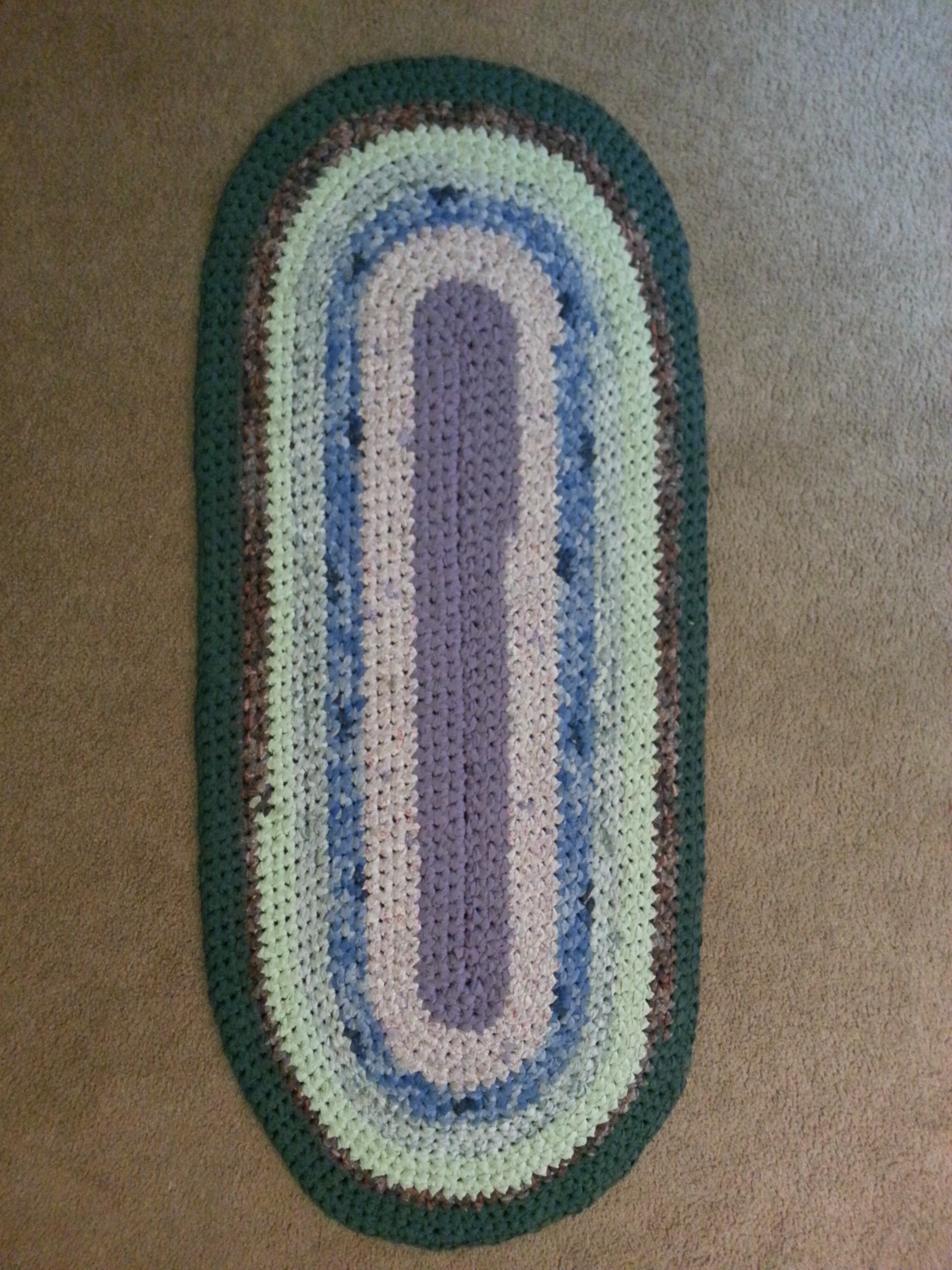
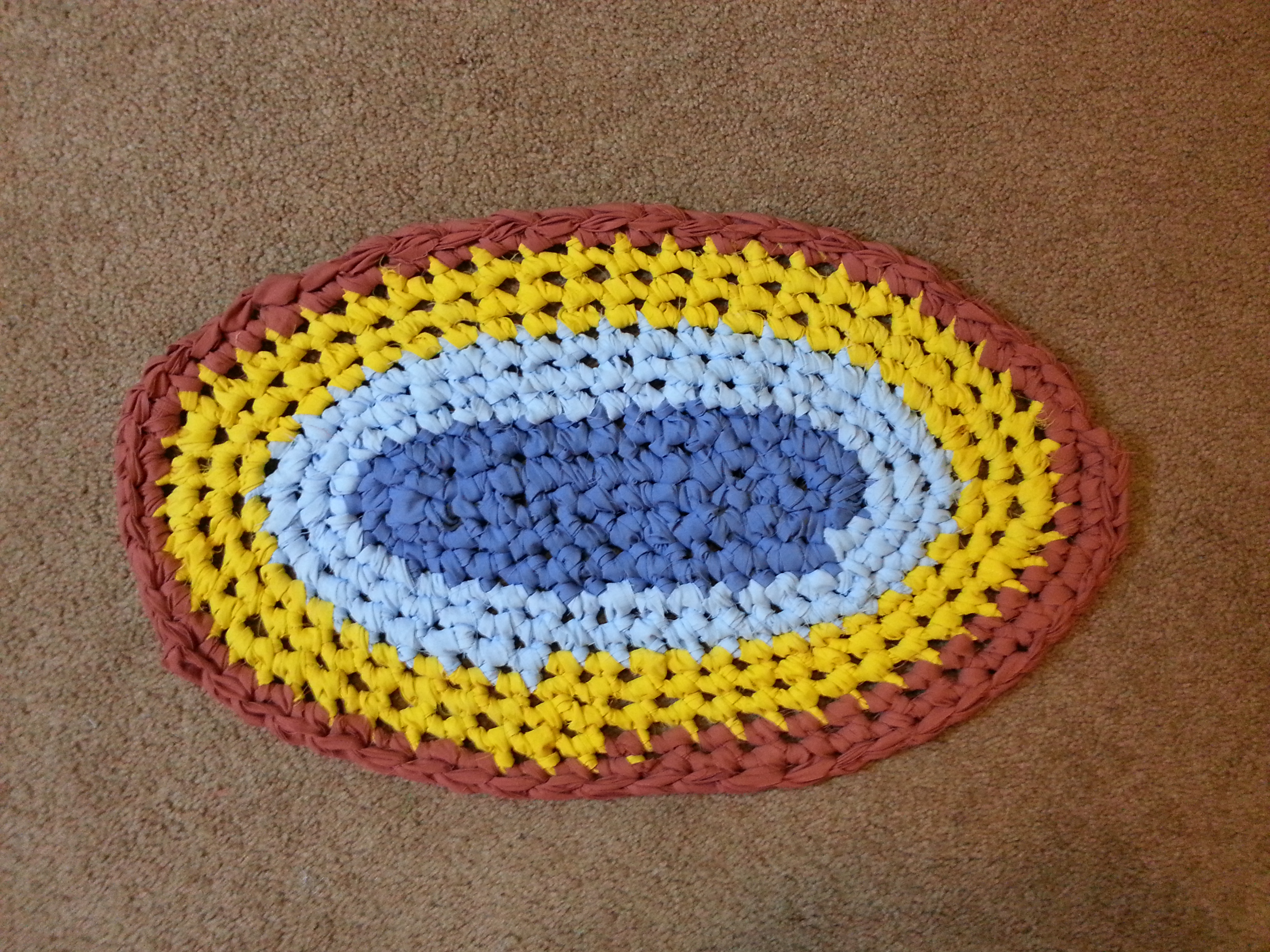
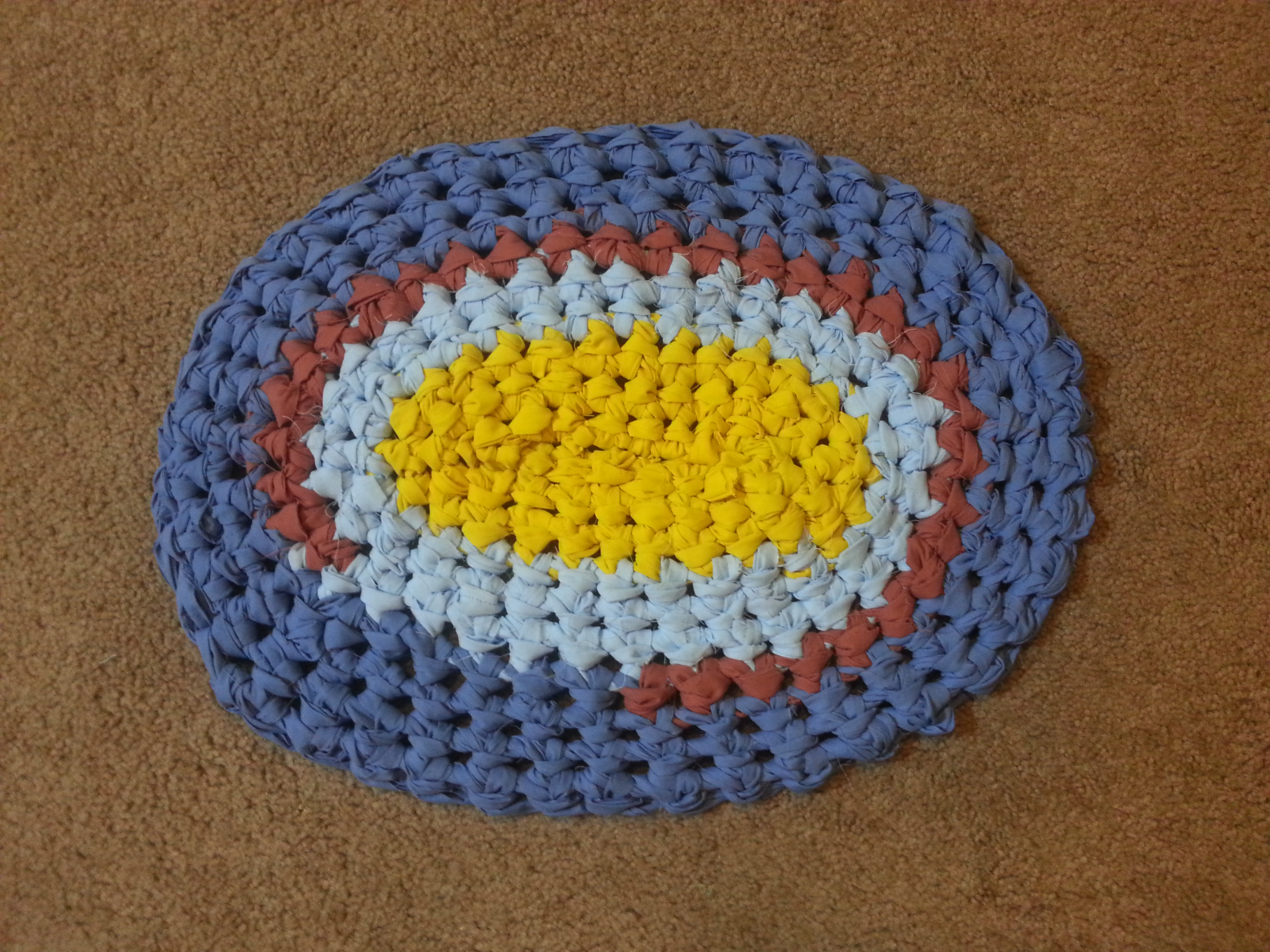
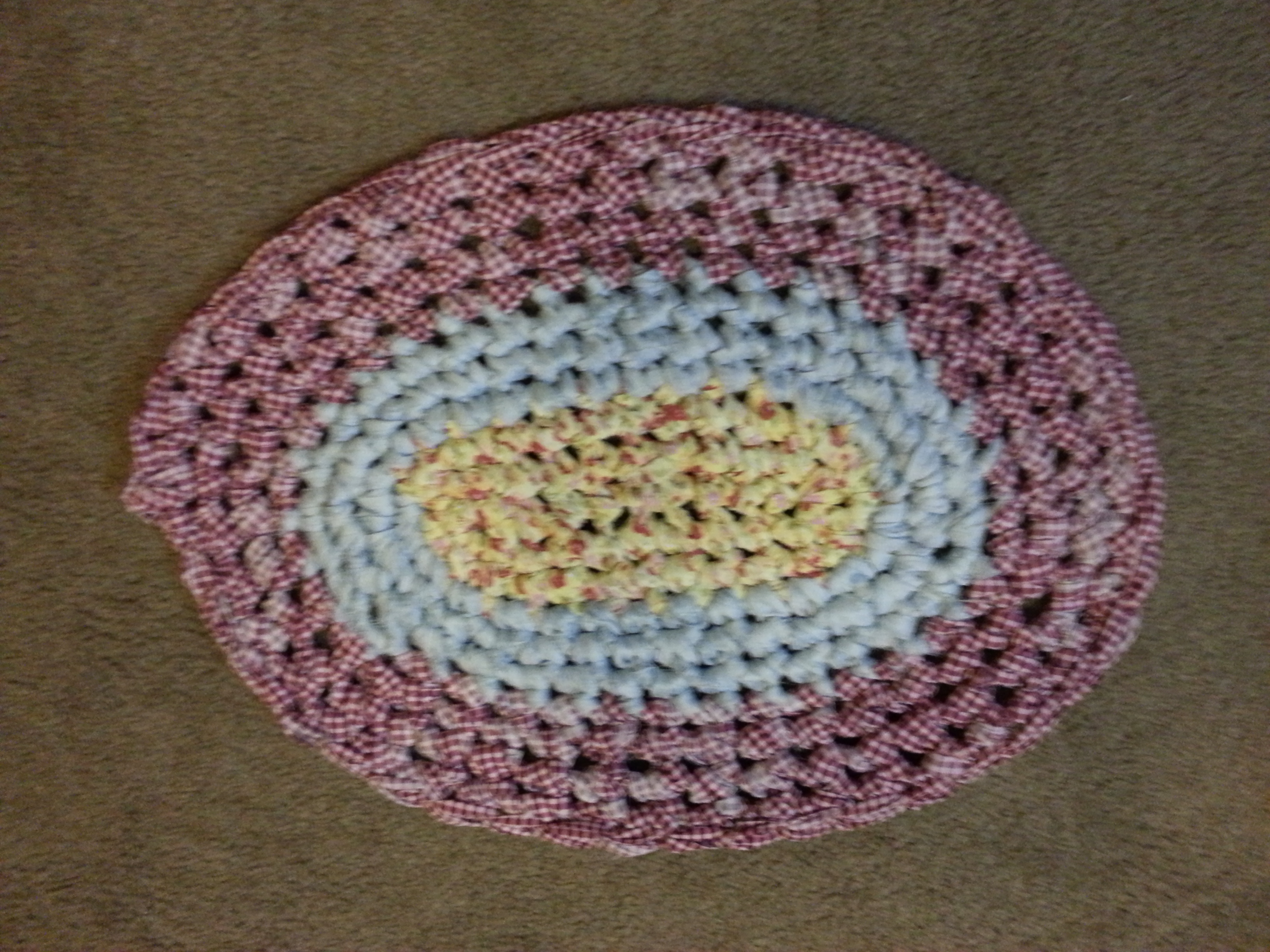
When my mother, Dorothy Lucille Bawden Baker, was a child, perhaps age 6 or 7, she accompanied her mother, Dorothy Erma Evans Bawden (born 1915), and her grandmother, Dorothy Ellen Beagly Evans (born 1895), to visit her great-grandmother, Elizabeth Esther Pierce Beagly (born 1875).  Grandmother Elizabeth was crocheting an oval rug from strips of cloth cut from old clothing.  My mother noticed it and told them she liked it.  Looking back, what caught her attention most was the notion of making something so beautiful from practically nothing: rags. My mother’s matriarchs encouraged her interest and offered to give her a crochet hook and strips of cloth.  Grandfather James Edmund Evans (born 1889) carved for her an oak crochet hook.  Her mother cut some cloth strips from old clothing for my mother, and taught her the crochet stitch.  After my mother’s marriage in 1962, she began her serious crocheting of rag rugs, for she and her new husband, Owen Nelson Baker, Jr., had no carpet or rugs in their home.  For her first project, she sat on the floor and crocheted an enormous round area rug.  After retiring and moving to Utah in 1998, she began crocheting again in earnest.  She found her sheets at the Deseret Industries thrift store, and bought a cutting board and cutting wheel.  Her rugs can be found throughout her home and the homes of her children.  She has given away many rugs as gifts to family and friends.  I recently asked her to teach me to crochet.  These small rugs, intended as prayer mats, are my first efforts to crochet something from nothing.  I made them for my three daughters and my daughter-in-law for Christmas (2015).  I hope that my girls find enjoyment in them, and in knowing that they hold a humble work of art six generations in the making.

20151206_180654

The beginnings of Hannah’s rug, with a sun at the center.

20151206_205752

Ringed with a light sky, ready for a darker ring of sky.

20151206_215749

The sky is complete.

20151206_221351

Ready to be circled with dark, rich earth.

20151207_220638

Hannah’s rug completed.

20151214_221644

Laura’s rug: blue evening sky trending toward sunset and night.

20151219_173044

Erin’s rug: sun, sky, and atoll surrounded by ocean.

20151223_230957

Avery’s rug.

Shoe Shine Boxes

20151126_101114

ONB

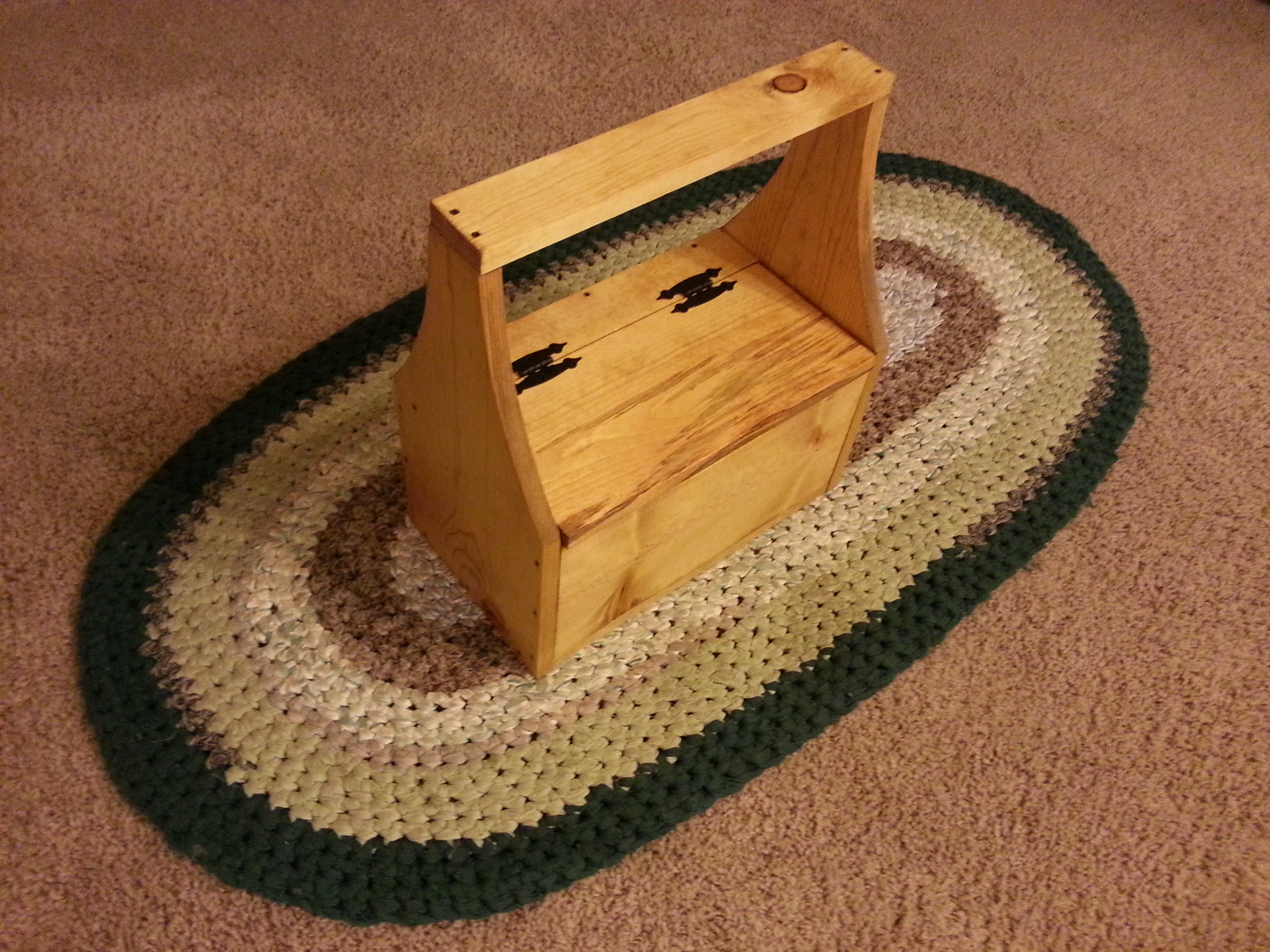
When I was a boy, my father scrounged scraps of oak plank and made himself a beautiful shoe shine box, of his own design, with his initials “ONB” carved on one end and chiseled greenery on the other.  He made a similar box for me, bearing my initials “REB”.

20140406_220428

REB

As boys, my four sons often watched me shine my shoes, asking me if I would please shine theirs.  Then they began asking if they could use my shoe shine stuff to shine their own shoes. They have enjoyed using my shoe shine box during their boyhood years.

This Christmas I presented to each of my sons their own shoe shine box.  It was time for them to have their own, to carry on the tradition.  For lack of tools, time, and skill, I simplified the design.  But I still find their shoe shine boxes elegant.

20151127_155511

I had planned to make the shoe shine boxes over the Thanksgiving weekend while staying with my parents.  Caleb (16) asked if he could stay one night with me, so I decided to let him in on the secret and help.

20151127_163205

20151127_165247

After Caleb left, Grandpa, the original shoe shine box carpenter, helped me finish the boys’ boxes.

20151128_160207      20151128_160331

20151127_180139

My sons may be the only living boys to have such shoe shine boxes, in a three-generation genealogy of shoe shine boxes, made by their father and grandfather.

20151128_165240

I hope my sons find years of enjoyment and pride in shining their shoes with their shoe shine boxes.  And who knows: perhaps they will make such boxes for their own children someday.

20151128_214542  20151128_214618 20151128_214645  20151128_214713

I hope you will find a unique and meaningful way to connect with your sons and daughters, and to carry on the traditions of your generations.

Church Bells

IMG_3904

(Liberty Bell, Philadelphia, PA)

Walking in the snow on Rabbit Lane I began thinking about Christmas bells ringing from church towers all over the celebrating world.  I pondered the many emotions associated with pealing church bells.  Happiness in marriage.  Sorrow in death.  Fear in disaster.  Hope that “all is well”.  The Liberty Bell rang in joyful celebration of America’s independence.  I composed this song about church bells at Christmastime, attempting to embrace all of these emotions, especially excitement at the birth of Jesus, the Savior of the World.  Here is the sheet music for you to enjoy: Church Bells.

Christmastime

 20151205_103756

My favorite part of Christmas is playing Christmas music all the month of December.  For me, Christmas music brings out the Christmas spirit like nothing else.  And I’m not talking about songs that celebrate a reindeer’s red nose and such, but about the hymns and carols that celebrate the birth of Jesus, the Savior of the world.  My family gathers each Christmas Eve to recite the story of Jesus’ birth and to sing the songs of Christmas.  I previously posted my little Christmas lullaby Nativity.  With this post I bring you the happy song Christmastime.  What it may lack in musical sophistication it hopefully makes up for in simple Christmas cheer.  Here is the sheet music for you to enjoy: Christmastime.

20151205_101728

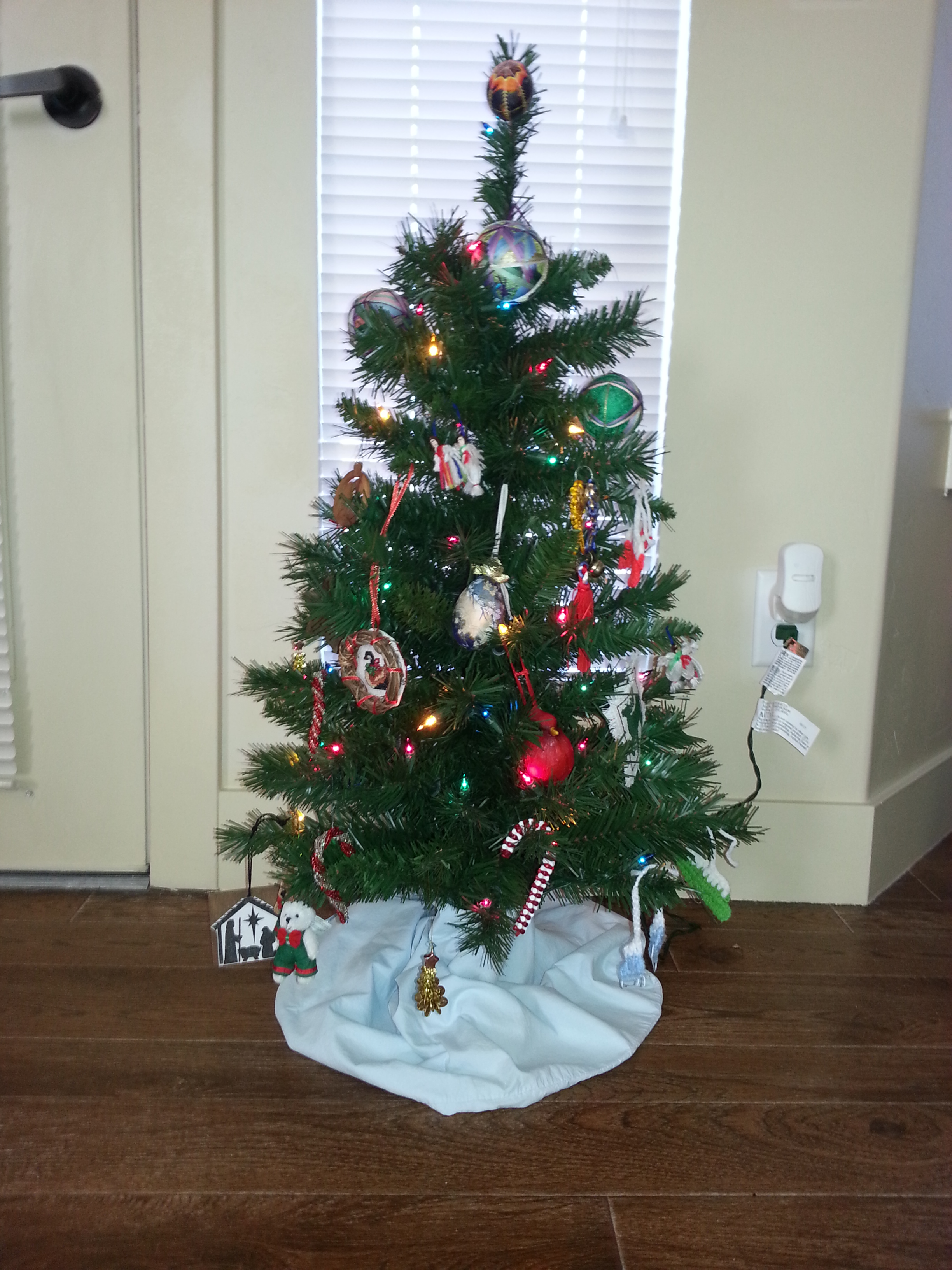
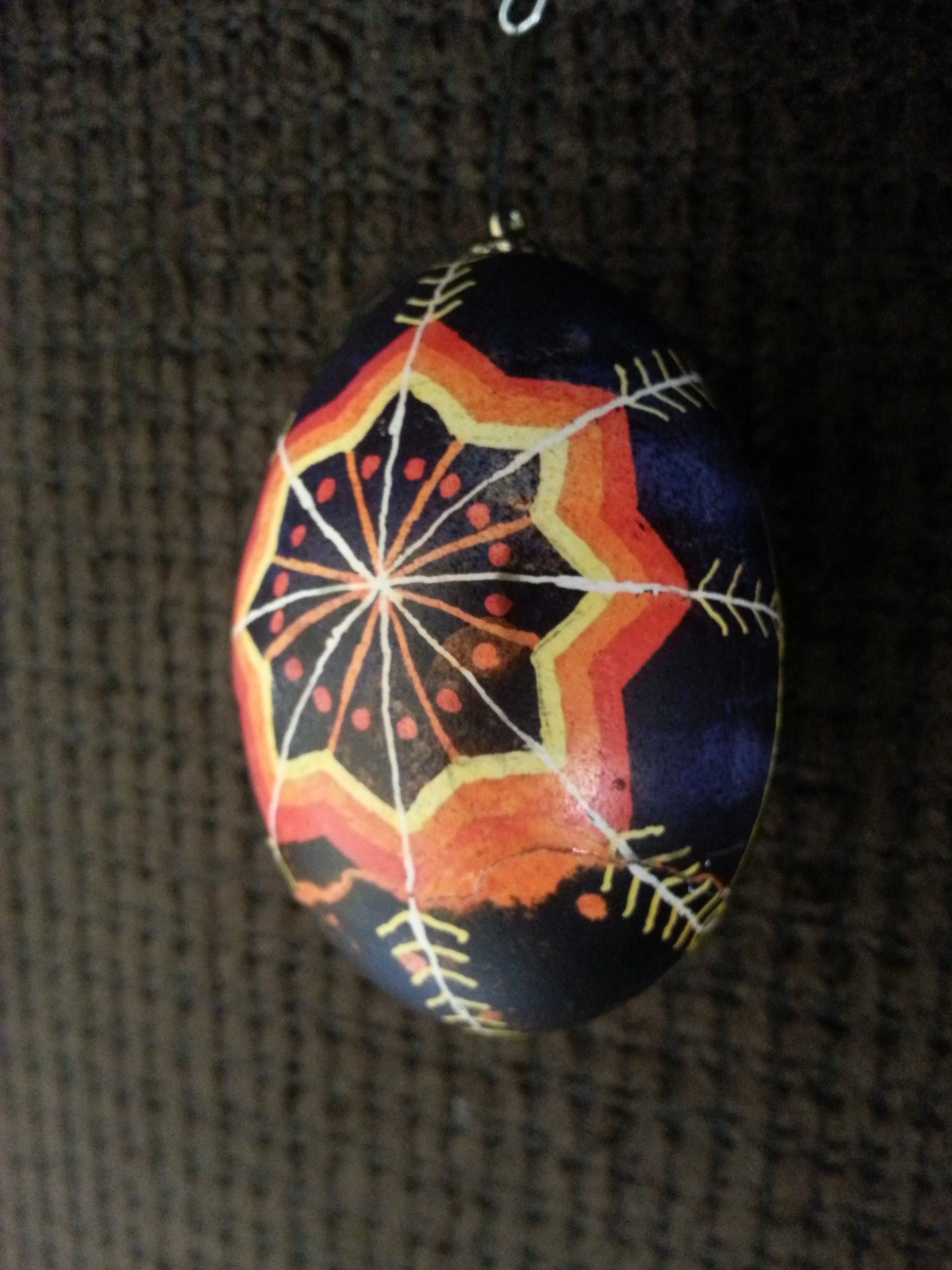
The star on my 30-inch-tall Christmas tree is this Pysanky egg blown, waxed, and dyed by my daughter Laura (20).  I treasure it.

A Visit to Saltair

20151105_160159

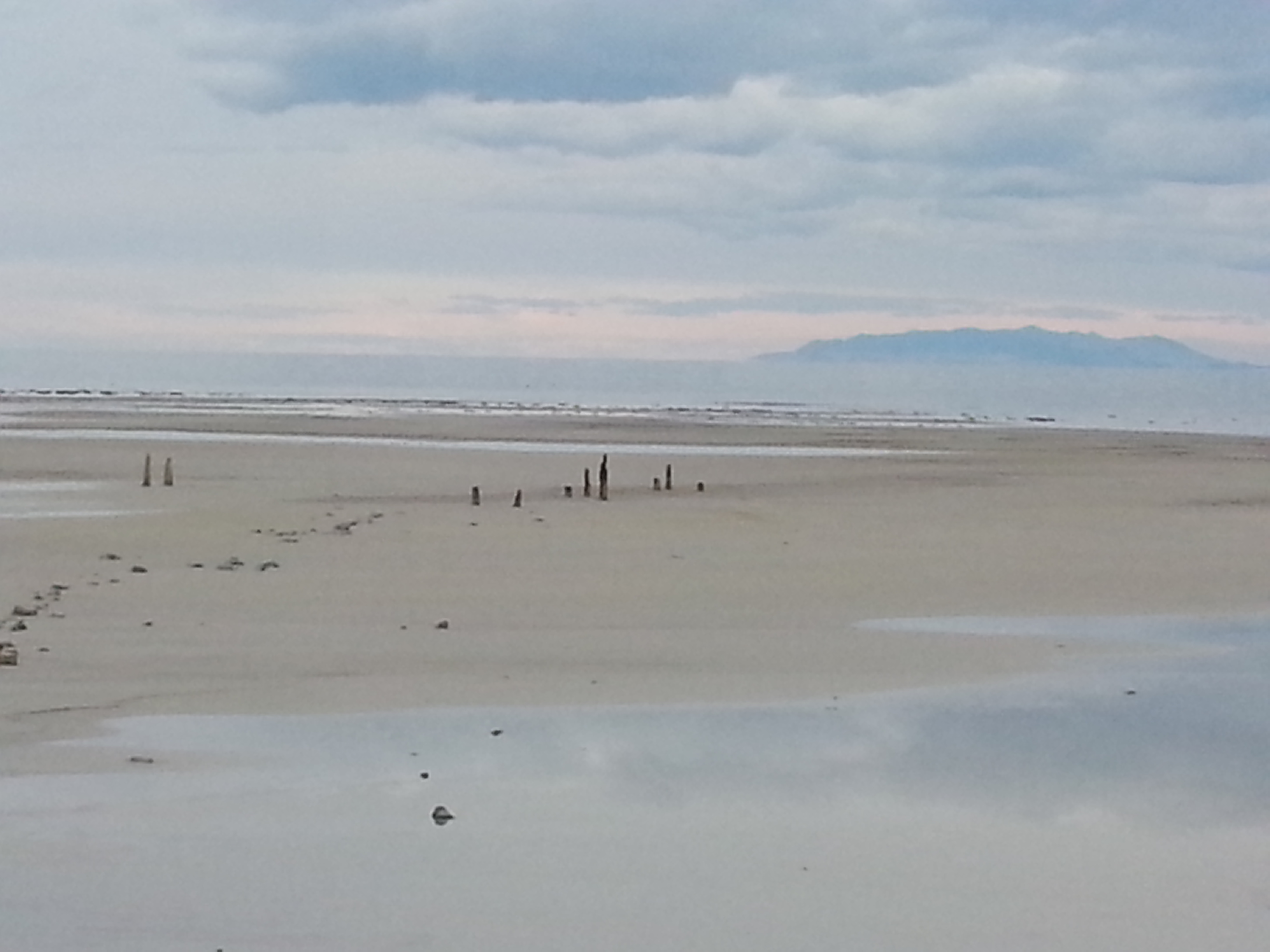
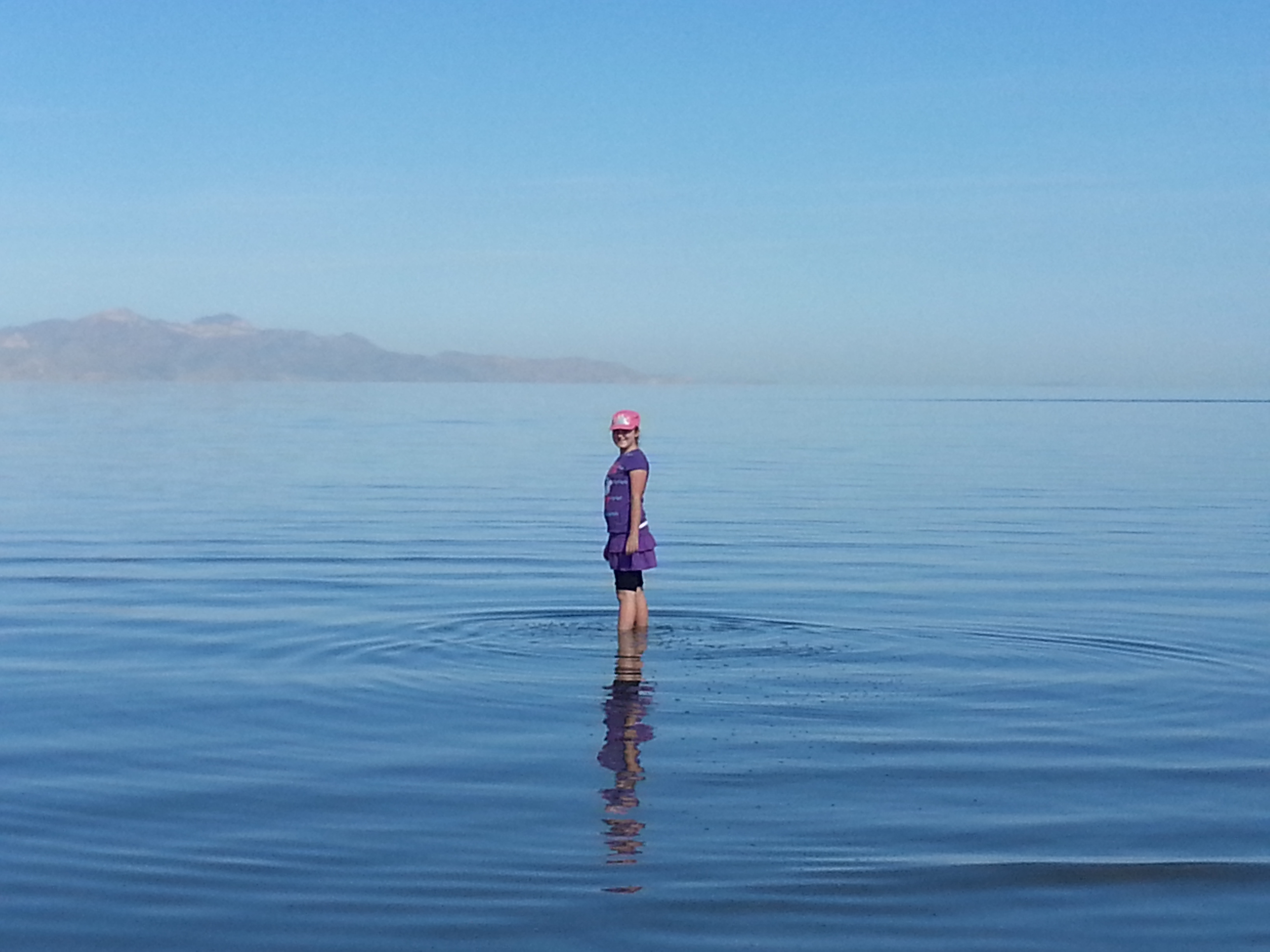
In August 2015 I took Hannah (9) to the shore of the Great Salt Lake.  We stepped onto the dry salt-crusted sand, rough and hard on our bare feet.  The water seemed miles away.  As we walked toward the enormous salt water lake, the fine sand became progressively more moist and soft, yielding to our feet with small wet depressions.  A calm day, the water reflected the sky.  Coming to the edge of the glistening water, we ventured in, walking a hundred yards out but barely wading up to our ankles.  Walking a path parallel to us was a tall, slender woman in a pastel red dress.  As Hannah and I played in the sand and water, my mind wandered momentarily into imagination about the beautiful woman.  This poem finds its genesis in the moments before catching myself in my fantasy and pulling myself back to reality.  Having come to my senses, I still felt a twinge of longing after she had gone.

A VISIT TO SALTAIR

You stepped out,
ahead of me,
onto the sand,
hard and salt-crusted,
a pastel-red floral dress
draped from bare shoulders
to delicate ankles,
the water still half-a-mile
distant, it seemed,
and I ventured, nearby.

You delighted
in the softening sand,
scrunching your toes and turning
slow pirouettes in the lake
breeze, uninhibited.
You lifted the hem above
your knees to wade and frolic
in water, shallow still
for a hundred yards or more,
lapping at your legs.

A low sand bar separated us.

“Did you know
the Great Salt Lake
is 25% salt?  The oceans
are only 5%.  Nothing lives
in this lake.  Except
tiny brine shrimp, trillions of them,
harmless little creatures
swimming with frilled gills,
some orange, some yellow, some rusty red.
See? They’re all around us.”
I wanted to say all this,
and more.

As you turned back
toward land, my heart filled
with shameless longing.
I wanted to splash
my clumsy feet in the water
with your long slender feet,
hold your salt-white hand,
listen to you talk about your dreams
for the future, release
your pastel red dress,
make gentle love on the sand—
if you wanted me—
and come back and back to this place,
forever.

But you are half the distance
to the parking lot,
looking small, smaller,
pastel red fading,
and while the glow yet lingers,
you are too soon
nowhere.

20151105_160151

The name Saltair references a lakeside resort that reached its heyday in the early 20th century.  My grandmother Dora told me of taking the train to Saltair with her friends to enjoy a day in the buoyant water.  Fire ravaged the resort, and only one meager building remains to remind of the resort’s former glory.  Few visit anymore, except those who want to walk out onto the salty sand to wade into the shallow water.

20150806_101103

Fly

20130724_120046

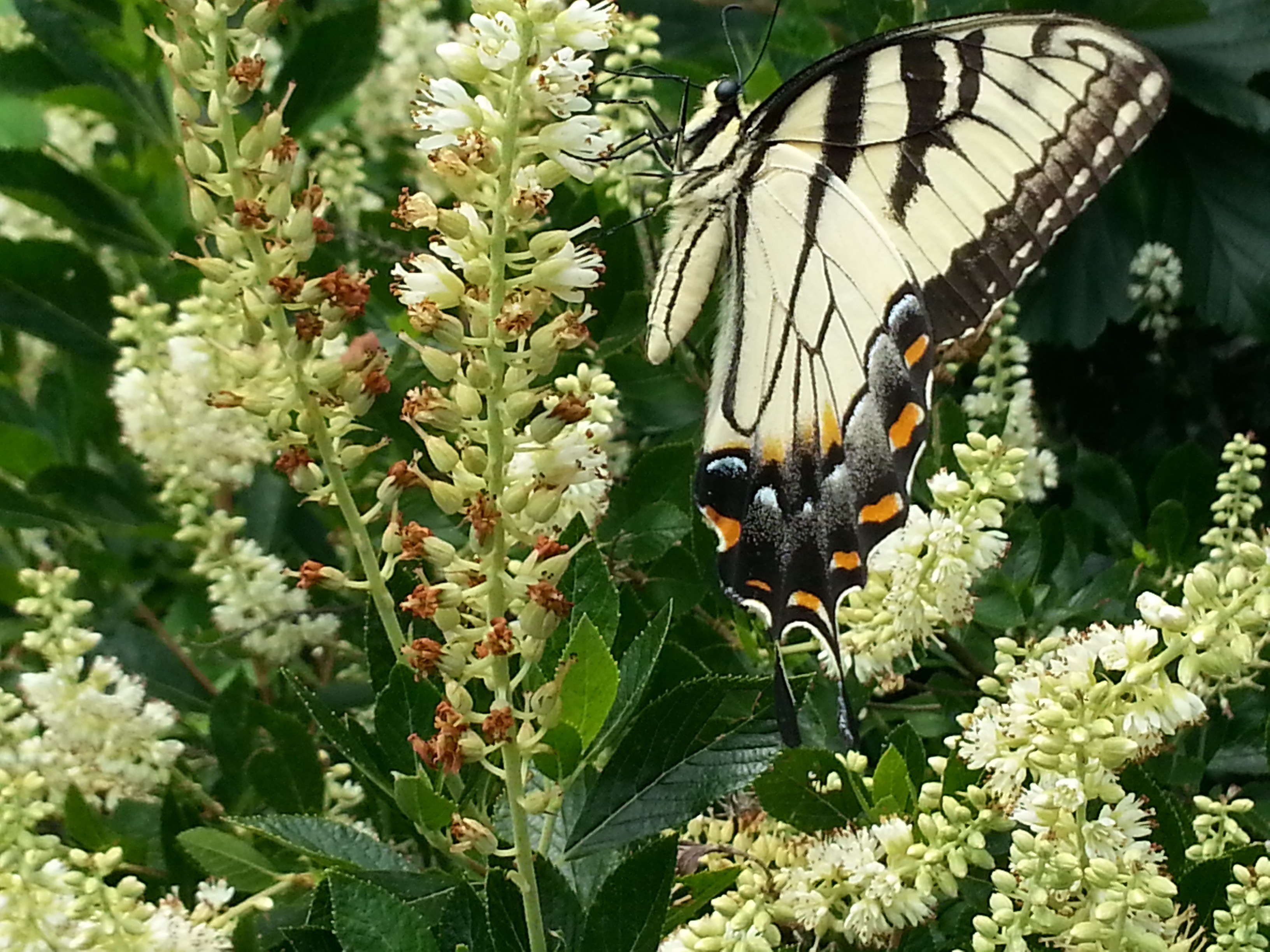
I watched a battered Tiger Swallowtail fly awkwardly from flower to flower, clinging precariously from its remaining feet, its tails cracked and broken.  How sad, I thought, that this usually stunning butterfly has lost its beauty.  Only later did it occur to me that the swallowtail had lost nothing of real beauty.  It lived on, though battered by storms, by would-be predators.  What it had lost in glamour it had gained in strength and nobility.  And it still commanded the air.  It still indulged in the sweetness of life.  This poem celebrates the swallowtail.

FLY

Today you limp
on air:
wings faded,
edges serrated,
tails broken off.
Still, flowers
beckon
you to push awkwardly on,
to cling with three barbed feet.
Uncurl your coil
to taste the sweetness
of the flowers
today.

Nativity

20151205_143134

The mere thought of adding to the Christmas repertoire intimidated me from making the attempt.  But one quiet evening, as Christmas approached, I began to think of the baby Jesus, and to hum.  I thought of the star and the heavenly choir, of the Magi and their gifts, and of Mary holding her child wrapped in rags.  The Christmas lullaby “Nativity” arose from my musings.  Here is the sheet music for you to enjoy: Nativity.  Sing it softly to your own little ones as you put them to bed.

20151226_001835

Dreaming

20151203_115606

My children, when they were young, liked to be put to bed with a song.  I composed many little lullabies and songs, some of which are posted on this blog.  I tried to compose tunes and lyrics that would sooth and inspire each child.  But sometimes I composed something to just make them smile and laugh.  “Dreaming” is one such song and contemplates a child’s nonsensical but humorous dreams, ending with mother’s call to wake up in the morning.  I hope you enjoy it! Click here for the sheet music: Dreaming.

In My Veins

1341952862970

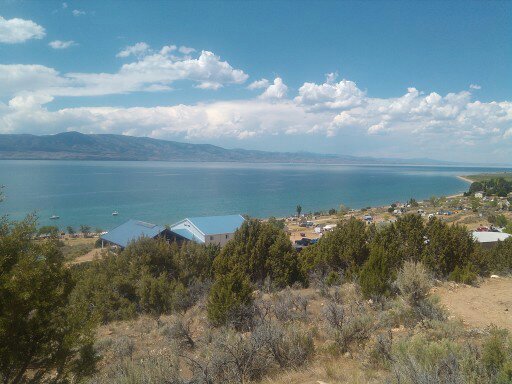
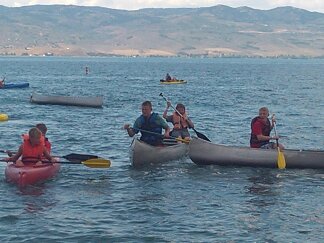
Sitting on the shore of Bear Lake watching my boy scout troop, including my own sons, swimming and canoeing, I grew contemplative about the nature of water and the currents of my life.  The boys laughed and squealed as they frolicked in the cold lake.  They were clearly enjoying scout camp at Bear Lake Aquatics Base.

 1342036427864

The scene caused me to remember my own scouting days canoeing down the rapids of the Delaware River, across the lakes of New York’s Adirondack mountains, and over placid colonial New Jersey canals fishing for catfish.  This poem began to take shape as I continued to watch the water and happy boys so clearly enjoying it.  Good for you, I thought.

The river of my life continues to flow, with strange twists and turns, and not a few eddies and submerged snags.  But I paddle on.

IN MY VEINS

This water does not seem to move,
rather sleeps contentedly,
still, glistening the yellow sun.
Trees on each bank reach
skyward and riverward,
into air and water.

This river slumbers except
where my canoe prow tickles
up a wake and green sides
send slow ripples
that lazily lap the banks.
I do no injury.

If I slow my canoe, if
I drop my paddle and stop,
leave no trace,
I see:
the boat still advances
in quiet current
past the bank-bound trees.
The river does not sleep,
I see:
it creeps forward
inexorably, taking me
from whence to where,
from then to what will be.

I am part of the river.
My childhood passed a stone
upstream, a green-speckled hegemon
lording from the bank,
aged with orange and black lichens.
The river’s mouth, yawning to the eternal
ocean, will swallow me some day, draw me
into swirl and flow forever.
Here, today, the river is
the liquid in my veins.

I seek neither headwaters nor sea:
they were and will be, and always are.
Here is where I am.
Kingfisher knows this,
watching me from arching bow.
Great Blue Heron knows this,
winging downstream
to a place where I am not
yet.  River knows this, too,
expiring in oceans even
while birthing from melting snows.

The river is always
awake, every part of it:
River knows.
Rock knows.
Tree knows.
Only,
I am slow to see.
Sky knows.
Earth knows.
Wind knows and whispers
to me across the water.
Only,
I am slow to hear.

Consecration

20140216_171051

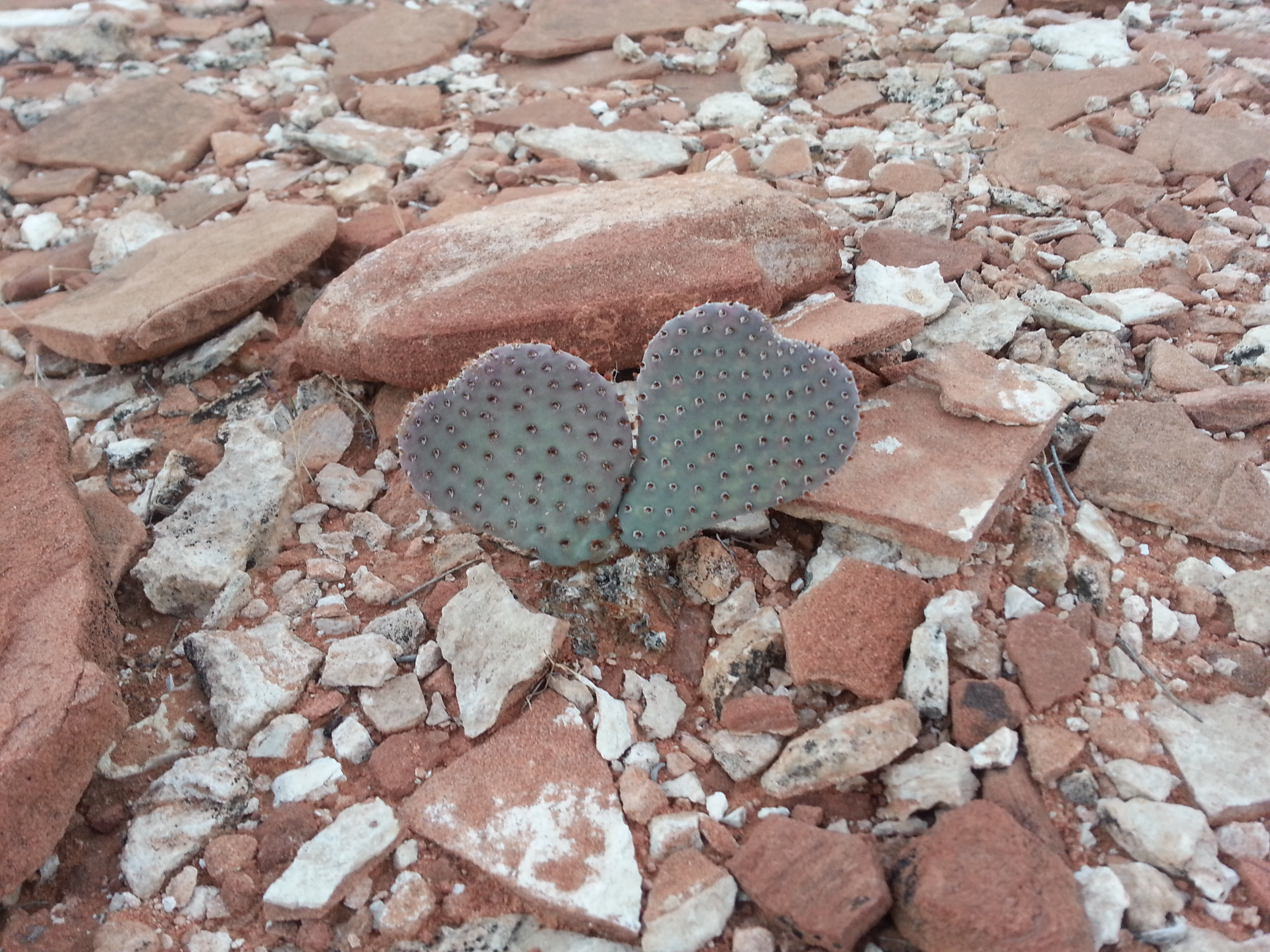
Wandering and sand and rock trails of southern Utah’s desert gems, I have often wondered about the ancient peoples who made the inhospitable terrain their home, and have admired the dedicated labor that were required to survive.  Snow Canyon state park, near St. George Utah, and Valley of Fire state park in northern Nevada, are two of my favorite places. The beauty of each place–carved by wind, rain, sand, and flood–causes me to marvel at indigenous ingenuity, persistence, and stamina.  This poem imagines the efforts of one young American Indian woman preparing a meager meal for her family.  The meal is much more than food.  The meal is her life’s sacrifice.

CONSECRATION

Kernels of corn
on the metate:
yellow and red,
shriveled and dry,
hard, nearly,
as the grinding stones.
Fingers grasp the mano:
cracked skin and cracked nails
press and roll
to crack and crush
the corn, grind it
to meal, to be
mixed with water,
salt, and sage,
baked in small cakes
on searing rocks.

New corn kernels
on the metate
under the weighty stone.
Mix the meal again, with drops
of sweat, tears dripped
from her chin.
Stoke the coals.
Cook and consume
your consecration.

(Previously published in Panorama and Utah Sings, publications of the Utah State Poetry Society.)

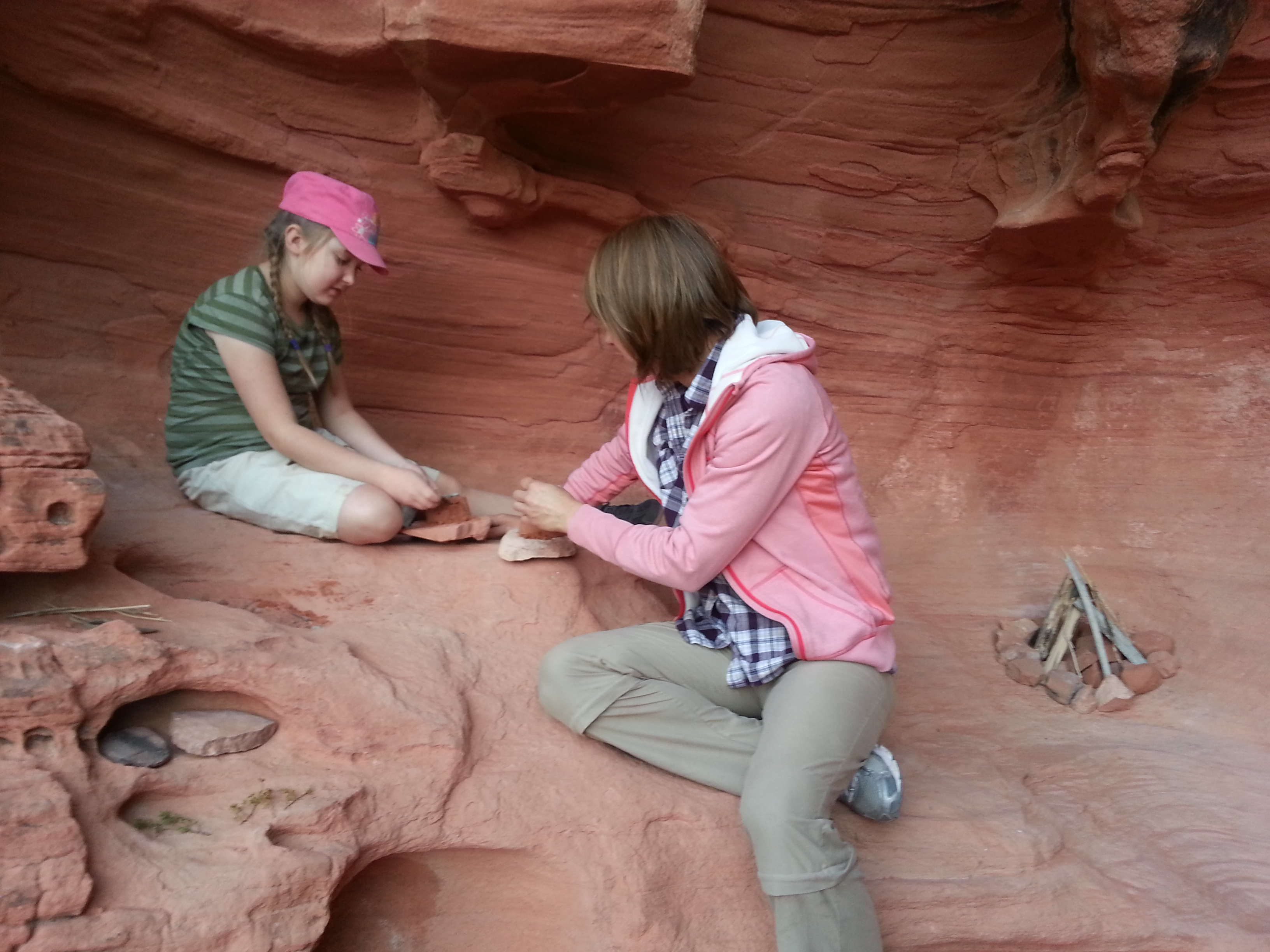
This photograph shows my daughter Hannah, with her mother, in her pretend “Indian kitchen” in Valley of Fire state park.

20140216_165140

Hawks Nest

20151014_173052

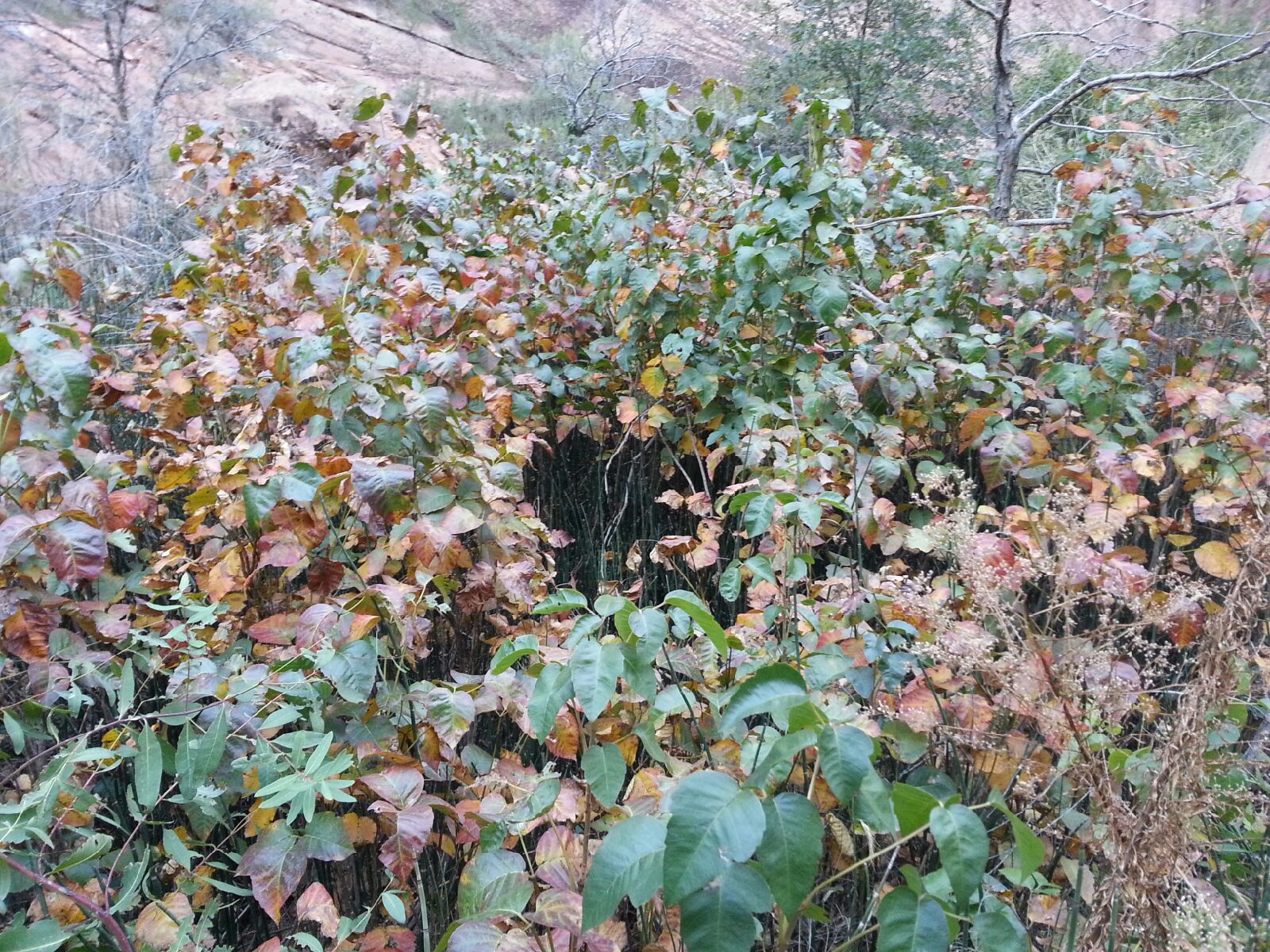
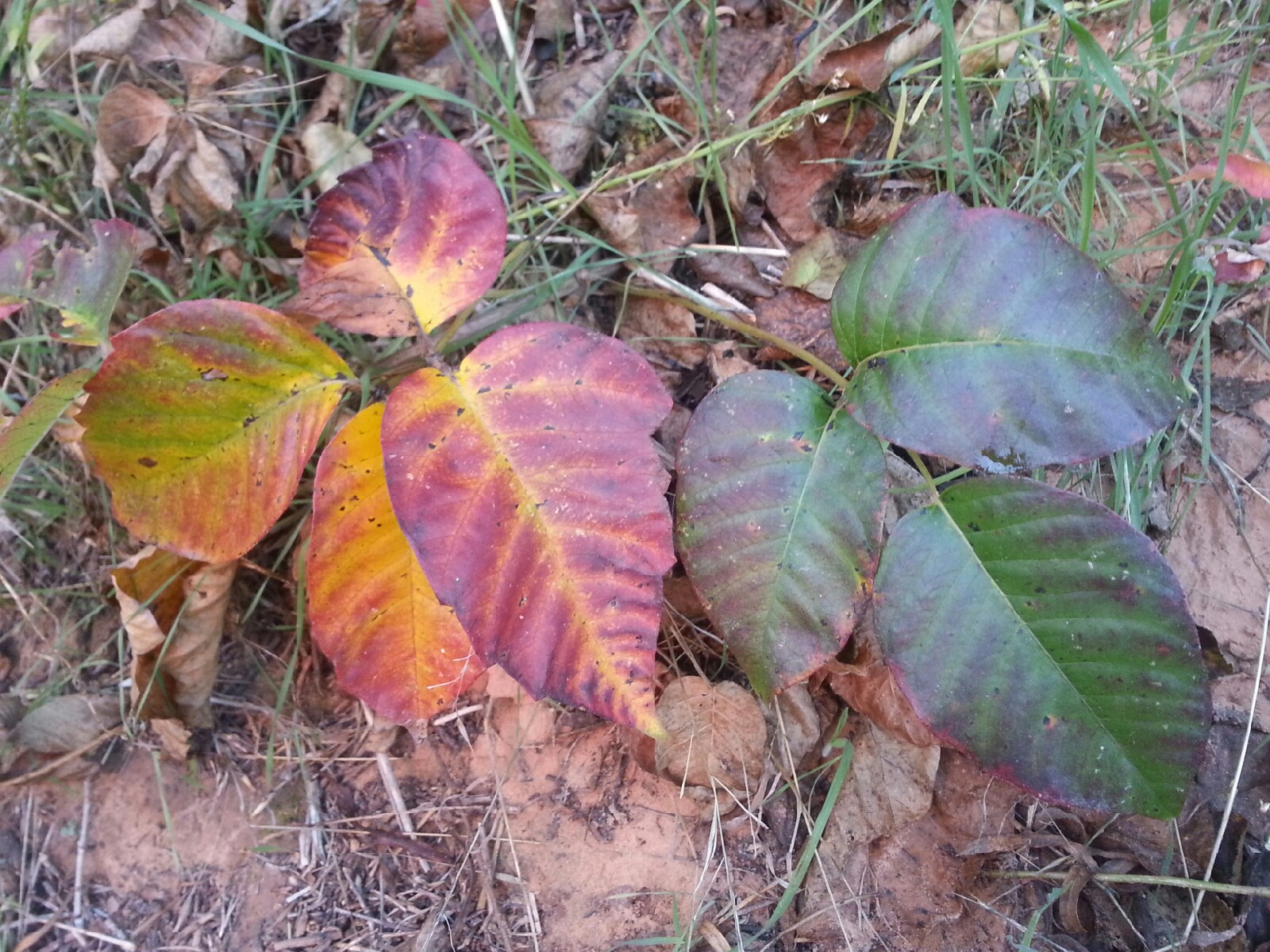
Upon moving to our New Jersey home in 1971, my father spent a Saturday eradicating huge vines and stands of poison ivy from our trees and yard.  He wore gloves, long pants, and a long-sleeved shirt, but the poison ivy dust and oils pierced his clothing and infiltrated his lungs.  His reward for his effort was several days in the hospital with severe rashes and swelling.  I learned vicariously the power of poison ivy.

20151014_173126

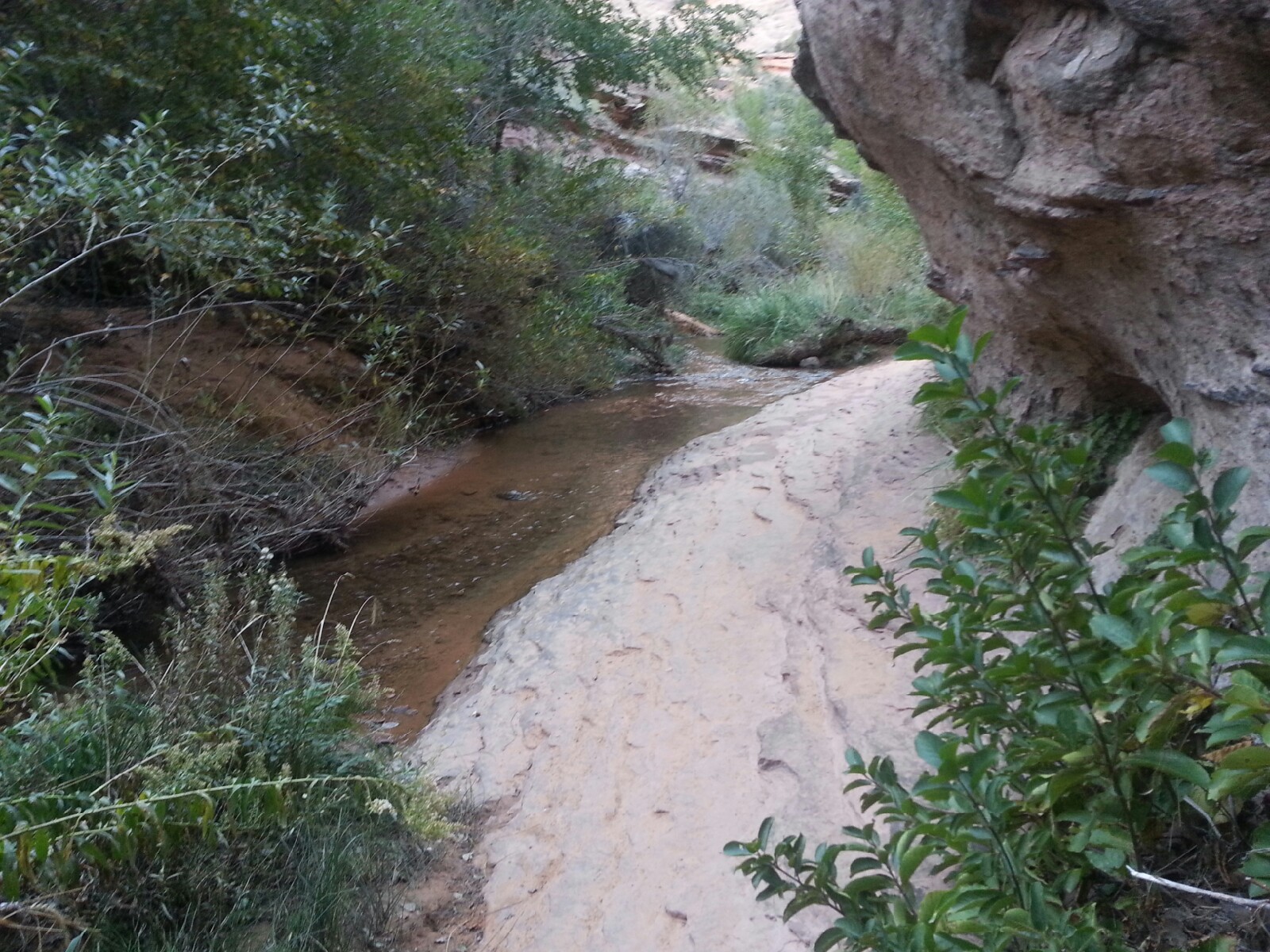
I rarely encounter poison ivy in arid Utah.  But I discovered lush poison ivy growth in Negro Bill Canyon, named after William Granstaff, an African-American who settled near Moab, Utah in 1877.

20151014_182310

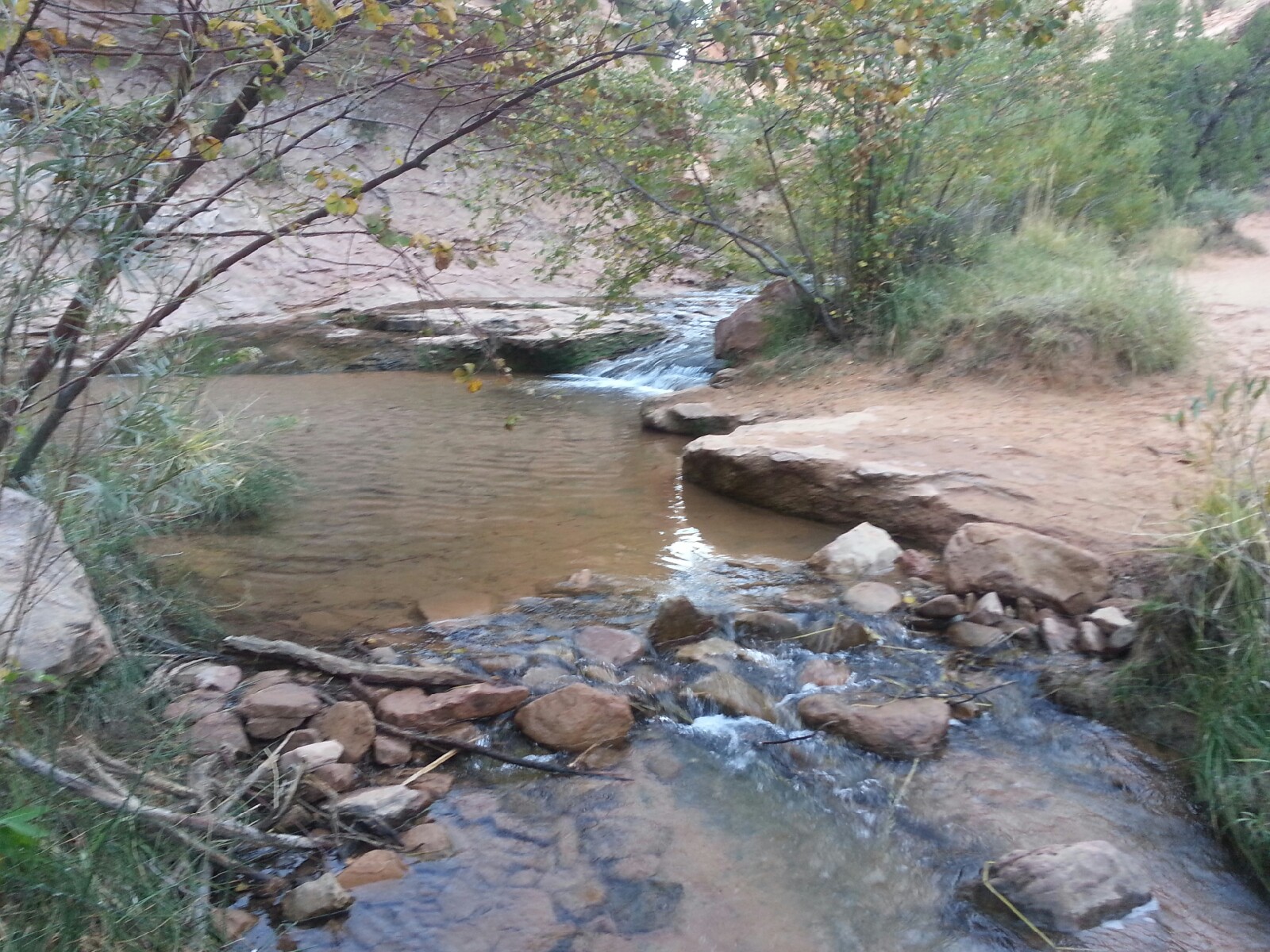
A 4.5-mile BLM trail follows a stream up the narrow canyon to Morning Glory Bridge, with a stunning 243-foot span.  The stream gurgles out from cracks in the sandstone cliff behind the bridge.

20151014_183533

This is a favorite hike of mine for trickling water, vividly-colored wildflowers, aromatic sage, and dense greenery set against towering patina-stained red rock cliffs, and eleven stream crossings.

20151014_173748    20151014_174142

And poison ivy is everywhere.  The characteristic shining green in these Negro Bill Canyon photographs is yielding to the reds and yellows of fall.  Beautiful, to be sure, but don’t touch.

20151014_182147

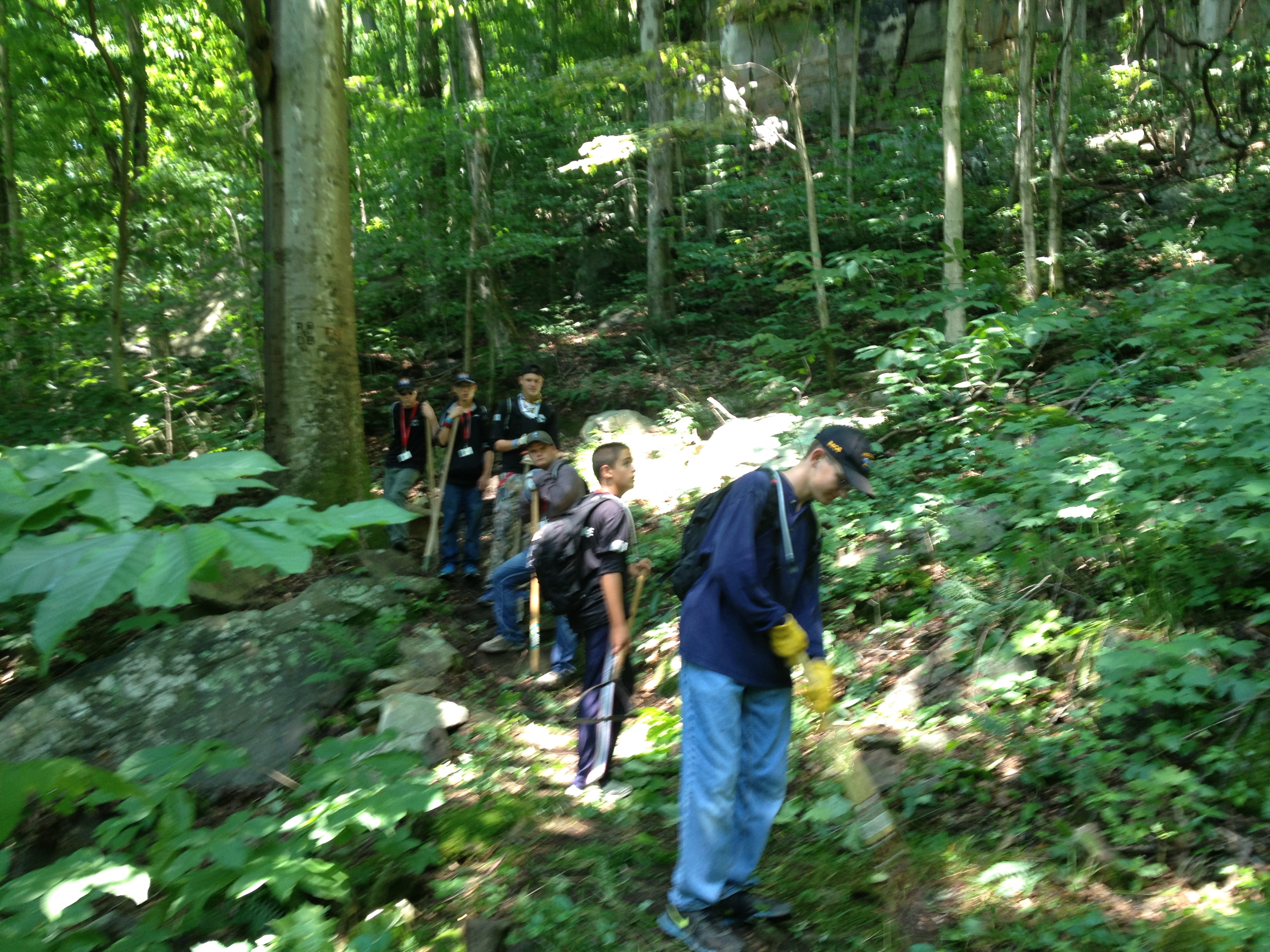
As part of the 2013 National Boy Scout Jamboree, my troop of 36 boys gave a day of service in Hawks Nest state park, West Virginia.  We cleared and improved park trails under dense hardwood canopies and abundant poison ivy bushes, grape vines, and ripe-fruited raspberry and blackberry bushes.

IMG_0307

After being away from eastern forests for so long, I thrilled to be walking through the forest again, and was even glad to see the poison ivy, thus prompting this poem.  Can you guess why I described poison ivy as being faithful or a friend?  Leave a comment if you have an idea.

HAWKS NEST

Hello, poison ivy, my faithful friend.
I have missed your glistening green.
My respect is rooted in recollection.

Vines—wild grape—thick
as a strong man’s arm,
chuckle at gravity,
entwine in tulip poplar tops.

Red oak leaves
large as elephants ears
shade me.

Morning

20130724_164623

At a recent Thanksgiving Day after-dinner gathering of my extended family, my father expressed his tender feelings for my mother.  With tears in his eyes and voice tight with emotion, he told of gazing at her as she lay sleeping one morning, the suns rays streaming through the window, and feeling that he loved her with all his heart.  That is as it should be, I thought, and wrote this poem.

MORNING

Warm sun in winter
hurtles white-capped
peaks and rushes through
wide windows
to halt and hover
over a head of tousled white
hair, aged, peaceful
upon her pillow.

Sing To Me

20150904_152449

During a separation some years ago, I often wondered if life were worth living.  I was not suicidal, but I lacked a desire to live.  Lying in my bed in the dark of night, I would whisper to the ceiling, to the universe, Give me a reason to live.  Of course, there are many reasons to go on living in spite of our physical, emotional, and spiritual suffering.  Listing them is an easy exercise.  But in suffering’s crucible these reasons can be hard to discern, let alone appreciate.  In this poem I identify a few reasons that just merely hoping for gave me an ounce of strength to go on living and caring, to arise with each new day, during a lonely and unhappy time.

SING TO ME

Give
me a reason
to live.

Smile at me softly.
Sing me a melody.
Touch your lips to mine.
Receive my song.
Condescend.

Give
me a reason
to live.

(I took the above photograph of a Milbert’s Tortoise Shell in September 2015 at Butterfly Lake in Utah’s High Uinta Mountains.)

I Waited for You

20150529_205730

Some of us wait silently to be loved, wait expectantly for our needs to be met.  Others of us demand to be loved with stomping feet and a sharp tongue.  The fortunate among us have learned to express their needs in ways that the listener understands, respects, and responds.  We are all different in how we approach life and love, yet we all want and deserve love.  My hope is that, rather than waiting for love or demanding love, we will learn to seek love in healthy, positive ways.  Beyond this, my prayer is that we will first offer love and kindness to others, thus inviting love and kindness to come back to us.

This poem personalizes one seemingly ill-fated approach to finding love.  What do you think the poem’s speaker could have done differently?  Should the speaker have done anything differently?  Was the speaker’s approach unreasonable?  Consider posting your answer in the comment section below.

I WAITED FOR YOU

I waited for you:
Waited for you to come to me.
But you did not.
I waited for you
Like the crimson clouds after the tired sun drops behind the mountains.
When you came to me at last,
I had faded and gone.

I waited for you:
Waited for you to touch me.
But you did not.
I waited for you
Like a dry, dusty leaf under a charcoal sky when the soothing rain won’t fall.
When you reached for me at last,
I had withered and gone.

I waited for you:
Waited for you to smile at me.
But you did not.
I waited for you
Like a famished infant yearning to suck from her mother’s ripe, fragrant breast.
When you smiled at me at last,
I had drifted and gone.

Violin

20151002_233105

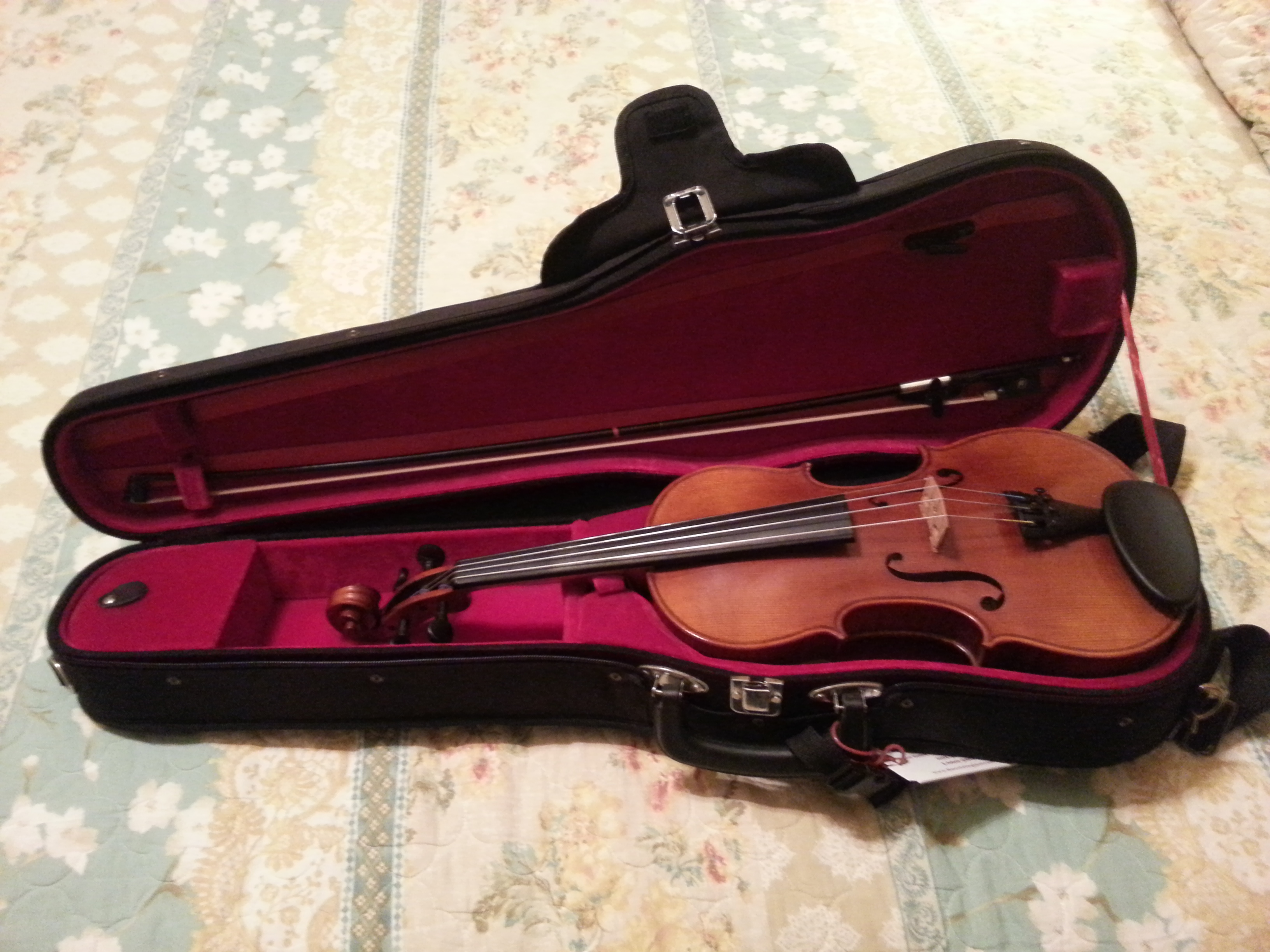
On summer evenings as the desert heat dissipated, we would open all the windows in the house to let in the fresh, cool air.  As I sat on the porch, or weeded in the garden, or fed the hens, the sounds of Erin’s violin would pour gently from her window, hovering above the quiet countryside.   Her music was like the smell of perfume from a Purple Robe Locust, or the flash of blue from a Western Bluebird, or the taste of ripe mango.  I haven’t heard Erin play her violin for several years due to her being away at university and missionary service.  But I can still hear the music in my memory and feel the soothing sensation of my mind and body loosening their many knots.  I miss her playing.  I miss her.  This poem brings Erin and her music back to me.

VIOLIN

Notes dance through the window:
cheerful young notes
tip-toeing prettily upon the air,
swirling soft, slow pirouettes above
Fall sunset’s deep-green grass;
a blanketing balm
come to rest upon
a tired brow,
a twitching muscle,
an anxious heart.

Youthful hand and hopeful heart
send the bow searching the strings,
like a songbird upon the breeze,
like a breeze along the tree branch,
like tree roots through the earth.

Cleanse me.
Lift me.
Bring me through.

Not Today

20150929_214300

More than any other child, Caleb’s bicycle tires always seems to go flat.  I would patch an inner tube one hour and have it be flat the next.  Those awful three-pronged “goat-head” stickers were his bane.  Caleb was too young to patch his own inner tubes, so he was constantly asking me to do so.  “Dad,” he would ask, “can you fix my bike?”  I grew weary of his frequent requests, and often put him off.  Each time I avoided the task, however, I could see the disappointment in his eyes and hear it in his voice: “OK, Dad.”  I would come around eventually, but my delinquency deprived him of many days of happy riding.  When I began to realize what I was doing to him, and to our father-son relationship, I started patching his tires more quickly, began to teach him to patch his own tires, and wrote this poem as a reminder to myself to exercise patience and love with my children.  (Note: each stanza diminishes by one line in length, symbolizing Caleb’s diminished faith in his father.)

NOT TODAY

On Saturday Caleb said, “Hey, Dad!
I ran over a sticker,
and my bike tire’s flat,
so I can’t ride my bike.
Can you patch it for me today?”
Dad sighed and then replied,
“Not today, son, can’t you see?
I’ve far too much work to do.
Maybe tomorrow.”
And Caleb said, “Thanks, Dad.”

On Sunday Caleb said, “Hey, Dad!
My tire’s still flat,
so I can’t ride my bike.
Can you fix it for me today, please?”
Dad sighed and then replied,
“Not today, son, don’t you know?
On the Sabbath day I cannot do such work.
Tomorrow would be a much better day.”
And Caleb said, “Thanks, Dad.”

On Monday Caleb said, “Hey, Dad.
I still can’t ride my bike at all.
Please, can you fix it, maybe, today?”
Dad sighed and then replied,
“Not today, son, I’m all tuckered out;
I’ve worked so hard all day.
Maybe tomorrow, or next week, sometime.”
And Caleb said, “OK, Dad.”

On Tuesday Caleb said, “Hey, Dad.
I’d really like to ride my bike.
Could you help me, sometime, fix my tire?”
Dad sighed and then replied,
“Goodness gracious, son, how you pester me so.
I told you I’d do it sometime. Not today.”
And Caleb said, “OK, Dad.”

On Wednesday Caleb said, “Hey, Dad.
Today’s probably not a good day, huh?”
Dad sighed and then replied,
“I’m afraid you are right, son, not today.
Today is definitely not a good day.”
And Caleb said, “OK Dad.”

On Thursday Caleb said, “Hey, Dad.
Do you think, maybe, tomorrow?”
Dad sighed and then replied,
“Sure thing, son—maybe tomorrow.”
And Caleb said, “OK, Dad.”

On Friday Caleb said, “Hey, Dad.
Tomorrow’s Saturday, right?”
Dad replied, “Last time I checked.”
And Caleb said, “OK.”

On Saturday Caleb said, “Hey, Dad.”
And Dad replied, “Hey, Son.”
And Caleb walked away.

Vales and Shadows

20150522_193352

I listened, straining to understand, as the young man struggled through a severe speech impediment to deliver his brief address from the pulpit.  Sitting in my regular church pew, I admired his courage.  Would I have the courage, I wondered, to face a congregation and speak, knowing that I could not speak clearly?  The strength of his conviction carried through even if the words of his message were garbled.  Later, staring at the night ceiling, I imagined him reciting Psalm 23, feeling his vale of sorrow, and taking comfort in his strength, his comforter, his shepherd.  And I imagined the response of the rapt congregation.  Then I wrote Psalm 23 as he may have recited it, not in derision, but out of utmost respect for the strength of his courage and conviction.

VALES AND SHADOWS

Tha Laws ma shepr;
Ishl nawan.
He make me to ladan
in grin pasht:
He led besa sti was.
He sto mso:
He lead me in pa righchne
foris nem sek.
Yeah, though wa valla
shada de
I feena evil:
for Thar wivme;
Tha ra an tha staff
they comfme.
Tha prepa taba fome
in prence ma enmy;
Tha noin ma hea voil;
ma cup runova.
Shu good mercy
fo me all day mlife;
and I dwell nouseof Law
fever.

(loud clappings . . . happy smile . . . weepings)

Wood Lamp: Reach

Reach

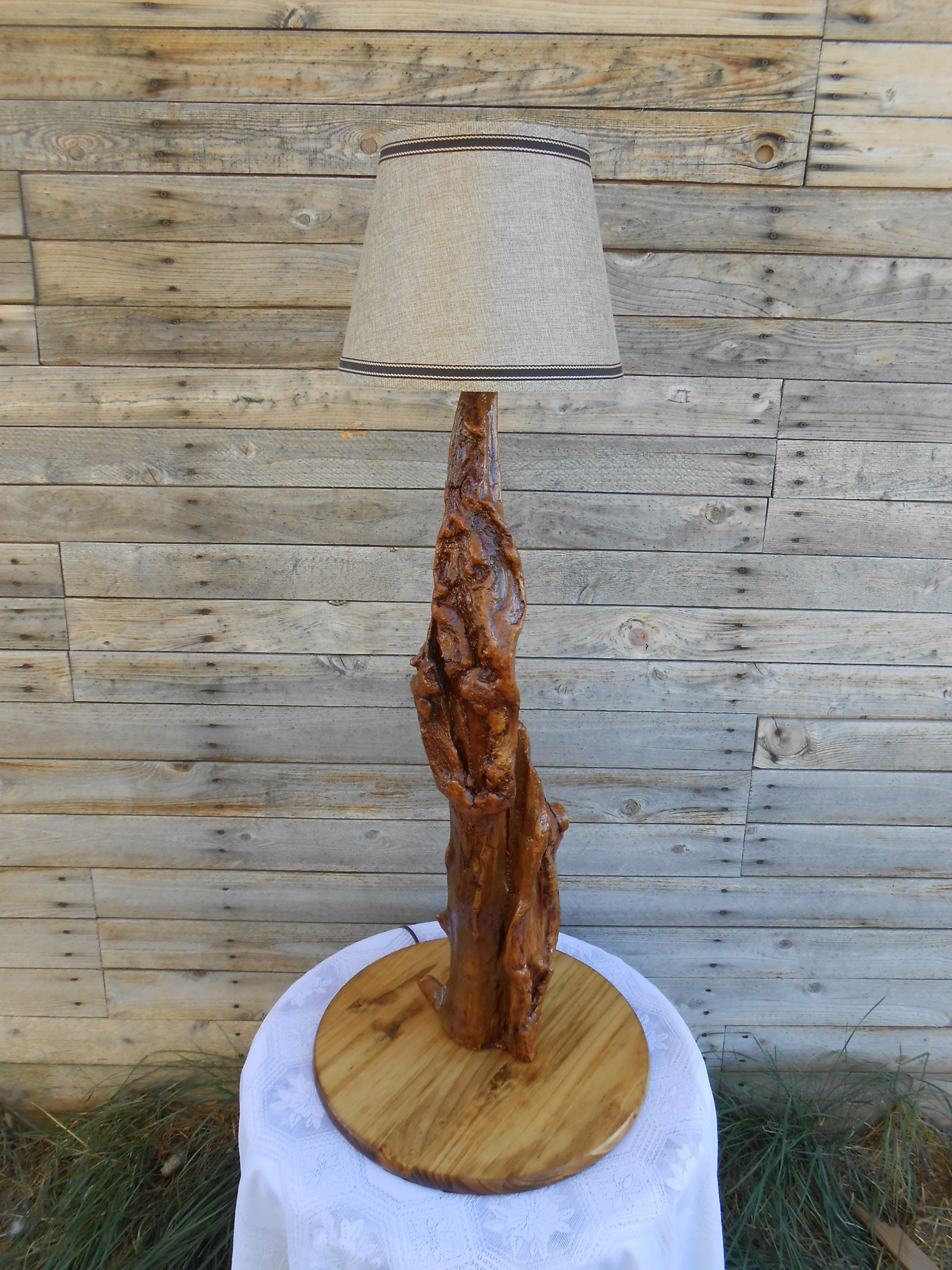
Reach, a lamp by Roger Baker

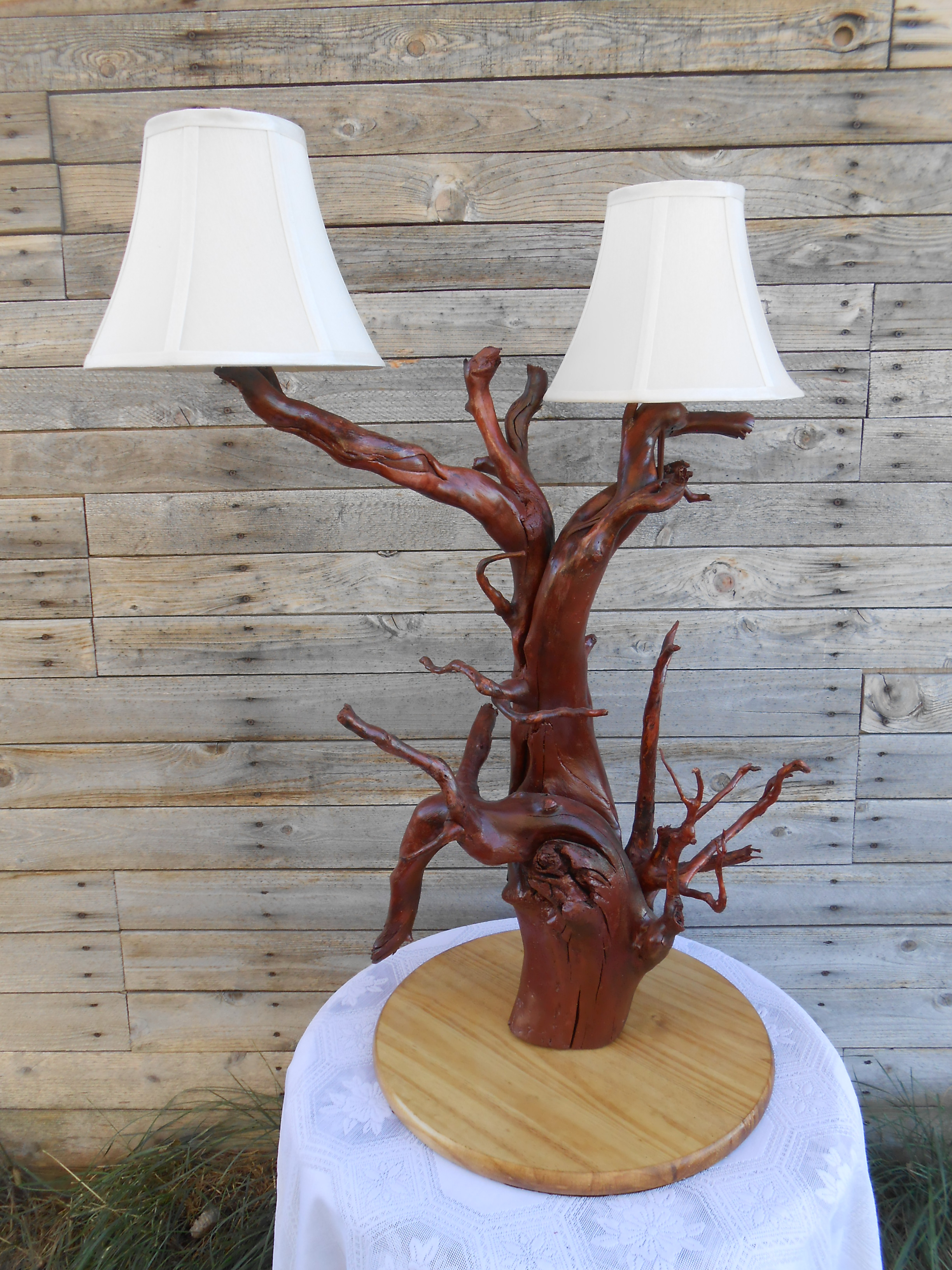
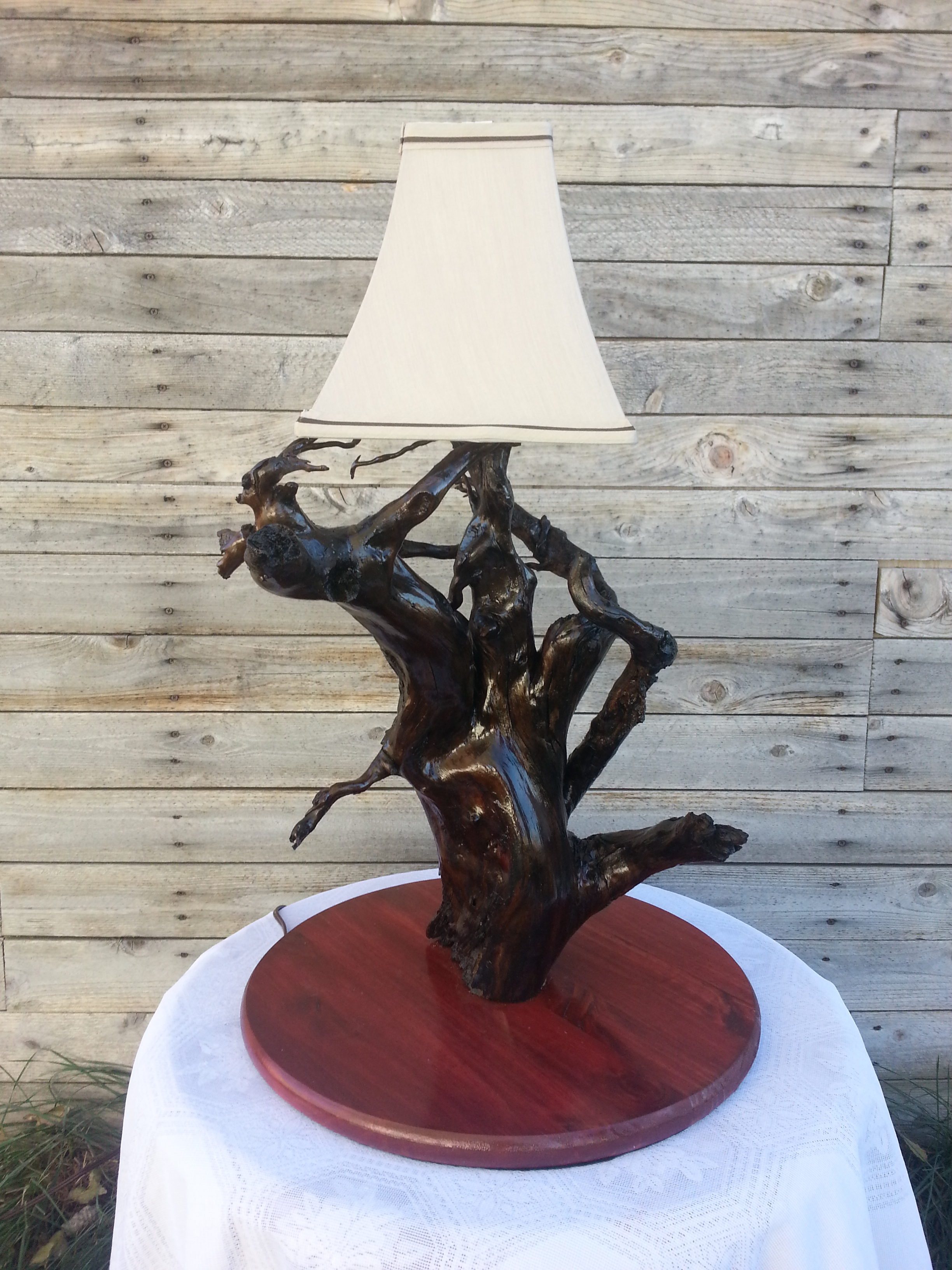
At 42 inches tall, this lamp presented a unique challenge.  Whereas Smoke and Waves were made of hard twisting wood difficult to drill, this lamp was rotten on the inside and brittle on the outside.  To keep the delicate exterior from constantly flaking off, I brushed it with several coats of diluted wood glue, transparent when dry.  A Provincial stain covered it nicely.  To reinforce the interior, I poured into the cavity a mixture of plaster-of-paris and wood glue, inserting a length of old curtain rod to preserve a conduit for the lamp wire.  Despite the challenges, I was quite happy with how this lamp turned out.  I called it Reach for its tall, elegant, vertical lines.

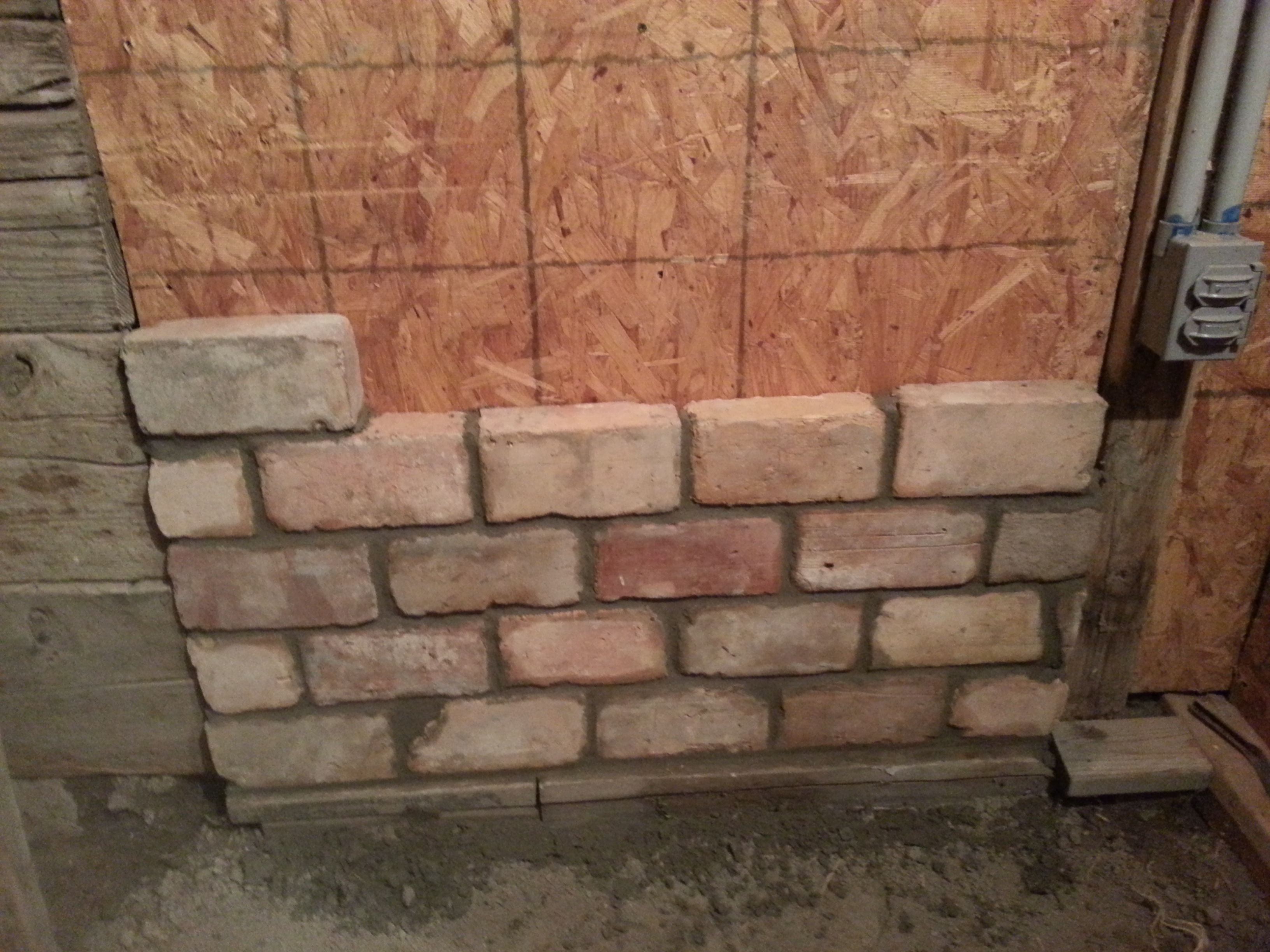
Though we believe Reach would have sold in excess of $600, I gave it to my good friend Justin M. in trade for his much-appreciated time as a journeyman electrician in wiring my outbuildings, including my chicken coop, work shop, and future writing studio, the interior walls of which I am finishing with antique brick acquired from a retired farmer.

20150815_222534

Wood Lamp: Waves

Waves

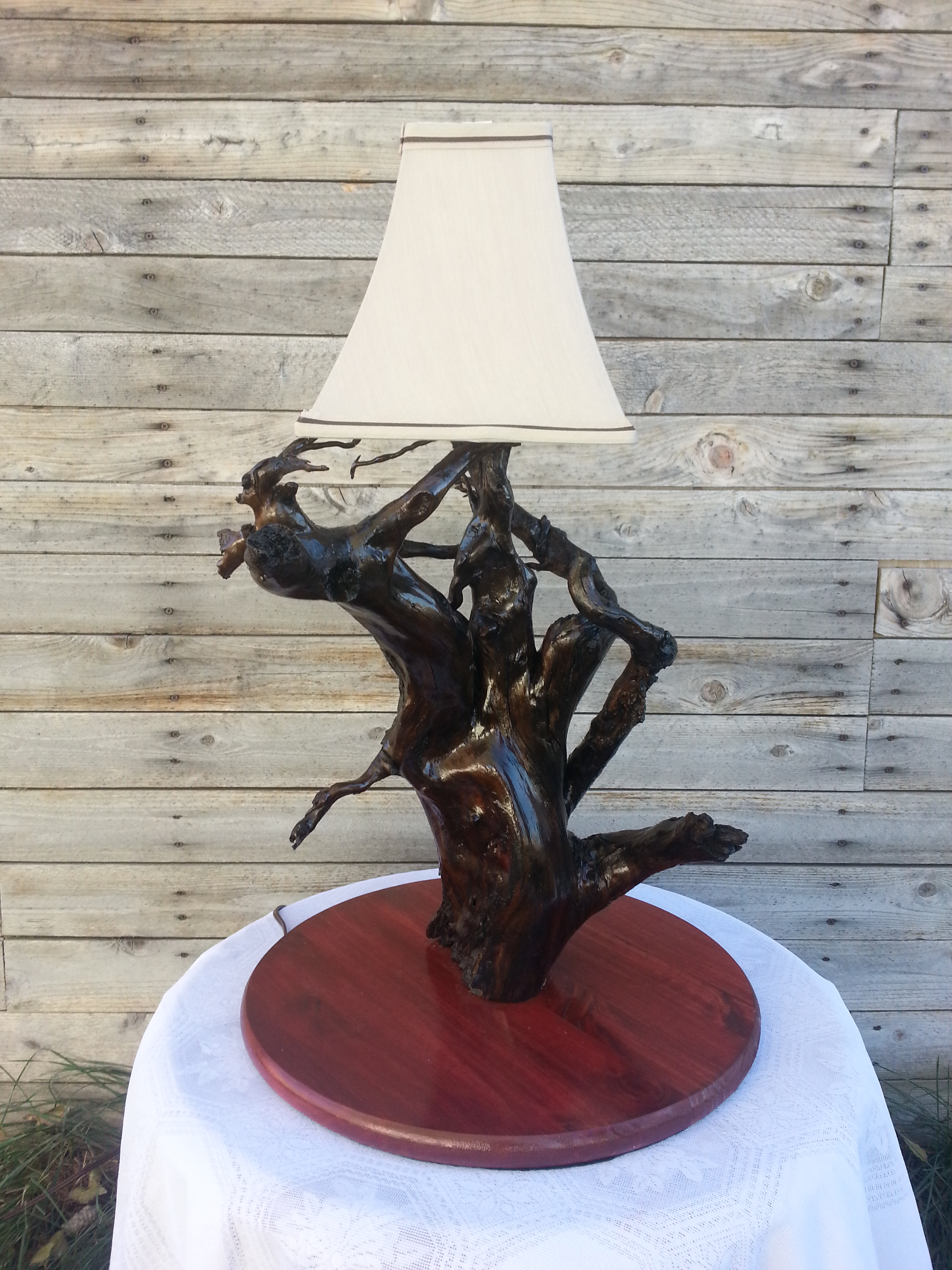
Waves, a lamp by Hyrum Baker

My son, Hyrum, made this gorgeous natural wood lamp, with a little coaching from me.  Like his lamp Smoke, the wood for this lamp came from a Russian Olive tree root.  For this lamp, however, Hyrum chose a dark brown Jacobean stain.  The lighter Sedona red base reflects light up into the twists and curves of the darker lamp, bringing focus to the rich glossy brown.  Standing at about 27 inches tall, this lamp presented Hyrum with the challenge of drilling in hard wood with long bits at awkward angles.  Hyrum, aged 12 at the time, turned an otherwise ugly root into a beautiful piece of artwork that doubles as a lamp.  Hyrum named the lamp Waves, the delicately curving arms evoking images of rippling water.  We suggest the value of this lamp to be $590 or more, depending on the market.  Waves is waiting to adorn the office or living room of a discerning decorator.

Fall

Tooele T crop1

Fall.  It has come early.  I bask in cool breezes, comforting after Summer’s heat, but knowing, also, that Winter will too soon chase its way in.  This mountain between Middle Canyon and Pine Canyon in the Oquirrh range of the Rockies sports the yellow leaves of Quaking Aspen trees, the reds of Gambel Oaks, and the evergreen Junipers, Pines, and Spruces.  I snapped this picture from the roof of City Hall, knowing I might need forgiveness after failing to ask permission–I just couldn’t resist.  Note the white “T” plastered on the mountain, for Tooele (too-i’-la) high school.

FALL

Fall has become
in my advancing years
a sweet season
sending forth
a settling sense
of things slowing down
preparing to rest
under white blankets
that warm and moisten
against year’s end.
Nights are cool
and days are sunny and cool.
Rows of dry corn
sheaves rasp each other
in the evening air.
Geese wave
a noisy farewell
overhead on their way away.
Greens melt
to candy yellows and reds
smelling earthy sweet
drifting down to become
the richness in the soil
where sleeping segos and tapertips
wait for Spring.

Brown Oak Leaf

100_3360

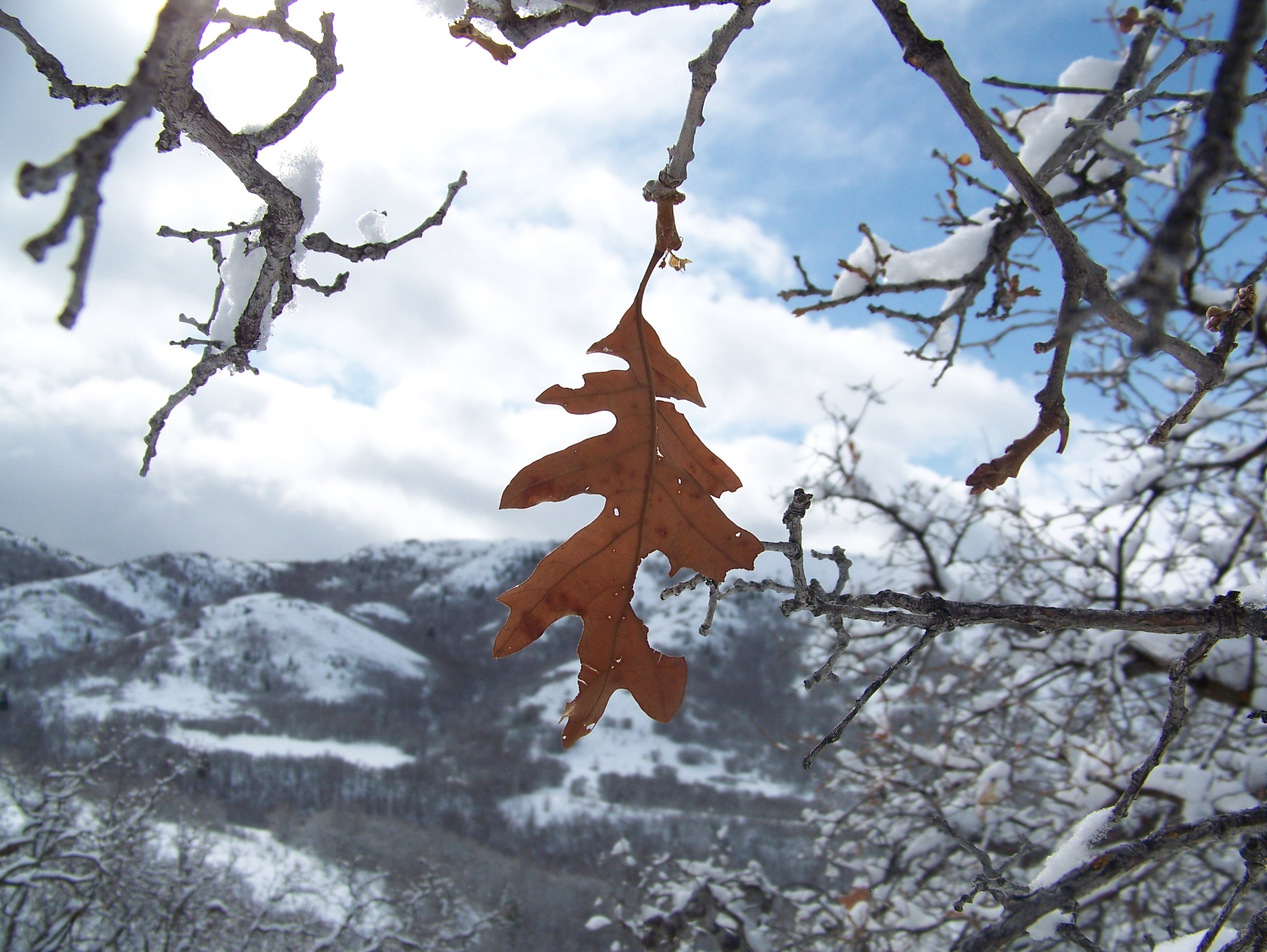
Several years ago I joined an expedition of older boy scouts, including my son, Brian, for a winter campout between the Christmas and New Year holidays.  At the top of Settlement Canyon, we spread insulating straw over the snow-covered tent sites, then shoveled out a foot of snow around the edge of the tents so we could sink the steel tent stakes in the hard ground.  I grew restless after eating my tin-foil dinner and visiting with the others for an hour or so, and set off for a winter walk.  Though the sun had long set, the moon and stars shown through the leafless Gambel Oaks and Mountain Maples to reflect brightly on the white snow.  The utter beauty of my surroundings suddenly washed over me transcendently.  Later in the night, in my tent, bundled up against near zero-degree weather, I turned on my headlamp and scratched out this poem.

BROWN OAK LEAF

A brown oak leaf
dangles from a stray gossamer string,
spinning like a winter whirligig,
reaching down to her sisters,
intercepted in her journey
to the resting place of all deciduous foliate life.
The cool air caresses the brown oak leaf
with the sweet fragrance of powder-green sage
and the sweet fragrance of the fallen-leaf loam
that rests, decomposing,
yielding to the hard earth
its fertile essence
to bless Spring’s
purple taper tip onion,
elegant sego lily, and
infant leafy-green canopy.
The dry leaf’s mother oak,
dressed in velvety orange-green lichens,
clings with tangled roots,
like the tentacles of ten octopi,
sinking their tendril tips into the high stream bank.
She joins her bare branches
to a thousand denuded tree tops,
waving randomly like
the up-stretched arms of
so many entranced worshippers
flexing toward their god.

(“Brown Oak Leaf” was previously published in the Summer 2007 edition of Avocet: A Journal of Nature Poems.)

100_3359

20151031_12083920151031_123855 20151031_132720

Wood Lamp: Smoke

Smoke

Smoke, a lamp by Hyrum Baker

My son, Hyrum, and I made this lamp together.  For his first lamp project, in 2014, he chose a difficult piece of wood, which required drilling with long bits at awkward angles.  We rescued this Russian Olive root, standing about 36 inches tall, on a firewood cutting expedition.  Encrusted with mud, Hyrum worked for weeks to clean and sand the wood, filling the cracks with putty, and staining: he chose Sedona Red.  The putty didn’t stain well, so we used a matching barn-red paint to cover the still-pale putty, then stained over the dried paint, all for a rich rusty red result.  I am particularly proud of Hyrum, aged 12 at the time, for this excellent piece of artwork that happens to also be a lamp.  (I helped a little, of course.)  He named the lamp Smoke.  We suggest the value of this lamp to be $650 or more, depending on the market.  It is waiting to be taken to the perfect home.

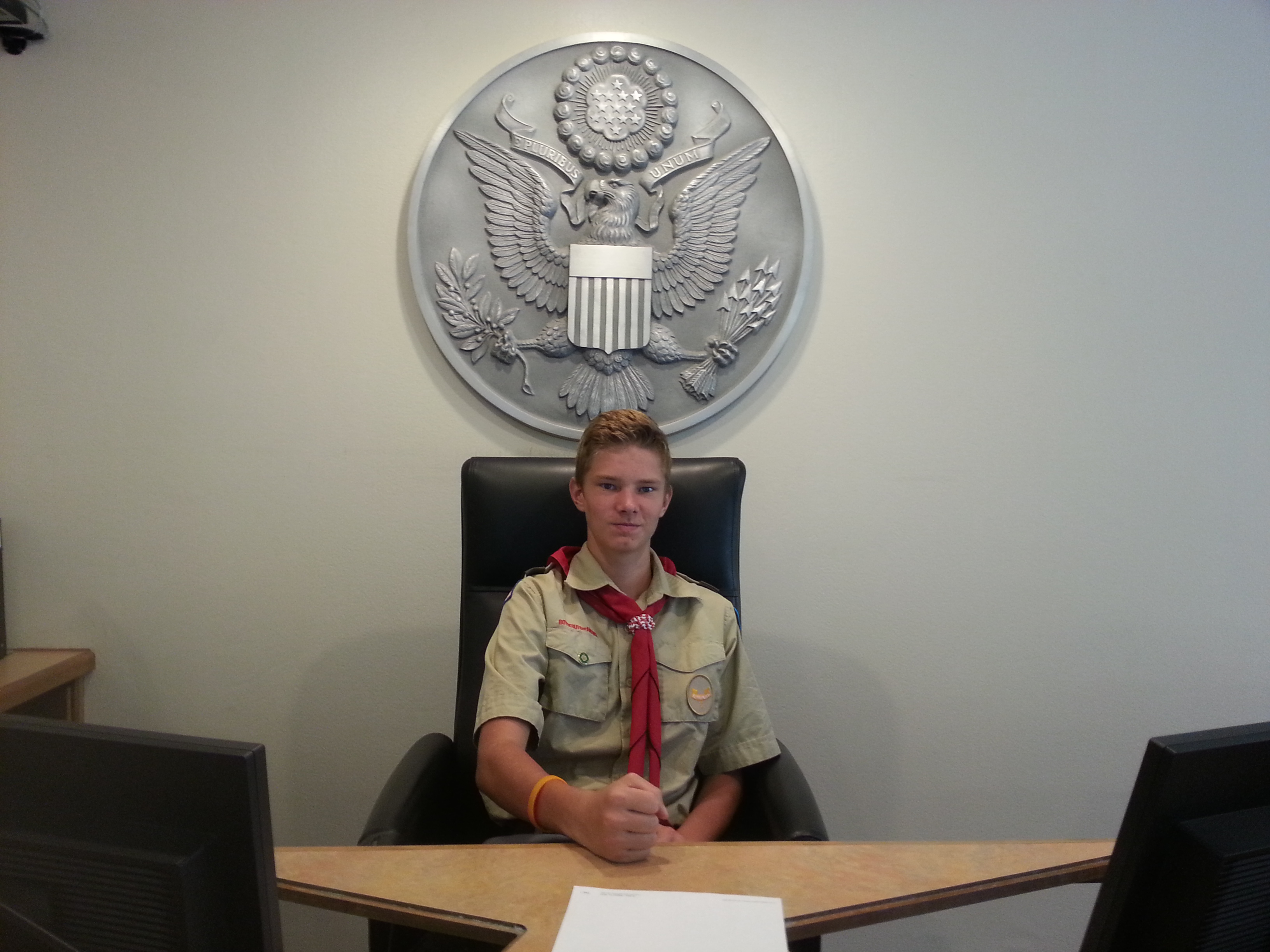
Here is Hyrum pictured recently sitting at the bench of a federal district court judge during a recent scouting expedition for the Citizenship in the Nation merit badge.

2015-08-21 Hyrum-05

After visiting the courthouse and other state and federal buildings, we enjoyed sandwiches at the Boston Deli, a downtown Salt Lake City lunch spot featuring jazz vinyl records, instruments, and music.

2015-08-21 Hyrum-04

Woodcraft: Introduction

20130710_161245

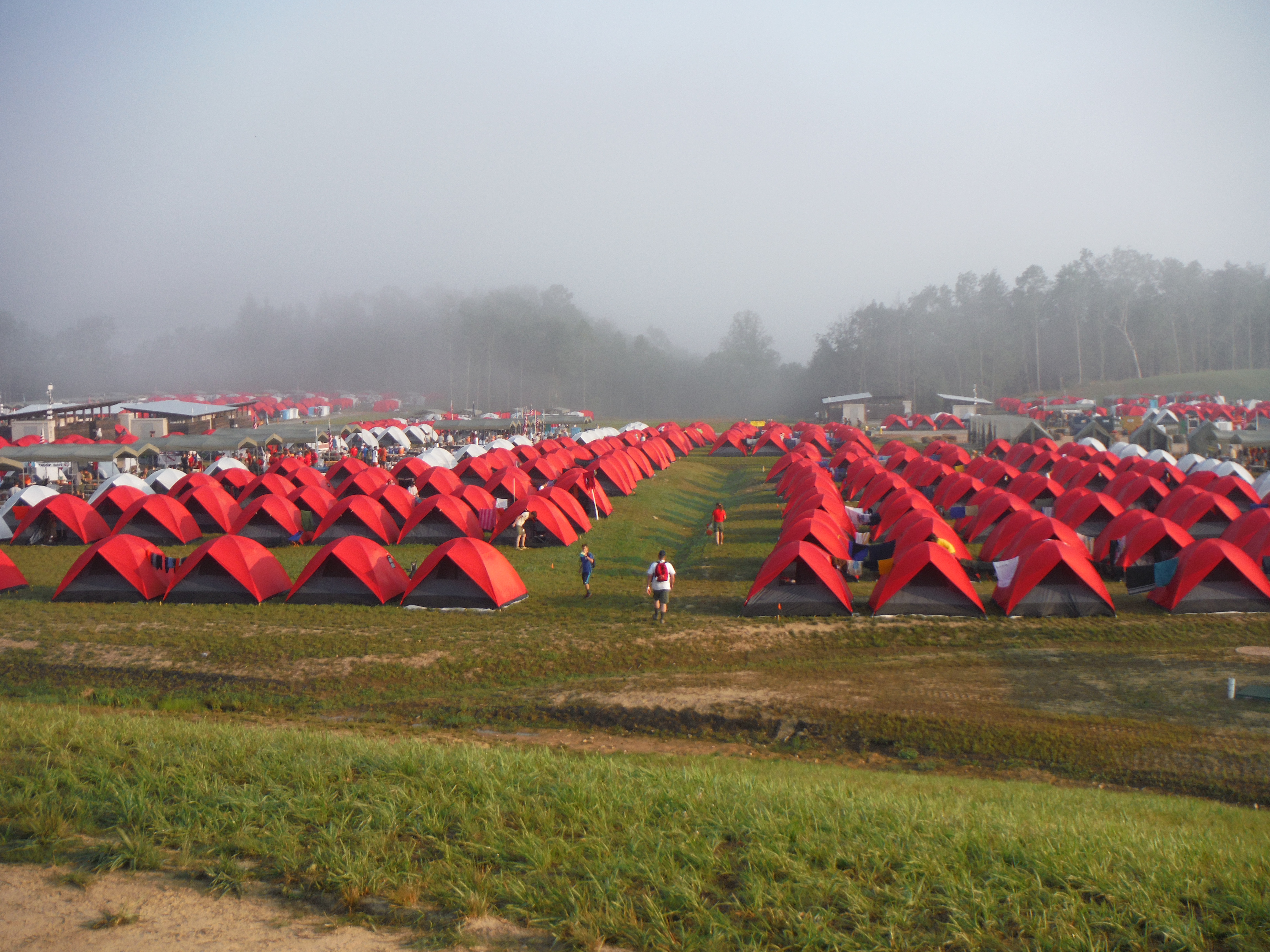
Working with natural wood has always been a source of pleasure and camaraderie for my sons and me.  On hikes we often spy gnarled driftwood or twisted tree roots that would make beautiful lamps.  We decided to make a number of these lamps and sell them to fund our way to the 2013 and 2017 National Boy Scout Jamborees.  For those unfamiliar with the Jamboree, it involves ten days touring the historic sites of New York City, Philadelphia, Gettysburg, Mount Vernon, and Washington D.C., then ten days at a high adventure camp in the mountains of West Virginia.  About 40,000 scouts attended the 2013 Jamboree.  Here is a picture of our troop’s camp area.

DSCF0627

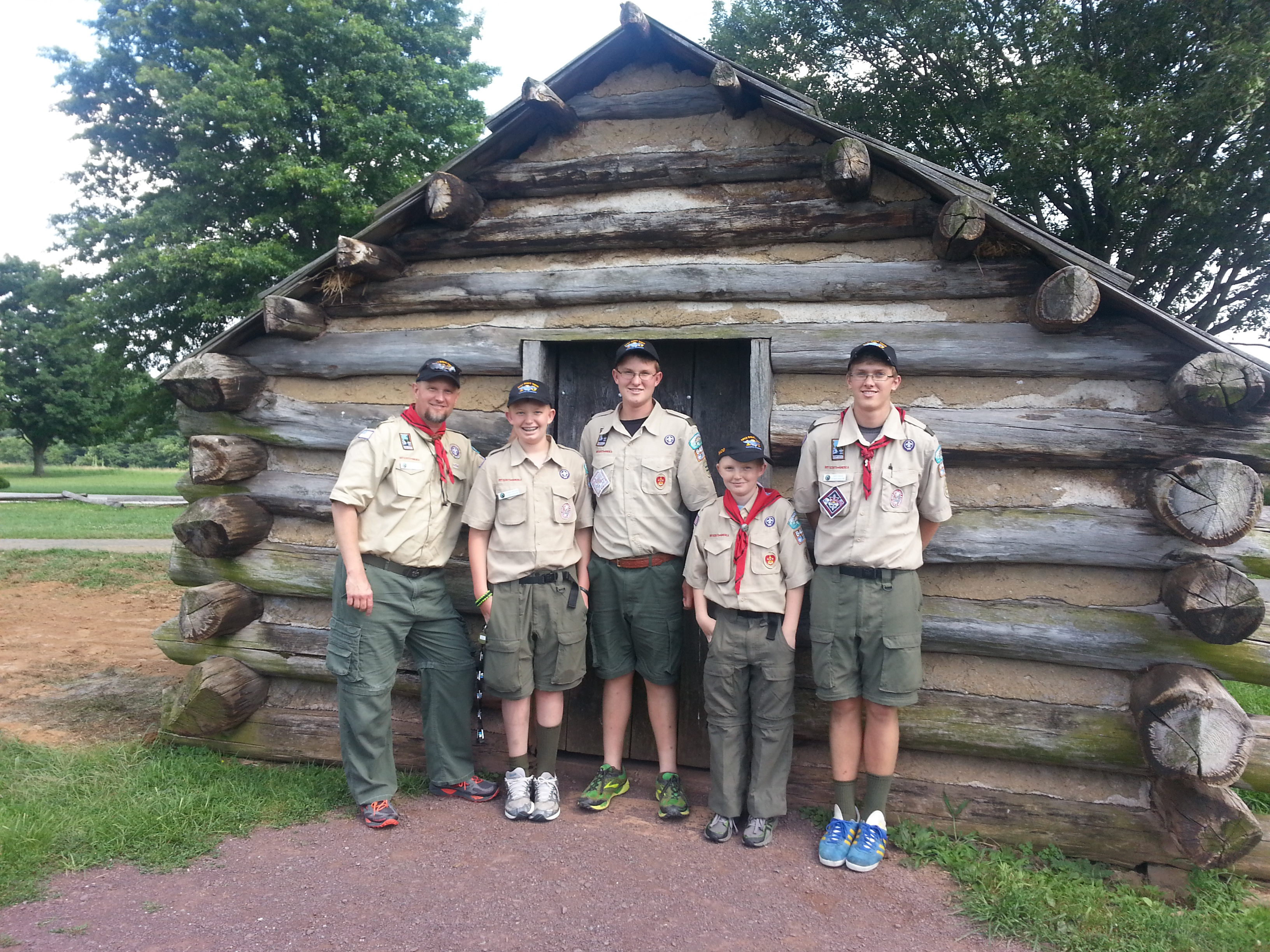
Pictured above are myself (one of four troop scoutmasters), my sons John and Caleb, and my nephews Thomas and Todd (four of 36 scouts in the troop), posed before a reconstructed winter quarters cabin at Valley Forge.

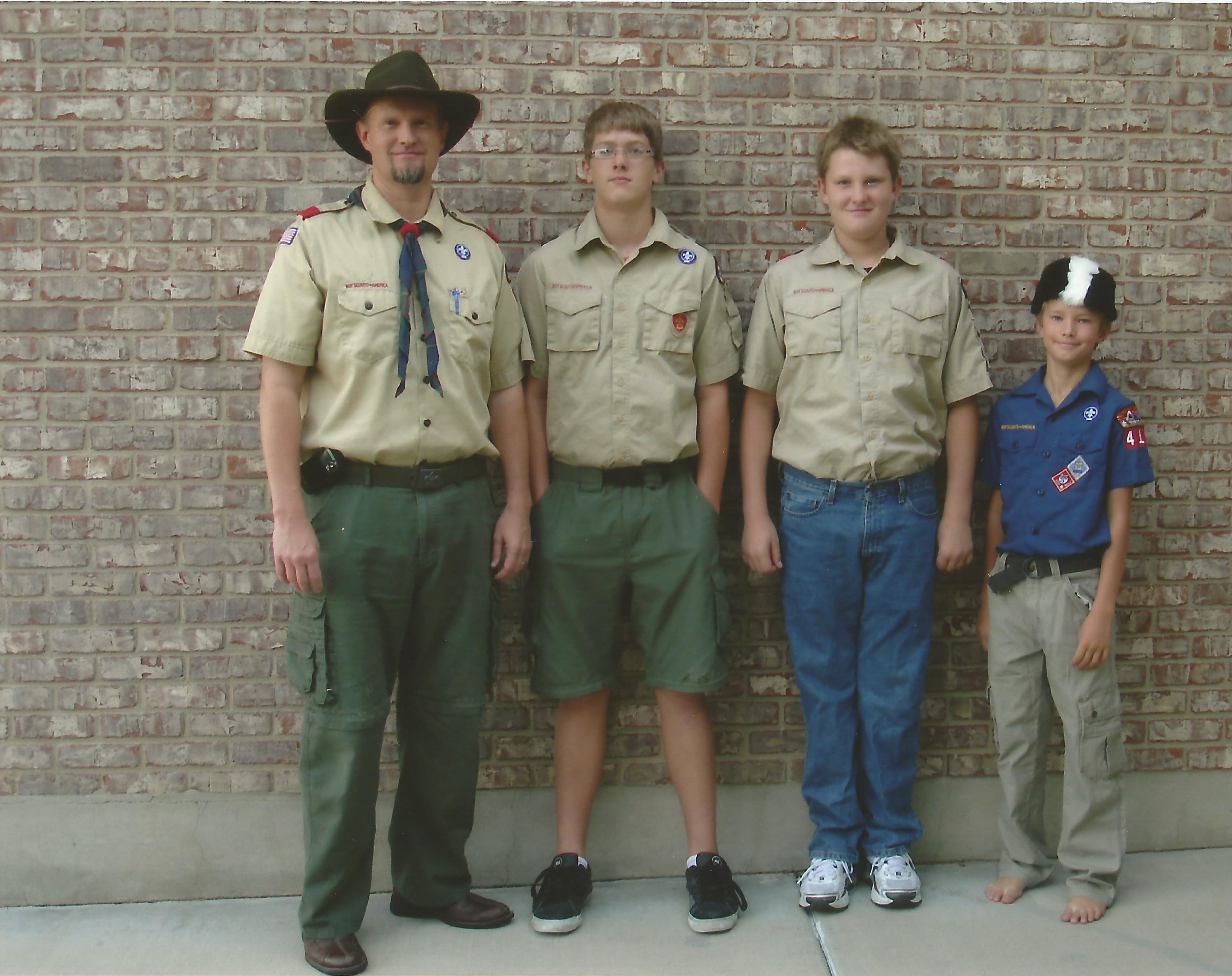
We hope to make Baker Brothers Lamps a successful going concern.  But in the meantime, we are learning skills and making memories together.  Each post on the Rabbit Lane: Woodcraft page will feature one lamp or other woodcraft project created by my sons and myself, pictured here on September 11, 2011, before attending Sandy City’s 10th anniversary commemoration of the World Trace Center attacks.

Dad and Boys 09-11-11

Maple Leaf

20150829_161249

I sometimes walk the neighborhoods near city hall during the lunch hour, trying to calm my mind from the troubles of the office.  On one such walk I beheld, on the ground, a beautiful maple leaf in the process of transforming from Summer’s green to Fall’s crimson hues.  I regarded her as the quintessence of natural beauty, and could not resist both scooping her up and writing this poem.

MAPLE LEAF

A leaf,
a many-pointed Maple,
demanded
that I look down
and see her,
her splashes of swirling colors,
laying with feigned humility
on a bed of matted elms,
paper-bag-brown.
She lay unspeaking,
satisfied to be admired,
to not be drab,
satisfied that I was tempted
to stoop and handle her,
satisfied with my sighs.
I could not walk away
and not take her with me.

(I did not have a camera with me as I walked, but the maple leaf pictured above is an acceptable substitute, found during a walk in Ophir Canyon.)

Good-Bye Clementine

20150901_070930

Clementine returned, thankfully.  And Boris moved out (or was eaten), thankfully.  Though Clementine’s company had been, in some sense, comforting to me, our dissimilar natures dictated that our relationship was not to last.  Sealing our fate was the fact that, after living with Clementine for three months, I had to move out in favor of paying tenants.  Moving from this drab little apartment felt traumatic to me because I had become accustomed to my situation and surroundings.  And I had found a silky, spindly-legged companion.  Clementine showed no emotion when I left, but hung unmoving, as always, in her corner.  I walked out, shut the door, and surrendered my key, leaving Clementine behind.

GOOD-BYE CLEMENTINE

Good-bye, Clementine.
I have to leave:
paying tenants, naturally,
take precedence. No doubt:
they will disinfect your corners,
wipe away your suspending threads;
they will squash you without
thought, flush you out
with swirling sewage.

What? No. You cannot come
with me. This is where you belong,
while you belong anywhere.

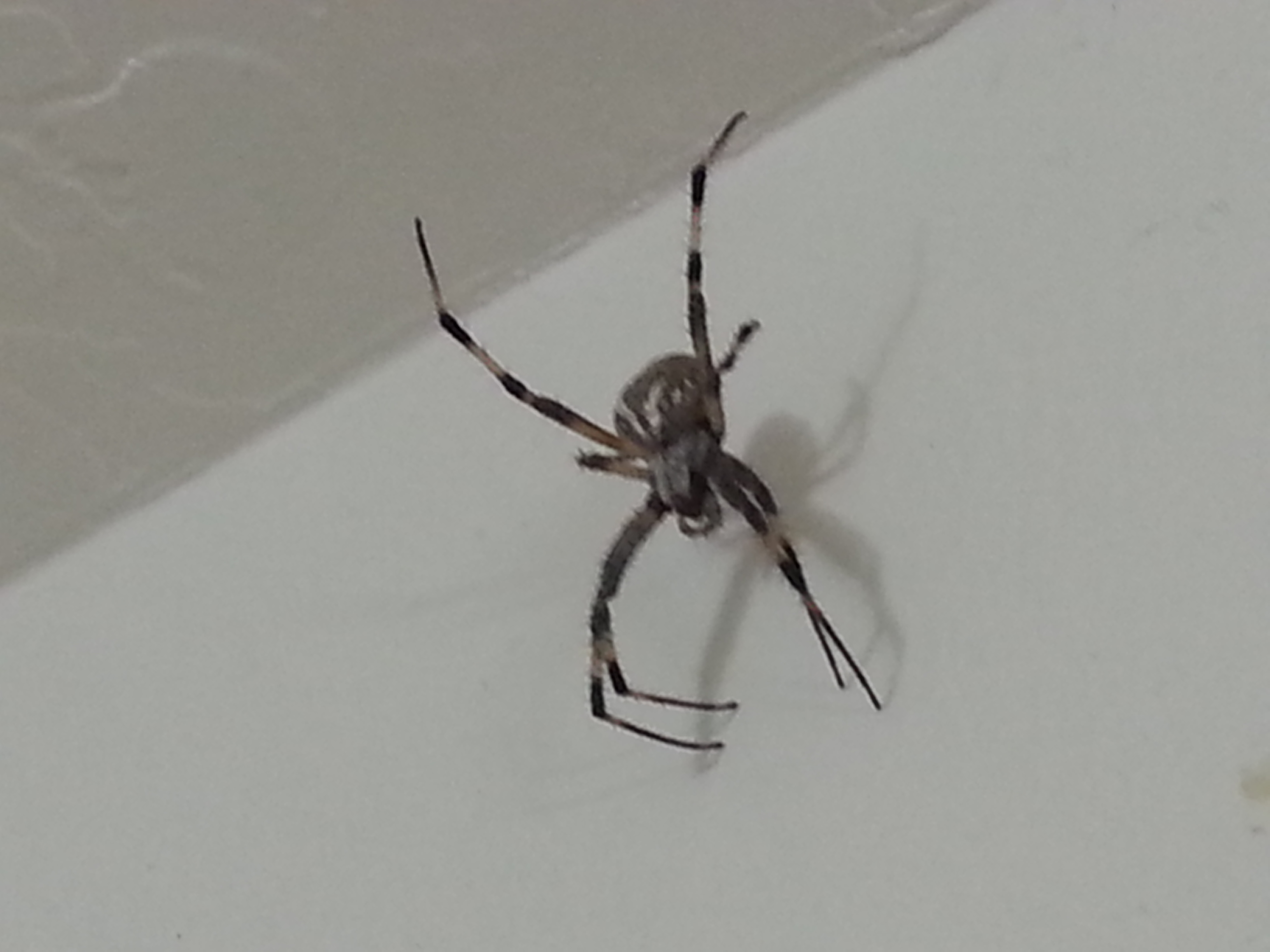
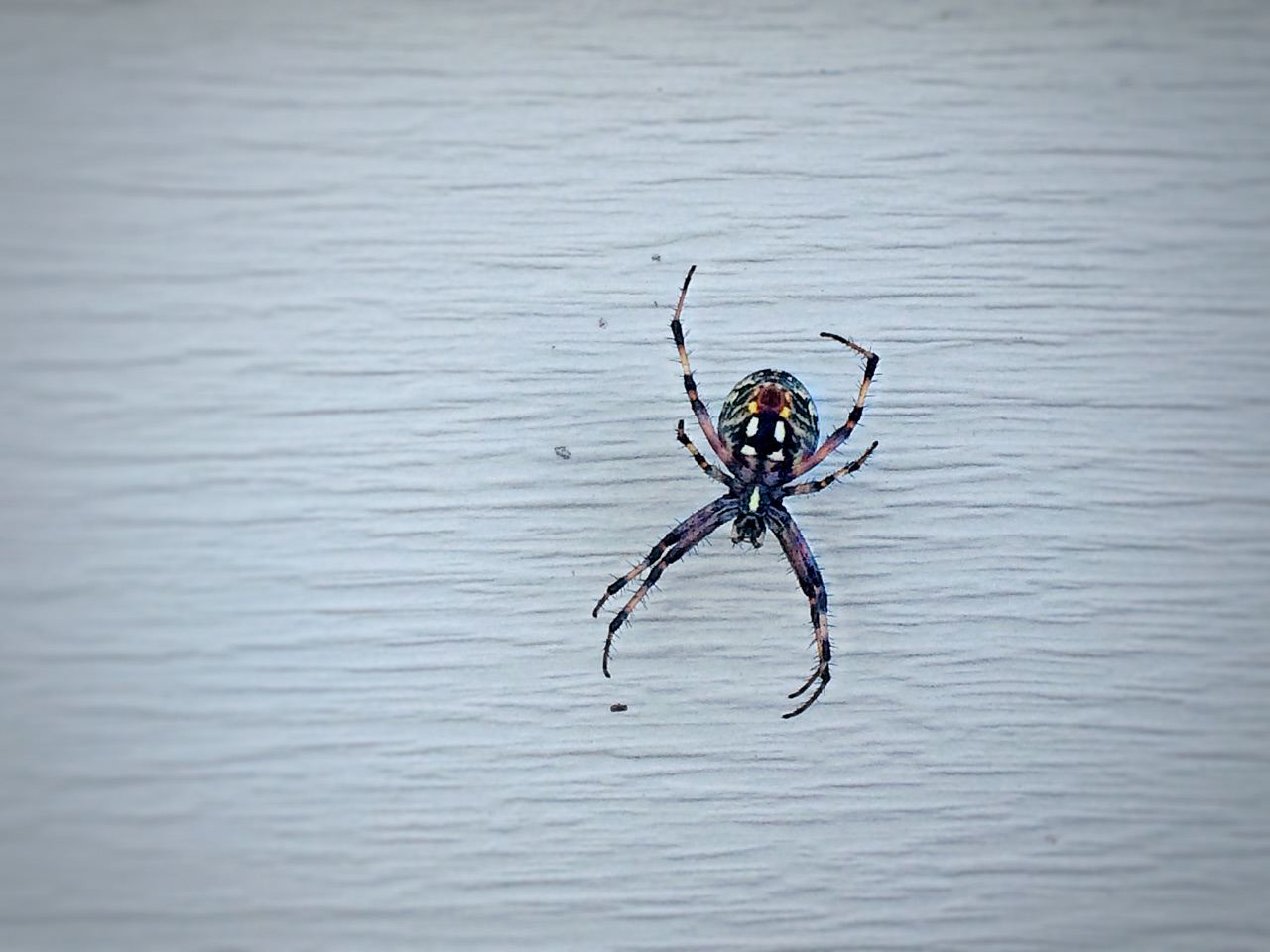
(Incredibly, the above-pictured spider appeared in my bathroom, in a corner of the ceiling near the shower, in the midst of my posting these Clementine poems.)

Clementine: A Scare

20150920_142229

When I came home from work one evening, Clementine was nowhere to be found.  But Boris hung in a corner of the shower insert.  He looked smug, and I immediately suspected him of foul play.  Fear and anger mixed as I both worried about Clementine and jumped to the conclusion that Boris was responsible for her disappearance.  As I said earlier, I didn’t like him from the start, and had no reason to trust him.  But something caused me to withhold the hand (and toilet tissue) of judgment and wait awhile to see if Clementine’s absence was temporary, and if I had misjudged.

CLEMENTINE: A SCARE

Boris?
Boris.
What have you done
with Clementine?

Clementine Brings a Friend

Clementine 06

(Photo by Laura Baker)

One day I discovered that Clementine had brought a friend to my shower stall.  Slightly smaller but of the same species, he hung in a corner not farm from Clementine’s habitual hangout.  I called him Boris, partly because I didn’t like him.  The name Boris morphed on my tongue into “boorish.”  I felt unabashedly jealous of this usurper, this intruder upon what I had naively assumed was the exclusivity of my relationship with Clementine.  I wanted Boris gone, but needed to be polite for Clementine’s sake.  All this was tongue in cheek, of course, but made for fun imagining, and a poem, during a melancholy time.  Boris didn’t stay long.  Perhaps Clementine ate him.  That suited me.

CLEMENTINE BRINGS A FRIEND

So, Clementine—
you have brought a friend—
And you are . . .
Boris?
Bo’-ris.
(You’re rather small.)
Of course, you can
visit for awhile.
Is there anything I can get
you, Bo’-ris?
Curds and whey? Well,
I’ll certainly see what I can do.
Won’t you
make yourself comfortable,
Bo’ris?
(Um, Clementine . . . )

Clementine: Gone

Clementine 03

(Photo by Laura Baker)

My last poem Clementine: Return would have made more sense had I first posted the poem Clementine: Gone.  Oh, well: I goofed.  As I suggested in my last post, when Clementine disappeared, I felt an intensified loneliness.  My only companion was gone, who knew where.  I hoped she would return, even though I thought it unlikely.  Clementine’s departure felt permanent, and I could not trust in the possibility that she would return.  Now you may understand better the ebullient tone of the previous poem, welcoming her upon her return.

CLEMENTINE: GONE

Spindly-legged spider—
I cannot see
where you have gone;
the corners are empty
in every room.

Clementine: Return

Clementine 02

(photograph by Laura Baker)

Clementine would disappear for days, and then reappear in the same or a different corner.  I could not see any web against the whiteness of the shower insert, but I knew a web must be there, for Clementine didn’t walk on the wall but seemed to walk in air close to the wall.  I wondered what she ate, for she was slow, spun no web to catch insects, and there were no insects (that I could see) for her to catch.  When she left I felt her absence, like after you say good-bye to a friend who has come to visit.  Her return always brought a strange sense of relief.

CLEMENTINE: RETURN

Welcome, Clementine!
I am glad
for your visit!
How I have hoped
you were well.
And here you are,
looking well!
Can you stay
awhile?
You left without notice
(you know),
and equally came.
But I am glad
for your visit!
Please, stay
awhile.
I am needing to go
to town this morning,
though. You’ll wait here
till I return?
Oh, good.
So glad
for your visit!

Hello Clementine

Clementine 01

(photograph by Laura Baker)

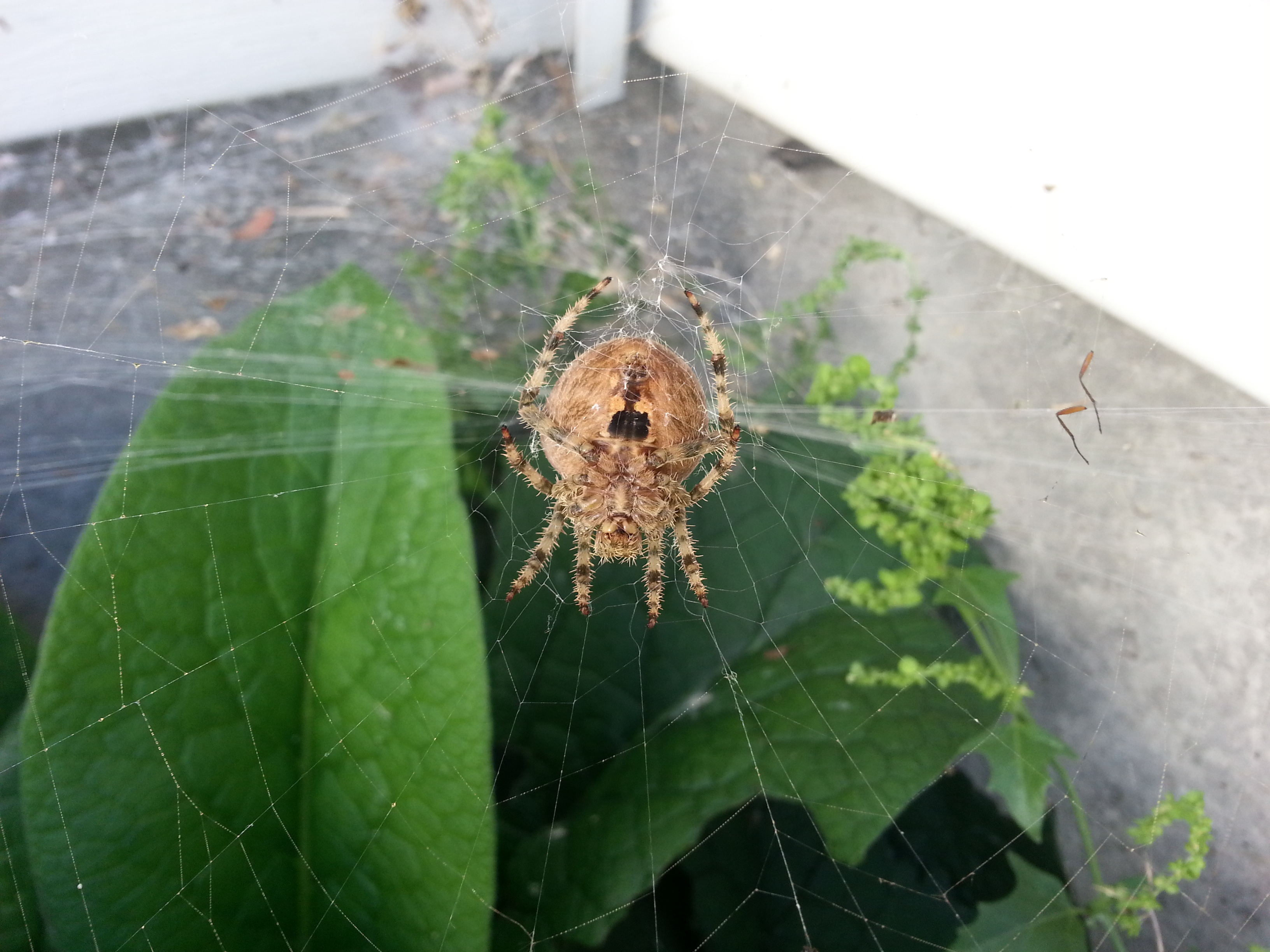
Some years ago, during a very dark time in my life, I lived alone in a small apartment.  In the bathroom the wallpaper border was peeling from the old paint, and mildew grew on the ceiling.  My clothes sat in neat piles on the floor inside a big duffle bag.  Parts of my life had crumbled despite my best efforts to hold everything together.  The weeks and months dragged on as I laid staring at the ceiling night after night, wondering how I had come to be here and where I was going.  I felt utterly alone.  But during the early weeks I discovered a quiet companion in a corner of the shower: a spider.  My Charlotte to her Wilber.  I called her Clementine.  I could have casually killed her to avoid her silky creepiness, for I don’t care for spiders.  Instead, in my loneliness, I greeted Clementine fondly each morning and evening, and missed her when she disappeared for a day or two.

This and the next five poems I post will chronicle my brief relationship with Clementine.

HELLO CLEMENTINE

A spindly-legged spider
hovers upside-down
above me, in the corner—
I don’t know what she eats
in this tidy little shack;
it’s only the two of us—
she faces away, but
I know she is only pretending
to not watch me.
Part of me squeams
to squash her:
three squares of toilet tissue
would do. But,
she is quiet and harmless;
this is her shack, too.
And, it’s only the two of us.

(Unfortunately I never took a picture of the real Clementine.  My daughter, Laura, took this and subsequent spider photographs of garden spiders around our house.)

Thistle Seed

20150516_115742

I love wild birds.  Each visual and aural encounter with a bird inspires me, lifts my spirit somehow, and causes me to stop what I’m doing and to watch and listen.  “Do you hear that?” I’ll ask my children as we walk on Rabbit Lane.  “That’s the cry of the Red-shafted Northern Flicker.  Now every time you hear that lonesome call, you’ll know who it is, and can watch.  See?  There he goes?”  The Meadowlark sings the most beautiful and complex melody.  Common Sparrows twitter chaotically, wooing mates in the tree branches.  Red-winged Blackbirds whistle and dive in for a sunflower snack.  Mourning Doves coo softly and sadly.  I hope you enjoy this prose poem about some wild birds in the Rabbit Lane neighborhood.

THISTLE SEED

Small striped Siskin grasps a high twig with black-wire feet, glancing repeatedly downward, wishing someone would fill the hanging thistle seed bag.

Two Red Tails sit close on a high bare branch watching the fields together for a mouse or a vole or a gopher that might poke its snout up through the snow. Which one will fly?

A thousand yellow-shafted Northern Flickers crowd a copse of gambel oaks and mountain maples, each of the thousand chatting earnestly to the other nine-hundred ninety-nine. The red-shafted flies alone, flapping then gliding close-winged, after sounding a solitary cry.

Kestrel finds its way into the coop, with no room to dive and where the chickens are ten times its size, and cannot see the way out. Brian grapples it with leather gloves and sets it free to fly, not before noticing the beautiful markings on its face, the scalpel beak, and the black glossy gleam in its eyes.

Bald Eagle came only once to our cottonwoods and stared down at me as I stood stupefied.

Kingfisher

Kingfisher by Caleb-jpg0002

(Belted Kingfisher by Caleb Baker-2015)

Driving to church one morning, I noticed a Belted Kingfisher perched on an electric wire suspended over Stansbury Lake.  What a strikingly beautiful bird.  I wondered about his perspective on the world from that perch.  All through church I thought more about the kingfisher and what he saw than I did about the sermons and what they taught.  I wondered what he saw, what he felt, what he thought about, what it must be like to dive like a missile into the water, then rise with a writing minnow.  Sitting in my pew I wrote this poem.  My family thought I was taking copious notes on the sermons.  (Thanks to my son Caleb for this excellent drawing of a Belted Kingfisher.  The smudge is from the best of many scans, not his pencil).

KINGFISHER

Kingfisher,
watching from your high-wire perch,
looking down upon the world,
upon the water—
what is it that you see?

Kingfisher,
diving from your elevated view,
wings folded,
a yellow-beaked torpedo—
what was it that you saw?

Kingfisher,
fluffing your feathers dry,
back at your vigilance place,
the minnow having slid down your gullet—
what was it that it saw?

Kingfisher,
flying on your blues and blacks from your high-wire perch
into the nook of a sheltering tree,
the waning sun still warming—
what will you see tomorrow?

At Midnight

Waves

(Lamp by Roger and Hyrum Baker-2014)

We may think that as parents we have plenty of opportunities to shape and affect the lives of our children.  And we would be right.  But some opportunities, when missed, cannot be recaptured.  They are lost, and we cannot know what we have missed or how we may have helped another.  The best we can hope is that we won’t miss the next indispensable opportunity.  This poem is about opportunities gained and lost, and hints at the need for making a commitment to make the most of them when they arise.  Our children need us.

AT MIDNIGHT

I lay on my back
at midnight
and wondered if I should
go to his room,
where his light still shone,
and talk to my son,
a young man.
I lay on my back and wondered.
I lay on my back and thought.
But when I at last arose,
I found his light too soon turned off.

(Note.  This poem is not about suicide.  But it could be.  If we suspect that our child is depressed or sad or lonely or wanting to take their own life, we need to take a moment to reach out, to express love and support, and to ask the hard questions that will help pave the way to safety.   QPR training–Question, Persuade, Refer–is a useful tool for all.)

Rooster

20150801_181955

I have raised roosters both tame and mean.  One white rooster is so gentle we can hold him and stroke his long white feathers while he softly chortles.  Give a rooster a harem of hens, however, and he becomes jealously protective.  My roosters never crow only at sunrise.  They crow at all hours of the day and night.  That same white rooster crows every time he wants our attention, like a dog barking for someone to play with or a cat meowing for a fur stroke.  Here is a little poem I wrote about roosters that do crow at dawn.  (For more on roosters in Rabbit Lane: Memoir of a Country Road, see these posts: Chapter 15: Of Foxes and Hens; Chapter 46: Of Boys, Pigeons, and an Evil Rooster; and, Round Shells Resting.)

ROOSTER

Rooster
Stretches from talon to beak
As he calls to the dawn,
“Welcome Today!”

Rooster
Squeezes from tail feather to crown
As he greets the new day,
“Good Morning!”

Dove Season

100_3741

In September I hear the plinking of low caliber (but still lethal) rifles through Erda’s country neighborhoods as hunters harvest pretty Mourning Doves and Eurasian Collared Doves from where they sit perched on power lines, fence posts, and tree branches.  I find it hard to believe that the State and County governments allow and even license such hunting.  I find it hard to believe that people still go to the trouble of making pigeon pie.  I believe the birds are simply killed.  To these hunters I say, please leave my pretty doves alone.  Let the hawks and falcons do the harvesting.  This poem further expresses these sentiments.  (See the post Of Boys, Pigeons, and an Evil Rooster for more on doves and pigeons.)

DOVE SEASON

A soft crying floats down
from the cottonwoods and power lines
to mingle with the morning mist:
a penetrating, mysterious cooing,
haunting calls of ghosts in the trees.

Pushing off from tree branches and the tops of fence posts,
doves’ gray tails fan wide with white-border bands,
wings beat powerfully with percussive whirring.

A .223 rifle cracks, pop, pop-pop,
plinking doves off power lines like cheap arcade prizes.
A shotgun shouts its BANG!
obliterating delicate birds in a whirl of flying
feathers twisting in air as they fall.
Another open season
to “harvest” my pretty mourning doves.

I think that I may write to the County government,
ask my elected officials why:
Most Honorable Commissioners:
Is there such an overabundance of doves,
as to create an unbearable nuisance,
as to pose an unarticulated threat,
that you feel compelled to countenance this slaughter?
Or do you dispense merely a license to kill,
a tolerance found in pioneer history that
modern man delights to perpetuate?
Please consider
shooing the rifles off our roads,
chasing the guns from so near our homes.
Please consider
letting the harmless doves alone
to grace my morning walks
with their woeful cries that take me
to the edge of somewhere sweet and tender,
laced with loss and mystery.
Sincerely, your humble constituent (voter).
I may write.

Mornings seem quieter than they ought to be
September-time.

To Say Thank You

Harvey 2015

How does one say thank you to a road, to a strip of dirt and gravel?  Yet that road is the main character, the protagonist, of Rabbit Lane: Memoir of a Country Road.  So, I must unequivocally thank Rabbit Lane itself for every gift bestowed to me over the years: calm, insight, resolution, understanding, beauty, history, and healing.  And for the gift of this book.  I also thank all of the people listed below who are mentioned in, or who contributed to, this book.

Angela Baker, my former wife, and our children Brian, Erin, Laura, John, Caleb, Hyrum, and Hannah.  My parents Nelson and Lucille Baker.

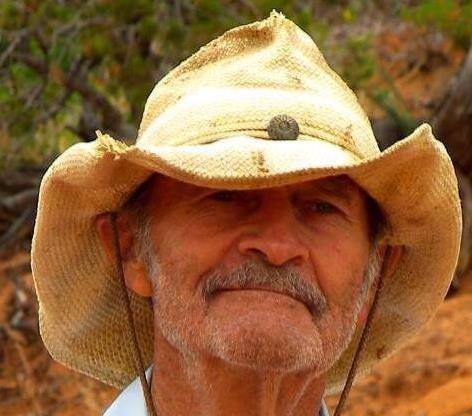
Harvey “Two Suns” Russell (pictured above; photo credit: Mary Russell) and Mary Russell.  Cloyd Russell.  Rocky Russell.  Three Native American sundance chiefs whose names I never knew.

20150216_153750

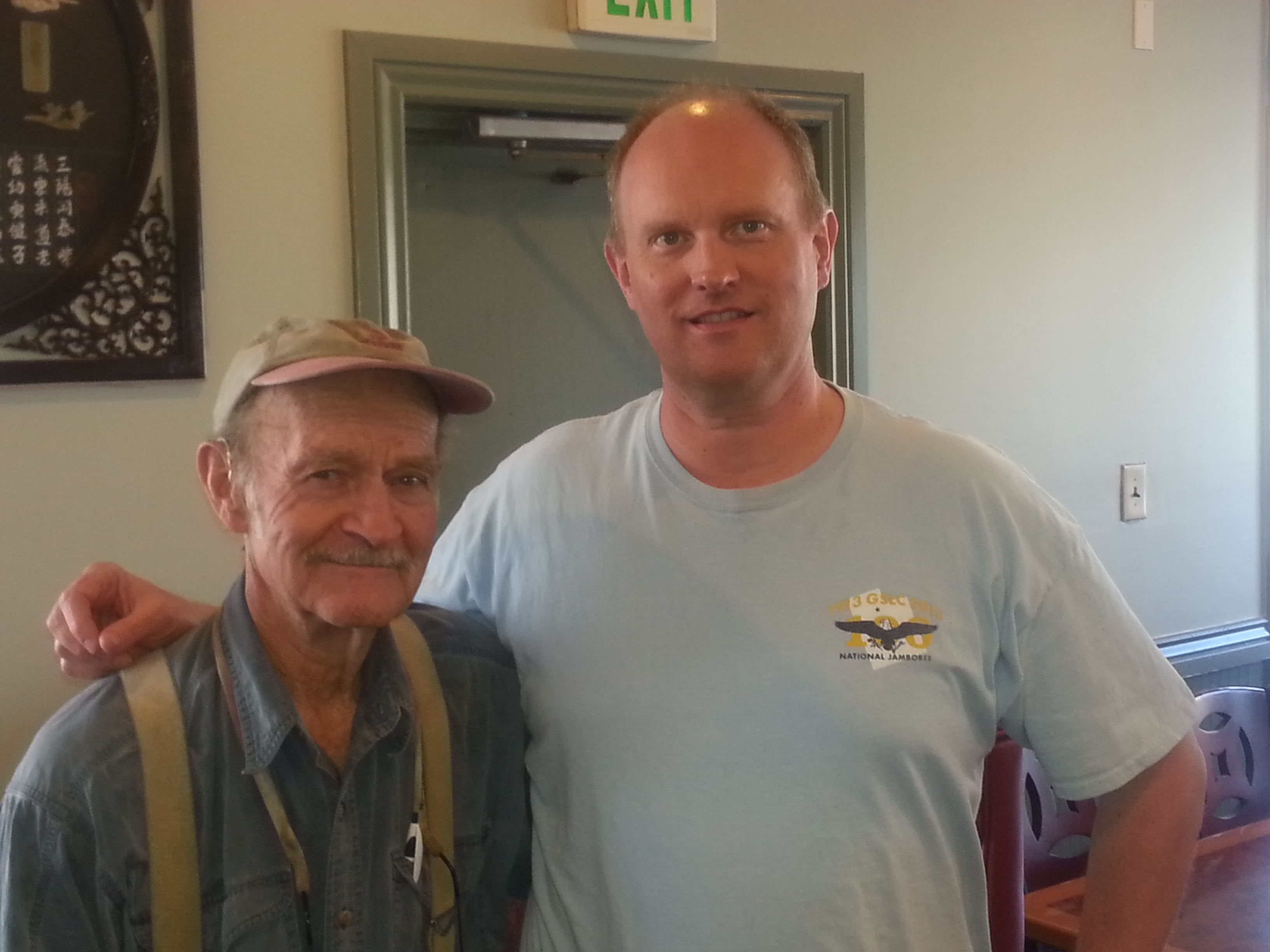
(Harvey Russell and Roger Baker)

Austin Barrus and Mary Barrus.  Cordale Gull.  Ron and Mary Norris, and Carly Gressman.  Craig Vorwaller.  Evan Coon.

Charley Warr and Judy Rydalch Warr.  Charley’s mother Nina Vorwaller Warr.  Charley’s great-grandfather Charles Warr.  Mayla Warr.  Doyle “Doc” Taylor.

Shirley Weyland and Lucille Weyland Rydalch.  Joe Liddell.  Dempsey Prichard (sp?).

Mathew Reza Arbshay.  Bobak, Anahita, and Deeba Arabashahi.  D. Brent Rose.  Mrs. Kastanis and her three children.  Bob Morgan.  Joe McNall.  Ben Court.

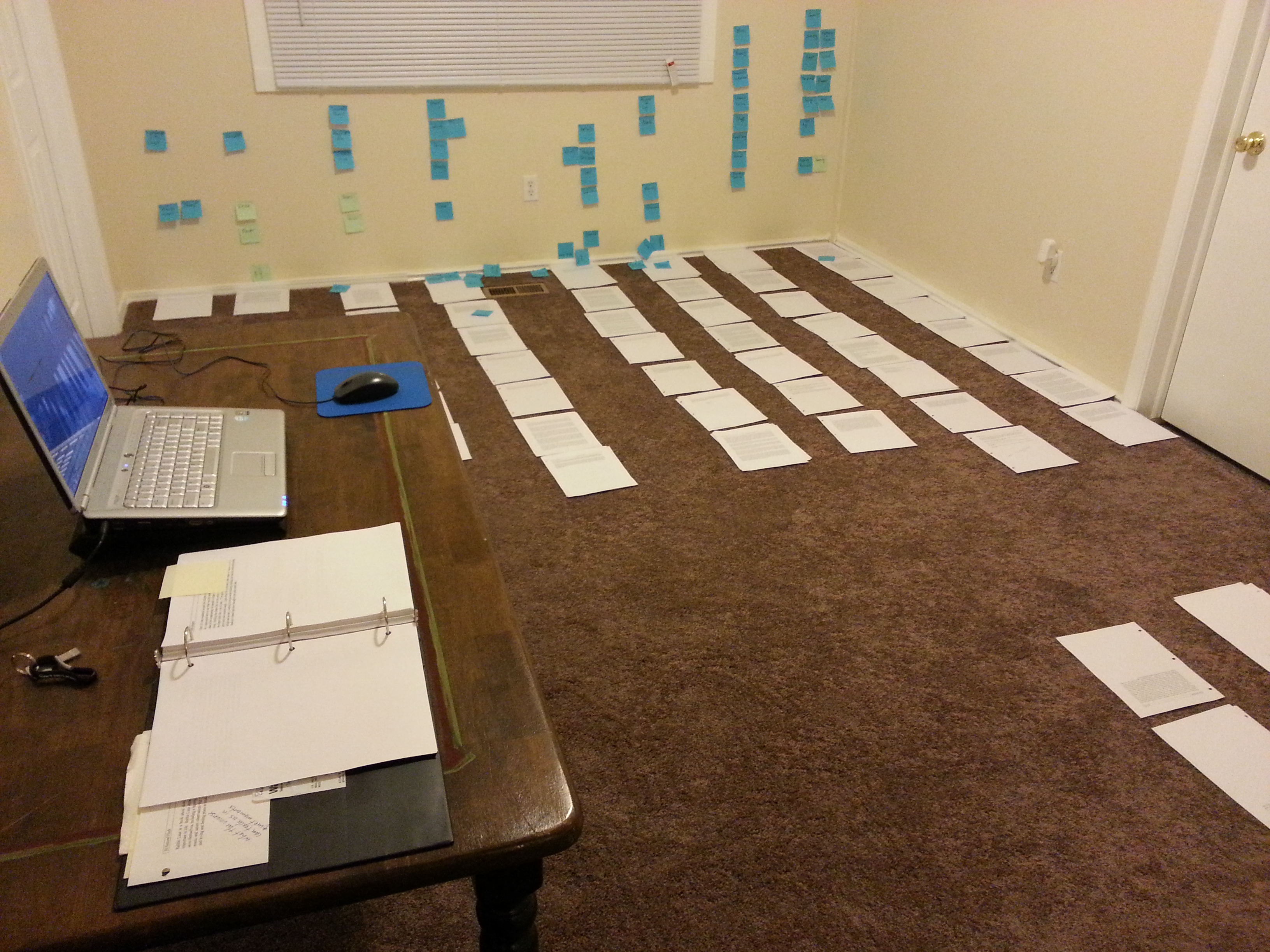
I want especially to thank my faithful friend Carl Johanson, and his wife Claudia Giron Johanson, who gave me both a place and a reason to live during the darkest hours of my life.  It was in this empty house that I assembled the finished manuscript for this book.

20140126_091639

Carl called my writing room my Walden Pond, which compliment greatly lifted my spirits and helped me believe in myself and that I was capable of writing the book.

20140309_101018

20140312_210905

20140309_101009

Thanks, lastly, to all of YOU for reading.  A book without readers is mere paper and ink.

Round Shells Resting

(The following piece tells in greater detail about the construction of my chicken coop and its inhabitants.  The article was originally published in 2003 in the Tooele County Magazine by the Tooele Transcript-Bulletin.  I offer it here as an appendix to Rabbit Lane: Memoir of a Country Road.)

20150801_182431

The weathered hinges creek as I enter my patchwork coop.  Its quiet inhabitants, rudely rousted from their roosting, suddenly jabber with a cacophony of clucks, crows, honks, and coos.  They run nervously about as I turn over a bucket and occupy a corner of their space.

I sit quiet and motionless, and the chatter calms as their anxiety fades.  Soon they ignore me and go about their normal bird business: pecking at mash, scratching through straw, drinking from water they muddied the moment it was poured, brooding on freshly laid eggs, and general roosting.

This is where I come for quiet contemplation.  Here I am free from the suit and necktie that pay the mortgage but strangle my dreams.  If I sit long enough, I begin to see again a glimmer of who I am.

In the coop, the delicate fragrance of fresh, dry straw soothes my frazzled nerves.  An impressive portfolio of molted feathers decorates the room in abstract patterns that appear a mere mess to the unenlightened.  Eggs nestle comfortably, softly, in beds of straw—a perfect still life of brown, white, and pastel-green ovals.

I soak in the simplicity and innocence of feathered life.  I silently bless the absence of drool and bark and bray.  I relish the moment’s escape from trivial chatter and from the weight of the world’s woes.  My birds demand nothing of me.  I feed them; they eat.  I water them; they drink.  I leave them alone; they leave me alone.  We are together in a four-walled world of quiet being—no doing allowed—happily minding our own business.

* * *

20150801_181611

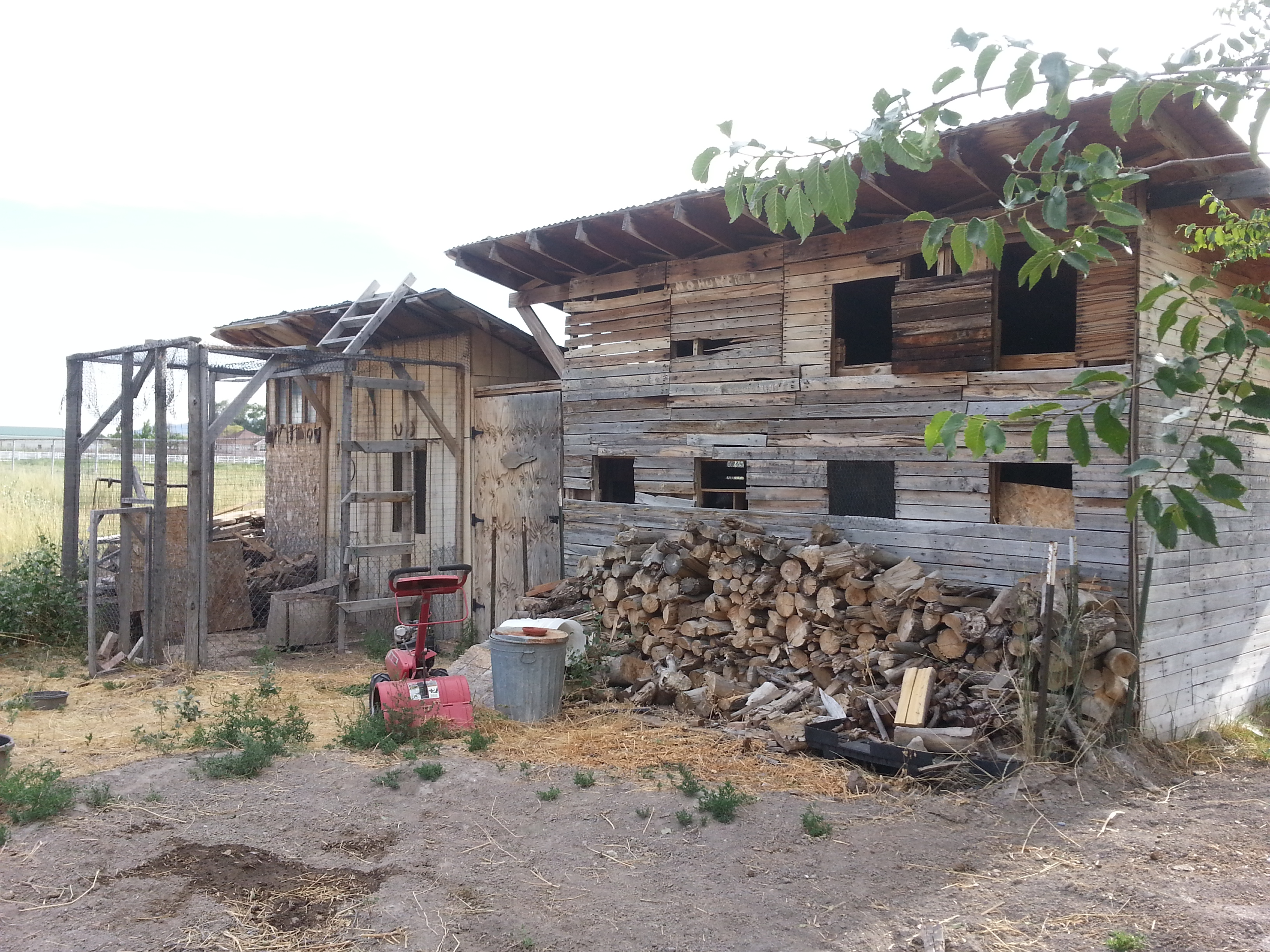
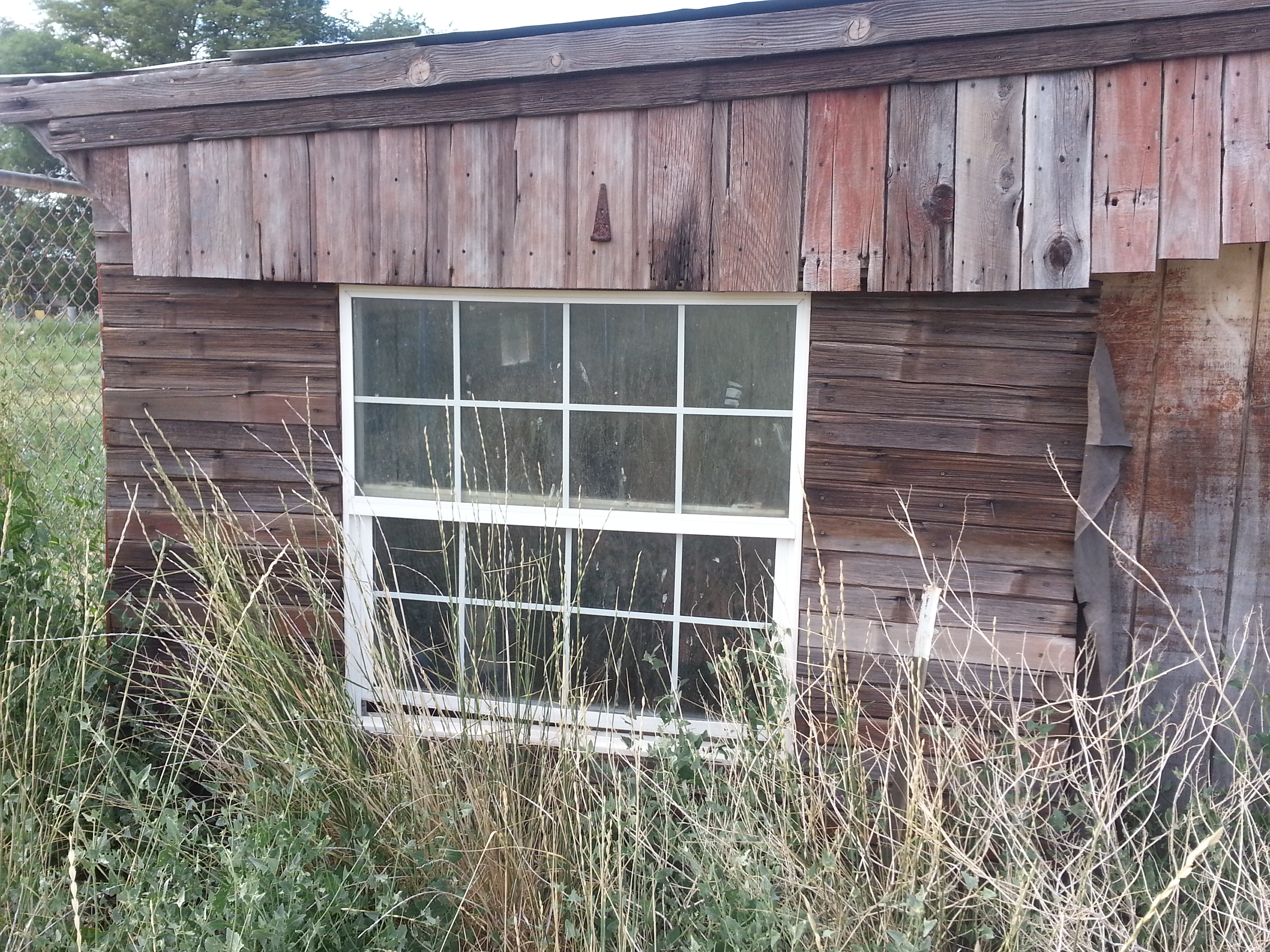
My chicken coop is unique in all the world.  It follows no blueprint or pattern.  Its configuration is determined wholly by the dimensions of the pallets that previously carried snowmobiles and four-wheelers to the local dealer.  The pallets were free, except for one blue fingernail, five stitches in a knuckle, and three dings in my truck.  Scrap fiberboard sides the pallets, with old storm windows framed into the south and east corners for winter light and warmth.

The finished product stands twelve by eight, ten feet tall in the front and six in the back, with more pallets nailed together forming the roof.  After driving the last nail, I stood back and admired my beginner’s handiwork.  Beautiful, I thought with pride.  The chickens seemed pleased, too.  A month later, Grandpa offered to cover the mottled scrap wood with exterior wood siding, and the roof with corrugated aluminum.  He said it would last longer that way—he was right, of course—but I could tell he was concerned about preserving my property value.

* * *

20150801_181711

Chickens and ducks share the coop.  Sometimes the billed birds peck at the beaked, but the coop is spacious enough to permit these distant cousins to live together in seeming familial friendship.  Maybe they merely tolerate each other.  I suppose at any moment an invisible tension could erupt into a flurry of feathers.

Despite both being fowl, however, they are really nothing alike.  They eat the same food—grain, mash, bugs—whatever is available.  But chickens peck with sudden snaps of the neck that bring whiplash to mind.  The hungrier they are the faster they peck.  At feeding time their heads lurch toward the grain with such ferocity that my head hurts, and I wonder what cushions their small brains from becoming mush against their skulls.  Their hunger satisfied, they meander around the coop, casually pecking at straw, feathers, grains of sand, but still with the same mechanical whip-snap motion.

Ducks, on the other hand, definitely don’t peck.  In fact, their heads remain practically motionless while they feed.  The head merely points the bill, which opens and shuts with remarkable speed, as if plugged into a vibrator.  My slow eyes perceive a vague blur as bills pulverize a strand of straw into straw-dust.

In contrast to whip-snapping chicken heads, chicken feet unfold and flex with a smooth, fluid motion.  This fact holds true with all chicken gaits, but becomes obvious to my eyes with the slow, searching gait employed in casual grazing and roost pacing.  I notice suddenly that each chicken breed has its own foot color.  White Leghorn: yellow.  Rhode Island Red: orange.  Araucana: steel gray.  Golden Sebright Bantam: blue-gray.

20150801_181955

Red combs flop around carelessly with the chickens’ bobbing heads.  Some combs reach over an inch tall; others resemble short, blunt spikes barely protruding from the head.  While the height of a chicken’s comb depends partly on its breed, the comparative height within a single breed indicates a hen’s egg cycle.  A tall comb indicates productivity.  A short comb tells me she’s taking a break for a few weeks.

I wondered one evening, Just what does a chicken comb feel like?  I had to know.  To find out, I employed my practiced chicken-catching technique to apprehend the subject of my curiosity.  I cornered a long-combed hen and inched forward slowly, rocking back and forth on wide-planted feet.  With a sudden stretch I grabbed her.  Terror struck her: she squawked hysterically, struggling to break free.  I cupped her head gently in my hand to calm her down.  Then I stroked her comb.  It was rough and firm, but fleshy, like an old, cracked rubber scraper.  I sat on my bucket and smoothed her ruffled feathers.  “Don’t worry, little one,” I whispered.  “I won’t hurt you.”  I began to savor this simple moment and to appreciate this creature who lives unfettered by the concerns and dysfunctions of humanity.

* * *

One evening, as I sat contemplating nothing, I watched a tiny field mouse skitter along a lateral plank, keeping to the shadowed corners.  It paused behind each pallet vertical like a thief slinking behind trees before a caper.  Yet I just couldn’t quite make the metaphor work: the tiny black eyes, soft, glossy coat, tissue paper ears, and delicate, bony hands painted a picture of sweetness, not deceit.  The tiny creature just wanted a little food, after all—and the chickens’ leftovers would do quite nicely.  The image of a poor vassal gleaning the fief’s fields fitted better.  But the chickens’ crumbs were far from subsistence: they were a bounty to the contented mouse.  Perched on petite haunches, it ate undisturbed from a kernel it turned in its delicate hands.

As long as I sat quietly, the mouse seemed to not be aware of my presence.  I noticed that the loud crowing of the big rooster registered not the slightest tremor in the mouse’s calm nibbling.  Neither did the soft hen clucking or high-pitched Bantam crowing.  Hmmn, I thought, and whistled a few notes.  No sign of rodent distress.  A little humming—still no observable trauma.  It must have thought I was just a big, motionless chicken, as oblivious as the rest.  Then I snapped my fingers with a crack.  The mouse jumped with a start and disappeared.  But my little friend soon peeked its dark bright eyes—small, but huge on its tiny snout—out from behind a board.  The mouse blended naturally with the setting: warm straw, yummy grain, lots of places to hide, and freedom from felines.

* * *

20150801_181927

Not only roosters like to roost.  Roosting, among chickens at least, rises almost to the exaltation of eating.  Old two-by-fours form their roosts, crossing the coop at different heights and angles.  As evening comes, the chickens instinctively return to the coop and hop up to segregated spaces.  The full-grown chickens claim the highest roost.  This Spring’s juveniles take the middle.  No one chooses the lowest.

I have never actually witnessed any pecking to this pecking order.  But I surmise that, when I am not watching, the mature birds throw off any pubescent ones who presume to attempt the highest roost, in a sort of king-of-the-roost affair.  I engineered some equity in their social order by positioning the roosts so as to protect the younger birds from getting dropped on by their roosting superiors.

Ducks don’t roost.  They prefer to cuddle comfortably together in the straw.  Long necks sway their heads back to settle in a fluff of wing feathers.  From this position, the ducks’ heads appear to rise neck-less from the middle of their backs.

* * *

20150801_181545

The crowing instinct has recently possessed my daughter’s young Bantam.  With no one to coach it, it is learning nonetheless.  But its attempts require an effort painful for me to watch.  Dropping its wings slightly, the young Bantam’s crow unfurls from the tip of its tail feathers through its small body, which contorts like a crawling caterpillar, and releases itself as a wheezy little croak, sounding like an old bicycle bulb horn.  Between crows, it struts around confidently, like a politician at his election party.

* * *

The big Araucana rooster paces inside its rabbit cage, to where it was banished for its summer misdeeds.  An amiable young rooster, the adult became arrogant and aggressive.  As I gathered eggs one morning, it flew at me, claws first, like an eagle swooping upon a giant rodent.  My denim-clad legs felt like they’d been struck with a willow switch, and I was glad I hadn’t worn shorts.  But the unprovoked attack annoyed me more than hurt.  A swift boot kick ended the fight, temporarily at least.  Each visit to the coop replayed the scene: flying claws; boot kick; peace.

Pulling weeds in the flower garden one Saturday, my seven-year-old began screaming hysterically.  I spun around to witness her racing across the grass with the big Araucana trotting after her like a miniature painted ostrich.  Its face devoid of emotion, I nonetheless divined its malicious intent.

With the rooster now securely in the rabbit cage, my children safely gather eggs from the irritated hens, whose pecks, after the rooster attacks, seem to them friendly taps.  I’ll some day expand the coop so the Araucana can enjoy life without ruining it for others.  It is a beautiful bird, after all, with luminescent blue-black tail feathers and a rich golden mien.  In the meantime, it paces endlessly in cramped quarters that cramp its tyrannical style.

* * *

20150801_181852

For the children, discovering the first egg was as exciting as finding hidden candy, not just because it was our first egg, but also because it was green.  Araucanas lay pastel green and blue-green eggs.  Some call the breed the Easter egg chicken, for obvious reasons.  Pre-died, you might say.

Despite the eight identical nesting boxes that line the rear wall, the hens insist on laying in only one box—the second from the right, to be exact.  Even when one hen is brooding a newly-laid egg, another hen, in answer to nature’s urge, oozes herself into the same one-foot by one-foot cubbyhole to lay.  Although they soon both give up on brooding, they continue to lay in the same box, day after day, egg upon egg.  Left uncollected, the eggs soon form a neat, multicolored pile, with the other seven boxes vacant.  The plastic eggs I placed in the other boxes to induce even distribution were pecked open and kicked out.

Each day, the children thrill to gather the eggs in their skirts and run to the kitchen.  At least one egg inevitably suffers a casualty, cracked or dropped along the way, sometimes before it even leaves the coop.  The chickens rush upon the broken egg, devouring its spilled contents in a cannibalistic frenzy.

Each broken egg tempts my irritation.  But a moment’s reflection reminds me that I love my daughters more than my chicken eggs.  Anyway, the majority of eggs usually weather the trip without incident.  I figure we have the chickens not just for the eggs, but for the experience of having chickens and eggs: to earn the rewards of work; to care for something besides ourselves; to nurture life; to find simplicity and peace in the midst of a frantically materialistic world.

Soon to come will be a pallet patchwork addition, with rooms for pheasants, jungle fowl, pigeons, quail, and maybe an exotic breed or two, like the iridescent Japanese golden pheasant.  We’ll admire their remarkable beauty and diversity.  We’ll cry when a raccoon spreads feathers and feet through the field.  We’ll curse as young roosters spur to defend their turf.  And we’ll witness the process of life as old birds die and new life emerges from thin, round shells resting in the straw.

Vultures on a Fence Rail

20150329_095848

I looked southward from where the wind had brought the brief summer rain, and was astonished to see a row of about two dozen turkey vultures perched atop a fence rail, their featherless heads almost glowing red above their black-feathered bodies.  A sight strange enough to inspire a poem.

VULTURES ON A FENCE RAIL

Vultures on a fence rail,
Heads bent low,
Sitting still and bundled
Through a fierce summer squall.

Vultures on a fence rail,
Heads pointed high,
Wide wings spread and warming
To the rainbow and the sun.

20150804_095617

Chapter 48: What Is To Come

imagejpeg_0

–Wherever you live, find your Rabbit Lane.–

(Photo credit: Jeanette Baker Davis)

Christmas day.  A warm south wind had begun to howl in the early morning hours, the kind of wind that tears off siding and rips at shingles.  A particular set of vulnerable shingles had flapped irritatingly above my bed all night long, as if under the sticks of a novice but indefatigable drummer.  All day long the wind had blown, with frequent gusts that shook the house and trembled the floor under my chair.  The bird feeders swung wildly on their wires, like marionettes under the hand of a demented puppeteer.  We knew the pattern: the wind would blow and blow until the climactic dissonance resolved in a downpour of driving rain or sleet or snow.  At 9:00 o’clock in the evening, Angie called us to where she stood by the front door opened wide to a world covered with new whiteness.  The south wind had stopped, replaced by a steady northern breeze bringing the snow from over the lake.  Brian, home from his first semester of college, announced happily that he was going for a walk.  He bounded away with enthusiasm. Continue reading
Chapter 47: Big-Wheel Ecosystem

100_4771

–Rabbit Lane is a short nothing of a dirt road in Erda, USA.–

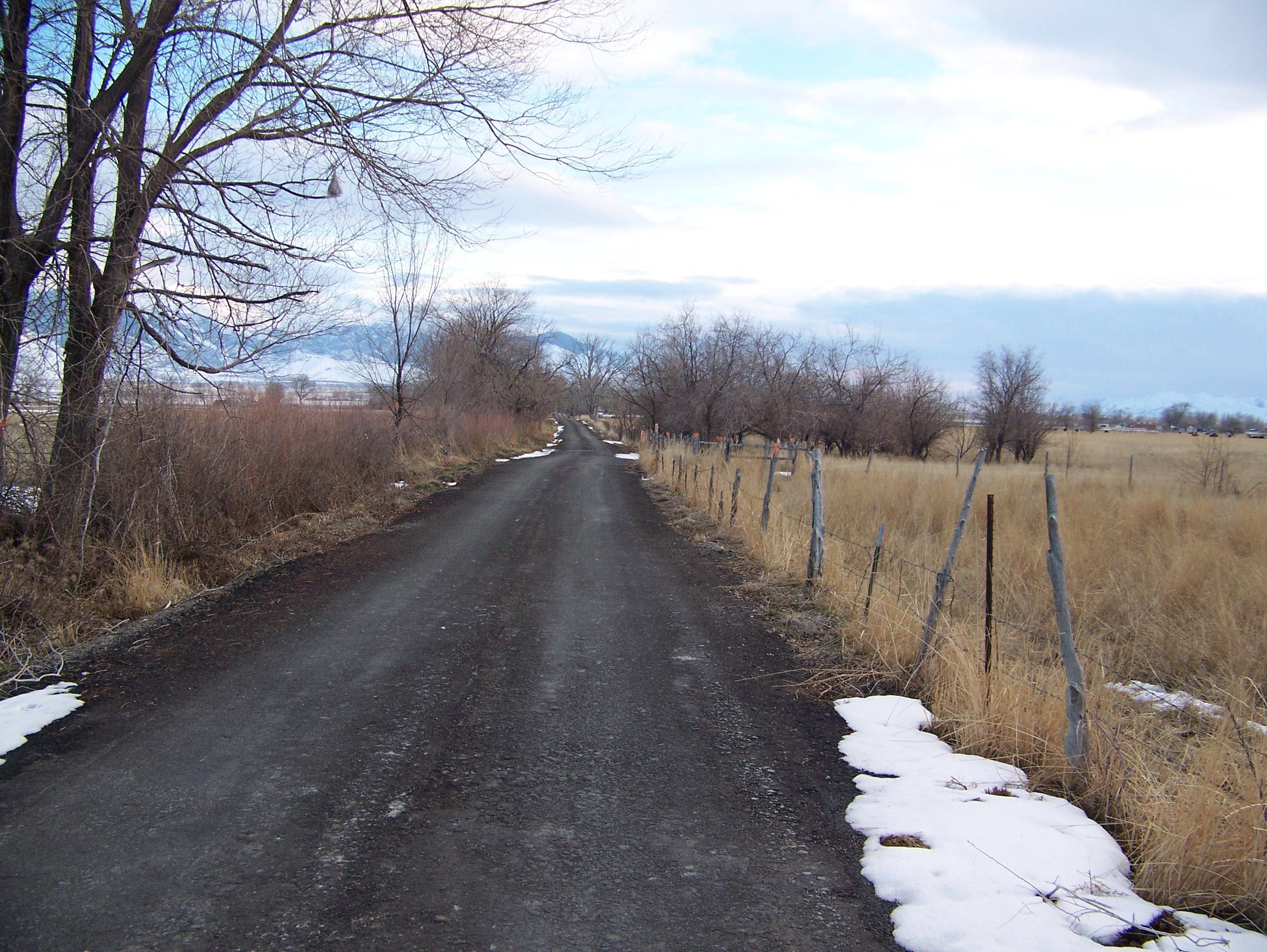
The air was crisp but warmer than a typical January day.  The sky hung gray, and pockets of darker clouds dropped round, soft pellets of dry snow.  Shades of orange accented the western mountaintops.  Feathers of unseen House Swallows rustled from inside Wild Rose and Willow bushes.  The scene made for an idyllic late Sunday afternoon walk on Rabbit Lane.  Idyllic and peaceful . . . except for Hannah (3) riding her big-wheel tricycle behind me.  The wide, hollow, pink plastic wheels ground over the disintegrating asphalt, radiating into the peacefulness the racket of an ore crusher.  I couldn’t hear my wife talk or myself think. Continue reading
Chapter 46: Of Boys, Pigeons, and an Evil Rooster

100_1884

— You’re my big, bald buddy-boo.–
(John-3 to Dad)

As I readied to leave for my Rabbit Lane walk, I noticed a pungent odor from the little boy that hugged my leg.

“I’ll change him,” Angie offered.  “You go ahead.”

Little John (2) responded, “NO—Dadda,” and I felt the dubious honor of being chosen by my son for this special duty. Continue reading

Chapter 45: Of Light and Love

100_4745

–I need the light on to keep my eyes warm. (Caleb-3)
–I need the light on to go to sleep because I can’t see. (Hannah-3)

Early one morning I notice a light in the Weyland wheat field next to Rabbit Lane.  The soft circle of lantern light bobs around over the newly-sprouted wheat, magically as if without a master, seemingly unattached to a farmer.  The night sky begins to lighten, and I can see the dim outlines of a man checking the sprinkler heads on a wheel line.

Ron starts his big John Deere early, headlights blaring, before I can see its trademark green and yellow.  The tractor pulls behind a homemade harrow: creosoted rail beams loosely chained together with railroad spikes pounded through.  The harrow tears at the rooted wheat chaff, spewing up dust that creeps over Rabbit Lane like a heavy, brown fog. Continue reading

Pavement

20150510_201826

Paving Rabbit Lane changed the nature of the country road so totally and quickly that my mind and emotions struggled to adjust.  Gone were the gravel, hard-pack dirt, and potholes.  In their place lay milled asphalt, the detritus of some other road mixed with new oil and laid roughly to rest on Rabbit Lane.  Some chunks still showed patches of yellow striping, so disjointed as to be of no use to the traveler, pointing in no direction and every direction.  As I saw it, the County had strangled the life out of Rabbit Lane.  I, also, found it harder to breath.  This poem portrays my early perspectives of this black-oil change.  (See the Chapter 38: Black-Oil Pavement post on the Rabbit Lane: Memoir page of this blog for a related discussion.)

PAVEMENT

It happened sooner than I expected.
ROAD CLOSED barricades appeared at either end.
They had paved Rabbit Lane.
They had paved Rabbit Lane with roto-mill from some other road’s temporary demise,
mixed the black rubbish with new oil
and plastered it flat upon the hard, living earth.
Now, after rain, Rabbit Lane reveals nothing,
no tracks of the earthworm pushing perilously slowly across the road,
no paw or claw prints of raccoons or pheasants.
No more wet pot holes for the children to ride their bicycles through with a whoop.
Instead, oil leaches invisibly into the ditch
to water cattle and crops some place too far away for accountability.
Pink-flowered milkweed and wispy willow bush cling to the asphalt fringe.
They transformed Rabbit Lane from a dirt farm road with country appeal
to another icon of the American Nowhere, with all the charm of a parking lot.
Rabbit Lane, of course, neither knows nor cares about the change.
But I know, and I am saddened.

100_1909

Chapter 44: Of Death, Swords, and a Bear Hunt

20140330_181224

–Wow, Caleb, you have lots of brains.–
–No, I don’t! I only have one brain!–
–I mean, you have lots of sense.–
— I don’t have any cents, only three pennies.–
(Caleb-3 with Laura)

“I hate it when things die!” Erin (7) sobbed bitterly.

I have tried to teach the children not to hate because hating makes you feel hateful.  But I understood her sentiment: her pet goat had died.  She didn’t want to feel the deep grief of the loss of things loved.

“We never even gave him a name,” she lamented.  “We just named him Goatie.” Continue reading

Apple Tree

100_4761

Old things fill me with such deep feelings of nostalgia.  It is as if they contain an essence of goodness and profundity that has somehow become lost and forgotten.  They are voices of lives and things far away but not diminished in value for their distance.  This poem highlights some of these, trying to catch that uncatchable essence.

APPLE TREE

The tree has grown
unpruned
for some seasons now. Golden
apples hang unpicked,
falling one by one
as breezes blow
and neighbors jostle, to cider
in the soil, enriching
first yellow jackets,
then slugs and worms and grass
still green in Fall.

The old brick bungalow,
white paint peeling,
has gone unlived in
for many years now. The smoke
is stilled, and the chimney soot
is old and cold. She was
born here, birthed
in her mama’s brass bed.
She played in the ditch,
munched raw oats, picked
nosegays of daisies and asters,
and planted pips
from a golden apple
in a secret spot of soil.

The misted vase has sat
empty upon the table
for so very long now. Dust has settled
into stem and petal etchings, caught
upon dry, white mineral rings. Outside,
beside bungalow brick,
hyacinths, daffodils, tulips,
irises rise in rows
to bloom each Spring,
bidden only
by sun and warm soil.

20150515_154709

Wandering

20150623_193901

The lonely apple tree on our one-acre property had survived from pioneer days, had made it through the decades of when the property housed the old Mormon church. After pruning my apple tree, I was able to climb into its highest branches, whence I could gaze over the sloping valley toward the silver ribbon of the Great Salt Lake to the north and west, or look the other direction to the Oquirrh Mountains to the east and south.  From high in my apple tree, and on my walks on Rabbit Lane, I contemplated many strange and wonderful and dreadful aspects of life and living.  These thought slowly distilled themselves into my song Wandering, attached here for you to enjoy.

Wandering

(See the Rabbit Lane: Memoir page, Chapter 43: Trees post, for further reference to my apply tree.)

Chapter 43: Trees

100_1873

–Boogers are sticky!–
(Hannah-3)

Dead and dying poplars stand along the ditch bank on Rabbit Lane, like sentries propped up against battles long ago lost and won.  Many branches, devoid of leaves, poke absently out and up like ten thousand fingers on stubby arms.  On the oldest, the only leaves huddle close to the trunk, near the base.  Finches and sparrows hop happily amidst the morass for some purpose unknown to me, or for no purpose.  Their nests lie hidden somewhere in dense bushes; no seeds or insects can be found in the spiky tree stubble.  But safety from cats and falcons the branches certainly provide. Continue reading

Chapter 42: Birdhouses

20140330_195256

–There is no sweeter sound than raindrops on the rooftop.–

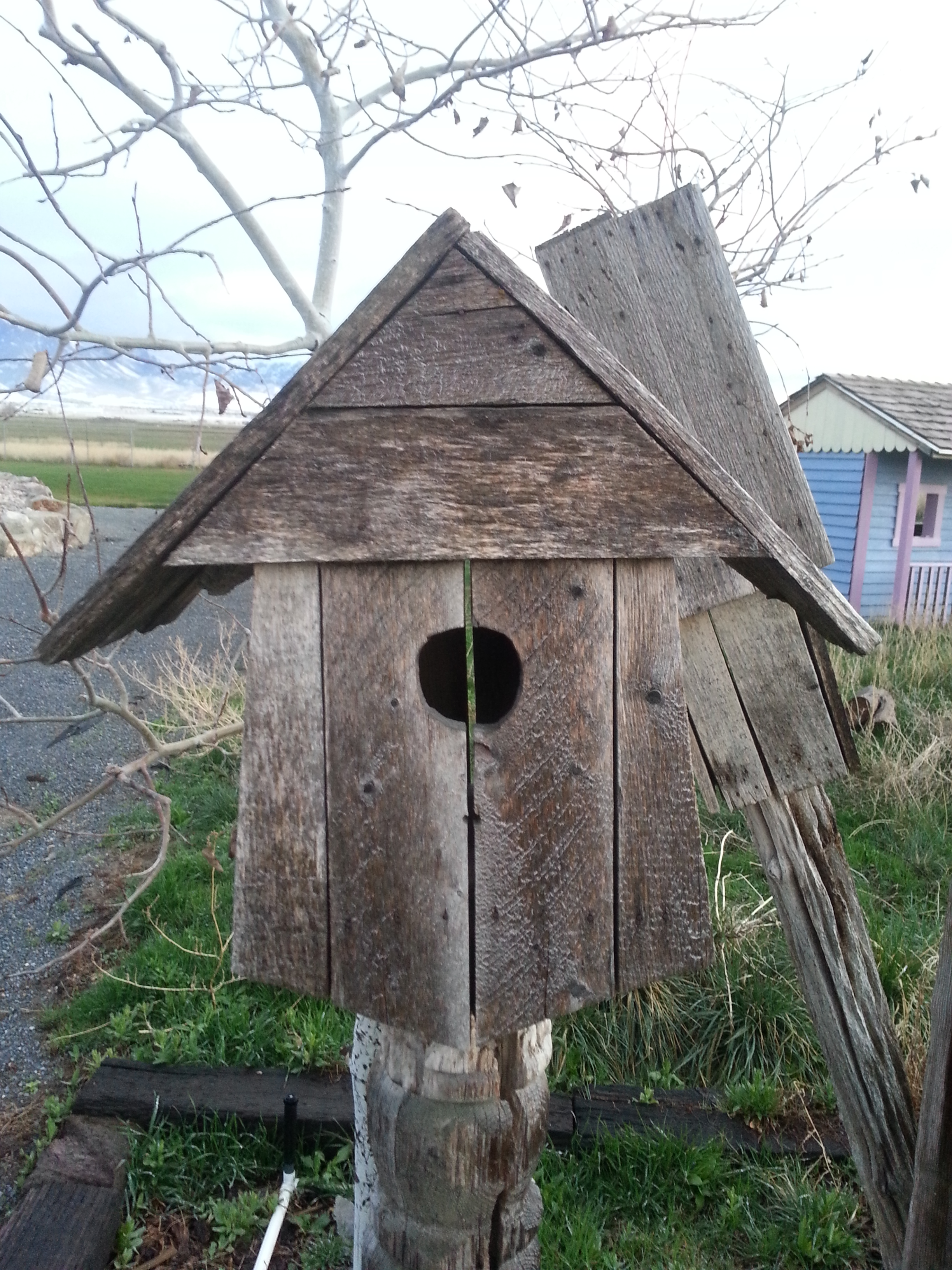
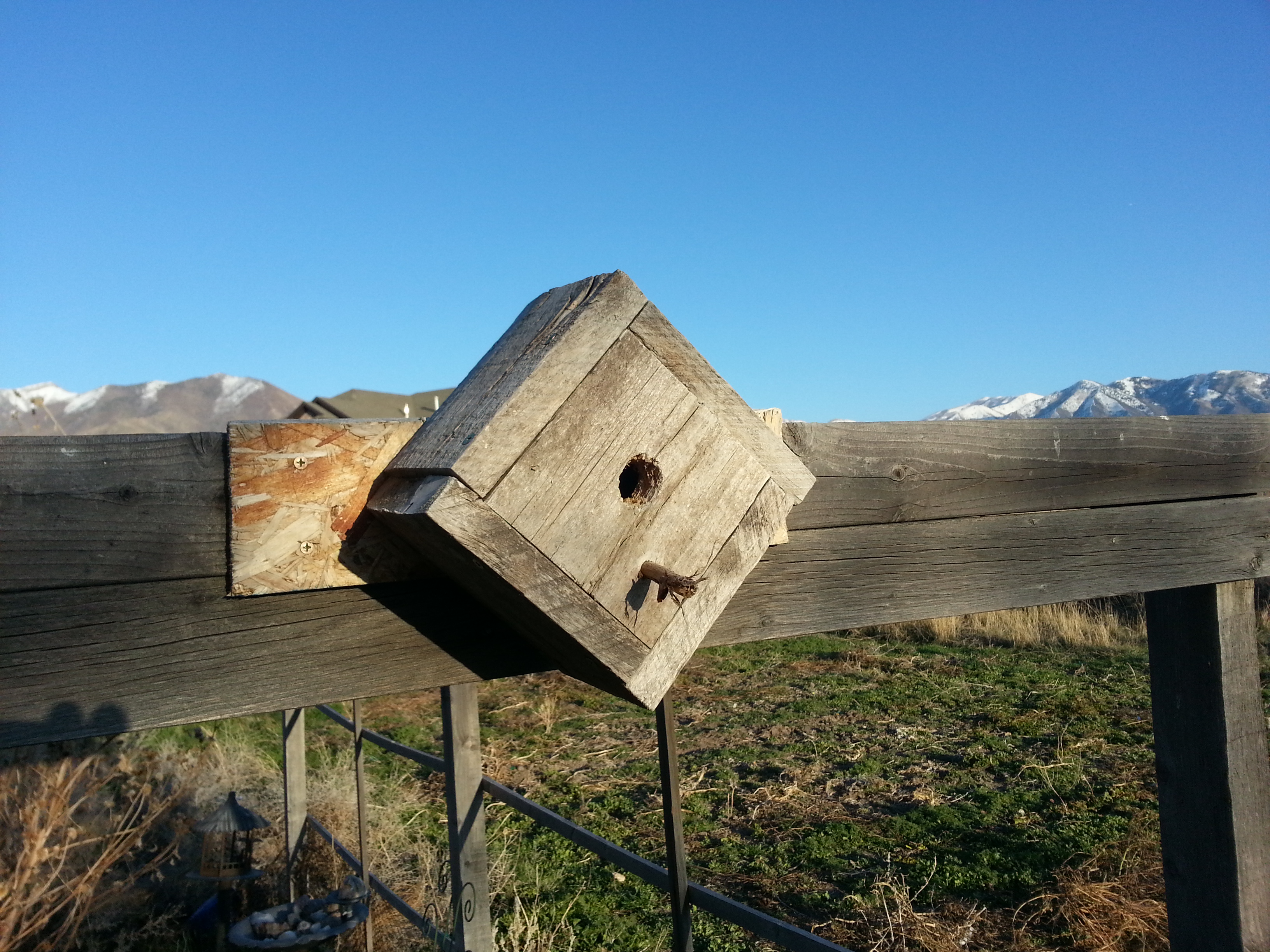
I love birdhouses and birdfeeders.  Probably because I love birds.  Their often sweet, sometimes cacophonic, twittering and chirping brings me happiness.  Providing them with an endless supply of seeds brings me happiness.  They gather at the feeders on my grape trellis by the hundreds: House Finch, House Sparrow, Pine Siskin, Redwing Blackbird, Mourning Dove, and on occasion some less-often-seen species like Brown Cow Bird, Indigo Bunting, Black-headed Grossbeak, Bullock’s Oriole, and Towhee.  One common sparrow shares the same general markings as its hundred cousins, but appears to be an albino morf, nearly white.  The Western Meadowlark, Western King Bird, and American Robin sing, fly, and hop around nearby, but don’t come to the trellis, being insect and worm eaters.

100_1319

But beyond the birds, I enjoy the sight of the little wooden birdhouses mounted on the beams of my grape trellis.  I call it a grape trellis not because it grows grape vines, but because I built it for grape vines and wish it grew grape vines.  For reasons peculiar to the Erda soil, or to my cultivation of that soil, grapes have never grown up my grape trellis, though I have tried many times with several varieties.  After ten years of false starts, the only thing growing on my grape trellis is bird houses.  Each of my children has assembled one or more birdhouses and attached them to the trellis.

20140322_184804

I decided one year to make large bird houses and mount them on poles throughout the yard.  Not content to purchase plastic models from Wal-Mart, and unwilling to pay for more expensive wooden models, I resolved to construct my own.  I drew out several designs that departed from the standard models.  In other words, no squares or rectangles, but unusual trapezoids and even a circle.  I constructed interior frames on the workbench in my shed, then attached gray, weather-worn siding harvested from discarded pallets.  No master woodworker, I awkwardly attached the siding to the frame, and the roof to the house.  Before attaching the roof, I drilled a hole in a bottom frame cross member, inserted a 4-inch-long bolt-head screw, and with a ratchet secured the house frame to the post.

The posts came in various forms from several places.  We found one while on a drive by Black Rock, on the shore of the Great Salt Lake.  The post had washed up on the rocks, worn smooth by years of buffeting by wind, sand, and salt water.  (The salt content of water in the Great Salt Lake exceeds 25%, while the oceans average about 5%.)  We tied the post to the top of our car and brought it home.  Another was an old cedar fence post I found lying broken and discarded in a ditch by the side of the road.  Four-by-four lumber also makes excellent posts.  I made a post for each of my four birdhouse models, cementing three of the posts in a cluster in the bird house garden, with the fourth nearby behind the picket fence.  The fence runs 40 feet from the grape trellis along the garden border to the birdhouse garden.  I made the pickets from old pallets, too.  I seem never interested in building the same thing twice, and built only one of each birdhouse model.  But seeing them each morning on their tall posts as I begin and end my walks on Rabbit Lane brings to me a simple satisfaction.  I would be happier were they inhabited by more birds and fewer yellow jackets.

20140322_184718

Almost

20150531_094255

Sometimes, in the evening, I like to sit in the chicken coop, in a corner on a stool, and just watch my hens.  They scratch around and peck at this and that, keeping a wary eye on me.  They don’t exactly come when I call, but neither do they seem anxious, rather, just aware of my presence.  As with my children, I have especially enjoyed the young chicks for their beauty and willingness to be coddled and petted and spoken softly to.  Yes, I confess to talking adoringly to my chicks.

ALMOST

Almost
they believe
I am one of them—
close enough for calm.
They, gold-feathered, look up at me
blankly, peeping softly,
let me stroke the feathers
on the tops of their heads,
across their backs,
accepting me best
under their yellow beaks
and down their bristly necks
to billowy young breasts.
The others, blacks and barred,
peck and scratch
comfortably at my feet,
sense me from a disinterested distance,
but run cackling to the corners
at my reaching hand,
as if I were
suddenly some monstrous enormity,
which, of course, I am,
but guileless and doting
despite my alien countenance.
I shelter them from skunk and fox.
I feed them and water them
each day. We visit,
me on my cinderblock stool.
They will grow and repay me with eggs,
and with soft peepings,
condescending to my gentle hand.