Author Archives: Roger Baker-Utah

Unknown's avatar

About Roger Baker-Utah

By profession a 28-year municipal attorney, my real loves are story, poetry, music, and nature. My publications include Rabbit Lane: Memoir of a Country Road (non-fiction), and A Time and A Season (poetry). My most recent writing projects include Reflective Essays, and vignettes about aging and elder care my a new page, Courage at Twilight. And I cannot forget Amy's bearded dragon lizard, Sunshine. I hope you enjoy!

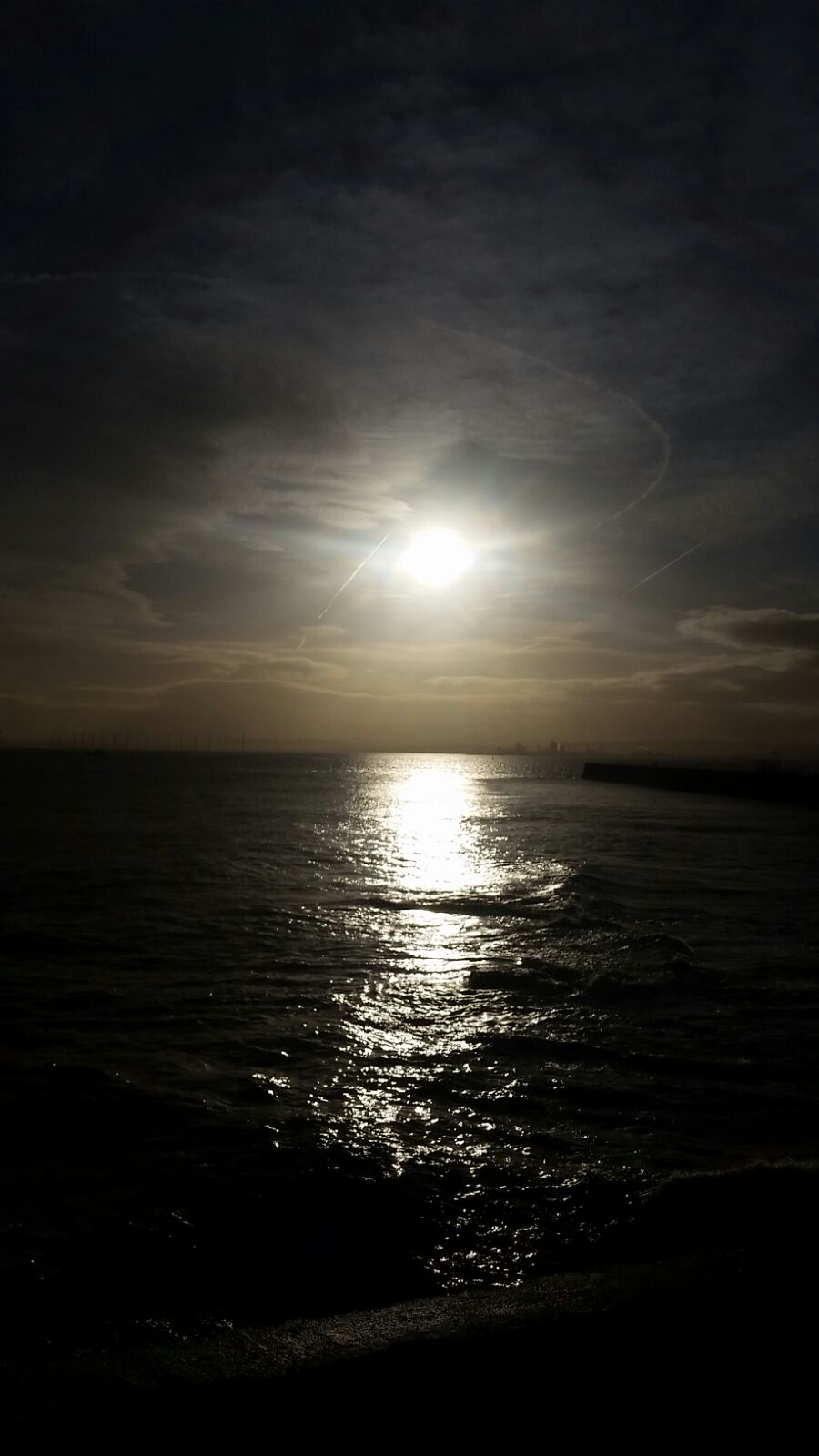
To Touch the Moon

20160421_203152-crop-01

I know this has happened to you.  You feel that something beautiful, something desirable, something blissful, is so close you can feel its presence, almost touch it.  Yet it lies a universe away, the mystery behind the gloaming.  Nearly yours, it slips through your fingers before you can take hold.  Or, it may be someone: someone you wish you could love, someone you wish could love you, someone to touch.  This poem explores that real but elusive sense, that longing.

TO TOUCH THE MOON

I cannot touch
the Moon.
For all her beauty,
her seductiveness,
for all her wisdom,
her distracted discernment,
she moves just
out of reach.
For all her cool warmth,
her illuminating glow,
for all her coy kindness,
her constant variability,
she glides just
beyond my reach.
For all my ardor,
my real gratitude,
for all my scheming plans,
my considered, burgeoning love,
I cannot touch
the Moon.

Yes

IMG-20160422-WA0007

Driving alone toward Zion National Park in southern Utah one night, the full moon appeared above the redrock cliffs, shining large and bright and white.  I found myself suddenly flooded with tender emotions, wanting desperately to hold and be held.  I wrote this poem to help me remember the image of the immaculate moon, and my emotions upon spying her.  Please do me the honor of understanding that this is not a sex poem.  Rather, this is a poem about the powerful and wonderful feelings that can accompany intimate romantic love, even across great geographic distance.

YES

I want to make love to the moon.

I want to caress her creamy, naked curves.

I want to whisper grateful sobs for withholding nothing but judgment.

Would she deign, I would make gentle, generous love to the moon.

Susquehanna

20130710_201620

This scene from 2013 is in the town of Bird-in-Hand, Pennsylvania, is the most idyllic I have ever seen.  “I want to live here,” I whispered to myself again and again as I looked over the tall corn toward the farmhouse and barn.  “This is where I want to be.”  Have you had this experience of seeing your dream home, your dream town, and sighing loudly but forlornly with love and satisfaction? Boy did I fall hard for this place.  I didn’t want to leave.  But my wife and children were in Utah; my parents and several siblings were in Utah; my job (and my income) was in Utah.  So I went back to Utah, not unhappily, but leaving a part of me behind in Amish country.  My poem Susquehanna braids a dialogue between intimate partners with a description of place.  Do you sympathize with or relate to one person over the other?  Or are they both unrealistic, even extreme?  Do you have the courage to pursue your dreams in spite of opposing voices?  (I hope I do, but I’m not sure.)

SUSQUEHANNA

I could live here,

he dreamed,
gazing
from a ridge-top
road

And what would you do
Mr. Lawyer? It would
ruin the place—and you—to dive
into their divorces

at the far-off
river meandering
in graceful curves

and mangled hands
and rat poisoned livestock.

Still, I could
live here: right there:
on that farm:
see
the red barn, tilting?

where the feet
of mountains meet,
a reflecting ribbon,
shining silver
beneath a bright
sky,

I could right it,
help it stand straight
again.

You and whose budget?
Not yours, surely,
and not mine!
And what would you do
with a farm, anyway?

flanked in leafy
darkening green

You couldn’t fix
a door knob
let alone
a bailing wagon.

transforming
to iridescent gold
under the alchemy

You don’t know your rye
from your barley or oats
or triticale wheat.
You,
a farmer!

of the slowly setting
sun.

I could live here:
me: right here.

Tulips

20160606_133947

My poems usually result from a single poignant image, thought, or sensory experience. Through the poem, I tell the story of that experiential moment.  On occasion, however, I compose a poem from random shreds of sight, sound, thought, and memory, stringing them together like multicolored bulbs on a string of lights.  “Tulips” in one such poem.  Though the glow of each image is unique, yet a common thread joins them.

TULIPS

Special sauce drips
from the double bacon
cheese burger clamped
between fingers and thumbs.

Overgrown boys goggle and grin
at bikinis bouncing
down the beach
as the girls blink and babble
at biceps.

Not one yellow patch
or errant blade
mars that lawn,
frequently fertilized
and mowed twice
to a neat crisscross.

He smiles at himself
in his tailored suit,
white shirt cuff linked
and monogrammed, perfect-patterned
tie, long-point faux alligator shoes
shining.

JD. . . MBA. . . PhD. . . CPA. . . MD. . . DDS. . .

Though shifting,
even clouds have shape.
Air I cannot see
rounds the alveoli
of my lungs.

Blood spatters my face
from new battles
with brick walls.

Drugs at least
dim the pain.

You had better shut your
window against the wafting
putrescence of skunk.
Dogs know only
how to bark.

Put down your gun:
no violence pursues you:
your bullets would pass cleanly
through the clouds,
undeterred and unaffecting.

Run to retrieve
a vomit bowl
for him or her. Summon
the compassion to watch
as they wretch.

Surrender to the universe
inside you. Let go
your clutching at clouds
you are not meant to capture.

Stand unafraid in the mists:
the dews will coalesce
to cool and sooth and moisten.

Tulips swell before the house:
purple, yellow, orange, pink, red, each
bright under the morning sun.

A Good Man

IMG-20160522-WA0007

Sometimes you just know.  You see someone, and your heart tells you, your mind tells you, This is a good person.  I can trust her.  Don’t ask me how.  It is something in the eyes, the set of the jaw, a softness of features, and a real spiritual, intuitive sense.  I experienced this recently with someone, and at a place, I did not expect.  But there he was.  A good man.  And I knew it.

A GOOD MAN

Today I met
A Good Man.
I know that
he may not know
himself.
His tremulous hands have
lost touch,
and his feet shuffle
through forgetting.
But the slight lifting
of grizzled cheeks
and his liquid blue eyes
looking into me
from behind bushy gray
brows, like a warm sky
through Spring’s maples and mimosas:
they told me.

Stuff

IMG-20160522-WA0009

One of my favorite books is The No. 1 Ladies Detective Agency by Alexander McCall Smith.  I read with delight the entire series of 15 books (I can’t wait to read #16).  Wonderful, sweet-and-sour characters, with goodness abounding and mysteries to solve.  On a day off I wandered to the public library grounds and settled in on a park bench to read.  A homeless woman, living on the grounds, approached me, interrupted my reading, and made a request. This poem tells the story.  What would you have done?

STUFF

“Excuse me,
sir,” I heard,
but the slanting sun shone in my eyes,
and I could not see at first.
“Will you
be here for a few minutes?”
Here being my bench
on the public library grounds, a bench
made of steel slats curved
and painted green. “It’s so hot
and I’m very thirsty: would you
watch my stuff
while I get a refill?”
Stuff: two sleeping bags
neatly covering egg-carton foam
with plastic underneath, all tucked
into a corner room formed
by intersecting retaining
walls. “Sure,” I mumbled,
closing the book
I had been reading, fancifully,
about African ladies,
ladies who were detectives
and teachers of typing,
ladies who made an effort
to help, and who lied
only when necessary to prop up
their men, men who were good
and who worked hard but
who needed some propping up
now and again
by smart and guileless women.
“Thank you.
I’ll be back in a few minutes.”
She shuffled away, hugging
two gallon-size mugs smashed
against unencumbered breasts.
Brittle yellow hair, sagging skin,
and an absence of teeth told
some of her story.
Watch her stuff. Stuff:
box stamped “This End Up”
with cups of dried noodles
in it; tube of toothpaste,
toothbrush, deodorant stick,
neatly arranged on the bed;
metal folding chair;
extra blankets, folded; winter coat.
I wondered what I would do
if someone took an unwarranted
interest in her stuff—like
a bicycle policeman;
a wizened tramp pushing
his own things
in a borrowed shopping cart;
a dog off its leash—
and I couldn’t say: Umm,
excuse me . . . that’s . . . not your stuff?
I hoped she would
come back soon, and turned
my eyes again to the stories
of good women and men
who helped each other
with troubles large and small
the best they knew how.
The woman returned
with her mugs refilled,
and with a friend,
a friend who waved her arms
wildly, bending and turning
at the waist, swinging her arms
up and around and down,
over her head, between her legs,
and I stood up to find another bench
on which to read.
“Thank you, sir,”
the stuff’s owner called
after.

An Evening

20160529_134426

I contemplate. Everything. I don’t mean to; I just do. I notice my abundance and my scarcity. I think about my gifts and talents, and worry about my abyssal weaknesses. I ponder my joy and my sadness, my human connections and my loneliness. I try not to allow meditation to slip into obsession, or depression. And my observations are not just about me. I thrill at the beauties of nature. The world, and life, are simply filled with mystery and unfathomableness and beauty and suffering that beg to be studied, to be understood. So I contemplate. This poem contemplates a quiet evening alone.

AN EVENING

A fish fillet simmers
in basil and salted lemon juice.
The baked potato steams
with butter and sour cream gobs.
Three cobs of corn.
Absence of conversation.

Fingers fumble with chords,
picking awkward patterns.
Crooning “Blackbird.”
Absence of applause.

On the big bed,
looking at paintings
on the walls.

Color Me

20160527_105654

How does one write a poem about domestic violence without slipping into shallow prose, or, more importantly, without trivializing a horrifying trauma.  As a municipal attorney, I have helped hold DV perpetrators accountable for 23 years.  I have spoken with the women, seen their fear, heard their terror.  I have seen the photographs of bruises, heard the sobbing screams in 911 recordings, and watched the abused tremble on the witness stand.  I have watched the “bad guys” smirk and win acquittals from ignorant or misogynist juries.  How I admire the courage victims have to become survivors, to stand tall and to say “Never again!”  I wrote this poem for victims of domestic violence, though the poem is by no means a celebration or victory song.  The poem attempts to express both the horror and the hope of someone caught, for now, in the twisted power and control dynamics of domestic violence.  To all of them, I say: have courage; have hope.

COLOR ME

blue—royal
blue—navy
purple almost to black
witness
Van Gogh starry nights:
beautiful
but
not here
where pale skin
should be

red lightning bolts
in white orb

two weeks
maybe three
until
I can pretend
it did not happen
no one knows

dark pigments
you paint on pale canvass
private studio
still life model undressed

would you plied
with greens and yellows,
orange and sky-blue

pinpoint pupils
in a Saint-Rémy sky

Deo Song

20160531_112804

I sang for years with an excellent 200-voice choir, the Salt Lake Choral Artists.  My last concerts were sung in St. Ambrose Catholic church in Salt Lake City, Utah.  Beautiful scenes in stained glass stretched floor to ceiling along both side walls.  The concert-goers sat in hard oaken pews, pleasing us with loud applause.  Once we performed selections from Leonard Bernstein’s “Mass,” a modern and moving work.  “Sing God a new song,” we sang.  After the concert, I noticed a stooped, white-haired man sitting in the back row, tears in his eyes.  I said hello, and he thanked me for the music.  I imagined some of his life’s emotions, and wrote this poem before leaving the church.

DEO SONG

He had sung his lifetime,
raised his voice to the Lord altissimus,
lifted his broken wholeness to Kyrie in excelsis,
Qui tollis pecata mundi,
weeping to the precise glide of the white baton.

He partakes, now, from the back row,
his back twisted, head bowed—
still the tears.

Translation of the Latin:

Deo:  God

Altissimus:  The highest

Kyrie in excelsis:  Lord on high

Qui tollis pecata mundi:  Who took upon himself the sins of the world

Separation

100_0917

The week I moved out I began singing again with the Salt Lake Choral Artists, a 200-voice audition community choir.  I needed the music.  Music to soothe my anxiety and sadness at being separated after 25 years of marriage.  At times waves of sadness crashed over me, ground me into the gravel of life.  I needed the music.  Our Christmas and holiday repertoire included some of the most moving melodies I had ever heard.  In one rehearsal the director shouted at me, “Everybody is singing here!”  I nodded, but my throat was choked up and tears stung my eyes.  I needed this music.  Still, the long drive “home” after rehearsal on dark, freezing winter nights, terminating at my construction zone apartment, mattress on the floor, wardrobe in my duffel, the thermostat set at 50, brought the waves crashing again, the music notwithstanding.  This poem attempts to describe that difficult time.

SEPARATION

The cold brings it on,
and the darkness.
The long drive dredges it
up, even after
the singing, after
three hours of wonderful
singing, the long winter drive
to a place that wasn’t home,
where I shivered in my bed
and thought of the woman
that used to be mine.

Mr. Robin

20160707_121718 crop01

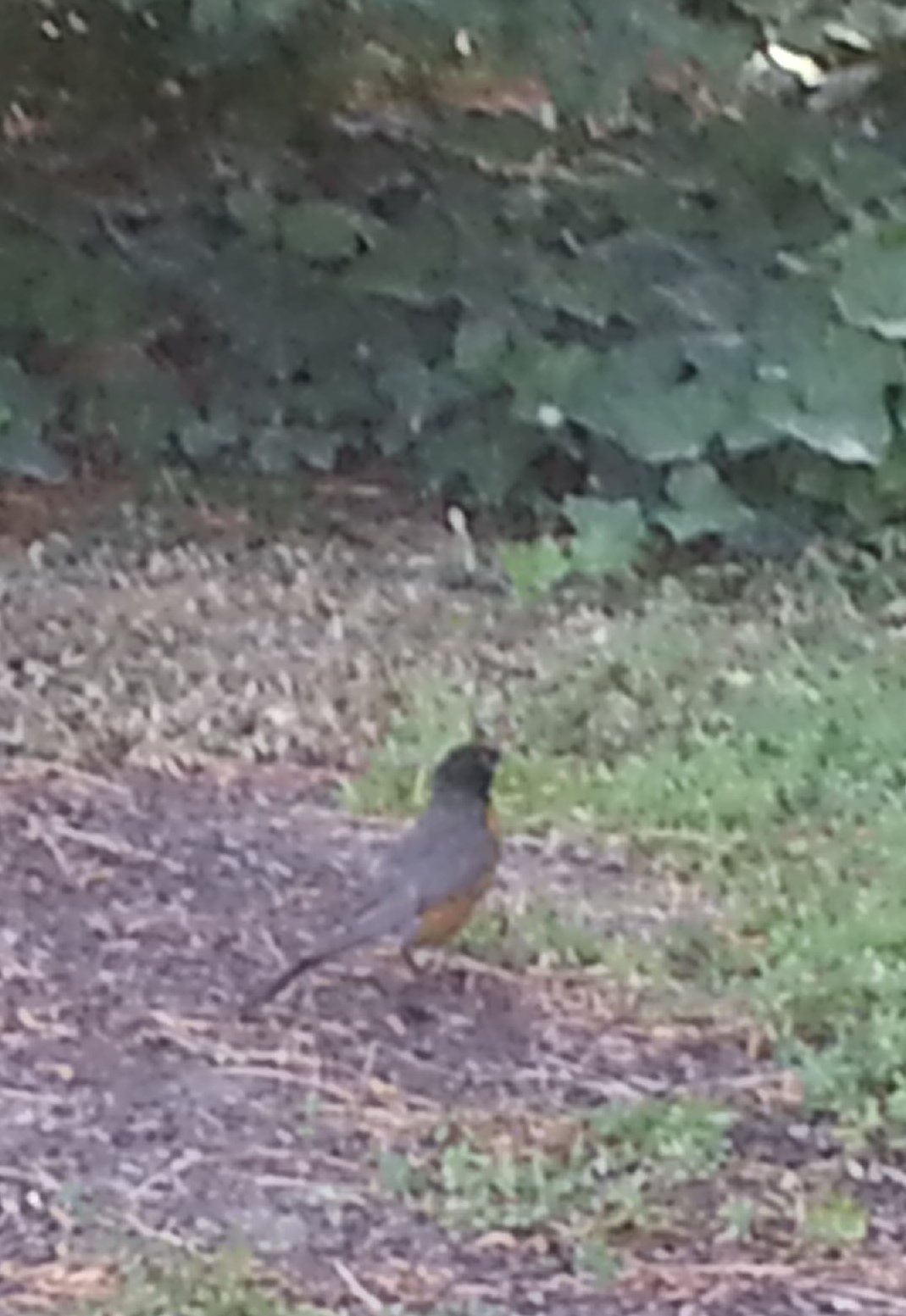
Riding my bicycle home from work the other day I noticed an American Robin standing proud and tall in the midst of deluging lawn sprinklers. He knew where to be to pluck juicy earthworms from the saturated turf. And he knew how to keep cool in the 100-degree heat. What caught my attention most was his bearing of obvious satisfaction, his beak lifted slightly, contemplating his idyllic surroundings. I couldn’t help putting pen to paper.

MR. ROBIN

Mr. Robin
stands tall
beak above the plane
eyes gleaming
in thick lawn sprinkler
mist, knowing
he is in the right place at the right time

Kingbird

20160702_134752 crop01

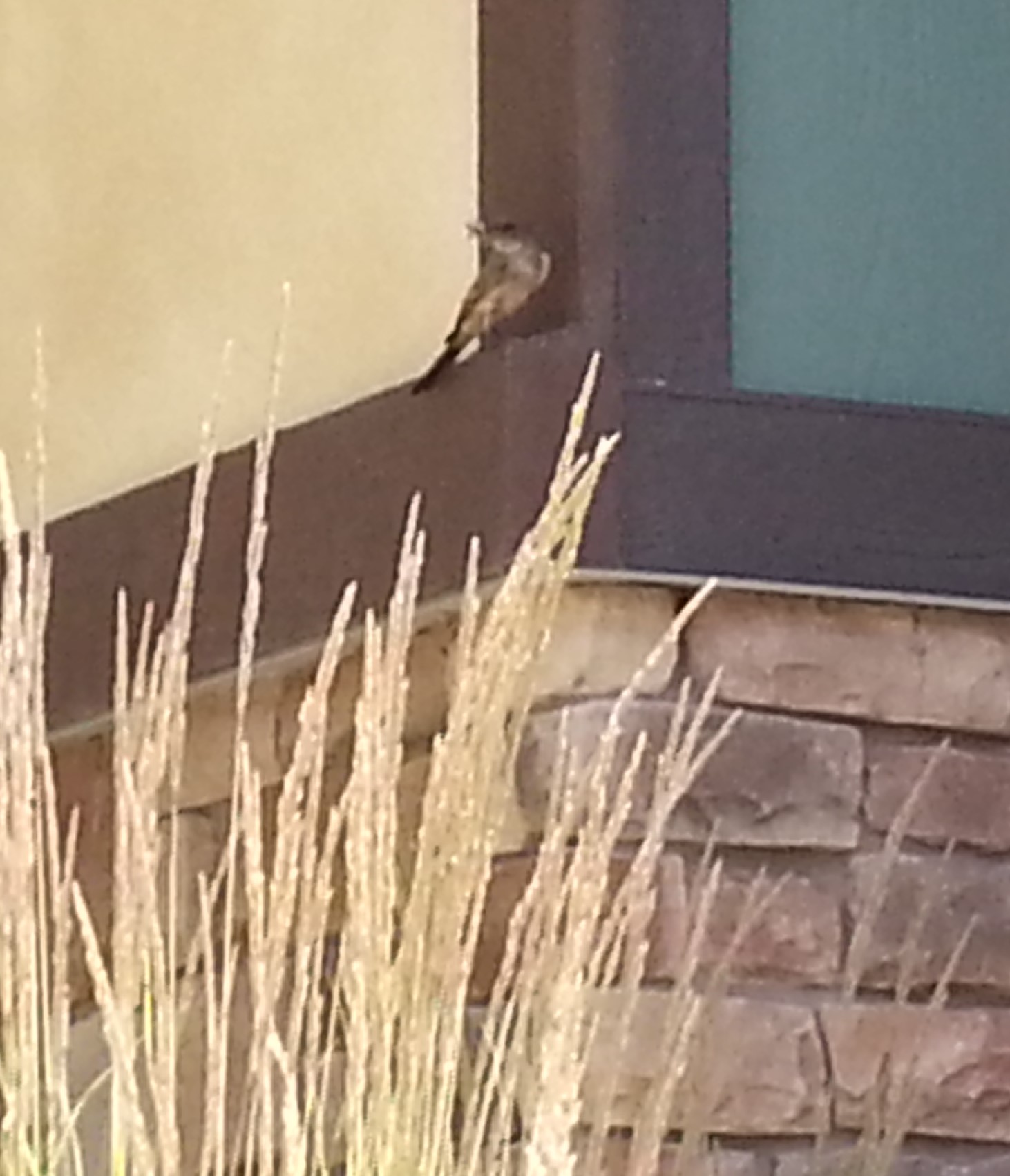
The Western Kingbird is one of my favorite birds.  It is unremarkable in size, color, song, or other characteristics enjoyed by more glamorous birds.  Its only coloration is a slight yellow-green on the breast.  But I love to watch the Kingbird’s frenetically acrobatic flight as it catches insects on the wing.  And I love listening to them from where they sit perched on the top of fence posts and power poles, singing an indecipherable electronica, devoid of tune but fascinating nonetheless.  Every morning when I leave for work, and every evening upon my returning home, a little Kingbird calls to me with a friendly whistle.  Today he let me take this picture as he perched on my wall with a grasshopper in his beak.  Enthralled with my new friend, to whose whistles I always offer my own greeting of “Hello little Kingbird,” I wrote this poem.

KINGBIRD

You are always
there, in that same spot,
on the top
of the fence post,
little Kingbird.

You twitter
at me, so I will
look to you,
find you, again
in that place,
tidy Kingbird.

You catch
and hold my gaze, then
twitch and twitter,
yellow Kingbird.

A quick hop,
an acrobatic
flap after
an airborne bug,
quick little Kingbird.

And you wing away
with a twitter
and a whistle
until tomorrow,
friendly Kingbird.

A Perfect Match

20160606_111020

“Such a cute couple!”  “They are so good together!”  I have heard these and other phrases so often about couples, young and old.  But what does it take to make a perfect match?  “Opposites attract,” says the cliche, though I’m not sure I believe it.  It is that we admire in our partners what we lack, or do we feel more comfortable with someone similar to us in personality and demeanor?  In this poem I explore two sides of a relationship that differ and yet complement.  I admit to tending more toward the second half of each couplet, though the poem is not (necessarily) autobiographical.  What are your opinions about what makes the perfect match?  Let me know by leaving your comment!

A PERFECT MATCH

impulsive
deliberate

spontaneous
self-conscious

hopeful
fearful

self-possessed
over-shoulder-watching

free-thinking
conforming

curious
contemplative

ebullient
restrained

giggling
steady now

disciplined
falling off the wagon

fun-loving
nose to the grindstone

inclined toward cheerfulness
tending to be sad

star-gazing
spot-scrubbing

bibber
tee-totaler

go to hell
I’m sorry

let’s go!
we’re late

bratwurst
sauerkraut

pedal to the floor
foot on the break

effusive
reserved:

beautifully broken

secretly afraid:

a perfect match

2020 Humankind

20160606_133947

Warning: this poem is satirical, even cynical.  No soothing pleasantries here.  Rather, I presume to introspect on behalf of humankind.  And I don’t like what I see.  As advanced as our species has become, with global economic networks, far-reaching social and humanitarian programs, abundant universities, and quotidian scientific breakthroughs, yet, I fear, we remain too shallow, too self-absorbed, too small-minded.  A ranting soliloquy I overheard at the gym (I know, not necessarily the epicenter of human achievement) caused me to reflect on the nature of humankind, and “inspired” me to write this poem to encapsulate this cracked jewel of human behavior.  Please forgive the profanity: it’s a quotation.  The number in the title–2020–does not reference a calendar year, but hints at the notion of perspective.  I, for one, will try to be a little smarter, a little kinder, a little more outward in my thinking and behavior.  Join me in the effort to be just a notch better today, for the sake of the species.

2020 HUMANKIND

The thing I hate about this gym is, you
know, that on Sundays it closes at 3.

3!!

I mean, what kind of a shitty policy is that?
It’s Sunday afternoon, you know, and I’ve slept all day,
and now I wanna go to the gym. I wanna
get pumped, you know?  Pumped up!

Boom!

But can I go to the gym?
NO! I’m fucked, man!
You know what I mean?

God damn!

What is wrong with these people?

Wood Lamp: Joia

20160619_100403

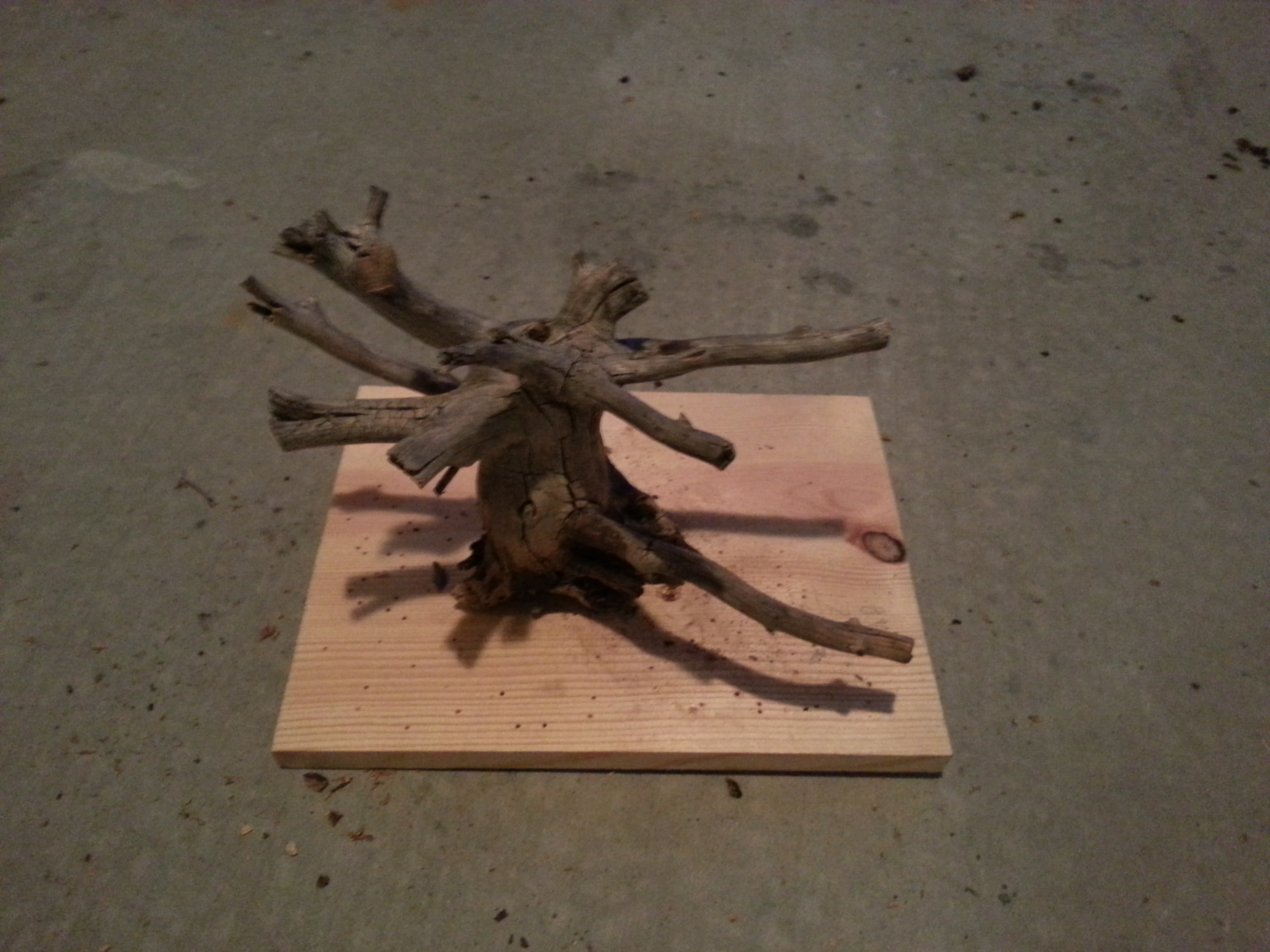
Writing a letter to his Grandpa Baker (80) this morning for father’s day, Hyrum (14) turned to me and asked, “Grandpa has been finding some cool wood for me to make lamps out of.  Do you think he would like one of my lamps as a father’s day present?”  “I’m sure he would love it,” of course I replied.

Hyrum found the piece of wood for this little lamp when working for a friend to clear his yard and flower gardens of weeds.  Obscured by the weeks was the small stump of a dead evergreen.  Hyrum could see the potential in this dead stump.  He asked if he could make something out of it, brought it home, and began to give it new life as a lamp.

20160426_203735

We made bases for small lamps by cutting discs off the end of an old cedar fence post.  The wood was old and cracked, but we wood-glued the pieces together, allowed them to cure, then ran them through a neighbor’s planer.

20160322_165123

20160326_134146

We named the little lamp Joia, a joyous Portuguese word meaning “gem.”  Hyrum gave Joia to his Grandpa today, the same Grandpa that inspired our lamp-making in the first place with his lamp Timponogos, about 55 years old.  Grandpa seemed as pleased to receive the lamp as Hyrum was to gift it.  This little gem of a lamp has connected the generations with memories and a common love of creation and beauty.

FullSizeRender

In the Garden

20160606_110651

Rarely do I write religious poems, thinking myself unequal to the sacred task.  Today, however, during a contemplative moment, images of our Lord suffering in the Garden of Gethsemane, pushed upon my mind, through my fingertips, to form this poem.  I feel that I don’t know Jesus well, but I do believe that I understand something of his purpose for us, that is, to create us anew in his image, through his Atonement, into beings of light, goodness, kindness, empathy, understanding, generosity, forgiveness, and truth.  He whispers to us every moment of every day, helping us to change, oh so imperceptibly, incrementally, to become more like him.  His end is our eternal happiness.

IN THE GARDEN

drops of blood,
crimson, thick,
fall, to spatter
on the rocks,
the sand, the soil,
running on the exposed roots
of an ancient olive tree,
purple roots
in the darkness,
choked whispers and sobs
hovering
over

GATE C-18, SLX

20160606_123119

Thanksgiving Point Ashton Gardens by Roger Baker

Sitting in the airport half a day to catch a one-hour flight to visit my sister in Arizona, I took opportunity to watch the people around me, sitting, walking, milling, guarding their things–and to wonder about their lives. Such diversity, and such beauty in that diversity! People appear so different from one another, and are in fact different in many ways, but yet are fundamentally the same, each dreaming, each wanting love, each working to make their life good, each going somewhere. This poem sketches some of my observations of people during those hours in the Salt Lake International airport.

GATE C-18, SLX

Flight attendant,
a former stewardess,
bounces by in high heels,
face drawn tight,
weary of being stared at,
undressed.

Grandma texts busily
with one finger,
novel in her lap.
Her man yawns
to his magazine.

A mop of gray hair
on this squinting,
tongue-chewing man
intent
on his Apple laptop.

Four young women
gab, quite happily,
but not so loud
that I can hear
what they say,
legs criss-crossed
with charging chords.

Newspapers
still exist.

“I’m proud
to be an American”
ring tone.

Veteran ball cap,
gray beard, fingers
home-made whole-grain
cookies
in a Ziploc bag,
picks at his teeth
with his pinky.

Beneath her sleeveless
tie-dye house dress,
colored swirling tattoos
run up her arms,
across her breasts.

Clip-clop running
in boot heels.
Late!
Late!

Ear rings, nose rings,
gauges, bars;
dress shoes, pumps,
cowboy boots;
argyles, nylons, bare feet.

Breasts,
pushed up
past her collar bones.

Most stare
contentedly at nothing.

One man writes
a poem,
sipping
at his Coke,
munching
from his bag of extra
fancy roasted mixed nuts
from Costco.

Little girl dressed
in pink
plays games
on a plugged-in
pink laptop.

Pilot father flies
his giggling boy,
soaring, diving,
banking
to delighted sputtering.

Thunderstorm.
Lightning.
Heavy bouncing hail.
Wind.
Now snow and ice.
Our airplane diverted
to Boise.

Announcements,
with attempts at humor.
Polite laughter.
The tension grows.

I watch
the mop’s bags
while he wanders
off to pee.
Then he watches
mine.

We board . . . at last.

Feeding Koi

20160606_135305

I chose to spend my birthday (52) at the Thanksgiving Point Ashton Gardens in Lehi, Utah.  Just me and the trees and flowers.  Peaceful.  Beautiful.  No demands.  I snapped dozens of photographs just because I could and I wanted to and the flowers were so pretty.  At Monet Lake, covered with water lilies, huge koi lazily swam.  A quarter bought me a handful of fish pellets, which I casually threw into the dark water.  The water suddenly roiled with a sucking, slurping mass of colorful fish.  I laughed, and I wrote this poem on my garden map.

FEEDING KOI

slimy slurping throng
benignly greedy
hot roiling mass
till the food is gone
droning gliders
splotchy bright
purposing only for pellets

Fragility

20160606_141230-crop

This poem, ostensibly about a dandelion flower gone to seed, is not about a dandelion flower at all.  Rather, the poem explores the fragility of life and relationships.  The slightest events can lead to enormous changes of circumstances.  So take care to avoid unnecessary upsets.  But when upsets inevitably appear, do your best to choose to go with the flow.  After all, the scattered seeds will birth new beauty.

FRAGILITY

This dandelion
head I carry cupped
in one hand’s lee
against a zephyr’s whimsy:
perfect symmetry of sphere,
nucleus sprouting spokes
sporting inverted umbrella wisps.
The slightest
stumble, or unfortunate exhalation
scatters dismemberment
and loss, gracefully,
a floating meditation,
without thought
of sadness or complaint.

Sleeping on a Sewer Manhole

20160421_203208

Wandering the streets of Philadelphia one rainy night, I asked a couple exiting their historic brick home where I could find a good place to eat.  They recommended a few restaurants, warning me which were BYOB.  Being both naive and a non-drinker, I hesitated, “Um . . . BYOB?” “Bring your own beer,” they chuckled.  I found City Tavern where the Founding Fathers debated the principles of liberty while smoking and sipping madeira, and ordered Martha Washington’s chicken pot pie.  My tummy warm and full (and my wallet drained), I set off through the cold drizzle to my hotel.  Steam snaked eerily up from the holes in the sewer manhole lids.  The wet air was growing more frigid.  I stepped round a cobbled corner into a narrow alley and came upon a man lying in a fetal ball on a sewer manhole lid, soaking up what little heat he could from the sewer vapors, sheltered from the rain by wilted cardboard.  This short poem remembers him.

SLEEPING ON A SEWER MANHOLE

A cold rain in April.
Glistening cobblestones.
Steam rising from the sewer through a cratered manhole lid.
A brother curled up, rolling restlessly, capturing wet warmth under his blankets
under an evening rain.

Woman at a Broad Street Bus Stop

20160211_081452

What difference will $1 make to the poor, the homeless?  None.  I’m not talking about the professional panhandler, who can make a good enough living.  I’m talking about the humble poor, who really need help, but who often don’t ask.  I gave such a woman $1 once, knowing guiltily that my contribution did nothing to help her solve her problems.  I only hope that my attempt at kindness made a difference in her heart.  She sat rocking, nursing her pains, at a bus stop on Broad Street in Philadelphia.  Back in my warm hotel room, this is what I wrote.

WOMAN AT A BROAD STREET BUS STOP

She rocked on a Broad Street bench
rubbing a leg through blue and green blankets.
Tears quietly cut her brown face.
Liquid eyes shone
upon each oblivious observer, pleaded
unheard for spontaneous compassion.
No cup or turned over hat called for
a casually cast coin.
“Could you use a dollar?” I ventured.
“Oh, yes,” she whispered.  “I need to buy medicine.
I have such pain.”
She rubbed and she wept.
She asked for nothing.
What use is a lousy dollar!  What use
are a hundred lousy dollars!
And she asked for nothing.
“God bless you, sir,” she cried
as she rocked and rubbed her aches through her blankets.
She asked for nothing.

Wachovia Man

20160130_140456

I spent hours in the evenings walking the streets of Philadelphia while there on business.  Around City Hall and the Masonic Temple, both architectural masterpieces.  Along Benjamin Franklin Boulevard toward the Museum of Art, with its steps made famous by Rocky Balboa.  On the banks of the dirty Schuykill River.  By the famous LOVE sculpture.  Down Walnut, Chestnut, and Market Streets in the historic quarter.  In many places I saw homeless people, in desperate condition, sleeping mid-day in parks wrapped in dirty sleeping bags and blankets, crouched in cardboard shelters under the South Street bridge.  One wizened man with wild beard and hair squatted with his back against a Wachovia bank wall, holding out his empty coffee cup for coins, staring blankly at the multitudinous passing feet, but seeing nothing.  In my hotel, haunted by these images, I wrote this poem.

WACHOVIA MAN

Only the cup and knee-knobs
of crossed legs showed themselves
to the thousands of preoccupied pedestrians.
He sat tucked tidily
into a Wachovia wall,
out of the way.
The cardboard cup held 3 pennies
and a ring of dried coffee stain.
It’s cold today,” I said and stopped,
68 smug cents now
in the cup of the blue-capped man.
His gap-tooth smile jumped from a thick grey beard,
and two clear eyes saw into mine:
Thank you. Yes,
it is a cold day.

Woman on a Park Bench

20160130_140517

Many years ago whilst ambling happily through Central Park in New York City, my gambol’s attention was diverted by an old woman sitting silent and still on a weathered park bench.  A woman without a home.  A woman without a family.  A woman without belonging.  Homeless.  I felt overwhelming emotions: sadness, pity, regret, helplessness, compassion.  I wished for her happiness.  I had no idea what to do or say.  I did and said nothing.  Even today, I don’t know what questions to ask about homelessness, let alone what the answers are.  This poem is about that encounter, about the woman on the park bench, but also about me, about you, about the human identity and experience.  My next several poems will feature my few experiences with the homeless, our brothers and sisters, humans that have been written off.

WOMAN ON A PARK BENCH

She sits
on a park bench—
rusting iron, splintered wood—
tattered hat askew on unkempt gray-streaked hair;
cotton and wool dripping threads;
too-big shoes cold against bare feet.
She sits,
hunched and silent and still;
a tiny, unnoticed atoll spotting a vast, smeary world;
a universe within.
Once there were dreams and smiles at dreaming the dreams.
But they wilted and died,
the struggle ending long ago,
yielding to forces that depleted, that destroyed,
that said:
You are nothing;
You don’t matter;
No one cares.
And so it is.
And so she sits:
finished looking for life;
not waiting for death.
She lives because she does not die.

No! to Shame

100_0959

Mt. Timponogos by Roger Baker

Shame is society’s largest lie, telling us we are bad or broken for making mistakes, committing sins, having weaknesses. Shame cripples individuals, families, communities, and countries. I felt ashamed of myself for most of my life, feeling deeply defective, unworthy, at fault, but not knowing why. Then I learned the difference between shame (i.e., I am bad for doing that thing) and embarrassment (i.e., I feel bad for doing that thing). I no longer feel ashamed of who I am.

I thank Brene Brown for her work to understand shame and to help people develop resilience to shame. I celebrate people who have the courage to tell their stories of feeling shame, and who have compassion for themselves and empathy for others. I dedicate this post and this poem to my darling mother, to my sweet sisters, to my lovely daughters, and to my dear friend Liddy on the other side of the world, all of whom I love and admire and appreciate. Let shame have no place in your mind and heart.

NO! TO SHAME

Many voices
in this world
will tell you
to feel
your shame:
you will.

Satan
and his stupid slaves
will whisper,
will scream
to believe in
your shame:
you will.

Listen,
though,
to my voice
above all:

You are good!
You are whole!

I will roar it
from my rooftop:

You are light!
You are love!

I will shout it
from my lighthouse:

You are virtue!
You are truth!

I will bellow it,
loud,
above the million hissing lies:

You are worthy!
You are pure!

I will say it and say it
again, and again,
time upon time,
till this world knows
what I know,
till I have banished
shame
from you,
for shame
has no place in you,
no quarter,
no nook,
no space,
no place.

Shame is ugliness
to your beauty.

Shame is filth
to your purity.

Shame is stench
to your flower’s bloom.

Shame is a leprosy
to your exquisiteness.

Shame is cold, gray ash
to the fusion heat of the stars
living in you.

So
quash the lying voices,
quell the insipid whispers.

So
send shame to its devil’s hatchery,
suck it to the center of
a massive black hole.

Listen to my voice
above all.

May 9, 2016

Life Ethic

100_0761 crop

As a boy I collected butterflies. I hunted them, killed them, and mounted them in an impressive display case. I knew their names, their habitats, their habits. Over 100 species. Unhappily, worms destroyed my entire collection. I see now that my youthful intention had been to capture the butterflies’ beautiful essence. I have outgrown my need to capture butterflies. I am content to view them alive and free, awed by their living beauty.

Working in the yard one day I watched my son Brian, then 9 (now 26), chasing a butterfly with a homemade pillowcase net. “I caught it!” he exclaimed. I held my breath as he peered into the net to examine his prize. He soon released the butterfly to live another day. A smile of wonder lingered on his face. I breathed a relieved sigh to see him possess the maturity I had lacked at his age. I had taught him to love beauty. And he had learned. Learned to love beauty without needing to clutch at it, control it, kill it, and mount it on a board, only to lose it in the process. He had learned a Life Ethic. Here is the poem I wrote about that occasion.  (Happy birthday Brian.)

LIFE ETHIC

“I caught it! I caught it!” cried the boy
over my weed-whacker whir
after waving his pole-clamped pillowcase
across the sky.
Two wide eyes and a victory smile
raced to the porch where
two trembling hands
coaxed the delicate creature
through the screened bug-box door.
A bundle of awe,
the boy sat still and stared
at this astonishing bringing-together
of color and form,
at this life.
Father watched from the garden rows,
remembering his own youth’s hunt
for small, helpless prey,
whose fate was to rot
with a pin through the thorax,
and a tag with a name and a date.
But the magical fluttering rainbows had faded
fast behind their showcase.
“Nice catch, son,” father admired
with a pat and a ruffle.
“What are you going to do with him?”
“Well, I think I’ll watch him for a while, and
then I’ll let him go.”
Good boy, father sighed, as
a boy released his heart’s hold and
a captive rainbow again
graced the sky.

(I took the above photo of a Milbert’s Tortoise Shell in 2007 on the banks of Duck Lake in the high Uinta Mountains of Utah.)

Songbird

IMG-20160430-WA0002[1]

Photo by Liddy Mills

My friend Elizabeth found an injured bird yesterday, a European Starling, and took it in.  Many people think of Starlings as junk birds.  I know of farmers who pay boys to kill as many as they can.  But Elizabeth took it in.  She fed it, watered it, and wrapped it in cloth.  Elizabeth named it Songbird.  She sang to Songbird, and, as she sang, Songbird fluffed its feathers and watched her.  She placed Songbird on a bed of straw, but the bird kept trying to come to her as she sang. “I held him as he took his last breath,” Elizabeth sadly recounted.  “I hope he understood that some of us humans care.”  She buried Songbird in the yard today, on the Sabbath.  “Songbird deserved a burial,” she said.  Elizabeth’s caring heart touched mine, and I wrote this poem, near midnight.

SONGBIRD

I crashed
and lay crumpled
in your townhouse yard.

You scooped me up
and sang to me
a song.

“Hello Songbird.”

You cradled me in a cloth
and stroked my feathered head.

Sing to me
          a song.

You watered me
and laid me in a bed of straw.

Sing to me
          a song.

You kept the cats
away.

Sing to me
          a song.

You cried when I died,
and you buried me
in your townhouse yard.

You sang to me
a song.

For another story about trying to save an injured bird, see Chapter 37: Of Caterpillars and Birds at my blog page Rabbit Lane: Memoir.

Prepping for New Carpet

20140126_091639

My friend Carl gave me a place to stay during the crisis.  “You will help me out if you stay here for awhile,” he offered.  To keep the burglars and vandals away, he said.  I could stay for free; no rent.  It was his great-grandfather’s house, which Carl had bought generations later as an  investment property, a rental.  It certainly was an investment: the previous renters, in additional to not paying rent, had trashed the house on their way out: food and candle wax flung on the walls, holes punched in the bedroom doors, and animal feces ground into the carpets.  Carl painted and carpeted a bedroom for me to live in, and retiled a bathroom.  That’s where I lived, my mattress on the floor, my wardrobe in a duffel.  I helped Carl–a little–work on the rest of the house.  I spackled holes in walls, painted ceilings, and pulled baseboards and staples to prepare for new carpet.  Carl saved me.  He gave me a place to stay.  He gave me a reason to live.  Carl gave me hope and friendship.

PREPPING FOR NEW CARPET

Staples
in rows
in the floorboards;
tufts of pink
from rolls of ripped-out padding
caught beneath.

Bang ‘em in or pull ‘em out:
you can’t sweep with ‘em there.

Some are rusted
from spilled bear
and untrained dogs
that left dark
offenses on the wood.

Pound ‘em in or yank ‘em out—
don’t matter which:
new pad, new carpet: covers
everythin’: like nothin’ never happened.

Pull, pull and yank;
yank and pull—pull,
with pliers.
Sweep the room
clean.

Wood Lamp: Timponogos

20160324_180031

Wood Lamp Timponogos by Owen Nelson Baker, Jr.

In the late 1950s, when my mother was my dad’s girlfriend, the two of them hiked to the peak of Mt. Timponogos in Utah.  (Nelson and Lucille have been married for 54 years.)  The 20-mile hike ends with optional slide down a steep, half-mile-long glacier.  (I made the mistake of sliding down this glacier 60 years after they did.  I slid so violently and fast, hitting dozens of rocks and holes on the way, that I thought I was going to die.  My backside was black-and-blue for months!)

100_0959

Timponogos Glacier

Owen Nelson Baker, Jr., my father, returned from that trip with a large piece of twisted root-wood on his shoulder.  He sandblasted it clean and smooth, drilled it, wired it, stained it, mounted it, and switched on the light of this gorgeous wood lamp, which I have named Timponogos.  The heavy iron base he hack-sawed off of an antique bird cage.  The root-wood still contains a sizable stone around which the roots grew.

20160322_192649

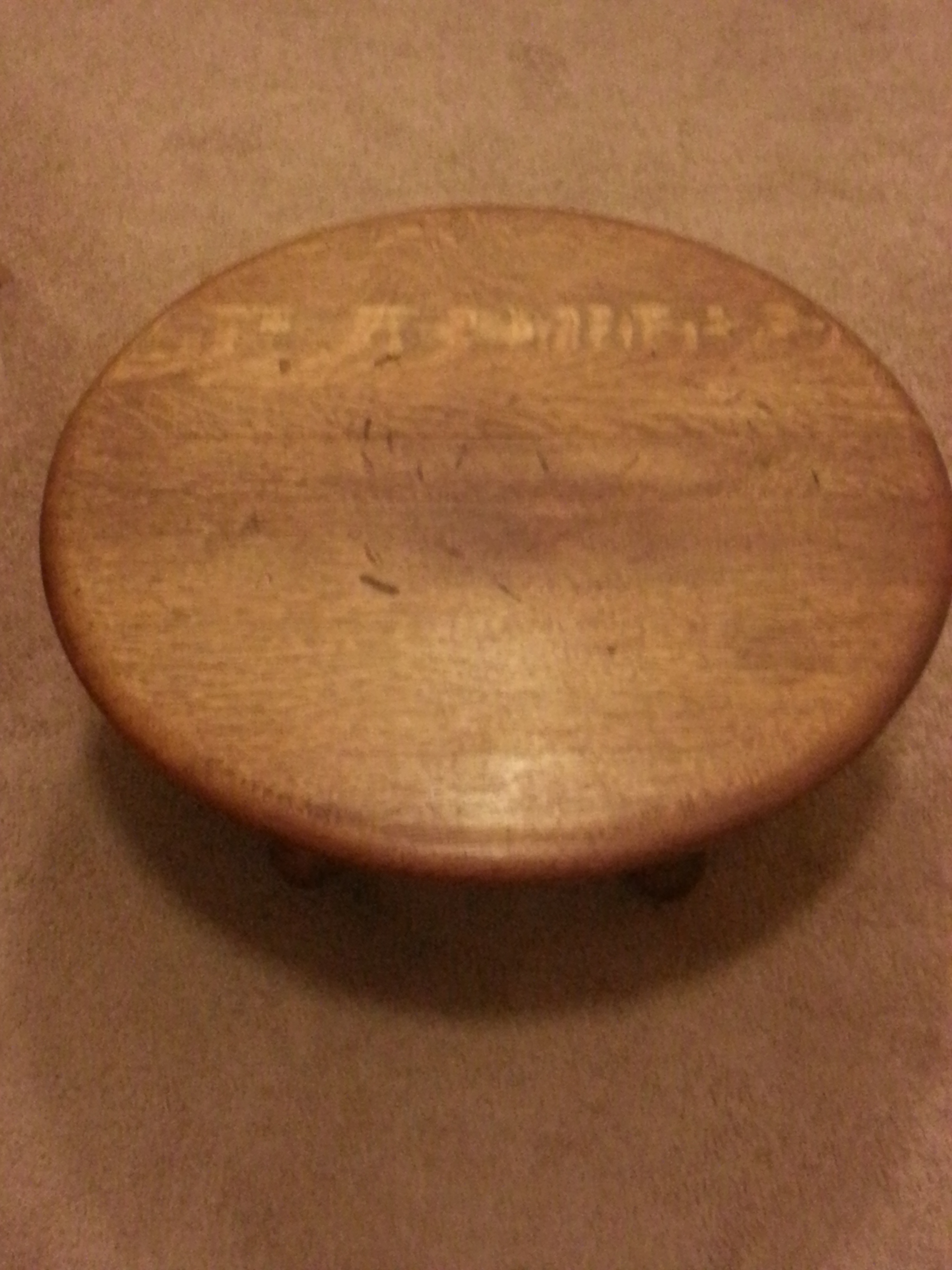
The antique oak table on which Timponogos rests was made by my father’s grandfather, also Nelson Baker, who was a machinist and mine foreman for the Prince gold mind in Pioche, Nevada.

20160322_194111

20160322_194219

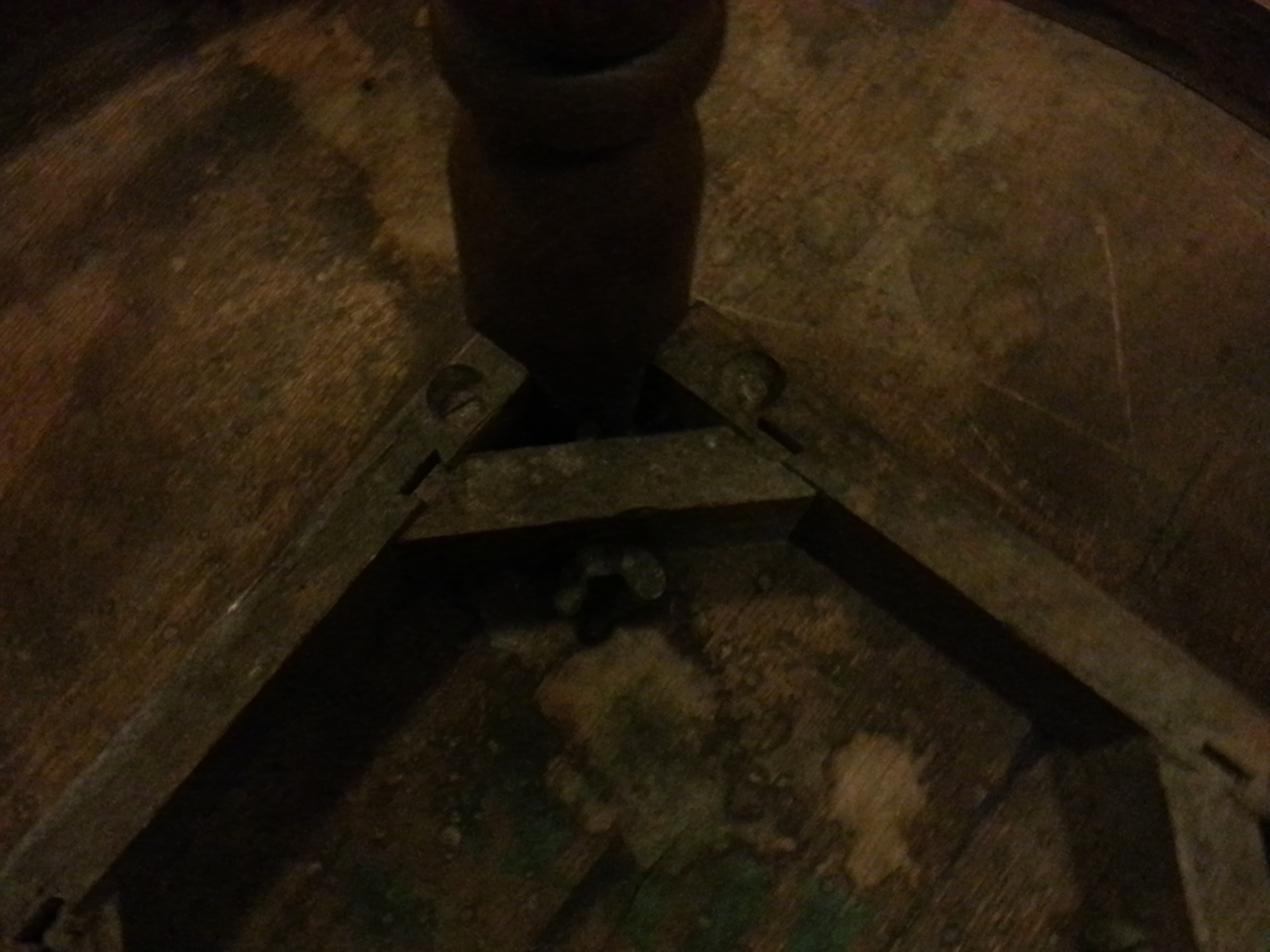
Notice the solid brace construction.

20160322_194245

20160322_194307

I have decorated the Timponogos table top with antique tools made and used long ago by great-grandpa Nelson.

20160322_192728

My father’s beautiful lamp, which I have admired all of my life, is the inspiration behind Baker Brothers Lamps, an enterprise in which I join my three younger sons–John, Caleb, and Hyrum–to make beautiful wood lamps that we sell to fund our attendance at the National Boy Scout Jamboree, and for their future college expenses.  (Sorry to disappoint, but Timponogos is not for sale.)

Dad and Boys 09-11-11

Dad and the Baker Brothers on 9/11/2011

Copy of July-December 2013 067

John, Dad, and Caleb coming home tired from the 2013 National Jamboree

We continue to enjoy making beautiful wood lamps together, the pictures and stories of which I will continue to post on this blog and offer for sale.  Here are links to some of the lamps we have made thus so far.  We hope you like them.

Dolphin

Grace

Smoke

Waves

Reach

Little Guy

Stone

No Diving

IMG-20160111-WA0007

Photo by Liddy Mills

I live in an apartment now.  My children come to visit.  Mostly I am alone.  But I have books, music, poetry, crock-pot dinners . . . and a hot tub.  My children and I sit in the roiling 110-degree water even when the ambient air is 20 degrees F, and the steam has condensed in frozen icicles hanging from the hot tub railing.  We talk about life, their soccer goals and rugby tries, sore muscles, ornery pimples, church dances, dates and the prom, stubborn cowlicks and bad haircuts, good books, good movies, hopes and dreams.  We flex our biceps and splash steaming water at each other and laugh.  Sometimes after work I soak alone, watch the steam rise, and write a poem.

NO DIVING

in the hot tub
three feet deep
no diving sign in the tile
ice clings to the chrome railing
steam, and contemplations,
billowing, billowing

Cup of Tea

IMG-20160410-WA0004

Photo by Liddy Mills

I sat recently with a mug of scalding water in one hand and a tea bag in the other, dipping the bag repeatedly in the water, watching the water darken as the herbs steeped.  Mmm.  How aromatic was that chamomile (“cidreira” in Portuguese).  I looked forward to sipping that sweet brew!  The process of boiling the water and steeping the tea–of transforming crushed, dried herbs into a delicious, soothing beverage–caused me to ponder the processes of life and transformation.  I thought about how we are similar to crushed, dried herbs–the dust of the earth, if you will–and about how, through life’s challenges and choices, we can transform our character, our soul, into something better and more pleasing.  I contemplated God’s purposes in sending us to this mortal sphere, giving us rules and guidelines for our success, and nurturing us quietly every arduous step of the way.  Please enjoy my poem “Cup of Tea” about this process of becoming.

CUP OF TEA

The Maker holds me
by a string, steeps
and dips me in the scald
until I become
the water
and the water becomes
me, stirred and stirred
with small cubes of sweetness
and drops of smoothing cream,
to be held in warming palms,
to be smelled and sipped
and savored.

Snow

20160130_140414

A snowy Rabbit Lane

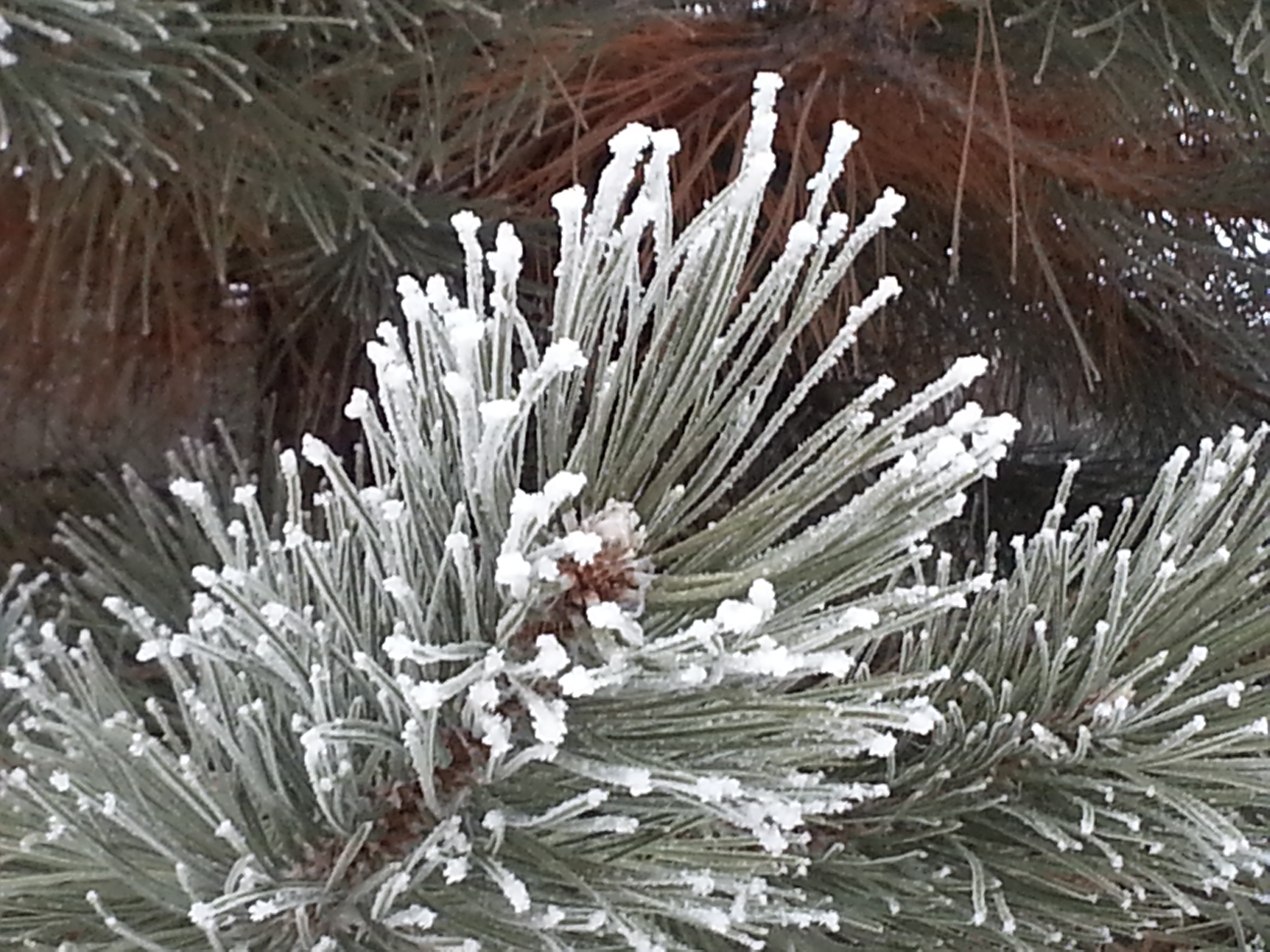
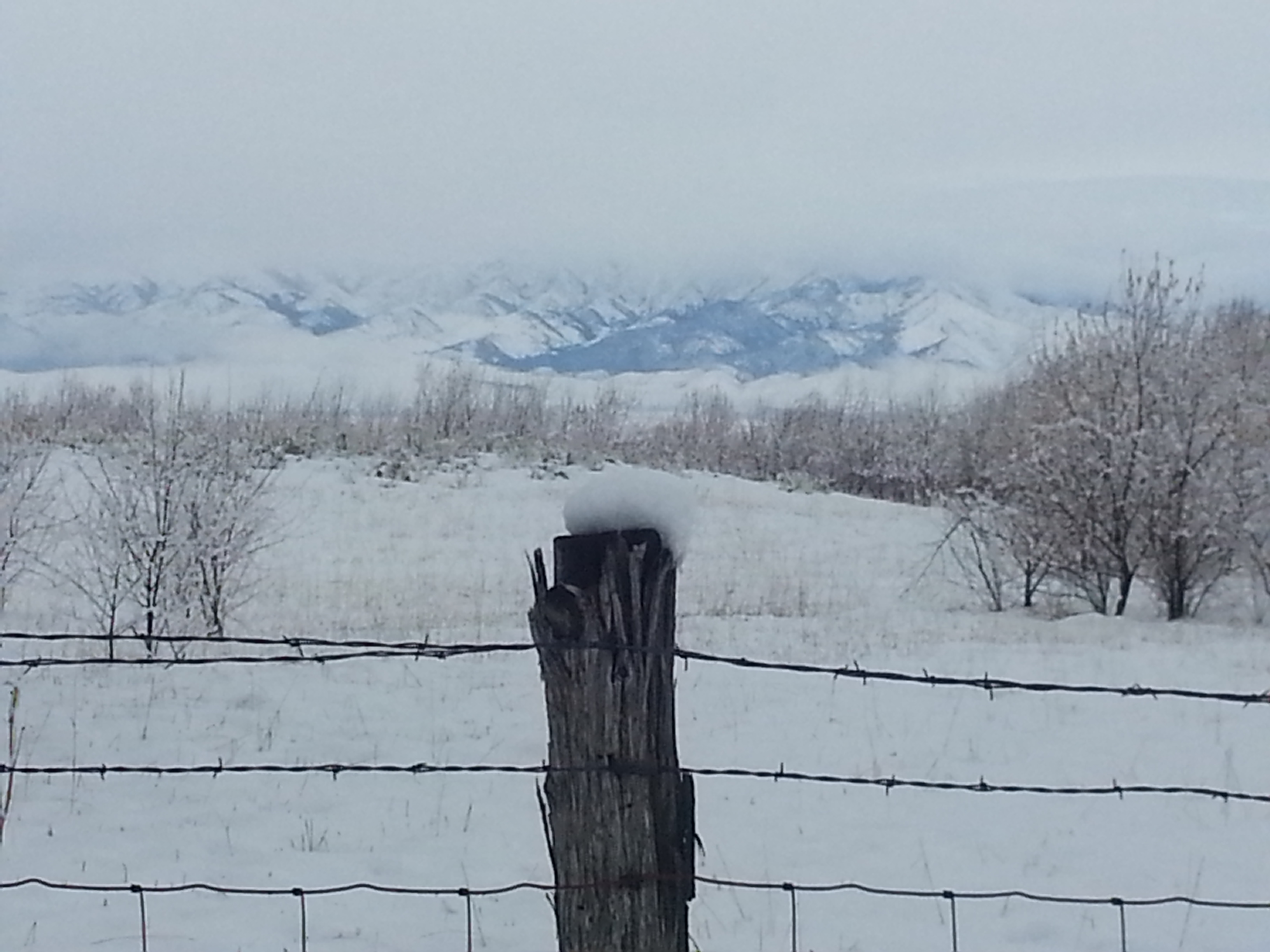
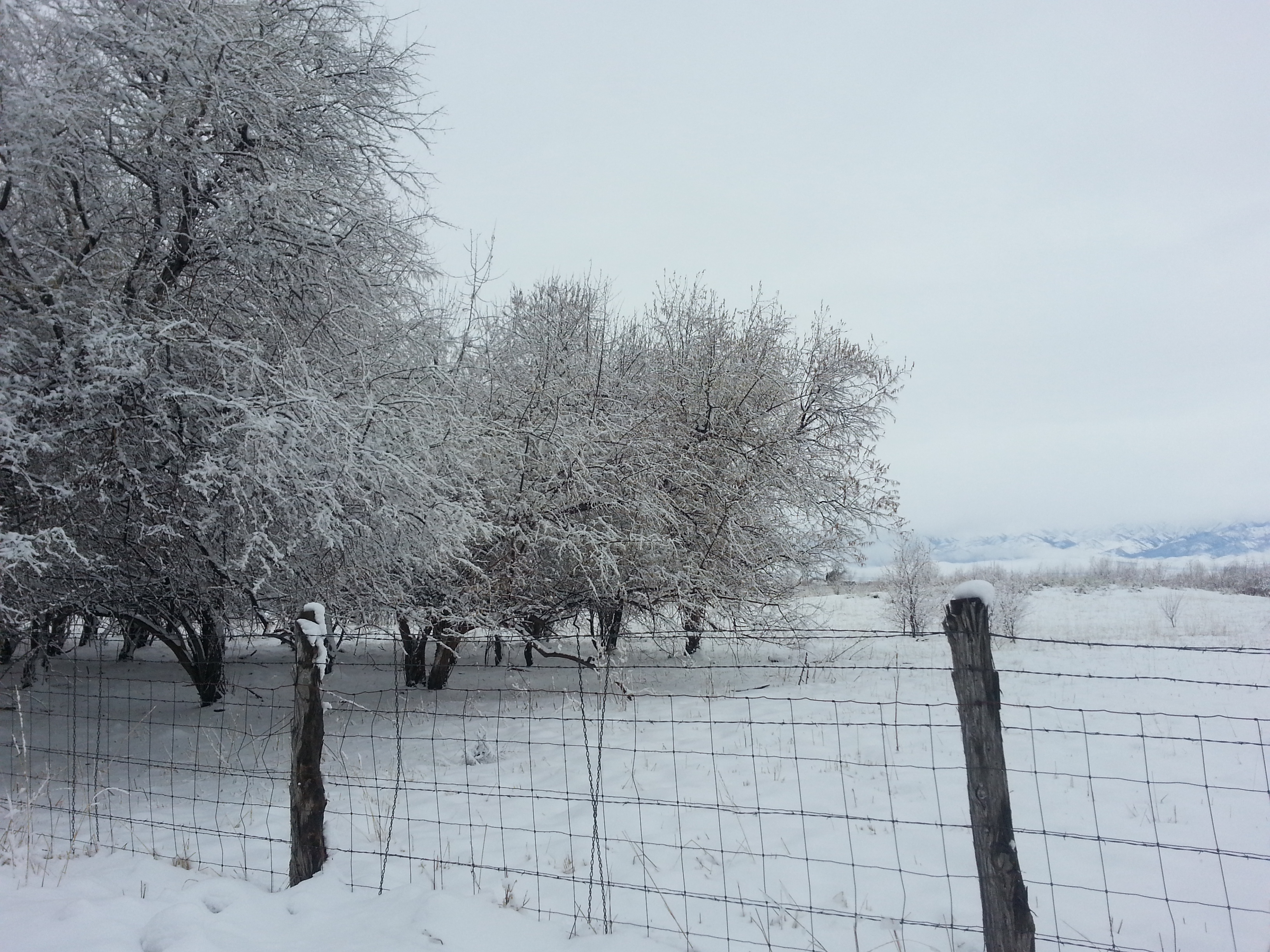
In arid Utah we are grateful for snows that persist through March, April, and sometimes even into May.  I remember a May 1993 snowstorm that dropped a full three feet of new snow on the streets and yards of Salt Lake City, the year after I returned from being a Fulbright Scholar in Portugal to live with my grandmother, Dora.  These Spring snows add high-mountain snow pack that continues to slowly percolate thousands of feet through fractured bedrock, into valley aluvia, recharging the aquifers that allow us to turn the desert into a rose.  So, even though I post this poem at the end of March, it is still snow season in Utah.  I hope you enjoy the poem.

SNOW

Sky lets down her snow
in slow and heavy flakes
all the long day
as if the world, everywhere,
has never known but snow:
slow and easy, flakes
perching undetected
in my thinning hair,
granting shy moist cool
kisses on the bulb
of my nose, on my soft
sagging cheeks, crystals resting
on lashes looking up
to a distant gentle font.
Wind does not dare to blow.

Wood Lamp: Stone

Stone

Stone by Hyrum Baker

Though made of wood, Hyrum and I thought Stone a good name for this little gem of a lamp, perfect for an end-table or night-stand.  Stained a dark Jacobean, we thought its swirls reminiscent of cooling magma on some ancient volcanic seashore.  Note the brass electrical tube wound tightly with jute twine.

This was one of our early wood lamp projects, before we embarked on more ambitious projects like Waves and Smoke, both masterpieces envisioned by Hyrum (then 12).  Waves sold for $500.

Along with Reach, we traded Stone for in-kind services, provided by my journeyman friend Justin, to power my chicken-coop studio.  We had set the price at $145.

Wood Lamp: Little Guy

Little Guy

Little Guy by John Baker

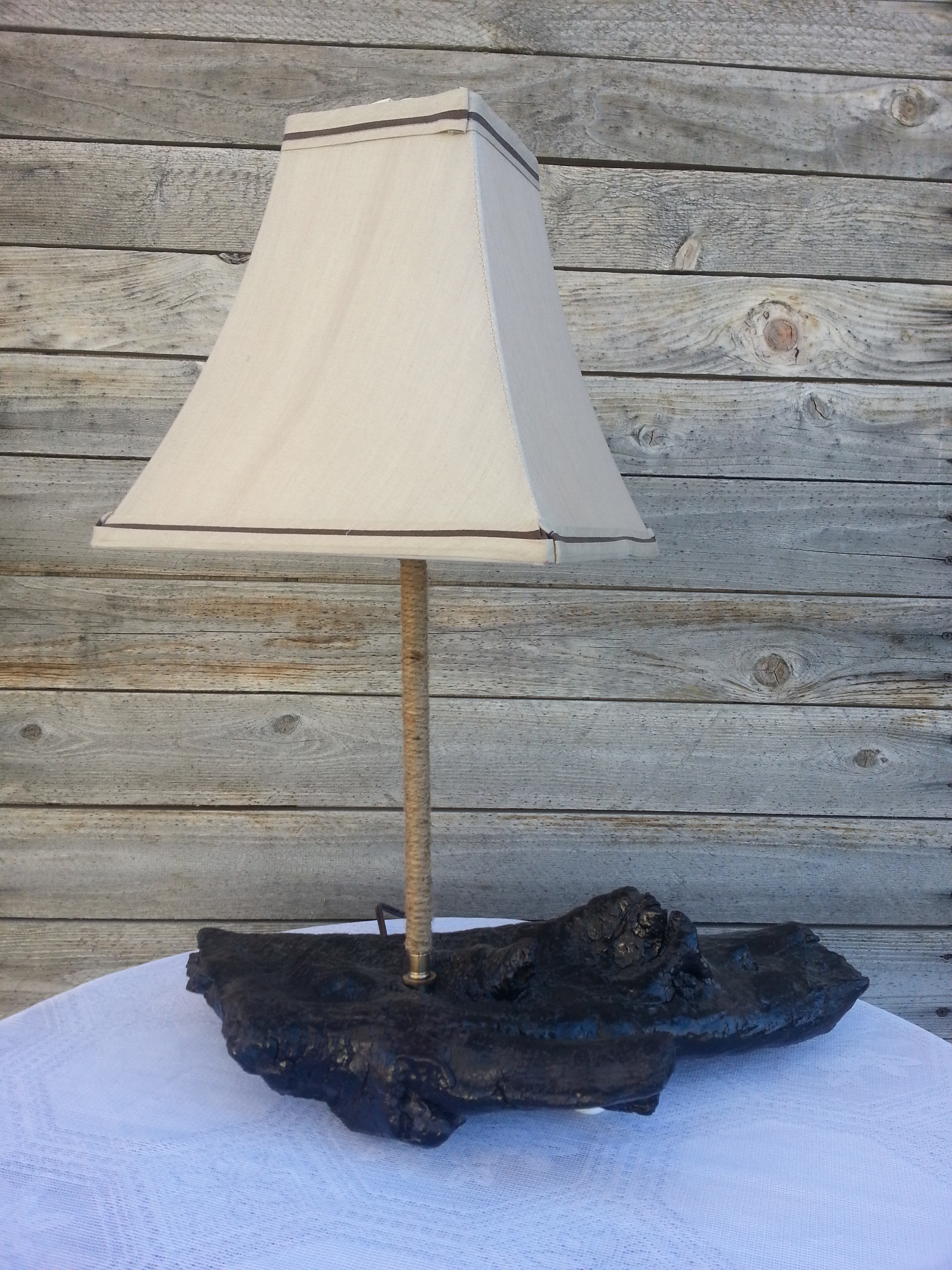
Not all of Baker Brothers lamps are large (like Dolphin and Grace) or ornate (like Smoke and Waves).  Some are small and simple, but still beautiful, like Little Guy, pictured above.  Made from a fairly flat piece of drift wood, it resembles a small floating barc.  A decorative stone placed just so balances the lamp perfectly on the wood’s natural three contact points (don’t worry–it won’t fall over without the stone, just tip slightly, as if riding a wave).  The brass tube containing the wire and holding the shade is wrapped with jute twine for a rustic, seafaring look.

Little Guy can accompany you on your next maritime imagination adventure for $180, proceeds to fund the Bakers brothers’ attendance at the National Boy Scout Jamboree and their college funds.  (An assortment of lamp shades is available.)

Wood Lamp: Grace

20160313_184100

Grace

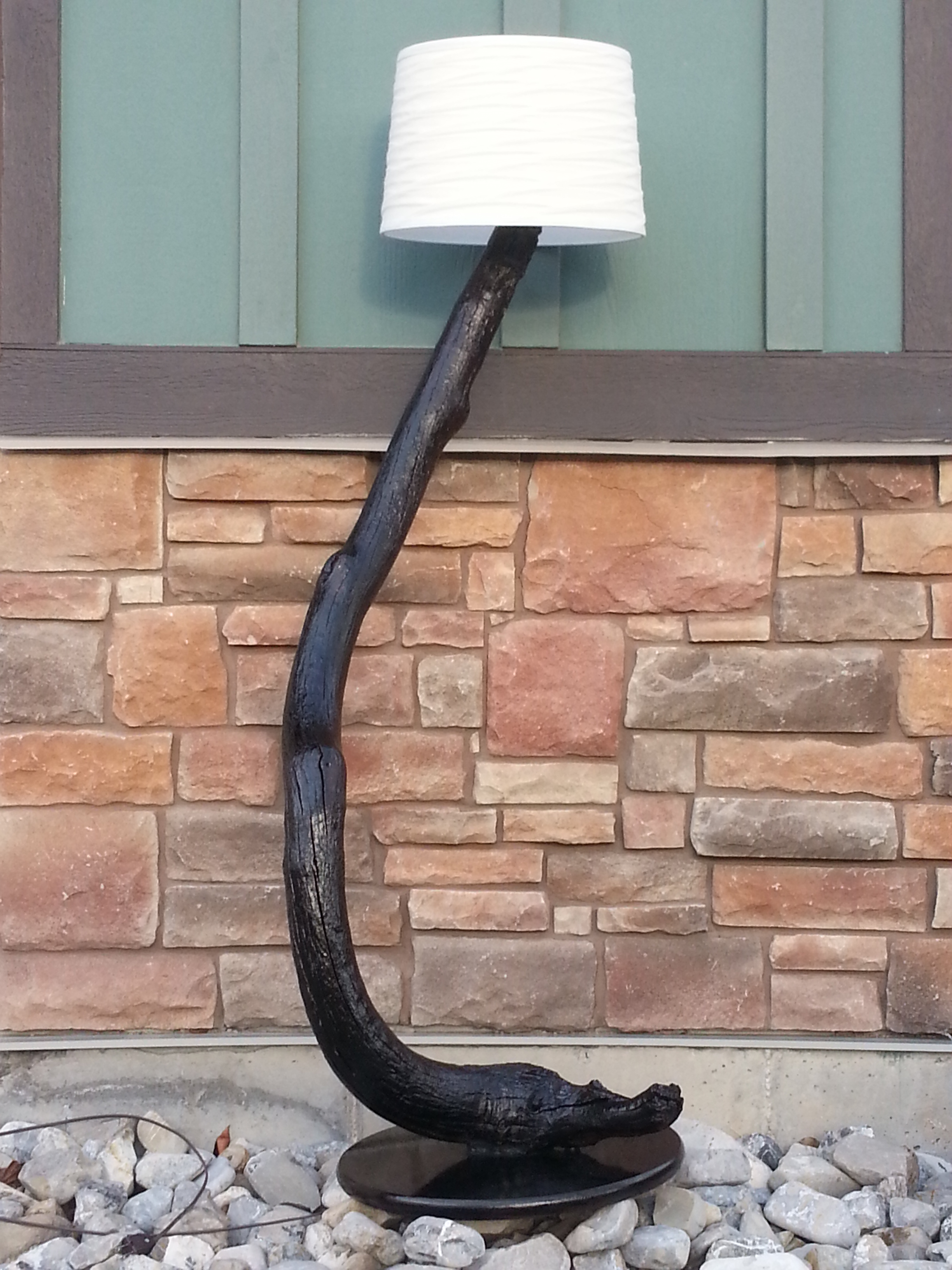
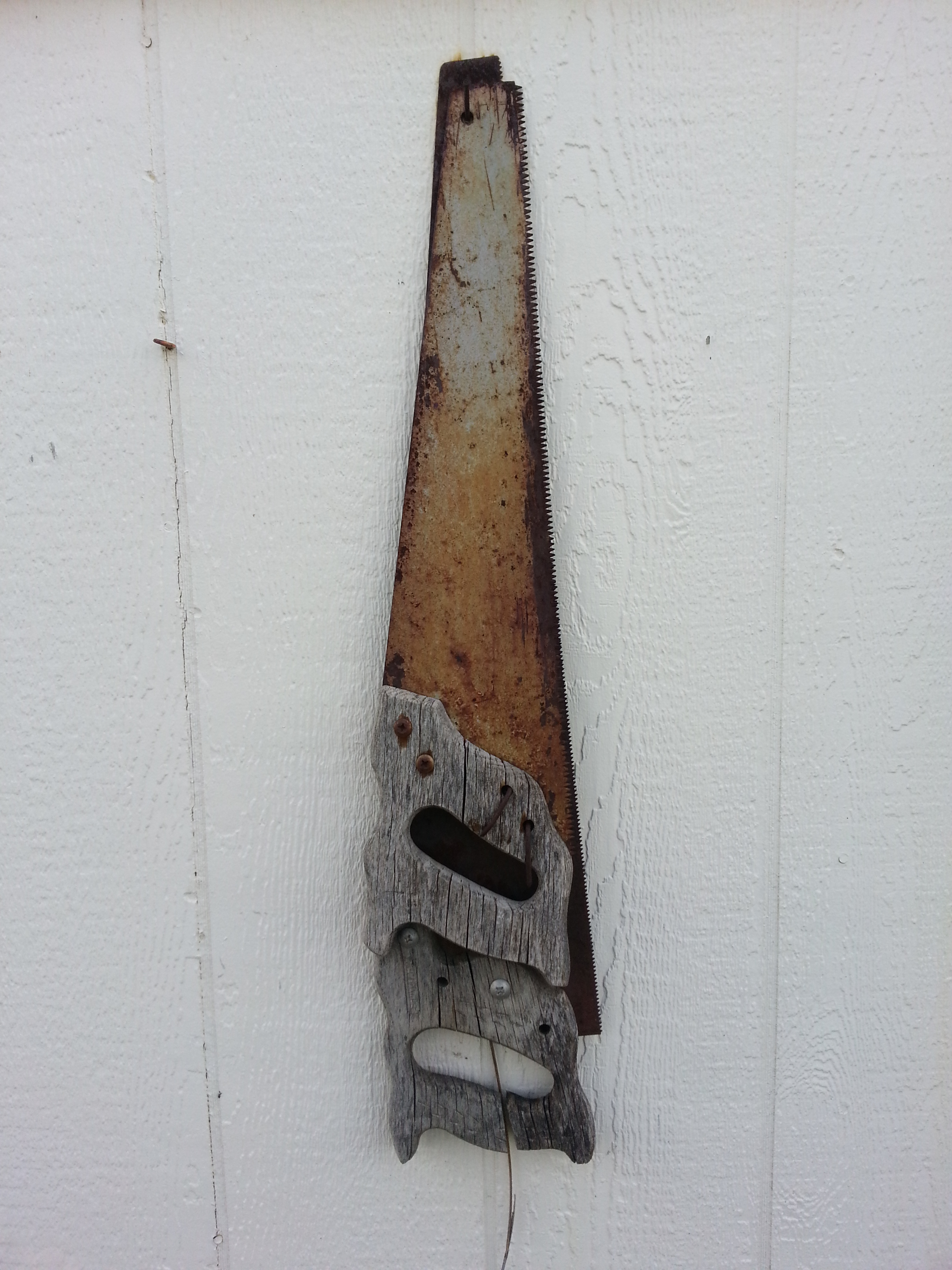
The piece of driftwood that became the lamp Grace leaned against my shed for about a decade, a temporary decoration with which I might do something someday.  It joined my other decorations, antiques, hanging from the shed by nails, though the wood lay on the ground, frequently obscured by weeds and grass.

20150515_154709

20150515_154729

20150515_154826

This lamp posed the special challenge of mounting its lithe and twisting form to the base.  At first I used a single nut and bolt, with washers at each end.  But no matter how tight, the lamp still wobbled.  Eventually, after staining and wiring, I added another bolt, and the lamp now stands firm like a ship’s mast to a ship.  While drilling such a lamp for wire would normally be a challenge, only minimal drilling was required.  The wire follows mostly natural cracks running down the back of the wood.

At 4.5 feet tall, a possible companion piece to Hyrum’s lamp Dolphin (4 feet even), we suggest a value for this lamp of $850.

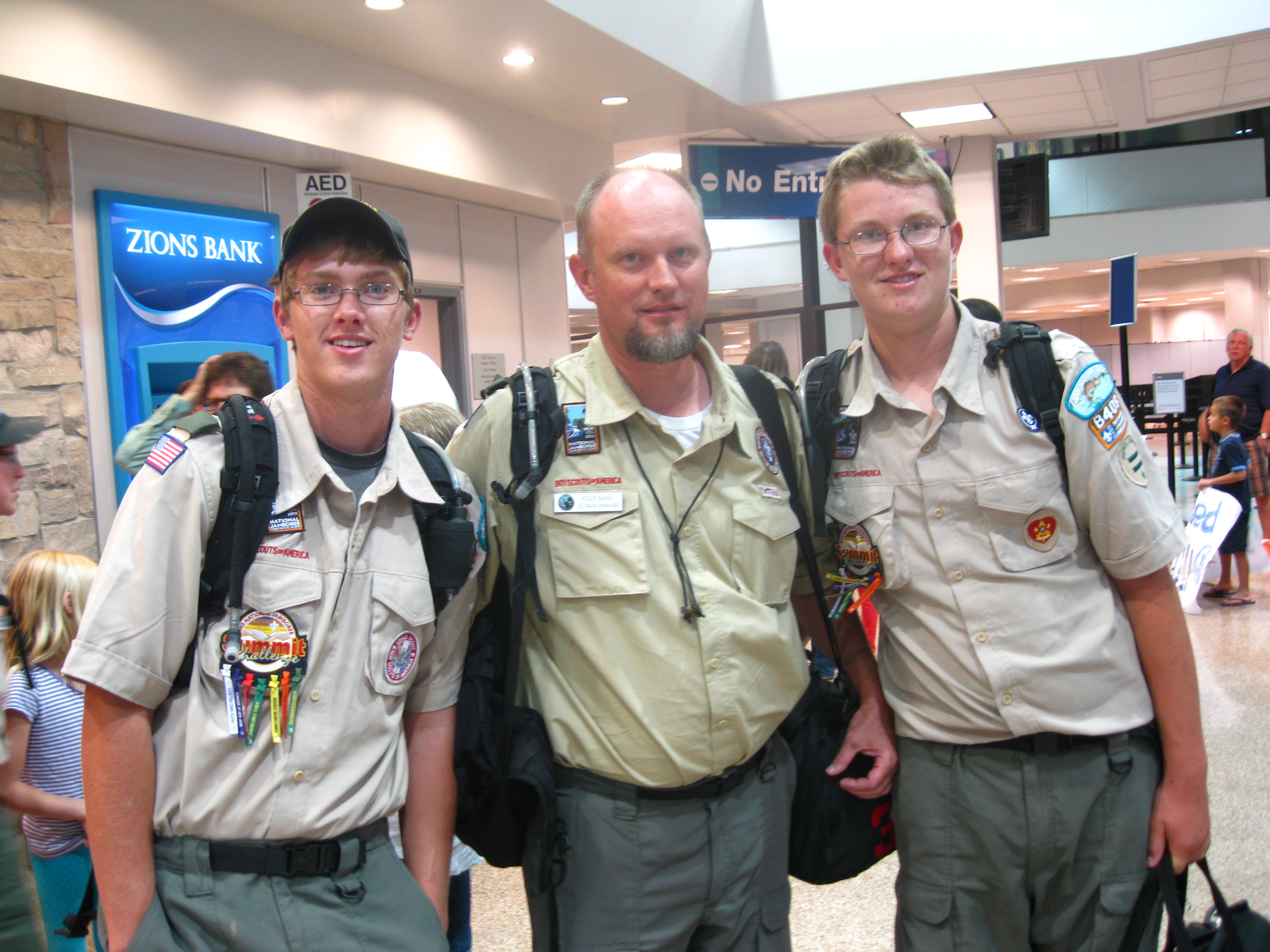
Not just my sons have raised money for the National Boy Scout Jamboree.  I join them in both the fund-raising and the scouting efforts.  I attended in 2013 as an assistant scoutmaster, one of four men accompanying a troop of 36 Boy Scouts.  I will attend again in 2017 in the same role.  I am pictured here with my sons John and Caleb, in the Salt Lake City International airport, exhausted but happy after our three-week adventure.

Copy of July-December 2013 067

I will post pictures and stories of additional wood lamps soon.

Wood Lamp: Dolphin

20160313_174813

Dolphin by Hyrum Baker

Hyrum (14) and I have worked on Dolphin for the better part of a year.  This lamp began as an unassuming piece of weathered drift wood, distinguished by its beaver chew marks at both ends.

20150912_132028      20150912_132055

Not owning an air compressor (yet), Hyrum devised an ingenious, low-cost method of cleaning the wood of sand and dust: a bicycle pump fitted with a ball needle.  Quite effective.

20150912_133404

Drilling this piece of wood, 48 inches from nose-tip to tail, was a challenge, due both to the length and the twisting curves of the wood.  We bored several holes with a long 5/16″ bit, then enlarged the holes with a 3/8″ bit.  Having the end of one bore meet the beginning of the next bore was indeed a challenge, but we made it work.

20150912_140449

For convenience, we decided to stain the lamp wood laying flat before mounting it to its base.

20150912_151003

20150912_150946

20150912_152911

With the lamp stained once, we were prepared to mount it to its base.  I learned the hard way on another tall lamp that a single bolt leaves the lamp wobbly, no matter how tight.  So we used two bolts, ratcheting the nuts down hard, with large washers on both ends, and with a little lock nut to keep them tight.  Black caulk filled the holes and covered the bolt heads.  We drilled and routed the base to accommodate the electrical chord.

20151010_184723

20151010_184757

20151010_185805

The next challenge was to thread the lamp wire through the several angled drill holes.  We first used a coat hangar to thread a length of electrician’s tape through the lamp, then used the tape to pull the wire through the lamp.

20151010_192410

With all the hardware work complete, we now applied more coats of Provincial WiniWax stain, then three coats of gloss polyurethane.  We often use different color stains for the base and the lamp in way that highlights the lamp (see Waves, Smoke, and Reach), but for Dolphin, a floor lamp, we thought using the same color stain for both was more effective.

20160130_102936

(Dolphin, in the final stages, is pictured in the background, with Grace in the foreground, and Smoke looking on from the sidelines.)

With black felt on the bottom and a simple but pretty shade on top, Dolphin is ready to swim into someone’s home.  We suggest a value of $850 for Dolphin (though we are confident that it would fetch more in many boutiques).  As a reminder, Hyrum is making these exotic wood lamps to fund his way to the 2017 Boy Scout National Jamboree, and then to college.

20160313_174813

Making these lamps together, while each one poses its own unique challenges, has been a true father-and-son joy.  I hope to continue our hobby into the future and Hyrum and his brothers become fathers themselves.

Three Quilts

20160211_081428

All parents have had the experience of children wandering into their room late at night, afraid or disoriented, and asking, “Can I sleep with you?”  Rather than be angry or annoyed, we merely laid out the spare quilts, sewn by the children’s grandmothers.  And we all fell asleep again.  Waking early for work, I tip-toed over and around my sleeping children.  Home in the evening, their quilts lay on the floor like the discarded skins of pupaed caterpillars taken flight.  I hope you enjoy my poem memorializing that recollection.

THREE QUILTS

Three quilts lie in a corner of my room,
folded, again, neatly, again;
three queen-size quilts
sewn and tied by gifting grandmothers
who rest under blanketing memory,
leaving to me these warm tokens.

From night-sleep stupor,
I hear distantly the click of a switch, and a flush,
an apologetic knocking, and a whispered “Dad,”
more like the hiss of heavy breathing than a name.
In my knowing, I find the corners
of a folded quilt and toss it out its full length
upon the floor, by the bed, where there’s room.
I could order them back to their beds, but
there seems to always be room.

In the obscurity of my morning,
I have sense enough
to step gingerly over and around
the boys, asleep in their quilted cocoons;
my boys, rising each day
with a deep life-breath yawn and
a stretching of slumber-stiff limbs,
flying from their crumpled quilts,
like the discarded skins of metamorphosis, with
only air and sky ahead.

Bliss

20160211_081612

I have always believed that a state of bliss in this mortal life is possible, achievable.  Perhaps not perpetual bliss, but certainly repeated blissful moments. I’m not talking about happiness, enjoyment, pleasure, or even joy. But bliss: a state of utter contentment and peace. I have been challenged in this ideal by those who I most hoped would believe along with me. Admittedly, bliss does not describe my normal state of being, or anyone’s, perhaps. In this poem, however, I declare the possibility of bliss and my determined intention to pursue bliss until I find bliss. I hope that you believe in bliss.

BLISS

You told me one day what
you believed bliss to be:
a sham, a ruse, a vanity,
a thing we chase
from dawn till dusk,
and dream dark dreams about,
and never find and never will.
But I am loath to think it
so. I will look
from my head to the long horizon.
I will search
every path and non-path.
For bliss exists and is mine to be,
not to capture but to free.
Then, I will beckon and waive
and say “come!” and “be with me!”
In that morning we will
walk every path and non-path,
touch every icy mountain peak,
warm to every ray the sun sends,
drink in raindrops and waterfalls,
and touch sea and sky and moon and skin.
On an evening we shall die
and know the soil and the seed,
and give life to grass and flower
and fruit of the tree.
We will see.

Chocolate: A Comic Courtroom Play (Scene 8)

IMG_0025

Hyrum (9) enjoying the feel of a federal district court judge’s chair.

No matter how compelling the evidence and the argument, the fate of any case, and the people involved, is in the hands of the judge (or the whims of the jury).  Outcomes are rarely predictable.  What do you think about this case?  Which way should the scales of justice tip?  Well, let’s check in on Judge Stone for this final scene of Chocolate.

CHOCOLATE: A COMIC PLAY IN ONE ACT
by Roger Evans Baker

The Characters:
• The Honorable Marsha P. Stone, Judge of the 13th District Court
• Mr. John Butcher, Prosecuting Attorney
• Mr. Gil Sullivan, Defense Attorney
• Victor S. Bull, the Defendant
• Ashton “Flapper” Cuff, Court Bailiff
• Officer Harold Ketchum, Police Officer
• Vickie Hicks, Bull’s 17-year-old niece
• Judd “Snoops” Lawson, Bull’s duplex neighbor
• Ernest “Tubby” Brown, Bull’s drinking buddy
• Winowna Darling Bull, Bull’s 76-year-old mother

MR. BUTCHER. (again, almost singing) No further questions.

MR. SULLIVAN. (deflated): No further witnesses, Mayam.

JUDGE STONE. Good. I mean, very well. Mr. Butcher, do you have a closing statement, or do you submit it to the judgment of the Court?

MR. BUTCHER. (catching the hint, but letting go with difficulty) Well, I have saved by most eloquent argument for closing, Your Honor, but I’ll submit it if Your Honor wishes.

JUDGE STONE. I do wish it. Mr. Sullivan, what do you have to say on behalf of your client?

MR. SULLIVAN. (grumbling, becoming agitated) Well, Your Honor, Mayam, it’s just as I said before. It’s all lies. And I’ll tell you somethin’ else. It’s more than just lies. It’s downright evil: the government cavortin’ with liars and deceivers to put an innocent man behind bars and shame him forever. What’s this country comin’ to? I’m tellin’ you, justice means nothin’ in the face of such conspiracy! I trust that a judge as intelligent and discerning as Yourself can see that, can see through the trickster’s smoke and mirrors, and find it within your heart to let an innocent man go free.

JUDGE STONE. Your brief rebuttal, Mr. Butcher?

MR. BUTCHER. (indignant) Conspiracy shmiracy, I say. He’s paranoid! I’ve never heard a more ridiculous story than the one this rascal tried to pawn to this discerning Court. Even I saw through it, I mean, well, you know what I mean. The rogue is guilty.

MR. SULLIVAN. (aside to Butcher) It’s a good thing for you this is a public defender case, Butcher, or I’d have your hide. You just watch your step with my high-paying clients, (under his breath) if I ever get any.

JUDGE STONE. (condescendingly) Well, then. I am prepared to pronounce my judgment. Mr. Bull, I have no doubt that whilst in the course of drunken tirade you did indeed manifest a dangerous weapon, i.e., a loaded firearm, in a threatening manner, thereby instilling terror in the heart of your victim. Your, hmm, defense notwithstanding, I find you guilty as charged. I also find you guilty of discharging a gun within the corporate limits of Sherman City, of public intoxication, of disorderly conduct, and of otherwise disturbing the peace.

MR. SULLIVAN. (outraged) You can’t do that Your Honor! Those crimes weren’t even charged!

JUDGE STONE. (incensed at being openly challenged) I’m the judge, this is my court, and I’ll do as I please. Do you hear! And I find that Mr. Bull did commit all of the above-enumerated crimes. (taking a moment to regain her dignified composure) I shall now pronounce sentence. For each crime the defendant shall pay a fine of $100 dollars, for a total of $500, plus a 200% surcharge to go the State to fund victim reparation programs, school non-violence programs, gun safety education programs, and judicial retirement programs. The total is, let’s see, $1,500. For each crime the defendant shall serve six months, each sentence consecutive (that means back-to-back, Mr. Bull). That’s two years. (long pause, then sounding pleased with her leniency) But I’ll suspend all the jail time upon full payment of the fine and completion of one-thousand hours of community service at the nursing home, where I hope you’ll learn some compassion and some patience and some manners. Court is now adjourned! (the judge suddenly rises and moves toward her chambers)

MR. SULLIVAN. (furious, as the judge descends from the dais) Butcher, you scoundrel, you prejudiced the Judge with all your talk of barbarian and rogue and rascal!

MR. BUTCHER. (defensive) What about you and all your chocolate licking?

BAILIFF FLAPPER. (in sergeant’s mode again, his eyes fixed dutifully on the departing judge) All arise! The most Honorable Judge Marsha P. Stone has departed the judicial chair and this Court is now hereby adjourned!

JUDGE STONE. (rolling her eyes and smiling coquettishly over her shoulder as she enters her chambers) Really, Flapper!

THE END.

[I sincerely hope that you have enjoyed my little play.]

Chocolate: A Comic Courtroom Play (Scene 7)

IMG_0026

Caleb (12) takes his turn in the federal judge’s chair.

As a prosecutor I could often count on the defendant’s mother to believe completely that her darling little boy could never do anything to hut anyone.  In trial, as in life, however, even the best of mothers may not always know how to help their wayward children.  I hope you enjoy Scene 7 of Chocolate.

CHOCOLATE: A COMIC PLAY IN ONE ACT
By Roger Evans Baker

The Characters:
• The Honorable Marsha P. Stone, Judge of the 13th District Court
• Mr. John Butcher, Prosecuting Attorney
• Mr. Gil Sullivan, Defense Attorney
• Victor S. Bull, the Defendant
• Ashton “Flapper” Cuff, Court Bailiff
• Officer Harold Ketchum, Police Officer
• Vickie Hicks, Bull’s 17-year-old niece
• Judd “Snoops” Lawson, Bull’s duplex neighbor
• Ernest “Tubby” Brown, Bull’s drinking buddy
• Winowna Darling Bull, Bull’s 76-year-old mother

MR. SULLIVAN. Just one more witness, Mayam, an important one. And she won’t take long.

JUDGE STONE. Very well, you may proceed.

MR. SULLIVAN. The defense calls Mrs. Winowna Darling Bull, the defendant’s mother. (pause) May I call you Winowna, my dear.

WINOWNA. (delighted) Why, yes, that would be delightful.

MR. SULLIVAN. How old are you, Winowna, dear.

WINOWNA. (shyly, but with pride) Seventy-six last Tuesday.

MR. SULLIVAN. Well, happy birthday! Winowna, tell us about your son, Victor.

WINOWNA. Well, Victor was born on the farm near the little town of–

MR. SULLIVAN. Not that far back, Winowna, dear. Just tell us what Victor is like.

WINOWNA. (glad to be helpful) Why, my Victor is simply the sweetest son a widowed mother could ever have. He calls me every week to see if my social security check, retirement check, royalties check, and dividend check have arrived. Then he takes them to the bank and cashes them for me. He buys me my groceries and gives me quarters for Friday night Bingo. He keeps the rest safe for me in our secret hiding place. It’s so nice to feel secure.

MR. SULLIVAN. That’s really not what I meant, Winowna, dear. Tell us how Victor is with his family.

WINOWNA. (delighted) Oh, that! Why didn’t you say so? My Victor loves his family. He wouldn’t hurt a fly. Oh, he hunts, of course, but just to put meat on the table. Quite an assortment, too. Deer, elk, moose, bear, pronghorn, duck, goose, and pheasant. It’s a hard life, you know. (giggling) Victor can be a bit careless, too. He’s shot himself in the foot twice, you know. That finger of his must just itch to pull the trigger.

MR. SULLIVAN. Would he ever point a loaded gun at his beloved wife?

WINOWNA. (shocked) Goodness, no! How dare you even suggest such a thing. Of course, he’s popped her once or twice, just to let her know who’s boss, you know, just like my dearly departed did to me on more than one occasion. But she deserved it, I am sure.

MR. SULLIVAN. (in dismay) I think you’ve told us enough, Winowna, dear.

MR. BUTCHER. Just one question, Your Honor. Mrs. Darling, would you say–

WINOWNA. (suppressing a giggle) It’s Mrs. Bull, young man, but you can call me Darling if you wish.

MR. BUTCHER. (blushing and flustered) Right. (regaining his composure) Well, would you say that a man who gets drunk, who beats his wife, who gets angry and jealous over nothing, and who shoots guns in his own home could be dangerous?

WINOWNA. (indignantly) I certainly do! Heaven help the poor girl! That man, whoever he is, should be thrown in jail!

MR. BUTCHER. (again, almost singing) No further questions.

MR. SULLIVAN. (deflated): No further witnesses, Mayam.

JUDGE STONE. Good. I mean, very well. Mr. Butcher, do you have a closing statement, or do you submit it to the judgment of the Court?

[Come back tomorrow for the last scene of Chocolate.]

Chocolate: A Comic Courtroom Play (Scene 6)

IMG_0027

John (13) in the chair of a federal judge, District of Utah.

This comic play takes place in the context of an incident of domestic violence.  Make no mistake, there is nothing funny about domestic violence.  I have been involved in domestic violence prosecution for over 20 years.  I have trained prosecutors and victim advocates on a local, state, and national level.  I take domestic violence very seriously.  In Scene 6, it’s time for the defendant to take the stand.  Remember that this play is the story of a real trial, with a twist of ridiculous.  But I always remember the suffering of real people working to survive violent relationships.  With that said, I hope you enjoy this scene of Chocolate.

CHOCOLATE: A COMIC PLAY IN ONE ACT
by Roger Evans Baker

The Characters:
• The Honorable Marsha P. Stone, Judge of the 13th District Court
• Mr. John Butcher, Prosecuting Attorney
• Mr. Gil Sullivan, Defense Attorney
• Victor S. Bull, the Defendant
• Ashton “Flapper” Cuff, Court Bailiff
• Officer Harold Ketchum, Police Officer
• Vickie Hicks, Bull’s 17-year-old niece
• Judd “Snoops” Lawson, Bull’s duplex neighbor
• Ernest “Tubby” Brown, Bull’s drinking buddy
• Winowna Darling Bull, Bull’s 76-year-old mother

JUDGE STONE. (astonished at Mr. Butcher’s outburst; inclined to sustain the objections, but intensely curious about Tubby’s testimony) Well, Mr. Sullivan, you have to admit, the testimony does seem to push the relevancy envelope a bit, wouldn’t you say?

MR. SULLIVAN. (conceding with a shrug of his shoulders) Very well, Mayam. No further questions for my friend, Tubby, here. The next witness is Mr. Bull, himself. (pause) Mr. Bull, how long have you been married?

MR. BULL. Fifteen happy years, Mr. Sullivan, sir.

MR. SULLIVAN. “Sir” will do nicely, thank you. And do you love your wife, Mr. Bull?

MR. BULL. (with a confident, broad smile) Oh yes, sir, with all of my big heart.

MR. SULLIVAN. Could you ever even consider pointing a gun at your wife?

MR. BULL. (feigning shock) Never, sir.

MR. SULLIVAN. Then can you tell us, why did you have a gun when you were arguing with your wife on the fateful night of July 7th.

MR. BULL. Of course, sir. You see, it happened like this. When we got home from the Dead Donkey, I was mad because of this chocolate licking thing because she thought it was funny and I didn’t because she’s been unfaithful before so I thought she was unfaithful now because of the chocolate licking thing because she thought it was funny and I didn’t.

MR. BUTCHER. (whining) Your Honor, I really must object most strenuously to the repeated mention of the lewd chocolate incident.

JUDGE STONE. (annoyed) Zip it, Butcher. I want to hear the rest of the story. Go on, Buller, er, Bull, Mr. Bull.

MR. BULL. Sure, thing, Mayam Judge. (animated) So we started to argue. Then she called me a “horse’s ass.” Me. She called me an “ass” when she was going to have chocolate poured all over her, and who k-n-o-w-s what else, maybe colored sprinkles, or a cherry in her bellybutton. (Mr. Butcher is writhing in his effort to restrain a string of frantic objections. Judge Stone suppresses a laugh.) At that very moment I decided I was leaving this place–outa’ here–hasta lego. So I grabbed my gun from the closet so my wife wouldn’t come after me with it. She was still screaming at me when I turned around to leave–that’s why the Butcher here thinks I was pointing it at her. And then the gun went off by accident. I almost shot my own nose off. Geez, would that have been embarrassing. So I left the house, thinking I’d sleep on the deck. I was so mad that when I went to step up to the deck I kicked it instead, hit my head on the railing post—man, did that hurt!—and fell to the ground dazed. Geez, how embarrassing! When I came to my senses and noticed that I was on the ground, I said to myself, I said, I think I’ll just crawl under this deck right here and rest in peace for a while. Next thing I know the police is dragging me out, throwing me against the house, calling me a “wuss” for shooting at my wife, blinding me with their flashlights, and playing tug of war with my arms as they hauled me off to their car. That’s it.

MR. SULLIVAN. (smug) Thank you, Mr. Bull. The witness is yours, Butcher.

MR. BUTCHER. (subdued, but astonished at the defendant’s story) You’ve got to be kidding me, Mr. Bull.

MR. SULLIVAN. (mocking) Is that a question, Butcher, or are you just philosophizing about the lack of merits of your frivolous case?

MR. BUTCHER. (unphased and incredulous) Mr. Bull, are you telling this Court that when you decided to leave all you could think of to take was a loaded gun?

MR. BULL. (confidently) Yes, sir.

MR. BUTCHER. And are you telling this Court that when you decided to leave the only place you could think of to stay was on the deck?

MR. BULL. Yes, sir.

MR. BUTCHER. And you really expect this Court to believe that you tripped on the step, knocking yourself to the ground, and then decided that underneath the deck would be a good place to take a nap?

MR. BULL. (trying with limited successes to maintain composure) Yes, sir, I do, because it’s the truth, the whole truth, and nothing but the truth!

MR. BUTCHER. (with contempt) No further questions of this . . . witness.

JUDGE STONE. (impatient) Mr. Sullivan, are you going to prolong this protracted proceeding with another witness, or can we finish.

MR. SULLIVAN. Just one more witness, Mayam, an important one. And she won’t take long.

JUDGE STONE. Very well, you may proceed.

[Only two more scenes to go.  Come back soon.]

Chocolate: A Comic Courtroom Play (Scene 5)

IMG_0021

John (13), Caleb (12), Hyrum (9), and Hannah (5) in the Utah State Capitol building
outside the old courtroom of the Utah Supreme Court.

No matter how carefully I prepared for trial, witnesses like Snoops and Tubby always managed to introduce the element of the unpredictable.  Sometimes I found my cases unraveling before my eyes, with me frantically thinking, Why didn’t they tell me that before?  This happened once when I was asked to prosecute a young man for illegal possession of wildlife when a “friend” from Florida brought him a baby alligator as a gift.  But that’s another story.  Let’s pick up where we left off with Chocolate.  As a reminder, here is the cast again.

CHOCOLATE: A COMIC PLAY IN ONE ACT
by Roger Evans Baker

The Characters:
• The Honorable Marsha P. Stone, Judge of the 13th District Court
• Mr. John Butcher, Prosecuting Attorney
• Mr. Gil Sullivan, Defense Attorney
• Victor S. Bull, the Defendant
• Ashton “Flapper” Cuff, Court Bailiff
• Officer Harold Ketchum, Police Officer
• Vickie Hicks, Bull’s 17-year-old niece
• Judd “Snoops” Lawson, Bull’s duplex neighbor
• Ernest “Tubby” Brown, Bull’s drinking buddy
• Winowna Darling Bull, Bull’s 76-year-old mother

JUDGE STONE. Very well. Present your case, Mr. Sullivan.

MR. SULLIVAN. Thank you. (as if the prosecution’s case were the weakest, most frivolous case he had ever seen) First of all, Your Honor–Mayam–I’m tellin’ you that you should dismiss this case right now! It is a disgrace to the entire criminal justice system, why, to the very Constitution itself! This man did nothing wrong, nothing more than argue with his adulterous wife, then leave the house for some respite.

JUDGE STONE. (chiding) Oral advocacy 101: never tell a judge what to do! Besides, I want to hear your side of the story. Call your witnesses, if you have any.

MR. SULLIVAN. (grumbling) Very well. We call Mr. Ernest Brown to the witness stand of this exalted Court.

JUDGE STONE. (aside to Sullivan, warning with a grin) Watch it, Sullivan!

MR. SULLIVAN. Mr. Brown. How long have you known the defendant, Mr. Victor Bull?

MR. BROWN. (quite pleased to be asked to relate his life story) Nigh onto 20 years, I reckon. Why we’ve been drinkin’ together since we was 15 years old. We’ve had some wild times together. Who-wee, could I tell some stories! Mm-mm. Yes, sir. That fellow Snoops has had three names, but me, I’ve only had one, since the early years: Tubby. Tubby. Fit me then and fits me now. Fit me till the day I die, I reckon.

MR. SULLIVAN. Thank you, Tubby. Just answer the questions without elaboration, please. And do know Mrs. Bull? And if so, how?

TUBBY. (disgruntled at his story not being more appreciated) Yes, sir, I do. She’s been a bar maid at the Dead Donkey for years.

MR. SULLIVAN. In fact, Mrs. Bull served you and Mr. Bull drinks on the night of July 7th, didn’t she?

TUBBY. Yes, sir. In fact, her boss had to send her home because she’d had a few too many herself. Only, she didn’t go home. She stayed right there with us and near drank us under the table. She was blitzed, yes sir, downright soused.

MR. BUTCHER. (panicked) I object! Mrs. Bull’s drinking has nothing to do with Mr. Bull shooting a gun at her in her home.

MR. SULLIVAN. He didn’t shoot it at her. Your own sweetheart Vickie said so.

MR. BUTCHER. She did not!

MR. SULLIVAN. She did too!

MR. BUTCHER. Did not!

MR. SULLIVAN. Did too!

MR. BUTCHER. Did not!

JUDGE STONE. (suppressing a laugh) Lord Almighty! Will you look at you two, arguing did not, did too, did not, did too, like two spoiled children. No wonder Snoops didn’t like being called Mr. Lawson. Grow up, just a little bit, please. Now, as to the State’s objection, I want to hear the rest of the story. Continue, Mr. Sullivan.

MR. SULLIVAN. (whining) Your Honor–Mayam–how am I supposed to mount a defense with Butcher here yapping like a wounded hyena every time things don’t go his way?

JUDGE STONE. Very well. Mr. Butcher, try not to object unless it’s really important. Now, the rest of the story, please.

MR. SULLIVAN. Yes, Mayam. Now, then, Mr. Brown. What was the interaction like between Mr. and Mrs. Bull at the Dead Donkey?

TUBBY. Not bad, after they’d had half-a-dozen. Before that it was a little tense. You see, Mrs. Bull had been braggin’ to us earlier that another customer had said to her, as she served drinks to him and his buddies, that he’d love to pour chocolate syrup all over her naked body and then lick it off–

MR. BUTCHER. (frantic and flustered) I object! This is really important! I object! I object! This, this, this . . . testimony . . . is . . . irrelevant, immaterial, out-of-bounds, disgusting, and utterly luskivious! Licking chocolate, indeed! Strike it! Strike it, I say! Strike it all from the record to preserve the unsullied business of this honorable Court to seek justice and truth!

JUDGE STONE. (astonished at Mr. Butcher’s outburst; inclined to sustain the objections, but intensely curious about Tubby’s testimony) Well, Mr. Sullivan, you have to admit, the testimony does seem to push the relevancy envelope a bit, wouldn’t you say?

MR. SULLIVAN. (conceding with a shrug of his shoulders) Very well, Mayam. No further questions for my friend, Tubby, here.

[On to Scene 6 tomorrow.]

Chocolate: A Comic Courtroom Play (Scene 4)

IMG_0029

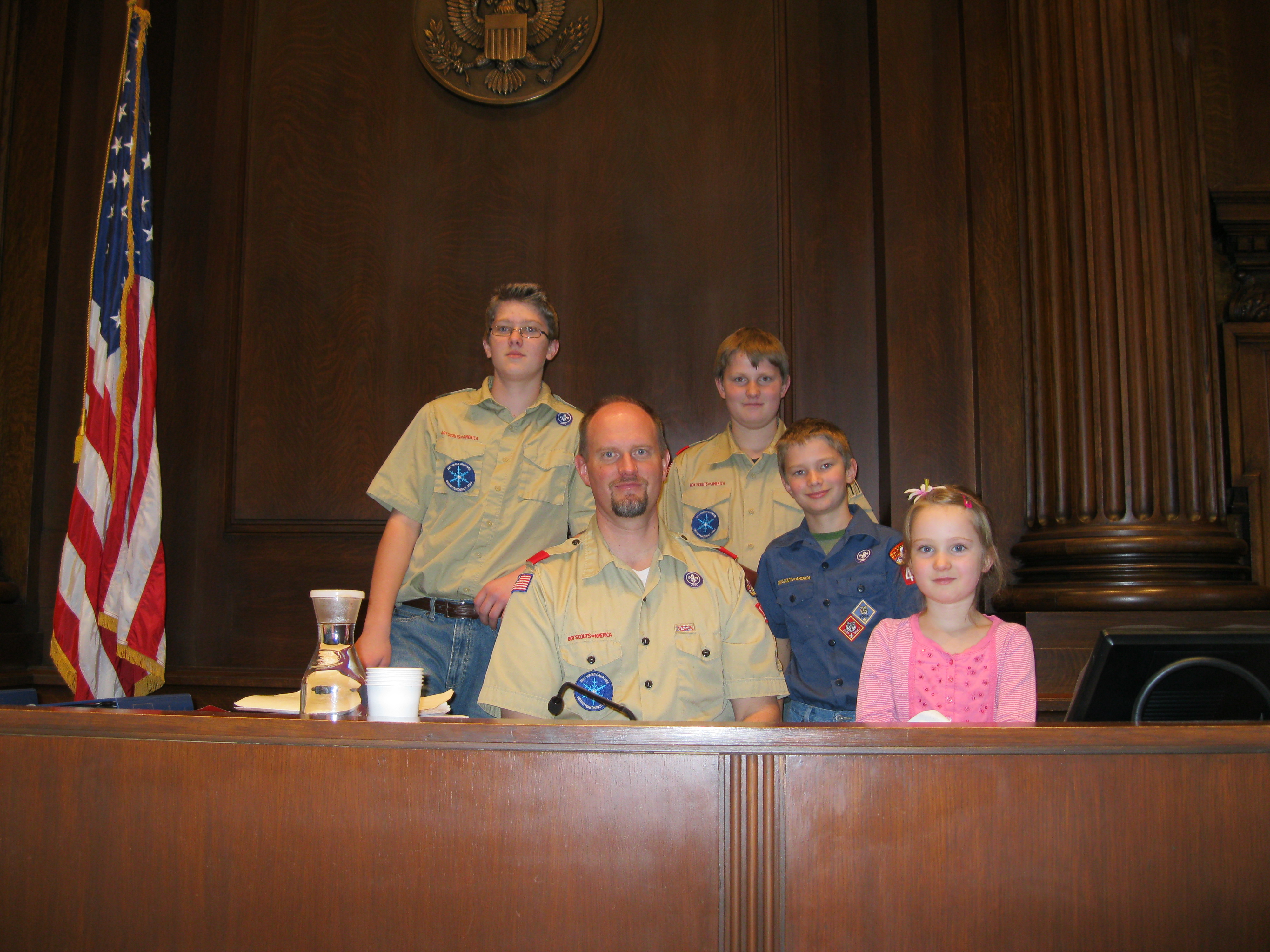
John (13), Caleb (12), Hyrum (9), Hannah (5) and me at the bar of the Federal District Court.

CHOCOLATE: A COMIC PLAY IN ONE ACT
by Roger Evans Baker

This scene pokes a little good-natured fun at the police officer caricature.  (I won’t mention coffee and donuts, a sore spot with my police officer friends.)  Lest I be misunderstood, I have the greatest respect for law enforcement, for who they are, for what they do, and for why they do it.  They bring order to society by maintaining the rule of law within the bounds of the law.  I know of no tougher, more dangerous, more stressful, less-appreciated, more underpaid profession.  I offer police officers my thanks, my admiration, and my respect.  Still, I have read modern police reports that actually used the phrase “dismounted my vehicle,” hearkening unwittingly to the days when deputy marshals dismounted their equine partners while patrolling 19th-century towns.  Now, let’s meet Officer Ketchum.

The Characters:
• The Honorable Marsha P. Stone, Judge of the 13th District Court
• Mr. John Butcher, Prosecuting Attorney
• Mr. Gil Sullivan, Defense Attorney
• Victor S. Bull, the Defendant
• Ashton “Flapper” Cuff, Court Bailiff
• Officer Harold Ketchum, Police Officer
• Vickie Hicks, Bull’s 17-year-old niece
• Judd “Snoops” Lawson, Bull’s duplex neighbor
• Ernest “Tubby” Brown, Bull’s drinking buddy
• Winowna Darling Bull, Bull’s 76-year-old mother

MR. BUTCHER. (with great expectations for triumph) Just one, Your Honor. The best for last. The State calls Officer Harold Ketchum to the stand. (Officer Ketchum, in full dress uniform, takes his seat at the witness stand) Are you or are you not a sworn, certified police officer with 15 years of experience with the renowned Sherman City Police Department?

MR. SULLIVAN. (affecting incredulity) What is this, an awards ceremony? Your Honor, Mayam, he can’t do that. He packs 18 questions into one and bulldozes it all down the witness’ gullet.

JUDGE STONE. (irritated) Oh, grow up, Sullivan. It’s just background details. (she shifts her attention, and irritation, to the officer) Answer the questions, Officer.

OFFICER KETCHUM. (obediently) Yes, Sir, Ma’am. The answer is, Yes.

MR. BUTCHER. Now, then, Officer. Tell us what happened on July 7th.

OFFICER KETCHUM. Yes, Sir. Glad to, sir. (shifting in his seat and clearing his voice, and beginning to narrate like a dramatic newscaster) Police dispatch dispatched me on my new 1,800 mhz radio and routed me to the complaining party’s location, to where I proceeded with dispatch. Upon my arrival, I dismounted my vehicle and encountered the complaining party. I inquired of the events leading up to the complaining party’s emergency call. She narrated to me the events exactly as her niece did a few minutes previous, including the shooting of the said firearm, Sir.

MR. SULLIVAN. (in disbelief) I can’t believe this! H-e-l-l-o! Has anyone ever heard of hearsay? Where is the lady that’s supposed to be so frightened anyway?

MR. BUTCHER. (accusingly) She’s at your client’s house, where she refused to accept a subpoena because she’s too afraid to show up.

MR. SULLIVAN. (indignantly) Look, Butcher–why don’t you just take the stand and tell the whole story yourself.

JUDGE STONE. (flaring) Oh, shut up, both of you! Now move it along Butcher.

MR. BUTCHER. (moving it along) Officer Ketchum, did you ever find this man, Victor Bull, at the scene of the crime?

OFFICER KETCHUM. Yes, Sir, I did.

MR. BUTCHER. (after a pause, annoyed) Well, tell me about it. What and where and when and how?

OFFICER KETCHUM. Very well, sir. I proceeded to investigate the house and the house premises. Finding no sign of the defendant, I proceeded to search again the yard area. Upon shining my police issue flashlight under the rotten redwood deck, I observed the person of the defendant hiding beneath said deck, in a horizontal position, as if sleeping. I instructed him to exit his location. He remained motionless, as if sleeping. I repeated my instructions, and the defendant exited his location, but not without difficulty, requiring my firm assistance to stand and to ambulate to my police vehicle.

MR. BUTCHER. You mean he was drunk?

OFFICER KETCHUM. Correct, sir.

MR. BUTCHER. (delighted, almost singing) No further questions.

JUDGE STONE. Your turn, Mr. Sullivan.

MR. SULLIVAN. Thank you kindly, Mayam. Now, Officer Ketchum. Fifteen years with the department, it is? Certified, are you? Fully trained, are you?

OFFICER KETCHUM. Yes, sir.

MR. SULLIVAN. (innocently) Then tell me this. Just how many times have you been trained in locating suspects beneath rotten redwood decks by flashlight light?

OFFICER KETCHUM. Well, none, sir–not specifically.

MR. SULLIVAN. (with suspicion) I see. And how many times in your distinguished career have you apprehended persons who appeared to be sleeping beneath rotten redwood decks? None, I’ll wager.

OFFICER KETCHUM. Correct, sir, although I have apprehended numerous other suspects who were pretending to–

MR. SULLIVAN (all innocence lost, suspicion turns to combative confrontation) Just answer the questions I ask, Officer. I didn’t ask, Would you please volunteer to me whatever you would like. I asked a simple question, and you gave me a simple answer–no. So it’s fair to say that you have no direct training or experience in the apprehension of people sleeping under rotten redwood decks, with flashlight light at night, right?

OFFICER KETCHUM. I guess not, sir.

MR. SULLIVAN. Did my client have a gun in his possession?

OFFICER KETCHUM. No, sir.

MR. SULLIVAN. Did you search the premises for a gun?

OFFICER KETCHUM. No, sir. I saw no need once we had apprehended the–

MR. SULLIVAN. Thank you very much, Officer Ketchum. That will do. No further questions.

JUDGE STONE. Does the State rest?

MR. BUTCHER. (quite pleased with himself) We do, Your Honorable Honor.

JUDGE STONE. Very well. Present your case, Mr. Sullivan.

[Stay tuned for Scene 5.]

Chocolate: A Comic Courtroom Play (Scene 3)

2015-08-21 Hyrum-03

Hyrum (13) in front of the doors of the Utah Supreme Court.

CHOCOLATE: A COMIC PLAY IN ONE ACT (Scene 3)
by Roger Evans Baker

Snoops, the main character of these scene, is quite a made up character.  But having an uncontrollable witness is quite a routine occurrence at trial.

The Characters:
• The Honorable Marsha P. Stone, Judge of the 13th District Court
• Mr. John Butcher, Prosecuting Attorney
• Mr. Gil Sullivan, Defense Attorney
• Victor S. Bull, the Defendant
• Ashton “Flapper” Cuff, Court Bailiff
• Officer Harold Ketchum, Police Officer
• Vickie Hicks, Bull’s 17-year-old niece
• Judd “Snoops” Lawson, Bull’s duplex neighbor
• Ernest “Tubby” Brown, Bull’s drinking buddy
• Winowna Darling Bull, Bull’s 76-year-old mother

MR. BUTCHER. State calls Mr. Judd Lawson. (pause while Mr. Lawson takes the witness stand) Mr. Lawson, are you next-door neighbors with the defendant and his wife?

MR. LAWSON. (happy to be of assistance) Yes, I live right next door. In fact, we share a duplex. They live on one side and I live on the other. Kinda’ like two homes in one, you know, with a dividing wall running right down in the middle. Not much of a wall, though–I can hear everything: water pipes vibrating, stereo blasting, laughing, shouting, and all sorts of carrying on. It’s hard to be a good neighbor, sometimes. But you know, I try. I try real hard. And I think I am a good neighbor, darn it. Like when their cat had kittens on my back porch. I took ‘em right over and gave ‘em to the neighbors, in a box. It’s their own fault, you know, for not getting the cat fixed in time. We gotta keep the cat population down, you know. It’s all in the fixin’, you know. And then there was the time when their dog pooped on my lawn and made a burn spot in the grass. I didn’t even complain, although I had rights to. People should keep their dogs–

MR. BUTCHER. Thank you, very much, Mr. Lawson. Would you tell us, briefly, what you observed on the night of July 7th?

MR. LAWSON. (cheerful) Certainly. I heard a gun shot next door and a bunch of female screaming and ran to the window and saw a man run down the front porch and then around the side of the house where I lost sight of him. I thought of following after him to see what was going on. (smiling, aside to the Judge) My friends don’t call me “Snoops” for nothing, you know. (back to Mr. Butcher) But with the gun shot, and all, I decided maybe I’d stay put. People is getting shot all the time by getting mixed up in trouble, you know, and I didn’t want to get mixed up in no trouble. No, sir. Trouble free, that’s me.

MR. BUTCHER. (in dismay) Thank you, Mr. Lawson. No further questions.

MR. SULLIVAN. (eagerly, licking his lips) Now, Mr. Lawson, or, should I call you Snoops? Which do you prefer, sir?

SNOOPS. Snoops is fine; or Judd. I’ve been called just about everything, you know. Like when my granddaddy called me Bud, and it stuck for years, until my high school sweetheart, God rest her soul, called me Snicker, and it stuck, until my drinking buddies called me Snoops, because I just kinda’ like knowing what’s going on, and it stuck for good, you know. But I don’t cater to “Mr. Lawson”; makes me feel like a lawyer or something. Don’t quite feel right.

MR. SULLIVAN. Well, then, Mr. Snoops. Could you tell who ran out the door?

SNOOPS. Snoops is fine. Just Snoops. No Mr. needed. Not exactly but I knew it was a man. You know, kinda’ tall, short hair, denim jacket, cowboy boots.

MR. SULLIVAN. (affecting astonishment) Surely you are not saying, Mr. Snoops, that a lady can’t be tall?

SNOOPS. No, sir, I aint.

MR. SULLIVAN. Well, then, are you saying that a lady can’t have short hair?

SNOOPS. No, sir, I aint at all. Short hair looks right nice on some ladies, though I like long, flowing hair, myself, of the blonde variety.

MR. SULLIVAN. Maybe you’re sayin’ that ladies don’t wear cowboy boots or denim jackets?

SNOOPS. (oblivious to Mr. Sullivan’s tactics) No, sir.

MR. SULLIVAN. The fact is, Mr. Snoops, you couldn’t really tell if it was a man or a woman, could you? For all you know it could have been a tall, short-haired, denim-wearin’, boot sportin’ lady, couldn’t it? You don’t really know what you saw, do you?

SNOOPS. (suddenly confounded) Well, all I know is that I saw a man or a woman run around to the back of the house. And I don’t know no more.

MR. SULLIVAN. (gloating) He’s all yours, Butcher.

MR. BUTCHER. (fed up with his insulting opponent) I really must protest, Your Honor. My name is not Butcher, it’s Mr. Butcher. It is truly bad form for Mr. Sullivan to keep referring to me as Butcher. It’s not civil. This is, after all, a civil proceeding, like Your Honor said, and he’s supposed to be civil.

MR. SULLIVAN. (sarcastically) Last time I checked, Butcher, this was a criminal proceeding, not a civil one, so I don’t have to be civil, do I?

JUDGE STONE. (angrily) Mr. Sullivan, whatever kind of proceeding this is, this is still my court, and I’ll ask you to be more civil for the remainder of this criminal proceeding. (aside to Butcher) Try not to be so touchy, Butcher! (resuming, impatiently) Anyone else, Mr. Butcher?

MR. BUTCHER. (with great expectations for triumph) Just one, Your Honor. The best for last.

[Come back soon for Scene 4.]

Chocolate: A Comic Courtroom Play (Scene 2)

2015-08-21 Hyrum-02

Hyrum (13) and guide in the old Utah Supreme Court room in the state capitol building.

You remember, don’t you, that I as the prosecutor in real life bear no resemblance to Mr. Butcher, the prosecutor in the play.  Flapper, however closely resembles the actual zealous, toothless old bailiff.  And defense counsel Sullivan is mild compared to the real defense attorney, who sported faded denim bib overalls under his western tweed blazer, with bits of breakfast lodged in his bushy beard.  (They have both long since retired.)  I hope you enjoy Scene 2.

CHOCOLATE: A COMIC PLAY IN ONE ACT
by Roger Evans Baker

The Characters:
• The Honorable Marsha P. Stone, Judge of the 13th District Court
• Mr. John Butcher, Prosecuting Attorney
• Mr. Gil Sullivan, Defense Attorney
• Victor S. Bull, the Defendant
• Ashton “Flapper” Cuff, Court Bailiff
• Officer Harold Ketchum, Police Officer
• Vickie Hicks, Bull’s 17-year-old niece
• Judd “Snoops” Lawson, Bull’s duplex neighbor
• Ernest “Tubby” Brown, Bull’s drinking buddy
• Winowna Darling Bull, Bull’s 76-year-old mother

JUDGE STONE. (commanding, with apparent renewed interest) Call your first witness, Mr. Butcher.

MR. BUTCHER. (with high-pitched excitement mixed with anxiety) The State calls Vickie Hicks to the witness stand.

FLAPPER. (like a drill sergeant) Vickie Hicks! Come forward! Take your seat on the witness stand! Speak clearly into the microphone, please!

MR. BUTCHER. (affecting meekness) Your Honor, may I stand to the side so that this child isn’t required to look at the defendant during questioning?

JUDGE STONE. (sighing impatiently) Very well. You may proceed with direct examination.

MR. BUTCHER. (with deference) Thank you kindly, Judge. (Calmly and gently.) Now then, Vickie, sweetheart. Please tell us what happened on the night of July 7th.

VICKIE. (adopting her sweetest teenage voice) It’s just as you said, Mr. Butcher. Uncle Victor came home drunk, started arguing with Aunt Mary, took out a gun, and fired off a round right into the ceiling. Dust and plaster everywhere.

MR. BUTCHER. (with indignation) And is this the very gun he pointed at her in a threatening manner and fired?

VICKIE. (smug) It s-u-r-e is.

MR. SULLIVAN. (complaining) Your Honor, Mayam. I object to Butcher’s leading questions–he’s putting the answers right into her mouth. Why doesn’t he just take the witness stand and do the whole trial himself?

JUDGE STONE. It is a bit out of order, you know, Mr. Butcher. Please be more judicious. In any event, there’s no point in going back. Overruled. Proceed, Mr. Butcher.

MR. BUTCHER. (with clenched jaw and accusing tone) The defendant pointed this gun at your dear aunt and then shot, didn’t he?

VICKIE. Yes, sir, he pointed it right at her and shot. Only, he didn’t shoot at her but at the–

MR. BUTCHER. (triumphantly) Thank you very much, Miss Vickie. (As if there were nothing left to tell.) Well, there you have it. No further questions.

MR. SULLIVAN. (dripping deference) May I have the pleasure, Mayam, of cross-examining Mr. Butcher’s sweetheart, Vickie Hicks?

JUDGE STONE. (motherly) Of course, you may. It’s your client’s right, you know.

MR. SULLIVAN. (like a cat ready to pounce on its prey) Yes, I know. Well now, Vickie, darlin’. I’m a-goin’ to ask you a few questions. Okay?

VICKIE. Shoot.

MR. SULLIVAN. (sarcastically) I’d love to. (Accusing.) You’re a lying little stink, aren’t you?

MR. BUTCHER. (offended) I object, Your Honor! Impugning the character of a child witness! It’s not proper! It’s not ethical!

JUDGE STONE. Objection sustained. (chiding) Now, Mr. Sullivan, mind your manners. She is a child, and she has sworn to tell the truth, after all.

MR. SULLIVAN. I’m aware of that, Mayam. But I do not believe this child has told the truth, and I have the right to challenge her credibility.

JUDGE STONE. Well, proceed. But please be civil. This is a civil proceeding you know.

MR. SULLIVAN. (innocently) Of course, Mayam. Vickie, dear, you haven’t told the truth here today, have you?

VICKIE. (she is caught off guard, but recovers quickly) I most certainly have.

MR. SULLIVAN. (as if stating known facts) In fact, you’re used to lying, aren’t you?

VICKIE. (losing confidence) I most certainly am not.

MR. SULLIVAN. You mean to tell me you’ve never told a lie?

VICKIE. Well, not really. No big lies, anyway.

MR. SULLIVAN. (diminutive, as if speaking to a baby) Just little bitty ones?

VICKIE. I guess, yea.

MR. SULLIVAN. And what little bitty lies might they have been?

VICKIE. (not sure what she should say) Well, maybe, like, I told my mamma I was studying as Suzie’s when I was really listening to CDs at Buddy’s.

MR. SULLIVAN. (sweetly) I see. So if you are so willing to lie to your own mamma, it wouldn’t be a stretch to lie to the Judge, here, would it?

VICKIE. (confused) I wouldn’t lie to the Judge, just to my mamma.

MR. SULLIVAN. (roughly) That’s not what I asked you, is it, Miss Vickie Hicks? It wouldn’t be such a stretch, would it, Miss Vickie Hicks?

VICKIE. (spiraling into distress) Well. I don’t know. I guess–maybe not. I don’t know!

MR. SULLIVAN. (raising his voice) And it wouldn’t be a stretch to lie to the police, either, would it, Miss Vickie Hicks?

VICKIE. (through tears) I wouldn’t lie to the police.

MR. SULLIVAN. (roughly) Would it? You have lied to the police before, haven’t you? You broke your Uncle George’s windshield and blamed one of your wannabe gang high-school punk friends, didn’t you?

MR. BUTCHER. (squealing) I object! I don’t know anything about this!

JUDGE STONE. (gleefully) Overruled. You’re not supposed to know everything about the defendant’s case, Mr. Butcher. I suggest you do your homework better next time.

MR. SULLIVAN. (caustically) Answer my question, Vickie, dear. You lied to the police, didn’t you?

MR. BUTCHER. (crushed by the Judge’s remonstrance, but daring to object again) I object, Your Honor. Mr. Sullivan doesn’t care if Vickie is honest or not. He just wants to make her cry!

JUDGE STONE. (with some disappointment) Back off a little, Mr. Sullivan. (Gently.) Answer the question, dear.

VICKIE. (confounded and upset) I don’t know what he’s talking about.

MR. SULLIVAN. (sweet again) I see. Let me ask you another question. Have you ever been suspended from school?

MR. BUTCHER. (anxiously) Objection! What does high school suspension have to do with the defendant shooting a loaded gun? It’s irrelevant, I tell you!

MR. SULLIVAN. (firing back angrily) It’s relevant when you are suspended for cheating!

MR. BUTCHER. (in a panic) I object! I object!

JUDGE STONE. (wearily, at the same time Mr. Sullivan snaps at Mr. Butcher) Objection sustained.

MR. SULLIVAN. (annoyed, to Butcher, at the same time as the Judge’s ruling) Oh, shut up, will you!

JUDGE STONE. (red-faced, infuriated, after a flustered pause) How dare you tell this Court to shut up! I have given you a great deal of slack, Mr. Gil Sullivan, and I’m just about to tie you up with it and let you spend a night behind bars for contempt of this Court!

MR. SULLIVAN. (mortified) No, Your Honor, Mayam.

JUDGE STONE. Don’t you tell me no, young man! I was a Judge when you were still in diapers! I’ve never heard such rudeness from the bar! Flapper, are you prepared?

FLAPPER. (approaching Mr. Sullivan armed with handcuffs and a toothless grin) A pleasure, Your Honor.

MR. SULLIVAN. (frantic) Please, Your Honor Sir–Mayam–Judge. I was talkin’ to Butcher, here, not to you.

JUDGE STONE. (quickly deflating) Oh. Well. Yes. Well. It’s a good thing for you, Mr. Sullivan, that you were telling Mr. Butcher to shut up and not me. The nerve! Stand down, Flapper. (Bailiff Cuff returns to his seat with obvious disappointment.)

MR. BUTCHER (hurt) But Your Honor!

JUDGE STONE. (wanting to put the incident behind her) Oh shut up, will you! Sullivan, are you quite finished with your assault on this poor child?

MR. SULLIVAN. (hesitating) Well, no. I did have a few more pertinent questions–but, on second thought, maybe I am through with her.

JUDGE STONE. (with kindness) You may step down, sweetheart. (Impatiently) Next witness, Mr. Butcher.

MR. BUTCHER. State calls Mr. Judd Lawson. (pause while Mr. Lawson takes the witness stand) Mr. Lawson, are you next-door neighbors with the defendant and his wife?

[Come back tomorrow for Scene 3.]

Chocolate: A Comic Courtroom Play (Scene 1)

2015-08-21 Hyrum-05

Hyrum (13) sitting in the chair of a federal bankruptcy judge in Salt Lake City, Utah.

Nearly 20 years ago I prosecuted a man for pointing a gun at his wife during an argument.  My two oldest children, Brian (then 8) and Erin (then 6) sat in the first row on the edge of their seat, their eyes wide in anticipation of seeing their dad in action.  This play is based on the facts and characters of the actual trial (which I won).  Some of the characters very closely resemble real people.  Others are totally fictitious.  I, of course, do not resemble Mr. Butcher in the slightest.  I hope you enjoy this comic play in one act, posted scene by scene each day over the next week.

CHOCOLATE: A COMIC PLAY IN ONE ACT
by Roger Evans Baker

The Characters:
• The Honorable Marsha P. Stone, Judge of the 13th District Court
• Mr. John Butcher, Prosecuting Attorney
• Mr. Gil Sullivan, Defense Attorney
• Victor S. Bull, the Defendant
• Ashton “Flapper” Cuff, Court Bailiff
• Officer Harold Ketchum, Police Officer
• Vickie Hicks, Bull’s 17-year-old niece
• Judd “Snoops” Lawson, Bull’s duplex neighbor
• Ernest “Tubby” Brown, Bull’s drinking buddy
• Winowna Darling Bull, Bull’s 76-year-old mother

The Scene: From a raised judicial dais, an elegant leather judge’s chair stares out over the country courtroom. Beneath the bench stand two scratched and peeling wood-veneer tables. At one table sits the State, incarnate in the prosecutor, who nervously awaits announcement of the judge’s appearance. At the other sits the defendant, in new jeans and new t-shirt, who leans over repeatedly to whisper to his attorney, himself dressed in jeans, but with a shirt, tie, and leather- elbowed jacket. The bailiff, weathered and toothless, slouches in his chair waiting for the judge’s arrival. Behind the bar, rows of orange-cloth benches contain an assortment of characters in a variety of dress, from stained t-shirts and holey denims to suits and ties, one of the latter often sitting by one of the former. With a deep sense of her own importance, the judge enters the courtroom without warning, and the bailiff springs to his feet, hurrying to fulfill his function with all the dignity he can muster.

BAILIFF ASHTON “FLAPPER” CUFF. (loud and crisp, like a trumpet heralding the queen’s appearance) All arise! The 13th District Court is now in session with the Honorable Marsha P. Stone presiding! Please be silent and orderly throughout these judicial proceedings!

JUDGE STONE. (rolling her eyes and waiving a delicate hand at the wrist) Thank you, Flapper. That will do.

FLAPPER. (unabashed) You may now be seated!

JUDGE STONE. (cheerfully) Very well. Shall we begin? Let’s see. The first case on this morning’s busy, busy calendar is State v. Victor S. Bull, for threatening with a dangerous weapon. (With a dismayed shake of the head; to herself, but so that everyone can hear.) My, my, what is the world coming to? (Resuming her normal voice.) The State appears to be represented by Mr. Butcher, and the defendant, Mr. Bull, is obviously represented by Mr. Sullivan. (Audible aside to Mr. Sullivan.) Really, Gil, the least you could do is trade in your denims and tweed for a suit.

MR. SULLIVAN. (swaggering, with a country-western twang) You know me, Mayam. No frills. What you see is what you get.

JUDGE STONE. (disdainfully) Apparently. Well. Are we ready to proceed with the trial, Mr. Butcher.
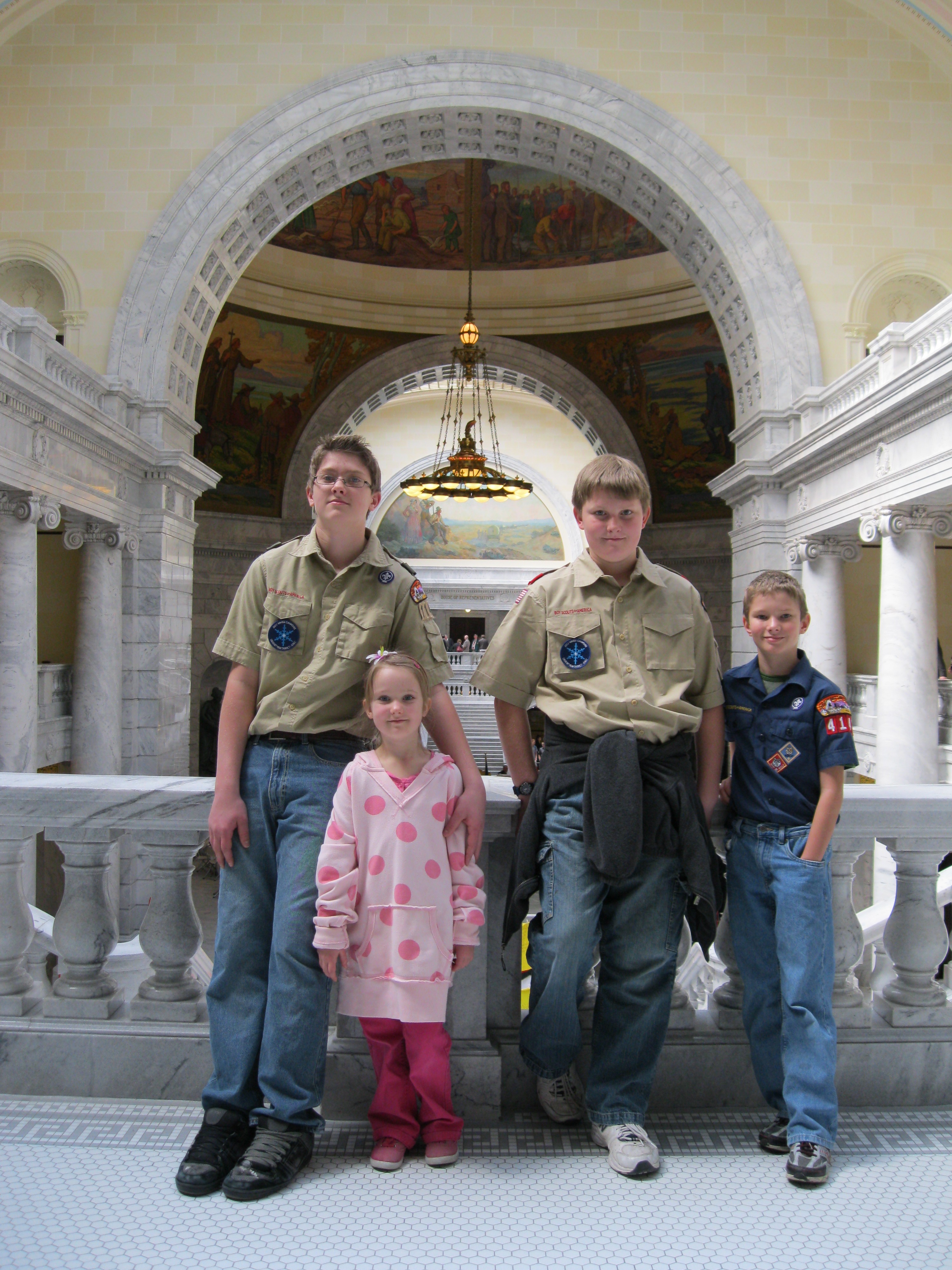
MR. BUTCHER. (chipper and confident) Yes, Your Honor. Ready as always.

JUDGE STONE. That’s a good fellow. Are we ready, Mr. Sullivan?

MR. SULLIVAN. I reckon.

JUDGE STONE. (looking at her elegant watch with affected disinterest) Yes. Well. I suppose you have an opening statement, Mr. Butcher.

MR. BUTCHER. (hesitating at the Judge’s tone) Of course, Your Honor, but a brief one. You see, on the night of July 7th, this very man, sitting at this very table, came home drunk after hours at the Dead Donkey Saloon. (The prosecutor’s voice begins to rise, sounding accusing and contemptuous.) Then this man–no, hardly a man–this scoundrel had the audacity to accuse his wife, (who happens to be a bar maid at the Dead Donkey), of cheating on him. He got in her face, spewing fumey insults. She was understandably disturbed by this animal behavior, pushed him away, and called him a fitting expletive, something resembling an animal’s backside. In vicious response, this barbaric male, a disgrace to the sex–

MR. SULLIVAN. (indignantly) Now hold on there, pardner. Judge—Mayam—“hardly a man” is one thing; “scoundrel” is another thing; but “barbaric male” and “disgrace” are downright nasty. Hundreds of people in this town drink. They’re just havin’ a good time with their buddies. My client here is no barbarian, and I’ll ask the persecutor here to mind his manners.

JUDGE STONE. (patronizingly) You were getting a little out of hand, you know, Mr. Butcher. Continue with your brief opening statement, but please discipline yourself.

MR. BUTCHER. (humbly) Yes, Your Honor. I’m sorry, Your Honor. When I think about this, person, I just become excited, you know, heated, riled. (His voice rising.) My blood begins to boil.

JUDGE STONE. (in a warning tone) Mr. Butcher.

MR. BUTCHER. (sincerely humble) I do apologize, Your Honor; I’ll try really hard to be civil.

JUDGE STONE. You do that. Go on.

MR. BUTCHER. (making an obvious effort to remain calm, but quickly becoming animated) As I was saying, to his wife’s very normal reaction of calling her staggering, screaming husband a “horse’s ass,” he lurched for the closet, whence he withdrew a loaded gun, and waived it around, repeating, “So I’m a horse’s ass, am I?” Then he actually fired the gun. Blasted a hole through the ceiling, right into their bedroom and through their bed. Scared for her life, she grabbed her sweet niece, Vickie–who, thank God, is still with us today–and they ran, barefoot, to the gas station two blocks away to call the police. When the police arrived, was Victor Bull in the house? No. Is he anywhere to be found? No! (Triumphantly.) Ah, but the diligent Officer Ketchum did find him, hiding, pretending to be asleep–

JUDGE STONE. (with authority, to an agitated Mr. Bull) Mr. Bull! Please! You must control yourself. If you cannot sit still in your seat, I shall have the bailiff shackle your legs to it. And no more grunting or moaning noises. In due time you’ll have a chance to tell your side of the story. (To herself.) I’m sure there is one. (Resuming her normal voice.) Are you quite finished, Mr. Butcher?

MR. BUTCHER. Yes, Your Honor. Almost, Your Honor.

JUDGE STONE. (affecting weariness) Very well. Do continue.

MR. BUTCHER. (calmer, but still excited) As I was saying, Your Honor, Officer Ketchum found the defendant hiding, pretending to be asleep. (With absolute conviction.) This man is guilty, Your Honor. Oh is he guilty: guilty as a boot stuck in the cold March mud.

JUDGE STONE. (affecting disinterest) Yes. Well. I’m sure you have an opening statement of your own, Mr. Sullivan.

MR. SULLIVAN. (confidently) Darn right, Mayam. Short and sweet. Say it like it is. It’s all lies, and we’ll prove it to ya’ right shortly. Pretendin’ to be asleep–indeed. I suggest we get on with it.

JUDGE STONE. (sighing) Bailiff Cuff, please have the witnesses stand and be sworn all at once. Saves time, you know.

BAILIFF CUFF. Yes Sir—Ma’am—Your Honor, Sir. (Like a preacher in a tent revival.) All the witnesses arise and repeat after me! Do you most solemnly swear! Upon all that is sacred and holy! To tell the truth! The whole truth! Nothing but the truth! So help you God and his heavenly host?

WITNESSES. (intimidated, in concert) I do.

JUDGE STONE. (whispering as the witnesses answer) Flapper. There’s no host here—just God.

FLAPPER. (obsequious) Right. Sorry, Your Honor. (preaching again) So help you God?

WITNESSES. (hesitating, in staggered response) I do.

FLAPPER. (like a rifle shot) You may be seated!

JUDGE STONE. (commanding, with apparent renewed interest) Call your first witness, Mr. Butcher.

[Check back tomorrow for Scene 2!]

Ceumar

IMG-20160111-WA0011

(Photo by Elizabeth Mills)

Having lived twice in Brazil (including the occasion of my birth), I have come to adore Brazilian music.  Though Brazil boasts many greats, like folk artist Dorival Caymmi and bossa nova pioneer Carlos Antonio Jobim, my favorite Brazilian vocalist is Ceumar.  This lovely woman’s lovely name means Sky and Sea.  Smitten by her silky, perfect voice, and inspired by her versatile repertoire, I wrote her this poem.

CEUMAR

Ceumar:
where ocean touches sky,
blue on blue,
often tender, assuaging,
at times roiling and violent
and black,
where the boundary
always is unclear,
where always I hear
music: of earth, of water,
of heaven.

I messaged this poem to Ceumar through Facebook, and she responded with grace and appreciation.

My favorite of all Ceumar’s songs is “Jabuticaba Madura”, which she composed herself and sings solo while playing acoustic guitar.  (You can watch her on You Tube.)  In the song, Ceumar compares the small, brown Jabuticaba fruit to a lover’s eyes.  Here is my rough translation of the lyrics.  (I apologize for the loss of nuance and rhyme.)

Ripe Jabuticaba fruit,
not yet fallen underfoot,
hovers shining in the tree,
giving me the desire
to know what it is.
Thus are your eyes.
Who can resist
discovering their dark secret.
Let me be that woman.

Let me climb up to you.
Let me choose you.
Let me taste your sweetness.
Let me lose myself in you.
Blackberry, plum, guava,
mango, breadfruit:
none can compare.
Let me give you a small, dark piece
of the fruit of my heart.

In her music, Ceumar combines quintessential Brazilian sounds and rhythms with the instruments and styles of their European and African roots, including the clarinet, mandolin, accordion, and violin.  Her repertoire avoids shallow pop in favor of mature, deep, moving, and fun music and lyrics.  In my opinion, Ceumar is a genius of Brazilian folk and popular music and culture.  And her voice is nothing short of heavenly.

Miracle

20160116_080327

Stansbury Mountain Range, Tooele County, Utah

During a quiet moment I found myself contemplating the nature of miracles. A miracle is often defined as a phenomenon that cannot be explained by the known laws of nature, and often carries a religious or spiritual aspect. To me, a miracle is anything truly joyous and beautiful, like love, acceptance, natural beauty, a smile. These miracles raise our countenance above the cruelty and disappointment of our mortal existence.

Inspired by my daughter, Erin (23), I keep a daily miracle journal. At the end of each day, sitting bedside, I search the day for miracles and jot them down. Hyrum’s cello recital. Hannah’s painting. Brian’s blog post. Laura’s straight As. Erin’s love. Caleb’s 15 points in a basketball game. John’s V6 bouldering problem. Smiles. Kindness. Laughter. Sunsets. Waves crashing on sand. Birds and butterflies. A peaceful sleep. Forgiveness.

I wrote this poem to convey, through images, what a miracle is to me. I encourage you to examine your life for the miracles that are surely there, every day. Seek them, and you will find them, and be transformed by them.

MIRACLE

the small
the hidden
the barely seen

what brings joy
what stretches
what teaches

a brush with the senses
an immersion
a whisper

relief
healing
denouement

my desire to forgive
my yearning to touch another
my love

your forgiveness
your reaching toward
your love

a butterfly’s artwork wings
a bird’s song
a giggling brook

fog hovering pink under sunrise
antlers, alert, twisting above brush
owl’s soundless flight

your whisper
your touch
unconditional

Picking Up Nails

20160121_180322

Over the years I have made a habit of picking up nails, screws, bolts, and other sharp metal bits from the streets and gutters as I walk during my lunch break.  I like to think that if I pick up this one nail, I will save someone the trouble of a punctured car tire.  I hope that, in turn, the driver is spared the cascade of negative emotions that might otherwise radiate out into his world.  None the wiser for being saved this trouble, I hope that the driver will be more inclined toward kindness and gentleness.  The pictured jar is full of the nails and screws I have picked up on my walks.  I am filling a second jar.

20160120_203249

As an assistant scoutmaster for a Boy Scout National Jamboree troop, both in 2013 and 2017, my Council contingent leader, Craig, gave me and the other scoutmasters a Jamboree medallion.  He challenged us to carry it in out pocket every day to remind us of the Scout Slogan: Do a Good Turn Daily.  Putting the coin in my pocket each morning starts the challenge. Feeling the coin in my pocket all day long is my constant reminder to be kind.  Retiring it at night gives me the opportunity for reflection upon my deeds and the state of my heart.  Even if it was just a smile, I have done my good turn.  I resolutely believe that a simple smile, or a picked up nail, can improve our world.  I hope you enjoy this poem.  Pick up a nail today.

I PICKED UP A NAIL

I picked up a nail
from the street I walked upon,
and changed the world:
a tire will remain inflated;
a vehicle will stay true to its course;
a curse will remain unuttered;
a hand will find restraint;
a smile will grace one’s face;
a prayer, at day’s end, will still ascend;
a heart will incline to humble gratitude;
a child will feel the gentleness of a father’s forehead kiss;
a child will hear the soft tones of a mother’s good-night wish.
I always pick up nails
from the streets I walk upon.

IMG_0356

Me at the 2013 Jamboree.

Prayer

20160118_222315

Prayer Rock by Laura Baker

Prayer has never come easy for me.  I avoid it, put it off, wander in my thoughts, cut it short.  Yet, I pray every day, because I have been told to, all my life.  It’s what I should do, they said.  I also pray because I want to believe that someone is listening and caring and responding.  But really I pray because I cannot deny a subtle, loving presence that abides and sustains when I am prayerful.  Prayerful through formal kneeling prayers as well as daily mindfulness.

For a family activity, we had each child choose a special rock from our faux riverbed, a rock to paint.  Laura (now 20) painted this rock when she was a young girl.  She gave it to me: a present for dad.  I keep it on my nightstand where I see it every morning and every night.  I call it my prayer rock.  I reminds me to bend my knee and bow my head, in humility, in gratitude, in desperate supplication, in recognition of the divine.

I offer to you two short poems on prayer.  Fitful, imperfect, but sincere prayer.

YES, I PRAY

Do you pray morning and night? they asked.

I wondered, Do I?

I pray all the day long.
My life is a prayer.
Living is a prayer–
a sacred expression of dreams, frustrations, loves, and straining efforts;
a reaching out to the One who can reveal the mysteries hidden deep within;
a cry of faith and despair, of struggle and the hope of victory;
an ever truer reconciliation of heaven and earth.

Yes, I pray.

ENDURING

Father–
I am here, and
I am listening.

Climbing Wall

20151020_181843

For my son John’s 17th birthday he asked me to help him engineer and construct a climbing wall in our garage.  That was the gift he wanted from me, his father.  I let out a heavy sigh, knowing, as a lawyer, my engineering limitations.  I write contracts and ordinances.  I don’t build things.  But I couldn’t disappoint him.  Testing his commitment to project, I promised I would help him if he did all the research.  He spent hours on the internet compiling a book of various designs and techniques.  He had done his part, so now it was time to do mine.

We carefully drew out our plans, bought the materials, and got to work.  The first step was to assemble a kick plate and wall foundation to attach to and cover the garage footing.

20141101_165142

20141101_165207

20141101_172731

The most difficult step was designing two wall sections, the first at 20-degrees and the second at 40-degrees.  We began this process by cutting angled joists, the climbing wall’s ribs, if you will.

20141108_104419

20141107_154226

The angled joists rest firmly on the kick plate/foundation wall, bearing much of the climbing wall’s weight.  This low wall is also where the climbing starts, with the climber in a sitting position.

20141108_104351

The angled joists were also secured to ceiling braces, screwed into the garage roof trusses.

20141114_172738

My good friend Paul (who is an engineer) instructed me that roof trusses are designed to withstand snow loads bearing down from above, not weight pulling down from below.  So I climbed up into the garage attic, crawled through fiberglass, and braced the roof trusses with 2x4s.  We also insert a portable vertical 4×4 post whenever anyone climbers, just to be sure the roof won’t fall in on the climbers.

Next came assembling the climbing wall surface.  Before we mounted the 3/4-inch plywood, John drilled numerous holes and inserted threaded T-nuts, into which the climbing hold would later be secured.

20141111_164221

With the holes drilled and the T-nuts set, we attached the wall to the angled joists.

20141115_143244

(Note the antiques with which I decorated my garage, several made by or belonging to my great-grandfather Nelson Baker.)

20141115_161323

20141129_120056

With the most difficult work done, it was time for John to have fun planning his bouldering “problems” and setting the holds.  The climber completes the “problem” by touching the top of the climbing wall.

20141228_123034

2015-08-20 John

In this photograph, John is hanging from holds on a box he built on his own to add to the climbing’s wall’s challenge.  He also built the pyramid.

20150911_180427

Note the crash pads underneath the climber.  Crash pads are mandatory.  These are surplus martial arts mats, to which we add several foam sleeping pads.  (John is a third-degree taekwondo blackbelt.)

Weeks later, John removed all the holds and painted his climbing wall, adding sand to the paint to add texture to the wall.  He used paint scraps left over from previous house painting projects.  Tapes of various colors mark the different bouldering “problems” or routes.

20151020_181834

Building this climbing wall with my son John, though intimidating to me at first, turned out to be a most meaningful experience for us both.  We enjoyed working through the design and construction challenges together.  John learned that he can dream and make his dreams come true.  He, his brothers Caleb and Hyrum, and his friends spend hours in my garage bouldering through the various “problems” John has set.  Just one year after completing his climbing wall, John off on a month-long NOLS (National Outdoor Leadership School) course learning real-life leadership and climbing skills.  He dreams of following in the footsteps of climbing heroes Alex Honnold and Chris Sharma.  John is pictured with Chris here.

John and Chris Sharma

*  *  *

The week before Christmas 2015, Caleb (16, also a taekwondo blackbelt and climbing enthusiast) whispered to me that he wanted to add to John’s climbing wall by building a “campus board” as a Christmas present for his brother John (now 18).  (Another sigh from dad.)  A campus board is an angleled wall with horizontal rungs cut for hanging and climbing, to strengthen the fingers, hands, and indeed the whole upper body.  Caleb designed it, and we set to work.

20151226_175045

Caleb used his great-great-grandfather Baker’s plane to shave off one corner of the 2×4 rungs so that they would be parallel with the ground, or angled slightly inward, making it possible to grasp with the fingertips.  I felt proud of Caleb for working so hard to bring his holiday plan to fruition, but mostly for wanting to make a meaningful Christmas gift for his brother.

20151226_175121

These are experiences and memories that we will always share as father and sons.