Tag Archives: Essay

Courage at Twilight: Change in the Air

Some people love change.  The newness of changed circumstances stimulates and excites them.  Others loathe change, which can frighten and overwhelm.  I tend toward the latter, though I am reconciled to the truth that change is both inevitable and frequent.  One reality on which both groups agree is that change disrupts.  Our perspective tells us whether that disruption is good or bad, positive or negative, welcome or to be shunned.  I also have learned the truth that change gives us the opportunity to reexamine who we are, what we do, and why we do it.  Why do I wash the laundry on Mondays and eat an enormous salad on Thursdays and only vacuum once a month?  Why did I eat my solitary dinners in front of the television?  Changed circumstances provide an opportunity to revise routines, and to discern and maintain the essential while escaping from old ruts.  Living with Mom and Dad, after six years alone, I no longer eat my dinner in front of the television screen—instead, I sit at the kitchen table and talk with Mom and Dad about the day.  Two habits I am working to strengthen are prayer to the Divine and time reading holy Writ.  Though I recognize the supernal value of both, I have always struggled to follow spiritual habits, maintaining discipline with stubborn irregularity.  My recent move disrupted all of my routines, from the side of the bed I curl up on to my practice of prayer.  I sense how important it is for me not to lose whatever little discipline I had harnessed before.  My success has been spotty.  But I will keep working at it.  For example, I read today about the Word in John chapter 1.

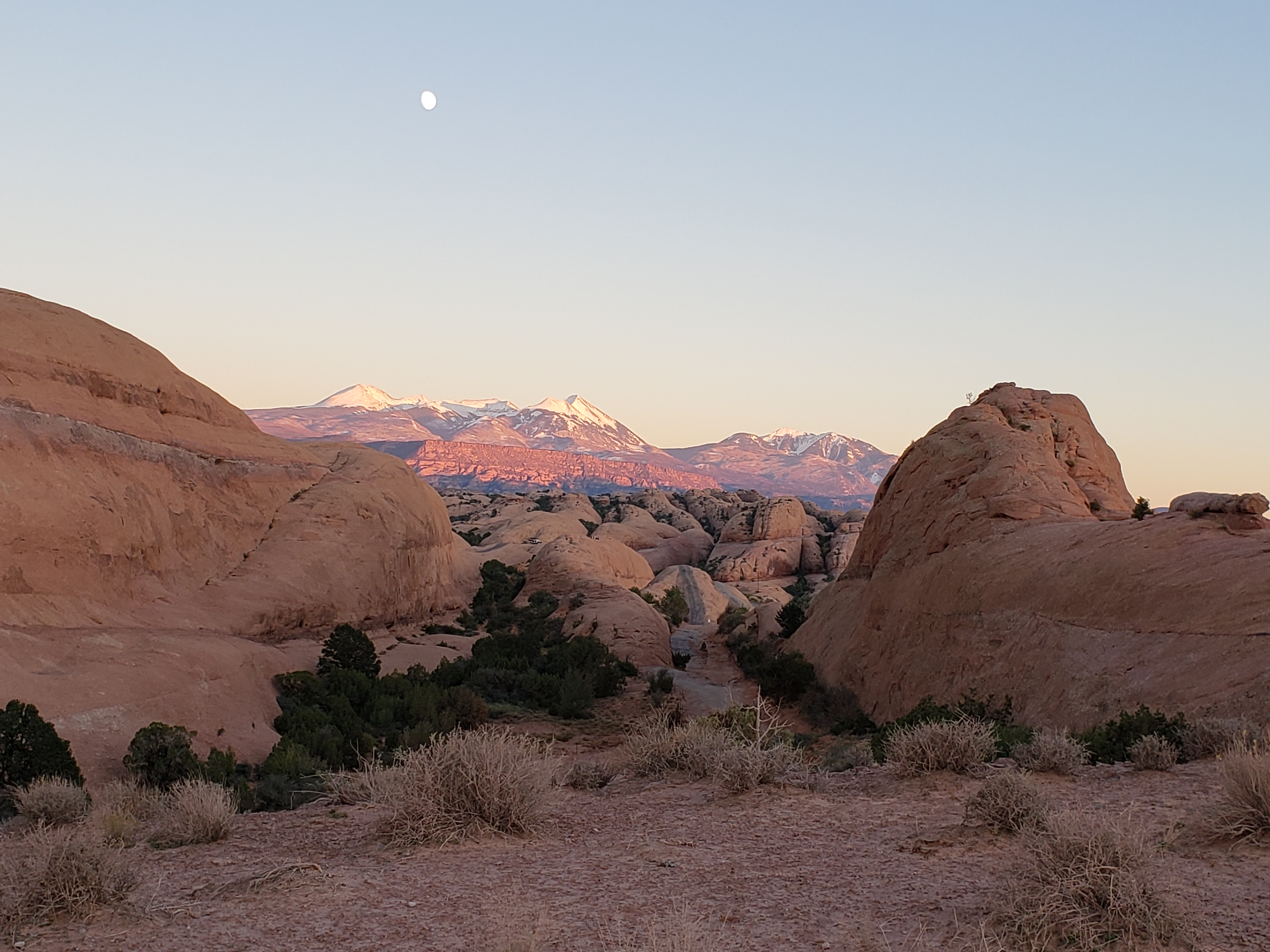
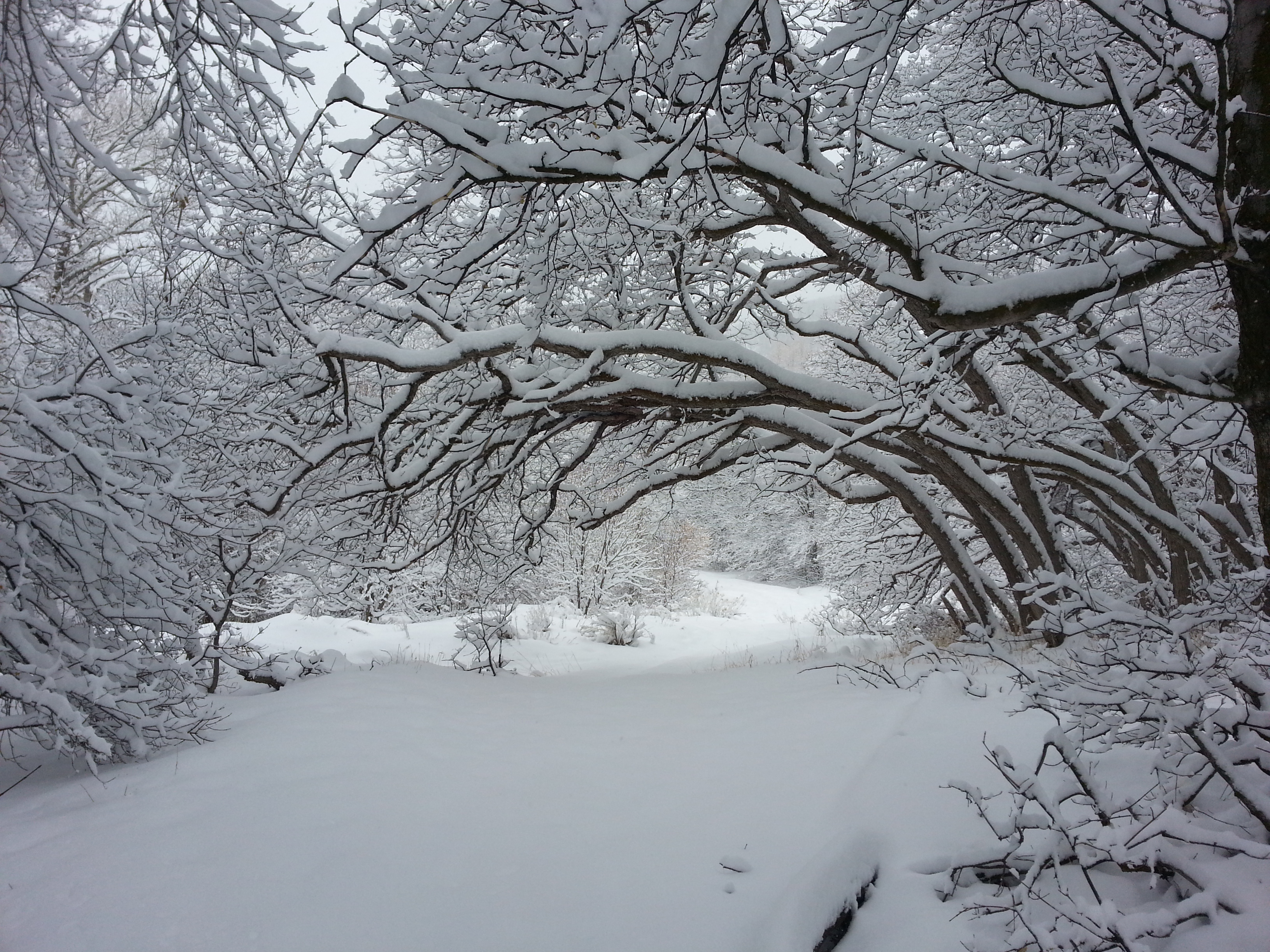
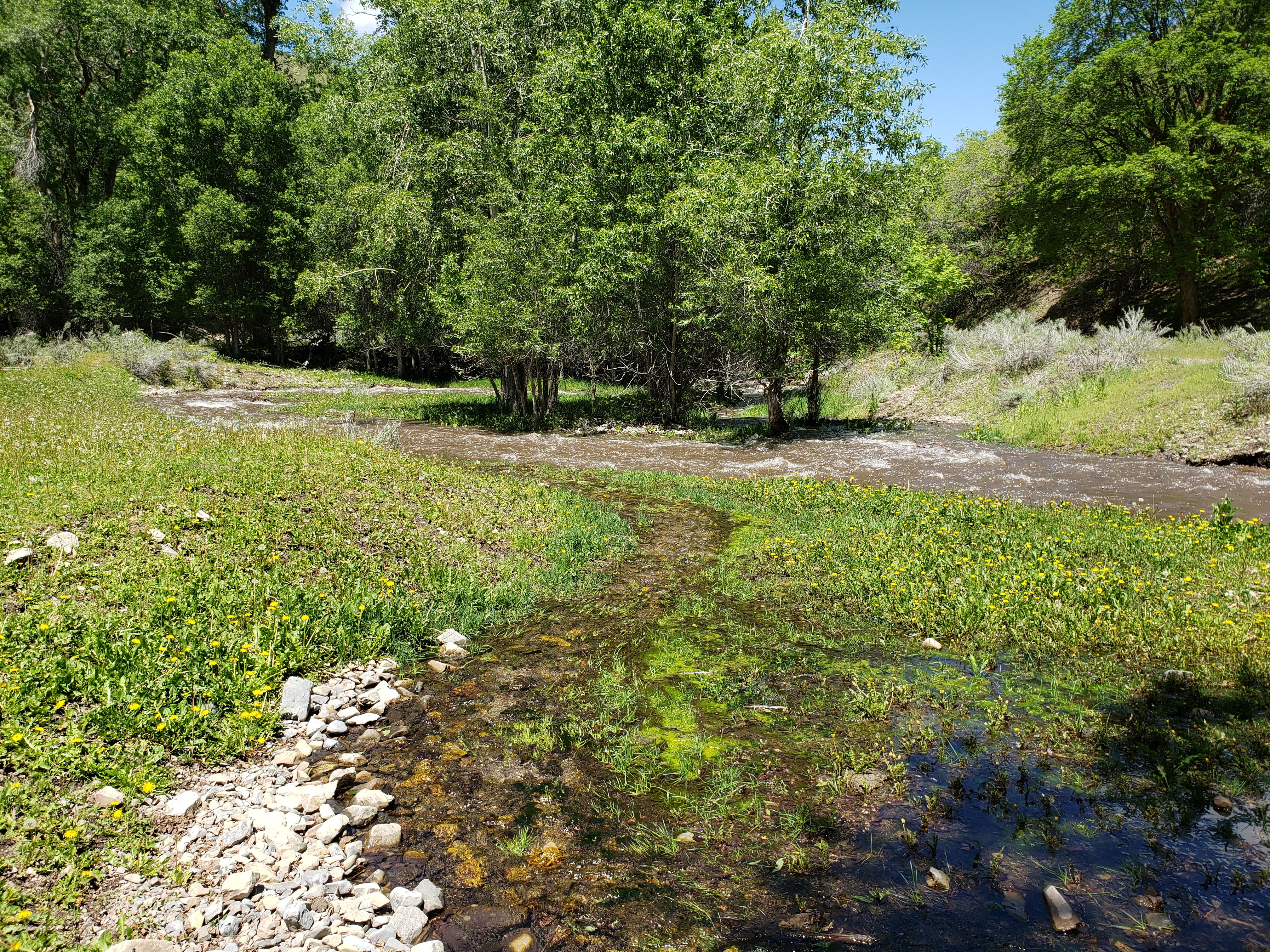
(Photo: Slickrock country in Moab, Utah.)

Courage at Twilight: Giving Tuesday

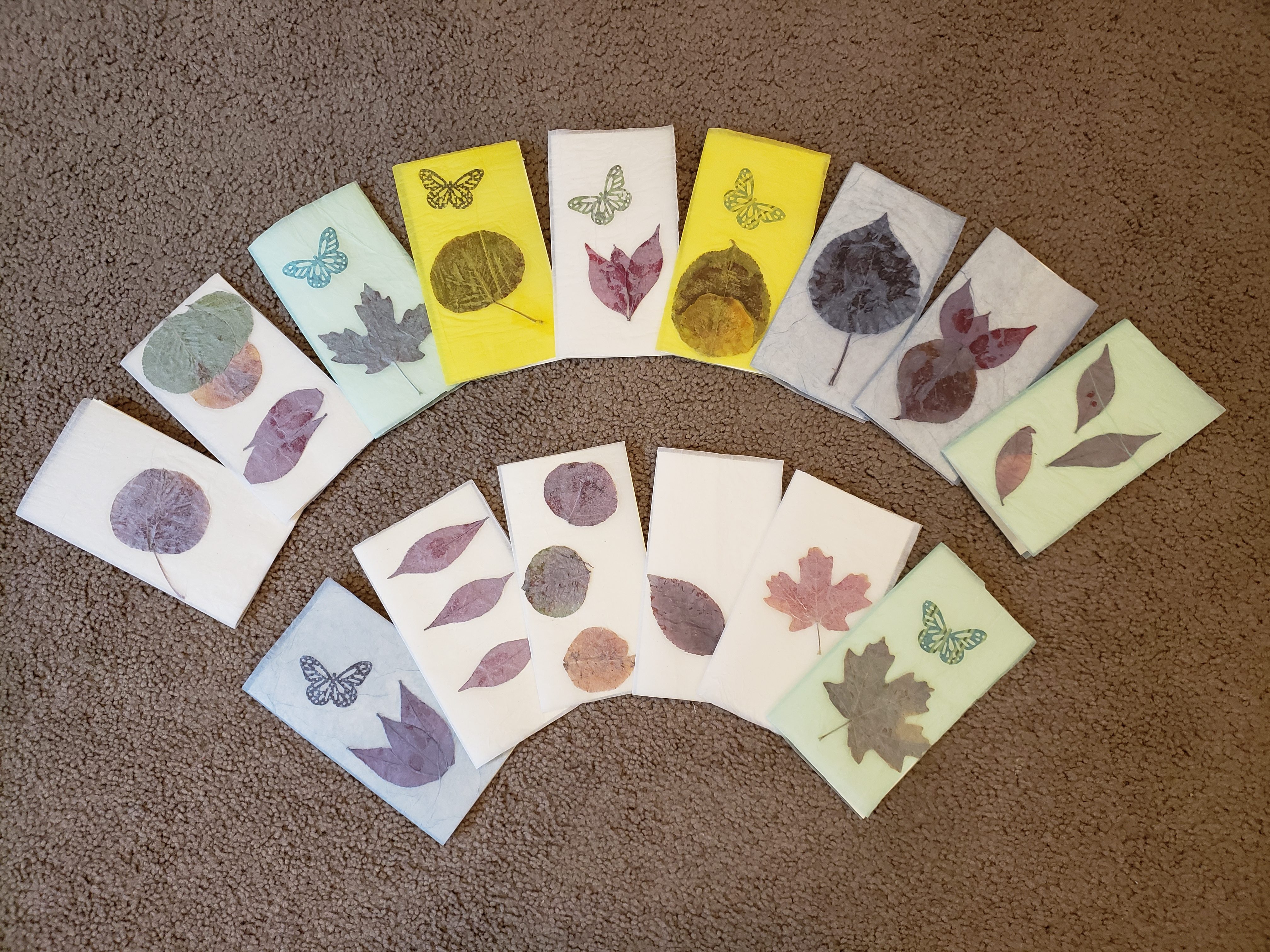
An excellent church sermon, on the subject of serving humankind in small and simple ways, prompted me to visit the service clearinghouse JustServe.org.  I browsed through hundreds of worthy service opportunities—everything from being pen pals with prison inmates to assembling hygiene kits to indexing gravestone photographs to tutoring young people in English and Math—and settled on a small and simple project I felt I could handle.  The project was to make greeting cards with the message You Are Loved decorating the inside.  I have made cards from pressed leaves and flower petals since my Grandmother Dorothy taught me decades ago.  Against her office walls leaned four-foot-tall stacks of heavy books pressing thousands of slowly drying leaves and petals.  The card-making process involves gluing pressed flowers and other decorations, like paper butterflies, to wax paper, gluing colored tissue paper to that, drying, ironing to melt the wax into the tissue, cutting, and folding.  Into the card I insert a blank paper bifold, on which I write a personal message for upcoming birthdays and anniversaries.  I love making cards because, while far from being an artist, I can make something beautiful to brighten someone’s day.  Equally important, making cards connects me to memories of my dear grandmother.  (For more photos and detailed instructions, see my essays Cards of Leaves and Petals and Grandma’s Pressed-Leaf Greeting Cards.)  My sisters have supplied me with abundant pressed leaves and flowers (from Carolyn) and paper cutouts of birds and butterflies (from Megan).  At the extended family Thanksgiving celebration, after our dinner, I enlisted family members to decorate the card inserts with colored markers, including the message You Are Loved.  I explained that the cards would be included in kits delivered to refugees around the world.  Upon opening the kits, the recipients will be greeted with the generic but safe and loving message: You Are Loved.  With those refugees in mind, my family members, from my two-year-old granddaughter Lila to my octogenarian parents, enjoyed personalizing their cards.  Only after Mom and I delivered the cards to Lifting Hands International, did I realize that today is Giving Tuesday.  That coincidence brought me happiness.  Thoughts of refugees being cheered, even if momentarily, by a loving personalized artistic message, brought me happiness.  In fact, I find that helping others always brings happiness.  Why don’t I do it more often?  To be sure, our service was among the smallest and simplest—no grant accomplishment.  But every good deed, no matter how miniscule, even when unnoticed, contributes to the world’s goodness, of which there can never be too much.  I wonder what small and simple gift of service you may enjoy offering others?  After making 60 labor-intensive cards, I need a break from card-making.  But I am sure I will make more, maybe for Giving Tuesday 2022.  Perhaps sooner.
Roger Baker is a career municipal attorney and hobby writer.  He is the author of Rabbit Lane: Memoir of a Country Road and A Time and A Season.  Rabbit Lane tells the true life story of an obscure farm road and its power to transform the human spirit.  A Time and A Season gathers Roger’s poems from 2015-2020, together with the stories of their births.  The books are available in print and for Kindle at Amazon.  See Rabbit Lane reviewed in Words and Pictures.

Courage at Twilight: In Which Roger Finds the Courage to Cook Julia Child’s Delectable Boeuf Bourguignon

Alone with Mom and Dad on Thanksgiving, I determined to make a nice meal (that was not a turkey), and found my courage to try Julia Child’s recipe for Boeuf Bourguignon (beef stewed in red wine).  The recipe had intimidated me for a long time, because of the expensive ingredients (quality cut of beef, bottle of Bordeaux) and the many involved steps that have to come together.  Boil and brown the bacon sticks.  Brown the beef cubes.  Sauté the sliced carrots and onions.  Pour in the red wine and broth.  Simmer in the oven for three hours while sautéing small whole onions and quartered mushrooms to add later.  “Do not crowd the mushrooms,” Julia charged.  The last step was to boil the wine and broth down to a thick gravy to pour over the platter of beef, bacon, onions, carrots, and mushrooms.  To my wonder and delight, the meal was a smashing succulent success.  I felt quite proud of myself as the three of us chewed with delighted mmmms and ahhhhs.  How disappointing to get full so fast!  I will not prepare this dish often, but the four-hour cook time was worth the happy result as we quietly concluded our Thanksgiving Day with our meal of French Boeuf Bourguignon.

Courage at Twilight: A Drive Down Memory Lane

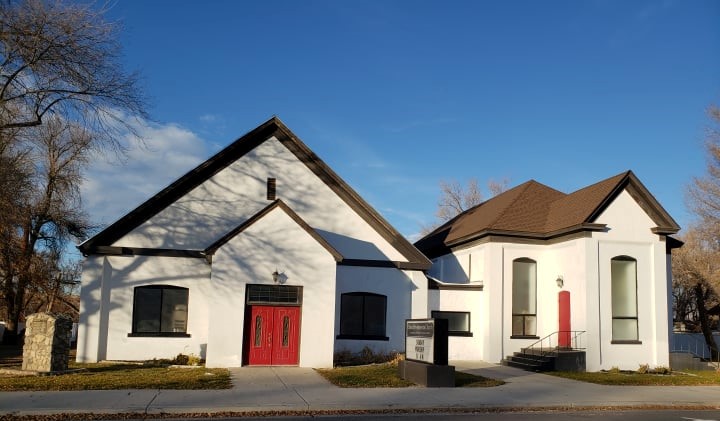
We took two drives in two days, Mom, Dad, and me—I drove the faithful Suburban.  The first day we drove into the hills, into the gated neighborhoods with the big houses, which grew bigger and fancier with altitude.  Several houses were enormous, of the 20,000 square-foot variety, with turrets and weather vanes and wrought iron fences and security cameras.  One resembled an English country mansion estate.  We felt distinctly uncomfortable at the thought of all the money poured into these lavish houses.  We are not wealthy people, and did not know how to relate to such wealth.  The next day we drove across the valley to find Mom’s maternal grandparents’ house.  We found it in a rundown part of town, with century-old match-box houses, tiny, unkempt, honest, 20 little houses crammed into a single mansion lot.  I remember visiting great-grandpa James Evans—I was four.  He scooped Neapolitan ice cream into cones from his top-loaded deep freeze.  He walked stooped with age, humble but dignified, showing me his little cherry orchard with the concrete ditches ladling irrigation water to each dwarf tree.  More than 50 years after that visit, I snapped a photo of his little old house.  Around the corner was the Pleasant Green church where my grandfather Wallace first met my grandmother Dorothy.  He was a guest minister, and she played the organ.  After church, Wally asked Dorothy if he could drive her home, and she accepted.  After he dropped her off, she got a ride back to the church so she could take her car home.  I snapped a photo of the church, and we drove away from history and memory back into our comfortable present, far across the valley.

Above: the Church where Wally met Dorothy.


Monument to the Pleasant Green church.


Grandpa Evans’ little old house.

Courage at Twilight: Stringing Christmas Lights

While I cooked dinner, Dad dressed in his gray winter coat and his pom-pommed snow hat and stumbled outside with a bag of rolled up strings of Christmas lights and a hot glue gun, a bag of glue sticks in his pocket.  The temperature dipped into the low 30s.  I wondered at the hot glue gun, thinking hot glue would not work well in cold temperatures.  After near an hour, I thought I had better check on him, to make sure he wasn’t collapsed and freezing.  But there he was, painstakingly gluing the light string to the brick every six inches.  He was nearly finished, gluing the last six feet to the wall.  “I didn’t think the hot glue would work on cold brick,” I commented.  “Actually, the glue works better in the cold, because it sets faster, and I can move on to the next spot.”  Just then he let out an “Argghh!!” as he pressed a fingertip into a dollop of hot glue.  “I seem to be gluing my fingers as much as the lights!” he cursed.  I reached in and held down each newly glued spot until the glue hardened, while he moved ahead to the next.  I dipped my finger into the hot glue myself, and I rubbed furiously against the cold brick to wipe the burning glue off.  “I see what you mean,” I commiserated.  With the last section in place, we extricated ourselves from the tangled bushes and stood back to observe.  “You did a great job, Dad,” I complimented.  The white LED lights climbed one end of the brick wall, ran along its adorned top, and ended at the base of the other end.  The next day we wrapped red and green and amber lights around the boxwood bushes.  “Let’s get your mom,” Dad enthused as the sun sank and the cold set in.  Mom was duly impressed, “You men did a great job with the lights!”  Every evening, Dad flips a switch by the front door, contended at the cheery beauty at the corner of the front yard.

Courage at Twilight: Grocery Shopping, A Sequel

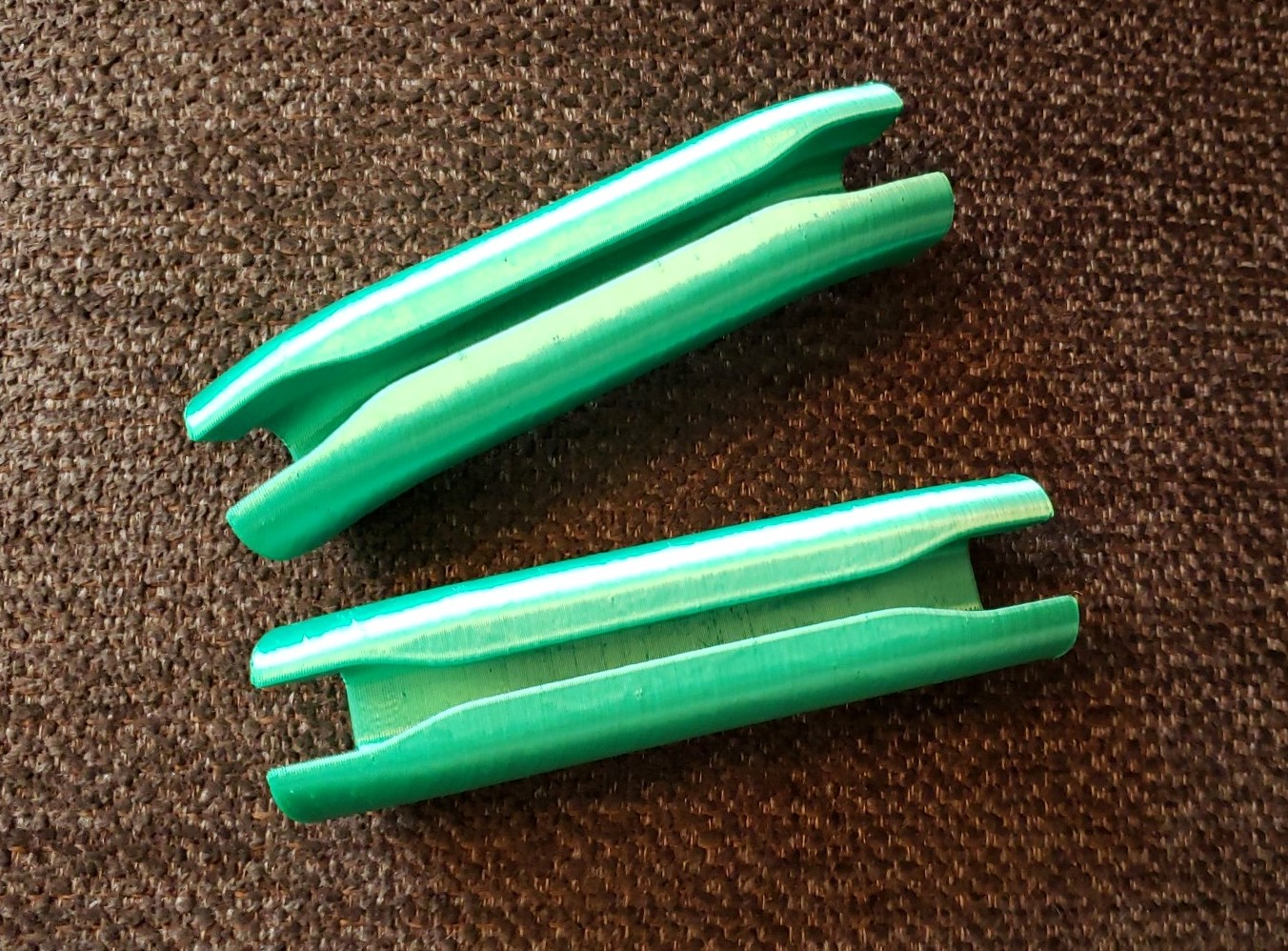
I feel so anxious in the grocery store with Mom and Dad.  In the produce section, I assess the fruits and vegetables with one eye even as I monitor Dad’s quickly waning strength with the other, tense and ready to catch him if he slumps.  While Dad waits exhausted and uncomfortable at a deli table, I rush from aisle to aisle scratching items off the shopping list.  I cannot suggest he stay home, and should not.  This is his life, and he enjoys grocery shopping.  If he wants to come with me, he should come.  It is healthy for him to get out of the house, to see the abundant beautiful produce, to get excited about beer-battered cod and grilled bratwurst and baking salmon on Sunday.  But he pays a steep price over and above the grocery bill.  “I’m done, Rog,” he whispered as we stood in the check-out lane.  “I hope I can make it to the car.”  Back at home, I carry eight plastic shopping bags in each hand, thanks to the handles Connor made on his 3D printer.  Mom and I put the groceries away, and stuff the plastic grocery sacks into a larger bag to be recycled.  Wiped out and grateful, they sink into their recliners with their books and newspapers—or the TV remote—and their snacks and drinks.  This is a perfect time for me again to urge Dad, captive to fatigue and comfort, to hydrate.


(Grocery bag carriers printed by my son-in-law, Connor.)

Courage at Twilight: Moments of Self-Doubt

In a prolonged moment of self-doubt about my abilities and contributions, I remarked to my brother Steven about my “stupid little blog posts.” He quickly chided me, gently, and urged me to have compassion for myself.  He assured me my stories are beautiful and real, and he loves reading them.  My four sisters have given me similar encouragement.  So, I trek daily ahead.  Mom has commented to me, pleased, but humble, “Your blog posts are kind of like my biography.”  She is right.  In fact, I tag every post with “Memoir.”  I am telling a story, painting vignettes, writing a family memoir, slowly, one day at a time.  All the stories are true and real, and I hope they approach the kind praise of “beautiful.”  Many of the world’s stories are dark and painful—still, they can be instructive and even revelatory.  But, except for confessing my mistakes (like, not investigating a bang! in Mom’s bathroom when she lost consciousness in the shower on a Sunday morning before church), I choose to tell stories that are both real and redeeming.  Steven is right to encourage me to have compassion for my own story.  I wondered today, Why is the First Great Commandment to love God with all our heart?  It cannot be that God needs the fickle adulation of seven billion squabbling humans.  Rather, I believe that by loving God, we discover the capacity and desire to love others, including ourselves.  So, I will try to believe in myself.  I certainly believe in Mom and Dad: their lives and characters make telling heartening stories an easy exercise.  Mom and Dad are endearing in their quotidian lives, smiling at each other across the distance between recliners, patting the backs of each other’s hands, reminding each other to take their medicine and to put in their hearing aids.  They exemplify.  They edify.  They love and they struggle.  They serve with such generosity.  They are virtuous.  They have value, and their stories deserve to be preserved.  I am so grateful for Mom and Dad.  I am telling their stories, and learning to love them more deeply day after day.

Courage at Twilight: Overpriced Electrician

After having a new roof put on the house, and the old attic fan removed, Mom called an electrician to pull the absent fan’s switch and wiring.  The job took three hours, for some reason, and involved no electrical parts.  But the bill seemed exorbitant, and I believed the electrician had taken advantage of my aged parents.  And so, contrary to my peacemaking avoidant nature, I called the company to complain, or rather, to “inquire.”  The intransigent manager rebuffed my suggestion we had been overbilled, offering an incoherent rambling justification—and I gave up the fight.  I reported the conversation to Dad who, to my surprise, grew cross.  Pointing to himself, he proclaimed, “I will decide which battles I want to fight and which battles I do not want to fight.”  The implication was perfectly clear: I was not to intervene uninvited in his affairs.  Fair enough, I thought.  I do not mean to fight his battles, and I do not want to fight his battles.  In fact, I abhor contention, and have a hard enough time fighting my own battles.  I appease and apologize to my adversary even as I timidly brandish the sword.  I did explain to Dad, however, and trying not to sound defensive, that I am here to help him and Mom—that is my purpose—and that I intend to say something when I see people taking advantage of them.  Loath to fight, yet I will defend my family.  Neither of us said another word about the subject.  But I sensed the boundaries had shifted and resettled, appropriately.


(Image by Clker-Free-Vector-Images from Pixabay)

Courage at Twilight: Aged Independence

Burger King to sell meat-free 'Impossible Whopper' nationwide - New York  Daily News

In the last several weeks, Mom and Dad have gone several places without me: to the dentist, to the audiologist, to the dermatologist to have a bothersome cyst removed, to the grocery store, to the post office.  I felt a bit glum being deprived of the opportunity to be useful and helpful, so show how needed I am, and to earn my keep.  But I arrested myself with a self-deprecating, How silly of you!  If Mom and Dad want to go places by themselves, and can do so safely, why shouldn’t they?  They do not need a third wheel on every outing.  In fact, any opportunity for them to be independent is healthy.  They do want to be unnecessarily dependent upon me, and do not want that either.  I should not try to soothe my sense of self-importance by inserting myself where I am not necessary.  Despite some lingering worries about their safety on the road, I am happy to see them go off on their own to do this or that.  I am not jealous.  If I am available, I can offer to go along, just to make the outing a bit easier.  In the meantime, it is fun to see them drive off to Burger King for Impossible Whoppers, fries, and diet Cokes.


(Image from NY Daily News.  Used pursuant to the Fair Use doctrine.)

Courage at Twilight: Visit to the Dentist

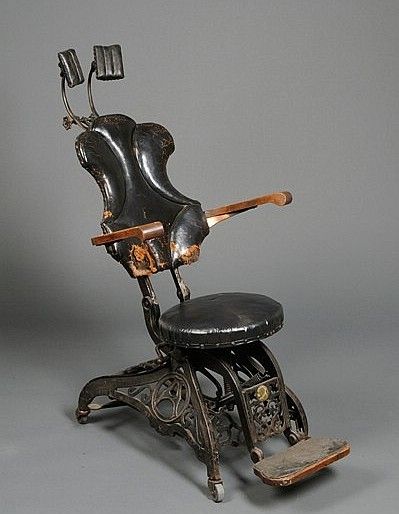
Mom and Dad drove themselves to the dentist office for their annual checkups and cleanings. They came home happy to report that they had no cavities or other problems.  Dad’s first visit to the dentist was at age 15, circa 1951, by which time several teeth were in bad shape.  His mother sent him to the dentist with a $5 bill, which the dentist took, along with four teeth.  “Going to the dentist was a luxury,” he explained, a luxury his single mother, emptying waste baskets at night in the Kearns Building downtown Salt Lake City, could not afford.  More than a decade later, when he had a job and dental insurance, “Doc” Nicholas made bridges to fill the gaps—implants weren’t a thing.  Mom took her first trip to the dentist at age seven, by which time she had several large cavities to be filled.  She remembers the agony of the dentist grinding for what seemed forever with a slow rotary tool, and no Novocain.  She had to just sit there, a prisoner in the chair, and suffer through it—what was the alternative?  Thereafter, Mom was taken to dear Uncle Harvey, a new dentist who always smiled and laughed and made you feel good about life.  Today, Mom and Dad came home cavity-free and in good spirits.  Mom reported how kind the hygienist staff were on this visit.  “Sometimes they just jab you, and it hurts, but my hygienist today was so nice and gentle.”  Next month it is my turn to see the dreaded dentist.  I wish “Doc” were still around.


(Image from Pinterest.  Used pursuant to the Fair Use doctrine.)

Courage at Twilight: Raking Fall Leaves

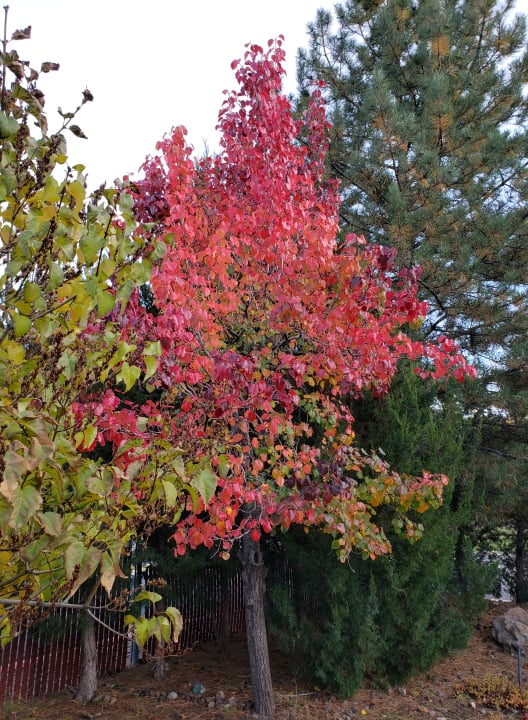
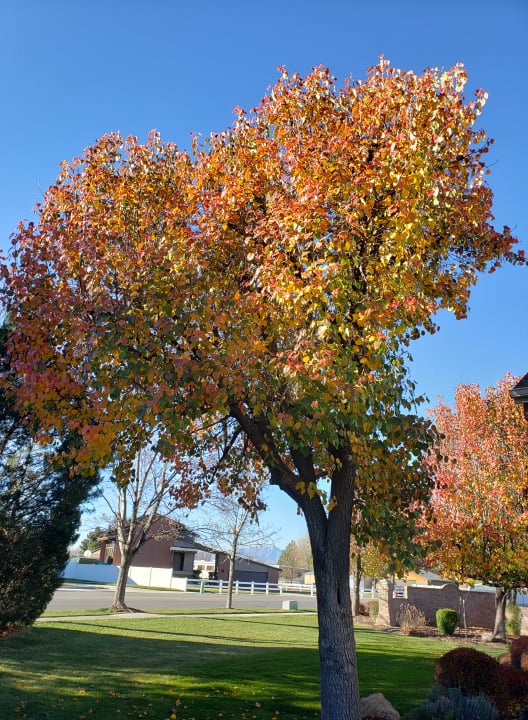
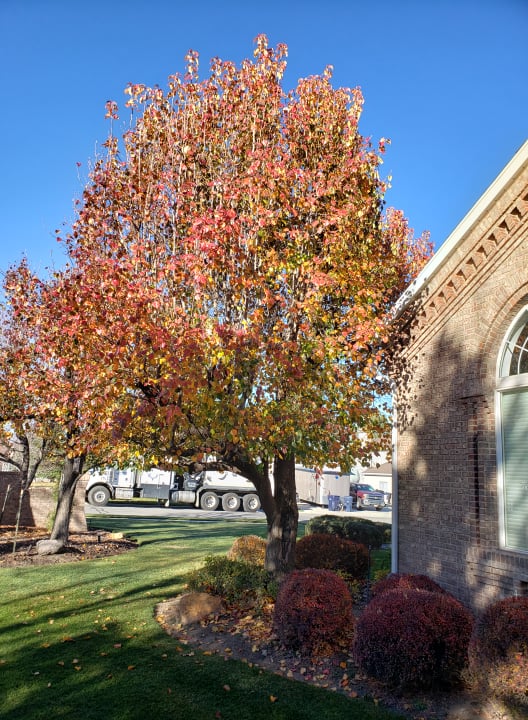
The best leaf rakers Mom and Dad had for our New Jersey yard were us children—six of us.  (Mom and Dad helped, of course.)  With half an acre to rake, we got after it, making huge piles of walnut, willow, oak, sumac, and maple leaves to jump and roll around in, before we piled them in the garden for compost.  These days, Dad does not bother with rakes, except to pull leaves out of the bushes and tight corners.  Instead, he mounts his riding mower and sucks up the maple and sweetgum and beautiful red pear leaves into the two rear-mounted canvas bags.  This technique saves Dad from the impossibly fatiguing task of raking, and gives him the pleasure of riding his mower long into the cold season, when the grass has stopped growing.  With no vegetable garden to nourish, the bagged leaves find their way to the landfill.

Courage at Twilight: Baked Birthday Salmon

For Mom’s birthday dinner, Dad baked his specialty: salmon.  He lined a baking dish with aluminum foil, sprayed on a little oil, placed the fish, and sprinkled on lemon pepper and salt.  I added a generous dollop of butter on top of each piece.  Into the oven for 45 minutes, and out it came, moist and flaky.  (I’m afraid I tore up one piece checking if it were done.)  He added steamed asparagus with butter and salt, and small potatoes sautéed in more butter and salt, with herbs.  Such a dinner is a sublime end to a long Sabbath fast, a cheerful gathering of parents and child, a turning of the day’s stresses into a satisfied sigh, a triumph of taste, and a happy birthday feast.  As far as I am concerned, Dad can bake salmon any day he likes, birthday or no.

Courage at Twilight: Waking to Light

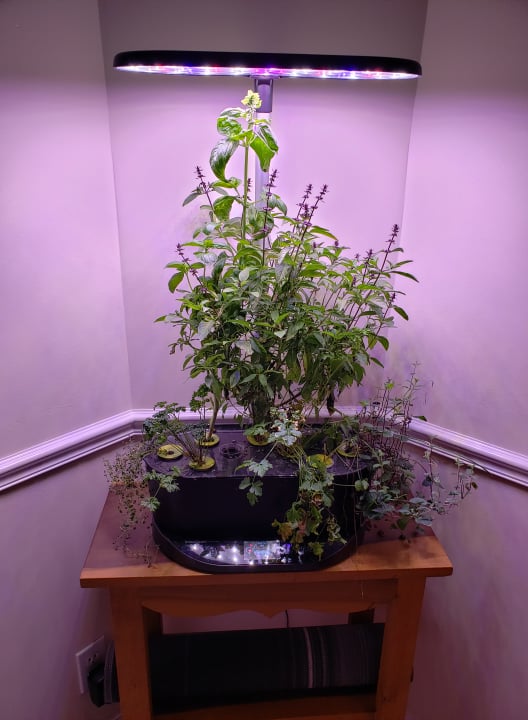
When I lived alone in my apartment, I kept the blinds twisted shut, not wanting the hundreds of complex residents to peer into my private space.  But the apartment stayed very dark.  And cold, because I turned down the heat to save energy and money.  Wrapped in blankets, I could not wake up in the morning without the end table lamp on a timer.  My phone alarm could not wake me, but the lightbulb in my face could, and did.  In my new second-story bedroom, I kept the blinds open, and awoke easily to the early summer-morning light.  With the approach of winter, the morning skies are dark.  But my Aerogarden lights snap on at 6:30, as does my end-table lamp.  (Confession: I have a different weekend setting for my lamps.)  Sleeping late simply is not possible with those lights blaring.  I can detect the difference in my mood between the cavernous apartment and my new quarters, bright with natural and artificial light.  I not only see the light with my eyes, but feel lighter inside.  Mom and Dad, too, have noticed the early-morning light from my room.  On separate evenings, they both mentioned with chuckles how my lights woke them up and they shuffled over to shut my door.  They love light, and open their plantation blinds wide to fill the house with sunshine.  Light remains largely a mystery to scientists, even though Newton and Einstein and others revealed much about light’s nature and properties.  And light is the subject of wonder and power to prophets and poets, who liken light to intellectual enlightenment and spiritual awakening.  The scripture of my Church equates light and truth, and explains: That which is of God is light.  Light proceeds forth from the presence of God to fill the immensity of space.  They that receive light, and continue in God, receive more light, and that light grows brighter and brighter in them until the perfect day.  I think it is a beautiful notion that we can allow light and truth into our souls, and can grow in light until we become creatures of light and truth, with no darkness or malice or guile.  I want to fill my life with light—except in the middle of the night.

Courage at Twilight: NCIS for Lunch

NCIS: Naval Criminal Investigative Service: The Eighteenth Season (DVD)

Mom’s lunch go-to television program is NCIS: Naval Criminal Investigation Service.  She owns many years of the 19-year series on DVD.  I, on the other hand, cannot watch.  By the nature of the show, it always boasts a dead body, and often a horrific one.  Perhaps I am naturally squeamish, and I abhor horror.  As a young man of 19, I served a two-year proselyting mission for my church in Portugal, as is the custom for young people in the Church of Jesus Christ of Latter-day Saints.  Toward the end of my service, working in Lisbon, a young man completed his own mission and was touring Lisbon with his parents.  While sightseeing together, his father had a heart attack and died.  As my mission president consoled and counseled with the grieving mother and son, I drove to the airport with a wallet-sized photo of the father.  My mission that day was not to preach the Good News of Christ but to identify the dead.  The dead man lay in a lead box, in a state of imperfect preservation that required close scrutiny to match him with his photograph.  I half expected his eyes to pop open like in a horror movie, and shivered as I peered.  Ridiculous, I know, but real.  So, I simply cannot get cozy with the dead, and scamper to my room at the opening music of NCIS.  But Mom enjoys the mystery, suspense, and jostling tough characters, and I’m glad she has a show she enjoys.

Courage at Twilight: Late into the Night

I awoke at 6:30 a.m. to get ready for work.  Noticing the glow from the living room lights, I looked over the railing and saw Dad still in his recliner, covered with a crocheted afghan, still reading his book.  “Hi Dad,” I whispered down to him.  “Are you going to go to bed soon and get some rest?”  He looked at the clock, looked up at me, and nodded a sleepy smile.  To be up all night was unusual.  It must have been a compelling book.  Often, I will awake at 2 or 3 a.m., needing to use the restroom, and Dad will be reading, or sometimes sleeping with the open book on his lap.  As much as he loves reading late into the night, the later he reads the less he sleeps and the worse he feels.  An all-nighter can ruin his energy for all of the next day.  One day when he seemed to feel particularly sick and weary, I asked him, “How do you feel today, Dad?”  “I feel awful,” he said.  “I was bad last night and read until 3:30 before I went upstairs to bed.  Now I’m paying the price.”  I remonstrated with him for associating the word “bad” with an activity he loves, which keeps his mind sharp, which enriches his life.  “There’s nothing bad about it,” I reassured him, adding that the later he read, the more he would need to rest, perhaps.  “What do you think about going to bed before midnight tonight?” I suggested.  “I just can’t do it,” he craved.  “I have to read, or my day will not be complete, and I won’t be able to sleep.”  Read on, Dad.

Courage at Twilight: Holland Mints (Not)

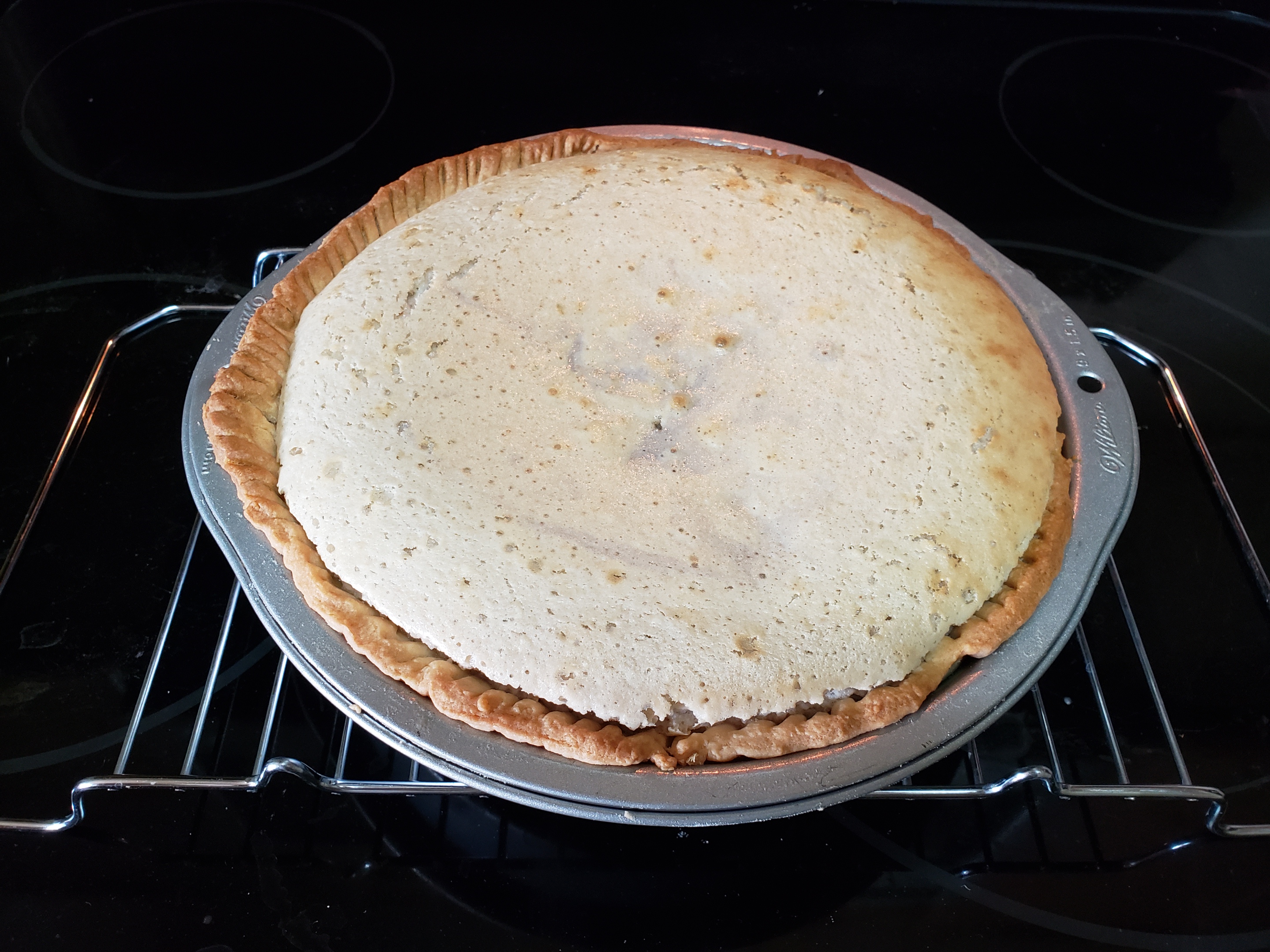
I wanted to make a nice dessert for Dad, and settled on a cream cheese tart.  I added fresh guava puree to exotify the pie, and sweetened the filling with Splenda.  I have become proficient at making French tart shells (pie crusts) from Julia Child’s cookbook Mastering the Art of French Cooking.   Dad sat at the island watching me prepare the dough.  “Don’t mix it too much,” he interjected.  I think you mixed it too much.  It needs to be ice cold and barely blended.”  I paid no heed, and placed the wax-paper-wrapped balls of dough in the fridge to chill.  After a few hours, I rolled the dough out and shaped the shell in the spring-form pan.  When I first starting baking, I pressed into the shell a sheet of aluminum foil and poured in a pound of dry black beans, to keep the bottom from bubbling up.  The beans are a cheap but effective substitute for ceramic baking beads, which I only recently bought.  Sitting in a yogurt container, they looked just like Holland mints, round and white.  Dad suddenly picked up a ceramic bead and plopped it into his mouth, thinking it was a mint.  Before I could articulate gentle words, I blurted, “Uh uh uh!” like one would chide a child with its hand in the cookie jar.  I did not mean to treat him like an errant child, but out of instinctual fear I did what I needed to do to stop him before he crunched on the glass bead and broke a took, or swallowed the bead.  He quickly spit it out, and neither of us looked at the other or said a word.  I did not want to shame him anymore than I already had with my tut-tut, and he did not want to acknowledge his gaffe.  We pretended nothing happened.  But later, when the pie came out of the oven looking beautiful, he confessed, as if I hadn’t known, “I almost ate one of those white glass beads.  I thought it was a mint!”  The beads removed, and the guava cream cheese filling poured in to bake, the tart tasted wonderfully delicious.

Courage at Twilight: Leftover Sandwiches

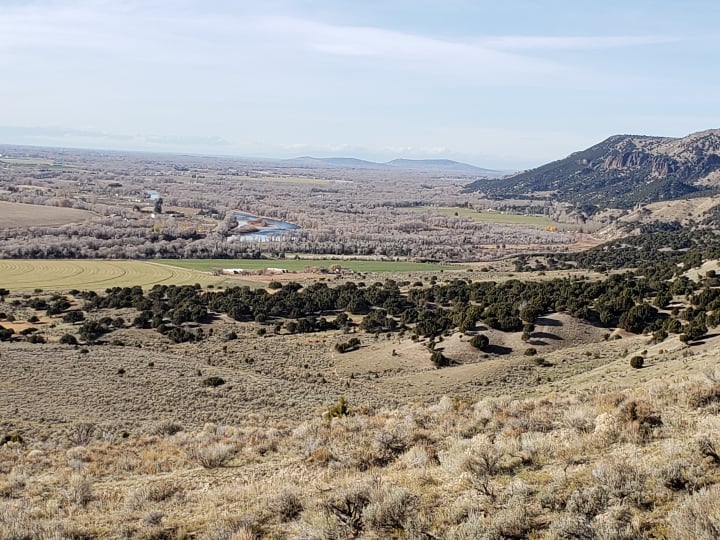
The Snake River valley from the Sidewinder trail.

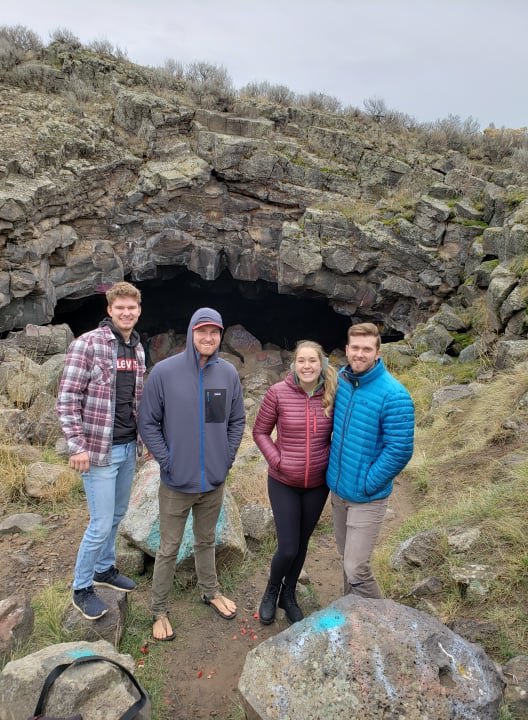
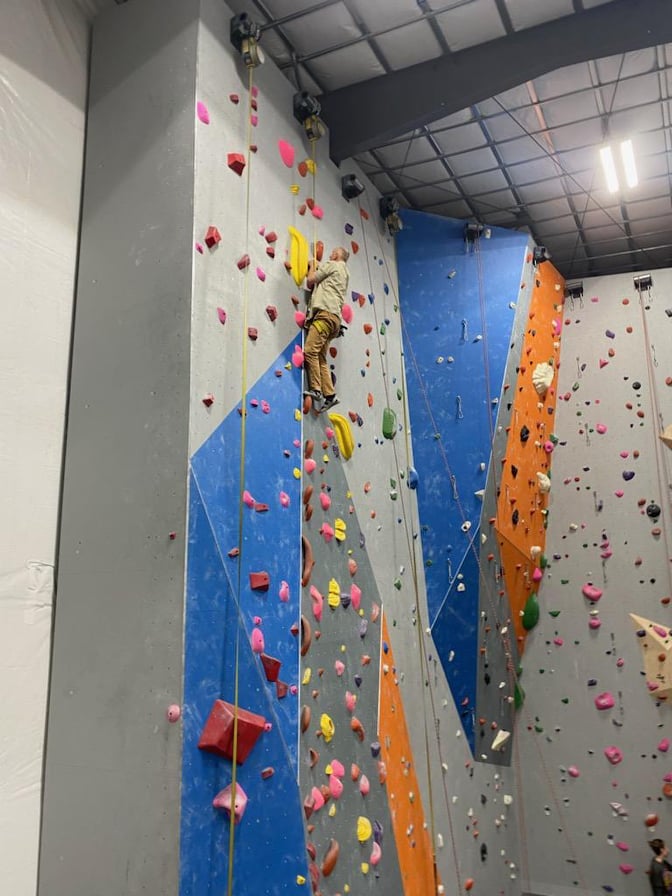
I left Mom and Dad for two days while I took my two youngest sons to visit their older brother John in Idaho for his 24th birthday.  We rode the five-mile Sidewinder mountain bike trail, a fast flow trail aptly named, although Hyrum’s chain broke and he coasted and pumped the whole distance down.  We explored a long cavernous lava tube in the sagebrush-covered Idaho wasteland.  We ravaged the local pizza buffet.  And we climbed at the gym where John works as a much-appreciated route-setter and climbing instructor.  I have been watching my children climb in gyms and on real rock, and have belayed them all, for 15 years.  But I myself have never climbed.  Suddenly excited to conquer my fears, I pushed past the panic and scaled a 5.8 climb—my first climb ever—with my three sons cheering their old man on.  We ended the trip with “Happy Birthday” and gifts and games of cards: Golf and SkyJo.  On the windy drive back to Utah, a bike rack strap snapped, and the bikes hung precariously by one strap while I pulled off the highway.  The getaway with my sons was delightful—I appreciated the break—and I was happy to come back to Mom’s and Dad’s house, which they insist is my house, too.  “Welcome home!” Dad cheered when I walked through the door.  “Tell us all about your trip!”  Back to work today, I attended a law training, complete with a sandwich lunch.  After stopping at REI for strong straps to re-strap my bike rack, I arrived home in time to help Dad rake deep red pear leaves out of the bushes and load them into the trash container.  “I am so tired,” he lamented, “I need to sit down.”  I invited him to come into the house for a lunch surprise.  “OK, I am ready for lunch.  Today must be Monday, because I always feel so tired after my Sunday ‘day of rest.’”  Inside, I served Mom and Dad two beautiful sandwiches, one club and one turkey avocado, which they split and shared.  The training organizer had invited me to take the leftover sandwiches for my parents.  “We were going to drive to Arby’s,” Dad said.  “But this is much better,” Mom chimed in.  While they munched sandwiches and chips and sipped Coke (Diet for Dad and Zero for Mom), I re-strapped the bike rack, happy for their lunch enjoyment, and grateful I did not lose the bikes on the Idaho freeway.

The entrance to Civil Defense Caves lava tube.


Pizza!


The old man’s first climb.

Courage at Twilight: Cold Cereal for Breakfast

Typically, I turn to cold cereals for breakfast during the work week.  It is fast and easy and delicious, and I am often running late.  But I avoid the high-sugar refined-flour cereals and opt for granolas and whole-grain varieties.  On the weekends, I enjoy cream of wheat or rolled oats or multi-grain hot cereals, sweetened with stevia extract and enriched with cream, raisins, diced apples, or spices (such as, cardamom, fennel, lavender flowers, or ginger).  For Dad, all the grocery-store-shelf cereals are high-sugar, anathema to his diabetes.  Understandably, he sometimes cannot resist, and eats them anyway, aching for something delightful and sweet.  Dad makes sure I shop the cereal aisle at the grocery store, so I have breakfast options.  I have attempted to find lower-sugar cereals for him that still are tasty and interesting.  After I bring the week’s groceries into the house, I carefully open all the box-top flaps, without tearing them, and cut off a corner of all the cereal bags, all this to avoid later finding the box tops destroyed and the bags torn vertically askew.  Wanting to find something Dad could enjoy that would not kill him, I shopped online for sugar-free high-protein cereals, and found some promising candidates, sweetened with stevia and monk fruit.  Of course, most of them exceeded $11 a box—heavy sigh.  I ordered some I found on sale for $7 a box, which seemed a bargain next to $11.  My brother’s cereal of choice is the Ezekiel brand: high in protein and fiber, with zero sugar, which he enhances with frozen blueberries and sweetens with organic stevia extract.  I tried Ezekiel once and liked it well enough when sweetened and soaked in milk for 20 minutes to tenderize the whole rolled grains and flakes.  But Dad thought it akin to shredded cardboard.  We’ll give the HighKey keto protein cereals a chance, and go from there.

Courage at Twilight: Cooking to Music

Having recovered from my last exhausting cooking experience, I resolved to cook a nice Sunday dinner for Mom and Dad.  Mom sat in her recliner, reading the Sunday New York Times, listening to music in the family room: a home-made CD of Mom’s church choir performances.  Dad decided to rest in the living room, reading Michelle Obama’s excellent memoir Becoming, playing his daily Johnny Mathis.  The kitchen is situated in between.  I attempted to review Julia Child’s cooking instructions, with “Count Your Many Blessings” in one ear and “99 Miles from L.A.” in the other.  Unable to read, I put the book away and attacked the recipes from memory.  Cooking Julia’s French recipes has become easier with practice, I guess, because I had dinner ready in good time: sauced fish poached in white wine; creamy garlic onion mashed potatoes, steamed broccoli, and sliced cucumbers.  Practice is also helping me refine the textures and flavors for a more pleasurable outcome.  Mom and Dad agreed the meal was a triumph.  But now I am tired and do not want to cook for another week, knowing I will be hungry tomorrow.

Courage at Twilight: Emptying the Grass

The cut grass and Fall leaves from the riding mower shoots into two rear-mounted canvas bags, which Dad empties into a large plastic can lined with a plastic garbage bag.  He thumbs two holes into the sides of the plastic to vent the vacuum and allow the grass to sink and settle.  Mom ties the handles.  Together they lift the can, heavy and with wet grass clippings, and dump the bag into the large trash container, which goes to the curb on Sunday night for Monday morning pickup.  Several times, I lifted the heavy bag out of the can by myself, not to show off, but just to get it done—and I was strong enough to do it.  In the following weeks, I found Dad bagging the grass himself and wrestling the can up to dump the bag into the trash container.  I felt bad I had done it by myself and made him feel he needed to be able to do it by himself.  When I ask if I can help him, he says, “I got it.”  So, now I ask him to help me hoist the can up so we can share the effort of dumping the bag.  No matter one’s relative personal strength, collaboration is often the best solution for all involved, young and old, and middle-aged.

Courage at Twilight: Grilling Bratwurst

I had taken Avery’s chili dinner to Sarah and Tracy, and read picture books with Gabe.  Dealing with cancer treatments, they appreciated the meal.  Arriving home, I could smell that Dad had gotten dinner ready: grilled bratwurst, baked squash, boiled cauliflower, sautéed onions—a feast!  Forking a brat off the grill, I noticed a foreign electrical cord connected to the grill.  Looking under the grill surface into the drip pan, I saw the correct cord, where I had stored it, covered in hot grease.  I commented my relief that the foreign cord had worked, and lifted the grill surface to retrieve the hot, greasy cord.  When Dad saw he had grilled not only the brats but the power cord, he let out a dismayed “Oh shit.”  Not in anger, but in chagrined exasperation that he likely had ruined my cord.  “I feel so bad I cooked your cord,” he lamented later.  I told him not to worry, that now we knew other cords would work, and anyway the cooked cord looked no worse for the grilling.  Nothing had melted or burned.  I suspected when cooled and washed up, the cord would work just fine.  And now Mom and Dad know I store the power cord inside the grill unit when not in use, where understandably one would not think to look for it.  And the bratwurst were grilled to plump juicy perfection.

Courage at Twilight: Recycling Buddies

Mom and I are recycling buddies, distressed by the thought of recyclable paper, cardboard, plastic, and metal cans being dumped by the billions into landfills.  Aluminum cans are 100% recyclable: each can recycled results in a new can.  We fill two large green recycling containers throughout the week, and set them by the curb on Sunday night for Monday morning pickup.  Even the toilet tissue tube is remembered.  If the wind is blowing on Sunday, we wait for early Monday, because during one storm all the containers on the street blew over, sending recyclables sprawling across the neighborhood.  E.P.A. reports that Americans discard more than 2,000,000 tons of aluminum cans each year—that’s 40 billion pounds, enough aluminum to rebuild the nation’s entire commercial airline fleet every three months.  I am astounded that we dig the stuff up out of the earth, refine it, shape it into packaging—all at huge cost—and then use it and throw it away so more of it can be mined at huge cost.  About 30,000,000 tons of plastic go to U.S. landfills each year.  To me, it makes so much sense to reuse these materials.  I choose to stow my cynicism about the American recycling industry, hoping it becomes more robust instead of diverting our recyclables to the landfill.  Anyway, Mom and I have fun saving our clean recyclables for the weekly recycling truck.  My sister Megan takes our glass bottles to a glass recycler.  We like to believe we are doing something good for our planet.

Courage at Twilight: Stopping the Spread

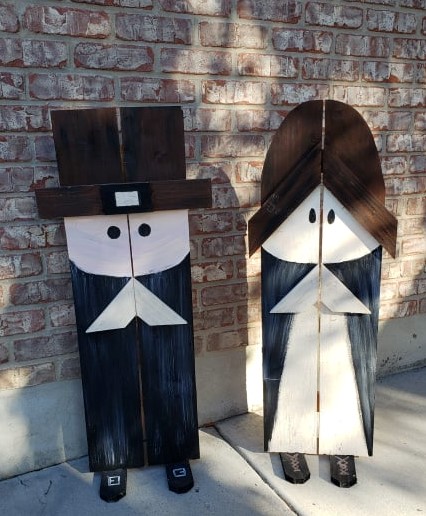
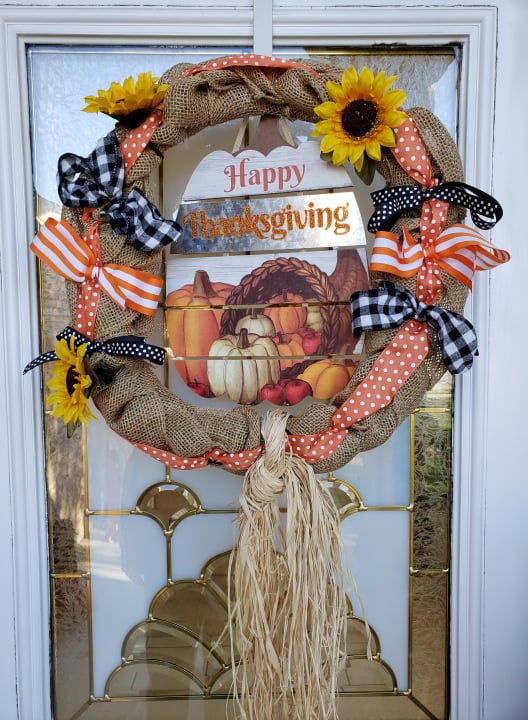
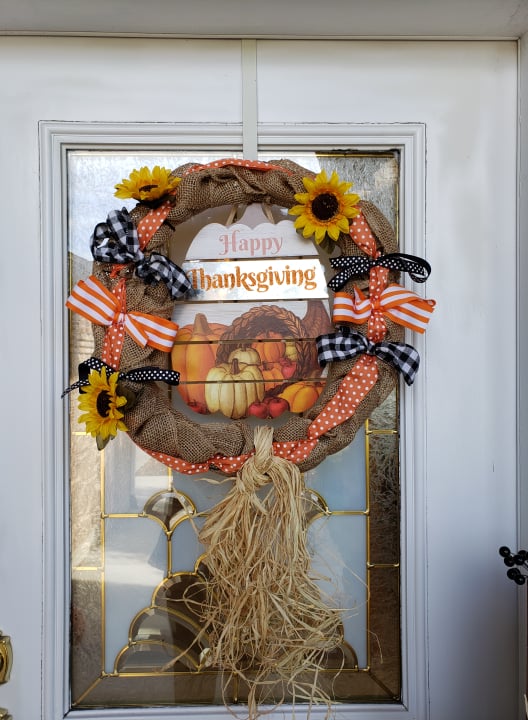
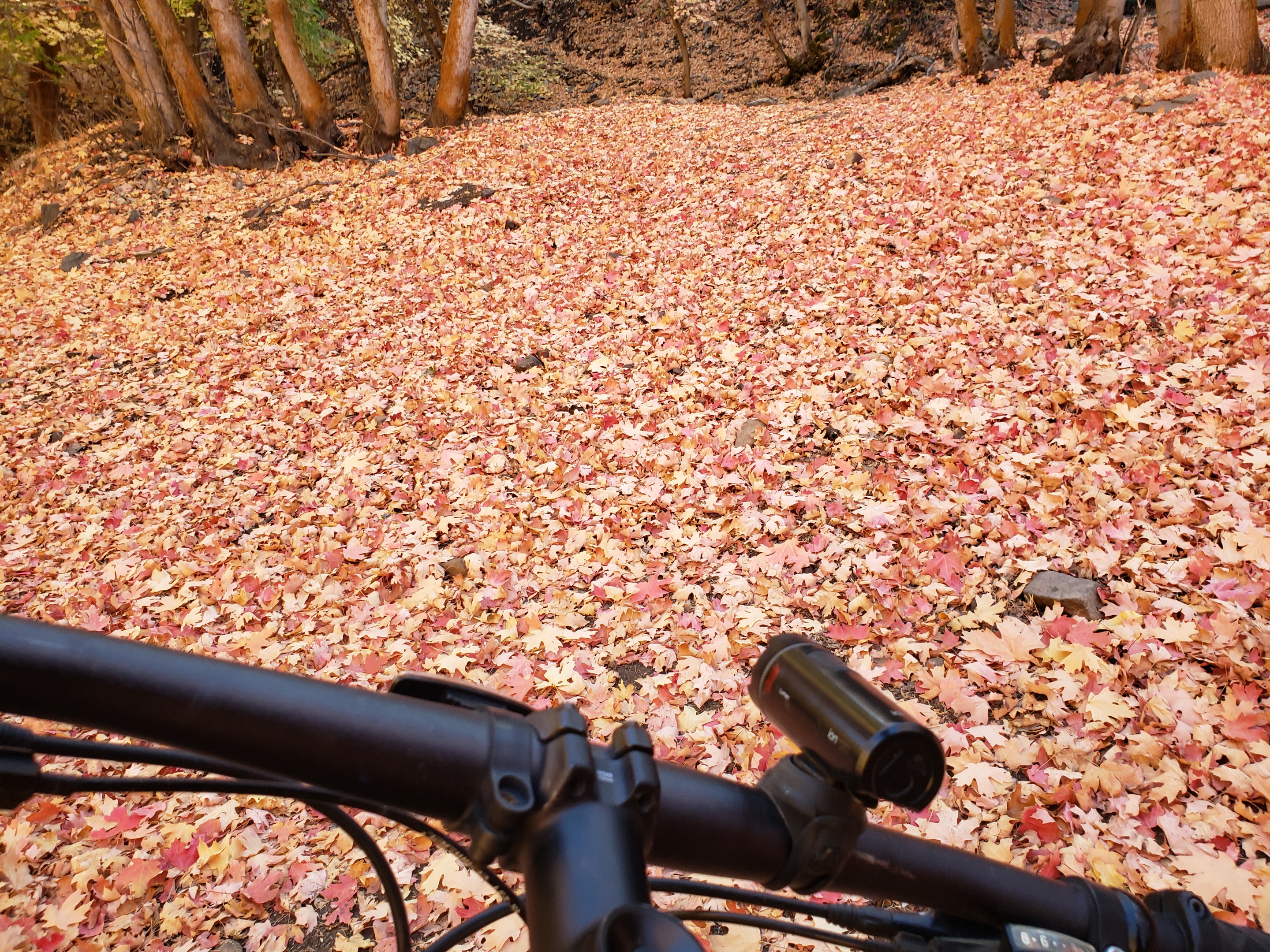
Living now with my parents, I cannot fathom the reality that we had no family gatherings with Mom and Dad for 18 months due to Covid-19. My sister Sarah grocery shopped for them every Saturday during those months.  I cooked for them on occasion.  We always wore masks and washed and sanitized our hands and kept our distance—no hugs (except for “air hugs”).  My siblings called Mom and Dad frequently, sometimes daily.  Sarah, as a speech pathologist, works at a critical care facility with people who suffer from conditions affecting their communication and swallowing.  While donning head-to-toe personal protective equipment, she watched Covid rage through her patients, ending the lives of too many.  My siblings and I all understood and respected that if Mom and Dad contracted Covid in their aged and weakened conditions, we likely would lose them, as so many thousands lost members of their families.  To keep them safe, we did our little part to stop the spread, following all the recommended precautions, putting philosophy and politics aside in the interest of safety.  Mom and Dad received their first Pfizer vaccine at a huge convention center.  Hundreds of old and infirm people stood for hours in long lines, walking from station to station around the entire perimeter of the hall—fully a mile.  Dad thought his cane would do, but shortly into the ordeal he confided to me, “I don’t think I’m going to make it.”  I had him sit down while I ran for a wheelchair.  They received their third shot this week at a local health department facility, walking 20 feet past the front door to their seats, with no wait.  What a difference between the two experiences!  But in all three cases, the nursing staff were so kind and pleasant and helpful.  After all the family members were fully vaccinated, we began to visit again.  My sister Jeanette recently came to visit from Arizona for a week.  We cooked together and played Scattergories and drove to see the fall leaves in the mountain forests.  And we broke out the fall crafts: wood pumpkins, a harvest-themed wreath, and a tall scarecrow.  My niece Amy joined in, painting the eyes black and the nose orange.  How grateful we are to be safe, healthy, and together again.

My first ever attempt at a wreath.

Courage at Twilight: The Spanish Word for Pain

“I wish I could do more for you,” Mom lamented one recent afternoon.  “I am so sorry for all the mistakes I made as a mother.”  For a moment I stood stunned at the revelation of my 82-year-old mother’s insecurity, especially as incongruous as it was with my memory of reality.  Mom gave her whole soul to being a mother.  Hot whole-wheat gruel steamed on the table before school, and she served a delicious dinner at precisely 6:00 p.m., every day.  She washed by basketball socks and took me to buy my first pair of Levi’s.  She gathered us every Sunday afternoon to play games—PIT was a favorite, with six kids clamoring cacophonously for “wheat!” and “rye!” and “barley!”  The family car ran night and morning with rides to and from marching band practice, piano lessons, and early morning Bible class.  I sat at the kitchen table one evening struggling with my homework, trying to remember the Spanish word for pain—dolor.  She surprised me by bursting out protectively, “You know: dolor, just like Delores!” referring to my painfully unrequited infatuation for a girl at church.  I never again forgot that word!  She nursed me through dozens of ear infections and serious injuries followed by surgeries and staff.  She organized a family vacation to the magical woods of Maine, and I have loved loons since.  She even gave me an enema (my most embarrassing life memory) when I writhed from what the doctor arrogantly insisted was constipation but was in truth an appendix about to burst.  And at 82 she says good-bye with “I can’t wait to see you when you come home!” and greets me after work with “There’s my boy!”  Once again she is providing a safe and comfortable home for me, and listens without upbraid to her children in all their multitudinous troubles.  “What mistakes?” I asked her sincerely.  “I cannot remember any.”  Even were they present, and I presume they were, they are long forgotten.  We six siblings, and our numerous offspring, all cherish her.  It is our turn now to wish we could do more for her.

Courage at Twilight: Riding in Corner Canyon

I have said good-bye to Settlement Canyon and my seven-mile mountain bike ride. I knew every rock and root of the Dark Trail, every low tree limb and snagging wild rose. How I loved that trail. I rode that trail with Hannah and my sons Brian, John, Caleb, and Hyrum during the exile years. I have ridden in snow and mud and scorching heat. I have ridden past meadows of sego lily, taper tip onion, and glacier lily. I have ridden with pronking deer and flustered turkey and migrating tarantulas. And there was that day I startled a merlin with its taloned prey still dripping blood. The Dell in Sandy is close to my new home, but its deep sand sucks at my tires and the river cobbles buck me off. Dad used to run in the Dell, a nature area with deep sandy ravines and a small stream. He knew well a family of red fox, which he adored and once fed with rotisserie chickens from Smith’s. He also rode for miles and years on the 50-mile Jordan River Parkway, as have I, catching frequent glimpses of the slow river with its great blue herons and its beavers. But today I gathered my courage to explore, and ventured into Corner Canyon, an area of steep gambel oak gullies in the Wasatch foothills. The Draper Cycle Park proved an excellent place to warm up, with its short training flow trails and pump trails. Then I rode three miles up the Corner Canyon trail. Having thus relished two delightful hours, I flew down a blue-level flow trail named “Limelight,” the last 2.5 miles of the Rush trail—very fast, moguled, banked, and flowing (all the more fun for the names of the song and the band). I felt very happy as I drove home, hosed off and stowed the bike, and greeted Mom and Dad. “Tell me all about it,” Mom enthused, having worried the whole morning that I would crash (again) and hurt myself (again). “I’m done going crazy fast and drifting and jumping,” I reassured her. But it was impossible not to enjoy the speed.

Courage at Twilight: Visit to the Podiatrist

Dad stubbed his fourth toe against the couch at three in the morning.  The toe pained him badly and turned black and purple.  “I think I’ve broken my toe,” he announced to me the following day.  Poor guy, I thought, there’s always one more thing.  Fortunately, his regularly-scheduled podiatry appointment was only three days away.  The podiatrist was so considerate as he clipped and ground, bandaged and lotioned, stockinged and shod.  Childhood polio and 20 years of marathon running have taken their toll, eliminating ligaments and mashing bones.  Was all that jogging and marathoning worth it?  As a teenager, I saw Dad taking his pulse one evening.  “Twenty-eight!” he cheered.  His resting heart rate was about 30 beats per minute for two decades.  I wondered how many heartbeats his exercise had saved him over those years, and if he were getting good use of them now at 85.  His own father died of a heart attack at 59, before I was born.  One Saturday morning in New Jersey, Dad did not come home from his 20-mile training run.  I knew roughly his route, and Mom sent me in the station wagon to find him.  That long run on that hot humid day had been too much, and I found him walking on Cranberry Road miles from home.  I gave him a thermos of cool water, and we stopped at Claire’s market for fresh sweet corn on the cob, Jersey tomatoes, juicy peaches, and the most delicious crenshaw.

Courage at Twilight: Stair Lift

I spent the morning researching stair lifts, also known as chair lifts, the makes and models, the Acorns and Brunos, leasing verses purchasing, wondering if it were time to make that move. I hear Dad grunting on every step, and Mom wheezing at reaching the top.  Sitting with them in their bedroom, I shared my research, and asked them what they thought about the idea, and the timing.  Dad acknowledged that climbing the stairs is hard for him to do, but he can do it.  He worries that once he stops doing a hard thing, he will lose the ability ever to do that hard thing again.  He thinks it best to keep on exerting, fighting even, doing everything he can to be strong and capable.  Mom and Dad had been going to the rec center six days a week before Covid shut down the nation’s gyms.  They would make a circuit through the many machines, strengthening back and arms and legs and heart.  He wants to go back, because his muscles have become soft.  He knows he will be starting over again.  I, too, seem to be always starting over after some injury or event (like moving) has knocked me out of my exercise routine.  I used to become discouraged about always starting over, but now try to be grateful I have the opportunity to start over, building on yesterday’s strength, and to keep working at life’s challenges, believing that every effort at living ultimately is strengthening and redeeming.  So, Mom and Dad said no to the stair lift, for now.  Dad wants to keep working as hard as he can.  He is not being stubborn about the stair lift, or walking, or working in his yard to the point of collapse (literally, like today, when he sank to the grass on shaking legs that just would not hold him up anymore, and crawled to the brick mailbox to claw his way back to his feet, while I stood inside obliviously baking a guava cream cheese tart, and how did no one driving by see him lying on the grass?).  No, not stubbornness.  Instead, he is fighting for his independence and his dignity and his strength, fighting for his life.  That example I can absolutely respect and emulate.

Courage at Twilight: Sacramental Emblems

Sunday church services focus on what we call “the sacrament” in my Church.  The sacrament consists of small pieces of bread and small cups of water, one of which we each eat and drink in remembrance of Jesus.  After Covid-19 forced churches to close, Church leaders authorized the men of the Church to use their priesthood authority to provide the sacrament at home to their families and others.  While the church buildings are again open for in-person attendance, Mom and Dad have been too weak to go.  How pleased and privileged I felt to use priesthood authority to prepare the bread and water, to kneel and offer the prescribed prayers, and to distribute the sacramental emblems to Mom and Dad.  After we partook, Mom looked up at me from her chair and said sweetly, “Thank you so much.  That was very special.”  As a threesome, we discussed how the sacrament serves several purposes.  We remember Jesus, his infinite loving sacrifice for us, and his ongoing atonement.  We covenant anew to obey God’s commandments, and to love and serve our neighbor.  We recommit to repent and to strive to be our best selves.  And we express our gratitude for our life and blessings.  After our intimate church service, we broke our fast and enjoyed leftover creamy vegetable soup and toasted ciabatta.

Courage at Twilight: Getting to Know the Neighborhood

After more than a month, I finally managed a bike ride, not on a pretty mountain trail, but on the neighborhood streets.  What lay beyond the mechanized gate was a mystery to me, though hundreds of noisily cars and trucks come and go daily, each stopping to provide identification.  The guard raised the gate with a friendly wave, and I passed into Pepperwood.  I rode on quiet winding streets with quiet expansive yards and quiet splendorous houses, pushing up steep hills and careening down—the radar speed limit sign clocked me at 29 mph in a 25-mph zone.  I pondered on the Pepperwood privilege even as I admired the expensive yards and houses.  Lincolns and Cadillacs in the driveways.  Tennis courts and pools in the back yards.  Turrets and wrought iron fences.  I am uncomfortable with money, perhaps because I don’t have much.  I do not begrudge these people—I know many of them, and they are law-abiding, religious, and kind—but I cannot help comparing their power and privilege with humans of equal worth who have none of this wealth.  But then, am not I also privileged, riding my mountain bike on a paid holiday with a salary and insurance and a 401(k)?  Yes, I am.  Privilege is no single condition, but a spectrum, a sliding scale, a degreed thermometer, and we are all both blessed and cursed with it to some degree.  This is what we must beware: privilege turning into pride.  Pride is humanity’s downfall.  Such were some of my thoughts as I sweated uphill and thrilled downhill and watched for cars zipping out of driveways and watched for mule deer pronking across the narrow streets far inside the gates.

Courage at Twilight: Such a Faithful Car

The Suburban key would not come out of the ignition.  It was soundly stuck.  And the gear shift handle flopped around incongruously, like an odd-angled broken arm.  The accident in 2018 had totaled Dad’s beloved Suburban, 20 years old, and had just about totaled him.  The force of the collision snapped his scapula clean in half—an excruciating injury with a long and painful recovery.  Once he began to heal, he joked with his grandchildren that he had broken his “spatula.”  Dad could not bear to say good-bye to “my faithful Suburban,” which had crossed the country and pulled trailers and carried the family and the kayaks and the spring-bar tents to extended family reunions.  So, he kept and fixed his car, which is as good as new.  Almost.  With the key now stuck in the ignition, the battery drained and died.  We tried the lawn mower battery charger, to avoid a tow to the dealer.  Eight hours later the large car battery still had zero charge.  Our neighbor, Terry, hooked up his 15-amp charger, which zapped the Suburban battery to 100% in 30 minutes.  Dad’s first Lyft took him home from the dealer while the car was being fixed.  The repairs accomplished, his faithful Suburban once again sits in the garage, ready for grocery shopping, hauling bags of bark chips, and taking a Sunday drive to see the reddening leaves of Fall.

Courage at Twilight: Good-bye Gym

After unfairly losing a big case in court in 2009, I knew that my stress would be the death of me and that I needed to change my lifestyle. So, I signed a gym contract and resumed my strength training and cardio workouts after a several-years hiatus.  But with my new two-hour commute and duties at home, going to the gym has become impractical.  “Unrealistic” is a better word, since 5:00 a.m. might be practical, but not realistic—it simply is not going to happen.  I paid VASA’s unfair exit fees and said good-bye to the gym.  Mom and Dad regularly ride their stationary bicycle, and I have resolved to ride it also, and to maintain my core-strengthening regimen: all praise the plank.  I also strain at elastic bands to strengthen the shoulder I injured in a mountain biking accident.  The floating clavicle of that separated shoulder will not let me do push-ups.  But Dad showed me how he kneels on one carpeted stair and pushes off against a higher stair in an angled push-up, and I found I could do the same with small discomfort.  I still ride my bike in the local canyons, but have slowed down and never take the jumps—my nearly 60-year-old body no longer bounces without breaking.  After one wreck with four broken ribs (2017) and another with a level 3 shoulder separation (2019), I simply cannot take another fall.

Courage at Twilight: Nothing of Interest

Nothing interesting happened today.  Nothing exciting.  Nothing fun.  Nothing new.  Nothing much.  I have told my children that much of life is uninteresting and unexciting.  If they live their lives in search of constant excitement, they will live lives of frequent disappointment.  Life is mostly maintenance, not meant to be consistently euphoric.  But life can be consistently satisfying and fulfilling.  When the big exciting events of life are few and far between, we can turn our attention to the little things, where we will find the happiness of a smile, the pleasure of a delicious flavor, the kindness of a Hello, how are you?, the insight of a book passage, the deepening release of forgiveness.  From this vantage point, the mundane can become miraculous.  Not that the event has changed, but rather the way we see it.  My daughter Erin introduced me to the daily discipline of finding the miraculous in the quotidian.  During a challenging period in her life, she began to search for her life’s miracles, and wrote them down in a daily Miracle Journal.  As I entered into a prolonged arduous period in my own life, I took her example to heart and began a similar search, recording daily the little miracles.  And I discovered a previously unperceived abundance.  Any particular day can leave you or me not wanting much to live, but upon a sincere search, we can find real miracles, or events of goodness and light.  And, of course, there are no little miracles, for the very nature of a miracle is to be divine and life-blessing.  While not loud or blaring glaring, all miracles are grand.  After a particularly grueling day of work and stress and drama, I arrived at home and found Dad sitting in the back yard patio, contemplating the grass, shrubs, flowers, trees, and mountains.  “Hi Dad,” I said simply.  “Rog!” he called out.  “I’m so happy to see you!”

Courage at Twilight: Immersed in Music

Music is always playing at Mom’s house.  As a boy, I awoke on Sunday mornings to the sounds of Bach and Brahms and Beethoven filling the house.  I associated music with Mom, and with home.  On my 15th Christmas, she introduced me to Aaron Copland, whose music was the first to stir my soul in otherworldly ways.  I learned to change out dull needles and set the stylus on the vinyl track I wanted to hear.  Now, instead of one side of an LP, she places five CDs in the player, and pushes play for five concert hours.  I hear the bossa nova of António Carlos Jobim, Von Williams’ Fantasy on Greensleeves, the symphonies of Mahler and Janáček, Copland’s quintessentially American ballet scores, Bartok’s concerto for orchestra, Barber’s concerto for violin, the virtuosic guitar suites of Villa-Lobos, Arty Shaw’s swinging clarinet, Sergio Mendes and Brazil 66. . . .  I love them all.  Her collection has inspired my musical loves, and I have lately expanded her eclecticism with Ceumar, Tó Brandileone, and Cainã Cavalcante, brilliant contemporary Brazilian artists.  Music has some mysterious power to move us and to fill the corners of the spirit reason alone cannot seem to reach.

Courage at Twilight: 9/11 at 20

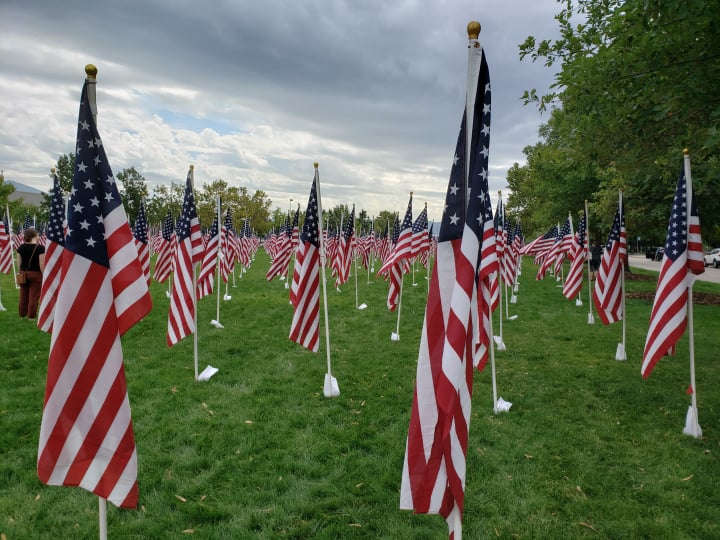
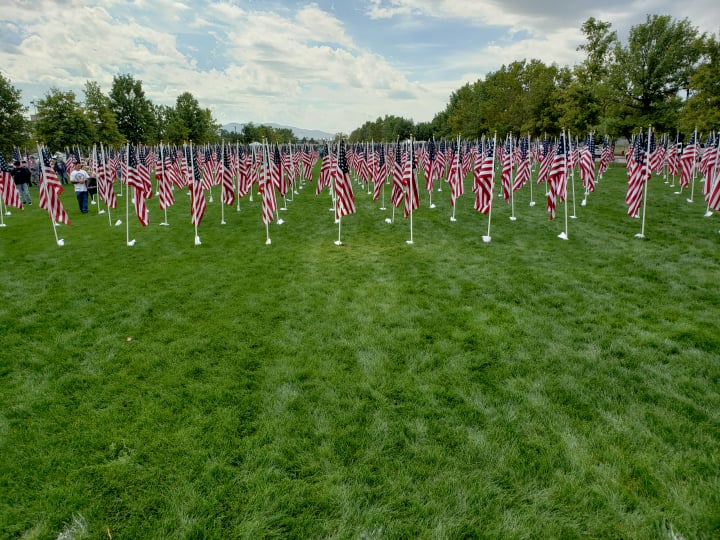
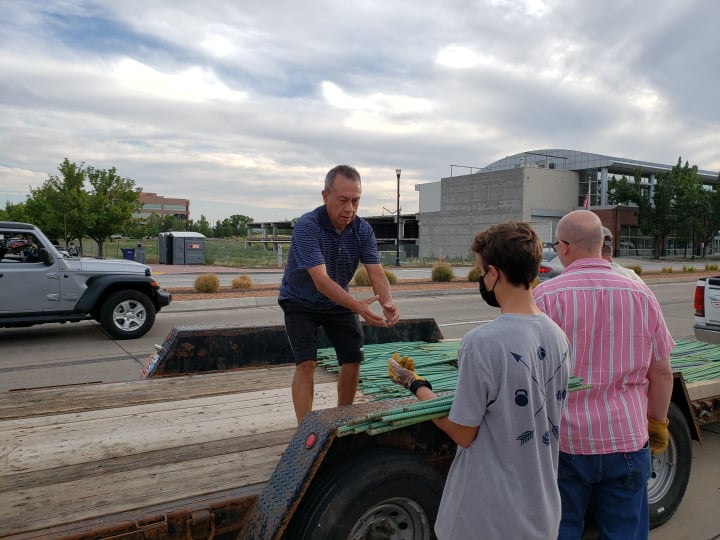
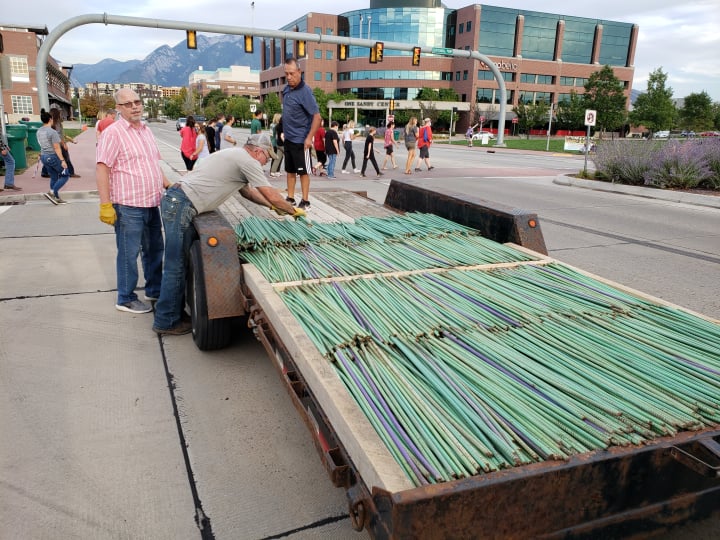
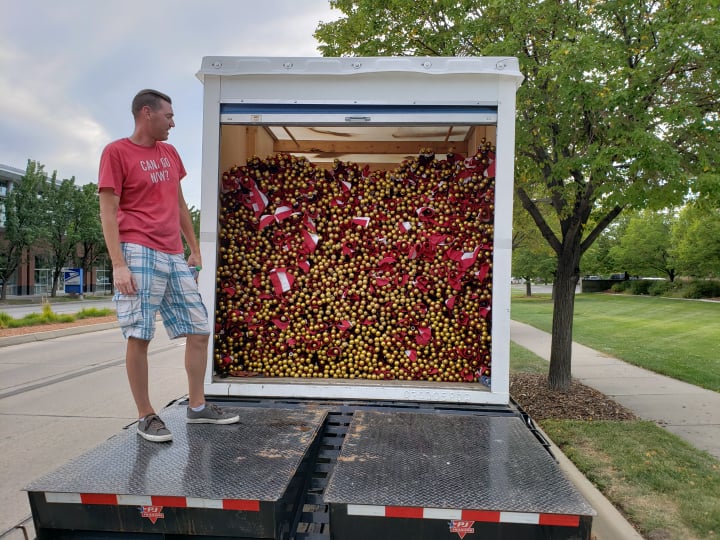
I was in a hotel elevator, at a conference on domestic violence prosecution, in Provo, Utah, when I learned of the attacks on the Twin Towers. The scheduled speakers yielded to the television screens as we watched, stunned and horrified.  Twenty years later, I walked amidst 2,977 American flags planted in a field, a Healing Field, in my new residence city of Sandy.  Each flag had a tag with a name and a story of where he worked, how she was loved by family and friends, what their hobbies were, their age, their loved ones, and the location of their death: World Trade Center; Pentagon; Flight 93 in a Pennsylvania field near Shanksville.  I read a hundred or so tags on flags flying for the people who died on 9/11/2001.  I had dressed in a jacket and tie, thinking it fitting.  The next day I drove Mom and Dad slowly around the field, twice, because they couldn’t walk, but they wanted to see, they wanted to honor, and I told them about the persons I had read about—the Flight 93 pilot, the World Trade Center trader, the Pentagon general, the child traveling with her mother, the secretary, the cook.  And the next day I descended on the field with 300 other volunteers to remove the tags, roll up the flags, and yank the three-foot rebar from the ground, one each for 2,977 persons, including 411 first responders, whom we have promised to always remember.  I rolled flags and yanked rebar with people aged from 10 to 80.  One of the octogenarians poked me with the butt of a flag, and apologized, and I joked, “You know, I have always been told to watch out for pretty ladies rolling up American flags,” and she laughed.  A small older man followed me and others as we pulled rebar from the ground, carrying heavy stacks of the stuff to the flatbed trailer.  I called him “Rebar Man” but his real name was Ishmael Castillo, a brawny little man with a big soft heart who came to help.  I thanked the organizer, and he gave me a 20-year commemorative bronze medallion.  I saw the Alta High School NHS photographer looking in the now-empty field for his lost lens cap, and I asked him if he had received a 9/11/2021 medallion, and gave him mine, because I had bought one for myself on 9/11.  “That is amazing,” he gasped his thanks.  The empty field will endure, now, until 9/11/2022.


Courage at Twilight: I Wasn’t There

I am wallowing in self-reproach.  Mom fell in the shower.  She does not remember falling.  She remembers only waking up on the floor, the water sprinkling down on her, the door flung open.  And I did not know.  And Dad did not know.  I asked her at breakfast about the scratch on the bridge of her nose, but she did not know where it came from.  As she sat in her Sunday dress, ready to go to church, Dad asked her how she felt.  “Not so good,” she said, seeming very tired.  I passed it off as a symptom of the sinus infection she is getting over.  She told me later about her slumping from her chair.  That morning I had awoken with a start when I thought I heard a bang.  I could hear water tinkling.  Remembering how the shower door clangs when it closes, I thought nothing more of it.  We went to church like normal, moving a little slower.  I cooked all afternoon to give Mom and Dad a nice Sunday dinner: tilapia poached in white wine with green onions, sauced with creamy mushroom-clam sauce.  For dessert I made crepes stuffed with vanilla-cream sauced apples.  It all tasted divine.  But all I could think about as I cooked and ate and washed dishes was not being there when Mom needed me.  I was there, in the same house, on the same floor, in the room next door, with Mom lying unconscious on the shower floor, being drizzled with warm water.  But I was not there for her.  I could have revived her, helped her up, given her care and attention.  But I was not there.  All this fancy French food and the effort it took and the palatable pleasure it brought meant nothing.  What would have meant something was following through on the waking start and investigating assertively and helping my mother when she needed me.  The bruise on her cheek bone is starting to show.

Courage at Twilight: Shaping Bushes

Dad loves his yard care tools, especially the power tools.  The only power tool we owned growing up in East Brunswick, New Jersey was the push mower, with no power drive, for the half-acre corner lot at 2 Schindler Court (named by the developer-friend of Mr. Schindler of Schindler’s List).  Now Dad enjoys a set of DeWalt battery-powered tools, including one of his favorites, the hedge trimmer.  He often trims the bushes nicely round.  But the trimmer cannot grab and cut the shoots along the ground, and bending and kneeling is out of the question.  I, on the other hand, can (barely) bend and (barely) kneel, and I like the small hand pruner.  So while Dad shapes the bushes, I kneel on a cushioned pad and reach under the bushes to cut their runners and shoots, leaving a collection of uniquely and pleasantly shaped orbs.  The hard-to-get-to places are the ones longest neglected, but turning attention and effort to them yields pleasing results.  There’s a metaphor there somewhere.

Courage at Twilight: Wall Hangings

The negotiated terms of my ouster included me rescuing my children’s artwork from the attic storage closet.  I wanted these paintings displayed and my children honored.  They had made oil, acrylic, and collage paintings on old plywood, cardboard, canvas board, and posterboard.  Many pieces were very good.  Determined, I took a framing class at the Tooele Army Depot morale, welfare, and recreation (MWR) facility.  I learned to measure and cut the mats and the glass, assemble the frames, and apply the backing.  I felt joyful and proud to hang these excellent art pieces on the walls of my apartment, which my father came to call my “art gallery.”  They included scenes of Lisbon streetcars, Rio de Janeiro’s Cristo Redentor, the romantic streets of Paris, African villages, Korean dancers, and New York City street corners, plus a Panda Bear and a Great Blue Heron.  The most venerable painting hanging on my apartment walls was an oil Dad painted in the 1950s of two children, a boy and a girl, walking hand-in-hand down a forest path.  To move them safely, I wrapped these jewels in plastic and stacked them carefully in the Mom’s and Dad’s basement.  After two weeks, I found myself ready to decorate my two rooms, too small to accommodate all the paintings I had framed.  And I suddenly found that my connection to them was touched with old despair.  For now, I will gently store them to await a time of greater healing and permanence, when I will take them out and again proudly display them.  Now is not the time or the season.  They are like so many priceless museum pieces wrapped in protecting plastic and stowed in crates, awaiting their grand retrospective.  In the meantime, I have hung in my rooms several of Mom’s beautiful needlepoints, prints I bought on various trips, and the old oil of two children walking through the woods, holding hands.

Courage at Twilight: Spraying Weeds

On the way home from work, I stopped to buy a big bottle of Round-Up herbicide.  Those pesky weeds keep popping up in the shrub beds and under the pine trees.  Virginia creeper seems impossible to extirpate.  As a teen, Dad taught me to mix concentrated pesticides with water in a three-gallon pressurized spray tank.  With rubber gloves and a long sleeve shirt, I mixed the poison and sprayed the fruit trees against aphids and borers.  Dad strictly instructed me never to get the pesticide—especially the concentrate—on my skin, and if I did to wash immediately with soap and water.  He told me how these chemicals had killed people who touched them, or breathed their vapor.  I took his word for it and followed his instructions carefully.  A decade later I came across a first edition of Rachel Carson’s 1962 masterpiece Silent Spring, and carried it around for another decade before reading it.  The book exposed the pesticide and herbicide industries for the dangerous nature of these chemicals to humans, animals (think DDT and Bald Eagle eggs), and ecosystems.  Of course, all those chemicals have since been banned for home use because they, in fact, killed people.  I am still careful with Round-Up, not spraying on a windy day, and washing with soap after.  How glad I am that sensitive, smart, and courageous persons like Rachel took on the industrial complex at great personal sacrifice to share messages of truth larger than themselves.  To introduce my book Rabbit Lane: Memory of a Country Road, and in admiration for how Rachel changed the world, I wrote this poem, expressing my sentiments 50 years after she penned hers.

SILENT SPRING

Spring,
Rachel:
not silent quite.
I hear,
distinctly:
the growing hum
of humankind.

Courage at Twilight: The Old Red Chair

After I organized my home office, in the former guest bedroom, I received an email from Dad asking if my red office chair held sentimental meaning to me, and, if not, perhaps I should consider getting a new office chair. I bought the cushioned red cloth chair thirty years ago as my writing chair.  I sat and rocked in it eight years ago as I typed the first, second, and final manuscripts of my book, Rabbit Lane: Memoir of a Country Road, as well as my volume of recent poetry, A Time and A Season.  The red cloth has faded, the spring has stretched into a permanent recline, and the paint has been scratched off the wood arms.  For years my son Brian used it in his room at his desk; daughter Erin also enjoyed the chair, and repainted the wood arms and legs.  But it is showing its age, and Dad thought it might not represent me professionally on Zoom.  Time to let it go.  I asked Brian if he might like his childhood chair, and he replied in the enthusiastic affirmative.  I will miss my old red chair, but it was starting to hurt my back, and I’m so glad Brian will enjoy sitting and rocking in it as he writes his poems and creative non-fiction essays and reads pictures book to little Lila.  The old red chair will fit his MFA nicely.

Courage at Twilight: Missionary Work

I had intended to accept an invitation to gather with the men of the neighborhood to help an ill neighbor with yard work he could not do.  “Bring your chainsaws,” the organizer goaded, “and show what real men you are.”  I chuckled, knowing his heart was pure.  As I sat with Dad in the back yard, however, and he talked about all the things he would like to accomplish in his yard, I decided to change course.  I chose to stay home and help with his yardwork, which I suppose is my yardwork.  An impish niggling voice accused me of being selfish for not helping the neighbor.  But I shrugged it off and responded, “Nope.  That is not my mission.  This is my mission: to be here, to help here, to the end.  This is missionary work.”  And so I got to work pruning trees and weeding flower beds and yanking out the long Virginia creeper vines.  A smile on Dad’s face, and his call of “Looks great!” confirmed what I already knew, and made me happy to be so engaged.

Courage at Twilight: Gathering for the Sunset

In July, just before I moved, Mom told me about how she and Dad sat in picnic chairs in the driveway every evening at 8:45 to watch the sun set, enjoying the colorful clouds.  I texted her one night that I would go stand by the apartment complex fence at 8:45 to see the sun set over the Tooele valley, in solidarity with her.  While she gazed toward the Oquirrh mountains to her west, I looked toward the Stansbury mountains to my west, each with peaks over 11,000 feet.  As July moved into August, our sunset time came earlier and earlier, today already at 7:45.  Sitting there in the driveway, the three of us, on our picnic chairs, we waved at neighbors driving or walking by, talked about the day’s work and news, and admired the brilliant colors.  With the worst California fires in history, Utah’s sun became an orange-poppy sphere that we could stare at without discomfort for the thick smoke.  As the sun dipped behind the mountains one evening, Dad announced, “I can see Venus!”  I looked and looked for several minutes, but could not see the “first star.”  His cataract removal and lens implants seem to have given him telescopic eyes at age 85, while my 20-20 eyes (thank you Lasik) still searched for the pin point.  As the sky darkened, Mom told of when she was six years old and sang at a neighborhood talent show, in the church building, and for the occasion her mother made a dress for her out of rolls of white crepe paper stitched together, with red paper trim and pink paper hearts.  Then Dad led us in a round of “Let Me Call You Sweetheart” and told me how wonderful my mother is (which he tells me every day, and she is).  Soon the automatic sprinklers popped up, and the quarter moon shone a rich orange through the smoky sky.

Courage at Twilight: Arctic Willow

The arctic willow bush tends to grow wildly, a thicket of unruly blue hair.  And twigs die and turn brown in the midst, marring the uniform soft blue.  Dad has always diligently pruned out the deadwood.  This weekend he asked me if I would find that one elusive dead twig and cut it out.  After a pine branch attacked me (see prior Pruning Pine Trees post), I wrestled my way into the willow tangle in search of brown.  Like with the pine tree, once on the inside I found much invisible dead wood to cut out.  I threw each brown branch onto the lawn, cut them up in short lengths, and filled an entire garbage can.  Stepping back from the bush, there was that elusive brown twig still peeking through. Finally I found it.  What a different removing the brown made to the quality of the blue.  Nature is full of instructional principles, like how cutting out the dead keeps the living healthy and beautiful.

Book Review: Rabbit Lane Memoir

May be an image of book

My son, Brian Wallace Baker, a recent MFA graduate in creative non-fiction and poetry, wrote this kind post as a gift to me.  I am deeply touched and grateful.  Brian’s post:

As a writer, I think a lot about other writers, how some get big book deals, big prizes, and how even these writers aren’t household names. And it’s rare for a writer, no matter how popular, to be remembered beyond their generation. Thinking about this has made me realize that fame and success have little to do with being a good writer. There are so many good books out there, and more being written and published all the time, and most of them will have relatively small audiences. And that’s okay. I’ve learned that good writing has a lot more to do with changing hearts than it does with seeking fame and fortune.

Rabbit Lane: Memoir of a Country Road is one of those good books with a small audience. It has many profound things to say and good stories to tell, which is why my last book review of the year will be about this book.

My relationship to this book is different from most other books because I appear as one of the characters, and I know many of the people and events discussed in the book. Rabbit Lane is my dad’s memoir. It’s about his experience of moving to the small farming town of Erda, Utah, raising his kids there, and what he learned from the community and the landscape. The stories vary widely in subject matter from escaped cattle to encounters with skunks, from a sacred Native American sweat ceremony to giving a duckling CPR. There are also many poems and songs scattered throughout the book.

The main character of the book is not a person at all. It’s a narrow country road called Rabbit Lane, where my dad walked day after day, finding peace, poetry, and insight along the way. Throughout the book, Rabbit Lane changes from a dirt road lined by trees and irrigation water, teeming with muskrats and crayfish, to a poorly paved one-lane road lined with backyards. Despite its transformation, Rabbit Lane is still an important place for our family.

Rabbit Lane is a place of meditation and observation, and my dad’s book is filled with both. His meditations on life have been eye- and heart-opening for me. Here’s an example:

“In the quiet of Rabbit Lane, I often ponder the purpose of life. Has it occurred to me that the purpose of life may be simply to live? Not just to breathe and have a pulse, of course, but to live the best life we can every day, slogging through the sorrow and the suffering in exchange for hope and a greater measure of joy and contentment, seeking to attain our full potential, to find the best that is within us.”

One thing I love about this book is its many descriptions of the natural world I grew up in, such as this one:

“On many an evening I strained to discern the source of a soft, ghostly, reverberating sound moving over the farm fields. But I never found it. Explaining this mystery to Harvey one afternoon, he told me to look high into the sky whenever I heard the sound. There, I would see a small dot, the ventriloquistic snipe. Flying high, the snipe turns to dive and roll at breakneck speeds toward the ground. Wind rushing through its slightly open wings creates the haunting sound. The snipe throws the sound somehow from those heights to hover foggily over the fields.”

(Yes, no matter what you may have experienced or heard about Boy Scout snipe hunts, snipes are very real.)

Toward the end of the book is a passage that has left a deep impression on me:

“Brian, home from his first semester of college, announced happily he was going for a walk. He bounded away with enthusiasm. Weary from Christmas chaos, I nonetheless determined to venture forth. A walk down Rabbit Lane, at night, under the falling snow, is enchanting and not to be missed. Proceeding down Church Road toward Rabbit Lane, I followed Brian’s footprints. At the intersection, I saw that Brian’s tracks turned north onto Rabbit Lane. I felt contented to see that his spirit had chosen the path that I have so often taken. Now my boots followed his.”

I’ll always be following your boots, Dad, but you have taught me how to “venture forth” on my own, how to find beauty. Thank you for the gift of your book and the gift of showing me Rabbit Lane, not just the road but the sacred life that surrounds it. No matter where I go, I hope to walk the way you taught me to walk down Rabbit Lane, gently, respectfully, joyously.

I highly recommend this book. Rabbit Lane: Memoir of a Country Road can be purchased here: Rabbit Lane: Memoir of a Country Road.

Thank you, Brian.

(Photo by Brian Baker.)

Damn!

Damn!

My subject today is swearing.  And cussing.  I am writing not about profanity in general but my own too-personal relationship with four-letter words.  Of course, my church weighs in decidedly against profanity, and my parents reinforced this teaching in our home.  Not what goes into my mouth defiles me, but what comes out of my mouth.  Jesus taught this truth one thousand nine hundred and ninety-five years ago, thereabouts.  Defiles . . . and defines.  I grew up knowing that swearing was bad, and I did not want to be bad, so I did not swear.  Then one day Continue reading

Assault with a Deadly Weapon

Assault with a Deadly Weapon

Well, children, that was my very first trial.  Assault with a deadly weapon.  What a disaster!

*  *  *  *  *

“Here are your cases for the week,” the secretary sighed, bored.  “You have a trial today.  Have fun.”  The other prosecutors cheered when I was hired because hundreds of their cases shifted from their desks to mine.  I was so new I had to ask directions to the courthouse.  I drove my grandma’s 1970 v8 Chevy Nova—it purred in idle and roared on demand.

I first saw that first case on the day of trial. Continue reading

Black Ice on the 72nd West Bridge

Black Ice on the 72nd West Bridge

November 13.  A Thursday night in 2014.  And John calls.

Dad, I hit some black ice and rolled the truck.

John, who was born in my bed after the big doula yanked behind her knees and pivoted her pelvis to get him out of there, all purple.

Are you okay?  Are you hurt?  What happened?  Is there anyone with you?  Are you hurt!!

I’m okay, Dad.  I’m with some firemen.  Can you come get me, Dad?

We’re leaving right now.  If the truck will start, hop back in and keep warm.

Dad, I am not getting back in that truck.

Okay, I understand.  Stay warm.  Stay with the firemen.  Don’t worry about the pick-up.

John, who the nurses wheeled away for the surgeon to dig a tumor out of his arm at Primary Children’s.  They filled the void with paste made from crushed cadaver bones, and the arm grew rock-climber strong and tae-kwon-do blackbelt tough.

There he was, by the fire truck, its red-and-white flashers blaring over the dark landscape.  After hugs and are-you-sure-you’re-okays, I searched for my white Chevy Cheyenne pick-up truck, and found it, crushed and mangled, at the bottom of an embankment resting against tall reeds and rushes.  It glowed in the night in flashes of red.

I don’t know what happened, Dad.  I wasn’t speeding, honest.  There was no snow or rain or fog.  When I started to cross the bridge the truck just slid side-ways and rolled and rolled and I crawled out and the fire truck came and I called you.

I stared hard at the pick-up then turned to John with a choking love and worry, knowing now he should not have walked away from that truck.  I side-stepped down the hill for a closer look.  The cab was crushed.  The windows smashed.  The doors twisted shut.  How did he even get out?  And I am carrying little John in one arm while the other wrestles the 5 hp garden tiller.  And we are loading logs on the hydraulic splitter and stacking and stacking that winter’s wood.  And we are assembling the bouldering wall he designed.  And we are pedaling our mountain bikes seven miles up the canyon’s Dark Trail.  And he is guiding his frightened little sister up the rough multi-pitch rock.

How did you get out, son?

I don’t know, Dad.

And I am stupefied and paralyzed with the horror and grief of what might have been and should have been and nearly was, but wasn’t.  And I am stunned and speechless with the mystery and miracle of what is.

“How does this work?”  I asked at the wrecking yard.  “You give me the title, and we waive the tow fee and the storage fee.”

Done.  On the drive home I stopped at the scene.  There were the tracks of the front and back tires sliding at an angle into the gravel shoulder.  There were the launch marks where the truck left the ground.  There was the crash point where the cab struck and crushed, and the gouge where the side mirror dug in.  And there were the roll marks and roll marks and roll marks.  I had turned tracker, reading the scars in the soil and the fractured grass straws.  The only mark on his body was the striped seatbelt bruise.

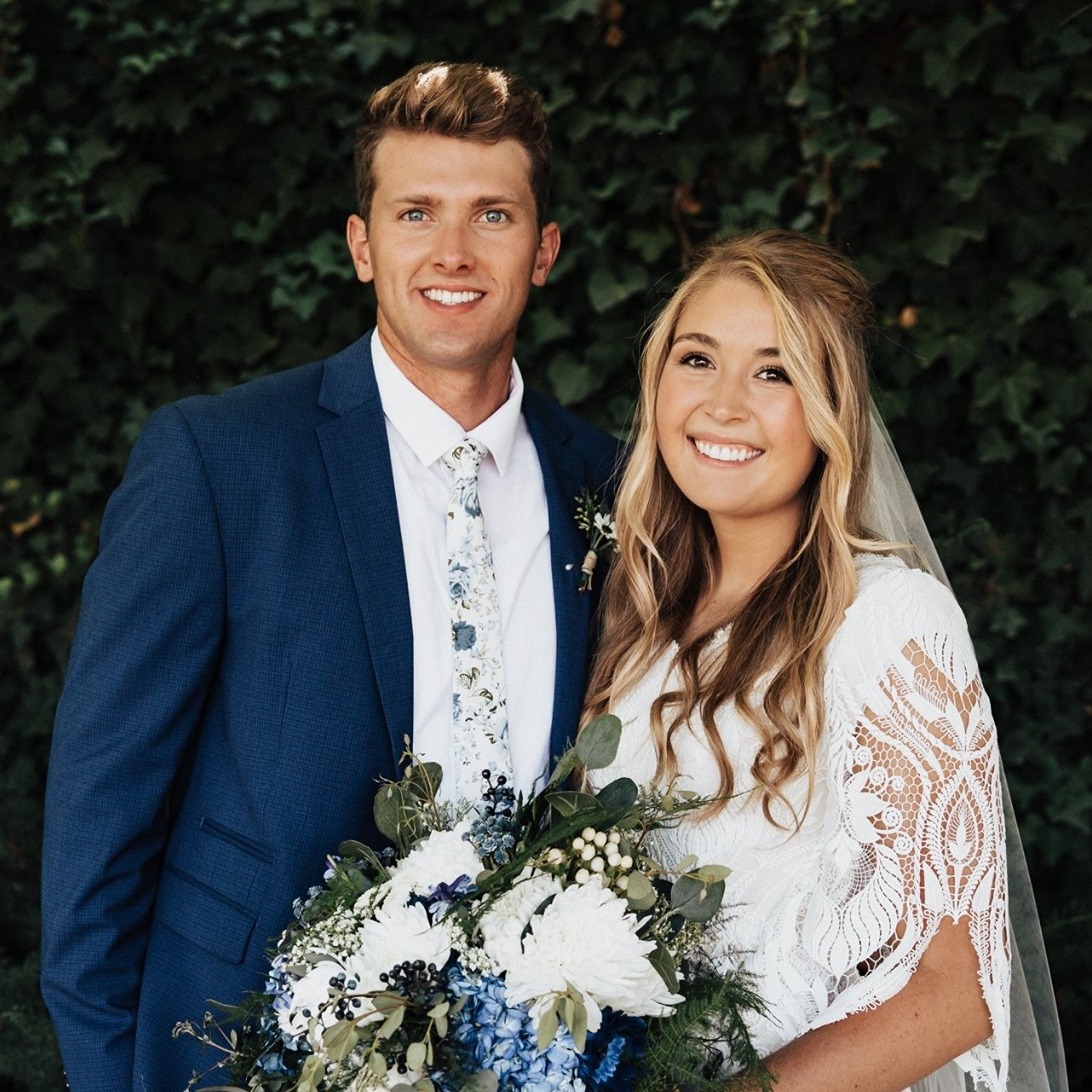
There the truck had sat, after three complete rolls, the crushed and mangled truck, the truck John was not getting back into to stay warm, the truck he does not know how he crawled out of.  And tracking back up the hill I picked up the coins from the spare change bin and the rearview mirror and the individually packaged Lifesaver mints for driving with dates and the loose axe head I found at the county dump and thought I might re-handle but never did – all flying around the cab, around his skull – and his Black Diamond beanie which cushioned his head when he broke the driver side window, and lots and lots of pieces of windshield glass.  And I gathered it all up and saved it to remember the blessing of my boy crawling out of that crushed and mangled pick-up truck.  And now he is married to his sweetheart and they hope to bring babies into this world to love and teach and guide as they grow.  And I am stunned and speechless – still – with the mystery and miracle of what is.

John and Alleigh Baker (August 2020)

Gunshot at Grandma

cherry-pie-723199_1920

Gunshot at Grandma

Grandma recounted how the revolver exploded like a last horrible heartbeat, how the bullet breezed her bangs as it bansheed by, and she showed me the bullet hole in the bedroom door, the door to that space where lovers should love with gentle minds and searching hearts.  The blue-hats told him knowingly to gowalk around the block” and “cool off,” as if overheating were his problem and all he needed was a little cool to salve the steam, but they would not see that the radiator was cracked and fouled.

In the mists of memory the boy came home from elementary school to an empty house and mixed flour with salt and cold shortening and cold water, and stewed a handful of raisins, and baked a raisin pie, and nibbled as he sat in the overstuffed chair and rocked away the silent hours.  The butcher knife leveled at the boy now a man because he dared to say no more hitting and to stand his ground and stare the knifer down and say No More Hitting! until the tyrant dropped the weapon and walked away.  There was thereafter no more hitting.

Grandma stood with me by her bedroom door as she recounted the revolver, and I cannot say for certain, now, whether the bullet hole was in that very door or in the vision of the storied door branded in my brain, in another bedroom, in another house, in another city, in another time, my vision of her memory merged with the immediate door of here – and I knew it did not matter, for the hole in the door was real, and the breeze of the bullet was real, and the ear-bursting bang of the gun was real, and the grimacing man was real, the overheated man steaming from the unbearable burden of her, my Grandma, making it her fault she was nearly murdered in her own bedroom.  To murder was not his purpose, of course, rather to compel the belief that he could and would if she stepped out of line.  To make her cower.

(Above Image by pixel1 from Pixabay )

My Grandma (1909-1994)

_______________________

Roger Baker is a career municipal attorney and hobby writer.  He is the author of Rabbit Lane: Memoir of a Country Road and A Time and A Season.  Rabbit Lane tells the true life story of an obscure farm road and its power to transform the human spirit.  A Time and A Season gathers Roger’s poems from 2015-2020, together with the stories of their births.  The books are available in print and for Kindle at Amazon.  See Rabbit Lane reviewed in Words and Pictures.

Windmill on the Coast of Portugal

Windmill on the Coast of Portugal

Whistle and whoosh come from the aged acrylic, old plywood behind, the building white and blue, though the eight arms stretch suspended and still, hung on my wall in a frame, and I remember these thirty years yet.  Clack . . . Clack . . . Clack . . .  round and round turned the granite circle stone, heavier than heavy, lifted once with a wooden windlass crane to the third-floor attic where eight men heaved and pushed and positioned this stone atop another: only the upper stone turned.  And the clacking stick jiggled the chute and the wheat stones drip-dropped into the center and ground and gristed into white farinha powder to mix with water and yeast and salt and oil to ferment and bloat into the steaming aromatic crisp and chew of bread.  The noise of fitting wood cogs and turning and grinding stones heavy as mountains and the incessantly clacking stick, and outside: the sails, four of them, white canvas, catching the Atlantic and whooshing wildly around with insistent hurricane power, and I knew if I stood errantly and a long arm struck, I would be flung clear to Madeira.  And the jars, those terra cotta jars, an angry orchestra of clay shrieking in thirds and fifths and octaves as they led the sails and followed the circling sails.  I did climb the stone stairs inside the round stone walls to watch everything spinning, the cogs and the wheels and the stones and the central beam – even the roof rotated to bring about the sails – with clouds of choking kernel dust – that central beam one foot square pointing a mile toward the sea, the great roiling ocean of Magalhães and Vasco da Gama and Bartolomeu from whose ship sterns the lusty homesick men watched the sails shrinking and waiving interminably, the shrieking jugs weakened to whispers and then gone, the tiny sails waiving in circles to the big caravel sails on the sea.

(Title painting by Erin Baker)


Portuguese Windmill

(Image by Horácio Lopes from Pixabay)

Half the Student Body

Half the Student Body

“If we had known the severity of your handicap, you would not have been admitted.”  That is what the law school averred, in 1960, when he was wheeled into class – speaking intentionally in the passive, because he could not wheel himself, nor could he write or type, turn the pages of his textbooks, raise his hand in class, feed himself, or use the restroom.  “We don’t have the facilities for you.”

Our anger was a fury sparked by profound injustices.
And with that rage we ripped a hole in the status quo.

But having arrived somehow at the school, he kept rolling on.

I call for a revolution that will empower every single human being
to govern his or her life.

Roommates hoisted him to the floor and turned on the shower so he could roll around to bathe.  Women gathered at his door each morning to greet him and push him to campus.  Law students took long notes longhand, holding them up for him to memorize one page at a time.

Disability is an art.  It’s an ingenious way to live.

At the phrase “I need to” Nelson took him to the restroom, lifted him from his chair, lowered his trousers, clasped him from behind to hold him up at the urinal, or set him on the commode, then tidied and dressed him and took him back to class.

I am different, not less.

Sitting at a study table, when he sneezed from a cold, his head flopped over and hit the table with a bang.  He lifted his head just in time for another sneeze and thump.  A clang every time.  One could not very well hold his head all afternoon in anticipation of a sneeze.  The sneeze simply erupted when it wished, with a heavy clonk on hardwood.

I’m already healed.  Just because I can’t walk doesn’t mean I’m not whole.

He graduated from college.  He slogged through law school.  He was their friend, and they were his friends.  They helped him: half the student body.  He ennobled them by inviting them to join him on his journey.

When everyone else says you can’t, determination says, YES YOU CAN.

A student in a wheelchair, whose name I never knew.  He graduated from that law school where they tried to tell him No.  He became an attorney in the U.S. Patent Office in Washington, D.C.  And he married a lovely girl.  And he fathered dear children.  And he lived a life full and long.

Alone we can do so little.  Together we can do so much.

Quotations from these Powerful Able-Disabled:
-Judy Heumann
-Justin Dart
-Neil Marcus
-Temple Grandin
-Ed Roberts
-Robert Hensel
-Helen Keller

(Image of Stephen Hawking by Gordon Johnson from Pixabay)

Roger is a municipal attorney, homebody poet and essayist, and amateur naturalist.  Roger is the author of Rabbit Lane: Memoir of a Country Road and A Time and A Season.  Rabbit Lane tells the true life story of an obscure farm road and its power to transform the human spirit.  A Time and A Season gathers Roger’s poems from 2015-2020, together with the stories of their births.  The books are available in print and for Kindle at Amazon.  See Rabbit Lane reviewed in Words and Pictures.

Jordan River Cantor

Jordan River Cantor

Dearest Mother,

Tonight I kayaked on the Jordan hoping to see a beaver, for lately I have noticed bits of beaver sign, like newly-gnawed box elder bark, and willow stems sheered with a single toothy slice. Porter’s Landing offers a rubber launching mat, a picnic table pavilion, and a merciful portable toilet: I put in there.  I paddled hard upstream, tense and anxious for wanting to arrive, to see a beaver.  But I regrouped and reminded: when I want to see wildlife, I must release my need to see wildlife.  One cannot ever coerce an encounter: one must allow to happen whatever wishes to happen.  Soon I settled into a smooth rhythmic stride.

Garish orange-black orioles chittered at me from the treetops.  Goldfinch on an eye-level branch watched me paddle by.  Great blue heron glided slowly in, dangling long gangly landing gear.  Cormorant, oil-black, rounded a bend low over the river then veered sharply away.  Kingfisher kept a hundred feet upstream, scolding with each irritated launch.  Canada Goose parents with six fuzzy new goslings paddled single file, an adult fore and aft.  Wild iris sprouted in clumps near the bank boasting delicate butter-cream flowers.  The river was calm and beautiful and slack and dark as the sun began to sink.

One hour upstream would see me back just before dark.  And at that one-hour mark a willow switch swam slowly against the current and stopped at a grass-hidden bank.  I glided slowly by, and there sat a beaver, upright on her haunches in the shallows munching.  A beaver!  Alive and real and close and wondrous – two famous enormous buck teeth, long tawny whiskers, tiny black-bead eyes, little round ears, rust-red fingers holding the branch just like I would hold a branch.  She chewed quickly and loudly and contentedly, completely unaware of my ogling.  But when she heard me she straightened and turned slowly and dove, nonchalant, and as she dove she raised her tail lazily and slapped the water with a cross crack.

My encounter with the beaver felt beautiful and personal and honorific and close.  I will take Hannah tomorrow.  We will ride our bicycles on the riverside trail, and I will show her where I saw the beaver.  We will sit on the trail above the bank and munch our sandwiches and whisper to each other until she comes.

I hope to see you soon.  Love always,

Me

(Image above by Hans Braxmeier from Pixabay.  Images below by author.)