Category Archives: Memoir

Chapter 40: Wind

20140322_182944

— I know what makes the wind. Trees!–
(Laura-3)

The big wind came in the night.  I awoke suddenly to hear the chicken coop’s sheets of corrugated metal roofing flapping and grinding as if under torture, while asphalt shingles beat on the roof over my head with the steady staccato of automatic weapons fire.  It felt like an earthquake, not mere air, shook my bed even as it shook the house.  Violent gusts of wind flung buckets of rain against my bedroom windows.  The house shuddered as each new gale struck, lashing it with rain.  Sleep was impossible. Continue reading

Chapter 39: Erda

20140312_180944

–Erda: the good earth.–

The weekend cowboy had neglected to secure the trailer gate as he drove down Church Road.  Arriving at Russell’s arena, he put his truck in park and hopped out, stopping stunned at the horror of what he saw behind.  Continue reading

Chapter 38: Black-Oil Pavement

100_4766

–Hold on by letting go.–

Toward the north end of Rabbit Lane, the ditch crosses the road through a 36-inch culvert pipe, where the water flows diagonally across Charley’s pasture in a shallow channel.  Charley was losing too much water through the informal channel and decided to install a new culvert a hundred yards or so further south.  He cut a new crossing in Rabbit Lane with his backhoe, dropped in a new section of black pipe, and backfilled around the pipe, restoring the road.  The water now flowed directly west in a deeper channel following a fence line. Continue reading

Chapter 37: Of Caterpillars and Birds

20140322_184804

–The Goldfinch is a splash of brilliant yellow against the white snow and brown earth.–

The ant hill is the sign of a delicate and sophisticated society, mostly unseen for its largely underground order.  The individual ant is tiny but far from delicate.  It is both formidable worker and fearsome enemy, taking on burdens and adversaries many times its size.  Yet its civilization is vulnerable to destruction by the careless shuffle of a shoe.

* * *

Every year we find Tomato Hornworms on our tomato plants.  The surest worm signs are bare branches, stripped of leaves, and large, barrel-shaped droppings.  When I find a fat caterpillar, I always call the children over to see.  Because of their tomato-leaf-green color and subtle markings, the hornworms are very difficult to see, even though they grow fatter and longer than my index finger.  Tracking them by dung and denuded branch is the quickest way to find them.

My grandfather Wallace, a part-time tomato farmer, detested these pests and hunted them doggedly.  Not needing to make a living from my tomatoes, I can afford to not mind a bare twig here and there.  In my garden, a bare branch is an occasion for excitement: a hornworm hides nearby.  The hornworms, earning their name from the stiff pointed horn on their tail end, don’t eat the tomatoes.  The children think the “callerpittars” are amazing, otherworldly creatures.  John (3) bravely held one in his open palm for a moment, then suddenly exclaimed, “He loves me!”

Unlike many moth and butterfly larvae, tomato hornworms dig into the earth to pupate.  They lie in the ground all Winter long and emerge in the Spring as tomato hornworm Hawk Moths.  Finding a hornworm, I have the children help me to prepare a shoe box with about two inches of loose, moist soil in the bottom.  We feed the caterpillars tomato leaves until their swelling, green bodies disappear to become dark-brown pupae in the soil.  We leave the box outside in a sheltered spot (where the cats won’t dig).  Occasionally we drip a little water on the soil to keep it from totally drying out.  In Spring, with the appearance of the first flowers, we put the box where it can warm in the sunlight, and we watch every day for the hawk moth to emerge.  To escape its pupa shell, the moth emits a liquid substance that dissolves a hole in the shell.  The new moth crawls out and spreads its wet, wrinkled wings and vibrates them rapidly in the sun’s warmth.  The vibrations pump blood from the moth’s body into the wing veins, causing them to spread open and smooth.  The wings quickly dry.  If this procedure is not completed successfully, the moth will never fly.

Hawk moths flit from flower to flower, sometimes chasing each other.  Their wings beat so fast that you see only the vague blur of wings.  The large moths look much like small Hummingbirds, and also enjoy the name Hummingbird Moth.  They feed while flying, like Hummingbirds, uncoiling their long, tubular, hollow proboscis to suck nectar from flowers.  Tomato hornworm moths are particularly striking, with soft red bands on their underwings.

We found a Hummingbird Moth floating in the children’s little wading pool.  We thought for sure that it was dead.  Putting a hand under it and lifting it from the cold water, I found that it moved its legs weakly.  We placed it on the sidewalk in full sunlight.  After a few moments, its wings dried and began to vibrate, circulating blood through the wing veins and warming the body.  The moth was a miniature, self-contained solar heating unit.  It suddenly rose from the sidewalk and flew away in search of nourishment.  We felt a hint of happiness at helping to revivify the moth.

I once gave a large Tomato Hornworm larvae, and a box with soil, to my nephew, Thomas (3).  Months later, he reported to me sadly that his moth had hatched.  Asking him why he was unhappy, he said, “I like the moth, but I miss my caterpillar.”

* * *

The children came running to me with alarm in their faces.

“A hummingbird . . . in the garage!” they gasped, trying to catch their breath.  Following them, I found the double-door up, the garage entirely open, yet the Black-chinned Hummingbird confounded and trapped inside.  Apparently, its instincts drove the tiny bird to fly always upward.  It buzzed around the garage with its beak to the ceiling, and could not see the obvious way out.  It stopped frequently to rest on the highest object it could find.  The bird looked at us nervously as we paced around the garage, but still could not discern the way to freedom.

I could see the hummingbird’s fatigue and hoped that, if I could catch it, it would have sufficient strength to fly away to find food and not fall easy prey to an opportunist cat.  I grabbed the long-handled butterfly net that stood in the corner of the garage.  The net was new enough to have survived active children chasing chickens and cats with it.  I raised the net and cautiously approached the hummingbird.  It jumped from its perch and flew to another resting place.  I quickly followed.  After repeating this for several minutes, I began to get a sense of its evasion pattern, remembering my old butterfly catching days.  Anticipating its next jump, I swung the net ahead of the bird, flipped the net to prevent the bird’s escape, and brought the net quickly but carefully to the cement floor.

Reaching my hand into the net, I wrapped my fingers around the bird tightly enough to keep it from flying away but loosely enough to avoid injuring the delicate creature.  The terrified bird peeped weakly and tried to flutter its trapped wings.  Bringing the tiny bird out from the net, I held it up for the children to see.

“That’s so cool!” one child exclaimed.  Then they all began to clamor, “I want to hold it!  I want to hold it!”

“Go ahead, touch it,” I invited, instructing them how to carefully stroke the iridescent, green feathers and to touch the wiry, black feet.

We walked out of the garage into the Summer sun.  Each child placed their hands under mine, and on the count of three we released the little bird.  It hovered erratically for a moment, then, gathering its bearings and new strength, it flew off to the south.  The hummingbird stopped for a moment at the feeder hanging from the arbor, full of sweet liquid, then flew high into the sky until we could no longer see it.  The children (and I) were thrilled at having touched and seen up close such a tiny, wild, beautiful creature.  We felt happiness inside knowing that we had rescued it and set it free.

* * *

An injured Western Kingbird flopped wildly on the pavement of Church Road near the intersection of Rabbit Lane.  It must have been struck by a passing car.  As I bent to pick it up, it opened its black beak wide and squawked in terror in a desperate but feeble attempt to protect itself from what it could only perceive as the attack of a giant predator.  I carefully folded the injured wing and cradled the bird inside my jacket as I carried it home.

I awoke Laura (9) and invited her help to dress the bird’s injuries.  We swabbed the wounds with disinfecting peroxide.  The bird still pointed its open beak at our awkward fingers, but had stopped verbalizing its protests.  We then wrapped the bird so that both wings were gently pinned against its body.  When the bindings were removed, we reasoned, the strength in the mended wing would match the strength of the good wing.  The wings would gather new strength in concert.  Satisfied that this was the best chance the bird had to heal, we carried it outside to a small, protected pen and set it down upon its feet in the straw.  We hoped we would be able feed and water the bird long enough for it to recover.  We would have to catch bugs, since its diet did not include seeds.

Releasing the bound bird, it immediately fell over onto its face.  The bindings had rendered it completely helpless, like you or I would be if wrapped from head to toe with only our toes exposed for mobility.  It needed its wings for balance as well as for flight.  Discouraged, Laura and I removed all of our careful wrappings and did our best to splint the broken wing.  This less invasive treatment allowed the bird to stand and walk about, but the bandage wouldn’t stay on for the difficulty of attaching it to the wing feathers.

Despite our well-intentioned but fumbling efforts, the Kingbird died after three days.  Still, I was glad we had rescued the bird and attempted to nurse it back to health.  The thought of leaving the frightened bird in the roadway to be smashed by the next passing car saddened me.  Also, handling the small but proud creature, and working to heal it, had worked a change in us.  We felt a greater awe in nature’s wild things and a deeper grief at their loss.

* * *

An old Warbler nest hangs, swaying, from a low willow branch like a balled up, gray woolen sock.  It clings to the branch through the strongest of winds.  Gusts topping 80 miles per hour have neither torn it apart nor pulled it from its suspending branch.

100_1902

A lone Crow flies south behind a V-formation of Canada Geese.  It caws loudly despite a large parcel in its beak, defiant toward the fable of the fox and the crow.  This seems to be a smarter, more talented Crow.  Is this Crow lonely or content in its aloneness?  Do the geese communicate, or do they merely find comfort in their raucous propinquity?

A cock Ring-necked Pheasant croaks unseen in the tall grass, nervous at my approach.  When I stop to search with my eyes, he seems to suspect me of bad intentions, and flaps inelegantly into a tree, landing clumsily in its top branches, his feathers thrashing against leafy twigs.  On Rabbit Lane, feathers from a Pheasant hen lay scattered about, chestnut brown barred with beige.  Nearby sits a pile of spent red plastic shotgun shells with brass caps.

When the Robin appears, pulling at worms, I know that Spring is near.  Hummingbirds whir and zoom looking for early flowers.  They light in me a tiny spark of joy that has lain smoldering all Winter.

The Killdeer scream at me, draw me away from their spare nests that lie hidden in the rocks and gravel, flapping their striped wings as if injured.

In a chaotic, white cloud of winged, shrieking voices, whirling and churning around me, charging my senses, thousands of California Gulls descend upon a newly ploughed field next to Rabbit Lane.  I perceive no order in their loose, gregarious grouping, unlike flocks of geese following a leader in formation.  Milling around in search of upturned earthworms, the flock calls raucously, sounding like a thousand tuneless New Year’s Eve noisemakers.  Despite their awful sound, the birds are beautiful: sleek white feathers with gray tips, a red dot on each side of the creamy yellow beak.  In flight, their streamlined bodies and powerful wing beats propel them through the air, with their black webbed feet tucked into their downy white undersides.

At Boy Scout camp at Lake Seneca, New York, the older boys sent me to ask another troop for a left-handed smoke-shifter, then took me on a snipe hunt.  I found neither the device nor the creature.  Only after moving to Erda did I learn that the Snipe is a real creature, a water bird.  Smaller than an Avocet, the Snipe roams the ditches and wetlands, poking its beak into the mud for insects and small crayfish.  On many an evening I strained to discern the source of a soft, ghostly, reverberating sound moving over the farm fields.  But I never found it.  Explaining this mystery to Harvey one afternoon, he told me to look high into the sky whenever I heard the sound.  There, I would see a small dot, the ventriloquistic Snipe.  Flying high, the Snipe turns to dive and roll at breakneck speeds toward the ground.  Wind rushing through its slightly open wings creates the haunting sound.  The Snipe throws the sound somehow from those heights to hover foggily over the fields.  I hear it less and less as the years pass.

The water from Rabbit Lane’s ditch crosses Charley’s pasture diagonally, bogging at the northwest corner.  Twenty or more striped Wilson’s Phalaropes cackle harshly at me as I walk by, their long legs sunk in the bog and their long beaks searching for insects and invertebrates.

Birds twitter in the willow bushes by the irrigation ditch.  Birds sing from the Russian Olive trees.  Birds call and screech and chirp from bushes and branches, from the tops of cedar fence posts and in flight.  How does one describe the song of a bird?  My National Geographic field guide to North American birds assigns all manner of syllabic writing to bird songs and calls, none of which words approach a satisfactory description of the music.  In English, the Crow is synonymous with the “caw.”  These meager descriptions are like saying a note played on the piano sounds like plink, like a model-T horn shouts ba-OO-ga, like a baby’s cry is waaaa.  No euphemistic reduction does justice to the genuine song.  Thanks to Cornell University’s ornithology lab, new bird books allow the reader to push a button and hear each bird’s unique song, sometimes a humble peep, sometimes a glorious, frenetic melody.

The Western Kingbird’s song resembles chaotic, unpatterned electronica.  A Bullock’s Oriole splashes its ember-orange on a canvas of blue-green Russian Olive.

The Western Meadowlark sings frequently from the tops of cedar tree fence posts.  Even driving at 60 miles per hour with the window cracked, I can hear its piercing but beautifully melodious song.  Attempts to whistle the tune bog it terribly down and omit half the notes, each critical, resulting in a sometimes recognizable but always shabby imitation.

A Black-chinned Hummingbird perches on a strand of stiff barbed wire, surveying vast fields of grass.  Its black beak points as straight and as sharp as the silver barbs, yet the bird possesses a softness and a beauty incongruous with the hard wire stretched tight.

A Field Crescent flits from place to place on Rabbit Lane’s asphalt, flying a low dance around my walking feet, making momentary spots of brightness against the ubiquitous gray.

Chapter 36: Shirley and Lucille

100_1023

–Please help us to not be mean.–
(Hannah-3 to God.)

Lucille, in her 80s, still lived in the tiny clapboard shack in which she had birthed her children, surrounded by her family’s historic grain fields, next to the small brick house in which she herself had been born.  The shack’s “facilities” were to be found in a one-seater outhouse 30 feet behind the house.  One very cold morning after an even colder night, a neighbor found her sprawled on the icy ground, her body frozen.  She must have slipped or tripped returning from the outhouse, was unable to get herself up from the ground, and slowly went to sleep as the overpowering cold seeped into her warm body.  Continue reading

Chapter 35: Canoe Trip

20150511_175239

–Being accomplishes more than doing.–

Our fast-paced society places so much emphasis on getting things done.  We often base our self-esteem on the completion of routine tasks.  I say to myself, “I had a good day: I got so much done.”  But what did I really accomplish?  Did I make a meaningful contribution to the world? Continue reading

Chapter 34: Of Ducks and Geese

20150317_160746 crop

–Away I must fly.–

From over a hundred yards away, I hear the enormous sound of what surely is a hundred geese cackling in loud cacophony.  I cannot see them in the pre-dawn darkness.  But in the growing light of my return walk, I make out the small gaggle of only a dozen very loud domesticated white geese as it mills under the venerable Cottonwood in Craig’s pasture, making its only-as-a-goose-can-do honking. Continue reading

Chapter 33: Shooting Stars

20140330_195219

–Be kind.  Always.–

Turning from north to south at the half-way point on my Rabbit Lane walk, I look southeast toward the mountain peaks still sleeping under the early-morning sky.  A star rises from behind a peak and continues in its slow journey toward zenith.

To the east of where I walk, strings of lights move slowly in the distance, white lights crawling forward, red lights inching away, two parallel lines of progress making their way to and from the offices and factories and stores of wares.  They send forth a collective engine-and-tire hum to hover over the fields with the fog.  A Union Pacific train’s whistle flows out gently over the valley from its tracks on Lake Bonneville’s fossil bank.  In the west, the lighthouse, itself out of sight, emits soft sweeping beams: white-green-white-green.  The beams penetrate Winter’s ice-crystal air to trace slow arcs across the gray belly of the sky, a ceiling above me, above Rabbit Lane.  The universe of stars—the heavens—are out there, somewhere farther above, hanging mostly hidden by clouds.  My fingers, toes, ears, and nose ache from the crystalline cold. Continue reading

Chapter 32: Snow Angel

20140312_181127

–Sweetness: that which induces a slow rolling of the tongue, a gentle closing of the eyes,
and an escape from the lips of a sensuous, sighing, “ahh.”–

Two young girls rode their bicycles down Church Road coming from the direction of Rabbit Lane.  Working in the yard, I looked up just as one bicycle, ridden by the younger girl, slid on a gravelly patch, and she fell face forward onto the asphalt.  I ran toward the crying girl, about six years old, with my concerned children following close behind.  Blood oozed from abrasions on the girl’s knee and elbow and cheek, and a tooth was broken. Continue reading

Chapter 31: Hurry Up and Play

IMG_8399

–I’m rich!–
(Caleb-3, upon finding two pennies.)

Though running late for work one morning, I felt a determination to take my walk on Rabbit Lane.  Quickening my pace on the crunching gravel, I found myself thinking: If I hurry, maybe I can finish my 30 minute walk in 20 minutes.  The absurdity of my thought struck me instantly.  I chuckled to myself, but could see that my thinking deserved further study.  I might as well have said, If I hurry, maybe I can short-change myselfContinue reading

Chapter 30: Good-Bye Harv

20140330_195948

–To change the world, we must first change ourselves.–

Harvey had to leave.  He lost everything he owned.  He moved out to the West Desert to live with a mountain man friend who lives in a teepee.  He said he would do fine, but worried about staying warm enough and getting enough to eat in the freezing winters.  I worried for him, too.  I did what I could to help Harvey, examining legal documents, but it was too late. Continue reading

Chapter 29: Gardens

2013-05-28_19-03-37_332

–Knock, knock.–
–Who’s there?–
–I got up.–
–I got up who?–
(Hyrum-4 with Dad)

Despite the bright blue sky and the sun’s brilliance dazzling from millions of ice crystals in the fresh skiff of snow, I felt crushed by life’s burdens as I trudged alone along Rabbit Lane.  The burdens of being a husband and provider and father to seven children.  The burdens of being legal counsel to a busy, growing city.  The burdens of maintaining a home, of participating in my church, and of being scoutmaster to a local boy scout troop.  The burdens of being human.  While the sky above me opened wide to space, these responsibilities bore down heavily upon my heart.  They seemed to darken my very sky. Continue reading

Chapter 28: Away with Murder

20130724_164623

–People who destroy are people who have not created.–

Rabbit Lane is a peaceful place.  The water trickling through Watercress in the deep ditch, the exotic purple and yellow blossoms of the Bitter Nightshade vines, the gently waving and rustling fields of ripe oats, the deep green of the ripe alfalfa.  The solitude.  After a few minutes on Rabbit Lane, all of this works together to settle my turbulent mind.  Usually.

On occasion, though, troubling memories from a piquant past press themselves upon the serenity of the present.  Images of a mother and her three children sometimes appear, without apparent cause, from many years earlier.  I have tried to forget these images, but cannot.  I also cannot forget how a guilty man got away with murder. Continue reading

Chapter 27: Sparring Skunks

100_1885

–I heard the sun and waked up!–
(Caleb-3)

The Stansbury mountain range is a succession of high peaks, some above 10,000 feet, each a lighter hue of gray proportionate to its distance.  In the moments before sunrise, the clouds and sky form a sea of swirling scarlet, orange, red, and pink.  The western face of the Oquirrh range once boasted thick pine forests.  But over-harvesting, together with decades of settling particulate pollution from the now-defunct Anaconda smelter, denuded the mountain slopes of their forests.  They now show mostly fault-fractured bedrock.  With the smelter gone, the trees are slowly returning, starting from deep within the canyons and creeping back onto the slopes. Continue reading

Chapter 26: Of Dogs and Cursing

20140330_180703

–Kind words counter the world’s cruelties.–

Quiet is a rare luxury at our house.  If not the cows or dogs or pumps, I can usually count on my children to fill my quiet moments.  But not all noise is unpleasant.

One day Hyrum (2) said sternly to his big brother Brian (14), “Brian, don’t keel anyone.  OK?  Because it’s dangerous.”

He was dead serious, as if in grown-up conversation.  It was apparent that the word kill had only a vague meaning to him.  It didn’t equate to the loss of life, but related more closely to roughhousing or child’s play, as in “Bang!  Bang!  You’re dead!”  Continue reading

Chapter 25: Shining Shoes

20140406_220428

–Knock, knock.–
–Who’s there?–
–Shampoo.–
–Shampoo who?–
–Made you look! Made you look! Made you eat your underwear!–
(Caleb-3 to Dad)

As a four-year-old, Caleb loved cowboy boots, though he didn’t have any of his own.  Somewhere he found some hand-me-down boots, one brown and one black, different sizes, both for the left foot.  He wore them everywhere, without socks, running in shorts and a t-shirt around the yard, whooping and hollering, digging in the garden, shooting his stick rifle, tromping in the pig pen.

My dress shoes hold their shine quite well for several months.  But eventually the time comes when I need to polish them.  Shining my shoes quickly becomes a family affair.  It seems that the moment I open the can of polish, the strong smell runs throughout the house, as if summoning the children, and they in turn come running, each with at least one pair of their own shoes.  They watch me patiently for a minute or two.

“Can I help you shine your shoes, Dad?” they each ask.  Next, “will you help me shine my shoes?”  Then, “Can I shine my own shoes?”

In the 1970s, before I can remember him doing it, my father made himself a wooden shoeshine box.  He made one for me at the same time, with my initials carved artistically in one end: REB.  The ends of the shoe box are shaped like broad spades; the sides slant inward and down to form a narrow bottom.  The wide lid is hinged, and a cross bar connects the tops of the two spade handles.  The box is stained a rich walnut.  Inside the box sit various cans of polish: dark brown, light brown, tan, cordovan, ox blood, white, and two cans of black.  The black polish gets used up the quickest, because I use it on every shoe to dress up the sole and heel edges.  Mixed in with the cans are various old gym socks and toothbrushes.  My favorite item is the wood-handled horse-hair brush made in Israel.  Over more than 30 years of polishing shoes, the horse hairs have slowly shortened to about half their original length.  But the hairs remain just soft enough and just course enough to give a perfect shine.

I formerly used the old gym socks, wrapped around my fingers, to apply the polish.  But I grew tired of dark stains on my fingertips where the polish seeped through the socks.  Now I use old toothbrushes to wipe the thick polish out of the can and work it into the leather.  When I’m done, the toothbrushes go into the socks to keep the box clean.  The polish dries and flakes inside the toothbrush bristles, so I vigorously work the bristles back and forth against the inside of the sock, both when putting the brushes away and when retrieving them for the next job, so that I don’t scatter specks of dried polish that stain my clothing and the carpet the next time I pull them out to polish.

I usually have enough patience to polish three pairs of shoes.  The number reduces to two if the children are clamoring to help.  Allowing a child to participate in shining shoes complicates the process significantly.  I place the can carefully on a rag so that the helping child doesn’t smear polish on the carpet or furniture.  I make sure he doesn’t scrape too much polish onto the brush to prevent globs from falling onto the carpet.  I see that she doesn’t fill the crevices and holes in the leather with polish, like putty.  I double check that every bit of leather has a film of fresh polish.  I let them help with the polish for a little while.  What works best is for me to apply the polish and to let them shine the shoes with the horse-hair brush.  Nothing can go wrong with shining.  Shining works best by placing one hand inside the shoe and passing the brush over the shoe with even, swinging strokes with the brush hand.  The in-shoe hand turns and angles the shoe to allow the brush to shine every part of the shoe.  I show the children how, then hand them the shoe and the brush.  Their little hands don’t fill the shoe like mine, making it harder to hold the shoe steady in the face of the swinging brush.  But when their hands grow, they will know how to hold the shoe steady for the best shine.  Their feet will grow, too, and their hearts and their minds, and will fill larger shoes than mine.

Many times after church and our mid-day meal we take a family walk on Rabbit Lane.  I sometimes forget (or am too lazy) to change out of my newly-polished shoes.  Back from our walk, I see that fine dust from the dirt road has settled upon my shoes, covering the polish.  A few strokes with the horse-hair brush usually restore the shine.

I find myself shining my shoes less and less over time.  As my shoes age, I feel less motivated to keep them looking nice.  I wear them scuffed, unpolished, and old.  Some lawyers I work with never seem to shine their shoes.  If the polish gets significantly scuffed, they simply buy new shoes.  I wear mine until they are worn out, polishing them (or not) for years.  Even an old shoe assumes new respectability with a fresh coat of polish.

I like the pungent odor of shoe polish: it reminds me of my childhood home and the aroma of my father’s regular shoe polishing.  He kept his wooden shoe shine box in his walk-in closet, with his initials carved in the side: ONB.  But not everyone enjoys the strong odor.  I fret that if I polish my shoes in my closet, it will smell up my wife’s clothing.  Maybe I should polish my shoes on the porch, or in the tool shed, or in the chicken coop, where the smell won’t bother anyone.

Chapter 24: Remembering the Day

20140330_195219

What I like best is being with you.

The hour was 10 p.m., long after the children’s bed times.  I had come home late from city council meeting, and had settled into the sofa with cookies and cold milk, Grandma Lucille’s crocheted afghan over my lap, and a book of Sherlock Holmes mysteries in my hand.  Finally, it was time for a little quiet enjoyment. Continue reading

Chapter 23: The Day’s Song

100_1047

–The music is everything.  Can we hear it?–

Erda and Rabbit Lane lie in the low lands of the Tooele valley.  Still, we are high enough to see the silvery ribbon of the Great Salt Lake lining the horizon.  The northerly breeze often brings with it the smell of salt in the air as it brushes over the enormous lake, transporting me through the darkness to days of my youth spent beach combing and sailing near New Jersey’s Sandy Hook, looking across the bay to the iconic twin towers that exist now only in memory and in mourning, and in old photographs. Continue reading

Chapter 22: Reza

100_1027

–Good men and good women make great differences in the world.–

My Persian friend, Reza, joins my family on occasion for Sunday dinner.  Over several Sunday visits, he told us parts of his life story, including how he left his homeland of Iran.  Reza had been a wealthy industrialist in Iran: young, educated, and ambitious, with millions of dollars invested in an industrial complex fabricating modular housing units.  Then the Ayatollahs overthrew the Shah and began their reign.  The new regime did not at first seem to pose a threat to Reza or his industrial operations.  Soon, however, they began to appropriate the proceeds of his operations while at the same time demanding that he continue to incur all his operating costs. Continue reading

Chapter 21: Cricket Chorus

100_4967

Hyrum, you’re my little bug.

Under low, heavy clouds and a light, misty rain, the lighthouse beam shines in a shaft for miles as it slowly sweeps the sky. Continue reading

Chapter 20: Of Cows and a Stray Bull

20140312_180757

–Cows have such large, glossy, gentle eyes.–

Ben was attempting to herd his cows from one field to another as I walked in his direction on Church Road.  The process first involved opening the gate at the receiving field, then opening the gate at the sending field.  In theory, Ben would then shoo the cows out of the sending field down the road and into the receiving field.  At the open sending field gate, Ben’s wife and children lined themselves up across the street, arms outstretched, forming a barrier the cows were supposed to respect.  The kine, however, had ideas of their own, and strolled indolently between Ben’s kin. Continue reading

Chapter 19: Porn

100_1074

–The Sego Lily is the most delicate and elegant of chalices, a veritable grail.–

The state highway traverses the valley three-quarters of a mile away, perpendicular to Church Road as I approach Rabbit Lane.  In the dark morning, a long line of white headlights travels north toward the Great Salt Lake, becoming red taillights as I pan from south to north.

Where do they all go? Continue reading

Chapter 18: Mary

IMG_0013

–Bend, bend, but don’t break.–

I had rescued Austin from his fall just two years before.  Now the barrel-chested man was gone.  Mary, his widow, a diminutive black-haired woman in her nineties, lived alone.  We tried to visit her one afternoon.  We knocked and knocked, but no one answered the door.  Later we learned that she slept during the day and lived her waking life at night.  I now understood the dim yellow light that glowed late at night from her living room window. Continue reading

Chapter 17: Foreshadowing

100_1012

–The Milkweed will push through to grow tall, fragrant, and beautiful, to call the Monarch.–

The disc cushioning my lumbar 4 and 5 vertebrae has been bulging capriciously since I was 12 years old.  It was then that I experienced my first unexpected spine-twisting spasms that paralyzed me sitting in my church pew.  A bulging disc means a frequently aching back, with locked joints and tense muscles.  The pain is always different depending on which way the disc is bulging and, more importantly, which area of the spinal nerves the disc is irritating.  While it becomes difficult and painful to bend, I somehow always manage to dry my feet after a shower, to shimmy on my socks, to tie my shoes, and to drive to work, even if I do have to lie occasionally on the floor during the mayor’s staff meeting. Continue reading

Chapter 16: Around the Fire Pit

100_1069


–I’ll help you learn to walk.–
(Erin-10 to Hyrum)

One Monday evening after dinner, the whole family walked on Rabbit Lane.  The sun was setting large and red, and the chilly Spring air settled upon us as we returned home.  We gathered around our new fire pit to tell stories, sing songs, and roast apples and marshmallows, sitting on camp chairs and logs. Continue reading

Chapter 15: Of Foxes and Hens

100_1871

You are my best friend and my big buddy.
(John-3 to Dad)

The day-old chicks arrived at the store in a box delivered by U.S. mail.  While I had ordered only half-a-dozen specialty breed pullets, they came boxed with two dozen unsexed White Leghorns for cushioning and warmth.  I had hung a heat lamp—a warm if impersonal surrogate for their mothers’ downy breasts—in a makeshift pen because the chicks were too tiny and frail to generate enough of their own body heat against the chilly Spring nights.  The hanging lamp radiated light and heat downward to make a spot of warmth in the straw where the chicks gathered close to rest.  I don’t think they ever fully slept, for the light.  But they were warm and safe and comfortable. Continue reading

Chapter 14: No Trespassing

20140318_181818

–A butterfly graces equally the idyllic mountain meadow and the urban flower box.–

On a cedar fence post near Rabbit Lane an old sign announces “No Trespassing.”  The letters were burned or carved into the worn and weathered plank.  The sign has been cracked by the black head of a rusting iron nail driven into the cedar post.  The sign has long ago lost any intimidating aspect, and it now resembles the endearing smile of a gap-toothed old man. Continue reading

Chapter 13: Of Goats and a Pot-Bellied Pig

100_4971

–Our garden is going to grow because of this beautiful rain!–
(Caleb-3)

Caleb (2) loved to feed the goats.  We kept a bucket under the sink into which we scraped all the table scraps and vegetable peelings.  Each time Caleb saw the bucket, he cheered, “Goatie, goatie!”  I carried the bucket in one arm and the boy in the other to the goat yard, dumping the bucket’s contents into the lopsided plywood manger I had made.  At 14, one of Caleb’s daily chores was to empty the scrap bucket into the pig pen, and it was no longer an occasion he looked forward to. Continue reading

Chapter 12: Worm Sign

100_1032

–A sincere smile can change the world.–

The night’s rains have turned the hard-packed-dirt surface of Rabbit Lane into a thin slick of mud, with small pools in the valleys between washboard peaks.  Long earthworms, flushed from their deluged burrows, make their tedious way across the muddy film, seeming to wander without any sense of where they need to go.  Slight worm tracks criss-cross the slick: shallow smooth ruts, their directions and intersections chaotic, random, crossing over and following each other without discernible pattern.  They leave only faint signs of their humble existence. Continue reading

Chapter 11: Austin

100_1020

–The measure of one’s greatness is one’s goodness.–

Sitting on the porch lacing my boots for a walk on Rabbit Lane, I heard the distant bellowing of a distressed calf.  Something in the bray was not quite right, sounded a little off.  I had heard lost calves calling for their mothers before.  I had heard desperately hungry calves complaining before.  I had heard lonely wiener calves bellowing for their removed mothers before.  This calf call sounded strange; perhaps, I thought, not even a calf at all.  I turned my head to pinpoint the source of the noise.  It came from behind Austin’s house, where there should be no cows and, in fact, were no cows.  An ignorant urgency sent me running through the intervening field to Austin’s back door.  There lay Austin, helpless, in abject distress, fallen across the threshold of his back door and unable to arise, the screen door pressing upon his legs.  He shouted and bellowed with his deep and distressed bass voice.  I wrapped my arms around his prodigious barrel chest and heaved as gently yet as forcefully as I could to raise the big man from the ground. Continue reading

Chapter 10: Country Quiet

100_1038

–If I say I’ll never do something, I never will.–

The country was not quiet, not like we all thought it would be.  Cows mooed, horses neighed, chickens clucked, dogs barked and howled, cats fought, chasing each other around the house, pea cocks called mournfully, and roosters cock-a-doodle-dooed.  I had always thought that roosters crowed at sunrise, waking the farmers for their morning chores.  But I discovered that the roosters in Erda crow all night long. Continue reading

Chapter 9: Witch’s Tree

100_1895

–Desire teased spawns vice.–

My boots crunch loudly on Rabbit Lane’s loose gravel.  The noise reverberates in the air and in my brain and distracts me from the peaceful quiet of my surroundings.  I imagine the noise to be similar to that of chewing crisp carrots with tight earphones on.  I find myself wandering within the roadway in search of the path of least noise generation potential.  Part of me doesn’t want to startle the wildlife, which in turn startles me with a sudden rustling of wings or splashing of water.  I also don’t want to interfere with nature’s soft voices.  A bigger part of me simply doesn’t want to draw attention to myself, not even from the animals.  On Rabbit Lane, at least, I can be free of critical eyes and voices.  Still, even here, alone, I instinctively avoid the noise that would bring the attention of looks and whispers in other places. Continue reading

Chapter 8: Tracks in the Snow

20140406_220701

–Wherever I am, I find that the road stretches both ahead and behind.–

From the airport lighthouse shine alternating beams of white and green light, ghostly sweeping columns in the crystalline air against the undersides of low-hanging clouds.  Here, walking in this desert, I imagine a lighthouse perched on a craggy rock cliff, overlooking ocean waves beating themselves in ferocious crashes against the rock, and ships with trimmed sails rocking, taking on water, close to sinking, with frantic, frightened sailors looking to the light as to a savior, the only thing in the world they can cling to, trust in. Continue reading

Chapter 7: Turtle Lodge

100_4764

How can we get closer to God?
In airplanes . . . and helicopters! Vvrroooom!
(Caleb-3 to Dad)

Harvey’s property was special to the Indians.  They needed a place to perform their ceremonies, where it was quiet, where animals and nature were close, and where Indians were welcome.  Harvey’s place fit the requirements.  The Skull Valley Band of the Goshute Indians had established Harvey’s land as an official Indian worship site.  Local Indians of several tribes set up a turtle lodge and held their sacred sweat ceremonies there.  Harvey invited me repeatedly to attend a ceremony.  Resisting what I didn’t understand, I politely put him off.  One Saturday, though, I reluctantly agreed, admittedly nervous to attend.   When I came home several hours later, the children found me exhausted, my hair sweaty and matted.  I took a big drink and a shower, then flopped down on the couch.  They begged me to tell them all about the Indians and their turtle lodge.  I sighed wearily, then told them of my experience with the sweat ceremony. Continue reading

Chapter 6: Harvey

20140330_200115

–Small acts of kindness soften the soul.–

“Let’s go over to Harvey’s,” I suggested one Sunday afternoon soon after moving to the country house.

“Who’s Harvey?” asked Brian (8).

“Harvey is our neighbor,” I explained.  “You’ll like his place.  He has lots of animals.”

We walked down Church Road toward Rabbit Lane, past Russell’s arena, and turned up the dirt drive to Harvey’s log-sided house.  No one answered my knock at the door, but I thought it would be alright if we looked around at Harvey’s animals.  We smelled the animals before we saw them: skunk.  No doubt about it.  A wrinkled, water-stained sign wired to the cage read, Stay Away. Continue reading
Chapter 5: Old Cottonwood

100_4762

–Engage your mind or others will engage it for you.–

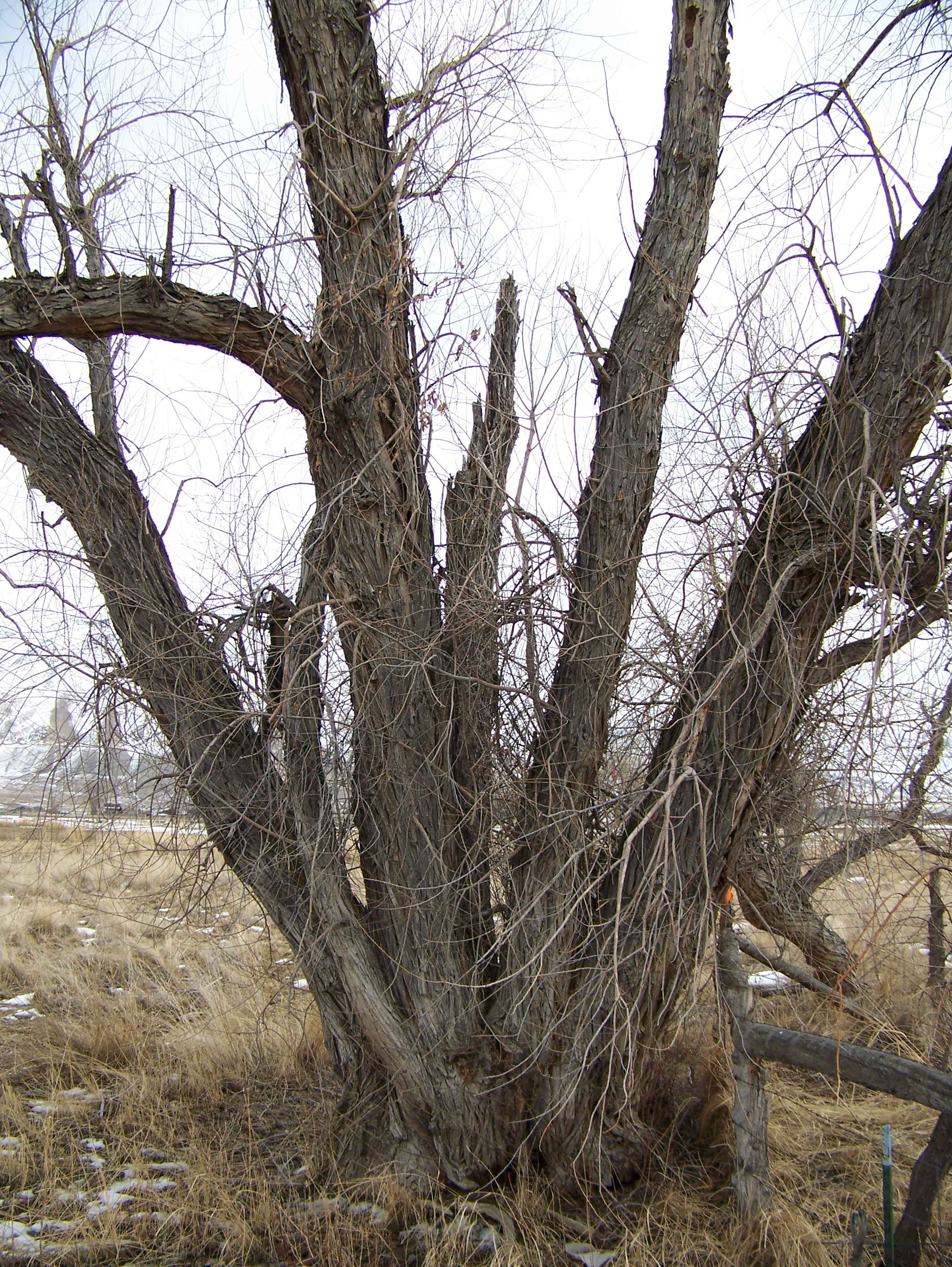
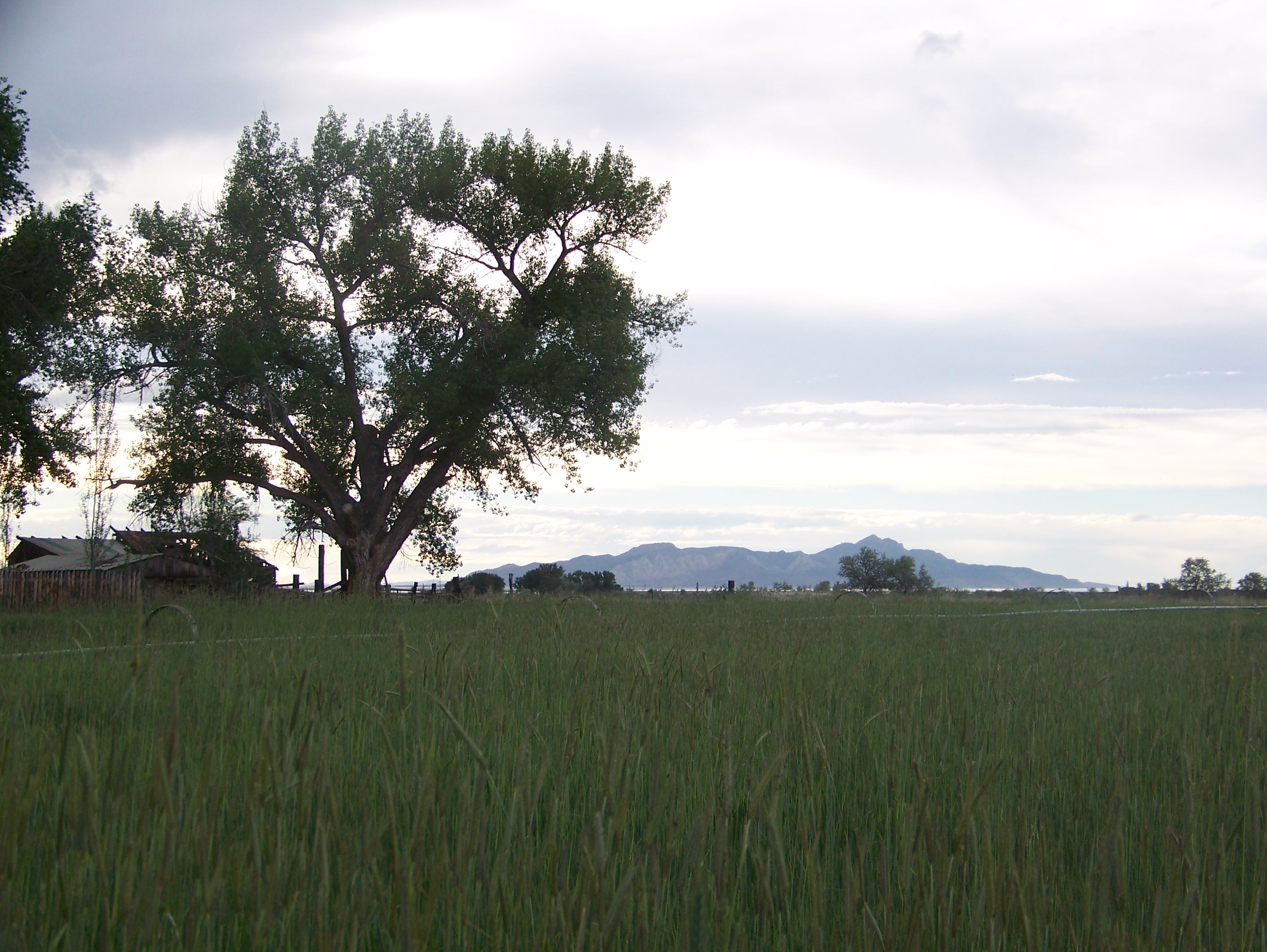
Cottonwood trees are the legacy of the departed farmer.  Once mere twigs, they grew quickly to become giants of the valley landscape.  The oldest Cottonwoods are slowly dying.  Each Spring the emerging leaves draw in closer to the trunks, leaving more of the outstretched branches as bare as skeletons.  More and more bark sloughs off, leaving the trunks to bleach in the Summer sun.  Dead Cottonwood trees resemble the ruins of medieval cathedrals.  The bare branches seem sculpted and shaped, like the flying buttresses that once supported a stone ceiling but that now lift up the ceiling of the sky. Continue reading

Chapter 4: Desert Lighthouse

100_4765

–Only small people seek to make other people feel small.–

Our first night in the country house, the children all slept in mom’s and dad’s room.  We offered this arrangement until they felt comfortable sleeping in their own rooms.  One night several weeks after moving to her own room, Erin (5) couldn’t sleep.

“Daddy,” Erin called in a loud whisper.

“What?” I moaned groggily after a moment.

“The lightning is keeping me awake.”

“What lightning?” I yawned.  “I don’t hear any lightning.”

“No—look—it’s flashing right now, without thunder or rain,” she persisted.

I pushed myself up onto an elbow with a groan. Continue reading

Chapter 3: Hawk

100_1050

–In the presence of goodness, good people rejoice.–

My boots crunch loudly on the loose and frozen gravel, rousing common sparrows from their cold roosts in the willow and wild rose bushes.  Despite being leafless in December, the bushes seem an impenetrable tangle of twigs and dead leaves.  I hear, rather than see, the birds fluttering and tweeting within.  I have bundled myself against the bitter cold, and wonder how these almost weightless creatures survive Winter.  I imagine them huddled in their houses, mostly protected from the wind, their feathers puffed out to gather insulating air, with temperatures sinking to just above zero.  I marvel that these birds constantly peep and sing, fluttering about with the energy of jubilation.  I envy them their unconditional happiness.  I have come to appreciate their enthusiasm, to rely upon their unassailable cheerfulness. Continue reading

Chapter 2: To the Country

          100_1918

–You deserve a palace made of gold. (But even a gold palace needs to be kept clean.)–
(Dad to Erin-8)

We moved to the country in the Spring of 1998.  Our new home offered so much room for the children to explore and play and run around.  They tromped through the tall, tan field grass making twisting paths that were not even visible from the house.  Once the children entered the grass they couldn’t see out (or be seen from without).  They were pioneers, blazing new trails in the wilderness, whacking at the grass with stick swords. Continue reading

Chapter 1: First Walk

100_1063

–Never betray inspiration with hesitation.–

Sleepily down Church Road I walked, past an unmarked dirt lane traveled most often by farmers on tractors.  Somehow I had tumbled out of bed and out the door.  I would much rather have continued my slumber under warm covers.  Crisp darkness and the ripe fragrance of dew upon cut hay greeted me as I stepped onto the covered porch.  I could see only silhouettes in the lingering darkness: old trees planted by farmers perhaps a century ago; the Oquirrh mountain range; cattle chewing mechanically on coarse grass. Continue reading

Introduction to Rabbit Lane: Memoir of a Country Road

100_4767

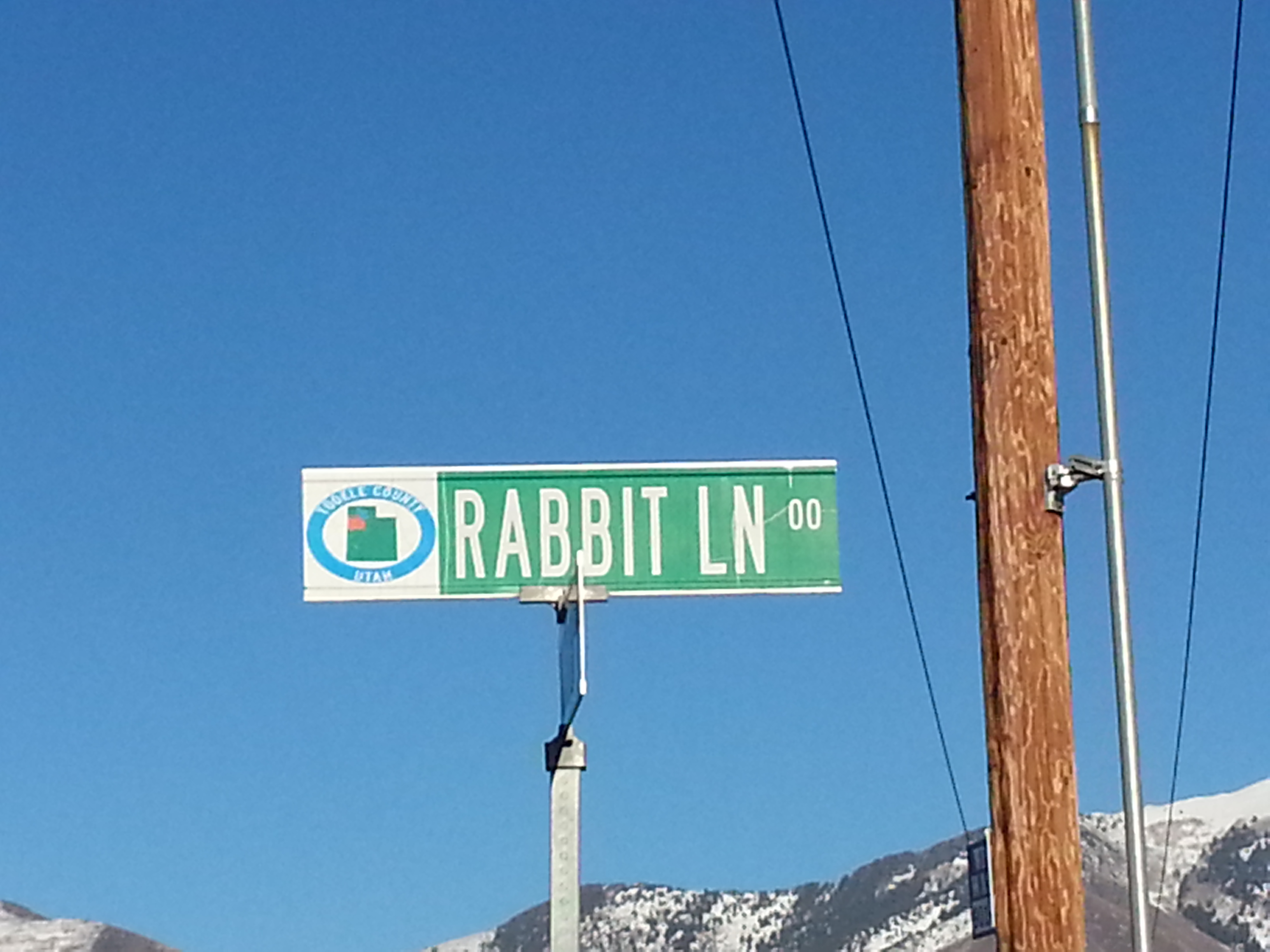
Rabbit Lane: Memoir of a Country Road tells the story of a humble country dirt road, of its human history, of its natural beauty, and of its ability to bring insight, understanding, transformation, and healing to those who walk it.  The book contains stories and poems, music and nature observations that will amuse and inspire.  Rabbit Lane helps us to slow down and pay attention to the beauty around us and within us.  The prefatory poem, Silent Spring, honors the vision and hope of Rachel Carson, author of the 1962 classic book by the same name, for a world filled with the music and beauty of nature.  Enjoy each of the many chapters, stories, poems, and songs as you walk with me on Rabbit Lane.


SILENT SPRING

Spring,

Rachel:

not silent quite.

I hear,

distinctly:

the growing hum

of humankind.


Roger Evans Baker is the author of Rabbit Lane: Memoir of a Country Road.  The non-fiction book is available for Kindle (full color) and in print (black-and-white) at Amazon.  Rose Gluck Reviews recently reviewed Rabbit Lane in Words and Pictures.