Author Archives: Roger Baker-Utah

Unknown's avatar

About Roger Baker-Utah

By profession a 28-year municipal attorney, my real loves are story, poetry, music, and nature. My publications include Rabbit Lane: Memoir of a Country Road (non-fiction), and A Time and A Season (poetry). My most recent writing projects include Reflective Essays, and vignettes about aging and elder care my a new page, Courage at Twilight. And I cannot forget Amy's bearded dragon lizard, Sunshine. I hope you enjoy!

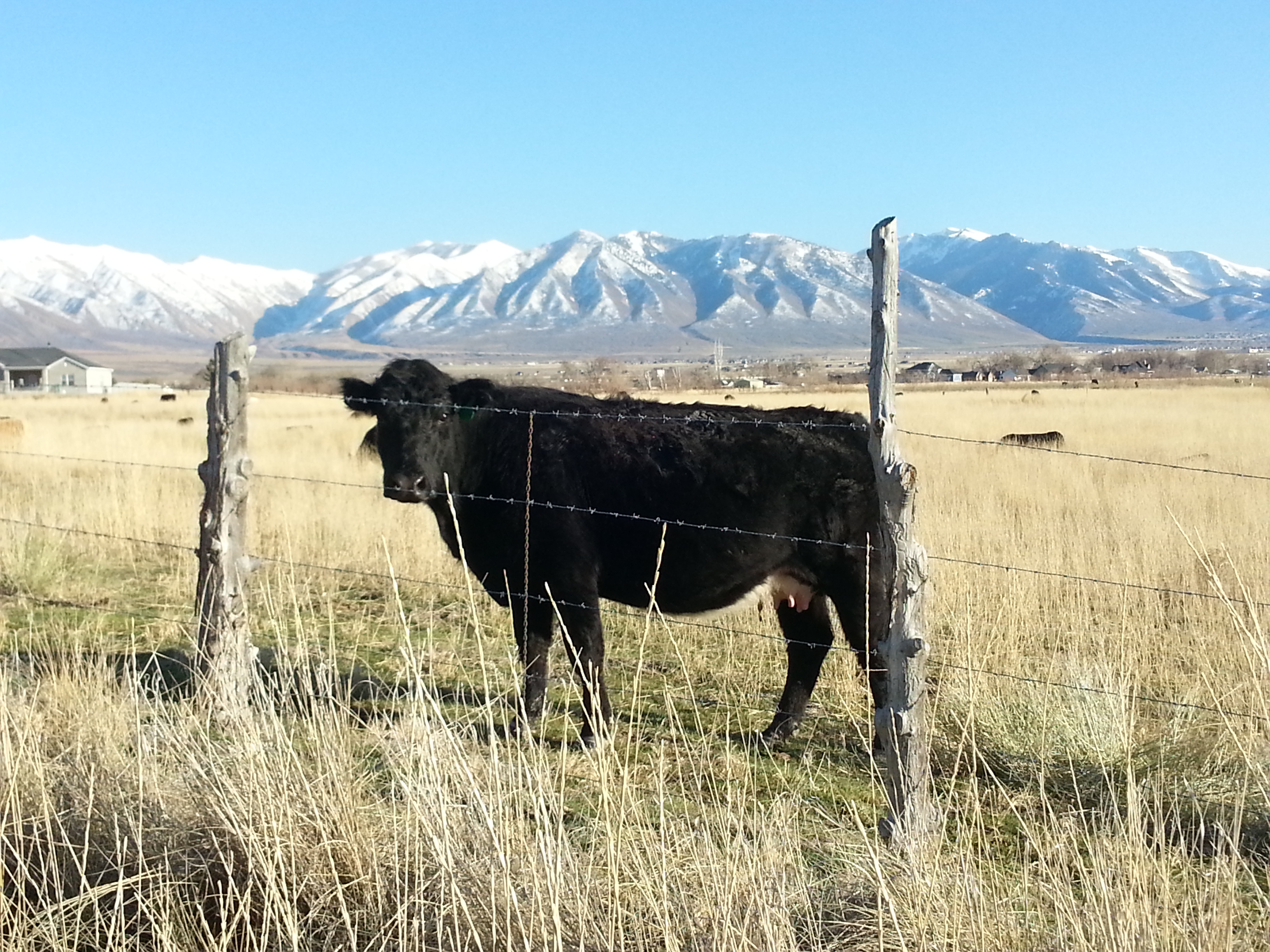
Chapter 20: Of Cows and a Stray Bull

20140312_180757

–Cows have such large, glossy, gentle eyes.–

Ben was attempting to herd his cows from one field to another as I walked in his direction on Church Road.  The process first involved opening the gate at the receiving field, then opening the gate at the sending field.  In theory, Ben would then shoo the cows out of the sending field down the road and into the receiving field.  At the open sending field gate, Ben’s wife and children lined themselves up across the street, arms outstretched, forming a barrier the cows were supposed to respect.  The kine, however, had ideas of their own, and strolled indolently between Ben’s kin. Continue reading

Turn to the Gutter

100_1044Walking on a downtown Salt Lake City street during a seminar lunch break, I became aware of how my gaze tended to turn downward on the trash that had collected in the gutter.  The words “trash” and “gutter” are well-known and perhaps over-used metaphors for the vulgar and profane.  I wondered, with some private embarrassment, why I persisted in looking downward instead of lifting my gaze to the trees, birds, architecture, and sky.  I wrote this poem to recognize and resist the temptation to look downward during life, and to encourage myself and others to raise our sights and to focus on beauty, on love, and on kindness and other noble attributes.  The gutter and its trash will still be there, but we need pay them no mind.

TURN TO THE GUTTER

Birds sing a-wing
in the ocean-blue sky,
perch on arched windows
and brick parapets.
Trees waive and bow,
flowers show splendor.
But I:
I turn my gaze, and
miss it;
I turn to the gutter,
treasure
lies and tokens, and
miss it all.

Chapter 19: Porn

100_1074

–The Sego Lily is the most delicate and elegant of chalices, a veritable grail.–

The state highway traverses the valley three-quarters of a mile away, perpendicular to Church Road as I approach Rabbit Lane.  In the dark morning, a long line of white headlights travels north toward the Great Salt Lake, becoming red taillights as I pan from south to north.

Where do they all go? Continue reading

Where Does Love Go?

IMG_7083

So many people feel so lonely.  Even the most gregarious are not immune.  Even the most stoic of intellects must acknowledge that these feelings are real.  Hurt feelings, disappointments, resentments, traumas, betrayals, sarcasm, silence: they all push us apart to such distances that we wonder whether healing is possible.  Contemplating love and loneliness as I walked on Rabbit Lane years ago, I wrote this poem.  I have great hopes that people can find other people to love and be loved by, and thus heal the deep hurt of loneliness.  (Photo credit: Laura Baker.)

WHERE DOES LOVE GO?

Where does love go
after long years limp by?

Love burns and love binds
in the moment of beginning.
Love cleaves,
then tip-toes cautiously away,
leaving you wondering where it went,
and how it is that it ever was.

One day you saw love
slinking off
to hide behind so many hurts.
Another day you saw love
rushing and crashing
against rage’s rocky shore.
The last day you saw love
huddling, withdrawn,
under a dark, shrouding silence.

Why does love go
after long years grind past?
And what do you do
when it’s gone?

Speak, Spirit

20140513_115738

Snow Canyon called to me.  I could not wait to finish my law classes in nearby St. George and head into the canyon for an evening hike.  I chose the Hidden Pinyon Trail, a popular trail over and through twisting redrock slots and boulders, past blooming prickly pear cactus, Mormon tea plants, black brush, and flowering yucca.  I felt lonely and disconnected in my relationships, wondering who I was and questioning about god and life.  Arriving at a ridge line 300 above the canyon floor, I sat cross-legged on a patina-stained ledge, raised my staff with both arms to heaven, and called upon the universe for answers.  This poem attempts to convey the experience that followed.  The photograph above is a Utah Agave plant with its bloom growing seven feet tall in Snow Canyon.

SPEAK SPIRIT

Great Spirit,
Father of earth and sky—
manifest Thyself unto me.

Spirit Son,
Child of earth and sky—
see my writing in the rock,
in the swirling veins of cemented sandstone,
in the lichens’ greens and grays.
Hear my voice in the warbles and trills of song birds,
in the lonely quail call.
Smell my wisdom in the breeze-born sage
after desert’s summer shower.
Taste my nature in the pure water
pooled in pocks etched in stone over a million years
by grinding wind and splintering ice.
Touch my mind as you touch with whisper touch
the stunning, delicate cactus bloom,
as you cause the fine red sand to sift through wondering fingers.
Feel my heart as you cry
and reach for the sky
at sunset.

Slop Bucket

20150117_133053

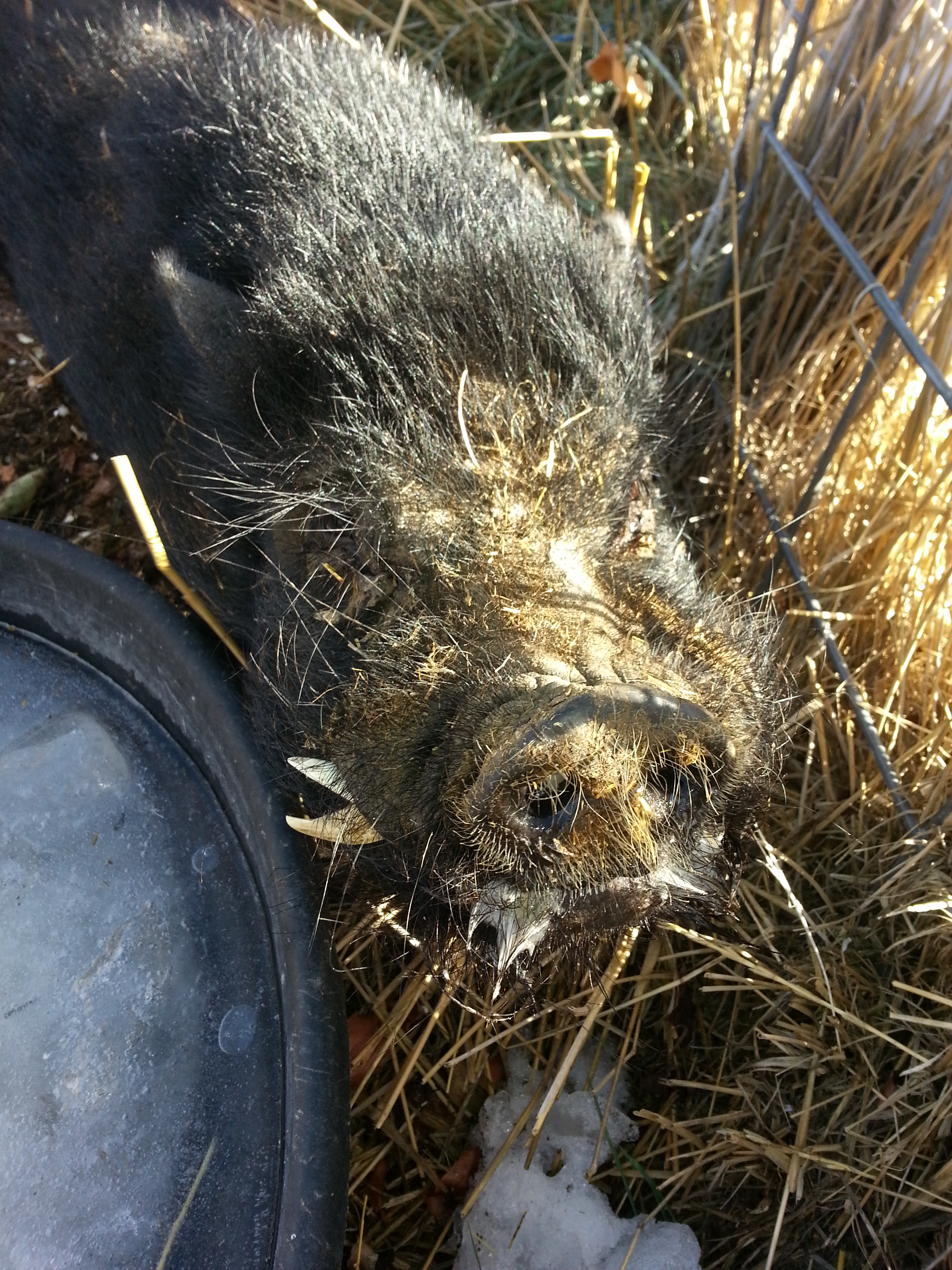
Piggie, our pet black pot-bellied pig, has lived long enough for all of my four sons to bring him his daily slops bucket, made up of peelings from daily meal preparations and unwanted meal leftovers.  At first the boys thought it was cool to feed the pig.  But then Winter came, and the slops bucket needed to be taken out every day in freezing temperatures (usually at night because they had neglected to do it during the day), and the water bucket froze and the ice needed to be broken every day, and I insisted that the smelly slops bucket be rinsed out before being brought back inside to its place under the kitchen sink, the chore became less glamorous. Piggie lives on.  On occasion a family member hopes out loud that the pig will choke on an avocado pit, but only in jest.  (This poem tells of the slop bucket chore from the John’s perspective ten years ago, with me, his dad, looking on.  Hyrum took the photo today.  The poem relates to the post Chapter 13: Of Goats and a Pot-Bellied Pig on the Rabbit Lane: Memoir page of this blog.)

Slops Bucket

The wintry day was gone,
the frosty night full on,
and Dad held the slop bucket out.
“You forgot your chore, son,
and the pig is hungry.
You’ll have to go out,
though it’s cold and it’s dark.”
I stomped and I cried;
I begged him not to send me out
into the fog-filled frosty night.
But Dad just handed me the brim-full bucket.
“I’ll keep the porch light on:
you’ll be fine.”
Dressed for the cold,
I heaved on the handle,
and stepped into the night.
My skin all goosebumpy,
I followed the frozen-mud path
through the tall, stiff iron grass.
A low rumbled grunt
made me start, and then shiver,
and look warily around
at dim shadows and darkness.
Pig stood at the gate in patient anticipation.
“Here pig,” I snorted, and dumped the warm slop.
As pig smacked and slurped,
a white vapor rose like a phantom,
and I turned to run the way I’d come.
On the porch, in the light, stood my dad,
in his slippers, arms crossed in plaid flannel.
He smiled at me as I came.
I warmed, then, because
I knew I’d done good;
so did he.
I knew I’d done right;
so did he.
And I knew I’d grown up just a tad.

Chapter 18: Mary

IMG_0013

–Bend, bend, but don’t break.–

I had rescued Austin from his fall just two years before.  Now the barrel-chested man was gone.  Mary, his widow, a diminutive black-haired woman in her nineties, lived alone.  We tried to visit her one afternoon.  We knocked and knocked, but no one answered the door.  Later we learned that she slept during the day and lived her waking life at night.  I now understood the dim yellow light that glowed late at night from her living room window. Continue reading

Chapter 17: Foreshadowing

100_1012

–The Milkweed will push through to grow tall, fragrant, and beautiful, to call the Monarch.–

The disc cushioning my lumbar 4 and 5 vertebrae has been bulging capriciously since I was 12 years old.  It was then that I experienced my first unexpected spine-twisting spasms that paralyzed me sitting in my church pew.  A bulging disc means a frequently aching back, with locked joints and tense muscles.  The pain is always different depending on which way the disc is bulging and, more importantly, which area of the spinal nerves the disc is irritating.  While it becomes difficult and painful to bend, I somehow always manage to dry my feet after a shower, to shimmy on my socks, to tie my shoes, and to drive to work, even if I do have to lie occasionally on the floor during the mayor’s staff meeting. Continue reading

The Dance

Rabbit Lane-Laura

My family’s favorite event of the year is Tooele’s Festival of the Old West, combining a gem and mineral show, a mountain man rendezvous, and an Indian pow-wow.  I give the children a small allowance, and they bring some money of their own, to buy polished rocks or beads, a bag of marbles or a medicine pouch, a rubber-band gun or second-hand knife, and always a homemade cream soda and fry bread.  “Fire in the hole!” precedes the boom of the real cannon that blasts arm-loads of candy for children to scamper at.  Men and women walk around in period clothing–my kids always chuckle at the man with the deer-skin breaches not quite concealing his butt-cheeks.  And then the drum beats begin, and the chanting.  The Native Americans have begun their dance competition.  Exiting the back door of the gem and mineral show one year, we saw a young American Indian man dressing in his fancy regalia in preparation for the competition.  His father helped him with the clasps and ties that held in place the flowing regalia, which abounded with feathers and shells and bells.  I wrote this poem to express my overwhelming impressions of this boy connecting powerfully with his peoples’ at once glorious and painful past, with his attenuated but clinging culture, and with the spiritual reality of his ancestors.  (This poem relates to Chapter 7: Turtle Lodge on the Rabbit Lane: Memoir page of this blog, and also to the poem House of Offering on the Rabbit Lane: Poems page of this blog.)

THE DANCE

Shell open.  Tailgate down.
A boy,
in bright-beaded leathers,
in spirit feathers,
preparing,
for the dance.
Father inspected, breathing deep:
satisfied and proud;
unspeaking:
You are ready.

The drum beats the hour,
the moment,
of the dance;
a summons:
compelling
the movement of feet
pressing the ground in
a rhythmic communion
of flesh and earth,
of spirits;
compelling
the movement of arms and wings,
like the offering
ascending
in red birch smoke.
Earth and sky recede.
Light and darkness combine.
There is only him,
with the drum,
with the song,
with the dance—
his dance.

They come to him, then,
and lift him up
in flight
through the heavens:
Shadow-faces
with warm wrinkled eyes;
their hair flowing in long gray strands,
like wispy rain clouds
above the parched plains.
Shadow-faces
singing the ancestral song,
turning above and beneath,
swirling around and through,
joining him, becoming one,
bringing him tenderly
down to earth and sky as
his feet press the ground
to the last drum beat.

He walks, then,
slowly,
back to the tailgate,
the world
before him,
Shadow-faces
within.
He waits, then,
to dance again
the dance.

Monday Night

100_1876

Family gathering together is what makes the holidays special.  Family, in all its forms. We arrive, ring the doorbell, and are welcomed with hugs (or grunts.)  We eat and laugh and tell stories, catching up.  We play out the human drama in the family microcosm. Older family members display what they have learned for younger generations to see, if they will.  Funerals, though enormously sad, have been some of my most meaningful family experiences.  We grieve together, share the family lore, and partake unquestionably in love.  Weddings, while hopefully more joyous occasions, strike me as similar.  Baptisms.  Bar-mitzvahs.  Holiday celebrations. Sunday dinners.  Even the mundane moment, however, gives families powerful moments to bond, to contemplate, to rejoice, to mourn, and to hope.  The poem “Monday Night,” below, describes one such moment from my family’s past, and relates to Chapter 16: Around the Fire Pit post of the Rabbit Lane: Memoir page of this blog.

MONDAY NIGHT

Monday night,
and we gather again,
a family:
sitting on cinderblocks
around the fire pit;
holding long applewood sticks,
like fishing rods,
with points in the flames,
connecting
with the warmth, the glow,
the power and mystery of fire.
A family:
singing songs about
head, shoulders, knees, and toes,
and the beauty of God’s creations;
reading poems about kitties and calves,
and forks in the forest path;
telling stories of inspiration and faith;
munching popcorn and brownies;
keeping the cats away from our cups of milk.
Children
toss sticks into the flames,
poke smoking sticks into the ground,
carve their special sticks
with knives that are somehow always dull.
Sun sets behind towering pink and orange
Cumulous that dwarf the snow-capped mountains.
Fire settles into a ringed bed of shimmering coals.
Children quiet themselves
and stare into the ebbing heat and color.
Mom and Dad look to each other
and share an unspoken gratitude that,
for this moment,
life is good.

Chapter 16: Around the Fire Pit

100_1069


–I’ll help you learn to walk.–
(Erin-10 to Hyrum)

One Monday evening after dinner, the whole family walked on Rabbit Lane.  The sun was setting large and red, and the chilly Spring air settled upon us as we returned home.  We gathered around our new fire pit to tell stories, sing songs, and roast apples and marshmallows, sitting on camp chairs and logs. Continue reading

4 degrees F

20141231_092833

My phone registers 4 degrees Fahrenheit as I walk this New Year’s Eve morning on Rabbit Lane. I do not enjoy the cold, but I know that I will find beauty on Rabbit Lane, despite the adversity, or perhaps because of it.  I am wearing as many layers as my boots, pants, and coat can accommodate.  Brisk movement is my best protection.  Also, the air is still, and the brilliant sun shines warm on my back, cutting through the cold.

Despite having completed the manuscript of my book Rabbit Lane: Memoir of a Country Road, which I am posting on this blog one chapter at a time, I know that the true story will never be fully told.  Beautiful things will happen every hour of every day that deserve telling.  The spirits of people passed on will whisper, You forgot about me.

Today, I come upon Russian Olive trees still sporting abundant fruits, burnished by months of hanging in the sun (photo above).  A Red-shafted Northern Flicker launches from a tree, flapping furiously, then torpedoes through the air without wing-beats, then flaps furiously again, sporting its white tail patch and orange primary underwings.  Torpedo.  Flap.  Dive.  Beat. There is always something new, something beautiful.

This poem attempts to capture the paradox of having completed something that can never be complete.  I hope you enjoy this last glimpse of Rabbit Lane from 2014.

POSTSCRIPTS TO A PARADOX

My manuscript is finished.
Everything there was to write, I wrote.
All the notes have been transcribed, expanded, and stitched up.
I proofread it, twice, and double-checked the formatting.
I capitalized the name of each Bird and Butterfly and Tree and Flower.
Now there is only rejoicing, recounting, and remembering.
But nothing new can happen.
My manuscript is finished.

PSs.
Bruce told me a story,
a good one, about Harvey,
that I hadn’t heard before.

Horses ran to the fence to greet us,
cheerfully, kicking up snow
and snorting steam.

Long after sunset
a thinning patch in heavy gray snow
clouds still held light, Hannah (8) pointed out.

Witch’s Tree is rotting,
her skin and flesh flaking off
into the dry waste of Witch’s Pond.

Old Cottonwood has unquestionably grown
beyond his once 17-foot girth,
though his tree-top branches languish.

(But nothing new can happen.)

Coming Home

100_1897

I stopped to watch the pulsing airport beacon–my desert lighthouse–as I walked in the snow today on Rabbit Lane.  White.  Green.  White.  Green.  “See that beacon?” I asked Hannah (8), whose gloved hand held mine while we gazed.  “It’s like a lighthouse showing the way for ships in trouble to make for shore.  Long before Hannah was born, I gazed out the window with Erin, then 5, as the old beacon bulbs swept slow arcs around the sky, lighting up the clouded underbelly of the sky.  I imagined sailing ships rocking precariously amidst tumultuous waves, the sailors shouting commands and wondering how to obtain the shore in one piece.  I also imagined their frightened families at home, wondering if they would ever see their fathers, husbands, brothers, and sons again.  With this troubled image in mind, I wrote this one-verse song about these sailors, nearly lost in the storms, coming home at last.  (Read more about this beacon in Chapter 4: Desert Lighthouse on the Rabbit Lane: Memoir page of this blog.)

Coming Home

Chapter 15: Of Foxes and Hens

100_1871

You are my best friend and my big buddy.
(John-3 to Dad)

The day-old chicks arrived at the store in a box delivered by U.S. mail.  While I had ordered only half-a-dozen specialty breed pullets, they came boxed with two dozen unsexed White Leghorns for cushioning and warmth.  I had hung a heat lamp—a warm if impersonal surrogate for their mothers’ downy breasts—in a makeshift pen because the chicks were too tiny and frail to generate enough of their own body heat against the chilly Spring nights.  The hanging lamp radiated light and heat downward to make a spot of warmth in the straw where the chicks gathered close to rest.  I don’t think they ever fully slept, for the light.  But they were warm and safe and comfortable. Continue reading

Fences

20141221_082803

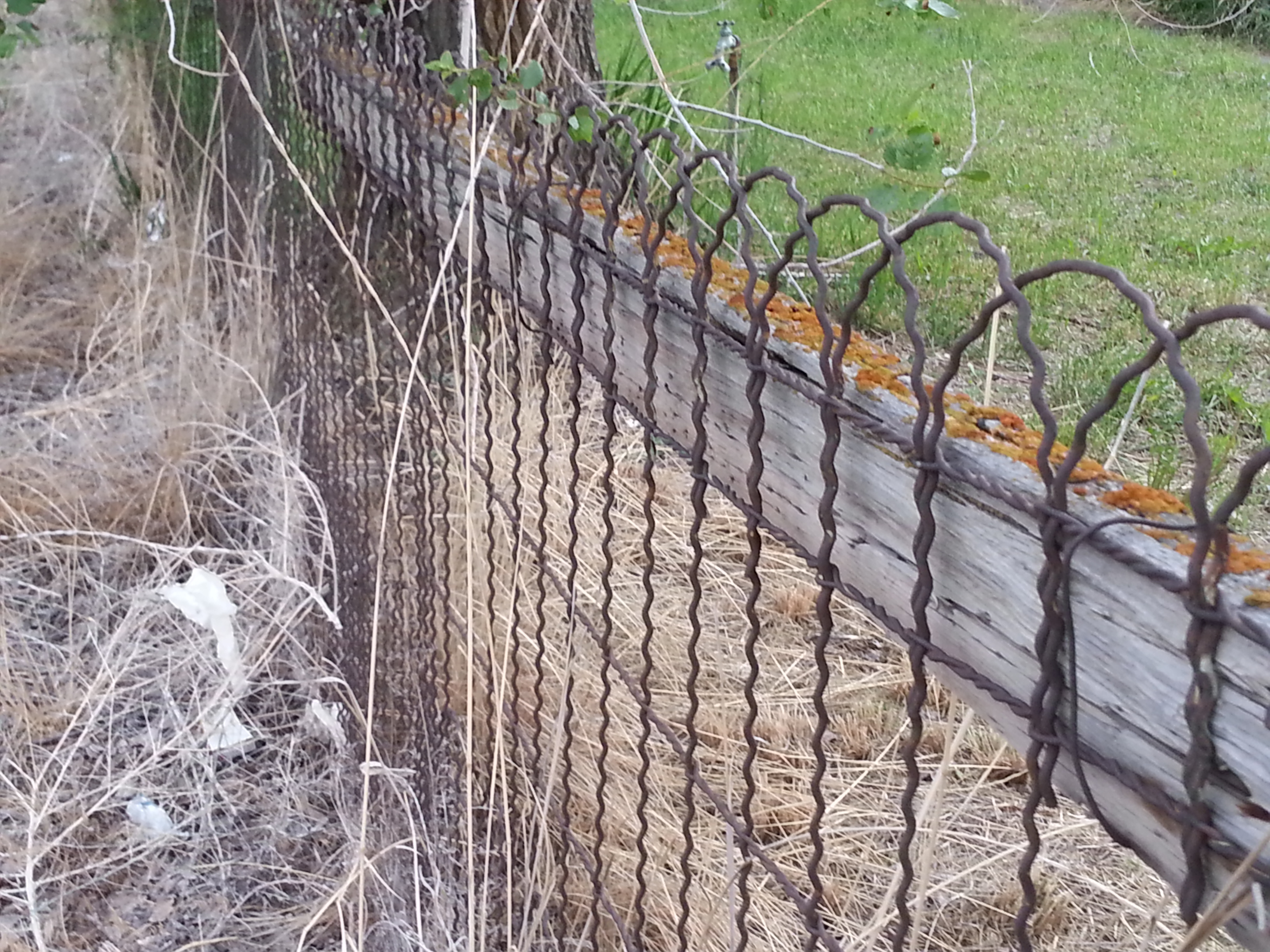
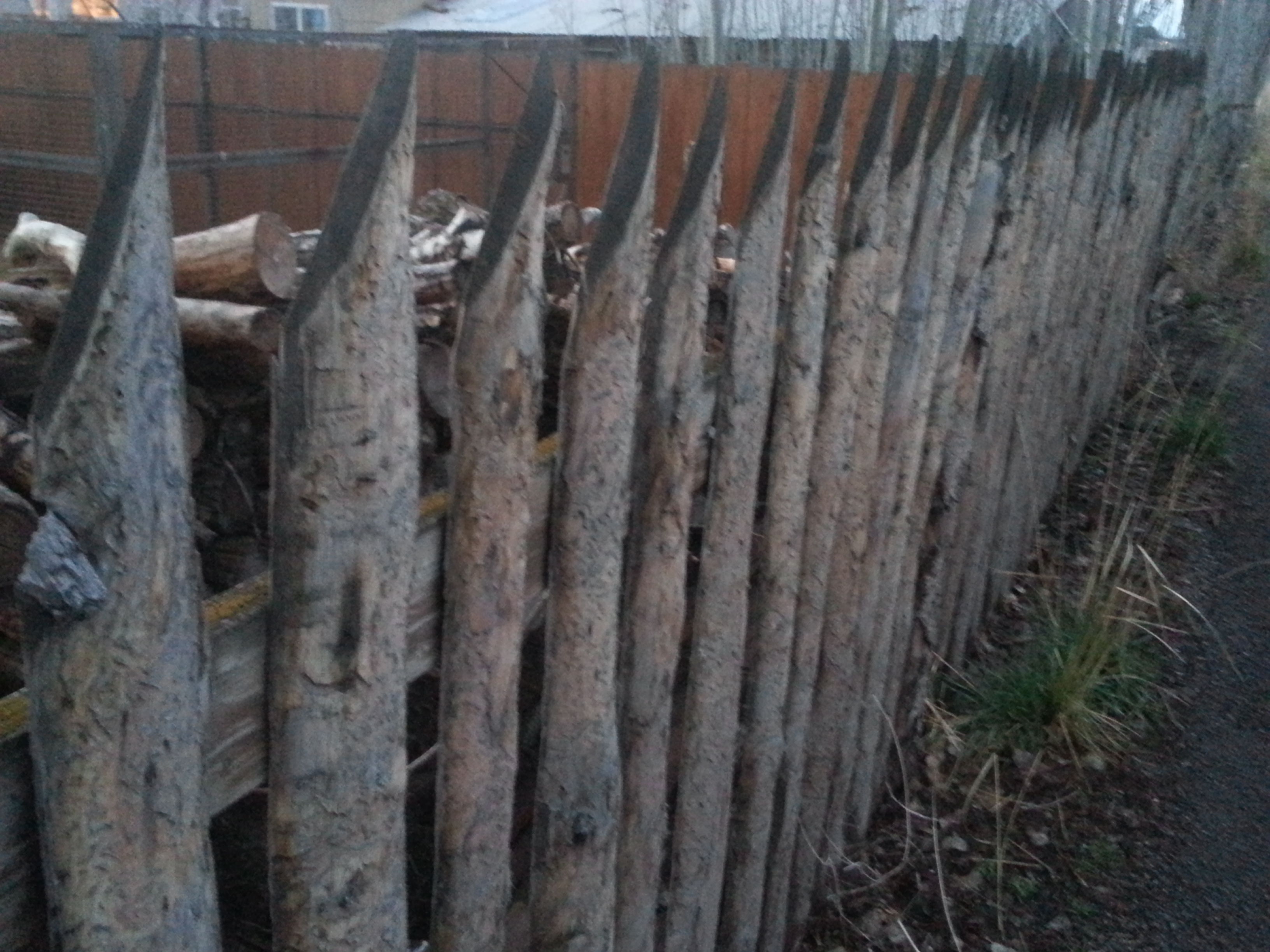
Farm fences flank me as I walk on Rabbit Lane two days before Christmas.  Walking the length of the country road, I begin to contemplate the nature of fences.  Fences keep the cattle in their pastures, while keeping pheasant poachers out.  Fences remind me of the limitations I put on myself through fear and doubt.  I think of social, legal, political, and relationship boundaries.  I ponder that each cedar fence post used to be a juniper tree thriving in the Utah desert.  I imagine lines of soldiers marching into battle in distant early-morning mists.  Ultimately, we can choose to transcend many of our life’s fences, like the butterfly that simply flies over, as if the fences do not exist.

FENCES

Grain-field fences march
away in a disciplined line,
cedar post after cedar post,
rough-barked,
each tugging its barbs
taut as burning guns
at soldiers’ cheeks, marching
straight and away at an acute angle
to the way I would go,
hemming me in with wicked wire
points, urging me down, at the risk
of gash and scar, the direct
and dusty disciplined road,
while a Tiger Swallowtail
lazily wafts its easy way across
the fence to flutter above
the ripe wheat tops,
and a Western Kingbird
darts here and there,
erratic, up and down,
above all artificial lines, chasing
invisible insects overhead.

20150520_183437

20140330_200303

20140322_184718

Chapter 14: No Trespassing

20140318_181818

–A butterfly graces equally the idyllic mountain meadow and the urban flower box.–

On a cedar fence post near Rabbit Lane an old sign announces “No Trespassing.”  The letters were burned or carved into the worn and weathered plank.  The sign has been cracked by the black head of a rusting iron nail driven into the cedar post.  The sign has long ago lost any intimidating aspect, and it now resembles the endearing smile of a gap-toothed old man. Continue reading

Cupcake and Olive

IMG_2748  IMG_2792

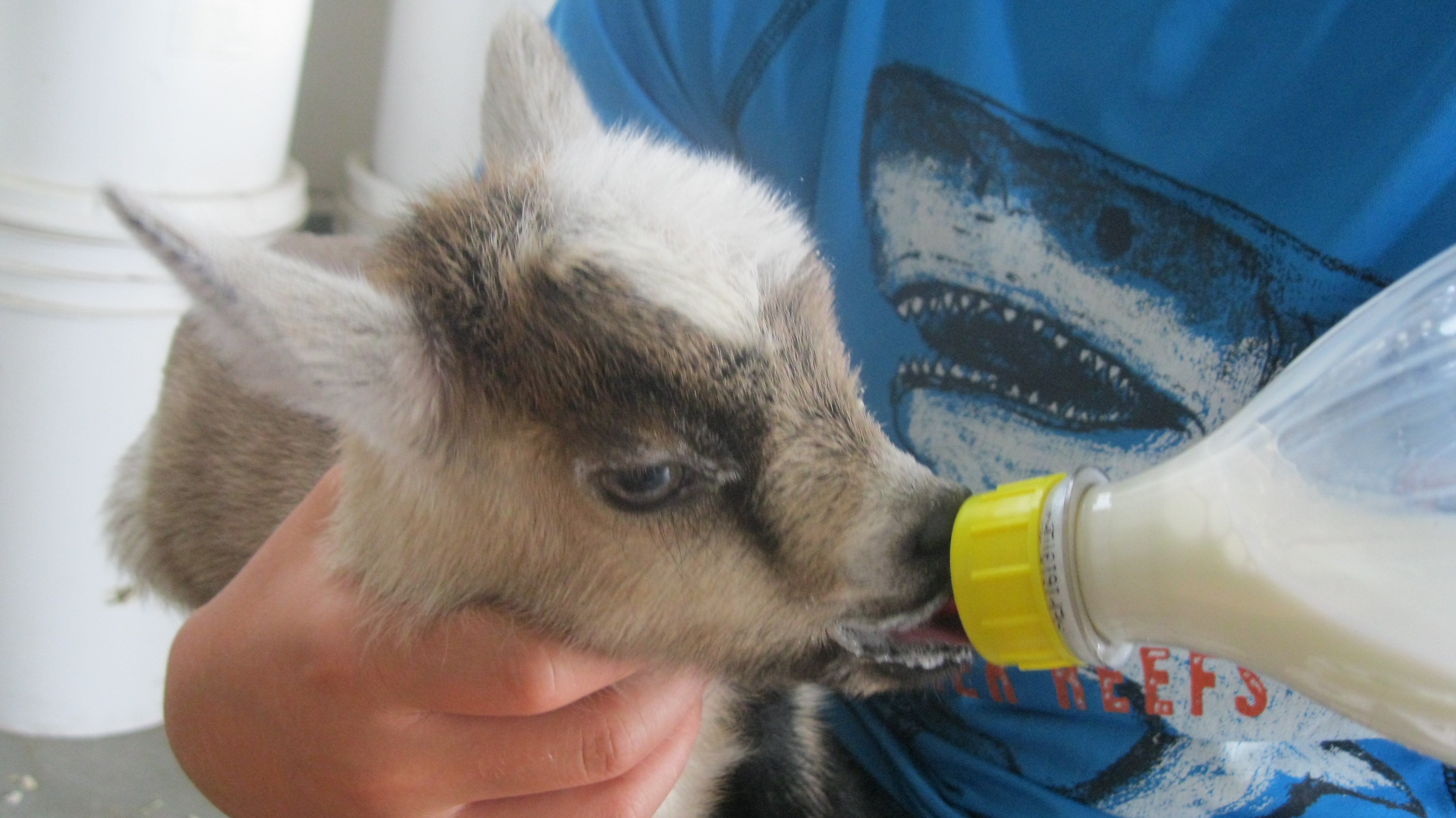
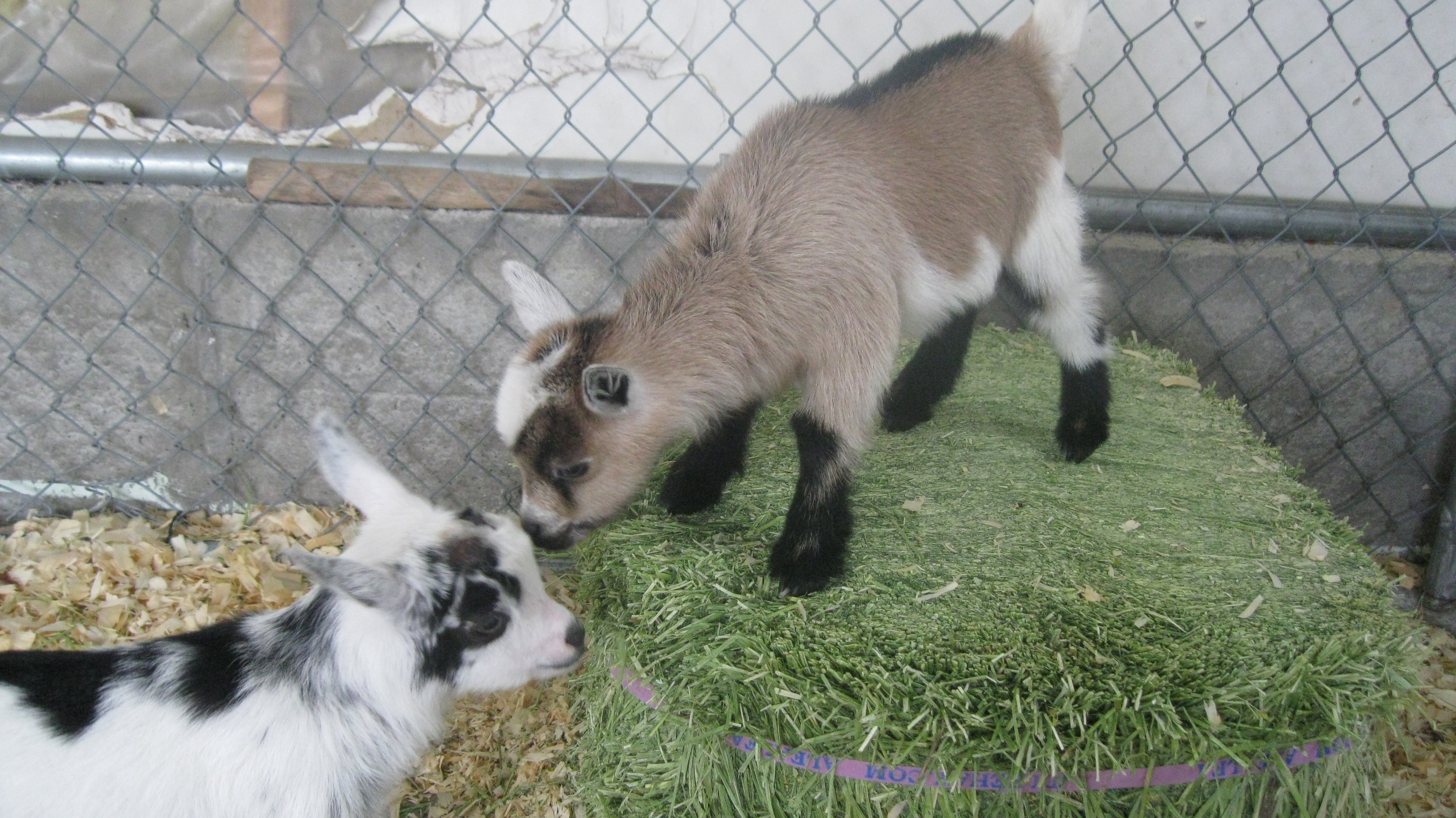
While I was away attending the National Boy Scout Jamboree in West Virginia in July 2013 with my teenage sons, my wife and younger children brought home two little precocious pygmy goats.  They named the black-and-white kid Olive, and the light-brown kid Cupcake.  Oh, they were adorable, running and jumping and calling to their human friends non-stop.  They loved the attention of being petted and bottle-fed, and followed Hyrum and Hannah around everywhere.  “My babies,” Angie called them.  This poem is about her love for the new kids.

CUPCAKE AND OLIVE

Olive is a pygmy goat,
white with black splotches,
or black with white,
two months old, almost.
You brought her, two days old,
home, with little cousin Cupcake,
and bottle fed her
four times a day.
She doesn’t bleat like Cupcake
(oh, my goodness),
even when hungry,
but cocks her head to one side,
just so, as if to say,
And where, Mama, have you been?
Olive will only suck
from a bottle held by you,
having jumped and flopped
onto your mother’s lap.
You stroke her neck
with a free hand.

Our Pet Goat Died Today

The deaths of dear pets have hurt my children’s tender feelings many times over as many years.  The sad fact is: pets die.  Sometimes from neglect; sometimes from sickness; sometimes from old age.  From tiny hamsters to guinea pigs, and from chickens to full-sized goats, each death raised in the children’s innocent minds anew the questions of why things die, and why did their heart have to hurt so much when saying good-bye to friends.  I grieved for them and with them as they grieved their losses.  The day one of our pet goats died, Erin and Laura cried and cried.  I didn’t know how to comfort them.  But I stayed with them and talked with them and did my best to sooth them.  I wrote this poem about the occasion.  It isn’t a great poem, but it expresses poetically the bitter-sweet experience of losing our pet goat.  You can read more about our pet goats in Chapter 13: Of Goats and a Pot-Bellied Pig post in the Rabbit Lane: Memoir page of this blog.

OUR PET GOAT DIED TODAY

Our pet goat died today.
We noticed he was sick:
gasping for breath;
struggling to raise his head off the ground.
Big hands placed him in the November sun;
little hands rubbed him warm,
coaxed him to suck from the bottle, but he wouldn’t, or he couldn’t.
Then he was dead.
He was our friend, and he was gone.
I held him and gathered my little children close around,
where they wept as death and loss seeped into their reality:
“I don’t want him to die,” they sobbed.
“I’m sad too,” I said.
Daughters chose the burial place,
near Diamond, last Spring’s kitten.
Father and son dug deep in the hard clay.
Old chicken straw made a bed and a pillow and a blanket,
to keep our goat warm and comfortable
in his resting place.
Fall’s last roses placed around his head
would bring him pleasant smells in Winter.
A child’s graveside prayer,
trusting an unseen wonder,
would protect the goat and comfort their sad hearts.
“Daddy, where do goats go when they die?” they asked,
knowing that I would know the answer.
I looked in my heart for sweetness and truth:
“I’m sure God loves goats just like he loves people, so goats must go to heaven.”
Through tears they asked hopefully, “Will we see him again?”
“I hope so,” I said. Then, “Yes, I’m sure we will.”
Worried at the thought of the goat covered with earth, they asked,
“What will happen to his body when he’s buried?”
Searching again:
“This is the goat’s resting place, and you have made it very special
with your flowers and prayers.
He will just rest here awhile.”
One last scratch on his nose to say good-bye.
My son works to fill the hole.
My daughters gently place the reddest rose petals on the mound.
Then they run off to play,
and I hear the scared bleating of a lonely goat.

Chapter 13: Of Goats and a Pot-Bellied Pig

100_4971

–Our garden is going to grow because of this beautiful rain!–
(Caleb-3)

Caleb (2) loved to feed the goats.  We kept a bucket under the sink into which we scraped all the table scraps and vegetable peelings.  Each time Caleb saw the bucket, he cheered, “Goatie, goatie!”  I carried the bucket in one arm and the boy in the other to the goat yard, dumping the bucket’s contents into the lopsided plywood manger I had made.  At 14, one of Caleb’s daily chores was to empty the scrap bucket into the pig pen, and it was no longer an occasion he looked forward to. Continue reading

Across the Day

Each morning as I leave for work I cross paths with my children.  They each require a hug (or two or three) as I run out the door.  I am often late and anxious to get away.  Sometimes I protest, “Just let me go, guys” or “You already hugged me once” or “I’m just going to work.”  When I slow down and live more mindfully, I stop and put my briefcase on the floor to give them a genuine embrace and a smile and a kind word, perhaps “I love you” or “Have a great day”.  If I really pay attention to these moments of connection, I notice a subtle but distinct feeling of goodness and happiness, a sense that something in life has changed for the better.  This poem is about one of those moments when I suppressed my natural tendency to hurry on to the next task and allowed myself to slow down and see what really needing doing.  See the related Chapter 12: Worm Sign post of the Rabbit Lane: Memoir page of this blog.

ACROSS THE DAY

Down the stairs he stepped,
pulling up a pant leg
to expose to me
yesterday’s skinned knee
and today’s unabashed want
for tenderness.
“It still hurts,” he whimpered
as I flew toward the door
with my briefcase and bagel.
“And you forgot.”
With guilty remembrance, I stopped
and lifted him to a counter top.
With guilty haste I rummaged through a drawer
for a bandage and soothing ointment.
“It feels better already,” he sighed,
his smile following me
out the door, down the highway,
and across the day.

Chapter 12: Worm Sign

100_1032

–A sincere smile can change the world.–

The night’s rains have turned the hard-packed-dirt surface of Rabbit Lane into a thin slick of mud, with small pools in the valleys between washboard peaks.  Long earthworms, flushed from their deluged burrows, make their tedious way across the muddy film, seeming to wander without any sense of where they need to go.  Slight worm tracks criss-cross the slick: shallow smooth ruts, their directions and intersections chaotic, random, crossing over and following each other without discernible pattern.  They leave only faint signs of their humble existence. Continue reading

Generations

So many times I have caught myself reflecting on the fact that I am as old in a given moment, involved with one of my children, as my father was when involved in the same way with me: camping, throwing a baseball, swimming and sailing at scout camp, choosing not to spank a stubborn child, asking about girlfriends, counseling through challenges, on bent knees begging for a child’s welfare.  I often sense a melding and shifting of the generations, from me being the child to being the father of a child, and yet I remain the child.  I muse on this time-defying phenomenon in this poem, Generations, and on the Chapter 11: Austin post listed in the Rabbit Lane: Memoir page of this blog.

GENERATIONS

I am the center and the circumference,
the present and the past.
The generations are one before me,
the memories of years
a single infinite scene,
shifting and stirring within me,
slowly moving to embrace the future
even as it becomes the past.

I am at once a boy and a man,
a son and a father,
my child: my father: myself.
I gaze at my child
and see
my father gazing at me
and feel
a father’s agony,
as I look to my father,
and my child looks to me.

Chapter 11: Austin

100_1020

–The measure of one’s greatness is one’s goodness.–

Sitting on the porch lacing my boots for a walk on Rabbit Lane, I heard the distant bellowing of a distressed calf.  Something in the bray was not quite right, sounded a little off.  I had heard lost calves calling for their mothers before.  I had heard desperately hungry calves complaining before.  I had heard lonely wiener calves bellowing for their removed mothers before.  This calf call sounded strange; perhaps, I thought, not even a calf at all.  I turned my head to pinpoint the source of the noise.  It came from behind Austin’s house, where there should be no cows and, in fact, were no cows.  An ignorant urgency sent me running through the intervening field to Austin’s back door.  There lay Austin, helpless, in abject distress, fallen across the threshold of his back door and unable to arise, the screen door pressing upon his legs.  He shouted and bellowed with his deep and distressed bass voice.  I wrapped my arms around his prodigious barrel chest and heaved as gently yet as forcefully as I could to raise the big man from the ground. Continue reading

Sun Has Gone

100_1319

Hannah (8) has added me to her bedtime routine.  “I was wondering,” she begins, “if you could maybe sing me a few short songs tonight.”  I sit on the edge of her princess bed and sing her one of my little songs, or a song from my 1970 Mister Rogers’ Songbook, a prized if tattered possession.  A song only takes a minute.  But many nights I feel burdened and tired.  The thought of answering to one more child’s needs sometimes overwhelms me.  It’s just one song, I say to myself with a sigh, and succumb.  From the first note I feel glad that I didn’t give in to the excuse of being weary.  A song only takes a minute.  Here is one of my favorite songs.  I wrote it years ago in response to a child’s request for a song from Dad.  It is sweet, calming, and, best of all, short.  The perfect lullaby for nights when Dad just needs to say “good-night” and go be by himself, or go to bed.  I hope that you will sing it to your little ones.  If you are so inclined, sing it through twice.  A song only takes a minute.

Sun Has Gone

These Hands

Hands are the perfect metaphor for who we are, what we do, and what we hope to become.  Do I use my hands to lift or to strike down, to caress or to punish, to persuade or to coerce?  My hands with their fingers type the words formed in my mind, spoon soup for a grandmother, and tickle a toddler.  Hands.  Use them for kindness, gentleness, hard work, and love.  And to write a poem.

THESE HANDS

Look at these hands.
My hands.
They tell my life:
in groove and scar and callous;
in a knuckle torn by a chicken house nail;
in railroad lines from a childhood race through a glass door;
in black grease ground into coarse cracks and cuticles;
in blisters and blood on a westward handcart;
at times, thrust hiding in deep but empty pockets.
These hands:
that hold the hopes and dreams of a self-hewn future;
that have sought the secret softness of a soul mate;
that have led trusting toddlers over perilous paths;
that hoisted an enduring ancient from the place of his collapse.
These hands:
that have clasped tightly together in impassioned prayer;
that have suffered the sad sting of punishment;
that have bathed the infant and dressed the dead;
that have hooked a worm and thrown a ball.
These hands:
that have penned a paltry poem;
that have reached for the stars and grasped only earth;
that have blessed the sick and slaughtered swine;
that can seal a man’s fate with a waive and a gavel’s rap.
These hands:
that spared the rod, soothed a crying child, wiped away a tear, smoothed a stray lock;
that once were tiny and tender, that patted Grandpa’s drooping cheeks;
that bestowed a ring and received one in return;
that now are old and gnarled, resting folded and futile in my lap.
Touch my hands with your hands.
Bring my hands to your face, your eyes, your lips.
Feel the coarseness and tenderness of my hands.
Bring your hands to my face, my eyes, my lips.


Chapter 10: Country Quiet

100_1038

–If I say I’ll never do something, I never will.–

The country was not quiet, not like we all thought it would be.  Cows mooed, horses neighed, chickens clucked, dogs barked and howled, cats fought, chasing each other around the house, pea cocks called mournfully, and roosters cock-a-doodle-dooed.  I had always thought that roosters crowed at sunrise, waking the farmers for their morning chores.  But I discovered that the roosters in Erda crow all night long. Continue reading

Little Baby (Lullaby)

Brian, my firstborn, suffered typical colic from about six weeks to about six months of age, always beginning at 6:00 p.m., it seemed.  A second year law student (and struggling with the stresses of law school), I frequently paced the living room floor trying to sooth the crying baby with gentle bounces, soft shushes, coos, and random soft melodies.  In Brian’s moments of calm slumber, I looked on his beautiful face and felt overcome with feelings of love, peace, beauty, and gratitude.  In these serene moments I began to compose a lullaby, metered to the my rocking arms.  Although Brian is now a 6-foot-4 24-year-old, I think of his once tiny form every time I sing this song.  Here it is for you to enjoy.  While I have titled it “Little Brian Baby” in my own book of music, for you I have titled it simply “Little Baby” and have added brackets in the lyrics indicating where you can insert the name of your child or grandchild as you sing. Enjoy this lullaby as you rock your precious little ones to sleep.  (To see the score, click on the link below.)

Little Baby

Chapter 9: Witch’s Tree

100_1895

–Desire teased spawns vice.–

My boots crunch loudly on Rabbit Lane’s loose gravel.  The noise reverberates in the air and in my brain and distracts me from the peaceful quiet of my surroundings.  I imagine the noise to be similar to that of chewing crisp carrots with tight earphones on.  I find myself wandering within the roadway in search of the path of least noise generation potential.  Part of me doesn’t want to startle the wildlife, which in turn startles me with a sudden rustling of wings or splashing of water.  I also don’t want to interfere with nature’s soft voices.  A bigger part of me simply doesn’t want to draw attention to myself, not even from the animals.  On Rabbit Lane, at least, I can be free of critical eyes and voices.  Still, even here, alone, I instinctively avoid the noise that would bring the attention of looks and whispers in other places. Continue reading

Come Walk with Me

Rabbit Lane-Laura

It was obvious to me that my daughter, Laura, was feeling emotional distress. “What’s wrong, sweetheart?” I asked.  “Nothing,” she replied, in typical hold-it-in fashion.  I put my arm around her and said, “Come walk with me on Rabbit Lane.”  We walked, she talked and cried, and I listened and did my best to buoy her up.  We have taken many walks on Rabbit Lane since.  Rabbit Lane has become more to me than an unremarkable little dirt country road.  It has become for me a place of contemplation, enlightenment, and healing.  I wrote this poem not only to remember the occasion of that walk with Laura, and of many other special walks with my family, but also as an invitation to you, my fellow travelers, to come walk with me down Rabbit Lane, as it were, in our respective journeys to understand, to grow, and to be the best men and women we can be.

COME WALK WITH ME

Come walk with me,
my child.
Come walk with me
down Rabbit Lane.
Tell me your troubles.
Tell me your fears.
Tell me your joys and your dreams.
Tell me everything
while we walk
past racing horses and cudding cattle,
past the llama guarding thick-wooled sheep,
past deep-green alfalfa and wispy golden grain,
past the skittish muskrat diving to its ditch-bank burrow,
past Monarch caterpillars poised on pink, perfumed milkweed flowers.
Come walk with me,
my child,
just you and me.
Come walk with me
down Rabbit Lane.

I Left the House

100_1918

While I don’t care for the cold of winter, I find that winter walking reveals unparalleled beauty despite the leafless trees, and brings unique pleasures and insights, such as those discussed in this poem.  And winter mornings are quiet.  So, as much as I prefer the warmer seasons, I still enjoy bundling up and heading to Rabbit Lane for pre-dawn winter walks.  (For more discussion of winter walks in the snow, see the Rabbit Lane: Memoir page of this blog, Chapter 8: Tracks in the Snow post.)

I LEFT THE HOUSE

I left the house
to walk a long walk
through the uncertain silhouettes
of morning’s pre-dawn dim,
and found that
Heaven had graced Earth,
silently,
magically,
with a covering of snow,
soft on the hard, frozen earth,
pale gray in the lingering starlight.

On the farm road,
tire tracks sliced and sullied the snow,
leaving long, undulating ruts
to follow.
I quickly chose the ease of the rut.
Then I found the tracks of
other travelers—mice, rabbits, a raccoon—
meandering, veering, crossing,
as necessary or desirable.
Then I, too, left the pre-established path,
and made my own way through the snow.
The frozen crust crunched and gave way
under the weight of my boots;
each step sent up a small crystalline cloud;
white snow caps clung to my toes;
my legs protested with burning fatigue at
the effort of resisting the rut.

The snow turned from gray to white with the fading of night,
tinged with the pink of impending sunrise.
In the undisturbed snow beside the rutted tracks,
the sun’s first rays revealed an infinity of microscopic prisms,
sparkling brief flashes of rainbow color.

In the distance behind,
the house waited patiently for my return.

Chapter 8: Tracks in the Snow

20140406_220701

–Wherever I am, I find that the road stretches both ahead and behind.–

From the airport lighthouse shine alternating beams of white and green light, ghostly sweeping columns in the crystalline air against the undersides of low-hanging clouds.  Here, walking in this desert, I imagine a lighthouse perched on a craggy rock cliff, overlooking ocean waves beating themselves in ferocious crashes against the rock, and ships with trimmed sails rocking, taking on water, close to sinking, with frantic, frightened sailors looking to the light as to a savior, the only thing in the world they can cling to, trust in. Continue reading

House of Offering

Ancient peoples walked and farmed and hunted on this land that we now call Erda. They fled to the desert wastes ages ago, making way for my ancestors to farm the fertile fields.  But Harvey’s property possessed a connection to the ancient traditions.  And he invited me to a part of that connection for a moment.  Inside the turtle lodge, we left the world behind, left our carnality outside, and sought the Divine Presence through prayer, heat, song, privation, and the smoke offering of the peace pipe.  (See Rabbit Lane: Memoir page of this blog, Chapter 7: Turtle Lodge post, for a full discussion of the turtle lodge sweat ceremony.)

HOUSE OF OFFERING

The rocks glow,
like a cluster of orange suns,
shimmering in ferrous shadows
with pulsing heat
in the mid-day darkness
of the stick-framed, skin-clad lodge,
the turtle:
House of sweat,
House of cleansing,
House of song.
Sing of the weathered ancients!
Sing of the laughing children!
Sing of the beasts and the rivers, the woods and the wind!
In this dark other-world:
House of hope,
House of healing,
House of dreams.
Dream of the grisly bear and the bison!
Dream of feathers flying and eyes!
Dream of circles and fire and roads to choose!
Sprinkle now the water,
fill the house with steam,
and breathe,
and sweat,
and renew the chanted song.
Ascend now the burning bark,
fill the house with smoke
pulled from this pipe
and offered up from this
House of prayer,
House of offering, to the
House of God.

Chapter 7: Turtle Lodge

100_4764

How can we get closer to God?
In airplanes . . . and helicopters! Vvrroooom!
(Caleb-3 to Dad)

Harvey’s property was special to the Indians.  They needed a place to perform their ceremonies, where it was quiet, where animals and nature were close, and where Indians were welcome.  Harvey’s place fit the requirements.  The Skull Valley Band of the Goshute Indians had established Harvey’s land as an official Indian worship site.  Local Indians of several tribes set up a turtle lodge and held their sacred sweat ceremonies there.  Harvey invited me repeatedly to attend a ceremony.  Resisting what I didn’t understand, I politely put him off.  One Saturday, though, I reluctantly agreed, admittedly nervous to attend.   When I came home several hours later, the children found me exhausted, my hair sweaty and matted.  I took a big drink and a shower, then flopped down on the couch.  They begged me to tell them all about the Indians and their turtle lodge.  I sighed wearily, then told them of my experience with the sweat ceremony. Continue reading

Chapter 6: Harvey

20140330_200115

–Small acts of kindness soften the soul.–

“Let’s go over to Harvey’s,” I suggested one Sunday afternoon soon after moving to the country house.

“Who’s Harvey?” asked Brian (8).

“Harvey is our neighbor,” I explained.  “You’ll like his place.  He has lots of animals.”

We walked down Church Road toward Rabbit Lane, past Russell’s arena, and turned up the dirt drive to Harvey’s log-sided house.  No one answered my knock at the door, but I thought it would be alright if we looked around at Harvey’s animals.  We smelled the animals before we saw them: skunk.  No doubt about it.  A wrinkled, water-stained sign wired to the cage read, Stay Away. Continue reading

Old Cottonwood (Poem)

20140126_162148

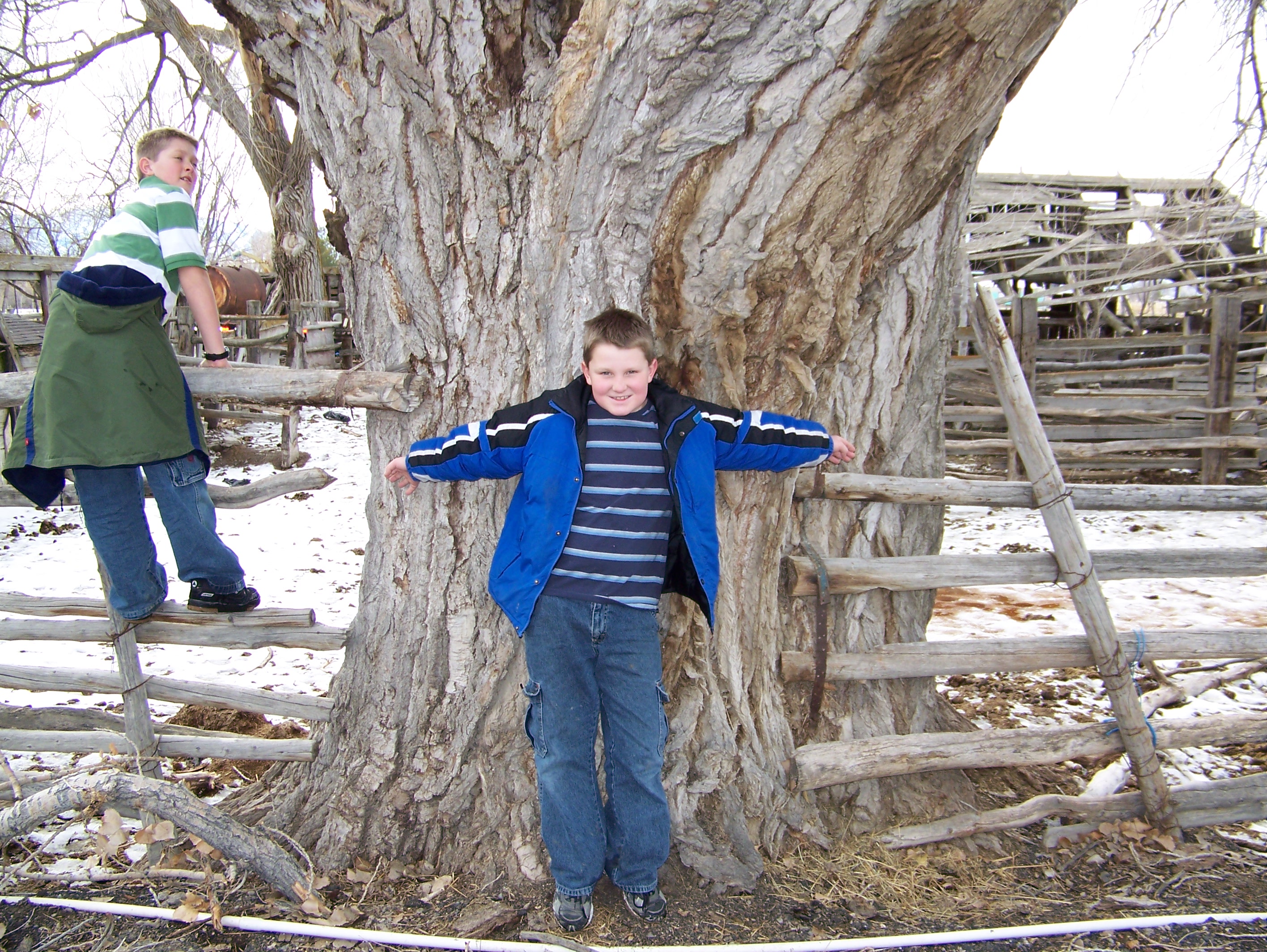
A century ago, Erda’s church-going farmers planted a row of Cottonwood twigs behind the clay-block church building.  A decade ago, a bald eagle stared down at me from one of these Cottonwood tree’s 50-foot height.  Today, the Cottonwoods are gone, felled by my saw, replaced by the neighbor’s new barn.  I can still see the majestic trees in family photos and in my memory as I walk home from Rabbit Lane, past Old Cottonwood, a 17-foot circumference behemoth.  This poem is for that and the other great pioneer trees that sit split on our porches and burn in our stoves.  (See the Rabbit Lane: Memoir page of this blog, Chapter 5: Old Cottonwood post, for more on Cottonwood trees.)

OLD COTTONWOOD

The old cottonwood is dead,
dead for many years.
Leaves have flown to join with new soil.
Sun-bleached bark has sloughed and fallen.
But the aspect of its reaching is preserved.
The trunk holds steady, the unseen roots entrenched.
A thousand branches reach sharply upwards,
spiny fingers feeling upwards,
still swaying, though stiffly.
Red-tailed Hawk still reconnoiters from a favorite high branch.
Great-horned Owl still softly calls its mate.
And Kestrel now rests in its cavities.

Chapter 5: Old Cottonwood

100_4762

–Engage your mind or others will engage it for you.–

Cottonwood trees are the legacy of the departed farmer.  Once mere twigs, they grew quickly to become giants of the valley landscape.  The oldest Cottonwoods are slowly dying.  Each Spring the emerging leaves draw in closer to the trunks, leaving more of the outstretched branches as bare as skeletons.  More and more bark sloughs off, leaving the trunks to bleach in the Summer sun.  Dead Cottonwood trees resemble the ruins of medieval cathedrals.  The bare branches seem sculpted and shaped, like the flying buttresses that once supported a stone ceiling but that now lift up the ceiling of the sky. Continue reading

Rita

Bill and Rita Stenner knew I loved small boat sailing.  I learned to sail small cat boats as a Boy Scout at Camp Liahona on Lake Seneca in up-state New York.  Of all my 35 Boy Scout merit badges, small boat sailing was my favorite.  Bill invited me to sail with him and Rita in his 19-foot sloop several times over several summers.  We put in at Atlantic Highlands, New Jersey, and tacked toward the Hudson Bay, with the Twin Towers shooting above the barely-visible land of Manhattan Island.  Rita suffered from crippling rheumatoid arthritis, and sat crumpled and twisted in a wheelchair.  But floating in the water behind the cruising sloop freed her from her confinement.  She never complained in the chair, but she exulted from within the cool salt water as I steered and called “coming about!”  This poem, “Rita,” I wrote some 30 years later in reverent memory of these good, kind, quiet people.  Thanks Rita and Bill.  (See the Rabbit Lane: Memoir page of this blog, Chapter 4: Desert Lighthouse post, for reference to sailing with Bill and Rita.)

RITA

The old man was kind to me,
though I offered nothing but my youthful company,
which I made pleasant, for my gratitude,
on those summer days.

How we sailed!

From Sandy Hook toward Hudson’s kills,
Twin Towers rising like brother beacons
beckoning us to tack their way,
I on the rudder,
Bill on the main sheet and jib.

Oh—how we sailed!

He tethered his wife,
a cheerful lump of rheumatoid flesh,
and tossed her offhandedly overboard,
whence she giggled and squealed
for the cool and the salt, the jostling wake,
for her release from the chair.

Sailing in the salt breeze!

Ponderous thunderheads darkened abruptly,
and we hauled her in
like a troll-caught crab
and fled the flashes, knowing
how tall and conductive was the metal mast
and how helpless we would be
on the water.

Silent Spring

As I walked along Rabbit Lane in the dark of early morning, I could hear only the distant hum of thousands of cars commuting to the Salt Lake valley.  The birds and crickets still slept.  The air hung still and silent over field and pasture.  I pondered Rachel Carson’s fearsome prediction in 1962 of a future where the wanton use of chemical poisons would wipe out the world’s singing, croaking, and buzzing creatures.  With a touch of irony, or sarcasm, I penned this poem, a mixture of hope and foreboding.  Visit the Rabbit Lane: Memoir page of this blog to read more about places of peace and hope, and to ponder how you can contribute to the world’s beauty and diversity.

SILENT SPRING

Spring,
Rachel:
not silent quite.
I hear,
distinctly:
the growing hum
of humankind.


Roger Evans Baker is the author of Rabbit Lane: Memoir of a Country Road.  The non-fiction book is available in print and for Kindle at Amazon.  Rose Gluck Reviews recently reviewed Rabbit Lane in Words and Pictures.

Good Night My Dear (Lullaby)

I wrote this lullaby for Erin, my second child, to comfort her in her nighttime fears.  (See Rabbit Lane: Memoir page, Chapter 4: Desert Lighthouse post).  (To see the song score, click on the link below.)

Good Night My Dear


Roger Evans Baker is the author of Rabbit Lane: Memoir of a Country Road.  The non-fiction book is available in print and for Kindle at Amazon.  Rose Gluck Reviews recently reviewed Rabbit Lane in Words and Pictures.

Chapter 4: Desert Lighthouse

100_4765

–Only small people seek to make other people feel small.–

Our first night in the country house, the children all slept in mom’s and dad’s room.  We offered this arrangement until they felt comfortable sleeping in their own rooms.  One night several weeks after moving to her own room, Erin (5) couldn’t sleep.

“Daddy,” Erin called in a loud whisper.

“What?” I moaned groggily after a moment.

“The lightning is keeping me awake.”

“What lightning?” I yawned.  “I don’t hear any lightning.”

“No—look—it’s flashing right now, without thunder or rain,” she persisted.

I pushed myself up onto an elbow with a groan. Continue reading

Chapter 3: Hawk

100_1050

–In the presence of goodness, good people rejoice.–

My boots crunch loudly on the loose and frozen gravel, rousing common sparrows from their cold roosts in the willow and wild rose bushes.  Despite being leafless in December, the bushes seem an impenetrable tangle of twigs and dead leaves.  I hear, rather than see, the birds fluttering and tweeting within.  I have bundled myself against the bitter cold, and wonder how these almost weightless creatures survive Winter.  I imagine them huddled in their houses, mostly protected from the wind, their feathers puffed out to gather insulating air, with temperatures sinking to just above zero.  I marvel that these birds constantly peep and sing, fluttering about with the energy of jubilation.  I envy them their unconditional happiness.  I have come to appreciate their enthusiasm, to rely upon their unassailable cheerfulness. Continue reading

Chapter 2: To the Country

          100_1918

–You deserve a palace made of gold. (But even a gold palace needs to be kept clean.)–
(Dad to Erin-8)

We moved to the country in the Spring of 1998.  Our new home offered so much room for the children to explore and play and run around.  They tromped through the tall, tan field grass making twisting paths that were not even visible from the house.  Once the children entered the grass they couldn’t see out (or be seen from without).  They were pioneers, blazing new trails in the wilderness, whacking at the grass with stick swords. Continue reading

Chapter 1: First Walk

100_1063

–Never betray inspiration with hesitation.–

Sleepily down Church Road I walked, past an unmarked dirt lane traveled most often by farmers on tractors.  Somehow I had tumbled out of bed and out the door.  I would much rather have continued my slumber under warm covers.  Crisp darkness and the ripe fragrance of dew upon cut hay greeted me as I stepped onto the covered porch.  I could see only silhouettes in the lingering darkness: old trees planted by farmers perhaps a century ago; the Oquirrh mountain range; cattle chewing mechanically on coarse grass. Continue reading

Introduction to Rabbit Lane: Memoir of a Country Road

100_4767

Rabbit Lane: Memoir of a Country Road tells the story of a humble country dirt road, of its human history, of its natural beauty, and of its ability to bring insight, understanding, transformation, and healing to those who walk it.  The book contains stories and poems, music and nature observations that will amuse and inspire.  Rabbit Lane helps us to slow down and pay attention to the beauty around us and within us.  The prefatory poem, Silent Spring, honors the vision and hope of Rachel Carson, author of the 1962 classic book by the same name, for a world filled with the music and beauty of nature.  Enjoy each of the many chapters, stories, poems, and songs as you walk with me on Rabbit Lane.


SILENT SPRING

Spring,

Rachel:

not silent quite.

I hear,

distinctly:

the growing hum

of humankind.


Roger Evans Baker is the author of Rabbit Lane: Memoir of a Country Road.  The non-fiction book is available for Kindle (full color) and in print (black-and-white) at Amazon.  Rose Gluck Reviews recently reviewed Rabbit Lane in Words and Pictures.