Author Archives: Roger Baker-Utah

Unknown's avatar

About Roger Baker-Utah

By profession a 28-year municipal attorney, my real loves are story, poetry, music, and nature. My publications include Rabbit Lane: Memoir of a Country Road (non-fiction), and A Time and A Season (poetry). My most recent writing projects include Reflective Essays, and vignettes about aging and elder care my a new page, Courage at Twilight. And I cannot forget Amy's bearded dragon lizard, Sunshine. I hope you enjoy!

The Dementia Dossier: Mentos Blue

I finally said something.  We were watching on television a Christmas special from the Tabernacle Choir at Temple Square.  At high volume.  And still, above the orchestra brass and 360-voice choir, I could hear the smacking of Mom’s gum as she chewed and sucked on it with obvious enjoyment.  But I couldn’t stand the sounds any longer, wincing at every smack syncopating the music.  “Mom, I can hear your gum-smacking above the orchestra!”  She looked hurt.  “I don’t want to hurt your feeling, Mom,” which was true, “but it’s loud,” which was also true.  I quickly changed the subject, commenting on the expert singing of the soloist.  One convenient characteristic of Mom’s deepening dementia is that she quickly forgets her hurts and disappointments, returning to cheerfulness.  In fact, she quickly forgets most everything, except things like the names of the cemeteries where her grandparents and great-grandparents are buried, or the road names of the New Jersey town where we grew up, and from where Dad and Mom retired nearly 30 years ago, leaving forever for Utah.  Mom and I returned to our television show, and while she returned to her normal good cheer, I did notice that the gum smacking had diminished…for now.

The Dementia Dossier: Ice Cubes

The water line to the refrigerator’s ice maker cracked years ago, ruined the kitchen’s oak-wood floor, and was permanently abandoned.  My daughter Laura has an amazing countertop ice-maker, producing pleasing, soft-crunchy cubes of pellet ice.  But Mom opted for a dozen of the old ice cube trays.  I confess to using my share of ice cubes for the day’s cold drinks, but it seems that every day I reach into the freezer only to find an empty ice bin.  Mom’s household routine used to include filling the empty trays at the kitchen sink and carrying them expertly to the freezer, without spilling: two stacks, six-high.  But with her walker a necessary tool of her daily perambulating, the chore has more often fallen to me.  With a busy schedule, running from one task and job and activity to another all the day long, the mental stoppage of finding the empty ice bin and needing to empty the ice cube trays into the bin and then to fill the trays with new water, has been a real irritant.  Mom uses by far more ice that I do, so I naturally expect her to fill the trays.  (Can I hear my readers offering sympathetic words of “Aw, you poor thing?”  I thank you.)  One reason the ice runs out so quickly is that Mom fills the trays only halfway, yielding half-cubes, naturally.  I, on the other hand, fill the trays completely, to yield large cubes lasting us twice as long.  Mom beat me to the job of filling the trays the other day: when, all twelve trays of cubes barely filled the bin.  “Mom,” I whined.  “Why do you fill the trays only half-full?”  Looking downcast, she explained, “I don’t like such big cubes.”  Besides her daytime use, her nighttime habit is to take a cup-full of cubes to her bedroom, to suck on them during her bedtime routine—and now I understand the desire for half-cubes.  The big cubes really are impossibly uncomfortably big and sharp to fit into one’s mouth and enjoy.  In fact, it might be similar to cramming a whole apple into one’s mouth instead of enjoying one reasonable bite at a time.  Half cubes it is, then.

The Dementia Dossier: Mobility

Mobility, or the lack thereof, dramatically affects lifestyle. After lurching and stumbling for two years, my father’s universe shrank to his daytime recliner and his nighttime bed, with his only outings being to the bathroom.  Mom’s mobility has deteriorated as well.  The steroid and gel shots in her knees did not help with stability and pain.  A cane became necessary.  I suggested to Mom that a walker would make her life so much easier, and safer, and she finally agreed, rolling it around the house.  She even balances her breakfast dishes (including a tall glass of milk) on the walker seat, from the kitchen to her recliner.  (No spills yet.)  I finally convinced her to try the walker at church.  I explained, gently, that I could not go back to having someone hang on me and cling to my clothing as they lumbered painfully along.  I did it with Dad, for a long time, and would not (could not) do it again.  She gave in, and I folded the walker and stowed it in the back seat.  Trading out the cane for the walker allowed her to move more quickly and safely, and more independently: she didn’t need my elbow or the loose fabric of my suit sleeve.  Today I told Mom I needed to go grocery shopping—she was welcome to come, but I could not wait for her to follow me through the aisles in the store.  To my surprise, she offered what I have suggested and she has rejected several times: using an electric shopping cart.  “I think that would be easier and better!”  So do I, I sighed in silent relief, surprised at her new willingness.  She got the hand of the throttle and steering, and set off happily through the store.  I even found myself following her once or twice.  Now that’s a change.

The Dementia Dossier: The End of the World

Mom’s computer printouts have been coming out more and more purplish-red as the black ink ran out and the color cartridge eked out its last.  “Looks like you’ll need new ink very soon,” I observed.  This morning, she rolled herself and her walker into the kitchen and gave me a look of panic and consternation.  “You’re giving me a look that says the world is ending,” I observed.  It was…for her.  I had noticed earlier on her desk a page printed red on the top half of the page only, and faded into nothing for the bottom half.  “My printer won’t work!” she shouted, more in anxiety than anger.  I reminded her she was running out of ink.  “I know…I tried to put the new cartridge in…but I couldn’t do it.”  Indeed, she had inserted the new cartridge, but incorrectly, and it was stuck fast in its slot.  HP had designed its cartridge bays so that when an 86-year-old tries to install her own cartridge, she will do it wrong and not be able to remove it and will panic and give up and will need a new printer.  I worked and worked to remove that cartridge, but it had clicked in incorrectly and was locked in.  I looked like a quack surgeon, with my headlamp and instruments operating on the printer’s innards.  With no little force and a great deal of twisting and prying, the cartridge finally released.  But not before staining my thumbs.  Baby wipes wouldn’t clean them.  An alcohol-soaked cotton ball wouldn’t clean them.  Soap and water?  Nope.  I’ll try mineral spirits next, I guess.  I have to give Mom credit, though, for trying to solve her own problem before coming to me.

The Dementia Dossier: Free Shots!

After taking Mom for her third of three rounds of knee injections, we drove to Walgreen’s for a prescription. A sandwich-board A-frame sign greeted us as we pulled into the handicapped parking stall.  Mom read the sign out loud: “Free Flu Shots.”  Then she exclaimed, “Free Flu Shots!  Have you ever heard of such a thing?”  Indeed, I had.  “Mom, you got your flu shot here, for free, just a month ago.  And you got your Covid-19 shot here also, for free, two weeks later.”  They were free to her, anyway, her health insurance having paid any cost.  “I did?  They were free?” she exclaimed again, then mumbled, “I don’t remember that.”  I didn’t want to make her feel bad, and asked only if she recalled how nice the pharmacist was, the one with the curly hair.  “Oh yes, she was wonderful.  She lives nearby in Draper and has two children and went to high school in South Jordan.  What a lovely woman.”

(Photo from Walgreens.com, used under the Fair Use Doctrine.)

The Dementia Dossier: Long-Distance Call


On a scenic afternoon drive, I told my mother I had spoken with my girlfriend as she was visiting family on the American west coast.  “How did you do that?” she asked is some amazement.  Not trying to be a smart ass, but also not comprehending her question, I responded simply, “Uh…telephone?”  She nearly began to cry as she exclaimed, “I’m so stupid!”  I tried to reassure her she was not stupid, and told her my own story of holding my phone to my ear talking to Caleb as I sat at a red light, then panicking at not seeing my phone on the console, and demanding of my girlfriend and her girlfriend, “Where’s my phone?  Where’s my phone!”  They looked at me strangely, then began to laugh, and I realized the phone I was desperate to find was in my hand and pressed to my ear, with my son on the other end of the call.  I was tempted to feel stupid, too, but chuckled shame away and laughed it off as one of the funny tricks our minds sometimes play on us.  Still, I wondered at Mom’s momentary bewilderment at how I was able to speak with my long-distance sweetheart.


Image by Heiko from Pixabay


The Dementia Dossier: Shots 2

(Mom to doctor, as the syringe enters the void of her knee joint): “How’s your family?”  (Doctor looks up and around, momentarily confused): “Who, me?”  (Nurse, who had mouthed Who, me? looks relieved.)  (Doctor to Mom): “Fine…How’s yours?”  (Mom to me): “How are we?”  (I do not answer the question.)  (Mom to nurse): “Do you have kids?”  (Conversation ensues about nurse’s kids.)  (Mom to everyone): “My birthday’s this week.”  (Hearty congratulations from doctor, approaching with second syringe, and nurse.)  (Mom to everyone): “It’s on Thursday.”  (Friday, actually.)  (Mom to everyone): “I’ll be 87!”  (86, actually.)  (Hearty congratulations and light laughter.)  (I roll Mom’s wheel chair out of the room.  The doctor smiles at me, whether in amusement or sympathy I cannot tell, but not likely in general good humor.)  (Mom to doctor as she rolls by): “My knees feel all full and squishy, and they sting a little.”  (Doctor to Mom): “That sounds about right.  See you next week for round 3!”

The Dementia Dossier: Poor Bank

Returning from an errand to the post office, I was explaining to my mother some aspects of my new work as an immigration attorney.  After leaving a 32-year career as a municipal government attorney, the director of the non-profit No More A Stranger Foundation (NOMAS) asked if I would consider starting a new career and working for her as an immigration attorney.  (I had volunteered there for a couple of years.)  NOMAS helps people with their immigration applications to legalize their status, at no charge to the clients.  The work would be part-time and paid “low-bono” (not quite pro-bono, but nearly).  I help prepare applications for naturalization, green cards, work permits, asylum, human trafficking visas, crime victim visas, student visas, and many others.  I am having to learn immigration law from scratch, and the Administration’s frequent policy changes aren’t making the learning easy.  Immigrants, whether in the U.S. lawfully or not, face real financial and social hardships.  They contribute to the economy and community, but often have the lowest-paying jobs and suffer discrimination, bigotry, and isolation.  NOMAS attorneys (a few) and volunteers (many) do what we can to legalize the status of immigrants so they can have improved quality of life.  As a sidebar story, our local Wells Fargo branch closed.  Mom and I knew the manager, bankers, and tellers, and were sad to see them leave, and sad to see our convenient banking location shuttered.  Coming home from the post office, we sat in our car at a red light as I explained immigrant hardships.  Mom did not respond or react at all to my narrative.  But upon seeing the closed bank building, she sighed, “Poor bank.”  I thought Wells Fargo was anything but poor.  And I thought my immigrants were much more deserving of her sympathy.  But Mom felt what she felt, and understandably related more with and sympathized more with what she knew than with what she did not.  And the universe of what she knows is shrinking.  (If anyone would like to support the work of the No More A Stranger Foundation, or are looking for a worthy Giving Tuesday or year-end charity, you may make a donation at the NOMAS website.)

The Dementia Dossier: Dinner in a Drawer

Dinner consisted of meat paddies (ground beef and pork), cheese tortellini, steamed asparagus, and sauteed sweet onions and mushrooms.  Mom hooted over the sauté: “Woo-hoo! I just love onions and mushrooms!”  Part way through our dinner television program, I noticed, in my peripheral vision, Mom open her middle end-table drawer and insert her dinner plate.  Gathering the dishes later, I asked her, “Do you want me to get your dinner plate from the drawer?”  Flustered, she reached for the bottom drawer.  “It’s in the middle drawer,” I observed.  She opened the middle drawer and retrieved her plate, empty of onions and mushrooms and asparagus tips, but all the meat remaining.  “I didn’t want you to be disappointed in me,” she said.  “I just couldn’t eat the meat.”  Not to worry, I reassured her—she could eat or not eat what she wanted.


Image by Guilherme Teixeira Guilhermim from Pixabay

The Dementia Dossier: The Victim

“You see yourself as a victim,” she said, “and as long as you see yourself as a victim, you’ll be trapped in anger and resentment.”  Exactly where I have been.  The suggestion stung.  I did not want to hear it.  But I heard it.  And I studied it, and turned it over, looking at all sides, and I asked myself, Is that what I do?  A victim of my mother’s dementia.  A victim of my father’s dementia and diabetic paralysis.  A victim of a spiteful boss.  A victim of frequent illness.  A victim of an unhappy marriage.  A victim of an unhappy divorce.  A victim of loneliness and isolation.  I have been wanting to find a way through, if not a way out, of my challenges.  I have even been willing to see life differently, to acquire another perspective, and to pay the price for that wisdom—but I could not see how to get there.  My sister Jeanette showed me how.  Stop suffering under the weight of your victimhood.  Choose where you have choice.  Submit where you do not.  Laugh.


(Pictured above: my backyard view of fall.  Sandy, Utah.)

The Dementia Dossier: Boggle

Somehow, the game Boggle has become a three-generational Baker family favorite (the fourth generation is still too young).  Put away your Monopoly and your Risk and the crazy card games.  Boggle rules.  My children even ask for Boggle when they come to visit, despite my branching out into Uno and Golf (they also love Monopoly, Risk, Cover Your Assets, and the crazy card games).  Mom used to kill it at Boggle.  An educated, well-read woman, she wrote long lists and racked up the points.  My sister Jeanette is also a pro.  My son Caleb recently challenged Mom and me to a few rounds of Boggle.  I topped 27 points in the first round, with 47 total for three.  Caleb did well, coming in second not far behind me.  Mom got 2 points each round.  She still finds lots of three-letter words, but her lists are growing shorter.

The Dementia Dossier: I’m Too Full

Dinner would be ready at 6:30, I told Mom.  Pork chops.  Mashed potatoes.  Yellow squash.  Yum.  She gave a noncommittal nod, watching the news.  As I turned away toward the kitchen, she pulled a banana Creamy out from under the dish towel on her lap.  Whatever, I thought.  Creamies are her new staple, her comfort food, coming in orange, banana, chocolate, and cherry flavors.  Creamies rank high on the weekly grocery list, along with gallon buckets of Farr burnt almond fudge ice cream.  We come home with two boxes of twenty Creamies, and two gallons of Farr’s, every two weeks.  One week, the only items on the grocery list were Creamies and Farr’s!  I really enjoyed the pork chop dinner, but Mom not so much.  She ate a little squash and a bite of chop.  “What’s wrong Mom?” I asked.   “Does everything taste all right?”  “I’m just not that hungry,” she said meekly.  Dinner was over by 7:00.  Mom wheeled her walker into the kitchen as I finished up the dishes, and a minute later wheeled back to her recliner with a large bowl of burn almond fudge on the walker seat.

The Dementia Dossier: Recycling Excess

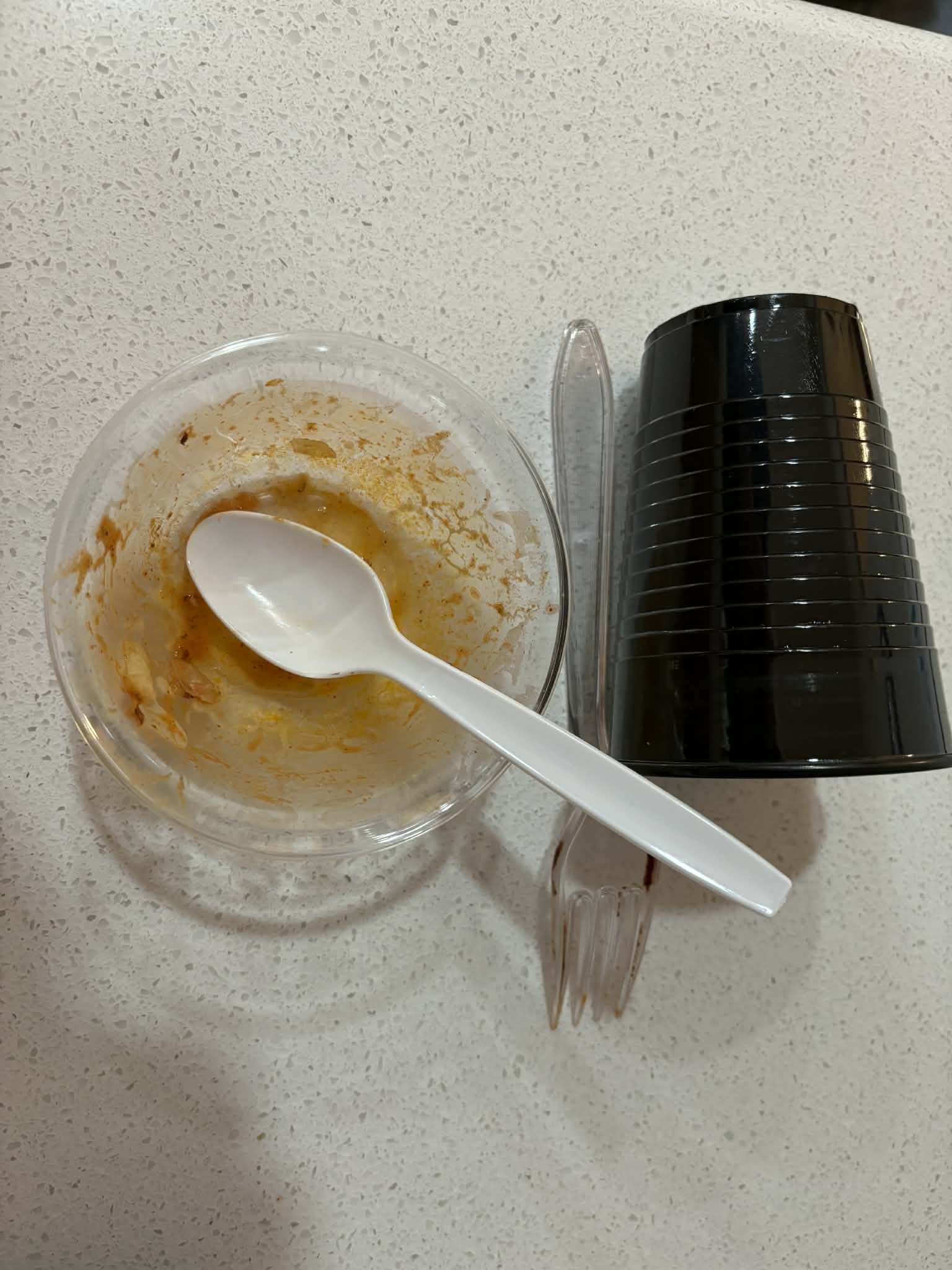
I dropped the empty peanut butter jar into the trash can, and covered it carefully with banana peels and used paper towels.  I had decided the natural resources required to clean the plastic jar sufficiently to be recyclable (e.g., a gallon of hot, soapy water) were worth much more than the plastic’s value.  Besides, I didn’t want to wipe the peanut butter remnants from the jar.  But for my hiding the jar, she would have pulled it from the garbage and cleaned it for recycling.  After I tossed in the trash a sandwich baggie containing bits of salmon, mostly scaly skin, I found the bag wet and smelly drying next to the clean dishes.  “Mom,” I called across the room, “nobody wants to recycle this fishy sandwich bag.  They don’t want it.”  She huffed as I tossed the bag again into the garbage can.  One evening we returned from a church chili social.  My son, Brian, pushed her wheelchair from the church building next door.  Back at home, I found on her desk her plastic chili dish, her plastic cider cup, and her plastic fork and spoon.  “Mom, why are your dirty chili dishes here at home,” I called across the room.  She huffed and told me she wanted to recycle them.  I knew none of the items were acceptable for recycling, and used her trick in reverse by later pulling the items from the recycling bag and hiding them amongst the trash.

The Dementia Dossier: The Power of the Print

I frequently hear Mom’s inkjet printer whirring as she prints the day’s emails.  She prints the church program and church notices.  She prints her hair cutting appointment, and then the receipt.  She prints letters from her missionary grandchildren.  She prints funeral notices and obituaries.  She prints pictures of grandchildren’s lizards and hikes and birthdays.  She holds the printouts up to me and asks, “Do you want to read this letter from _____?”  I already read it, Mom.  I got it, too.  Mom seems to find enormous pleasure at having the power to transport her electronic correspondence from the computer screen to a tangible stack of stapled pages.  “I need you to order me some new ink for my printer,” she informs me.


(Image by OpenClipart-Vectors from Pixabay)

The Dementia Dossier: Arthritis In My Knees

Mom’s knees pain her and are weak and wobbly with arthritis. “I feel like I might fall,” she often says.  You can’t fall, I want to say.  If you fall, your life in this house will be over.  At the nearby hospital, the orthopedic doctor prepared to inject cortisone into her knees.  I asked him questions about injection dosage and frequency, and he answered that the dosage was fixed, standard, and the injections could be administered only every three months.  I thanked him for the information.  The doctor asked Mom if she had any questions.  “Do you want me to pull my pants down now?” was her answer.  I felt a bit embarrassed as the doctor shifted on his feet and stammered a suggestion that maybe she could lift her pant legs.  She could not.  Down came her pants.  In went the needles.  “I hope the shots help, Mom,” I managed as I wheeled her out to the car.  They did not.


(Image by Ewa Urban from Pixabay)

The Dementia Dossier: I’ll Miss You

“See you in a bit, Mom,” I waved as I walked toward the front door on my way to run an errand.  “Okay.  I’ll miss you.  I’ll be lonely.”  I ground my teeth and glowered.  The more I pull away, the more attached she wants to be, and in turn the greater my desire to turn away, and the greater her loneliness.  I’m not here to hold your hand and keep you company all day. I wanted to tell her.  I’m here to call 9-1-1 when you fall.  I’m here to feed you one good meal a day.  I’m here to keep you safe in your home until you die.  I never say any of these things, of course.  I’m too afraid to hurt her feelings, feelings which she cannot control or even be aware of in her dementia.

The Dementia Dossier: Nothing’s On

As I cleaned up the kitchen after dinner, Mom surfed the cable channels (access to 100+).  She pressed the “channel up” button one at a time, roaming slowly through each of the channels.  The process seemed to take forever.  After surfing past baseball games, basketball games, news programs, a dozen movies, a tennis match, nature and history documentaries, and even her beloved crime show reruns, she turned the television off and pronounced with some disgust, “There’s nothing on.”

The Dementia Dossier: Getting Cash

Mom told me she needed me to take her to the bank so she could get cash.  She was carrying her checkbook, and had written a check out to “cash.”  I figured the outing was less about the cash than the outing itself.  But I couldn’t resist asking, Why are we doing it this way?  I can just drive by the ATM the next time I’m out.  “Because that’s what I want to do!” she answered, flustered and almost in tears.  So, I took her to the bank.  She staggered to the car in the garage, staggered from the car to the bank building and down the long corridor to the teller.  She presented her check and got her cash, and staggered home in reverse order.  The next time we ran an errand together, I drove by the ATM machine, tapped my card, and took my cash.  “I’m absolutely amazed you know how to do that!” she exclaimed.  I wanted to smile, but couldn’t.  In her dementia, the ATM was some mysterious miraculous machine never before presented to her consciousness.

(Image by Gerd Altmann from Pixabay)

The Dementia Dossier: The Old Wallet

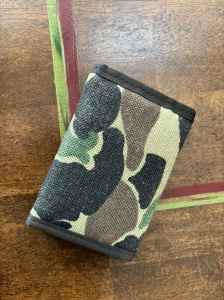
For decades I had admired Dad’s black leather wallet: not a bi-fold or tri-fold, but a full-length wallet holding his ID cards and credit cards and unfolded cash.  A real man’s professional wallet, I fancied as his worshipper and shadow follower for years.  A sophisticated man’s wallet.  The wallet of an intellectual.  When Dad died, I secreted the wallet, with his cards and cash, in my bedroom, knowing where it was if it were needed.  Out of loyalty and transparency with Mom (and the estate), I told her that I had the wallet, what was in the wallet, and where I had hidden the wallet in my bedroom.  Dad had another wallet, at least one that had been given to him, but never used: a nylon and Velcro camouflage tri-fold.  Mom asked every member of the family who came into her orbit if they wanted Dad’s camo wallet.  The stiff, green, empty thing had no meaning to anyone, and no one wanted it.  But Mom really wanted someone to have “Dad’s wallet.”  My lovely sister, Jeanette, also did not connect with the camo, but mentioned offhandedly to Mom how she much had admired Dad’s black leather wallet.  Sometime later—how long I don’t know—I went to the hiding place to retrieve Dad’s wallet, for his social security card.  Instead of the black leather wallet, I found the plastic camo wallet, complete with all Dad’s cards and cash neatly cached.  The implications of what had occurred crashed in around me: Mom had snuck into my room, had opened my drawers, had rummaged through my things, and had snuck the old wallet out, replacing it with the cheap camo, and transferring all the contents.  I could almost hear her thinking, I’ll move everything into the plastic wallet, so it’s okay.  I approached Mom with the camo wallet raised, and said to her evenly, “Mom, I’m going to try very hard to be calm as I talk to you,” and then proceeded very uncalmly to ask her, “What is this!”  She seemed befuddled, and offered that she could ask Jeanette to return the leather wallet.  “It’s not about the wallet,” I responded.  “It’s about you sneaking into my room and getting into my stuff.  Stop sneaking around!”  I left her in tears as I stormed from the room.  Oy vey.  Jeanette felt terrible when I told her the story, and offered to return the wallet.  Among other things, I told her I was very happy for her to have Dad’s wallet as a family keepsake—and I meant it.  My feelings weren’t about the wallet.

The Dementia Dossier: Lights Blazing 2

The chandelier was on again, all 16 incandescent bulbs, for the third time that day. I had turned it off twice already.  And now it was blazing again.  “Alright Mom.  I give up.  I have turned the chandelier off twice today, and it’s on again.  You win.”  She looked crushed.  “I went to sit on the front porch.  I forgot to turn it off when I came back in.”  Exactly! I wanted to say.  Mom is incapable of passing a light switch without flipping it up and turning on some light or other.  Her morning pathway includes the 16-bulb chandelier, two hall ceiling lights, five table lamps, and 25 recessed bulbs.  Conversely, she seems incapable of flipping a light switch off on her return trip.  Having not said “Exactly!” but having said “You win,” I left the lights on all day, despite my acute and painful awareness of my expanding carbon footprint, which I imagined to be the size of the Great Salt Lake.  The next morning, in advance of her descending the stairs via the chair lift, I turned on the chandelier, the hall lights, the lamps, and the recessed lights.  I decided to preempt (but not disrupt) her blazing lights routine, adopting it as my own (for today, anyway), refusing to engage in a petty power struggle (for which I am partly responsible, especially the petty part).  I know I won’t be able to hold out, perhaps not even for a day, and will surreptitiously here and there follow after her, turning lights off.

The Dementia Dossier: Rigid Dementia Routines

A month after my involuntary retirement, and the illness that followed, I finally found the mental energy to map out a new routine for my daily life. My routine involved time for reading scripture, exercising, new writing projects, painting lessons, low-bono work with an immigration non-profit, and yard and house projects.  I also built in time to take Mom for her necessary errands, like the post office or the pharmacy.  Since Mom is so routine-bound in her dementia, Jeanette suggested Mom would benefit greatly from seeing my schedule, knowing my routine, and knowing that she was a part of it.  I printed the schedule, and Mom taped it to the lamp next to her recliner, where she could always see it.  I knew a routine would need to be flexible.  Without flexibility, the routine would cease to be the servant and become the master.  Instead of the routine serving my purpose, I could become a slave to the routine.  That flexibility proved necessary as I succumbed to sinus and bronchial infections that laid me flat for much of eight weeks and dragged me through two ten-day microbiome-depleting rounds of antibiotics.  The illness destroyed my routine.  But every day near 2:00 p.m., Mom asked—according to my routine—to be taken to Help U Mail or Walgreen’s or out for a drive: Ahhh! Just look at the beautiful blue sky!  I began to roil with increasing resentment, and biting my tongue and clenching my teeth, I evenly uttered, “Mom, I don’t think you have a sense of reality right now about what I can do.  I had just enough strength to watch Jeopardy with you for half-an-hour.  I’m not up to an outing.”  After more than two months, I am nearly recovered, but my routine remains in a shambles.  Returning from an appointment at 4:00 p.m., I asked Mom how her afternoon had gone.  “Quiet,” she answered, and continued under her breath: “I guess I’m stuck in the house today.”  “Stuck?” I answered.  She thinks she’s stuck in her recliner, I thought.  She thinks I’m responsible for her getting unstuck.  “You’re not stuck,” I challenged.  “You can get up from your recliner and sit in a chair on the front porch and look at the blue sky, the clouds, the endless airplanes, the cars driving by.  You can sit on the back porch and look the mountains with their maples turning red and the dustings of snow on the peaks.  You can use your walker on the sidewalk for a quick walk.”  And then I saw it.  When I began my new retirement routine, I had made time for her in my daily schedule.  My  My schedule.  She had taped my schedule to her lamp.  And with that bit of adhesive tape, I became part of her routine and her schedule.  I had been sucked in even further by her consuming dementia.  I was now another symptom of her slavery to dementia routines.  The next morning, I pulled the paper from her lamp and crumpled it into the trash.

The Dementia Dossier: Getting My Email Up

Mom checks her email first thing, last thing, and several times throughout the day. Several years ago, I placed a short-cut icon in her task bar, and explained, All you have to do, Mom, is click this one button—nothing else, and your email will come up.  She recently called to me from her office for help with her computer.  “I can’t get my email up!” she exclaimed in exasperation, staring helplessly at the computer home screen.  I looked at her screen, saw that no apps were open, and asked her if she had clicked the email icon I had made for her.  “I don’t remember how to do it,” she whispered in dismay, sensing that she ought to remember, but couldn’t.  I reminded her about the email icon.  She clicked it once, and up popped her email.  “I just couldn’t remember how to do it!” she cried with relief.  Gladly, she hasn’t had any trouble since.

(Image by Raphael Silva from Pixabay)

The Dementia Dossier: Paying the Bills

On the first day of every month, Mom’s scheduled task is to “make out the bills,” which means writing a check for each utility, communications, insurance, medical, and tax bill, etc.  By the end of the day, a tall stack of envelopes is addressed and stamped and feeding her anxiety for immediate posting, which means I am to take her—now—to the post office or the copy & mail store.  She doesn’t trust placing outgoing mail in the mailbox, not that she should.  Last month, the County Treasurer sent Mom a check refunding a tax payment because she had paid it twice.  Another refund check came from her doctor, whom Mom had paid twice for the same visit.  On the doctor bill, I give her the benefit of the doubt, because invoices and payments can cross in the mail.  The tax bill she simply somehow paid twice.  I am monitoring the frequency of refund checks before deciding whether I need to start helping her make out the bills.

The Dementia Dossier: Lock Box

I had calmed myself enough to want to join Mom in our camp chairs in the driveway watching the sky at dusk.  I sat and breathed and relaxed.  And Mom’s opening comment was, “I want you to do something for me.”  Yes, I literally stiffened as I said What.  “I want you to take that black box lock thing off the front door.  Everyone is asking me if I am moving.”  My immediate response, intelligent and nonjudgmental, was They’re all idiots!  That lock box has been on the front door handle for four years—four years without worrying what the neighbors might think about us moving.  Sarah bought and hung the box because if Dad was home alone (i.e., when I took Mom grocery shopping), and he couldn’t get to the door (he couldn’t get to any door), people could call me for the combination and could open the box for the house key.  It proved useful for nurses and family members.  But one of Mom’s friends saw the lock box this week and asked her if she were moving, and Mom suffered immediate terror at the thought of leaving her home of 27 years, of her rutted routines disrupted, of the end of life as she knows it.  She was correct that we don’t need the lock box anymore because Dad passed away six months ago, and Mom can get to the door…so very slowly.

The Dementia Dossier: An Outing

LA PEQUENITA MARKET - Updated July 2025 - 44 Photos & 22 Reviews - 2740 S  State St, Salt Lake City, Utah - International Grocery - Phone Number - Yelp

Would you like to take a drive to La Pequeñita today, Mom?  “I would LOVE it!”  And off we drove to the Latin food import store on State Street in Salt Lake City.  On the freeway, her head turned this way and that from side to side, marveling at the seemingly new sights of the city she has lived in for all but 4 of her 86 years.  “Would you look at that!” she remarked about a semi loaded with used cars.  “Look at all those cars!  I’ve never seen anything like that!”  Surely you’ve seen a car carrier before, Mom.   “But not with THAT many cars on it.”  After purchasing our Brazilian bom-bom candies and our Antártica guaraná soda and our manioc puffs (she also threw in a bag of dried white lima beans), we shuffled to our car.  “Where do you suppose that little road in back of the store goes?”  Well, I guess we had better find out.  I drove into the dingy alley, which very quickly emptied onto a sub-collector.  “Well, what do you know?  Amazing!”

(Photo from Yelp used under the Fair Use Doctrine.)

The Dementia Dossier: Ice Cream Scoop

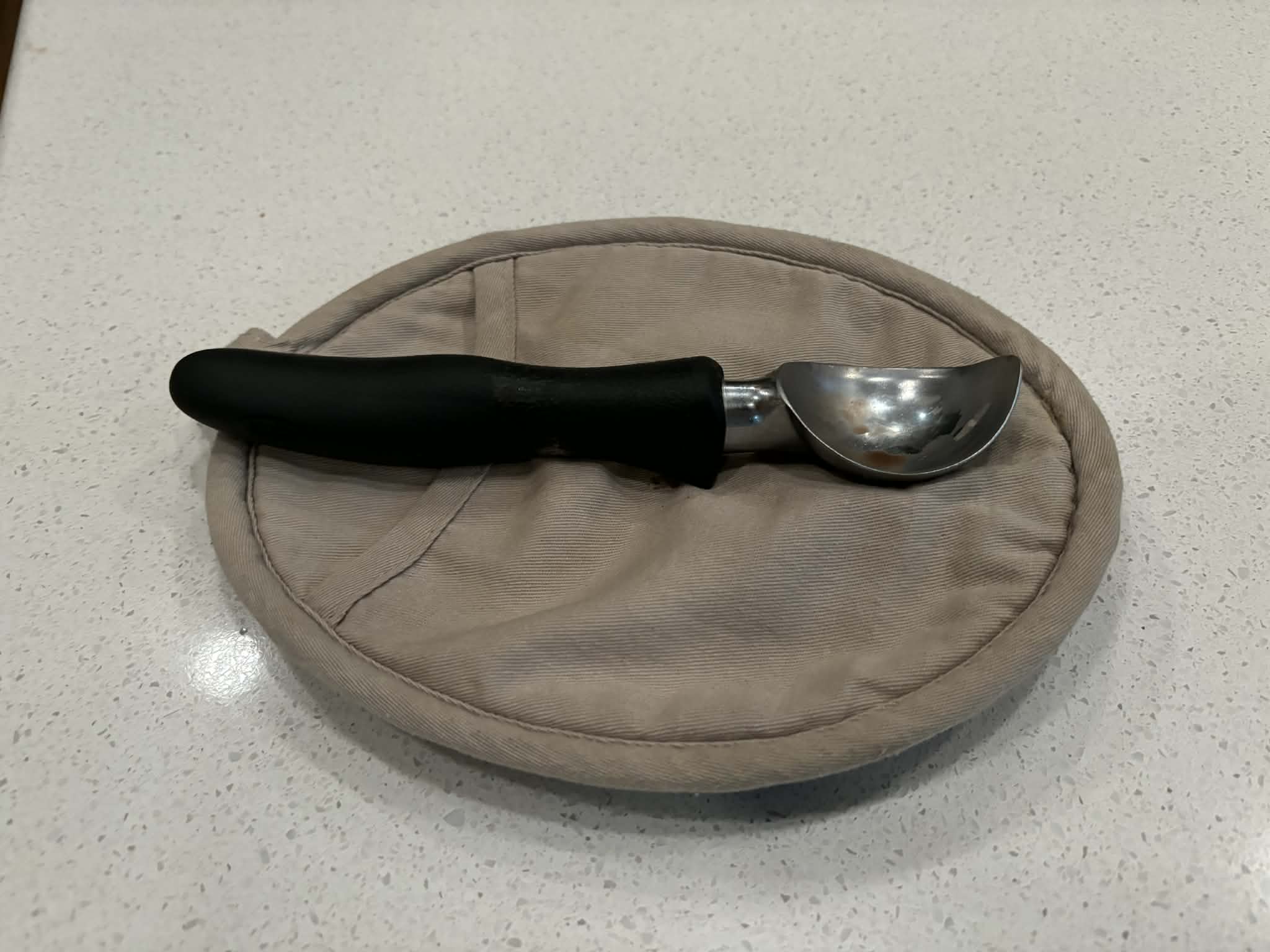
Twice I had searched the kitchen for my favorite ice cream scoop: aluminum, with a cutting blade and anti-freeze in the handle, and had given up, selecting instead an inferior model, which would still work, but not as well. Upon opening the freezer, I found the favorite scoop sitting on the gallon tub of Farr’s burnt almond fudge ice cream, Mom’s favorite.  The second time I found the scoop there, I asked her, “So, Mom, is this where we’re keeping the ice cream scoop now?”  She grinned in embarrassment and confessed to being “too lazy” to wash it and put it back in its drawer.  There is a certain efficiency, I suppose, in keeping the scoop in the freezer with the ice cream.  Perhaps we should stash the carrot peeler in the refrigerator vegetable drawer, and the potato peeler in the pantry, and the measuring spoons in the spice cupboard.  But I vote for consolidation in a common centralized location: the utensil drawer, which is where Mom has put the scoop since.

The Dementia Dossier: Operation Mouse

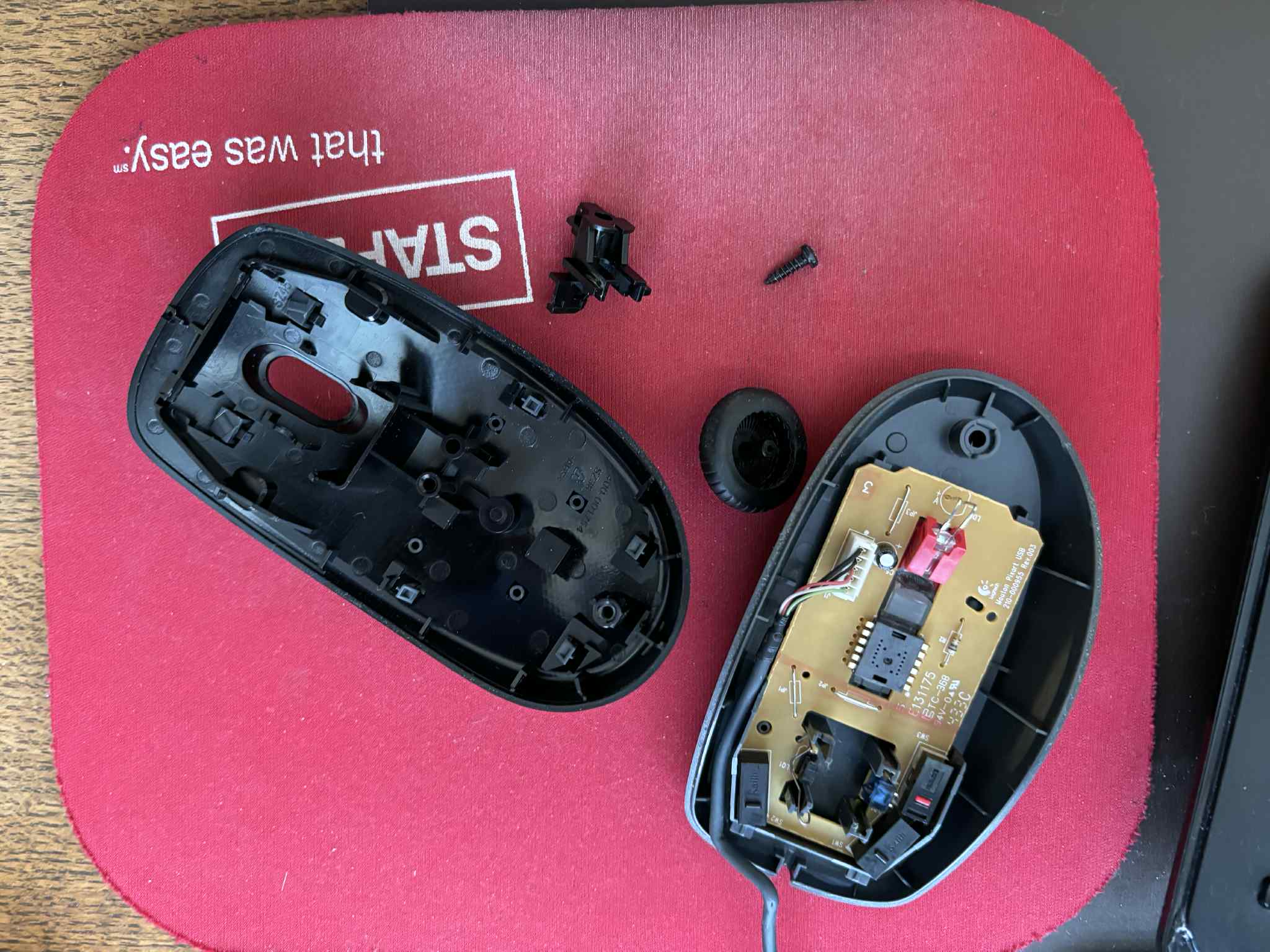
“I need your help with the computer,” Mom announced, not an unusual daily routine.  But this time she seemed unusually distressed.  Peeking into the study, I found the relic desktop tipped onto its face, and mouse innards splayed across the old oak desk.  What happened here? I asked.  “The mouse stopped working, so I tried to fix it, but I couldn’t, so I turned the computer off and unplugged the mouse chord.”  Unsure of the relevance or wisdom of each of these procedures, I examined the mouse parts and sighed.  Mom never tries to fix anything, especially not computers—I’m her repairman—so what had compelled her to attempt this repair job escaped me.  But I had no patience that day for attempting to piece back together something I had not taken apart.  The mouse was thoroughly disemboweled, and I could not immediately see how the pieces fit together.  Maybe I just wasn’t in a fix-it mood.  The easier route, for me, on that day, was a quick drive to the DI thrift store to purchase a new old mouse for $3.00.  At home, I sanitized it with 99% germ-kill wipes, plugged the chord into the USB port, and righted and turned on the computer.  The disassembled mouse parts went into the trash with the ragged teddy bears.  “You’re in business,” I declared, to her relieved sighs.

The Dementia Dossier: A Lecture

On my filing cabinet sit two framed copper sheets into which a Greenwich Village street artist pressed my parents’ portraits in 1963. They capture my father and my mother at the apex of their young lives: newly arrived in New York City from their rural Utah roots, a graduate student and his pretty young wife, no children, no debt, the future at their fingertips.  I love the pressings and am so pleased my parents gifted them to me years ago.  This morning, though, they were gone.  On opening the top filing cabinet drawer in search of a file, I found the frames hidden in the drawer.  I marched to my mother and asked angrily if she knew anything about the portraits being moved to the drawer.  “They are ugly,” she announced.  “I was sitting in your chair waiting for the laundry and just couldn’t stand to look at them anymore.”  Well, I spat, these portraits are mine, and I love them, and I love them where they are.  And that is my chair and my private space you have been sitting in and messing with.  And you are not allowed to sit in my space and touch my things and move my things around, whether you like them or not.  If you see something of mine you don’t like, you are allowed to talk to me about it or to leave my room and sit somewhere else while you wait for your laundry.  But you are not allowed to be in my private space or to touch and move my special things.  Of course, she cried.  But I was too piously put out to care.  I felt justified in drawing an immediate and clear boundary, one she should have already been fully aware of without my emotional explanation.  And of course, it was stupid and mean of me to do anything other than kindly and patiently explain appropriate boundaries to my old mother who has lost her husband of 62 years and who can’t stand to see herself and her handsome young husband in the beautiful prime of long-lost youth.

The Dementia Dossier: Stuffed Animals

A pile of stuffed animals at the front door greeted me as I came downstairs for breakfast.  I have seen one of these rotating stuffed animals on Mom’s bed pillows for years.  “I want you to throw them away,” she instructed.  Okay, Mom, but what’s this all about?  “I’m just tired of them,” she kind of explained.  Apparently, but what happened to make you suddenly want them in the trash?  They’re just old, she reasoned, and she was tired of them and didn’t want them anymore.  She thought they were too dirty to donate to the Deseret Industries (DI) thrift store.  I checked with my sister to see if the stuffed animals had any historical or sentimental value.  Indeed not: Mom had herself purchased them at DI years ago for maybe a dollar each.  Waste Management will pick them up on its Monday morning run.

The Dementia Dossier: Dinnertime Movies

NCIS: The Crime Show that Has Something to Say about Racism ...

Mom and I enjoy watching television during dinner, her from her recliner, with her plate of food balanced on her belly, and me sitting at my TV tray.  But finding a program we both like can be a challenge.  I can’t stand murder mystery/crime shows (read NCIS), and she is done with Star Trek.  I have tried funny, touching, and exciting movies, all to mixed reviews.  One thing I know, though, is that movies are simply too long for her.  After about 45 minutes, she begins tapping her fingers, glancing repeatedly at the clock, and sighing.  That’s when I know it’s time to take a break.  “We’ll pick it back up tomorrow,” I suggest.  And I clean the kitchen, and she channel surfs, inevitably landing on murder.

(Photo used under the Fair Use Doctrine.)

The Dementia Dossier: Tissues

With her decreasing mobility, Mom’s world has slowly shrunk to her recliner and its reachable environs: her needlepoint basket, and her end table drawers with books and jelly beans and O’Henry bits and the telephone directory and TV remotes, and tweezers and nail clippers…and tissues. She does venture out on the occasional trans-oceanic voyage to the upstairs laundry room, or trans-continental trek to the mailbox.  Even the main level bathroom, however, is a journey.  Her recliner has become the center of her universe, with a constellation of personal items close by.  She seems to prefer Little Caesar’s Pizza napkins for tissues, though I find them rough for tissues and useless for napkins.  I hear a drawer opening, a nose blowing, a tissue rustling, then shake my head as the used tissue goes back into the drawer for multiple later usages as the weeks drip by.  Instead of just shaking my head this time, I found a solution and brought her a small garbage can and a box of clean tissues.  Do you have a garbage can, Mom?  No?  I see that you don’t have a garbage can.  Here is a small garbage can.  And here is a box of new clean tissues.  No more recycling used tissues, okay?  And I left her to grasp the implications of what I had said: throw away your used tissues into the garbage can.  I looked over at her at the next nose-blowing sound, and saw with satisfaction a new white tissue, and clenched with chagrin and futility as the used white tissue dropped into her top drawer for later reuse.

(Image by Anna from Pixabay)

The Dementia Dossier: Basement

My new sweetheart joined in Father’s Day celebrations, conversing easily with my sons and daughters in law, munching on bacon burgers with all the fixings, tossing corn hole bean bags, and tickling my grandchildren.  Mom had insisted on my darling sitting on her lap for hugs and kisses and conversation, and my dear one cheerfully submitted.  (Mom asks the same of me, and I persistently refuse.)  Needing a few minutes of privacy to discuss some sensitive couples questions, I took my new love’s hand and led her down the stairs into the cool basement great room.  In a few minutes came a knock on the wall, from Hannah, looking for me, and chuckling with a blush that “Grandma” had suggested she knock in case my pretty one and I were “making out.”  She laughed and my sweetheart laughed and ogled and I did not laugh or ogle but shook my head for the severalth time that day.

(Image by Rudy and Peter Skitterians from Pixabay)

The Dementia Dossier: Silk Pie

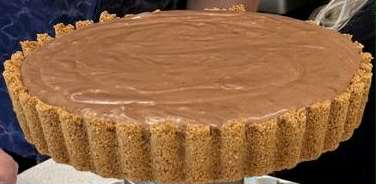
French silk chocolate Nutella cream pie in a toasted graham cracker crust.  Ahhhh.  “This is very possibly the most amazingly delicious thing I have ever tasted,” praised my son Brian at my birthday celebration.  Not wanting to ask anyone to bake or buy a birthday cake for me, I had made my own, this luscious French silk chocolate Nutella cream pie in a toasted graham cracker crust.  Everyone loved it.  I could eat only a small taste because of how the sweet aggravated my searing sore throat.  After the party, a plate with half the pie went into the fridge for Mom and me to enjoy later.  I’ll have a slice for my lunch tomorrow, Mom said.  I invited her to help herself to as much as she liked, only save me one piece, because I had labored two hours to make the pie and wanted to enjoy just one more slice when my throat felt better, despite dieting to reduce my sugars.  And later in the week I was ready, my throat feeling great, my sugar intake dramatically decreased, ready for my last piece of silky smooth sweet.  On opening the fridge, I found the plate gone.  Mom, where is my pie?  I told you to enjoy as much as you wanted but to save me just one piece.  Do you remember I told you that?  Just one piece?  Confusion clouded her face as she mumbled, I guess I forgot.  I’m sorry.

The Dementia Dossier: Resting

She’s up at 8. Like clockwork.  Up at 8 and in the shower and down the stairs by 9 for her crunchy dry Cheerios and glass of milk on the side and a glass of hot tea in the incessantly beeping microwave begging for someone to come attend.  And Monday is laundry day.  And laundry comes after breakfast, beginning at 10 or so.  I texted my mother about my illness and miserable night, about my aches and chills and inability to sleep, and about needing to rest, and she responded Me Too.  But the water started flowing and squirting, and the washing mashing swooshing and spinning, with my head resting on its pillow and the pipes and drains and machine six inches away through the wall.  Rest now futile, I stood in my bathrobe fuming and wondering and watching my mother jam the dowel into the soaked whites.  You saw my text that I was sick and needed to rest, right?  You know that my bed is just on the other side of the pipes and I can hear everything, like my head is inside the washer, right?  Well, I waited for a while…but I was out of clean underwear.  I’m just trying to understand what you were thinking.  Because you could have done the laundry later, like at 1, or at 2, right, so I could rest?  Well, I don’t know, I was out of clean underwear.  This conversation came slowly, in snippets, as I gauged her capacity to absorb feedback without hurting her feelings, and like most such conversation with her, she had no capacity and did have hurt feelings, so I had failed again at discerning how to communicate through dementia.  She seemed confused at the notion of delay and incapable of weighing priorities and convinced that her need for tomorrow’s clean underwear was paramount today, and she must do the laundry, now now now, before it was too late and the day had turned into late Monday or, forbit it, tomorrow.

(Image by moerschy from Pixabay)

The Dementia Dossier: Nude.

I had escaped the west-facing heat of my bedroom to the constant cool of the basement to find sleep.  When I climbed the stairs and passed Mom’s bedroom at 8 a.m. the next morning, a Sunday, she was trudging across her room, in the nude.  Seeing me suddenly, she started and tensed up and covered, but had nowhere to hide, and I walked past, pretended I hadn’t seen her.  Several minutes later, all dressed for church, I attempted to bring up the subject, hopefully without embarrassing her further.  “So, you were walking around your room naked this morning….”  She reddened a bit, and answered that she had been walking from the shower to her dresser for clean undergarments.  I wondered aloud if she might take her undergarments to the bathroom on her way to the shower (which is what she has always done, so far as I know), instead of on the way back.  “I guess I could do that,” she conceded, the idea a revelation.  “I didn’t think of that.”


(Image by Moondance from Pixabay)

The Dementia Dossier: Watching

Do you know the feeling of being watched, but when you turn around, no one is there? As it turns out, in my case, someone is there, though often out of sight.  Mom watches me.  Her eyes follow me around the kitchen as I cook or bake or clean up.  She watches me from the kitchen window, or from my bedroom window, or from her recliner-side window, as I do the yardwork: “I saw you pulling so many weeds!”  Serving dinner to her in her tv-watching, needlepoint stitching, word puzzle circling recliner takes several trips—first the mango juice in a glass with ice, then the salad or fruit or toast, then the main dish—and her eyes seek to fix upon mine with each approach, as if begging me to beam back the affirmation and connection she craves in her new loneliness.  And I just cannot do it.  Like staring into a bright light, I turn my discomfited gaze away and perfunctorily do the duty of delivery.  I have told her, gently, that I cannot be the antidote to her loneliness.  Jeanette, Carolyn, Megan, Barbara, Deanna, and others do their best to fill that function.  I serve her meals, make home repairs, answer correspondence, keep the yards beautiful, shampoo the carpets, resolve her computer and internet difficulties, manage the finances, fill the pantry and fridge, and generally problem-solve.  But I am here.  And I am doing my best.  And we do talk some.  And we watch tv together.

(Image by Michaela 💗 from Pixabay)

The Dementia Dossier: Jobs

“You three boys empty the dishwasher for me, will you?” called Mom, from her recliner, to my brother and his son, who were beginning a week-long visit, and to me.  “You bet, Mom!  Come on, son!” my brother answered with his usual enthusiasm.  I, however, grumbled, and a bit too loudly.  “But Mom, emptying the dishwasher is, like, your only job!”  I confess to the sin of annoyance at being instructed to do a job she is perfectly able to do, and does regularly, quickly and efficiently, all by herself.  Steven did a quick and cheerful pivot: “Come on, Mom, we’ll help you!”  And Mom and her son and grandson emptied the dishwasher together, with Mom, of course, instructing her visitors on the correct location of each item.  I did not help them, not out of stubbornness or principle or pride, but rather from practicality: four adult bodies huddled around and reaching into the Bosch and adjacent cabinets clearly would be too many.

(Image by Natasha G from Pixabay)

The Dementia Dossier: Look!

Black angus beef cows in a grass field Stock Photo - Alamy

Mother’s Day 2025. Cards and packages of chocolates and fudge and jelly beans and penuche.  Her favorites all.  In the end, though, all she really wanted was a long drive down memory lane.  And I served as her driver, avoiding the freeway, taking the back roads, taking in the sun and big sky, looking at everything.  Look at the open fields.  There’s a farm—look at the hay.  Look at the horses.  Look at the old houses, look at the big old trees—they’re Chinese elms.  Look at that pink car: how cute!  Look at the cemetery (almost whispered).  Look at the canal, so full of water.  Look! Valley Junior High School—that’s where I went to school—I would take the bus every day.  Look, there’s 4200 West—that was my street.  Look, there’s Winder Dairy, and that used to be Brock’s farm.  Oh, look, there’s my grandparents’ house.  I loved going there.  My grandmother kept bottled fruit in her cold storage.  Oh, thank you for bringing me here.  Look, there is the church I went to as a girl; I invited your dad to come with me sometimes.  Wow, look at the size of that huge truck!  Look: cows!  Oh my goodness!  Thank you, Roger, for such a nice outing.

(Photo source: Alamy.  Used under fair use.)

The Dementia Dossier: Clocks

No fewer than seven clocks keep time in Mom’s kitchen/dining/family room area: clocks on tables, clocks on walls, clocks on countertops, and clocks embedded in appliances.  If you count phones, the number rises to nine.  Mom seems to have adopted every sort and shape of clock, needing to give each a good home.  One never needs wonder the time.  Actually, one always must wonder what time it is, for no two clocks tell the same time. And every clock runs fast.  She sets them all ahead so that she never runs behind.  I never know if I am early or late for this or that.  To know the true time, I check my phone.  And twice each year arrives an import hour, the hour to move all seven clocks (plus the dozen in other rooms) ahead or behind one hour, on a day when she enlists me urgently to help her reset all the clocks, a vital task to be shared but not delayed or put off or procrastinated.  I fight the urge to roll my eyes at the emergency nature of the biannual ritual.  My time-turning strategy is to let the phone fix itself while I sleep.  I don’t even have a watch.

(Image by Alexa from Pixabay)

The Dementia Dossier: Shrimp

Dad used to rave at my crunchy baked breaded butterfly shrimp—straight from the grocery store bag.  Mom, too.  But recently she has taken to picking off the breading and eating just the shrimp.  “I thought you loved the crunchy shrimp,” I ventured one evening after scraping the breading into the garbage can.  She did, she assured me, but she was worried about “putting on pounds,” so she was picking the breading off the shrimp’s girth, leaving a bit on either end for a bit of crunch and flavor.  After dinner, she scooped her nightly bowlful of Farr’s burnt almond fudge ice cream, settling into her recliner for the basketball game.

Image by Tesa Robbins from Pixabay

The Dementia Dossier: Niagara Falls

When Dr. Winnett fitted Mom with her new hearing aids, he promised her she would hear so well that flushing the toilet would sound like Niagara Falls.  Her hearing was severe enough that she likely could barely, if at all, hear the toilet flush.  She giggled after she used the toilet that first day, reporting that the toilet paper rustled like dry corn sheaves, and the toilet flush did indeed sound like Niagara Falls.  She has also turned down the TV volume from 45 to 38, much to my relief.  And she can hear me talk from the kitchen.  And I don’t have to shout much anymore.  And she is brighter and more aware and more cheerful and more engaged with company.  And I only had to remind her once how to plug the hearings aids into their nighttime charger.

(Image by SunnyBlueSky7 from Pixabay)

The Dementia Dossier: Ladders and Lights

Over the course of three days, three of the chandelier’s 16 candle-flame bulbs burned out. I suspected Mom would notice the blackened bulbs immediately, and my suspicion was confirmed by the immediate appearance of a package of new bulbs on the countertop wanting me immediately to install them.  At a height of 12 feet, replacing bad bulbs required a tall step ladder, hanging in the garage, carried with care for the cars and wall corners.  Not my favorite job.  But I would get to it—when I felt like it.  My son John brought his little family over the next day for an Easter egg hunt.  Three-year-old Henry helped his dad hide the eggs, then raced to find them all, then begged to hide them again, to which, of course, we acceded.  When John walked in the front door, laden with children and plastic eggs, Mom immediately called out to him with a guilty giggle, “John!!  Do you feel like climbing a ladder?”  I all but shouted at her that I will get to it, Mom, when I’m ready!  You don’t need to ask anyone else!  Two days later, my brother was visiting from North Carolina.  Before Mom could ask him to change out the bulbs, I grabbed the ladder, dragged it without a ding down the hallway, and climbed with an armful of fresh bulbs.  The chandelier’s heat on my too-near head surprised me.  I replaced the bulbs, then replaced the ladder, then went to my room to change from my jacket and tie.  I heard Steven cheerfully ask Mom, as he approached from his own room, “Should I change the bulbs now, Mom?”  Having desired an immediately replacement of the blackened bulbs, she had had to wait days for her slow firstborn son, who confessedly moved slower for her hurry.  With new bulbs, the house has settled back into its calm fully-lit brilliance.

The Dementia Dossier: Locked Out

My briefcase and lunch bag and shopping bags hung from my wrists and hands, and I strained an arm awkwardly up to turn the handle of the door from the garage where I had parked to the house.  Ugh, I thought when I turned the nob and the door remained closed, she locked me out.  Again.  Down went all my bags so I could pull my keys out of my pocket and let myself in.  The big electric garage doors are shut all day, so no threat exists of a stranger entering the house through that door.  Only I come through that door, precisely once a day after work.  I have asked Mom not to lock me out, and she apologizes, with no awareness of having locked the door.  I deduced that when she habitually turns on the outside garage lights (three hours before dusk) on a trip to the bathroom, she habitually turns the dead bolt to lock.  Instead of complaining, I should just assume the door is locked and have my key ready.

The Dementia Dossier: Four-Leaf Clovers


I'm Looking Over A Four Leaf Clover", 1927 Vintage Sheet Music, Bob Smith  Cover. Mort Dixon, Harry Woods. Remick Music Corporation. Music Ephemera  and History: Mort Dixon (lyric), Harry Woods (music): Amazon.com:

My date and I sat on the sofa with a sibling and a nephew wondering how to spend the evening, whether to watch a movie or play a game or just talk. “We could sing songs!” Mom piped up. “Do you know ‘I’m Looking Over a Four-leaf Clover’?” And she launched into the 1927 song with the unsteady tin of old voice:

I’m looking over a four-leaf clover that I overlooked before.
One leaf is sunshine the other is rain. Third is the roses that grow in the lane.
No need explaining the one remaining is somebody I adore.
I’m looking over a four-leaf clover that I overlooked before.

At first, I felt mortified, but my date knows and loves my mother and didn’t mind the cute oddity. I even found myself joining in, since I, too, know the old song. Still, I felt relieved when the verse ended. We quickly moved to casting family photos to the TV. When I voiced a frustration that I couldn’t manipulate the casted photos from my “Samsung,” Mom brightened: “You want to sing more songs?”

The Dementia Dossier: A Mystery

Tidy, but not fanatical. I think that describes me: Tidy.  Everything (mostly) has its ordained and proper place.  My dress shirts all hang on wooden hangars in roughly color order.  My 50 years of black-binder journals line my shelves in date order.  My lap pillow sits in my recliner waiting to prop up my book when I sit to read.  My bed is made, my vases and bowls decorate my dresser, and the floors are absent of random items.  On occasion, I have noticed (or thought I noticed) certain items not in their usual places.  A decorative bowl has moved two inches to the left.  My bedroom blinds have been opened.  My lap pillow is on the floor.  (Yes, I am sure of it: things have definitely moved.)  Most concerning, a recent journal volume has not been fully replaced in its spot.  Sarah warned me once that Mom knew things she shouldn’t know and couldn’t unless she had been reading my journal.  Knowing that Mom is looking out my window or touching my decorations or sitting in my chair doesn’t trouble me greatly—they are not real violations, just strange wanderings.  But her reading my journals I cannot abide.  I resolved upon a strategy which would communicate without accusing, and placed a warning sign on the last journal binder moved: Please Do Not Read My Journals.  Things have moved around less since, and the journals not at all.

The Dementia Dossier: Trust Me

Twelve of our three dozen padded folding chairs reside in a neighbor’s closet to facilitate church choir practice at their house.  “There are 12,” Kevin pronounced, all labeled Baker, as we loaded them into the back of Dad’s faithful Suburban.  We needed all our chairs for the Friday mission reunion, and indeed used them all.  After the reunion, I stacked the 12 choir chairs against the wall, leaving out a 13th for me to use with the TV tray during dinner.  On Sunday I carried the 12 chairs four at a time to the car, leaving the 13th behind.  “But there are 13,” she said anxiously.  No, there are 12.  “No! There are 13!” she wailed in near panic.  I reassured her I had brought 12 chairs from the neighbor’s house—“Trust me”—and that 13th was to stay behind for me to use.  The same evening, I piled the bulk pickup refuse at the curb where I usually place the garbage and recycling cans, moving them instead to the mailbox side of the house, but a good distance from the mailbox so the mailman could easily pull up his truck.  Mom instructed me to make sure I didn’t put the cans in front of the mailbox, “because the mailman won’t come.”  She seemed really worried.  “Mom, trust me,” I insisted, “I know how to do this right.”  I promised to leave plenty of room for the mail truck.  She remained dubious on both accounts.

(Image by Clker-Free-Vector-Images from Pixabay.)

The Dementia Dossier: Bedtime Prayers

Once Dad could no longer kneel, or stand, or even sit up, he began saying his nighttime prayers in bed.  Mom would hold his hand as he spoke to his Father God, giving thanks for the blessings of home and family and his witness of spiritual truths, and importuning the Great Intervenor to bless each member of the family, by name, in their various afflictions and difficulties.  I did not like to eavesdrop on these sacred moments, but passing by their room I sometimes heard him praying for my happiness.  With Dad now departed, Mom has assumed his former role of praying out loud every night from her bed.  Mom loathes praying out loud in the presence of others, even to ask a blessing on our meals—for some reason she feels embarrassed and inadequate.  But in the comfort of her bed and dark bedroom, she prays to the Divine.  I hear her croaking gasping voice in supplication even from the distance of my bedroom, where I struggle to find my own words of faith and prayer.  I do not discern her words, and that is just as well: I don’t want to invade her privacy.  But I am glad to witness her faith.

The Dementia Dossier: Throw It Out

Dad’s personal papers filled filing cabinets and drawers and shelves and box upon box: study notes and drafts of his book Process of Atonement; correspondence; mission papers; journals and memoirs; travel brochures for family vacations; investment and bank statements; tax returns; and much more. As I emptied hanging file folders to shred no-longer-needed papers, I removed the clear plastic label tags and dropped them in an empty desk drawer for later use.  That later use came several days later as I began to create new files for life insurance papers, home and auto insurance papers, pension and health insurance papers, family history records, and others.  But when I pulled open the drawer with the clear tags, I found the drawer empty.  “Mom,” I called out.  “Where are all the file folder tags?”  She looked confused and said nothing.  I retrieved a tag from an active file drawer, and asked her where all the tags I had saved might be, if she knew.  Her confusion turned to embarrassment as she confessed to not knowing what they were so she threw them away.  Why would you do that? I thought.  “Please don’t throw things away just because you don’t know what they are.  Please ask me first.”  She whispered an Okay.  Scraping the dinner dishes into the kitchen trash bin later that day, I found several new clean vacuum filters in the trash.  “Mom.  Why are these new vacuum filters in the garbage can, if you know?”  She had really wanted to clean out the hall closet, she said, [and I hadn’t done it fast enough for her compulsion,] and she didn’t know what they were, she said, so she threw them away, she said.  I told her what they were and put them back in the now-empty closet.

(Image by gugacurado from Pixabay.)

The Dementia Dossier: Listening

How Can I Really Help the Poor? - Third Hour

Two men from the church came to visit Mom, one a teenager and one recently retired. In addition to the box of Crumbl cookies, they brought their love and interest and supportive smiles.  And Mom gave them each her big bouncy full-bodied hugs, and they laughed, even as I cringed.  I had set holding chairs out for them, in front of Mom and her recliner, and I listened from the kitchen, wanting Mom to have their full attention.  Stewart and Brendan had come just a few days before Dad passed away, and here they came again to minister to Mom with words of comfort and love (and with cookies).  The subject of death has been tender and frequently on our minds.  Mom asked about Stewart’s son who died, long ago, of meningitis at age 10, and Stewart was coming to the crux of the terrible story, about how even in death he had felt profound love and peace and a divine Presence.  As Stewart stopped for a breath, Mom looked at Brendan and asked him about his favorite subject in school.  The sudden change of subject, at such a dramatic and touching moment, left me feeling jarred.  What mental mechanism of Mom’s caused that? I wondered.  I know she loves and cares about people.  I wondered if she even heard the story, or felt the emotion in it, or if she just couldn’t focus on one subject or story line for long, no matter how poignant.  Steward took the jolt in stride, understanding and not judging, loving her notwithstanding.  Still, as I escorted the men out through the front door, I made a point of thanking Stewart for sharing his story, and of standing with him for a moment in his resurgent pain.

(Photo from Pinterest, used under Fair Use.)

The Dementia Dossier: Just Lazy

Plantation blinds allow abundant natural light in Mom’s living area.  But after dark she feels exposed, and turns the wood slats to the shut position.  I’m sure the only voyeurs are mule deer, but I understand and agree with her desire for privacy, and her caution.  When I brought Mom’s dinner to her in her recliner one night, she said, “Close the blinds behind me, will you, dear?”  She has a wooden yard stick for precisely the purpose of pushing the slats closed, but using it requires her to stand up from her position of supine comfort.  “Well, that’s your job, Mom,” I reacted, perhaps a little too abruptly.  I have encouraged her to keep up her strength and independence by doing as much for herself as she can.  “Oh, alright, dear,” she responded with a tinge of chagrin.  “I’m just being lazy.”  All the more reason for me not to have immediately acquiesced.  The next day, when I came home from work and sat down, she said, “Get the mail for me, will you, dear?”  The mailman hadn’t come when she went out for the New York Times.  I reminded her that her walk to the mailbox is pretty much her only exercise, and I was sure she could get the mail, there being no snow or ice or rain.  “Oh, alright, dear,” again the subtle rebuke.  “I’m just being lazy.”  And on a Friday morning that I worked from home, she called to me in the kitchen, “Get the newspaper for me, will you, dear?”  I stared hard at her and did not speak.  “Normally I would get it, but you’re here,” she explained.  Precisely, I thought piously through my stare: This is something you can do.  “Oh, alright, dear.  Never mind.  I’ll get it.  I’m just being lazy.”  I am not about to be put to work in compensation for another’s laziness.  But I suspect the issue isn’t so much laziness as it is the comfort of being helped and cared for and even pampered when one is 85 and always tired and life is lonely and every chore seems to take so much energy.