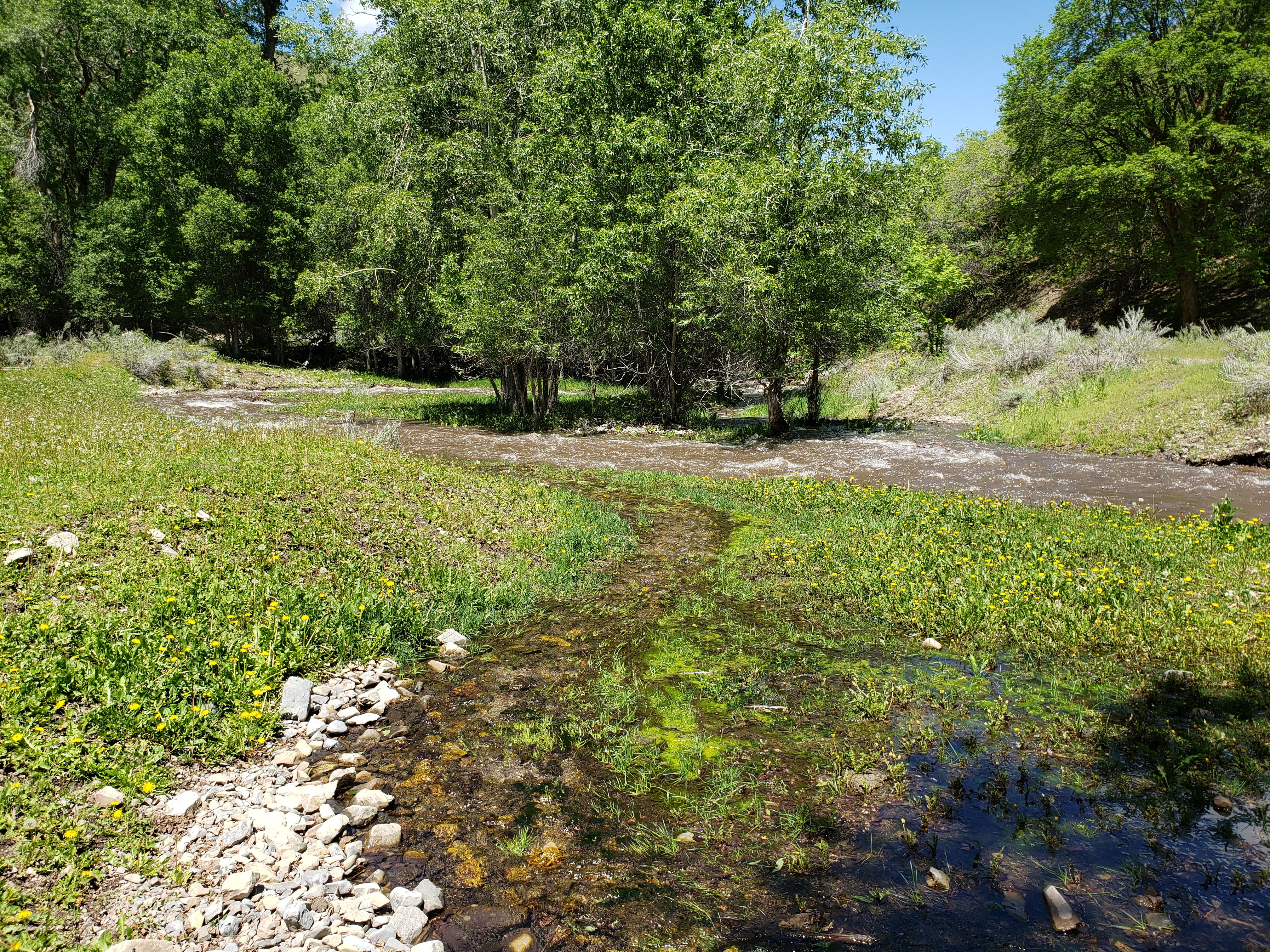
At almost 89 years, Dad just keeps waking up every morning, day after day after day. His t-shirt garment tops are too tight around the neck and try to strangle him in his sleep, so he sleeps without a top now, or a bottom. Life is simpler that way. Mom pulls the shower door closed regularly at 8:00 AM with a bang which I have learned is not a body falling to the floor. This morning, I needed to escape the comfortable incarceration of home to seek beauty on nature’s trails. That seems to be my life’s aspirational pursuit: finding beauty. The twisted canyon where two glaciers once ground away at each other seemed unusually lush. On their steep meadows, cut gently by a meandering snowmelt stream, the wildflowers grew in excess of three feet tall, all of them: yellow-flowered strawberry, white columbine, lavender lupine, sticky geranium, both the pink and the white, firecracker penstemon, powdery blue bells, the unfortunately named beard tongue, larkspur, paintbrush, sweet pea, catnip, purple and yellow daisies, and blue flax. On this day’s journey to Desolation Lake, I climbed one slow step after another, steady. One just keeps going, on and on, up and up. Pretty middle-aged faces passed me, in both directions, and I said Hello to each, and each became the last in a long, knotted thread of lost opportunities to connect with another human being, for my lack of skill and courage. At the lake, feeling very tired, I stopped and sat on a log, for there is nothing wrong with stopping to rest on one’s journey. A small flock of hairy woodpeckers, almost a foot long each, graced me by landing in the ponderosa pines and quaking aspens, very near to me—one of them looked over at me, I am sure—and hammered at the trunks in rapid staccato. I wondered if the dasher’s one-hundredth-of-a-second stopwatch would still tick too slowly to measure the motions of these birds. They flew off, and I moved on to the mountain’s descent, not without growing pain from a swelling Achilles tendon. Never without pain on these trails, never without loss, and grief, all wrapped up in tenderness and love and the beauty of wildflowers and butterfly wings and birdsong and the burbling of water over rocks. Mr. Rogers and Kermit the Frog both have taught me that every ending is a new beginning, that every good-bye points to the next reunion. Forever. When does a story find its end? How does a writer know when to put down the pen? When, perhaps, it is springtime in the Rockies, and the swallowtails fly very close and bob their hello, and the stands of bluebells and columbines waive their petals against the canvas, and a bird I have not met sends her voice to echo through the trees with the loose embouchure air of a reedy flute.
Tag Archives: Nature
Courage at Twilight: Living Through Me
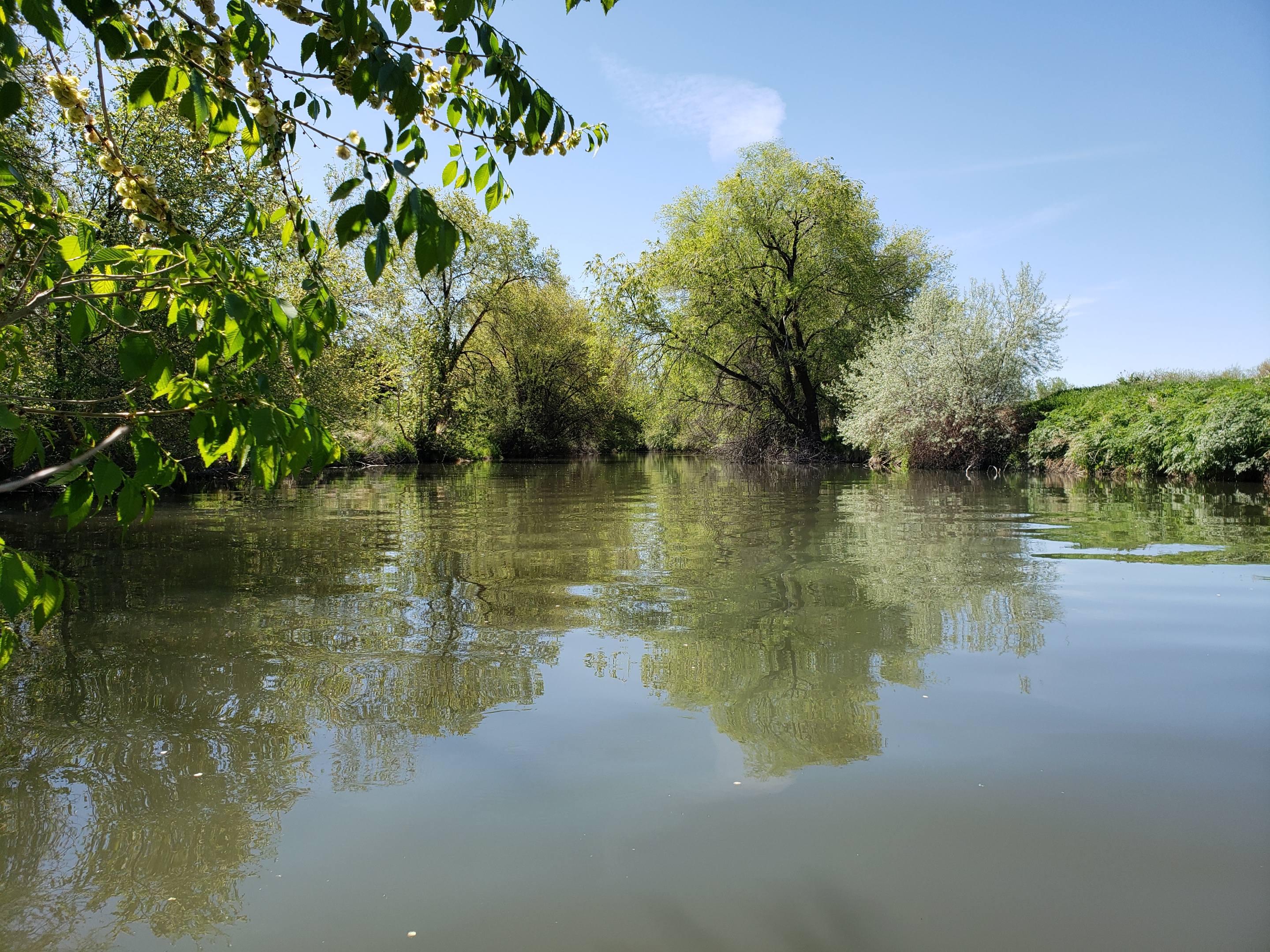
Some people need to talk—a lot. Some people prefer to listen. A match of these two is fortunate. I have already described how Dad talks and tells his stories and expounds upon religion and history and morality and family and the contents of the encyclopedia, and how I am more of a listener who at 60 is weary of listening. Gloria, however is another talker. She cares for Dad several mornings a month, and the conversations begins rapid fire the moment she calls “Good morning!” from the top stair. When Gloria talks, Dad listens. When Dad talks, Gloria listens. Yet, somehow, they both seem to talk continuously. Today I caught snippets about Gloria’s sick cat and how the dry cat food and wet cat food each affect the cat’s weight and health and energy and general demeanor, and how the cat is slowly getting better with good cat food and care. Dad took his turn about the cosmic character of the universe with its gravity and dark matter and fusion and electromagnetic energy and relativity physics vis a vis quantum physics. Both are vaguely sympathetic to what the other is saying, but mostly they each appreciate being able to talk and being listened to. Did you know that a mere 20 years ago, the consensus among cosmologists and xenobiologists was the impossibility of intelligent life anywhere in the universe but on our Goldilocks Zone earth, but that today, with the James Webb telescope’s discoveries, the consensus has shifted to the statistical impossibility that intelligent life does not thrive among the trillions of habitable planets orbiting in the trillions of solar systems orbiting in the trillions of galaxies or our vast universe. Her cat prefers the wet food. We will never know because even light takes one hundred thousand light years to travel to us. The vet’s treatments are helping. Time for your shower, Nelson. I returned from my ten-mile Jordan River paddle long after Gloria had gone for the day. The olive-brown water ran at a 15-year high and swept us pleasantly downriver. The toughest stretch of the paddle was the half-mile portage through head-high thistles with mean mean thorns and willowy willows and sage brush, so aromatic, daisy-chain carrying our kayaks single-file to where we could cross the private hydroelectric dam that also splits the river into two enormous irrigation canals, the river itself suddenly shrinking by two-thirds. Weary and blistered and scratched upon arrival home, Dad called out with his usual cheer: “Roger! Welcome home!” followed by “Sit down and tell us all about it. The people. The river. The wildlife.” And so I told them about the thistles and dams and slow high olive-brown water, and the people, and the birds: the Clark’s grebes, cormorants, pelicans, belted kingfishers, Bullock’s orioles, avocets, ibis, phalaropes, terns, stilts, Canada geese, mallard ducks. I did not tell them how I was so eager in the twilight to show my friend Stephen a beaver and saw one in the shadows and called to Stephen “There! Beaver!” only to have the beaver sprout wings and take flight. “I think that’s a duck,” he dead panned, “or maybe a duck-beaver.”
Courage at Twilight: Fiercely Red

Mom stood. Up from her recliner. During a commercial break. “Are you going to the bathroom?” Dad asked with a touch of accusing panic, for the urge had struck, and he gets so little notice, and every second counts on the 12-foot journey. “Yes,” she spat. “Don’t worry, Dad,” I assured him, “she’ll be out by the time you’re up.” Dad sat, stymied. Sunk in his recliner. During the commercial break. He still had not stood when Mom came wandering into the kitchen, her business done, to check on my cooking. The Jeopardy buzzers buzzed. “Are you finished, Lucille?” Dad barked after the commercial break. “Yes,” she called. “Why didn’t you tell me?” he lobbed, struggling and shaking to stand and stoop over the walker, his time perilously past. “I’M FINISHED!” she hissed. “Didn’t you hear the flush?” A streak of white flashed in my periphery and something bounced hard against the kitchen window, two feet from me. I knew, of course, what it was, sort of, a bird, but my heart pounded anyway. We hustled outside to find the bird sitting in the dirt, a gray falcon or hawk of some kind, sitting awkwardly, wings askew, head rocked back on its neck. Its red eyes glared fiercely at us, and it panted rapidly with parted beak. Well, that’s the end of this bird. Its neck is broke. Such a startling beautiful creature. I was powerless to make a difference for the hawk, and let it be, returning sadly to my cooking. The children and grandchildren remained, marveling and sad. Then Lila screamed, and Brian poked his head through the door to tell me the bird had stood up and pushed off in flight. Well, I’m sure glad to be wrong. Audubon informed me the bird was a Northern Goshawk. The kitchen window had vinyl grids that I thought would have averted the bird. But from its vantage point outside, I could see the window was filled with a glare reflecting the mountains and trees and sky behind. And the goshawk had been flying like a line-drive baseball after a sparrow. Days and weeks later, the goshawk’s scarlet boring ferocity still flashed in memory. The bird had dared me to underestimate her, and had defied the neck-breaking brick and glass of humanity, and had flown off above the house and trees and everything into its freedom sky. The red-headed house finch was not so fortunate. She landed on the arborvitae, on the bird netting wrapped around, and became irretrievably enmeshed, dying before I knew, before I could scoop her out and set her free.
(Photo from Flickr.com and used pursuant to the fair use doctrine.)
Courage at Twilight: “R” Mountain
Sweat trickled down my arms and dripped from my fingertips, and my growing girth stretched my shirt against its buttons. I shall be thin(ner) again: I have signed onto the galactic S.U.G.A.R. treaty (I cannot remember what the acronym represents) and have foresworn all things donut-cake-cookie-candy. Ice cream once a week is an important negotiated exception. Breaking for breath, the trumpeted cackles of sandhill cranes float up from the Snake to where I stand on the rim of the world’s largest tuff cones, the Menan Buttes, ancient volcanos formed by magma boiling upward through groundwater. A pair of red-tailed hawks screech overhead, circling each other on warm currents, the same screech TV commercials ascribe to the mighty magisterial bald eagle because it sounds cooler and more mighty and magisterial than the eagle’s pinched laughter. On this high Idaho desert my four sons have struggled at university, jogged in fifteen below zero Fahrenheit wrapped and bundled, set climbing routes at the gym, served smokey sauced meat at Blisters BBQ, rafted class 4s on the Salmon, discovered the spirituality of a stone labyrinth laid out in the sagebrush, found dear wives and seen babies birthed, and graduated. They make me proud, because I love them, come what will. And when I walk through the front door to shouts of “Welcome Home!!” Mom and Dad have me sit right down to tell them about it all. They will not remember what I tell them. Dad commented to Mom last week, “I’m having trouble remembering peoples’ names,” and she answered, “Whose name?” “Nobody’s name!” he retorted: “I can’t re-mem-ber….” They won’t remember what I told them, but they will remember my pride in my sons’ personalities and my happiness in my sons’ successes and how beautiful were the photos of the high Idaho desert and the Snake River and the alfalfa pivots and the views from “R” Mountain.
Courage at Twilight: Making Some Sense of the World
The law firm had changed names four times in the decade-and-a-half since Mom and Dad retained a friend of a friend to prepare their estate planning documents. But I tracked down the firm and the lawyer, and scheduled to meet. I have felt unprepared to be the personal representative of Mom’s and Dad’s small estate, and had many questions, such as, Do they need to update their documents? How do I handle the cars? Is the deed correct? What is an estate tax credit? Do I need to understand QTIP? (No.) What is the first call I make when the time comes? What is your hourly rate? He told me not to worry, that I was well-prepared, even “light years” ahead of 95% of his clients. I breathed deeply and reassured myself, Maybe I can do this after all. Then I was off to NOMAS’ Thursday evening clinic to help with a U crime-victim visa for a humble hard-working woman whose paramour turned perpetrator, who refused to work or contribute to business and household expenses and who screamed and threatened and hammered, whose trump card in oppressing her with power and control was the threat of deportation if she called the police. But the U visa helps people be in America legally and shelters victims of crime from the further victimization and trauma of deportation for their mere victimhood. I knew how to find the court dockets and case numbers and protective orders that would corroborate her truthfulness and his abuse, and printed them for the file. Driving away from the clinic, I saw some clients walking down the street, laden with foodstuffs from the community pantry, laboring to the bus stop with their sacs and their children, because they cannot afford cars or cannot afford to fix their cars, and thought of my neighbors with their several Porsches and BMWs, and still cannot make sense of the world. I stopped at NY Pizza Patrol for a Brazilian Bahaiana pizza with calabresa sausage and kalamata olives and sliced eggs: I just could not face the kitchen for a 9:00 dinner. The pizza was a rare treat, which Mom and Dad (and I) loved. On Friday evenings in June, I have been trying to make sense of the world, searching for calm and beauty on the calm brown waters of the Jordan River. Dozens of homeless encampments lined the banks of one urban section. A beaver and birds greeted me downstream: black cormorants, Bullock’s orioles, Clark’s grebes, coots, Canada geese, Mallard ducks, avocets, black-necked stilts, Wilson’s phalaropes. I missed seeing my territorial friend the belted kingfisher, and hoped he had not fallen prey to a Swainson’s hawk. With my new and first-ever drybag clipped to the kayak, and my phone hanging safely in its clear pouch around my neck, I lounged in the shade under a willow bush, smelling sweet Russian olive blossoms and arousing yellow iris blooms, when the Messenger alert rang and rang and rang while I fumbled to answer, knowing who it likely was, and, yes, it was William calling me from his high chair where he sat munching on pineapple chunks, with his smiling adoring amazing mother beside, telling me about her day as I floated and rocked on the river, making some sense of the world.
Courage at Twilight: Oh, That Bird!
“Lucille!” I thought perhaps I might have heard from under my cool-morning covers the calling of Mom’s name, but I could not deny even in my profound grogginess the second “Lucille!!” with clearly Nelson-like tones, and I jumped from my bed fully alert and threw on my bathrobe and bolted to Dad’s room. Mom, alerted from downstairs, whence she heard his bellowing even without her hearing aids and even with her ever-present morning music plucking away—this time a harp concerto—raced upstairs, a slow sprint across the house and up on the stair lift in time to hear me call: “Is everything okay, Dad?” Of course, everything is okay, he said, oblivious of our cause for alarm. “When you go to Harmons,” he said cheerily, “if they have fresh cherries, open the bag and squeeze one to make sure they are ripe and not rotten or green, and get two bags, no, three, because John likes them, too, and tap on the watermelon like I showed you to make sure it’s ripe and not overripe or green—of course, you can’t tell the taste by tapping.” Mom sat on her cedar chest crying quietly from fright and relief and frustration, and I could not help remonstrating that I have been sitting on the edge of my metaphorical bed for two years waiting to hear him shout “Lucille!!!” so I could run to his rescue, save him from some crisis, lift him off the floor, and he’s shouting “Lucille!!!!” to make sure we check the ripeness of the cherries at Harmon’s? “Why, yes,” because company was coming, and everything had to be just right, including the tomato bisque, including two loaves of gluten-free bread, and sliced mild cheese, but no meat for the vegetarian melts, and guacamole and salsa and humus and two bags of corn chips, and gluten-free cakes, and just-right cherries and watermelon. “I told you we were shopping at 10!” Mom burst out, “and it’s only 8!” and “why would you shout for me throughout the whole house to tell me to squeeze the cherries!” and she stumbled back to the slow lift down the stairs to her harp music and her soggy breakfast, and I could not be angry because of how comical the whole scene struck and because everything was okay, because he was not dead or on the floor but was okay. “I’m sorry I shouted for Lucille to come,” Dad lamented as I yawned, for my body so ached in the night that I could not sleep and had taken naproxen sodium and half a fluoxetine hydrochloride at one in the morning and had a lovely sleep until I heard “Lucille!!!!!” because 13 miles on the Jordan River down rapids through eddies and mysterious invisible cross currents and from long portages around the dams and with the awkward ins and outs from my kayak on the muddy banks had pulled and twisted and tired me out, but that bird we saw, oh, that bird, that black-crowned night heron that watched me float within ten feet before it flew a hundred feet downstream and watched me again approach until I could see his crimson eye and the long white head feathers streaking loosely down his black back and the hint of yellow on his neck, stretch after hundred-foot stretch, mile after mile, until he flew back up stream back to his territorial stretch to stalk for ducklings and fish. “You can go back to sleep if you want—it’s only 8 o’clock.”
Courage at Twilight: Fleeting Greeting
The sub-sonic motor of the stair lift rumbled almost beneath hearing—Mom was slowly being carried down the stairs—and a loud double-beep signaled her arrival. She clump-clumped around the corner into the kitchen. “Hi Mom,” I greeted her. “Good morning, my boy!” she smiled. “I’m running off for a bike ride on the Jordan River Trail. See you soon,” and I was out the door. I always feel happy on the broad paved trail by the river, and today hundreds of other people also felt happy to be on the trail. I always find humorous the greeting rituals of trail users. A nodding up of the head, or down—never both. A raise of an index finger, or four fingers, or eight, just over the handlebars. A smile or a non-smiling pursing-of-lips smile. Most cohorts, from older women to middle-aged men in full cycling gear to young couples with young children—they all offer some sort of fleeting greeting. Many wait for me to initiate the ritual, responding eagerly when I do. A small minority works hard to pretend I do not exist in order to avoid having to offer any greeting at all. Some who do this may be afraid, others absorbed, others seeking solitary quiet and not wanting to engage. One young woman stood straddling her bicycle at the crest of a high hill, looking out over the winding river and broad marshlands, glancing at me several times as I labored up the hill in low gear. When I arrived, puffing, she smiled and cheered, “You made it!” I did not flatter myself that she flirted with a man three times her age—she was simply a kind, cheerful, observant soul, encourage a fellow cyclist. Careering down the hill, I screeched to a stop before a baby garter snake sunning itself on the trail. He coiled like a cobra when I approached. My snake holding days are over, even with harmless serpents, so with a twig I tenderly tossed the critter into high grass ten feet away. Within seconds, had I not stopped, he would have been smashed several times over. Above the marsh grass, a rust-backed kestrel hovered then dove for a flying insect. Older men and women passed by me on their fat-tired e-bikes, making nary an effort, as did the youngsters on motorized scooters. I tend to judge others by own standard: I was out there to push myself at speed down the trail, and to enjoy the wind in my face and the springtime nature flashing by, and I judged others for their lazily allowing the motors to do all the work. I knew my judgment was misguided, of course: these good people all had their own motives for being on the trail: enjoyment; relaxation; nature; sociality; enjoying the wind in their faces. And then there were those perfectly-physiqued specimens jogging completely under their own power, next to whom, with my wheels and gears and sprockets, I was the loafer. I decided to admire them all for knowing what they wanted and doing it with a nod or a smile or a wave. Seventy-eight city blocks and one hour later, my thigh muscles burning, I returned to my car, still unconnected despite hundreds of subtle salutations. I felt disappointingly unaltered. But the river-front ride had indeed changed me, especially through gratitude—for the pretty young woman who lauded me on—and through saving the life of a brave little snake. Dad wanted to hear all about the birds and snakes and turtles, and even the people. He loves that trail, and remembers nostalgically the days and years when he rode in his retirement, his long-career labors ended, instead enjoying the birds and snakes and turtles, the winding narrow river, the wood-planked foot bridges, the feel of speed as he pushed at his pedals, and even the people, to whom he nodded and smiled and waved. “I’m off with Mom to the grocery store,” I called to him, and he asked me not to forget the pre-cooked bacon, and said to please bring home some red geraniums for the front corner garden.
On the Jordan River Trail, monuments to Utah’s eight native tribes.
Courage at Twilight: Recharged
Dad has tired of ham-onion-Swiss sandwiches, and Mom has had to get creative with his lunches. A plate of mixed nuts, applesauce, a slice of cheddar, carrot sticks, celery and cream cheese, and a peach cup—do not forget the diet Coke, on the rocks—have been this week’s fare. And the bag of kettle-fried potato chips on the floor by his recliner. Mom assembles Dad’s lunches simply because Dad cannot. He seems to enjoy ordering her around a bit, e.g., “Lucille, get me some crackers.” While they munched, I dug out the Subaru owner’s manual and read the jumper cable instructions carefully, three times, connected the jumper cables, carefully, to Mom’s Legacy and the Mighty V8, rechecked the instructions twice, started the Mighty V8’s engine, then turned the key to Mom’s Legacy. Dad’s faithful Suburban soon began to falter, then died, and smoke curled up from both batteries. Mom’s car never started. Continue reading
Courage at Twilight: Hummingbirds and Rot
Dad made the rounds on his riding mower, the single yard-maintenance task left to him. He donned his straw hat and sprays his arms with SPF 100 sunscreen and vroomed rapidly around the yard, missing corners and spots here and there and not knowing or caring. On his mower, he is master. No driver license required. No traffic rules. He sat on the back patio, resting, after finishing the job, when a tiny Black-chinned Hummingbird zoomed across the yard but stopped and hovered one foot from Dad’s face, eyeing him closely, pointing a long sharp beak at him in an ambiguous manner, neither clearly malevolent nor benevolent, but clearly curious. Then she veered away to land on the feeder and lick sugar water with a pink tongue through that long beak. Did you know the Portuguese name for Hummingbird is Beija Flor, meaning Flower Kiss? Appropriate and romantically sweet. Dad found the up-close-and-personal hummingbird encounter endearing and exhilarating, and stumbled into the house to tell Mom and me. Dad does not get to see the hummingbirds Mom and I are always heralding with “There she is!” since he cannot turn his head and stiff neck. His encounter was thus all the more personal, far from routine. Hummingbirds are a fascinating combination of aggression and cuteness, peevishness and beauty. But Mom and Dad and I are just glad they have found us and keep coming. Their olive-green wings seem drab until the sunlight catches them just right, revealing a jeweled florescence. Three days later, a rotting stench filled the garage, and I remembered that Dad had mowed the lawn, leaving the grass to compress and putresce in the canvas mower bags. Vile black liquid dripped from the bag bottoms like bile. I steeled myself against a recurring gag and plastic-bagged the grass for disposal in the outside cans, where the grass will continue to rot in the hot sun for another five days before the garbage truck rescues us. Driving off to the grocery store later, Dad ventured, “Hey, Rog, you can ride the electric shopping cart, too, if you want to!” I tried to smile at this prospect that held no attraction for me whatsoever but that offered some insight into his initial lack of enthusiasm for the motor-assisted cart. After parking, I finally responded: “I’ll be right back, Dad,” and ran into the store to commandeer a cart and scoot it out the store doors and across the parking lot to Dad’s car door. “What did you think?” I pretended not to hear as I rushed a push cart over to Mom. But I think we found a new grocery store routine.
(Hummingbird image by Daniel Roberts from Pixabay.)
Courage at Twilight: PT/OT
Weston sent Sarah and Suzie, a physical therapist and an occupational therapist, to see Dad a few days after the intake assessment. Sarah put him on the stationary bike and instructed him to ride until he was too tired to ride anymore, and to repeat the burnout every day. And she had him do what he will not do for me—amble around the house with his heavy-duty metallic blue walker, a stopwatch in her hand—and instructed him to practice every day because she would be timing him at every visit to see if he is improving. The day after Sarah’s “therapy,” Dad could not walk at all, and the therapy seemed obviously counterproductive to him. Suzie, who has a dozen hummingbird feeders at her house, looked over Dad’s house for ways we could make his life a bit easier. Dad’s most painful moments of the day, both physically and mentally, are standing up from his recliner. His pain is an 8 out 10 on the grimace scale, so severe that he avoids leaving his chair. She suggested we attach risers to the feet of his recliners so Dad does not have to rise from such a plush depth, but can slide out more easily to a standing position. What a simple idea, I thought. (Another Duh.) So, I brought home from Lowes some quality 2×3 lumber, cut it to size, drilled pilot holes, and attached two 26-inch lengths to the 26-inch two feet, then two more, adding a full three inches of height to the chair. He was quite excited to try his elevated chair, now much easier to stand up from. Of course, the increased height puts greater pressure on his hamstrings, so he must keep his feet elevated, which is better anyway for his edema. Dad came outside and watched me while I measured the lumber, and cut it with a crosscut saw, and drilled the pilot holes, with divots for the screw heads. Before he made it back into the house, the lumber risers were firmly anchored and his “new” chairs were ready. Such a simple aid for such a serious problem. And as we sat at the kitchen table eating our chicken rice almond casserole, two tiny spotted fawns wandered into the yard, stopping to nibble generously on Dad’s potentilla bushes. Both the mule deer and the potentilla are endemic to the nearby mountains, so go well together also in our yard. Each pull at the leaves tugged at me somewhat urgently me to shoo the fawns away, but Dad said, “Let them eat the whole bush. I don’t care. Don’t shoo them away. I like to see them, such darling creatures. I’m glad they are here. And I’m glad the hummingbirds come to the feeder.”
Courage at Twilight: Nature’s Serendipity
The mountain bike trail proved too challenging for me: too steep and too rocky for too long. I stopped pedaling a dozen times to rest and drink and slow my racing heart. Walking the steepest stretches, I finally reached the top of the trail, marked by a bridge over the river, set Dad’s red vintage Specialized against a tree, and stepped down the fractured granite to the riverside, where I knelt and cupped icy water onto my feverish head. How relieving that cold water felt, and I calmed and relaxed. The river cascaded violently and deafeningly down and past, lurching between thousands of giant rough angular granite boulders. My peripheral vision detected a short-tailed gray bird land on a mid-river rock downstream, bobbing on her backward knees, lifting her very-short tail with each bow. She fluttered from boulder to boulder, thrusting her black beak into the current to pick nymphs and rollers off rocks, working her way toward me, at times even immersing and walking along the river bottom to find insect morsels. I sat perfectly still and she paid me no heed as she came to within six feet, preening her delicate gray plumage before me in a spot of full sun, then hopped back into the shadows to work her way upstream and around a bend fifty feet off. What an encounter! Forty years ago, Dad and I left the Sawtooth Mountain trail to follow the stream, and saw a little gray bird with a short tail hopping and bobbing along a log fallen across the stream. The bird grasped the bark with its long feat and stepped around the circumference of the log from dry air to upside-down and under water, emerging dry and pretty on the other circumference side. Dad and I were gob smacked. A Robin-like bird that walks and hunts underwater in a swift mountain stream? We had never heard of such a bird. But our field guide introduced us to the American Dipper, and, though a colorless non-descript little bird, she has become one of our favorites. Memories of our first Dipper and the stream and the forest and the mountains and the moose and trout and bear and beaver and the wild blueberries flooded back to Dad’s perfect recollection as I described my new and fortuitous encounter. I discovered as a boy that Nature comes to me when I am still. I do not call her or pursue her. I study and I watch and I wait, in good places and at right times, and Nature’s path veers toward mine to grace me with intimate unearned wildlife experiences. My children know this, and we both marvel at Nature’s magical providence. The butterflies come, and I know their names and their habits, and I talk to them: “Hello Beautiful,” I whisper to the Tiger Swallowtail or the Red-spotted Purple. “You look lovely and strong today.” The deer come, and the beaver, the Red Slider turtle and the Belted Kingfisher and Clark’s Grebe and Black-crowned Night Heron. “Hello pretty Mama,” I once whispered to a Mule Deer doe suckling her spotted fawn, the mother taut with fear, ready to pronk away, and I reassure her, “Don’t worry, little Mama, I will not hurt you or your magical spotted fawn. You need not fear me. I will wait right here until you are ready for me to pass.”
(Photo above from eBird.org, used pursuant to the Fair Use Doctrine.)
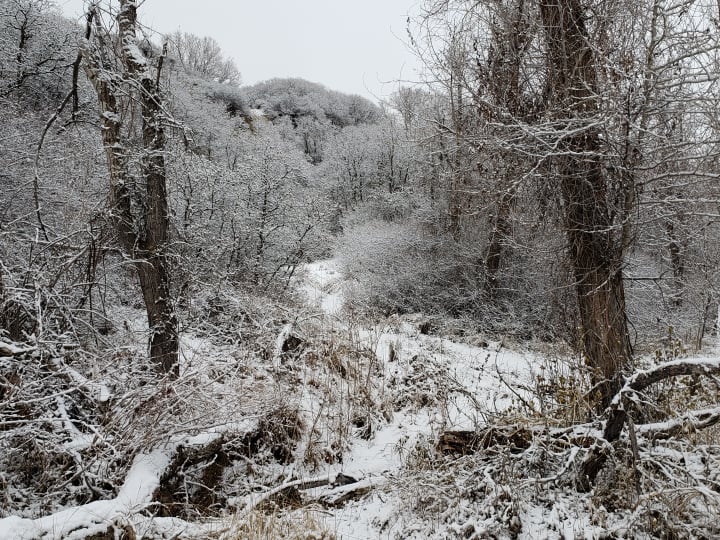
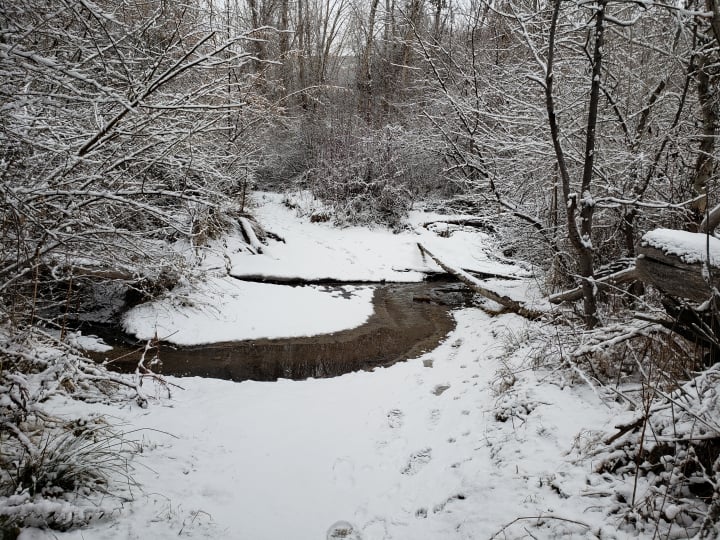
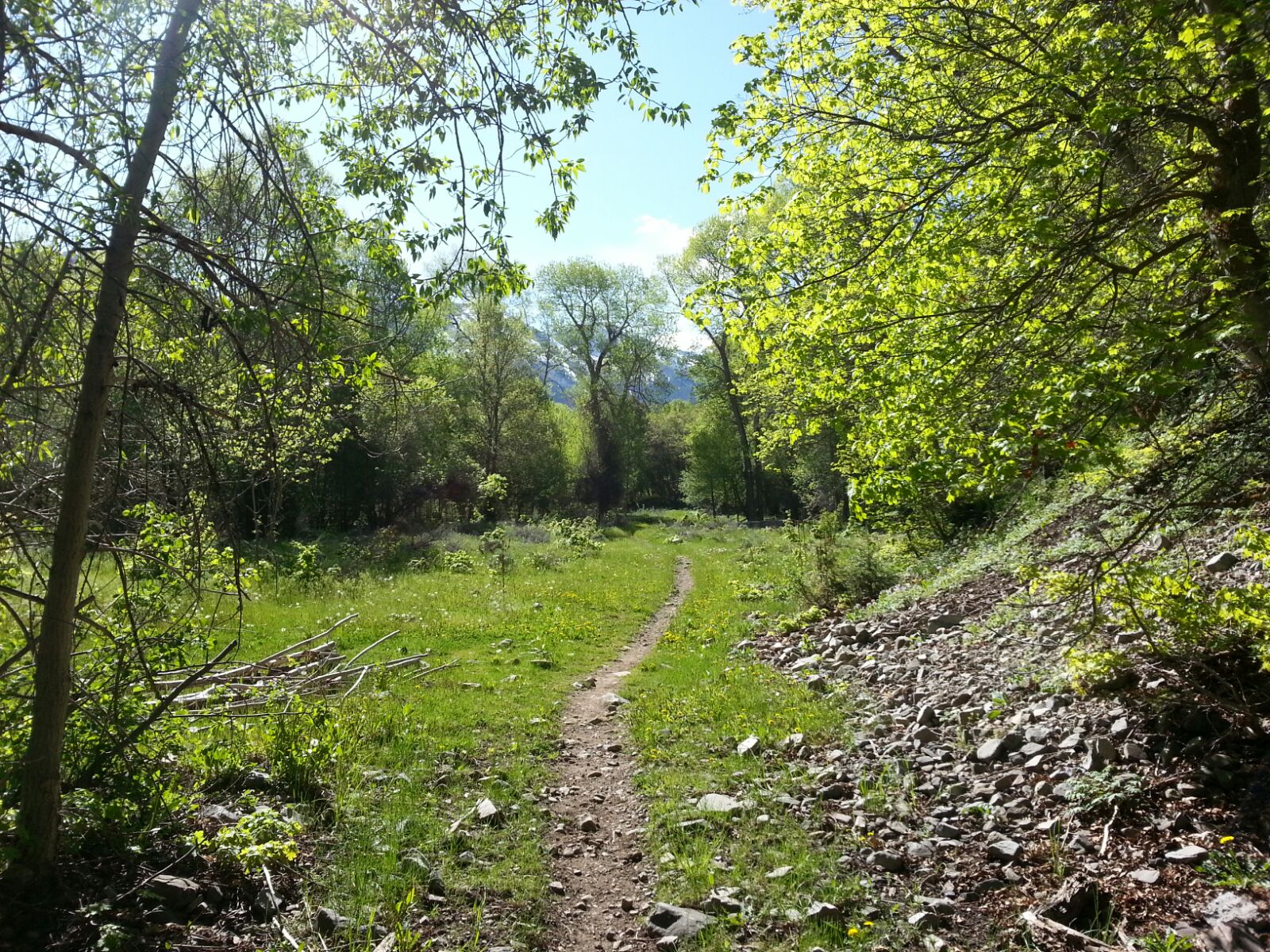
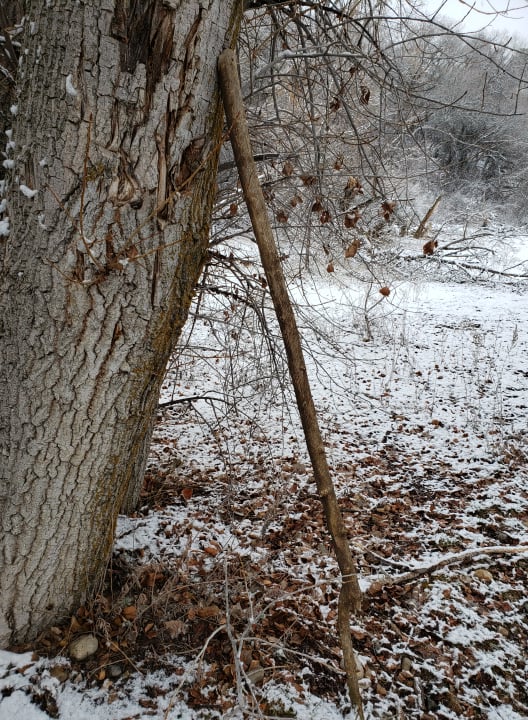
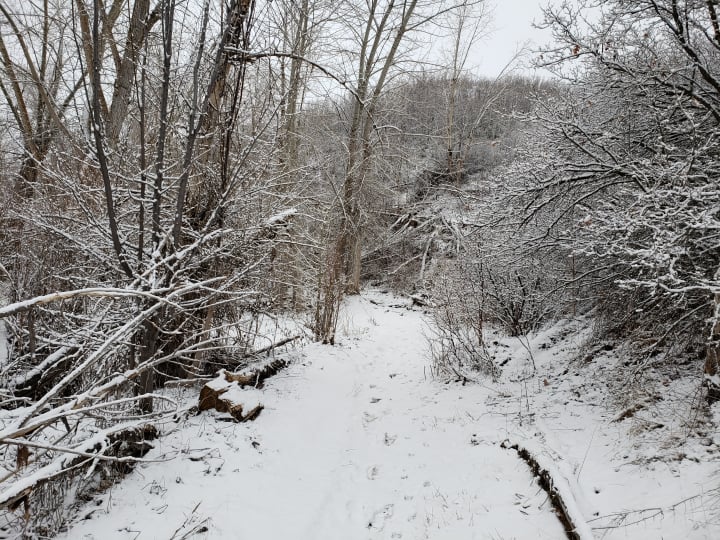
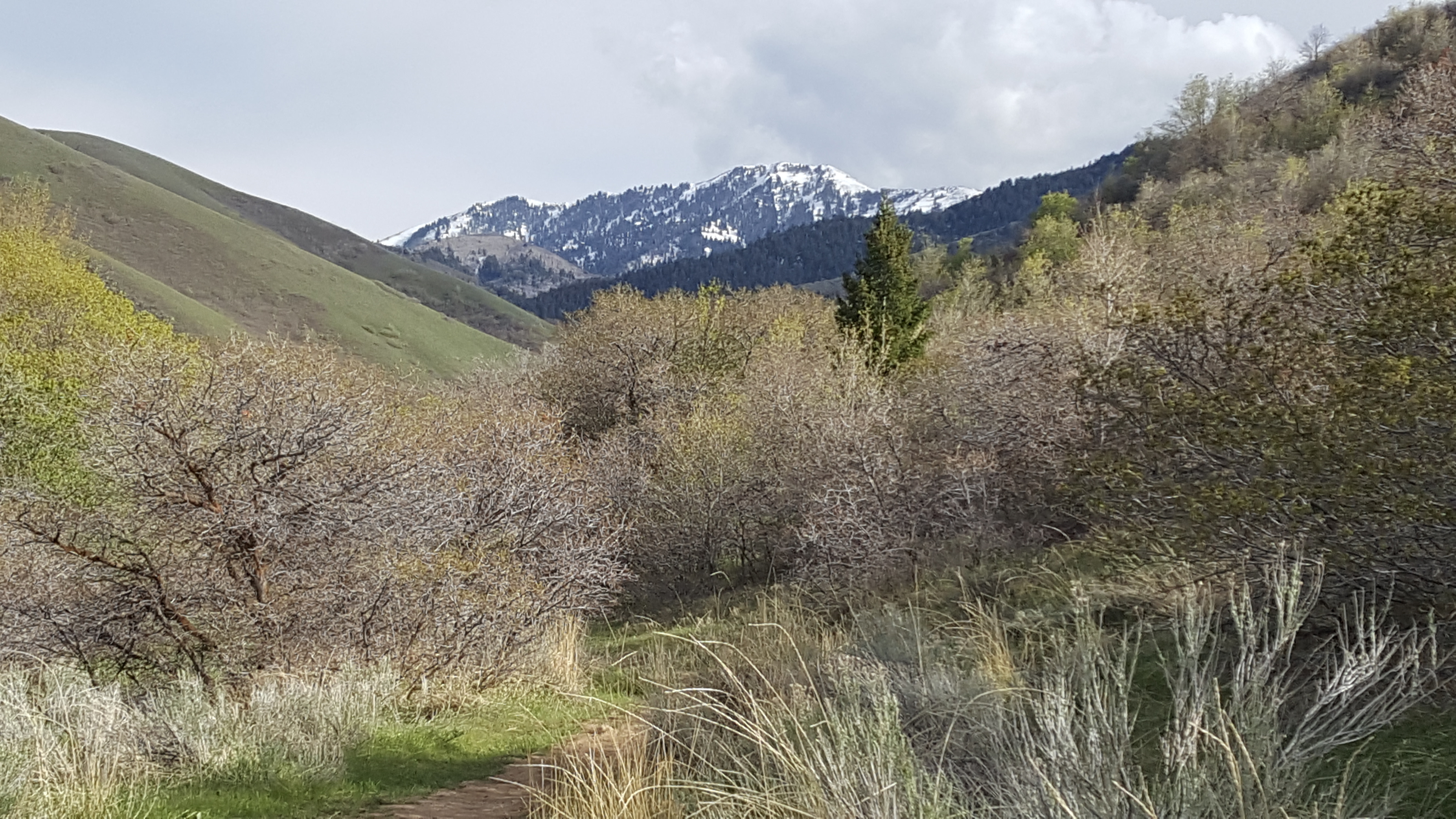
Pictured below: photos of Little Cottonwood trail, creek, and canyon. The trailhead is a ten-minute drive from Mom’s and Dad’s house.
Courage at Twilight: That Pervasive Little Squeal
The front door nob when turned emits a pervasive little squeal upon the first turn, never the second or third, such that our comings and goings are never a secret. The squeak begs for lubrication, and goes without—once the door shuts, I forget, for the squeal comes with the opening not the shutting of the door. Out that door we piled, into the suburban, loaded with coolers and cabanas and chairs, on our excursion “to the Uintas” the old east-west range in the younger north-south Rockies. We set the “easy-up” cabana over the picnic table at the edge of Moose Horn Lake, and we eased Mom and Dad down the shallow trail to their camp chairs under the cabana from where they gazed out over the lake where the zebra trout were rising for gnats, at the towhee flitting low in the dwarf spruces, at the robin dangling a worm lakeside, at the paintbrush and wild strawberry and blue columbine blossoms, at the layered formations on the back side of Bald Mountain, some lying flat and dark, others standing crumbled and rusty, evidence of tectonic cataclysm. These views formed Dad’s definition and experience of wonder. “I used to come here when I was young,” Dad began, recounting how he bought an old jalopy and cut off the roof to make the car a convertible and draped a blanket over the occupants with holes cut out for their heads, how he put a “bumble bee” on his fly line and lowered it from his perch on a house-sized boulder and how when the bee hung six inches above the water an enormous trout leapt to devour the bee and how the beautiful sleek strong creature hung wriggling for a moment then flipped itself free and flew back to the water. Dad told us how he came often to the lakes of the high Unitas to fish, and how his best fishing day was when the rain drizzled down and he floated his fly and the fishes struck and struck and he caught and caught. Purple-black clouds began to gather, as they can do several times a day in these high mountains, and knowingly we packed up and shoved off, grateful to be in a warm suburban with a roof to protect us from the sudden deafening blinding hailstorm that carpeted the forest with billions of white balls of ice. Might this be Dad’s last trip to the Uintas, where he can relive in context the happy youthful memories of driving the jalopy and dangling the bee and looking up into the rain? Reaching home, 98 degrees Fahrenheit to the Uinta’s 46, I turned the door knob and did not hear the iconic squeal, for I had oiled it as we left.
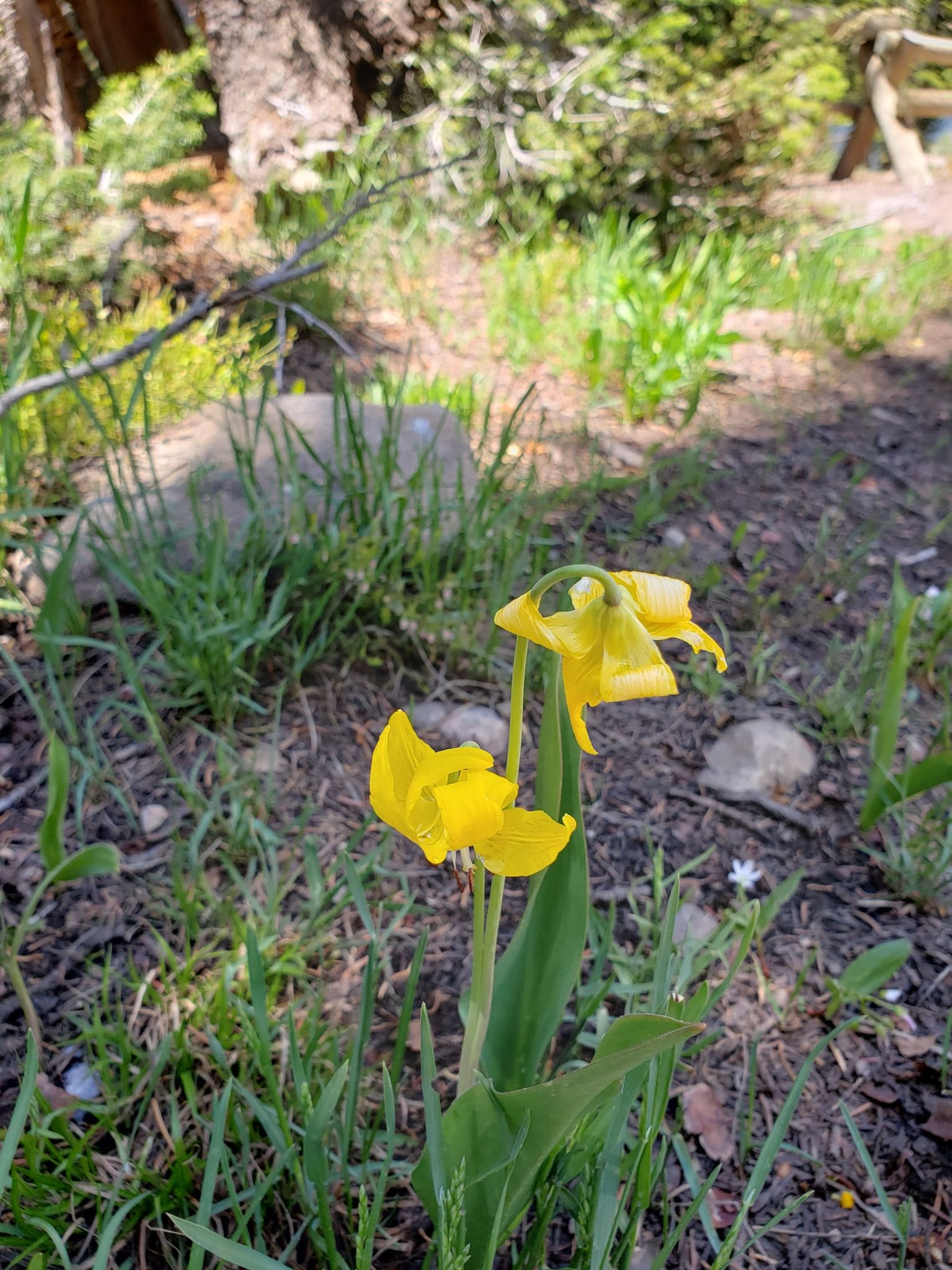
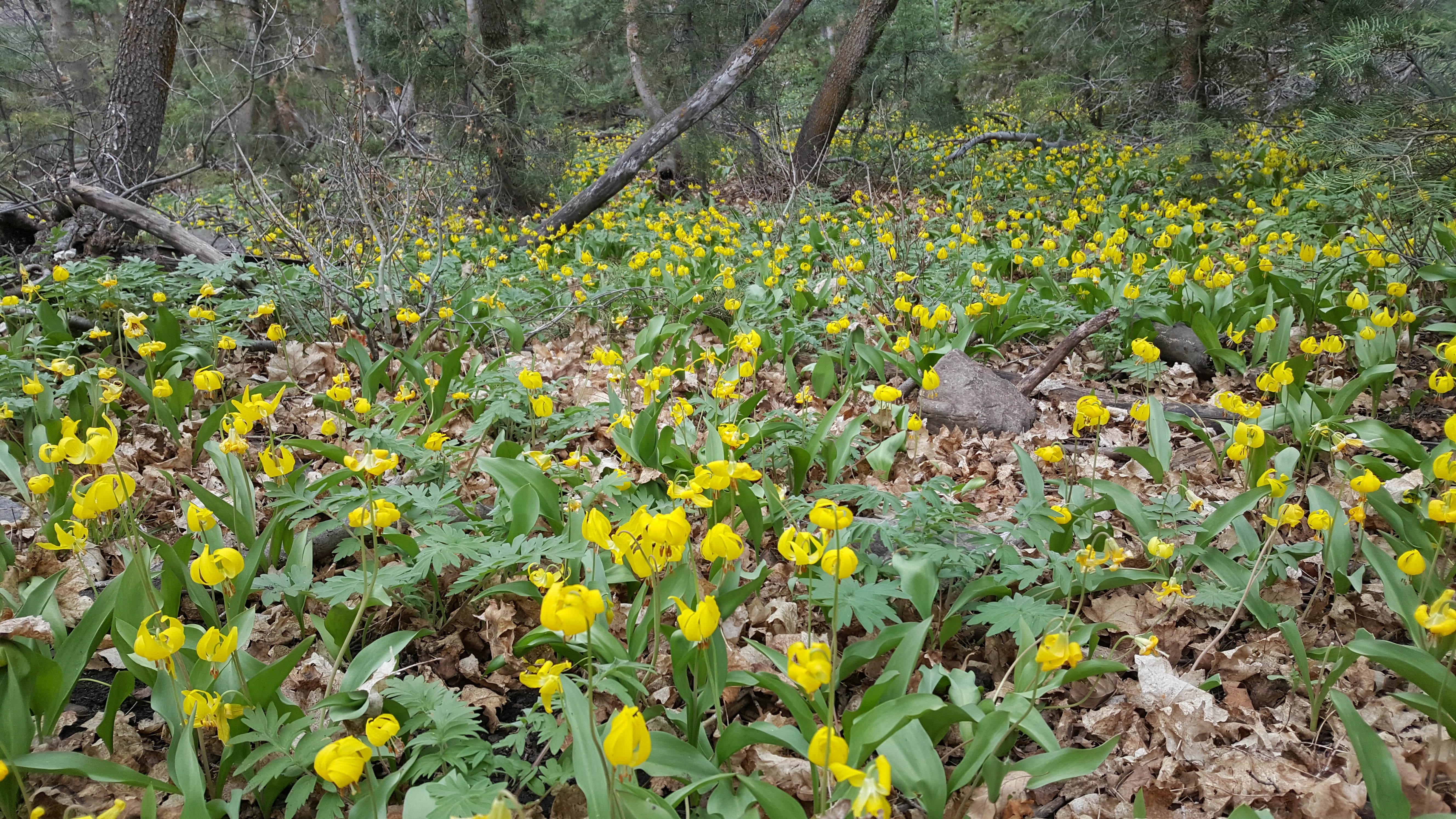
Pictured above: Glacier Lilies
Courage at Twilight: A Turtle and a Grebe
I waltzed up the river with strong strokes. Pull-rest-rest. Pull-rest-rest. The hen and her ducklings huddled tight against the bank looking every bit the bunch of muddy roots. How do ducklings love their father drake? I wonder. He has flown this stretch of river. “Happy Father’s Day, Dad!” came the texts. Is that how it is done, I wonder: four small typed words with a diminutive exclamation mark? I handed Dad a thick old book, yellowed, wrapped in newspaper, in a red paper sack, to thank him for being my father. Fiorello LaGuardia: the Italian Mayor of New York City who took on the Tammany Hall political machine, and won. A black-crowned night heron rose from the riverbank with five-foot wings barred black and white, as silent as my waltzing river pondering. How do his chicks say Happy Father’s Day? I wonder. With urgent shrieks for regurgitated fish, no doubt, and by leaving the nest! What a magnificent beautiful creature. I imagine the carp fingerlings say nothing at all, glad not to be gobbled. And I baked a pesto chicken orzo casserole and a sticky pudding cake full of dates and walnuts dribbled with hot toffee-cream syrup. Oh, and first dibs to Dad on my book by Beryl Markham, an early pilot who flew single-props with open cockpits, who flew so intimately with planet earth, skimming the tall tree tops—she could see the waves and smiles of the farmers and they could see hers. I have reached my three-mile turn-around too soon—I feel I could paddle up this river forever, relaxed and calm, not having the answers, and at peace with that unknowing. My two youngest played cello-piano duets to Mom and Dad and me, moving us with their beauty and the music’s beauty. “Rafting the river . . . I remember you naming every single type of butterfly we saw. You knew everything about them. And the trees and birds and wildflowers, too. You taught me to look for the small and simple things, and remember the value they add to our lives.” Thank you, son. (I’ll have you write my epitaph.) Maybe Bullock’s orioles chitter cheerfully to celebrate their fathers, flashing their oranges blacks and whites in their excitement. I don’t know that little turtles thank their big-shell papas, sunning exclusively on fallen tree trunks, necks and legs stretched out pleasurably, imperiously, a knot of dried algae on one’s back. I sent my sons-turned-fathers a handmade card with a personal note of admiration and encouragement and a token ten-dollar bill. Does that count? Yes, that counts—every sincere expression counts. “Oh, my dear Daddy. How I love and honor you and appreciate with deep gratitude all that you do for me.” Thank you, sweet daughter of mine. A Clark’s grebe with white face and black crown and piercing yellow beak and piercing scarlet eye dove and dove as I approached, then appeared twenty-five yards behind me. What a magnificent beautiful creature! His chicks would easily admire him. “I love you Daddy!” That’s how it’s done: with love. I love you, too.
Pictures above and below: scenes from the Jordan River, in Utah, today.
Courage at Twilight: Flicker
I have seen the Red-shafted Northern Flicker flash her orange primary underfeathers, and her white backside button, as she torpedo-dove from her hole in the snag. I have heard the Flicker’s sad cry, piercing and irresistible. I have watched the Flicker stand cantilevered on the trunk to feed her clamorous young. But I have never heard the machine-gun rap of her beak on deadwood, as I did today, echoing through Dimple Dell. But there she was, high in the dead cottonwood. I know the bird better now, and love her more.
(Images from Birdsofafeather.org and Newsweek.com, used pursuant to the Fair Use Doctrine.)
Courage at Twilight: Just One-Half Hour
Comfort-eating has taken sinister hold of me. I seem powerless to resist. I conquered hunger a year ago, imposing discipline, and losing 40 pounds. With 10 pounds still to go, I moved, and hunger pounced on me and conquered. Fasting had been a key element to my success, not for the diminished calories but for learning not to be afraid of hunger. And there is an element of religious spiritual practice, looking to the Divine to consecrate my fast to help me obtain personal spiritual objectives. After shopping for the evening’s boeuf bourguignon—I had company coming—and approaching the end of my day’s fast, I determined to spend one-half hour walking in nature, in the Dell. Stepping through the trail’s new snow, I felt lean, my belly taut and my mind exhilaratingly clear and controlled. I had forgotten my walking stick, again, but found an old one leaning against a tree trunk, and helped myself. I relished being alone in nature in the crisp air as occasional flakes fell. My 15-minute turn-around timer sounded—the apricot brioche was done rising. “Bike up!” announced a cheerful woman on an expensive mountain bike with enormously “fat” tires, perfect for riding in snow, sand, and mud. She wore all the right gear, head to toe, for the weather, including goggles. “Have fun!” I called after her. A leash-less blue pit bull approached me, its owner explaining, “she’s gentle.” Being a city attorney who sees dozens of dog-bite cases a year, I become irritated when owners do not leash their dogs, and I countered, “You may know she’s gentle, but no one else on this trail knows it.” He muttered something about me knowing it now, and a little voice chided me for introducing darkness into the world and for failing to share light, to impart goodness, to lift another. The voice continued the instruction: even when irritation might be justified, choose to be kind in spite of the justification. Alright, I will, I promised, chastened. I can’t fix it this time, but I will do better the next. Immediately a huge black Labrador trotted toward me, his owner 50 yards behind. Another leash-less dog! I whined to myself, but to the owner I gave a friendly “Good morning!” The face that barely looked up at me was so sad and downtrodden and depressed—I was glad he had his dog-friend with him on a walk in the Dell in the snow, and I was glad I had not further darkened his day. I set the walking stick against the tree trunk for the next forgetful hiker. Climbing to the parking lot, two morbidly obese men with disheveled beards smoking cigarettes wearing greasy ball caps sauntered down the trail, obviously father and son, following their remote-control Hummers. “That looks fun!” I called cheerfully. “Good times,” Dad hissed past his cigarette. And I could see that father and son, indeed, were creating a good time, together. Half a day of cooking later, the boeuf bourguignon, stewed with red wine and beef stock, topped with braised shallots and sautéed mushrooms, triumphed, enjoyed by Mom and Dad, and by Solange and Ana, my two Brazilian friends, who thought the meal marvelous, and who listened with genuine interest as Dad and Mom told story after story about the family and Brazil.
Courage at Twilight: Riding in Corner Canyon
I have said good-bye to Settlement Canyon and my seven-mile mountain bike ride. I knew every rock and root of the Dark Trail, every low tree limb and snagging wild rose. How I loved that trail. I rode that trail with Hannah and my sons Brian, John, Caleb, and Hyrum during the exile years. I have ridden in snow and mud and scorching heat. I have ridden past meadows of sego lily, taper tip onion, and glacier lily. I have ridden with pronking deer and flustered turkey and migrating tarantulas. And there was that day I startled a merlin with its taloned prey still dripping blood. The Dell in Sandy is close to my new home, but its deep sand sucks at my tires and the river cobbles buck me off. Dad used to run in the Dell, a nature area with deep sandy ravines and a small stream. He knew well a family of red fox, which he adored and once fed with rotisserie chickens from Smith’s. He also rode for miles and years on the 50-mile Jordan River Parkway, as have I, catching frequent glimpses of the slow river with its great blue herons and its beavers. But today I gathered my courage to explore, and ventured into Corner Canyon, an area of steep gambel oak gullies in the Wasatch foothills. The Draper Cycle Park proved an excellent place to warm up, with its short training flow trails and pump trails. Then I rode three miles up the Corner Canyon trail. Having thus relished two delightful hours, I flew down a blue-level flow trail named “Limelight,” the last 2.5 miles of the Rush trail—very fast, moguled, banked, and flowing (all the more fun for the names of the song and the band). I felt very happy as I drove home, hosed off and stowed the bike, and greeted Mom and Dad. “Tell me all about it,” Mom enthused, having worried the whole morning that I would crash (again) and hurt myself (again). “I’m done going crazy fast and drifting and jumping,” I reassured her. But it was impossible not to enjoy the speed.
Learning to Speak Goose
Kayaking for the two-dozenth time on the same stretch of the Jordan River, a natural phenomenon new to me showed itself as I paddled along upstream. The river is full of such surprises, which it gives me the honor of witnessing, a few at a time, so as not to overwhelm my feelings of wonder, and not to dull my sense of the miraculous. A gander, a Canada Goose, led a small pre-fledged gaggle of goslings upriver, the mama goose in the place of caboose. I approached them carefully, paddling slowly against the current, to say hello. And they responded by gathering speed and flicking their beaked heads nervously this way and that. Though of course I had no intention of hurting them or frightening them, or even teasing them, nature dictated that they fear me. And rightly so, for I am sure I seemed to them a giant malevolent alien goose-hunting weapon-wielding creature, easily capable of ending their lives. The gander knew I was gliding faster than he could ever swim, and abandoned his effort to outpace me. Switching strategies, he prepared for flight—a smart plan, with a good chance of success, since he could fly infinitely faster and higher than I could fly, though I wondered about his abandonment. But he could not seem to launch, instead flapping his wings loudly and frantically on the water, as if hurt.
That Mr. Gander sure tricked me. He fooled me good. His antics made focusing on him irresistible. Finally yanking my attention away from the frantic papa goose, I looked back to the mama goose and goslings to see how they fared, but saw only fading ripples. They were gone, disappeared, and did not reappear while I sat and drifted, befuddled. Resuming my upstream slog, I almost failed to notice the same number of goslings of the same age and fuzziness ensconced safely behind a leafy branch hanging low over the bank, some one hundred feet from the dive: clearly the same goslings who gave me the slip while I focused on the feigning father. That gander had drawn my whole attention to him, for the sake and safety of his little ones, his progeny, and his mated partner. I had failed to understand that by slapping his wings on the water he was signaling his objection to my invasion of family space, and warning me to keep away. I had ignored his clear Goose-speak (I really need to learn Goose), and he had water-slapped away, not abandoning his family (of course), but protecting his family. I will keep my distance next time the wings beat on the water, and respect the family space. The Jordan is goose home, after all, and I am just a curious occasional uninformed rather rudely interloping human, who doesn’t know the language.
(The Jordan River, named by 1840s Mormon pioneers fleeing to Utah from religious persecution in the frontier United States, flows north from the freshwater Utah Lake into the vast fishless Great Salt Lake, reminding the refugees of the homeland of their God Jesus.)
Image of Goose Family by TheOtherKev from Pixabay
Jordan River Cantor
Jordan River Cantor
Dearest Mother,
Tonight I kayaked on the Jordan hoping to see a beaver, for lately I have noticed bits of beaver sign, like newly-gnawed box elder bark, and willow stems sheered with a single toothy slice. Porter’s Landing offers a rubber launching mat, a picnic table pavilion, and a merciful portable toilet: I put in there. I paddled hard upstream, tense and anxious for wanting to arrive, to see a beaver. But I regrouped and reminded: when I want to see wildlife, I must release my need to see wildlife. One cannot ever coerce an encounter: one must allow to happen whatever wishes to happen. Soon I settled into a smooth rhythmic stride.
Garish orange-black orioles chittered at me from the treetops. Goldfinch on an eye-level branch watched me paddle by. Great blue heron glided slowly in, dangling long gangly landing gear. Cormorant, oil-black, rounded a bend low over the river then veered sharply away. Kingfisher kept a hundred feet upstream, scolding with each irritated launch. Canada Goose parents with six fuzzy new goslings paddled single file, an adult fore and aft. Wild iris sprouted in clumps near the bank boasting delicate butter-cream flowers. The river was calm and beautiful and slack and dark as the sun began to sink.
One hour upstream would see me back just before dark. And at that one-hour mark a willow switch swam slowly against the current and stopped at a grass-hidden bank. I glided slowly by, and there sat a beaver, upright on her haunches in the shallows munching. A beaver! Alive and real and close and wondrous – two famous enormous buck teeth, long tawny whiskers, tiny black-bead eyes, little round ears, rust-red fingers holding the branch just like I would hold a branch. She chewed quickly and loudly and contentedly, completely unaware of my ogling. But when she heard me she straightened and turned slowly and dove, nonchalant, and as she dove she raised her tail lazily and slapped the water with a cross crack.
My encounter with the beaver felt beautiful and personal and honorific and close. I will take Hannah tomorrow. We will ride our bicycles on the riverside trail, and I will show her where I saw the beaver. We will sit on the trail above the bank and munch our sandwiches and whisper to each other until she comes.
I hope to see you soon. Love always,
Me
(Image above by Hans Braxmeier from Pixabay. Images below by author.)
One Night in Maine
One Night in Maine
Don’t snap it.
Sweep a smooth long figure 8 and gently lay down the leader.
Your mayfly will hover then rest on the water, the last of the length to touch.
If you snap, you will break your knot and lose your fly.
Imagine 600 feet per second.
That’s it. That’s better.
Lakeside grass is smashed here where bear sat munching meager blueberries in morning’s mist.
You may pick a few for tomorrow’s pancakes, but leave the rest for our friend.
The lake glows burning amber with the sun behind the pines, our water glowing and still, and mayflies dance and bob, and aquatic creatures leap and slap and leap and slap.
A silhouetted loon swims low in a patch of smoldering amber and sings the saddest haunting song laced with hues of joy and reconciliation.
(Image by PublicDomainPictures from Pixabay.)
They Fell from the Sky
Hundreds of them. Eared Grebes. The birds precipitated from inside crystalline clouds where the sunlight flashed in an infinity of ice atoms swirling and refracting in a frozen explosion of brilliance, as if the sun raged coldly right there inside the clouds. The birds became utterly hopelessly disoriented in the icy intensity, blind, not knowing up from down. Hundreds of grebes dropped from the mists to bounce into buildings, cars, trees, yards, and parking lots. And there she stood, unmoving, in my parking space, her olive-brown feet stuck frozen to the ice. My office key made a crude chisel for chopping around her toes – they bled and flaked skin already. I wrapped her in my coat and sat her in a box by my desk, with cracker crumbs and a bowl of water.
The children begged to open the box and see what was scratching inside, and exhaled exclamations of wonder when they saw. What IS it? She’s an Eared Grebe. Look at her pointy black beak, her long flaring golden feathers that look like ears, and her crimson eyes. Do you know what you call a group of grebes? A Water Dance! Can’t you just picture the family flapping and paddling and splashing their delighted dance on the lake?
What are we going to do with her? Can we fill the bath tub? Our grebe paddled around with obvious enthusiasm. What are we going to feed her? How about fish! Tub-side with a bag of goldfish, the children clamored for the privilege of feeding their bird. Our compromise: eight hands held the bloated bag and poured. She darted after the fish in a flash of black and gold and red, a little paddling package of magnificence. Look at her feet – no webbing. Look at how her toes unhinge with little retractable paddles. Wow! came in whispers.
That needling question of what to do with the bird in the bathtub? We would try a nearby pond, and hope for the best. The children watched her swim away and they looked sad and happy and I sensed how singular a blessing to have welcomed that bit of living feathered grace into our human home, to release her willfully, to be moved by her wildness and beauty. And I hoped a small sliver of that exquisiteness would stay behind in memories of hinged toes and golden ears and red red eyes, and of creatures that dance on the water.
(Image by David Mark from Pixabay.)
Roger is the author of Rabbit Lane: Memoir of a Country Road and A Time and A Season.
Dragon Patrol
Dragon Patrol
This was his modus operandi:
arriving at a mountain lake and settling the family with picnic baskets and chairs and tackle boxes and poles, our father walked the perimeter, heading off on a trail if there was a trail, through bushes and over-and-around tree trunks if there wasn’t, to scout the best fishing and to gather perspective of lake and forest and meadow and bog and picnicking family from every vantage point to find what he could find. He looked small on the opposite shore Continue reading
Merlins and Holy Ground
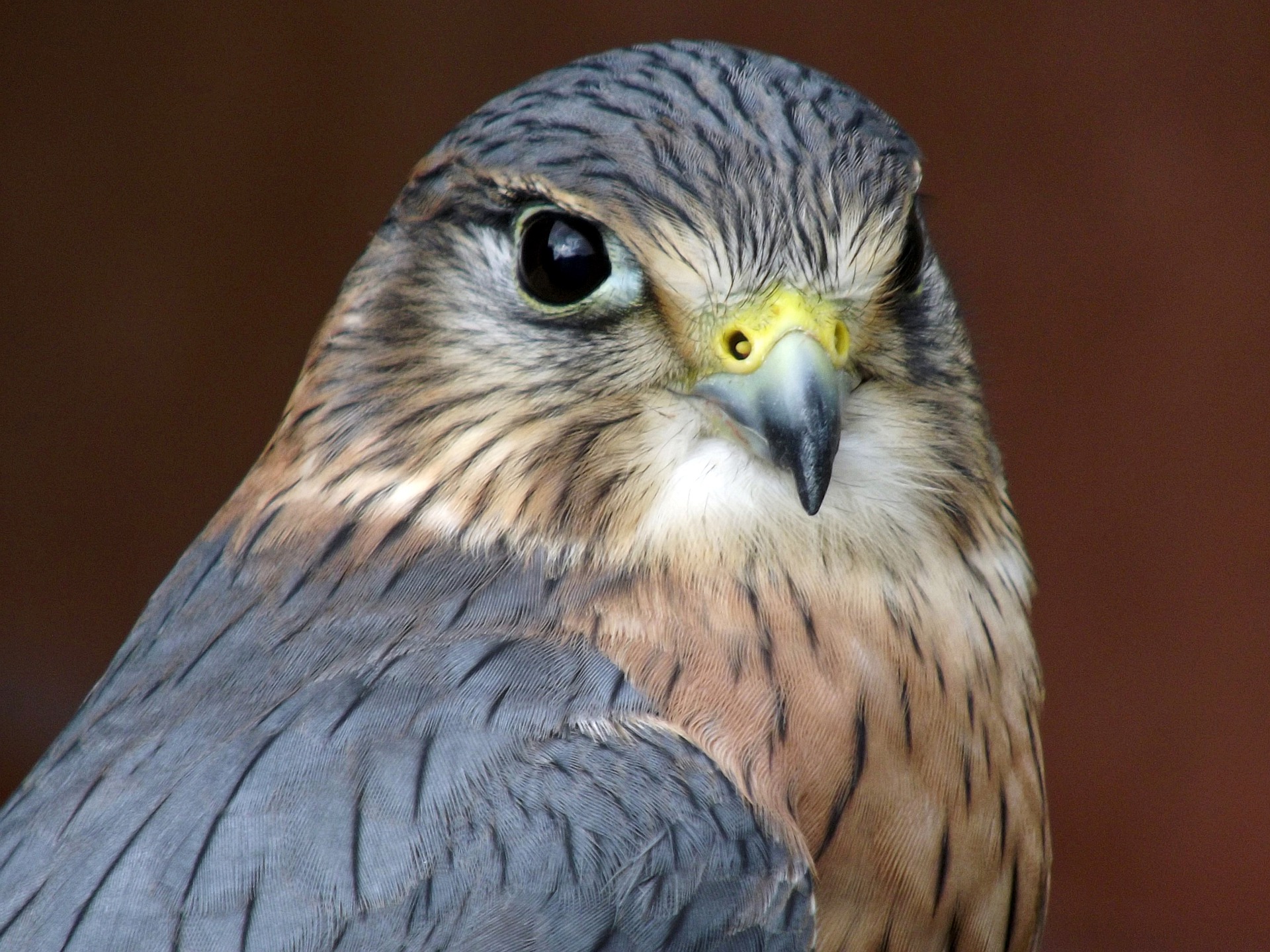
Dark Trail earned its name for the tree canopy that shades and darkens its travelers. Gambel oaks. Mountain maples. Box Elders. Orange lichen clothes their trunks as they arc over the path. I ride a round-trip seven. The higher I go, the prettier the canyon, campsites yielding to firs and aspen groves and snow pockets still in June. On Independence Day I launched from a mogul Continue reading
Forest Boardwalk
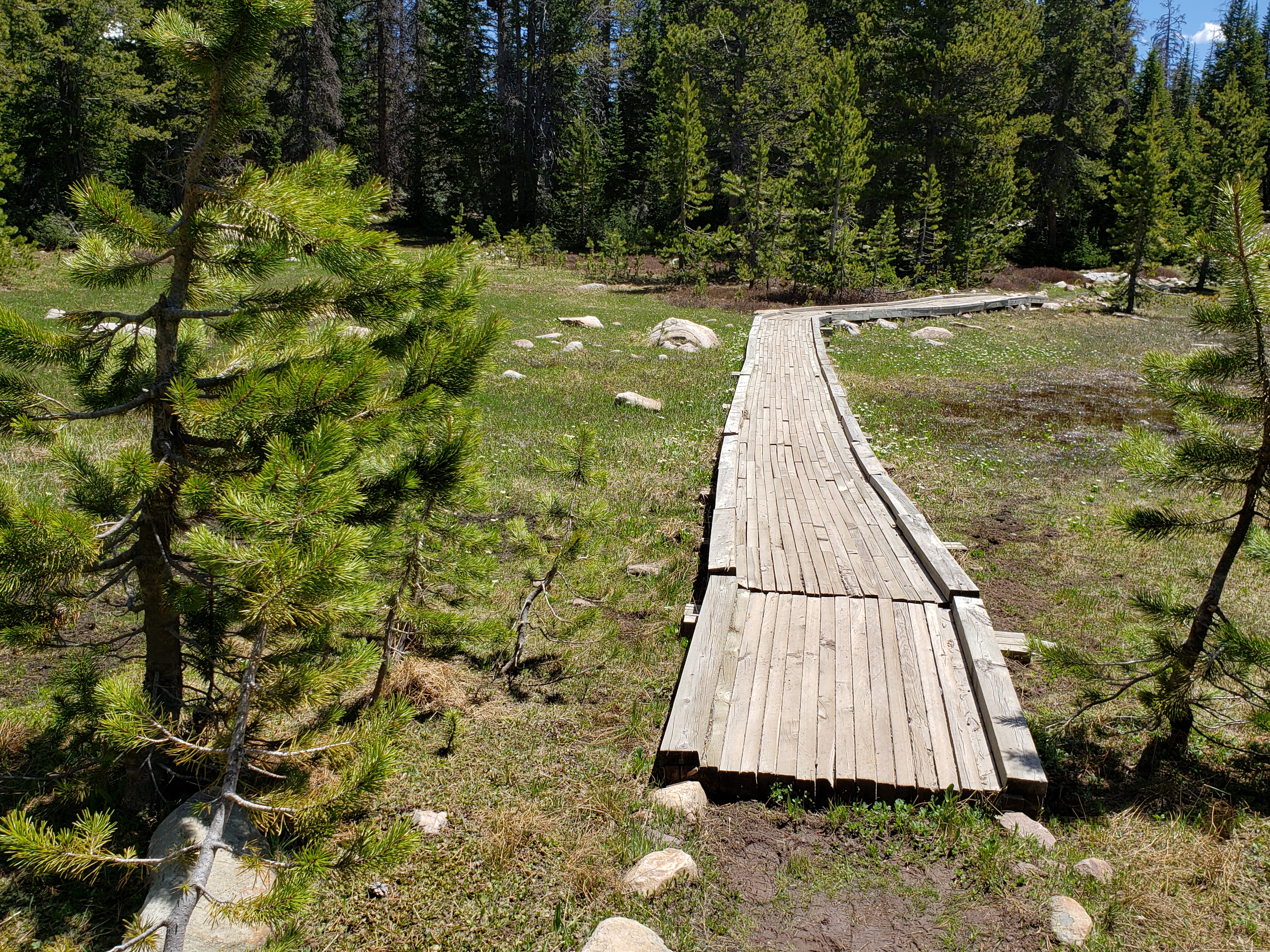
Exploring High Uinta mountain lakes and trails is a favorite family pastime. While the children fish and kayak, I enjoy walking around the lake. Teapot Lake is just my size: not so big I feel it might swallow me up, but small and friendly and pretty, and more than a puddle. I walk around its banks in 20 minutes, despite the north shore trail still being snow-bound in July. Hundreds of frogs croak in swampy bogs. An old boardwalk guides directs the trail across snow melt draining into the lake. Tiny white flowers proliferate.
FOREST BOARDWALK
the boardwalk beckons
a sign of humanity
in my wilderness of fears
easing my way
on the swampy trail
lily pad pools flanking
yellow stars in the green
invisible frogs creaking
a hundred rust-hinged doors
and always the wind
across the lake
Roger is the author of Rabbit Lane: Memoir of a Country Road. The book tells the true life story of an obscure farm road and its power to transform the human spirit. The book is available in print and for Kindle at Amazon. See Rabbit Lane reviewed in Words and Pictures.