Tag Archives: Caregiving

The Dementia Dossier: Mentos Blue

I finally said something.  We were watching on television a Christmas special from the Tabernacle Choir at Temple Square.  At high volume.  And still, above the orchestra brass and 360-voice choir, I could hear the smacking of Mom’s gum as she chewed and sucked on it with obvious enjoyment.  But I couldn’t stand the sounds any longer, wincing at every smack syncopating the music.  “Mom, I can hear your gum-smacking above the orchestra!”  She looked hurt.  “I don’t want to hurt your feeling, Mom,” which was true, “but it’s loud,” which was also true.  I quickly changed the subject, commenting on the expert singing of the soloist.  One convenient characteristic of Mom’s deepening dementia is that she quickly forgets her hurts and disappointments, returning to cheerfulness.  In fact, she quickly forgets most everything, except things like the names of the cemeteries where her grandparents and great-grandparents are buried, or the road names of the New Jersey town where we grew up, and from where Dad and Mom retired nearly 30 years ago, leaving forever for Utah.  Mom and I returned to our television show, and while she returned to her normal good cheer, I did notice that the gum smacking had diminished…for now.

The Dementia Dossier: Ice Cubes

The water line to the refrigerator’s ice maker cracked years ago, ruined the kitchen’s oak-wood floor, and was permanently abandoned.  My daughter Laura has an amazing countertop ice-maker, producing pleasing, soft-crunchy cubes of pellet ice.  But Mom opted for a dozen of the old ice cube trays.  I confess to using my share of ice cubes for the day’s cold drinks, but it seems that every day I reach into the freezer only to find an empty ice bin.  Mom’s household routine used to include filling the empty trays at the kitchen sink and carrying them expertly to the freezer, without spilling: two stacks, six-high.  But with her walker a necessary tool of her daily perambulating, the chore has more often fallen to me.  With a busy schedule, running from one task and job and activity to another all the day long, the mental stoppage of finding the empty ice bin and needing to empty the ice cube trays into the bin and then to fill the trays with new water, has been a real irritant.  Mom uses by far more ice that I do, so I naturally expect her to fill the trays.  (Can I hear my readers offering sympathetic words of “Aw, you poor thing?”  I thank you.)  One reason the ice runs out so quickly is that Mom fills the trays only halfway, yielding half-cubes, naturally.  I, on the other hand, fill the trays completely, to yield large cubes lasting us twice as long.  Mom beat me to the job of filling the trays the other day: when, all twelve trays of cubes barely filled the bin.  “Mom,” I whined.  “Why do you fill the trays only half-full?”  Looking downcast, she explained, “I don’t like such big cubes.”  Besides her daytime use, her nighttime habit is to take a cup-full of cubes to her bedroom, to suck on them during her bedtime routine—and now I understand the desire for half-cubes.  The big cubes really are impossibly uncomfortably big and sharp to fit into one’s mouth and enjoy.  In fact, it might be similar to cramming a whole apple into one’s mouth instead of enjoying one reasonable bite at a time.  Half cubes it is, then.

The Dementia Dossier: The End of the World

Mom’s computer printouts have been coming out more and more purplish-red as the black ink ran out and the color cartridge eked out its last.  “Looks like you’ll need new ink very soon,” I observed.  This morning, she rolled herself and her walker into the kitchen and gave me a look of panic and consternation.  “You’re giving me a look that says the world is ending,” I observed.  It was…for her.  I had noticed earlier on her desk a page printed red on the top half of the page only, and faded into nothing for the bottom half.  “My printer won’t work!” she shouted, more in anxiety than anger.  I reminded her she was running out of ink.  “I know…I tried to put the new cartridge in…but I couldn’t do it.”  Indeed, she had inserted the new cartridge, but incorrectly, and it was stuck fast in its slot.  HP had designed its cartridge bays so that when an 86-year-old tries to install her own cartridge, she will do it wrong and not be able to remove it and will panic and give up and will need a new printer.  I worked and worked to remove that cartridge, but it had clicked in incorrectly and was locked in.  I looked like a quack surgeon, with my headlamp and instruments operating on the printer’s innards.  With no little force and a great deal of twisting and prying, the cartridge finally released.  But not before staining my thumbs.  Baby wipes wouldn’t clean them.  An alcohol-soaked cotton ball wouldn’t clean them.  Soap and water?  Nope.  I’ll try mineral spirits next, I guess.  I have to give Mom credit, though, for trying to solve her own problem before coming to me.

The Dementia Dossier: Arthritis In My Knees

Mom’s knees pain her and are weak and wobbly with arthritis. “I feel like I might fall,” she often says.  You can’t fall, I want to say.  If you fall, your life in this house will be over.  At the nearby hospital, the orthopedic doctor prepared to inject cortisone into her knees.  I asked him questions about injection dosage and frequency, and he answered that the dosage was fixed, standard, and the injections could be administered only every three months.  I thanked him for the information.  The doctor asked Mom if she had any questions.  “Do you want me to pull my pants down now?” was her answer.  I felt a bit embarrassed as the doctor shifted on his feet and stammered a suggestion that maybe she could lift her pant legs.  She could not.  Down came her pants.  In went the needles.  “I hope the shots help, Mom,” I managed as I wheeled her out to the car.  They did not.


(Image by Ewa Urban from Pixabay)

The Dementia Dossier: Rigid Dementia Routines

A month after my involuntary retirement, and the illness that followed, I finally found the mental energy to map out a new routine for my daily life. My routine involved time for reading scripture, exercising, new writing projects, painting lessons, low-bono work with an immigration non-profit, and yard and house projects.  I also built in time to take Mom for her necessary errands, like the post office or the pharmacy.  Since Mom is so routine-bound in her dementia, Jeanette suggested Mom would benefit greatly from seeing my schedule, knowing my routine, and knowing that she was a part of it.  I printed the schedule, and Mom taped it to the lamp next to her recliner, where she could always see it.  I knew a routine would need to be flexible.  Without flexibility, the routine would cease to be the servant and become the master.  Instead of the routine serving my purpose, I could become a slave to the routine.  That flexibility proved necessary as I succumbed to sinus and bronchial infections that laid me flat for much of eight weeks and dragged me through two ten-day microbiome-depleting rounds of antibiotics.  The illness destroyed my routine.  But every day near 2:00 p.m., Mom asked—according to my routine—to be taken to Help U Mail or Walgreen’s or out for a drive: Ahhh! Just look at the beautiful blue sky!  I began to roil with increasing resentment, and biting my tongue and clenching my teeth, I evenly uttered, “Mom, I don’t think you have a sense of reality right now about what I can do.  I had just enough strength to watch Jeopardy with you for half-an-hour.  I’m not up to an outing.”  After more than two months, I am nearly recovered, but my routine remains in a shambles.  Returning from an appointment at 4:00 p.m., I asked Mom how her afternoon had gone.  “Quiet,” she answered, and continued under her breath: “I guess I’m stuck in the house today.”  “Stuck?” I answered.  She thinks she’s stuck in her recliner, I thought.  She thinks I’m responsible for her getting unstuck.  “You’re not stuck,” I challenged.  “You can get up from your recliner and sit in a chair on the front porch and look at the blue sky, the clouds, the endless airplanes, the cars driving by.  You can sit on the back porch and look the mountains with their maples turning red and the dustings of snow on the peaks.  You can use your walker on the sidewalk for a quick walk.”  And then I saw it.  When I began my new retirement routine, I had made time for her in my daily schedule.  My  My schedule.  She had taped my schedule to her lamp.  And with that bit of adhesive tape, I became part of her routine and her schedule.  I had been sucked in even further by her consuming dementia.  I was now another symptom of her slavery to dementia routines.  The next morning, I pulled the paper from her lamp and crumpled it into the trash.

The Dementia Dossier: Silk Pie

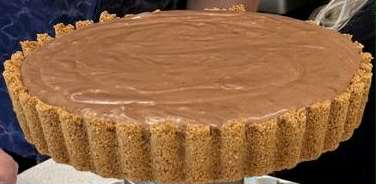
French silk chocolate Nutella cream pie in a toasted graham cracker crust.  Ahhhh.  “This is very possibly the most amazingly delicious thing I have ever tasted,” praised my son Brian at my birthday celebration.  Not wanting to ask anyone to bake or buy a birthday cake for me, I had made my own, this luscious French silk chocolate Nutella cream pie in a toasted graham cracker crust.  Everyone loved it.  I could eat only a small taste because of how the sweet aggravated my searing sore throat.  After the party, a plate with half the pie went into the fridge for Mom and me to enjoy later.  I’ll have a slice for my lunch tomorrow, Mom said.  I invited her to help herself to as much as she liked, only save me one piece, because I had labored two hours to make the pie and wanted to enjoy just one more slice when my throat felt better, despite dieting to reduce my sugars.  And later in the week I was ready, my throat feeling great, my sugar intake dramatically decreased, ready for my last piece of silky smooth sweet.  On opening the fridge, I found the plate gone.  Mom, where is my pie?  I told you to enjoy as much as you wanted but to save me just one piece.  Do you remember I told you that?  Just one piece?  Confusion clouded her face as she mumbled, I guess I forgot.  I’m sorry.

The Dementia Dossier: Resting

She’s up at 8. Like clockwork.  Up at 8 and in the shower and down the stairs by 9 for her crunchy dry Cheerios and glass of milk on the side and a glass of hot tea in the incessantly beeping microwave begging for someone to come attend.  And Monday is laundry day.  And laundry comes after breakfast, beginning at 10 or so.  I texted my mother about my illness and miserable night, about my aches and chills and inability to sleep, and about needing to rest, and she responded Me Too.  But the water started flowing and squirting, and the washing mashing swooshing and spinning, with my head resting on its pillow and the pipes and drains and machine six inches away through the wall.  Rest now futile, I stood in my bathrobe fuming and wondering and watching my mother jam the dowel into the soaked whites.  You saw my text that I was sick and needed to rest, right?  You know that my bed is just on the other side of the pipes and I can hear everything, like my head is inside the washer, right?  Well, I waited for a while…but I was out of clean underwear.  I’m just trying to understand what you were thinking.  Because you could have done the laundry later, like at 1, or at 2, right, so I could rest?  Well, I don’t know, I was out of clean underwear.  This conversation came slowly, in snippets, as I gauged her capacity to absorb feedback without hurting her feelings, and like most such conversation with her, she had no capacity and did have hurt feelings, so I had failed again at discerning how to communicate through dementia.  She seemed confused at the notion of delay and incapable of weighing priorities and convinced that her need for tomorrow’s clean underwear was paramount today, and she must do the laundry, now now now, before it was too late and the day had turned into late Monday or, forbit it, tomorrow.

(Image by moerschy from Pixabay)

The Dementia Dossier: Introduction

Many of you followed Courage at Twilight as I recounted my experience living with dying parents.  With this page, I am launching a new exploration.  As my father’s mental abilities diminished, I naturally attributed the loss to senility, or more broadly and accurately, to dementia.  He read for hours and hours a day until the final week, and he still comprehended and remembered more than I do when I read the same books.  But his ability to comprehend, synthesize, apply, and remember the information began to suffer.  The decline was mostly masked by his great intellect, but gradually became more noticeable.  Where nine years ago he easily followed Word’s “accept” and “reject” functions while reviewing my suggested edits to his book Process of Atonement, in his last year he could not manage the power button, mute button, or any other button on the television remote.  Alone with Mom now, I am observing on a daily basis her decline in mental function, short-term and long-term memory, and the ability to process new information and work through new problems.  And I am pondering the spectrum of mental normalcy.  I am well-known at work for remembering the details of 30-year-old incidents, but I notice my own mid-term memory fading, like forgetting that the City Council increased its golf course fees six months ago (I wrote the fee resolution).  I am wondering: where does sanity end and senility begin?  But that is the wrong question, presupposing that senility is the loss of sanity.  It isn’t.  Senility is the loss of memory.  And don’t we all experience memory loss for once-remembered people, places, dates, and occasions?  So, by becoming more forgetful, am I, myself, drifting into dementia?  Where does dementia begin?  On what date is my memory and cognitive function loss sufficient to say, “That’s when my dementia began”?  I doubt such a date can be determined.  But episodes characterizing dementia can be humorous, sad, or maddening (etc.), or all combined.  In these posts I will record my mother’s little oddities, pointing together toward dementia and decline.  I mean no disrespect in finding an aspect of humor in her decline.  But humor often derives from the little human oddities of life, whether happy or sad.  I am merely observing, and trying to make sense, again, of the ending of life.  Each post here will be much shorter than this one—I promise—and will relate a small vignette illustrating the nature of inevitable human decline.  I love and respect my mother—and she also drives me batty!  Hopefully these entries will make you smile at, and ponder on, those we love whose earthly lives are winding down.  I look forward to continuing my journey through life with you.

Courage at Twilight: The After Words (Privilege)

For every day of this caregiving experience, I have been conscious of the blessings, the resources, the benefits, the privileges that shaped and enabled the experience.  By “privileged” I simply mean to indicate our relative place on that vast spectrum of personal resources, our being somewhere in the in-between of those with tragically few resources and those with unnecessarily huge resources.  My caregiving experience, and my father’s and mother’s experience as the cared-for, undeniable was shaped and even determined by our relative resources.  My father’s pension allowed us to hire private-pay home health care and hospice, which sent aides for two hours a day, seven days a week, including holidays, for the last two years (about $30,000 per year).  To be sure, the costs ate away steadily at my parents’ savings, but the fact remains that they had savings, whereas many do not.  Not having this resource would have made my caregiving experience impossible, at least for me.  Add to our privileges the ability to purchase a $14,000 chair lift for the staircase.  While the lift was a major hit to our budget, we had the budget.  Add the blessings of medical insurance, prescription insurance, and social security.  Include the allowance I was given to work a flexible work schedule, which enabled me to cook healthy from-scratch meals from fresh ingredients.  While I am only a small-town government lawyer, my professional knowledge and social clout did clear obstacles others struggle to break through.  Our relative privileges do nothing to reduce the legitimacy or reality of my experience and my story.  But they do shape that story.  A lack of these resources would have dramatically altered the experience, and dramatically multiplied the stress and trauma, and I acknowledge the difficulties faced by persons with fewer resources.  I am not a community organizer, and offer no social solutions, but I am aware of some of the challenges and struggles faced by many.  It may be a cop out to say I would not have been up to the task without our resources, but I fear I would not have been up to the task.

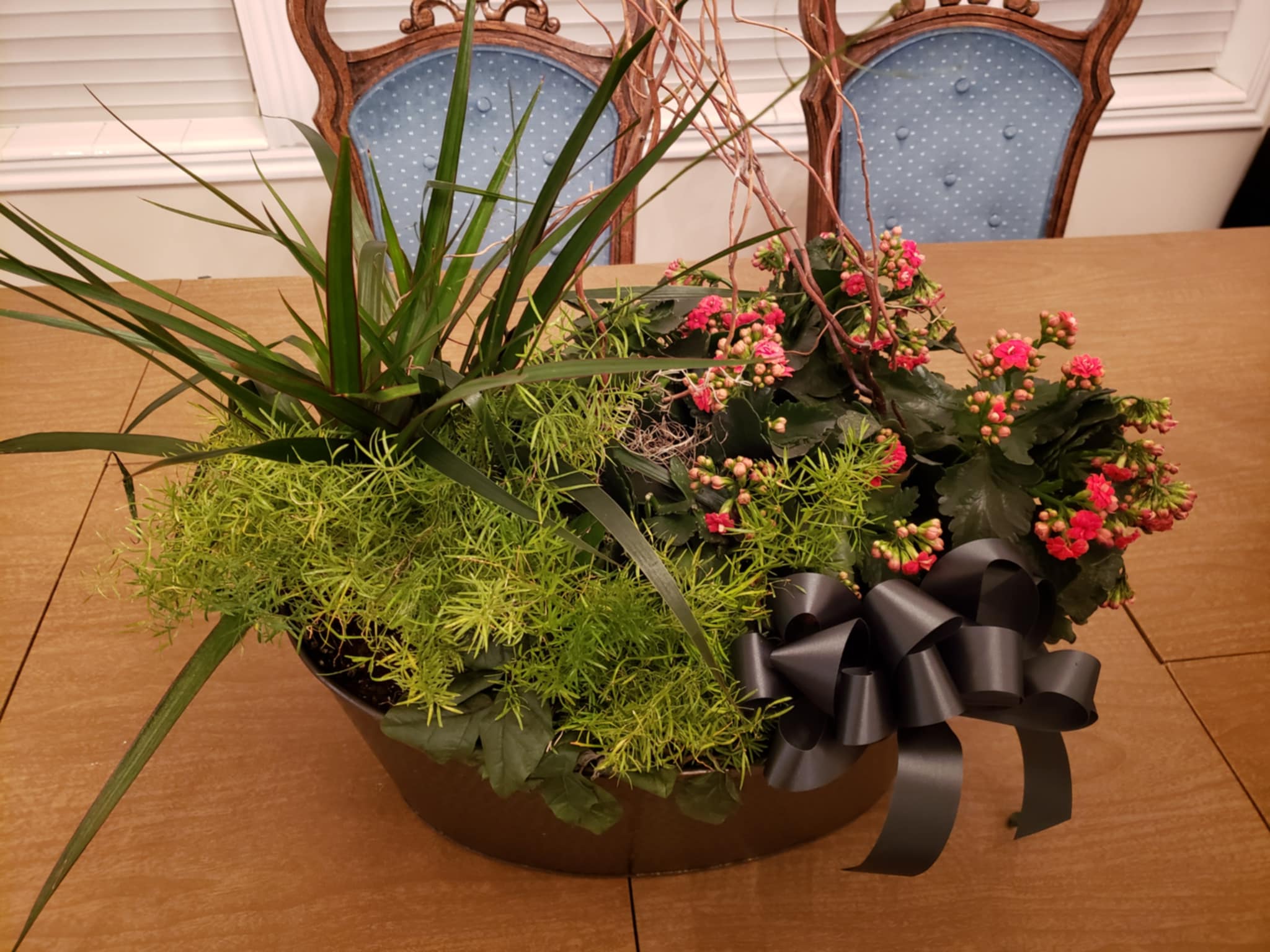
(Pictured: funeral planter from the Tooele City Mayor and City Council.)

Courage at Twilight: The After Words (Loneliness)

We, my brother and sisters and I, navigated a week of days too filled with tasks to feel much grief—writing an obituary that attempted to summarize in two pages the long life of a great man—preparing a funeral program involving dozens of family members—writing a funeral talk I did not want to write—the mortuary checklists—settling affairs of estate—hundreds of texts and emails and messages to and from those who knew and loved him—the trickles and gushes of people through the house—all the standard tasks, which we were determined to perform in an exceptional manner.  Mom will be lonelier now, without her husband and friend of 65 years.  She will not hear him say as she sidles past his hospital bed, “You’re just the most wonderful wife, Lucille.  I love you.  We’ve been married 62 years.  When you walk by, I’ll give you a hug.”  I will not hear him exclaim “Roger!  Welcome home!” and “What a gorgeous dinner, Rog!  I just love steamed vechtables!”  Walking the grocery store aisles, I passed the zero sugar mint patties, the deluxe mixed nuts, the lidocaine foot lotion, the Brussels sprouts (Mom hates them), and no longer put them in the cart.  And, I felt the wrench of good-byes anew when I handed to the thrift store attendant the bags stuffed full of shoes and socks and shirts and sweats and suit coats and hoodies.  But our grinding struggle is over, and Mom will experience her widow’s aloneness with a new measure of calm.  A neighbor asked Mom how she was feeling, and she declared, “I’m so happy for my husband.  He’s not paralyzed or sick anymore.  He can run and jump and play.  He’s with Sarah, and with his mother, his father, his sister Louise, and all the rest.”

Courage at Twilight: I Haven’t Lost My Mind

Dad asked me to make an entry in his check registry, in which he keeps a scrawled and unnumbered untallied record of his checks. And that is where I discovered the $500 check made out to his dear hospice nurse.  The image of the entry bounced erratically around my brain for hours, seeking but finding no possibility of legitimacy.  I asked Mom and Dad if I could discuss something with them (“Certainly!”), explained about finding the registry entry, and asked what they could tell me anything about it.  Dad offhanded the check as a simple Christmas gift, and turned back to his book.  I pressed him about why this gift in this amount to this person.  “I just thought she needed it,” he demurred, not looking up.  I pressed further: but what did she say that led you to believe she needed money?  He mumbled something about hard times and her husband being out of work, with Christmas coming.  I launched, carefully, into a lecture about his days of monetary magnanimity being over, that his bank balance was low and diminishing, that giving his money away sabotaged my ability to take care of him, that my fiduciary duty to him required me to raise the subject of financial irregularities with him, and that, besides all these, his hospice nurse playing on his sympathies and accepting a gift violated hospice company policies, Medicare hospice licensure rules, and nursing ethics.  What’s more, for a person in a position of trust and confidence (like a hospice nurse) with a vulnerable adult (like him) to obtain that vulnerable adult’s funds (like a $500 check), constitutes the crime of exploitation of a vulnerable adult.  But I asked her if there were any rules that prevented her from accepting a gift, and she said no.  Just a week earlier, Jeanette had warned Dad about another exploitative person who might ask him for money, and he had retorted that he could “recognize a con.”  And yet here he had been conned.  “I haven’t lost my mind,” he insisted to me, but he could see now he had been played, and he felt embarrassed.  “I won’t do that again,” he promised.  He looked to Mom, “We won’t do that again.”  Lying in bed pondering the bizarre situation, I realized I possessed a new power, namely, the power to get the nurse fired: a power I did not want.  We liked this nurse; we trusted her; she is a nice woman and a good nurse; and I did not relish reporting her and causing her pain.  And that is part of the con.  My sympathies were being played, too.  So, I used the power I had been given: I called my contact at the hospice company and reported the occurrence of the gift.  The same afternoon the company director called to tell me the gift had been investigated and confirmed, the nurse had been fired, the nurse would be referred to the Board of Nursing, and the $500 would be reimbursed.  Thank you so much for calling.  Sudden and severe, but not surprising.  I fought to not feel responsible for the devastation just wrought in the life of the nurse and her family, due to my report, urging my brain to believe the truth that these were direct and terrible consequences of her actions, not mine.  But I will not tell Dad that I reported the nurse and that she was fired, because his brain would lose the battle, and he would berate himself for giving the forbidden gift and destroying the gifted.

(Pictured: brick wall, with ivy, surrounding my daughter’s Chicago apartment back patio.)

Courage at Twilight: Nobody Cares

Ten p.m. The hated hour.  The impossible hour.  The hour of transfer from recliner to walker seat.  The hour of rolling dragging backward to the bedroom.  The hour of transfer to the edge of the bed, to enough of the edge to stay on and scoot farther in, and hopefully enough not to slide off and fall to the floor.  The impossible hated hour.  He doesn’t want me here, Dad doesn’t.  He knows he’s poised on a precipice: “I don’t know if I can do it.”  He knows some unseen stress is getting to me, that I am on edge and irritable, and has no idea it has to do with him.  “Where’s Lucille?” he demanded, looking to her to lift his butt, though she can’t, pretending he doesn’t need me, though he does.  “I won’t do it without Lucille.”  On this night, gripping the armrests to make the impossible effort, he looked up at me in his nakedness and remarked how sixty years ago he was a student in Brazil, and I was a baby, and I dutifully observed in return what a long time ago that was.  But he persisted and began rehearsing to me one of his many mystical stories, this one about being assigned to visit ten families who no longer came to church, ten families who had no phones or cars (neither did he), ten families who lived far from the church building and from each other and from him, families whom he visited every month for the school year he was there, riding buses in the vast internecines of São Paulo, urging them to Christ, inviting them to church, making the last visit as my first birthday neared, and hearing the voice of his Savior assuring him that his offering of service to the ten families had been seen and accepted.  But as he began the old story, looking into my face with the earnestness of someone having something of utter importance to say that had never been said or heard in the long history of the world, I walked away, having absolutely desiccated internal emotional reserves, muttering that I had something in the oven that needed tending, and indeed I did have something in the oven, for the second time, because I had baked the miniature mincemeat pies for the first time on the wrong temperature and now I hoped to salvage them for an office party the next day.  “Never mind,” he said, and he looked up at Mom imploringly: “This is important.  And nobody cares.”  Back from the oven, my own heat rising, I rebutted with how unfair that was to me, and how of course I cared, and how I have heard the story a dozen times and did not need to hear it again, and how I had something in the oven that needed tending, and how I had a lot going on in that moment, and how I was tired and wanted to go to bed.  Another painful barefoot moment on the razor’s edge of being needed but not wanted passed, and I hung back in offering a steadying arm under his armpit until the moment just preceding a would-be fall.  Somehow he made it to the edge of the bed.  “Good-night, Mom and Dad.”  From where I sat in the living room, piecing together the faces of angels and shepherds and sheep, I listening to his gravelly petition to his Heavenly Father, praying for me, praying that I will not be angry, that I will be blessed in my hardships, that He will be with me, totally unaware of the cause of my feelings.  Placing the Jesus piece in the Nativity puzzle, I breathed, “Blessed Jesus, let me not do this to my children.”  Let me leave this planet before this, knowing they will weep for a day and then get on with their joyful challenging bitter hopeful grinding lives, with me a happy memory instead of an angry silence or an endlessly repeating story of a glorious romantic mystical reinvented past.

(Pictured: my own brickwork in an antique-themed writing studio within my old chicken coop.)

Courage at Twilight: I’m Worried

Mom served Dad his can-of-soup lunch at 2:53 p.m., and he said hopefully that he hoped they didn’t have to watch the last seven minutes of Family Feud. “I don’t care what you want!” she snarled, hoping precisely to watch the last seven minutes of Family Feud.  At the kitchen sink, I turned to look at her in disbelief, raising my shoulders and hands in a What was that? gesture of irritated incomprehension.  None of us said a word, but she had seen me, and turned on Dr. Pol.  I guess she is done being bossed by the boss, the man of the house.  And now she possesses the marvelous power of the TV remote.  That morning, I had driven to a temple of the Church of Jesus Christ of Latter-day Saints, a beautiful edifice, a place apart from the cares and worries of the world, where we dress in the symbolic equality and purity of all-white, and learn about God’s plan for humanity and about our place in the vast universe, our origin and destiny, and we make promises to be good and chaste and generous and faithful to the faith and to the Church and to our God and to each other.  In the temples, we act as proxies for the departed, being baptized on their behalf, and linking them together for eternity (if they wish it) in their mortal family units as couples and as parents and children.  I had come for peace, for inspiration, for answers, for a settling of the spirit.  But sitting in the bright room with chiseled carpets and gold leaf wall accents and gorgeously upholstered chairs and elegant inlaid wood tables and brilliantly colored stained glass and tinkling sparkling crystal chandeliers, sitting and seeking some peace, all I could hear in my head was Dad repeating his ruminations: “I’m worried about…” (insert the name of any one of his two dozen grandchildren, of any one of his dozen CNAs, of any one of his six children, etc.) hour after hour after day after week after month, endless cogitations about endless worries, repeated to me daily, and I let his rueful expression worm into my head and crowd my heart, and I let all the worries follow me into that quiet holy place, unworthy stowaways into the temple, to churn and swirl and tense my neck and back and distract me from the hopeful joyous prayers and promises, and fill me instead with dread and angst.  And when I came home and he began again with “I’m worried about…” I changed the subject, I interrupted, I dodged and demurred, I pretended I had not heard him, and I launched into another subject, a small subject, a brief subject, then made the excuse of having work to do upstairs.

(Pictured: mountain stream in Little Cottonwood Canyon, Utah.)

Courage at Twilight: Television Tyrant

“Is this asparagus?” Dad called out after I served him his dinner plate. “It tastes like a stick.”  The only words my mind would form were profane, and I clenched my jaw against their audible escape.  Perhaps he was trying to be funny?  Or, perhaps his dementia really is that bad?  The asparagus was very skinny, after all.  But mighty tastily cooked.  After the dinner-time Next Generation rerun, I retrieved the empty dinner plates—all the sticks on his plate were gone—and Mom began surfing the channels.  Oh, the power.  “We could watch ‘Superman’,” he suggested, catching a glimpse of the name on the screen.  “No.” Mom answered simply.  “We could watch ‘Pirates of the Caribbean’,” he ventured again.  “NO!” she hollered.  She was in total control.  He was helpless, defeated, and he knew it.  I fled the kitchen, weary of the too-frequent tyrannical television exchange.  At 10:00 p.m., when I wanted to be in bed, I descended the stairs to the family room, the scene of a terrible nightly struggle.  Dad’s task was simply to stand, to hang onto the walker handles while he turned, and to sit his bare bottom on the towel-covered walker seat.  No steps required.  A good thing, since he has no steps in him to take.  He pushes, and he rocks, and he pushes, and he trembles, and he slowly rises from his recliner, his body bobbing convulsively from arms and legs that will no longer bear his bulk.  His swollen feet shift an inch or two at a time in the 120-degree pivot.  And there it was—I could see it: he was going down, and once he went down there would be nothing I could do but dial 9-1-1 and be up half the night with adrenaline and worry.  So, I pressed a fist into his hip and shoved, and he groaned and slumped precisely into position and exploded angrily, “DON’T PUSH ME!”  I had no patience for the petty power posturing, as if he could have positioned himself.  I recognized that he was reacting to my maneuvering with the only power he had left: the attack.  But I was having none of it.  “DON’T YELL AT ME!” I retorted.  “If it weren’t for me, you’d be on the floor!”  I pulled the walker, Dad’s back toward the direction of travel, to his bedroom, his feet dragging uselessly behind, swollen and deformed.  I will not give him the meager dignity of pushing the walker with him face-forward, not because I am spiteful, but because of his difficulty in inching his feet forward and my difficulty in not running over his hideous toes.  So, I drag him.  And I position him facing the bed for the last agonizing transfer of the day.  “I don’t want any help, because I can do it myself, even though I’m slow.”  Be my guest.  I must be there anyway, just in case, and to spare Mom the labor and worry.  And, somehow, every night, he pivots just enough to land his butt on the edge of the bed, barely.  But I want to scream at him that he shouldn’t be here, at home, scaring everyone and bossing everyone and narrating the news in real time, a delayed echo competing with David Muir at volume 45, and complaining about eating sticks for dinner, and making Mom lift his butt.  But, of course, he should be here: that is the whole purpose in my being here, so that he can be here, until his end.  Though not wanting him to die, that purpose has exhausted me and left me angry and resentful despite my every effort to be the good, dutiful, patient, faithful son.  At the Thanksgiving dinner table two days before, we sang one of our favorite family songs, “Swing Low, Sweet Chariot,” and Dad explained how it was an old slave song, the enslaved Black Americans supplicating God to send his fiery chariot to end their suffering and convey them to a merciful heaven.  We have sung that song since I was a little boy, at home, around the campfire, at reunions.  “One day, soon, that chariot will swing low for me,” he sighed.


(Pictured: fall leaves on an arched wooden bridge over a dry creek in Dimple Dell, Sandy, Utah.)
Courage at Twilight: Night Lights and Shadows

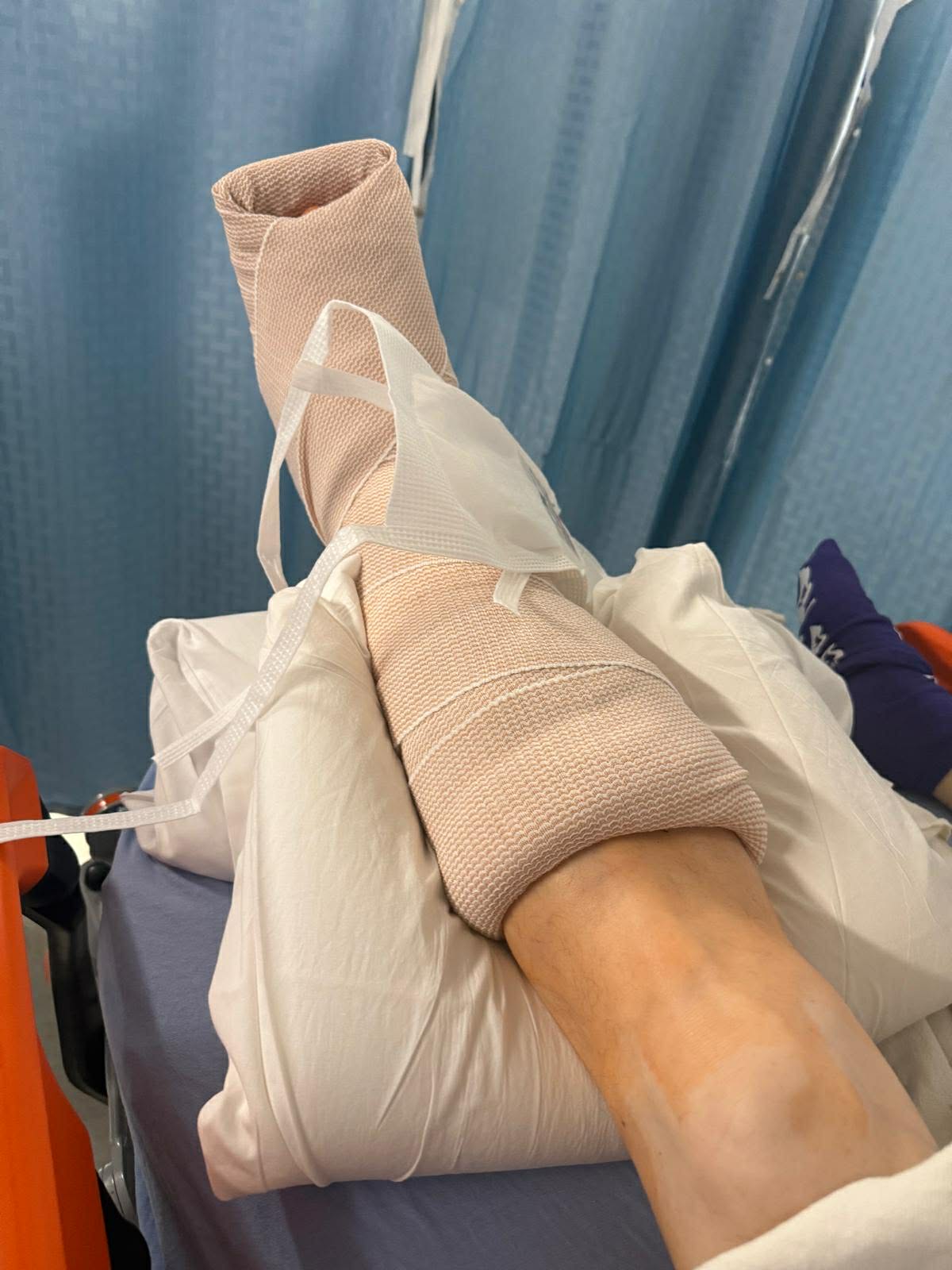
“Help him pull up his pants,” Mom instructed.  I responded that I would help Dad if Dad needed help, but I wasn’t going to stand there waiting for him to need me, standing and waiting for something bad to happen.  “I can’t just stand there waiting to see if he needs me, hovering, waiting, waiting, worrying for the next hard thing to happen.  I can’t do it anymore.  I can’t.”  Twenty minutes later, Dad finally needed help pulling up his pants, and I was there to help.  But I hadn’t hovered and waited and worried and worn myself out over it.  I have to say, I don’t care, which, of course, means I care a great deal, but am weary of the worry of caring.  After three accidents the next day, Dad admitted to me that he might have to start wearing a brief.  The only way he will wear a brief is if the brief idea is his idea.  I don’t bother suggesting.  “Whatever you think you need, Dad.”  So tired, I’m often in bed by 10 p.m., and often wake up at 11 or 12 feeling hungry, or I awaken for no apparent reason.  To get past the master bedroom, I must traverse the light field cast by the outlet night light, sending daddy-long-legs shadows into their room, and as Dad lies in bed rehearsing to Mom the family’s challenges and blessing, he never fails to detect my quick passage, calling out without fail, “There goes Roger down the stairs to get a snack,” and I roll my eyes in the dark.  Some nights I stand at light’s edge, wondering if the snack is worth being discovered and commented on, again.  This morning, Dad rose from bed and strained to stand at his walker, at 8:30, and he immediately collapsed to the floor, too weak to move.  Mom was in the shower.  When she discovered him lying on the floor, she put a blanket over him and waited for an hour for the CNA to arrive.  She phoned no one, not even me—she said Dad would not let her call.  Instead, she sat in her chair watching her husband immobile and paralyzed on the bedroom floor.  At 11 a neighbor texted me, “Hi, my wife mentioned that she saw some activity at your house this morning.”  Some activity?  What the hell did “some activity” mean?  “Some activity” meant an ambulance and a fire truck pulled up to the house with flashing lights.  The paramedics and firefighters—it took five of them—managed to hoist Dad off the floor.  Dad will sleep is his recliner tonight.  He is too weak to get himself to the chair lift.  I have set him up with large absorptive pads underneath him and on the floor, with a urinal, with a portable toilet that he likely is too weak to reach, with blankets, with his feet raised and his body laid back, and with the very real question in his mind of how he will get through the night.  Well, I can’t piss for him, or stand up for him, or walk for him.  I can just give him what he needs, or try to, and respond to whatever happens.

Courage at Twilight: Noises in the Night

Bowing to the carpet—to investigate the yellow streak.  I have come to hate the stench of urine.  I don’t judge or malign the fact of urine—I hold no personal grudge.  Urine is universal.  But I loathe the smell.  And entering the house today, acrid yellow vapors rushed up my nose.  I hurried to mitigate the offensive odor by filling the carpet shampooer with soap and hot water and getting to work.  The shampooer stands ready in its convenient corner for tomorrow’s use, for I will need it tomorrow, and the next day, etc.  Noises, too, are triggering panicky heart beats and sweats.  The squeals of school children running to the bus stop seem the screams of my mother in distress.  The “thunk” of Mom’s magnetic shower door becomes the thud of my father falling.  This morning’s Tchaikovsky bass drum booming might be, I wondered weirdly, Mom’s grief reaction to finding Dad dead in his recliner.  Getting Dad situated in his new hospital bed, I felt zero confidence he could navigate the urinal in the night.  I keep my bedroom door open at night now, listening for sounds I hope not to hear, lying awake in the quiet.

Courage at Twilight: Giving a Tug

“I want to go by the bushes and trees,” Dad insisted at the end of a wheelchair walk around the block.  “Put on your list, for whenever you get around to it , to trim the junipers back from the sidewalk.”  I was reluctant to do so, I said, worried I would cut off all the green and leave only the bare ugly inside sticks.  “Do it anyway,” he said imperiously, admitting no discussion.  And I bit out a stiff, “Yes, Sir.”  Mom invited her doctor (and neighbor) over to see her needlepoints that adorn every wall.  He politely wandered the house, exclaiming, “Oh my gosh!” at each frame, and she beamed.  Quinn quizzed Dad from a paralegal coursebook.  As 9:30 p.m. came, and Quinn asked Dad if he wanted to discuss another legal scenario, I bristled at the late hour and Dad’s flagging energy, but Dad answered “Absolutely!” and they kept at it, Dad’s legal mind as sharp as ever.  I fled the house for a Saturday hike, a long hike, the longer away the better, and before the midpoint my phone dew-dropped with Mom’s text: Will you be home soon?  I need you to take me on an errand. I responded, No, I will not be home soon.  No, I will not be home, ever, I wanted to type.  As I nursed my bottle of Gatorade after the hard hike, Dad randomly asked if I knew a particular song, and began croaking out “Sunny Side of the Street.”  One of my favorite Frank Sinatra covers.  Mom soon added her higher-pitched screech, and the melody flattened into a gravelly two-tone monotone.  After the song, Dad struggled and shook to stand tall enough to push his walker toward the bathroom, dribbling along the way, muttering desperately, “Oh, God.  Help me, Abba!” and cursing his routine “Damn!” as he worked to coordinate the walker, the door, the handrails, his pivot to sit down, and pushing down his sweat pants.  “Rog, give my pants a tug,” he called on his journey back to his recliner.  “I couldn’t pull them up by myself.”  Yes, Sir.  Oh, God.  Help me, Abba.

Courage at Twilight: Living Through Me

Some people need to talk—a lot.  Some people prefer to listen.  A match of these two is fortunate.  I have already described how Dad talks and tells his stories and expounds upon religion and history and morality and family and the contents of the encyclopedia, and how I am more of a listener who at 60 is weary of listening.  Gloria, however is another talker.  She cares for Dad several mornings a month, and the conversations begins rapid fire the moment she calls “Good morning!” from the top stair.  When Gloria talks, Dad listens.  When Dad talks, Gloria listens.  Yet, somehow, they both seem to talk continuously.  Today I caught snippets about Gloria’s sick cat and how the dry cat food and wet cat food each affect the cat’s weight and health and energy and general demeanor, and how the cat is slowly getting better with good cat food and care.  Dad took his turn about the cosmic character of the universe with its gravity and dark matter and fusion and electromagnetic energy and relativity physics vis a vis quantum physics.  Both are vaguely sympathetic to what the other is saying, but mostly they each appreciate being able to talk and being listened to.  Did you know that a mere 20 years ago, the consensus among cosmologists and xenobiologists was the impossibility of intelligent life anywhere in the universe but on our Goldilocks Zone earth, but that today, with the James Webb telescope’s discoveries, the consensus has shifted to the statistical impossibility that intelligent life does not thrive among the trillions of habitable planets orbiting in the trillions of solar systems orbiting in the trillions of galaxies or our vast universe.  Her cat prefers the wet food.  We will never know because even light takes one hundred thousand light years to travel to us.  The vet’s treatments are helping.  Time for your shower, Nelson.  I returned from my ten-mile Jordan River paddle long after Gloria had gone for the day.  The olive-brown water ran at a 15-year high and swept us pleasantly downriver.  The toughest stretch of the paddle was the half-mile portage through head-high thistles with mean mean thorns and willowy willows and sage brush, so aromatic, daisy-chain carrying our kayaks single-file to where we could cross the private hydroelectric dam that also splits the river into two enormous irrigation canals, the river itself suddenly shrinking by two-thirds.  Weary and blistered and scratched upon arrival home, Dad called out with his usual cheer: “Roger! Welcome home!” followed by “Sit down and tell us all about it.  The people.  The river.  The wildlife.”  And so I told them about the thistles and dams and slow high olive-brown water, and the people, and the birds: the Clark’s grebes, cormorants, pelicans, belted kingfishers, Bullock’s orioles, avocets, ibis, phalaropes, terns, stilts, Canada geese, mallard ducks.  I did not tell them how I was so eager in the twilight to show my friend Stephen a beaver and saw one in the shadows and called to Stephen “There! Beaver!” only to have the beaver sprout wings and take flight.  “I think that’s a duck,” he dead panned, “or maybe a duck-beaver.”

Courage at Twilight: Fiercely Red

Northern Goshawk | Northern Goshawks are impresive when you … | Flickr

Mom stood. Up from her recliner.  During a commercial break.  “Are you going to the bathroom?” Dad asked with a touch of accusing panic, for the urge had struck, and he gets so little notice, and every second counts on the 12-foot journey. “Yes,” she spat.  “Don’t worry, Dad,” I assured him, “she’ll be out by the time you’re up.”  Dad sat, stymied.  Sunk in his recliner.  During the commercial break.  He still had not stood when Mom came wandering into the kitchen, her business done, to check on my cooking.  The Jeopardy buzzers buzzed.  “Are you finished, Lucille?” Dad barked after the commercial break.  “Yes,” she called.  “Why didn’t you tell me?” he lobbed, struggling and shaking to stand and stoop over the walker, his time perilously past.  “I’M FINISHED!” she hissed.  “Didn’t you hear the flush?”  A streak of white flashed in my periphery and something bounced hard against the kitchen window, two feet from me.  I knew, of course, what it was, sort of, a bird, but my heart pounded anyway.  We hustled outside to find the bird sitting in the dirt, a gray falcon or hawk of some kind, sitting awkwardly, wings askew, head rocked back on its neck.  Its red eyes glared fiercely at us, and it panted rapidly with parted beak.  Well, that’s the end of this bird.  Its neck is broke.  Such a startling beautiful creature.  I was powerless to make a difference for the hawk, and let it be, returning sadly to my cooking.  The children and grandchildren remained, marveling and sad.  Then Lila screamed, and Brian poked his head through the door to tell me the bird had stood up and pushed off in flight.  Well, I’m sure glad to be wrong.  Audubon informed me the bird was a Northern Goshawk.  The kitchen window had vinyl grids that I thought would have averted the bird.  But from its vantage point outside, I could see the window was filled with a glare reflecting the mountains and trees and sky behind.  And the goshawk had been flying like a line-drive baseball after a sparrow.  Days and weeks later, the goshawk’s scarlet boring ferocity still flashed in memory.  The bird had dared me to underestimate her, and had defied the neck-breaking brick and glass of humanity, and had flown off above the house and trees and everything into its freedom sky.  The red-headed house finch was not so fortunate.  She landed on the arborvitae, on the bird netting wrapped around, and became irretrievably enmeshed, dying before I knew, before I could scoop her out and set her free.


(Photo from Flickr.com and used pursuant to the fair use doctrine.)

Courage at Twilight: Do I?

“Close these blinds, will you?” Mom asked.  Her habit has always been to stand, lean over her recliner, and push the slats closed with an old wooden yardstick.  But now she waits for me to stand up from the couch or to enter the room, and asks me to do little things she no longer feels like doing.  “Bring your Dad’s medicine, will you?”  “Put your Dad’s checkbook in his office, will you?”  My opinion is that I should not being doing for her things she is perfectly capable of doing for herself.  Do I draw that boundary and risk hurting her feelings?  No, I guess not, at least not tonight.  Dad takes his turn, too: “Lucille, would you get my checkbook from my office?”  I interpret “Lucille” as meaning “Lucille, Roger, anyone?”  It is true that Dad obtaining the checkbook (or anything else) for himself is nearly impossible.  “Your hair is beautiful,” Mom called to me after I delivered the checkbook to Dad.  “That’s not possible, Mom,” I hissed.  “I don’t have any hair.”  She guffawed, “Yes, you do!  And anyway, it’s the shape of your head that’s beautiful.  I just love the shape of your head.”  She cannot see my eyes rolling inside that beautiful hairless head, or my jaw muscles working in my face, or the energy it takes for me not to growl and bark.  More and more I’m her perfect first-begotten bald baby boy in some weird Benjamin Button skit.  On the counter lay a bag of moldy bread, which I threw into the kitchen garbage can.  Throwing something else away later in the evening, I noticed the moldy loaf but not the plastic bag.  Mom had salvaged the bread bag to recycle at Smith’s grocery with the blue newspaper bags and the brown shopping sacs and packing bubble-wrap and various other bits of bag plastic.  Another day I discarded several mold farms growing on the forgotten cheese inside quart-size baggies hiding at the bottom of the cheese bin.  And again I later found the molding cheese swimming bagless in the garbage can.  Do I tell her how insulting it feels to have an old lady following after me and digging in my garbage, implying I should not have thrown this and that away, that I ought to be a more diligent recycler, that I should do things differently?  Do I tell her Smith’s grocery does not want our moldy bread and cheese bags, our greasy leftover pizza zip-locks, our frozen vegetable bags?  Do I point out how many gallons of heated treated water she uses to wash the bags out with dish detergent, the cost of the water far outweighing the damage of a sandwich baggie in the city dump?  Do I tell her how annoying it is having all these wet washed baggies doing their damn best to dry scattered on the kitchen counters?  Do I tell her the moldy cheese bag was in the garbage because I wanted it in the garbage, not because I’m lazy or apathetic or belligerent?   I guess not.  It should be easy for me to swallow that much pride, to let an old lady have her little quirks, for Mom to be cheered at the thought of helping to rescue the planet from plastic.  I have drawn the line, however, at the gallon-size baggies that held raw chicken and raw fish and raw beef.  “Mom.  It’s just not possible to sanitize them,” I insisted.  “Smith’s doesn’t want our raw-meat bags.  Nobody wants them.  And we might kill some innocent store clerk with salmonella-infested bags.”  She reluctantly agreed to leave the raw meat bags where they belong, in the trash can, her feelings mostly intact.

Courage at Twilight: Spring Rolls

“Will I see you tomorrow?” Mom asked as I turned toward the stairs and bed.  I stared at her, uncomprehending.  “You see me—every day—after work,” I finally stammered out, and she could tell from my tone I thought she had done something bad, though she could not fathom what and muttered I’m sorry, and I felt bad that she felt bad that I might be annoyed, and assured her I would see her tomorrow.  When I brought vegetable spring rolls home from Costco, she cheered with both arms raised, “Spring Rolls!” and Dad quipped pleasantly, “Spring rolls is her middle name.”  Dorothy Lucille Spring Roll Baker, I thought with a chuckle, and then said the name aloud: “Dorothy Lucille Spring Roll Baker.  Has a nice ring.”  She laughed nervously, not sure if I were making fun, but hoping I wasn’t, and thinking I probably wasn’t, because I never do.  After displaying the various prepared meals I had purchased for those days I do not feel like cooking, I stacked the boxes and headed for the basement stairs and fridge.  “Don’t fall down the stairs,” Dad called after me, and I stopped in my tracks, uncomprehending.  Not wanting to challenge or enjoin or even demure, I called back cheerfully, “Thanks Dad.  I won’t fall down the stairs.”  My reaction was less humoring when, attending an out-of-town conference, I received an email from Mom, “Hi dear Roger, Your dad wanted me to email you that he is afraid for you to go hiking somewhere where you could fall over the edge of the trail.  He wants you to be careful to not go where the trail might be high up and too close to the edge of a cliff where you might fall.  He was worried about you and wanted me to tell you that immediately!”  I scowled at the computer screen and email after a long walk on a flat paved urban trail, uncomprehending.  And I sighed.  Like I often do when dinner is almost cooked after an hour in the kitchen: a long loud sigh.  Dad’s hearing is deteriorating.  I visited Erek the audiologist to have Dad’s hearing aids checked—they were working fine—and he offered kindly to come to the house to clean Dad’s ears and check his hearing.  I gawked, astonished and uncomprehending, as Erek slowly pulled a three-inch string of wax from one ear, certain what I was seeing was impossible.  No wonder Dad could not hear.  The hearing test confirmed that Dad had “severe hearing loss,” no doubt due to his early unprotected years working the house-size ore tumblers at the Utah Copper smelter.  Erek offered to purchase a pair of high-quality hearing aids for a reasonable price, through his physician’s group manufacturer discount.  “You will hear lightyears better,” Erek promised, and my brain strained at applying a photonic analogy to ears and hearing.  I decided “lightyears” simply meant “lots and lots,” and let the teaser go.  Though Dad cannot hear me from three feet away, he can hear me sighing from thirty feet away, and without fail calls out to me, in a kindly tone, “How are you doing, Rog?”  And he praises the meal as a “once in a lifetime best in the universe dinner.”  I will keep shouting until his AGX Omnia 7s arrive, after which Dad should hear my conversational tone.  I hope so.  “Good-night Mom and Dad,” I yelled.  “Knock if you need anything.  See you tomorrow.”

(Pictured above, a view of Snow Canyon, Utah, one of my favorite beautiful places in the world.)

Courage at Twilight: The Standard Four

Just before midnight came Mom’s anxious rapping at my bedroom door. “Can you help us?  The lift won’t work, and Dad’s stuck downstairs in the chair.”  Worry dripped from her sagging face.  I knew instantly the trouble.  Little Owen, 18 months, carries around an irresistible curiosity about buttons and switches and the wondrous things that happen when he pushes them.  His favorite is the light button on my Aero Garden: he taps it rapidly and repeatedly to make the bright multi-colored LEDs flicker off and on and off and on and off and on.  A toddler’s delight!  A close second is the illuminated cherry red switch on the back of the stair lift chair, installed at perfect toddler height and with just the right color to attract his attention.  Owen and Lila, his four-and-a-half-year-old big sister, two of my six prodigious precocious grandchildren (number seven arrives in May!), had joined Mom and Dad and me for an Easter Eve dinner of traditional Polish pirogi, homemade potato cheese dumplings, expertly fashioned by their generous mother.  Lila’s first and familiar impulse was to pull out the old wooden blocks Mom and Dad brought back from Brazil, dump out the box of dominoes, lay out Connect Four, and spill the enormous tote of Legos, the standard four go-to great-grandchildren games, which she invited me irresistibly to play with her.  Dinner segued into the hunt for plastic eggs filled with chocolate eggs and jelly bean eggs and malt ball eggs.  At age four, Lila knew exactly what to do, and chased out the not-so-inconspicuous bright ovals.  Owen, at just one, gripped one colorful egg in each hand, dancing thrilled and contended with his prizes.  Mom and Dad watched on from their respective arm chair and wheelchair, wearing the peaceful smiles of the gentle joy of young posterity.  “We just love having you here, Brian,” Dad called as the little family bundled out the door at evening’s end for the long drive to Stockton.  And sure enough, Owen’s last curious-child deed was to switch the red toggle to “off.”  Mom had completely forgotten her panic of a month ago when the lift would not work, from precisely the same guileless cause.  I flipped the red switch, and, with Mom feeling much relieved, up Dad rode to his bed.

Courage at Twilight: Lithium-ion

As I walked through the front door after work, Mom approached me with a written list of five things she needed help with. 1a) Dad’s printer would not work.  She was right.  I unplugged it and re-plugged it in, and it worked, but she had clicked the “Print” icon so many times that the resulting print jobs drained the ink dry.  1b) Replace the ink in Dad’s printer.  2) Dad’s gabapentin was about to run out, with no refills, so would I call the prescribing doctor to renew the prescription.  I texted the hospice nurse, who had the medicine delivered to the house.  3) Dad’s glucometer stopped working, so would I go to Walgreens or somewhere and buy him another one—suddenly, after years of not testing his blood glucose levels, he wants to start testing his blood glucose levels, at age 88.  I plugged the glucometer into my computer to recharge the battery as I wrote, and announced heroically that we would not need to buy a new one.  “It has rechargeable batteries!  Isn’t that amazing?”  4) Review the list of distributees for Sarah’s tribute book, which at 52 pages, including 12 color pages, would cost $12.25 a book to copy and bind.  We cut the list of essential persons “who would still want to have the book in 50 years” (I suggested to him that no one would still want the book, or perhaps even be alive, in 50 years) from 60 copies to 40 copies, with the reassurance we could print more, if needed.  5) Write on the calendar the coming weekend’s activities.    As Mom confronted me with the list, I asked a bit testily if I could pee first, because I had drunk too much passion-fruit-flavored ice water before leaving the office, and peeing was my first priority.  Relieved, I set about the tasks, still in my hat and tie.  Mom invited me to look in Dad’s office at how she had rearranged Dad’s power tool batteries and their chargers.  Dad had kept her awake the night before repeating suddenly anxious expressions about the lithium-ion batteries shelved in his office closet—shelved by me, already responding to his anxieties about the batteries touching each other or their chargers and starting a 1200-degree F fire that would burn the house down, shelved by me alternating the chargers and the batteries, nothing touching anything else, with the tools far away in the garage.  But he had forgotten, and had begun to panic again about lithium-ion infernos, and after midnight had sent Mom downstairs in her nightgown to redistribute the chargers and batteries more safely, so there was no chance they would touch.  My completed or in motion, I examine with some confusion the closet shelf, now bare of batteries, and looked toward Dad’s L-shaped desks to see the chargers and batteries spaced there at distances of three feet each from the other.  “Looks great, Mom.  They’re certainly not touching each other.  Nothing to worry about.”

Courage at Twilight: Welcome Home, Roger

Though Dad often cannot hear me shouting to him across the living room, he manages to hear the key turn the dead bolt, and before I have finished latching and locking the door, he is calling out to me, so cheerfully, “Rog! Welcome home, Roger!  It’s good to have you home!”  I’m not the brightest bulb in the box, but I’m pretty good at the light going on and showing me patterns and changes.  Dad has always welcomed me pleasantly home, but his greetings have cheered and lengthened noticeable almost three years into this caregiving experience.  And it is just like me to worry about the cause, and the meaning.  Might he be sensing the nearing of his end, and be making an extra effort to be kind and close and grateful?  Or is that just my mild paranoia?  On a Saturday morning, ratchet set in hand, I set about checking all the stair lift bolts for tightness; the bolts securing the brackets to the lift structure were tight, but the bolts anchoring the same brackets to the stairs were appallingly loose, and the sound of my ratchet doubling them down reached Dad’s ears.  What reached my ears was his worried complaint, “I hope he doesn’t break the lift.”  Poor Mom walked into the trap as she tottered over to me and reported, “Your dad wants you to know he’s worried you’re going to break the lift,” and I barked back at her, “I don’t care.  I know exactly what I’m doing.”  In tears she returned to Dad and ordered him to shut up, reminding him that I was a “big boy” and knew exactly what I was doing.  Of course, I soon apologized to her for barking at her, gnashing at the guileless messenger.  She smiled and teared and invited me to bark at her anytime I pleased (sweet thing), to which I retorted, “Never!  You deserve better.”  During dinner I explained to Dad what I had done to the lift, and he smiled weakly and seemed unconcerned, and he thanked me for dinner: “Roger, we are so lucky to have you make us such beautiful, delicious food for our dinners.”  All smoothed over, I guess.  My New Jersey friend Bruce was his mother’s caregiver for the better part of a decade, running up the stairs at her beckoning or at the slightest unusual sound.  He knows the life of sleeping with one eye and one ear open for anything out of the ordinary that might signal a need or a fall or a crisis or…  My eyes feel particularly tired this evening, and I think I’ll shut them early, though part of me will be on the alert until Mom and Dad are safely in their bed after midnight.  I am not a skilled caregiver, but I do live here with them and do cook and clean and fix and answer to their needful beckonings as best I can, and enjoy being welcomed home by my old mom and dad: “I’m sure glad you’re home, Roger.”

Courage at Twilight: A Pat on the Butt

Dad is mildly delighted, in the way only a crippled 88-year-old former marathoner could be, with his new used walker, painted racing red. Leaving work early to hunt for a walker, I mentioned my mission to my legal secretaries, and one reported her family had a walker they weren’t using and didn’t need, and within the hour I was driving home with the walker in my Outback hatch.  With the walker cleaned and sanitized, and with the handles raised to their full height, I introduce it to Dad.  “What a great-looking walker!” he chortled.  “It’s a miracle!” Mom exclaimed.  Well, if not a miracle, certainly a convenience and a grace.  Past midnight, I stumbled to the toilet and heard Dad droning uninterrupted in his gravelly aged monotone.  He seems to talk like this past midnight every night (as I stumble to the toilet), and I wondered whether he kept Mom awake or whether she simply slept through it, acclimatized by decades of droning.  Back in bed for only a moment, I heard Mom utter a strange squeal, and I jumped out of bed to investigate.  I stood in the dark hallway in my undergarments, poked only my head through the doorway into their bedroom, and piped up, loud enough to be heard, “Is everything okay in there?”  “Oh yes,” they both called back, and Mom explained that Dad had just finished praying for them, and it was such a marvelous prayer, and show he reached over and “patted him on the butt.”  She giggled over having squealed.  Well, I chuckled to myself, good for you for praying and praising and being cute and cuddly and coquettish.  At 4:00 a.m. when I stumbled yet again to the toilet, I looked in on Mom and Dad, lying under their blankets, back to back and softly snoring.  And I remembered what kind, generous, loving, devoted people and parents they are, and how I am blessed to be theirs.

Courage at Twilight: Bad Dreams

Mom phoned me from the first floor to where I worked on the second floor: she was too dizzy to get up and prepare lunch for herself and Dad, and would I please help. It was 4:30 p.m.  Dad complained at 7:00 p.m. that the bratwurst I served for dinner had upset his stomach.  I gave him an antacid.  Aide Jenifer texted me a photo of the bed sore on Dad’s bottom, and aide Diana texted that he almost fell getting out of the shower.  Nurse Chantelle brought calmoseptine cream for the sore and ordered a corrugated cushion.  Dad forgot aide Gloria’s name, and his head-crushing spells have returned.  Mom cries at his complaints.  And I can no longer seek Sarah’s counsel and support with a quick text or call.  Every day seems to bring compounding ailments, none of them small to my elderly parents, Dad 88 years old, and Mom 84.  It is what it is, and my job is simply to address the moments as they come.  “I still have a huge hole inside,” he laments.  To these griefs and ailments, add Dad’s worsening dreams.  Last night in his dream he was with Sarah as she snowmobiled along the obscured trail, her visor snow-streaked, was with her as she left the trail and crested the berm, was with her as she hit her head against the tree, saw her lying dead in the snow, watching and feeling and being present as the terrible event unfolded and finished, helpless and bereft.  He awoke and struggled to sit on the edge of his bed, where he sat until the full light of morning, afraid to lie down and go back to sleep for fear the very real dream would return.  Knowing what happened is bad enough.  Watching it happen is one-hundred-fold worse.  Experiencing it with her was infinitely more painful.  How awful, I thought, and served him with all the compassion and tenderness of which I am capable.


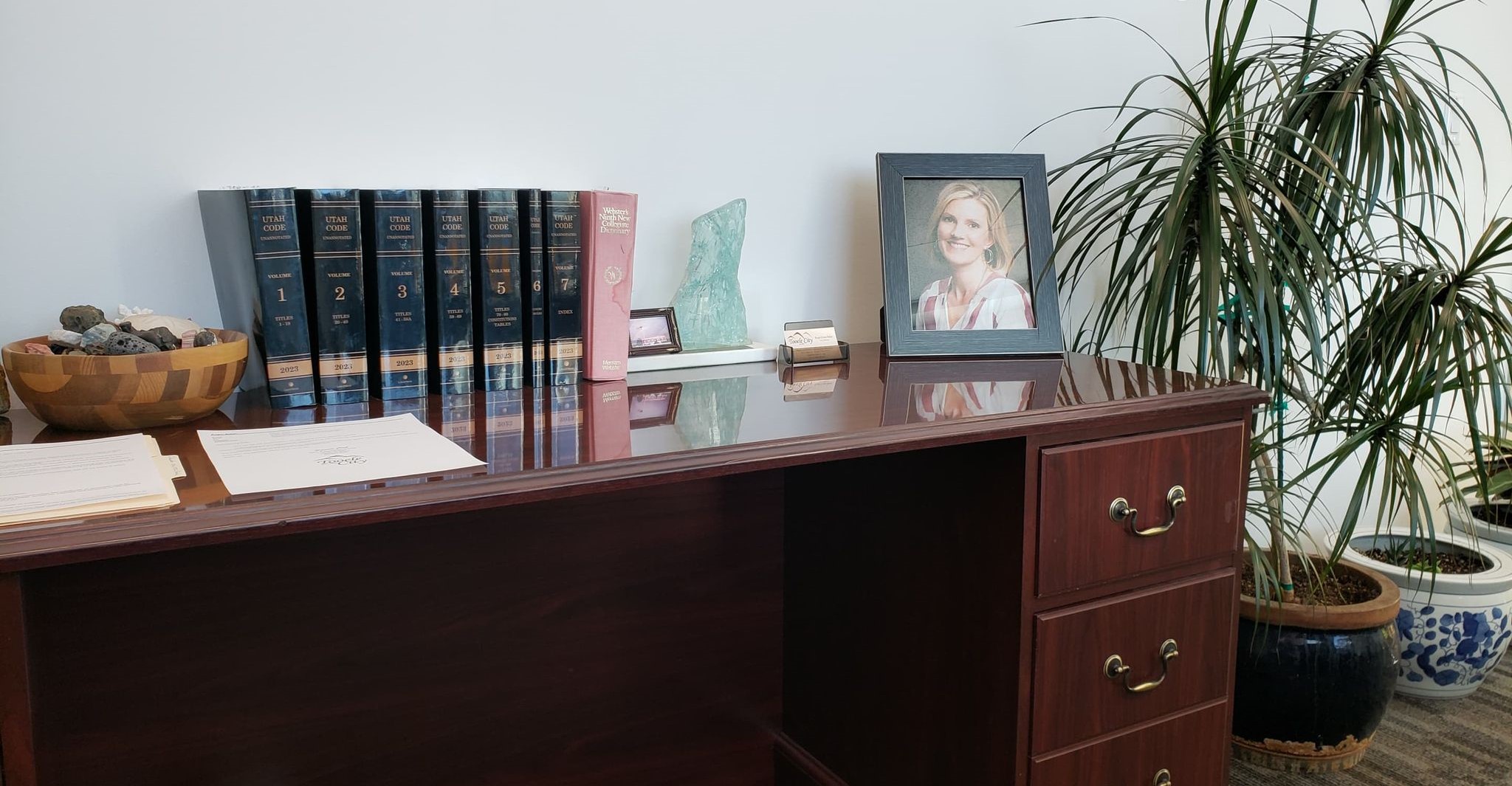
(Pictured above: my office credenza, with law books and portrait of Sarah.)

Courage at Twilight: Turn Up the Heat

“Is it cold in here?” Dad lobbed the question into the middle of the family room.  Mom and I looked at each other and shrugged.  Dad pulled his favorite soft burgundy fleece up around his neck.  I moved to Mom’s kitchen desk to affix a return label to their quarterly tax return envelope, leaving the kitchen can lights in the non-blaring off position.  Mom, bless her, struggled to her feet and tottered over to the kitchen, switching on the blare: “Don’t you want more light?”  This is what I heard: “I know better, son, and I love you, so I’m turning on the lights you don’t think you need.”  And I decided to try drawing a teeny-tiny itty-bitty boundary: “Thank you, Mom, but please don’t hover.  I know how to turn the lights on, and if I wanted more light, I would turn the lights on.”  “Alright, dear,” she bit, her face shrouding, and she tottered back to her chair with that arthritic hip-knee-ankle stagger.  I know she had acted from a place of love, but perhaps love could have observed that I was happy in the daytime dim and trust that I will act in my own best interest, and let me be.  “I’m cold.  Should we turn on the fireplace?” Dad ventured from his chair.  Brother-in-law Mike had come to repair the wound to the bathroom tile resulting from installing a wider door, prompting me to get in gear and calk around the door molding and frame and fill the nail holes.  After two months, the project is nearly finished.  “I think maybe I’ll turn on the fireplace,” said Dad, the hint growing more apparent.  The night before snow fell and the temperature dipped.  Dad had emailed me at work: “Roger, the weather report says a strong storm will come through this afternoon.  Snow, wind, white-out conditions.  They recommend persons leave work early.  Dad.”  It’s nice to be loved and cared for and worried over.  But I am 59 years old, and am always cautious driving in snow.  And, yes, when snow is coming, I leave work early.  “Yep, I’m going turn on the fireplace,” and I finally took the hint and flipped the switch to ignite the gas so he could warm up.  Before he had ridden down the stair lift that morning, I had heard him scream, “Owieow!!” from his shower.  Mom had started the dishwasher, which diverted alternatingly scalding and freezing water from his shower stream.  “I’m scalded,” he complained an hour later.  “My skin is still red and sore.”  And mom promised not to run the dishwasher in the mornings anymore.  Sometimes it can be hard to get the temperature of things just right.  The fireplace burned with yellow flame, and the fan coursed hot air into the family room.  “Is it hot in here?” Dad lobbed.

Courage at Twilight: Comfort Kit

“How was traffic?” Heavy.  “How were the roads?”  Dry.  “Was it hard to drive in the snow?”  There was no snow, Mom—the roads were dry.  “Did you get to see Paul today?”  Yep—every day.  I work with my close friend the City Engineer every day.  For dinner, I served mini pizzas made from toasted English muffins topped with spaghetti sauce, chopped ham, and shredded Mexican blend cheese—a passable dinner—I have come a long way from my fine French entrees.  Dad has stopped taking the diuretic medicine because he grew tired of having to pee every hour (with the benefit of increased exercise), but his legs look like fleshy tree trunks and his feet like hot water bottles with stubby toes.  Nurse Chanetelle convinced him to wear his calf-length compression socks (he will not even talk about wearing the hip-length ones), and I dug them out of his sock drawer and laid then over the back of his bedroom sofa, where remain two days later.  The Christmas tree came down on New Years Day, leaving a green mess of fake needles, so the vacuum cleaner came out and sucked up the needles and the bits of dried food from Christmas Eve, leaving the food and foot stains behind, so the spot cleaner squirted and the carpet shampooer roared and roamed and sucked up dark water.  I take pride in my work, and left the dining and living rooms with beautiful rows of long triangular shapes, each width equal to the others.  Looks so much better, I thought with tired satisfaction, and while I was stowing the vacuum and shampooer and bottles of carpet soap Mom tottered across the wet carpet with her new dig-your-toes-in gait to put the crystal candlesticks away.  I suppose I am being silly, but I felt like someone had left prints in my new smoothed cement or dragged their fingers across my finished canvas.  No harm done, actually—none to justify my irritation.  Mom dug into the garbage to remove the mug I had thrown away, because the microwaved chocolate cake mix was gross and would take three gallons of water to wash out, and we don’t need another nondescript mug in the cupboards anyway—you see, I did have my justifying reasons for throwing the mug away, and then there are my used Ziploc bags which she pulls out of the garbage to wash with a gallon of water each and to dry over wooden spoon handles lined on the countertop, for recycling, even where they had contained raw chicken or fish—They don’t want our soiled baggies, I wanted to scream.  She has been such a dedicated recycler.  She has been such a dedicated mother.  Her dementia is worsening.  The pharmacy delivered a hospice Comfort Kit (also known as an emergency kit) and nurse Jonathan spread the contents out on the table and explained that the dozen blue oral-solution morphine micro-dose syringes are for pain or distress or discomfort or difficulty breathing (from congestive heart failure) and the dozen green oral-solution lorazepam syringes are for anxiety and distress, and they could be used together.  “I prefer not to take anything habit-forming,” Dad rebuffed, smiling righteously.  I want a Comfort Kit!! I felt like shouting.  I could use a little morphine now and again!  Another form of comfort came in Gaylen the hospice chaplain, who found Dad in great spirits and relatively great shape considering most of the people Gaylen counsels and comforts are days from death and cannot speak and do not know who anyone is and are wasted and broken and ready to go, so he assures them the afterlife is real and they have nothing to fear on the other side, where they will be free of their pains and troubles.  I wouldn’t mind a little of that comfort, too.

(Pictured above: Crossing over the suspension bridge on the Bonneville Shoreline Trail in Draper, Utah.)

Courage at Twilight: Gift Dispenser

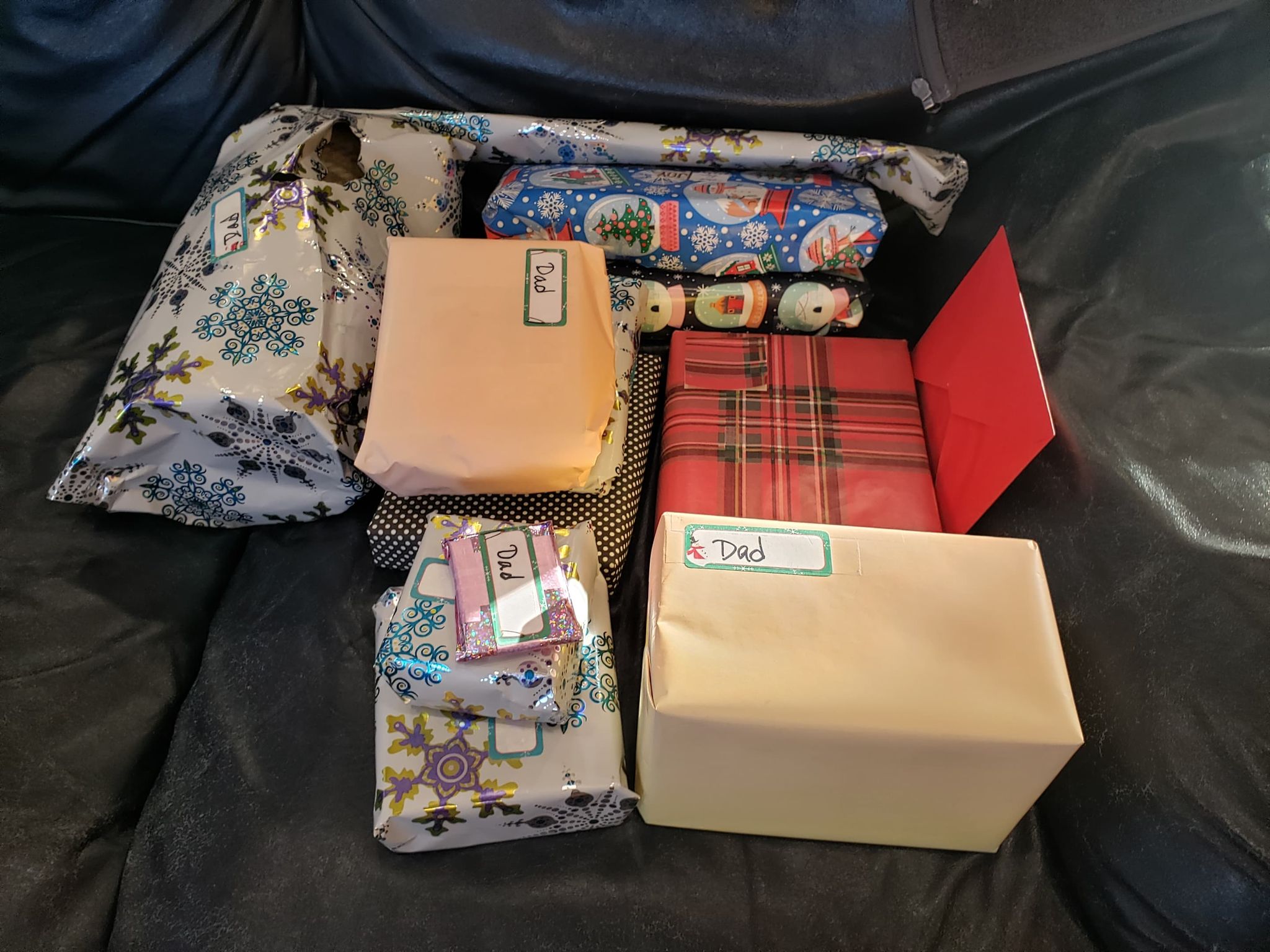
“The doctor wants to see him in person,” the receptionist asserted, and this after Sarah, and then I, more than once each, had explained how delivering Dad to the doctor’s office was not only an impossible physical feat, but also an unsafe one, both for Dad and for me, for the sheer physical strain, and how leaving the doctor’s office after an in-person visit would find Dad worse off than when he arrived, and how is that in the patient’s best interest. She said, again, that she would talk with the doctor, who on the day of the video appointment commented on how well the five-minute visit had gone, and let’s do it again in two weeks to check on the diuretic.  A nurse had come to the house to take Dad’s vital signs (based upon which he is healthier than I am) the mornings of the video appointments.  My goodness—so much happening today.  Cecilia helped Dad for the last time, said she wished we could have worked things out with Arosa, said she might leave Arosa because the new rates are driving patients away and reducing her hours and her pay, said good-bye and said good luck and drove away.  Chantelle and Liz, the hospice nurse and social worker, came for Dad’s hospice intake interview and paperwork.  Dad got stuck on the “blue sheet” and what mechanical measures he did and did not want taken to unnaturally prolong his life if he had a stroke or a heart attack or a bad fall—he wants to live, damn it, not be given up on.  But doctors have explained to him how cardio-pulmonary resuscitation on his 88-year-old frame would leave him crushed and bruised and brain damaged and with a quality of life reduced to an oxymoronic noun (like “shit”) that “quality” would not describe.  Q: How are you feeling?  A: Like great shit.  We will come back to the blue sheet another day.  And we will come back another day to the long medications list, and the question of which prescription drugs he might dispense with in light of the hospice goal to maintain comfort rather than artificially extend life.  Mom and Dad each sat in their recliners during the long interview, and I sat in between them, moderating questions and answers, careful to let them answer what they could before jumping in, careful to quietly correct dementia’s inaccuracies, and a few downright lies, as to dates and weights and numbers and names.  I sat between them, just as I did on Christmas day when they opened the gifts their children had delivered, from where I dispensed one gift to Mom on my right and one gift to Dad on my left, from their respective gift piles, identifying whom the gifts were from, keeping a written list, and moving the unwrapped gifts to new respective piles, gathering and crumpling the wrapping paper after each unveiling.  (Wrapping paper is recyclable, I researched, so long as it stays compressed and crumpled when compressed and crumpled, meaning it is really paper instead of mixed with plastic or metal or cloth fibers.)  Fuzzy slippers, fuzzy socks, biographies of the Fonz and Captain Picard, pounds of chocolates, word puzzle books, Horatio Hornblower DVDs, needlepoint kits, and signed cards.  Mom held up her hands for her gifts, as she does with her dinner plates, like an eager chick.  As the hospice women left, instant new friends, Mom announced they would each receive an Afton hug, a full-bodied arm-wrapping embrace with dancing left and dancing right, named after a beloved granddaughter.  I felt mortified and turned away from the tender bizarre scene, all my inhibitions overwhelmed, but Chantelle and Liz laughed and joined heartily in.

Courage at Twilight: Tasting Sweetness

Grinch Candy Cane Hunt - KC Parent Magazine

Dare I dip my toe again into the dark eddies, and launch into the currents of this memoir of living with the dying?  My resolve to navigate these waters began before I embarked, and the eight hundred and seventy-fourth day is no time to beach.  Arosa raised Dad’s in-home care rates by 75%, charging a “premium” for clients who receive less than four hours of care per day—Dad receives two—but I perceive the premium as a penalty, and the company as preying on the most vulnerable. Continue reading

Courage at Twilight: I Know What I’m Doing

Now remember.  Butt in.  Chest out.  I know how to do it!  Stand up straight, as straight as you can.  I am!  Actually, you’re not standing straight enough to be safe.  I’ll do it my way!  Your way will get you killed, Nelson: you’re too hunched over, and the walker will walk out from under you, and you will fall, and fall hard.  I do it this way all the time!  That’s part of the problem.  You can’t go home until you can get to the bathroom and back without help.  Well, I’ve done that a hundred times since I’ve been here!  Maybe six times.  But I need to be home for Lucille’s birthday on the 14th…for Thanksgiving on the 23rd…next Wednesday the 29th!  You can have a three-hour pass on Thanksgiving.  Just three hours!  Only because you’re not strong enough yet to stay longer.  I’m not staying here until next Friday! That’s December already!  Friday would be best: you’ll have a few more days of therapy, and you’ll be stronger when you go home.  Wednesday!  You really must be able to get around without help: Lucille can’t help you if you fall, and neither can Roger, and they shouldn’t have to.  Now pull your butt in, straighten your knees, and push your chest out.  You’re so bossy!  (“Nelson tells all the staff how bossy you are.”)  If you did what they told you to do, and got safe and strong, I wouldn’t have to be so bossy.  I don’t need anyone’s help!  Oh, yes, you do, you definitely do.  I hate it here!  I’m sure you do.  I can’t stand staring at this ceiling and these walls for another week!  I’m sure it’s lonely and bleak and no fun at all, so work hard and do what they tell you to do so you can leave here and won’t have to come back again.  I guess I’ll just bite my tongue and come home next Friday!  That would be best—it won’t cost you a thing, and you’ll be that much stronger when you get home.  And you won’t be as much of a worry to Roger and Mom—Mom’s too old and frail to take care of you, and Roger works full time and anyway shouldn’t have the stress of picking you up off the floor and changing your soaked and messed clothing and shampooing the carpets every day (sorry to be blunt).  He won’t have to do that!  Wonderful—glad to hear it—Friday it is.  You have to leave already?  So soon?  ***  (Dad sat in his wheelchair before the wide windowpanes, looking out at the parking lot, the new snow covering all of November, the white-dusted mountains rearing up so stupendously high, sat in his wheelchair looking small and sad and far away, and I made sure Mom turned to wave before we drove away.)

Courage at Twilight: Each Other’s Heroes

After days of dissolved fiber and a suppository, the hospital cleared Dad for discharge to the rehabilitation facility.  Sarah was pulled into the strange world of his hospital room for five days and nights, never leaving.  She supplemented excellent hospital care with all the little things an immobile old person in a hospital bed needs in order to not suffer too terribly: brushing his teeth, slathering his back with anti-itch cream and his bum with anti-bed-sore cream, alerting the nurses when his oxygen dipped, adjusting him so he could pee into the urinal, applying lip balm, shaving his sparse whiskers, adjusting the bed angles, changing the TV channels, ordering his meals, replacing the cannulas he kept pulling out, pulling up his compression leggings (he shed ten pounds of water, from each leg, in five days), listening to him prattle past midnight.  She hugged pillows over her face to block out the light and beeping instruments and snoring, not completely successfully, rising to his calls for help every 45 minutes of the night.  This list of little services yanked me back to the other hospital room, 14 months ago, and the other rehab, 13 months ago, and the other homecoming, 12 months ago, when I rushed to build the ramps.  “I’ll be out of here in three days!” he enthused to Sarah today with typical optimism and sudden delusion.  And just today he complained he could not do it, he could not stand up from the toilet or the bed or the shower chair or to dress, could not shuffle with a walker ten feet.  “It’s too hard.”  Well, that’s not an option, Daddio.  That’s a terminal philosophy you can’t afford.  You simply have to.  If you can’t do this, you can’t go home.  You can’t go home and burden Mom and Roger with all this because they can’t do it for you, and shouldn’t have to—you have to be able to do it for yourself.  So do it, so you can go home.  Receiving these necessary reports from Sarah, memories of 2022 began to seep in, along with their tension and terror and trauma, memories morphing into anticipations, along with new stresses and trepidations and traumas, of what awaits, of the care he will need, knowing his needs may often outpace my abilities and availabilities and resilience.  So, now, I am slowing my in-breathing and my out-breathing and reminding myself that memories are just that, impressions of things past, and that the future will take care of itself, day by day, and that Dad will work hard at rehab.  He will be ready for home, and I will be ready for him.  And we all will resume our routines to our utmost.  My lovely friend Liddy from the east shores of England, counseled me sweetly: When were babies, so small and helpless, we worried our parents.  As our parents enter their winter years, they worry us.  It turns full circle.  The feeling of exhaustion and defeat is at times unbearable.  But we find the strength because we have to.  We have to put our exhaustion to one side, if you will.  Something inside us will still fight, and we become protectors.  We do for our parents what they did for us in our time of helplessness.  We become our parents’ parents.  The experience your family is going through, and the feelings that go with it, allow you to be human.  You become each other’s heroes.  You develop a greater understanding of each other, and become wiser.  You are not, and never will be, alone.

Courage at Twilight: Sorry, But You Can’t Go

Calendar appointment: November 8: Wednesday: 2:45 p.m.: Alta View Hospital Radiology: Mammogram. “I’m looking forward to my breast squish,” Mom texted her daughters, to whom she once likened a mammogram to lying on a concrete floor and having a semi park on her breast.  Pat was to pick her up at 2:00.  Though she was symptomless, I had given her my last KN95 for the trip.  She put it on right away.  “You don’t need to wear it in the house,” I explained—I was isolating.  “I like it,” she answered, never having worn a KN95, “I think it’s sexy!”  But on the morning of: a little cough and a small sniffle and a rasp in her voice and a bit more tired than usual.  With Dad and me positive for Covid, what else could it be?  “Mom, I think you probably have Covid.  You can’t go to the hospital for your mammogram if you have Covid—you’ll infect the whole place!  You need to test before you go, and if you test negative, you can go with your sexy mask.”  “I do not have Covid!  I feel just fine.  Just a little tired.”  “Well, you can’t go unless you test negative first.”  “I’m going!  I can’t cancel on the day of!  I’ll test when I get home!”  (You’ll test after you expose everyone?)  “Believe me, Mom, they don’t want you there if you’re sick—they’ll be glad you called to let them know.”  “I’m not sick, just tired.”  (“Sarah, I need your help.  Mom won’t test and won’t let me reschedule.  Can you give me some support?”)  “Mom, you are not going unless you test negative!  ”  Sarah did not enjoy the call, but she’s good at being the bad guy, so she says.  As they talked, I prepared the testing kit.  Our two-flanked approach got her tested: Covid positive.  I rescheduled the mammogram and called off Pat and informed a disappointed Mom, who deflated into her chair, wrapped in her orange fleece sweater and blue fleece throw.  Her doctor sent in a Paxlovid prescription to our regular Walgreen’s, and we waited for the “ready to pick up” text.  During each call I made, the automated system reported the prescription had been received, and I would receive a text when it was ready to pick up.  I did not receive the text, so we drove to the store a half-hour before closing.  The drive-through was card-boarded up—“We are short staffed”—so I had no choice but to mask up and go in.  “We’ve been out of Paxlovid for a week,” said the tech, and he sent us racing to a store 20 minutes away that had some.  This drive-through was open, and at 8:58 Mom got her medicine.  The fact that my prescription never made it into the system did not matter: Mom’s was the store’s last box.  I spent the next day in bed, except to warm chicken broth, when Mom announced, “I want you to help me do some things: I need to go to the post office to mail my election ballot, and I need to fill the gas tank, and I want you to drive me past the rehab center where your dad will be.”  Saying NO to my sweet 83-year-old mother is not easy, but I needed a boundary.  “I’m sorry, Mom, I’m not up for an outing today.”  “Well then I guess I’ll go by myself,” her disappointment dripped, but, in the end, she did not feel well enough either, with now a deeper cough and a stronger sniffle and deeper fatigue.  But she’s taking her Paxlovid, and resting, and eating, and word puzzling, and needlepointing, and news and Jeopardy and N.C.I.S. and Incredible Dr. Pol watching.  On the father front, Sarah reports that Cora, a 22-year veteran CNA from Mexico City, resembles Zsa Zsa Gabor as she coos her daily “My daaaling” greetings to Dad.  With his blood glucose elevated, she gently chides, “Oh, you are just too sweet, my daaaling.”

Courage at Twilight: Just Let Me Rest

Raspy, distressed breathing, not a loud thump, alerted me to something wrong, and I found Dad lying on the floor quivering with total futility to move.  I verified he was not injured, then rubbed his back and encouraged him to just rest for a few minutes until he regained some strength, code for, relax while I figure out what to do, and draped a blanket over his bare legs and bottom.  Rising from his bed, he had taken two steps with his walker and collapsed, utterly spent.  “I have no strength at all,” he croaked, frightened and suddenly hoarse.  “I wonder if this could be the end?”  After his first fall two years ago, I bought a padded sling to wrap around his big chest and help me lift him, which I did now, hoisting him to his hands and knees, and I held his weight as he crawled to the couch.  More heaving brought his arms onto the couch, and my knee leveraged a hip onto the cushion.  From there I fine-tuned his position with awkward pushings and pullings.  The operation took all my strength.  Nick, the strong young nursing assistant, arrived and bathed Dad with a sponge.  He managed to bring Dad downstairs—Dad insisted on it—but I almost wished he hadn’t, wondering how I would manage to get Dad back upstairs and in bed.  He grew weaker during the day, croaking and coughing.  I served a dinner of baked squash, steamed spinach, and organic apple-wood chicken sausage, sliced for him into single-bite portions, and I watched dismayed as he stabbed his fork eight times into the plate, missing the sausage.  He began sentences only to slip into confused nonsense, and I wondered, Could this be the end?  At bedtime, I did not succeed in transferring him from his recliner to the walker seat, and he sank again to the floor, helpless.  “Just let me rest here,” he whispered, wheezing.  My morning strength failed me, my muscles ached, and I knew absolutely I could not get him up.  Our neighbor Josh is a big man who knows how to hoist big disabled men, and he ran over at my phone call.  Together (mostly Josh), we got him into the walker seat, onto the stair lift, back into the walker seat, and into bed, a pad tucked under him.  Mom is beside herself with worry and fear, and wondered to me whether this were the beginning of the end.  We will see how he fares in the night, and what the morning brings.  In the meantime, I am on call: Mom has instructions to wake me with even the smallest need.  Calm during the day’s crises, my own silent distress compounded during the day’s uneventful hours, and has grown in the quiet and dark of my room.

Courage at Twilight: A Kind Doctor

“Tell me what’s happening,” Dr. Hawkins asked me over the phone. I was not sure how to express the subtle changes my siblings and I had observed, but I breathed deeply and tried.  Well, first, there’s her memory.  She forgets what I told her just minutes or hours before.  And she’s forgetting the names of familiar people and places.  (Heck, I do that, too.)  Second, she becomes easily confused.  I explain simple things several times before she comprehends, and I interpret for her much of her mail.  Third, anxiety.  When something needs doing, it needs doing right now.  Small things distress her, until I reassure her everything will be fine.  And when go for a drive, she points to cows and clouds and airplanes and exclaims, “Look, a cow!…a cloud!…an airplane!”  “Well, I think you’ve expressed it pretty well,” the doctor confirmed.  “Bring her to my office, and we’ll talk.”  Raising with Mom the subject of a doctor visit to discuss memory and confusion hurt her feelings, though I had tried to gentle and assuring.  “I don’t remember forgetting anything,” she worried.  Hawkins was so kind, entering the examination room with “Hello Lucille!” and pulling her into an embrace.  He thanked her for having the courage and wisdom to have this hard conversation, but assured her she had done the right thing.  “If we catch dementia early, we have ways of slowing it down.  (And don’t worry about the name: dementia is just the medical term for memory loss.)  If you had waited until there was a real problem, there is little we could have done.  Dementia is caused by brain atrophy and is not reversable.  You were right to come in early.”  An MRI two years prior (which Mom remembered but the doctor and I had forgotten) had revealed mild brain atrophy, normal for her age, so the doctor moved right into Mom’s treatment plan, which included taking a new once-a-day pill and doing lots of word puzzles and needlepoints.  “Thank you so much for coming in to talk with me about this difficult subject,” he said.  “You’re doing great.”  Mom left the doctor’s office feeling good about herself and her future, and I left feeling grateful for a kind doctor.

Courage at Twilight: Partial Eclipse of the Sun

That morning I worked like the careful assassin who leaves no trace at the bloody crime scene, with the walls and floors scrubbed and sanitized, the clothing rinsed and washed (and sometimes thrown away), the washing machine sterilized with hot bleachy soapy water, the trash deposited in a distant dumpster, a squirt of Febreze.  No one would ever know the bathroom was anything more than a bathroom and not a crime scene.  Back in his recliner, Dad lamented his nighttime desperation for his children and grandchildren—he had prayed all night for their protection and triumph over tragedy.  What can he do, he asked, but trust in the God he loves?  Desperation for the same children, my children, worries me at night, too, and during the day, too, and what can I do but toil and trust?  But last night I worried about the deer plucking my mum blossoms and nibling at the arborvitae, and I braced myself, shivering, for the stink of putrescent eggs sprayed liberally.  In the kitchen, the warm slimy aroma of raw onions rises in moist billows, roiling the contents of my stomach, which never sees raw onions.  Another trip to the trash.  I shiver again in the quick darkness and chill of the moon crossing before the sun, the fusion globe a mere crescent in my eclipse glasses—but even ten percent of the sun’s surface blinds without the dark plastic.  How fascinating that the rocky moon can be precisely the size and the arc to neatly eclipse the giant gaseous sun to reveal the coronal “ring of fire.”  Home from work, I found Dad in his chair with only his red velvet throw over his legs.  “Your dad had an unfortunate accident,” Mom announced, matter-of-fact, and I braced for a crime scene cleaning.  But the “accident” was merely that he had fallen asleep with his icy glass of Coke Zero in his hand, which had slowly tipped in his slumber until it spilled fully into his lap and soaked his pants and his undergarments and his sitting pillow and his chair and his No. 1 Ladies Detective Agency books, now drying wrinkled in a row.  “He was so upset!” Mom grinned.  Yes, an unfortunate accident, but one we can handle, anytime.


Photo by Brian Baker, October 14, 2023

Courage at Twilight: Christmas in August

“Freeze them all!” Dad commanded. “They don’t belong on my body.”  Indeed, all the moles and tags and bumps offended his dignity and threatened his pride.  Kirk the PA said he would be happy to freeze Dad’s little lesions to the extend he could tolerate the pain.  “Freeze them all!” Dad repeated, grimacing at each squirt of the liquid nitrogen.  Thirty minutes later I wheeled Dad out of the dermatologist’s office with his chest, neck, face, and head boasting more thirty red polka dots.  Back at the car, he realized all the freezing and pain had triggered a bladder response, so back into the building we went to look for a bathroom, a building with no automatic doors for the disabled.  The men’s room at least was ostensibly wheelchair friendly, but we soon entered into pathetic gymnastics with doors and wheelchair and multi-point k-turns and misplaced grab bars—this bathroom might be legal, but it definitely was not wheelchair friendly, in fact it was wheelchair nearly-impossible.  We barely managed, as a team.  Having visited the restroom, the drive home was much more comfortable, despite his painful polka dots.  Two incognito spots had hidden in the wrinkles above his mouth, one on each side of his face, symmetrical.  “A little poke,” lied the friendly Kirk, injecting lidocaine in each spot ahead of the biopsy.  Dad fretted immediately about the possibility of two surgeries on his face, above his lips, a horrifying prospect.  I could not help thinking briefly of the Joker, but banished the thought unuttered.  With dinner Dad had Coke Zero in one glass and apple juice in another, and drank neither.  I cannot get him to drink during the day, and I am tempted to remonstrate.  But then I remember that each trip to the bathroom is a life-or-death struggle, and, as he tells me frequently, his paralysis worsens every day.  No wonder he avoids hydrating.  On the front porch lay a package decorated in floral wrapping.  I had ordered the needlepoints in November last year for Mom’s Christmas gift, but they never came.  I entered into the longest email string of my life: can you check on my order? one item is out of stock, we can’t order the other item in, no that replacement choice is also out of stock, can you check my order? yes we have that one, they will be mailed soon, can you check my order? so sorry, we’ll get right on it, can you check my order? and they never came.  Exasperated, I mailed a letter to the owner about my terrible customer service experience, adding that they had my money, inviting them to make things right, and then I let the issue go, certain I would never see my order.  But today, August 28, against the odds, the package finally came: “Merry Christmas, Mom!” I finally got to say.

Courage at Twilight: Such Nice Neighbors

Mom fussed over Dad as she and I left for Smith’s. “I will miss you,” she cooed, patting his hand.  “Will you be alright until we get back?”  At the grocery store, she pulled a sandwich from a bank of coolers, and whispered her excitement: “I’m getting this for your father.  He is going to love it!”  The sandwich looked unremarkable, but her whisper conveyed the pride and power of a simple choice and purchase, when so much has fled her influence.  She delivered the sandwich to Dad immediately upon our return, and looked chagrined at his request to add slices of sweet onion and slathers of mayonnaise and mustard, requests she perhaps thought challenged her whimsical magnanimity, rained on her pride, and poo-pooed her power.  But, in the end, they both happy munched on their lunch, with Special Agent Gibbs on the screen.  For the first time in a year, Dad successfully watched our neighborhood church services online.  Zoom has failed him consistently, with bad microphones making the speakers unintelligible with their underwater garble.  Frustrated week after week, he merely fell asleep, later receiving Mom’s report.  With polite urging from several congregants, including me, the three local congregations pooled their budgets and purchased the equipment to connect directly to the Church’s broadcasting system, with a dedicated camera and hard-wired mic.  “I loved seeing church today, Rog!  Weren’t the talks great!”    I stayed home with him so I could refresh the link when the screen froze from low bandwidth.  There are always things to improve.  But he sang from his hymn book, and appreciated the emblems of sacramental bread and water.  Walking down our street that evening, Mom relished the fresh air, and Dad admired the gold-tinged clouds, and a distant airplane flew by the moon, bright silver from the western sun, and Steve and Marla emerged from their house “to wave to the parade” of two wheelchairs, one pushed and the other motorized, and to say hello.  Nice neighbors.  But I cannot take my parents for walks often enough, and Mom aches to get out of the house.  I asked the Church’s women of the Relief Society if they could assign “sisters” to take turns picking up Mom every Wednesday for half-hour outings.  The “sisters” were delighted—“we just love your mom”—and texted the next day with September’s schedule.  Such nice neighbors.  I will report her adventures.


(Pictured above: a mere four hours’ effort to extirpate weeds and shape shrubs in the back yard.)

Courage at Twilight: Dry

The ink has drained from my Lincoln rollerball, and I lack the means to refill. But the sun never stops its monotonous movement morning till night.  I asked Mom if that day were a good day for me to do laundry, and she exclaimed, “Yes! You can do laundry forever and ever!”  So I began.  The next day I came home from work to find them in Dad’s office, organizing his papers, a team effort, their combined age pushing 175 years, Dad instructing Mom from his coastered office chair: File this. Shred this. Throw this away. Shred this, and this.  File these. No, throw those away—away!  They both beamed their pride at their tidiness.  This week brought hard conversations about fading finances and funerals and planning for the end of life, and after.  They have always managed to afford their generosity, until now, when their spirit of giving exceeds their means to give.  To my great calming relief, they were open, accepting, and grateful for my “thinking logically about things.”  After all, they are one illness or fall away from assisted living and selling the house to pay.  They proposed, and I agreed, that the only practical solution is for them to die in their own home.  Dad has three abscessed teeth, poor guy, to be extracted soon, poor guy.  But he felt inspired as I cast to their sagging television the national steeplechase championships where the BYU runner fell on a hurdle and rolled and rolled and jumped up to rejoin the group and win the race, and he felt happy to see all the dozens of photos I took on my mountain camping trip with Hannah (17) and Brian (33) and Avery and Lila (3 years 11 months) and Owen (10 months) and their smiles and explorations and crawlings in the dirt and splashings in the river pool and paddlings in the kayak on the high mountain lake and their roastings and burnings of marshmallows over the hot cedar fire, and the ripe thimbleberries.  He still says, “I love life.”

Above: about to kayak on Moosehorn Lake, Mirror Lake Highway, Uinta mountains.

Below: peek-a-boo with baby; thimbleberry bushes with ripe sweet berries; the Provo River next campsite #18 at Cobblerest; view of the Uinta mountains from Bald Mountain pass, with two of the hundreds of lakes.

Courage at Twilight: I Really Want To Go

1953-plymouth-cranbrook

Old patterns seem to reassert themselves without my even noticing.  I had pulled and raked weeds for three hours in 95 degrees.  The gardens looked beautiful, and I definitely did not.  At 3 pm I took Mom to the grocery store to cross off our lists.  At 4 pm we put the groceries away in various pantries, cupboards, refrigerators, and freezers.  At 5 pm began the peeling and slicing of vegetables for roasting: yams, carrots, onions, potatoes, mushrooms (plus sliced Kielbasa).  At 7 pm dinner was served to grateful parents who cannot cook their own.  At 8 pm came the washing of dishes and cleaning of kitchen.  And I was so glad to be done with my work for the day.  But at 8 pm Mom asked if we could go for a walk now, and, in fairness to her, I had hinted earlier in the day a willingness to take them on an evening walk.  Now, I complained about having been on my feet the last five hours and about wanting my day’s labors to be done.  “I really want to go,” she persisted sweetly, and I felt my weak attempt to draw boundaries and wind down my Saturday giving way to a kindly old lady’s pining to get out of the house, to feel the evening air on her face, to see trees in their multitudinous shades of green, to wave to the waving neighbors, to revel in freedom and calm and beauty with her arms raised exultantly to the sky.  So, out the door we trundled.  Nick drove by in his vintage Mustang, waiving, and smiled at our “We love your car!” and said he’d be back with something she would really enjoy seeing.  Every night I sigh wearily, wanting my day’s labors to end, and there is always more work to be done.  I am remembering back to Saturday mornings pulling weeds for three hours in 95 degrees, to the days of two decades of raising my seven children, when I often fell asleep comforting a crying child who himself soon slept sprawled and drooling on my chest, when I would seethe over dirty greasy soapy dishes at midnight, when the next day’s unbearable stresses already came crushing.  “I love it!” Mom exclaimed after passing an enormous blue spruce twenty feet across and forty tall.  I confessed to enjoying our walk, too, and heard her relieving sigh.  Boundaries feel selfish to me.  Every boundary I draw limits another’s needs and my service to those needs.  Trying to draw lines leaves me feeling guilt for others’ disappointments.  But a life without boundaries, as I well know, will leave me empty and dry and weary and resentful and depressed—all used up.    I am getting a little better at saying, “That will have to wait until tomorrow,” Mom or Dad.  Our walk finished at 9 pm.  The doorbell rang at 9:10, just as I sat down to rest.  Nick had come back, this time with his 1949 Plymouth (blue).  “What do you think of her!” he asked.  His gray mustache grew from his lip down his cheeks to well below his jawline.  “It’s a Plymouth!” she impressed him, hanging on my arm as we walked slowly to the rumbling car at the curb in the dark.  She told him the story of how she and Dad as newlyweds had driven their 1953 Plymouth (green) for five days from Salt Lake City to New York City, in 1963, at a top speed of 40 miles per hour, on local and state roads before interstates.  The city had alternate side of the street parking rules, and Dad sleepily descended the apartment stairs at 5 every morning to move the car to the other side of the street to avoid tickets and towing.  After three days of that, they decided they didn’t need a car in Greenwich Village, put a “For Sale $50” sign in the window, and sold the big rounded old Plymouth to a clerk at the corner grocery, who waxed it up and proudly cruised the Big Apple in his new Plymouth.  I shook Nick’s hand.  I became so weary raising my family, my love for them notwithstanding, and I am weary again now, my love for Mom and Dad notwithstanding.  My work feels never done.  That is the human experience: the work to be done always outpaces the time and energy to do it, and we tire despite ennobling lives.  The thermometer reached 102 that day, the same day an email came from the company that hangs our Christmas lights on the house, asking for a deposit.  How strange to think about Christmas in 102 degrees in July, waiting for parts to repair the air conditioning, grateful for refrigerators and freezers and ice and little water cooler fans bedside.  We will forego the house lights this year.  Is there irony in my hanging three August calendars on my bedroom wall, one for Push-ups, one for Planks, and one for Prayer?  They can wait for August, I decided, and dropped into bed before 10.

(Picture of 1953 Plymouth from Dragers.com, used under the fair use doctrine.)

Courage at Twilight: Waiting for Miracles

Dad talked with me for 63 minutes about bedding and food and shampoo and vehicles for the wedding guests coming in a month, and about Cecilia’s food poisoning and the country’s ammunition shortage and increasing road rage and the weeks of 100-degree days.  Climbing the stairs to change after work, I felt the temperature rise with every step.  My west-facing home office had turned sauna: 90 degrees and rising.  (In Phoenix, Jeanette’s house rose to 109 when their AC quit.)  Our air conditioner hummed but pushed only warm air through the vents.  Dad complained about not sleeping at night and instead lying awake sweating and sticky and stuck.  I escaped to the basement, perpetually cool, but he and Mom have no escape.  A “bang” in their room startled them in the dark of night three.  “Lucille, get up and see what that was!” Dad instructed; he would have done it himself in earlier years, when he could move.  Mom found that the ceiling fan I had turned on the move the air had flung the metal trim off a glass blade into a wall, thankfully not hitting a mirror or a window, or them, so the fan had to be turned off.  Another thing for me to fix.  The floor fan I borrowed from Terry only transformed the sultry night into a hot hurricane.  Across the region, Home Depot and Lowes and other stores had sold out their indoor air conditioners, except for the models $400 and up, exceeding my budget, but I found at Target two tiny seven-inch-cube coolers that blow air over cold water, and I set them up for us bedside.  The repair technician will save us in two days.  The lack of air conditioning is a first-world problem, I know, but high temperatures can be deadly to 88-year-olds in any country, and I felt oppressed by both the heat and the responsibility of Dad’s well-being as I scurried to provide some relief, a bit of which the little water boxes brought by gently blowing cooler air on him all night, helping him sleep.  He has asked me to bring him a scraper, a pallet knife, a sanding block, and the spackle—he had resolved to fill the old banister holes in the wall above the chair lift, and I resolved to let him do what he could do before jumping in to do it myself.  The chair, unhappy at being stopped mid-rise, chirped continually at him as he worked.  But he succeeded, and thanked me for giving him a job he could do.  Dripping with sweat in my own chair, nervous about tonight’s pain and tomorrow’s root canal, I whined to Liddy about our woes, and she listened and affirmed and told me she was, at that moment, lying on her bed an ocean and a continent away listening to the waves lap the surf, and I asked her how she has been, and she said about the same, waiting for miracles but counting blessings.

(Pictured above: dried spackle ready to be sanded and painted, which Dad wants to do himself.)

(Pictured below: the ceiling fan glass blade metal trim.)

Courage at Twilight: Is Today Tuesday?

“Is today Tuesday?” Dad suddenly asked. “No,” I responded carefully, “today is Sunday.”  “Oh, right,” and he observed how the days melt together, for during all of these days he sits in his recliner reading bestseller books, except for the compulsory state and national news and political commentaries.  But I suspected this was more than the melting together of days.  He is forgetting, losing his bearings.  For my part, having made a study of grief and empathy in recent months, my word for the week is integration, by which I mean the perpetual process of welcoming into myself all of myselves: my fearful child and anxious adolescent, my flaws and brilliance, my wounded divorcé and bursting-with-proud father, all of my joyful wounded grieving giggling selves, the Me’s of every day and year and hour, with every cruelty and kindness meted out and swallowed—all of me, every bit, every moment—they are all here in a single whole Me, and I am working to love and to welcome even the unlovable and unbelonging pieces of my fractured whole.  Integration eddied and swam in my thoughts as I sat in the 100-degree sun ridding the grassy strip between street and sidewalk of tentacled clover choking the grass, for hours, my hands aching and my head pulsing with heat.  But I could not stop weeding.  Was I trying to impress Mom and Dad, or the neighbors?  Was my fealty working out a good son’s guilt?  Was I aching for praise, or craving perfection?  Dad cannot do it, so I will, and we will enjoy the results together.  On that hot afternoon, their bedroom registered 85 degrees Fahrenheit; my room climbed to 90.  So, I slept in the basement where the air always flows cool.  For reasons he cannot fathom, Dad stuck his gym on the armrest of his recliner, then stuck himself to his gum, which promptly stretched and gooed in his fingers.  Mom pulled out the trusty old (banned) bottle of Thoro and cotton-balled it onto his fingertips and forearm and the armrest and quickly dissolved the gum.  The room reeked of naphtha, and Dad complained of the chemical taste on his tongue even though Mom and I both washed and scrubbed the armrest with various detergents and covered it with towels.  “Thoro: The All-Purpose Spot Remover Since 1902!” the bottle title boasted, with the small-print subtitle, “Fatal If Swallowed.”  We really did try to be careful.  At least the gum is gone.

Courage at Twilight: Oh, That Bird!

“Lucille!” I thought perhaps I might have heard from under my cool-morning covers the calling of Mom’s name, but I could not deny even in my profound grogginess the second “Lucille!!” with clearly Nelson-like tones, and I jumped from my bed fully alert and threw on my bathrobe and bolted to Dad’s room.  Mom, alerted from downstairs, whence she heard his bellowing even without her hearing aids and even with her ever-present morning music plucking away—this time a harp concerto—raced upstairs, a slow sprint across the house and up on the stair lift in time to hear me call: “Is everything okay, Dad?”   Of course, everything is okay, he said, oblivious of our cause for alarm.  “When you go to Harmons,” he said cheerily, “if they have fresh cherries, open the bag and squeeze one to make sure they are ripe and not rotten or green, and get two bags, no, three, because John likes them, too, and tap on the watermelon like I showed you to make sure it’s ripe and not overripe or green—of course, you can’t tell the taste by tapping.”  Mom sat on her cedar chest crying quietly from fright and relief and frustration, and I could not help remonstrating that I have been sitting on the edge of my metaphorical bed for two years waiting to hear him shout “Lucille!!!” so I could run to his rescue, save him from some crisis, lift him off the floor, and he’s shouting “Lucille!!!!” to make sure we check the ripeness of the cherries at Harmon’s?  “Why, yes,” because company was coming, and everything had to be just right, including the tomato bisque, including two loaves of gluten-free bread, and sliced mild cheese, but no meat for the vegetarian melts, and guacamole and salsa and humus and two bags of corn chips, and gluten-free cakes, and just-right cherries and watermelon.  “I told you we were shopping at 10!” Mom burst out, “and it’s only 8!” and “why would you shout for me throughout the whole house to tell me to squeeze the cherries!” and she stumbled back to the slow lift down the stairs to her harp music and her soggy breakfast, and I could not be angry because of how comical the whole scene struck and because everything was okay, because he was not dead or on the floor but was okay.  “I’m sorry I shouted for Lucille to come,” Dad lamented as I yawned, for my body so ached in the night that I could not sleep and had taken naproxen sodium and half a fluoxetine hydrochloride at one in the morning and had a lovely sleep until I heard “Lucille!!!!!” because 13 miles on the Jordan River down rapids through eddies and mysterious invisible cross currents and from long portages around the dams and with the awkward ins and outs from my kayak on the muddy banks had pulled and twisted and tired me out, but that bird we saw, oh, that bird, that black-crowned night heron that watched me float within ten feet before it flew a hundred feet downstream and watched me again approach until I could see his crimson eye and the long white head feathers streaking loosely down his black back and the hint of yellow on his neck, stretch after hundred-foot stretch, mile after mile, until he flew back up stream back to his territorial stretch to stalk for ducklings and fish.  “You can go back to sleep if you want—it’s only 8 o’clock.”

Courage at Twilight: Solar Winds

The sun spews huge masses of atomic particles in loops and flares and flashes a million miles above its seething four-million-degree (F) surface into a stellar corona. And the sun shoots immense volumes of cosmic rays and subatomic particles at nearly the speed of light, a solar wind that picks apart human DNA when given the change.  But the earth’s molten iron-and-nickel core sloshes spherically around inside, generating a massive magnetic field that deflects most of the solar wind.  What this all means, Dad explained to Cecilia, is that we can live, here, safely on earth.  “Without the magnetic field….”  His cosmology lesson came from volume “C” of the encyclopedia: corona; core; cosmology: this morning’s reading.  Cecilia reminded Dad about his shower, and his breakfast of a whole wheat English muffin and two slices of pre-cooked bacon and a tall glass of cold milk (and 19 pills).  The chair lift shook and boomed at the bottom of the stairs, and I worried he or Mom would tumble onto the tile.  Accessible Systems came the next morning to repair it, under warranty, so now I need not worry, as much.  “Do you think we might cut the grass today?” Dad asked me after work, and I felt sad that he felt he needed my permission, though certainly he needed my help.  6:00 p.m.  I reminded him about how frightening and difficult it was for him to mount the mower last time, but could not say “no.”  Don’t rob him of what little he has left, I thought.  But this time we managed impressive transfers to and from the mower, and he motored around the yard, sun hat askew, all the jogging neighbors waiving and smiling their astonishment.  Pull weeds and trim bushes.  7:00 p.m.  Cook dinner and serve.  8:00 p.m.  Clean up kitchen.  9:00.  Listen to thoughts and stories.  10:00 p.m.  I am just too tired to read or to pray or to clean my teeth (though I do the latter anyway).  No time for TV, for 6:00 a.m. comes early, and I am too old to go without sleep.  And I self-assess: Why am I so irritable?  Mom thinks of me wistfully as her little boy, her first baby pulling pots out of cupboards and crawling, cloth-diapered, across the floor, smiling and untroubled.  When, troubled, I say good-night: “I will miss you.”  When, troubled, I arrive at home: “I’m so glad you’re back.”  But I am almost 60, too prickly, less cuddly and cute.  It would be better for them if I visited here rather than lived here: the visits would be more joyful and less chore-full.  But they need me, and a visiting life cannot be the agenda.  As I said good-night, I wondered aloud to Dad: How is it that the moon is just the right shape and size and distance and orbit to just block out the sun and reveal its beautiful chaotic million-mile hot hot corona?  And he shrugged with like wonder.

Courage at Twilight: Valeu a Pena

Three hundred ninety-two. An arbitrary number, I suppose, but a number representing at least three hundred ninety-two hours, hours I spent thinking about and writing and revising and revising these short creative non-fiction essays—is that what they are?—pieces of the story of a nearly-sixty-year-old divorced nearly-retired still-commuting lawyer living with his aged parents to help them keep living in their own home, living with their books and needlepoints and (mostly) healthy delicious food and television programs and recliners and all the familiarities of a long life together: 61 years and counting.  I was neither prepared nor worthy to be their caregiver.  What family member is, I wonder?  But I was available, and my lack simply does not matter: here we are, together.  Valeu a pena.  (Continental Portuguese: It was worth it.)  The New York Times delivery lady in the squeaky broken Durango has just tossed the newspaper onto the sidewalk.  Dad is sitting on his bedroom sofa reading volume “T” of the World Book Encyclopedia (1998) waiting for his CNA, his naked legs covered with a crocheted afghan throw.  Merilee no-showed last Sunday, so I had the privilege of a son learning the routine of getting a father safety to the shower, then drying and dressing him, while Mom went off to choir practice.  I will conduct the church choir today—“Precious Savior”—and am terribly anxious about being so visibly expressive and expressively visible, two-hundred congregants watching my waiving arms.  My pumpkin seeds have sprouted, and the deer seem to be leaving the landscaping alone, whether from the cannisters of dried blood, or the putrescent egg spray, or the dangling bars of Irish Spring.  I have placed little rings of stones around the volunteer juniper saplings to connote their belonging and because they look cute that way, cared for, embraced.  Dad has been wondering about the bottle of honey that claims to come from Uruguay, India, and Argentina, and suggests I next purchase a Utah brand.  Within minutes of the desert downpour last week the lawn care company mowed the lawn and left a rotting mess for me to clean up the next day: it was either rake for two hours or watch a thousand patches of turf suffocate under wet steaming clumps.  Three days later, Dad came motoring down the ramps, wanting himself to mow the lawn mid-week, and I helped him transfer from the wheelchair to the riding mower, surely a never-intended transfer, impossible of grace, but with shovings and heavings and unspoken curses and doubts I muscled him awkwardly onto the mower and watched him tool around the yard, utterly happy.  Transferring back to the wheelchair was even more ungainly and frightening: I doubt he will want to try again soon.  And last night the thick smell of skunk jolted me from sleep, a smell far beyond a smell, a noxious choking vapor that penetrates and lingers and reminds me of my former family-raising life in the country.

Courage at Twilight: Keeping Both Legs

Zoe on Zoom taught me that an “access point” is a moment in space-time when I feel sufficiently safe to risk human connection, and I found myself musing after sundown that every moment of my lifetime of space-time is either an access point or the absence of an access point: I am either seeking or avoiding connection.  Dad felt safe enough to tell Cecilia his leg felt “off.”  Cecilia felt safe enough to tell Mom that Dad’s leg was alarmingly swollen and red, and Mom told Jeanette, and Jeanette told her siblings, and announced to Mom and Dad: “We are going to the doctor, now.”  And fear entered my heart, and I wondered, what does this mean? and I thought he might lose his leg to diabetes and infection and gangrene and amputation, altering his life and our lives horribly, this story’s end sprinting too-fast forward.  But the doctor diagnosed cellulitis, a skin infection, and sent Mom and me to Walgreen’s for antibiotics while Jeanette trundled Dad home.  A mere skin infection—nothing serious—a relief.  Sarah sobered us with facts: cellulitis can lead to sepsis and to septic shock and to death, and she was soooooo glad Jeanette acted quickly.  My sisters are heroines, aren’t they?  They regularly save the day.  Dad became downright chipper, perhaps from the relief of realizing he would keep his leg, and he tooled around the yard in his power chair with his electric hedge trimmers giving each of the many bushes a mullet cut: he could not reach the bush backs.  When Dad was six, he used that leg to climb the neighbor’s old cherry tree, high into its branches, and the neighbor groused, “Get down from that tree!” but the boy only climbed higher.  The neighbor threatened to squirt him with water from the garden hose, but the weak stream reached only part way up.  And the neighbor sighed and pulled a nickel from his pocket and offered it to the boy if would climb down from the branches of the old cherry tree.  That day in 1941, a six-year-old boy skipped home five cents richer.  On another day in another tree, Dora grumbled for the boy to come down at once, and he did, with a “Yes, Mother,” because he loved her.  Zoe told me over Zoom that our first and deepest question as human infants is this: Are my needs in life going to be met? and I found myself reflecting that I have asked this question long past my infancy, across my childhood and over my adolescence and into my marriage and my mid-life and will ask this question still in my old age.  And with the asking I also answer: Yes, I will give myself to you, to you, and to you, and to you….

Courage at Twilight: Someone Else to Push the Chair

Jeanette has come, and I have left her with the work and fled to my upstairs office to read Brian Doyle’s humorous penetrating moving essays, and have escaped to the yards to trim low shrub runners and pluck crab grass and spray the arborvitae with putrescent eggs spiced with clove oil that mule deer despise, and I beg off from the evening walk to the end of the street and back, my feet aching from a bloody self-pedicure and the day’s hike, content that someone else has come to push the wheelchair. I want to heave at the odor of commercialized rot—I am desperate to deter the deer—and decide to follow a neighbor’s suggestion to cut in half bars of Irish Spring soap, drill a hole in each half, and drape a green perfumed necklace to each faltering arborvitae tree.  Nearly half of the trees’ greenery was eaten by deer, and nearly the other half froze and dried and sluffed away, but new green, darker than the soap, richer, is peaking out from what I thought were dead twig ends.  A new day, and Sarah has come, and she has rousted Dad from his reading lethargy to come watch the cousins play cards and to coax the cousins out the front door and down the homemade ramps, and Jeanette and Sarah have struck off to the end of the street, Amy aahing at divinely gorgeous flowers.  I had followed, too, and waived at Greg, the thirty-three-year veteran retired police officer whose garage walls are speckled with five thousand police agency shoulder patches from all over the U.S. and the world, though he used to have six thousand patches and has sold one-thousand on e-Bay to self-fund a missing dental plan.  I shoved off and caught up, and we ended the walk in the back yard on Memorial Day and encouraged Mom and Dad to tell stories of their long lives.  Dad’s first memory of his mother came when he shut his finger in the screen door and sprouted tears and a purple blood blister, and Dora cooed and chortled over him and kissed his finger and comforted and promised he would be okay, and Dad decided at that moment in his life that he would be okay.  Dad’s first memory of his father came from working outside in the yard, where Owen had a bucket of dirty transmission oil, and where Owen and Owen Jr., the latter only three, each dipped a paint brush in the black oil and slathered it darkly onto the thirsty sun-bleached wood-fence slats, an inexpensive waterproofing stain.  Dad’s first memory of Mom was of the church dance when he was 25 and she was 21 and they met and he asked her for her phone number and she willingly gave him her number, and over the coming months he gazed at her often and thought how kind and smart and beautiful she was, and how nice it would be to live a long life together.  They have moved inside for ice cream, and I have watered my pumpkin-seed mounds, waiting for sprouts to emerge, upon which I will shave flakes of green soap against the deer.

Yours Truly with sweet sisters Jeanette and Sarah.

Courage at Twilight: With a Vehemence

“Welcome home!” Mom cheered with a bright smile and her arms raised high. “Welcome Home, Raj!” Dad echoed.  (“Rog” looks sensical but rhymes with “Frog.”)  The day was just another of 400 days I have come home to Sandy from work 55 miles away in Tooele.  Yet Mom and Dad made me feel like the son newly home victorious from the front lines of life.  Slurping our Lazy Rigatoni with sausage and sauce, I told them about volunteering that day at the free NoMas immigration clinic (No More a Stranger), and how I wished the facts for my asylum application were stronger, but that stronger facts would include kidnappings or beatings or murders, and how returning the man and his family to Maduro’s Venezuela likely would mean kidnappings and beatings and murders, and about how well I performed my work might mean escape, and if not escape, returning the man and his family to….  That morning, the shower pipe had again slipped into vibrating screams, which I loathe with rending vehemence, screaming in my soap-slimed face: “You’re doing it wrong! You’ll never be good enough!” and I had again adjusted the water quickly to quiet the unbearable banshee.  And that evening, after dinner, Mom handed me a note Dad had written to Tamara, and asked if could deliver it, but after a twelve-hour work day I did not want to find the emotional energy needed to deliver a note to a woman dying of pancreatic cancer, feeling awkward with what to say, but I said simply, “My Dad wrote you a note: he loves you and hopes for you, we all do.”  Tears and smiles: they arrive with our suffering and hope.  We do hope for her.  This is our faith, that in healing or in dying she finds hope and finds love.  Pine needles had fallen thick over the years, an unruly mat in the back yard, and I quickly filled both cans, pensive about Tamara, waiting for next week to fill the cans again.  With his bowl of chocolate ice cream and a slice of warm chocolate-chip pecan banana bread, Dad complained that he could not sleep the night before, how his hips and legs had hurt, how he sat on the edge of the bed in darkness wondering whether years of sleeping in the same spot on the same side of the same mattress might suggest turning the mattress over.  In the day’s eleventh hour, I hurriedly stripped the bed, flipped the queen mattress over, and strapped on fresh sheets.  Rising slowly in the stair lift, still they caught me in the last tuckings.  “Which way did you flip it?” Dad asked.  “I flipped it,” I answered.  I hope he sleeps better.  We shall see.

Courage at Twilight: Reminiscing with Mr. Towhee

The Spotted Towhee pecked at seeds on the ground and flitted from tree to rock to limb.  I watched him for a full 20 minutes, and decided he was such an adorable little creature.  I think he has taken up residence in the tangle of arctic willow trunks.  Watching the pretty bird in the cool evening breeze, I reflected on many things.  On how Dr. Seegmiller has decided to care for his invalid patients by making home visits, kneeling at recliners to clip nails and shave callouses.  On how the new Church missionary from our neighborhood, off to Argentina for 18 months, had discounted her “simple faith” because it was not more sophisticated or profound, not realizing, yet, that simple faith is pure and powerful faith: genuine.  On how Dad observed one evening, “Rog, if you got married now, we would be in a rest home” and I thought he might be right, and I determined to continue my mission to minister to my parents in their days of feebleness and need.  On how I gave an ethics presentation to the city’s Public Works Department (water, sewer, and roads divisions), a tough crowd in boots and ball caps and dirty jeans, and how I coaxed them to laugh and to think, and how Mom and Dad insisted I show them my PowerPoint slides in an abbreviated show, and how we learn ethics through living, and promise to do better next time.  On how I took Mom and Dad for a roll, pushing Mom’s wheelchair, past the guard shack and gate, into wealth and privilege, all the Porsches and Audis and Lincolns and BMWs racing by, and how they are not representative of most of America, or of me, and how I joked with Dad that he would be pulled over if he didn’t stop riding off the edge of the asphalt trail.  And on how Steven had remarked that for all Dad’s disappointment and misery, and despite two minutes of agony every two hours (when nature calls), he is happy in his life, reading his books (several a week), scanning the New York Times (daily), watching television (totally at Mom’s mercy since he cannot operate the remote), enjoying tasty nutritious food (yesterday French sauteed chicken in onion cream sauce), visiting with visitors (from church, mostly), balancing his checkbook (check register in one hand, pencil in the other, calculator on his lap), doting on grandchildren and great-grandchildren (I have lost count), and chatting with his white-haired sweetheart (of 62 years).  And Mr. Towhee hopped and flew all the while.

Above: French sauteed chick in onion cream sauce, roasted tarragon asparagus, and scalloped potatoes from a box.

Below: The melted jumper cables from my failed attempt to jump start Mom’s dead car battery.

Courage at Twilight: Booby-Trapped


In the three weeks since Steven and I planted the four emerald green arborvitae, I have watched them disintegrate before my eyes, each day more pieces of green leaf littering the ground. I emailed the nursery pleading for help to keep them alive—we had worked too hard and brotherly to let them die—and the nursery’s diagnostician replied that the trees looked alive but badly eaten, and he wondered if we had deer in the neighborhood.  Boy do we, I fumed to myself for the thousandth time.  Mule deer roam the neighborhood by the dozen, nipping at tulip sprouts and lily petals and other flowers and shrubs and garden produce, transforming from wild novelty to neighborhood bane—but I had not thought they would eat evergreens full of resins.  I drove to Lowes immediately and purchased two deer repellent products, the first a powder of dried blood (the package did not say whose) that would trigger the instinctual flight response in deer (so the package promised), and the second a liquid concoction of putrescent egg solids graced with garlic.  Eager for the trees to begin their recovery, I sprayed them liberally with putrescence, and discovered instantly why deer and rabbits—indeed any sane creature—would stay away.  Then I spent an hour manicuring the tree moats and surrounding grounds, skunked and gagging the while.  I would have done well to reverse the order of things.  But by the time I had finished, the revolting stench had become strangely comforting: if it worked, our trees would recover and fill out, emerald green and evergreen fragrant (except for the days of repeated treatments).  After my report to Dad, he explained how he has had increasing trouble rising from his shower chair after bathing.  He thought he must be getting fatter because the arms of the chair hugged his hips tighter and tighter.  Today he could not free himself of the chair, but stood with the chair clinging to his backside like in The Bishop’s Wife.  Surely, he thought, he could not have gained that much weight in just a few days.  He asked Elie to take a look at the chair.  After turning the chair over, Elie announced that the chair’s metal supports had cracked, allowing the chair to bend and the arms to squeeze, and that if Mom and Dad kept using the chair it would soon snap in half and collapse beneath them.  Sarah lost no time sending over a newer, stronger chair, a pleasant blue color.  I have contemplated many times, in fact constantly, the value of the help and service my siblings have gifted to our parents, and how the gifts are in turn mine, lessening the weight of burdens, making room for a break, unstringing the bow.  And I am grateful.  After dinner Dad declared, “Roger, it is so nice of you to get home late from work and make us a dinner of roasted vegetables.”  The sweet potato and butternut squash wedges, roasted in olive oil and salt, had indeed been delicious.  But the odor of putrescent garlicky eggs remains arrogantly in my nostrils.