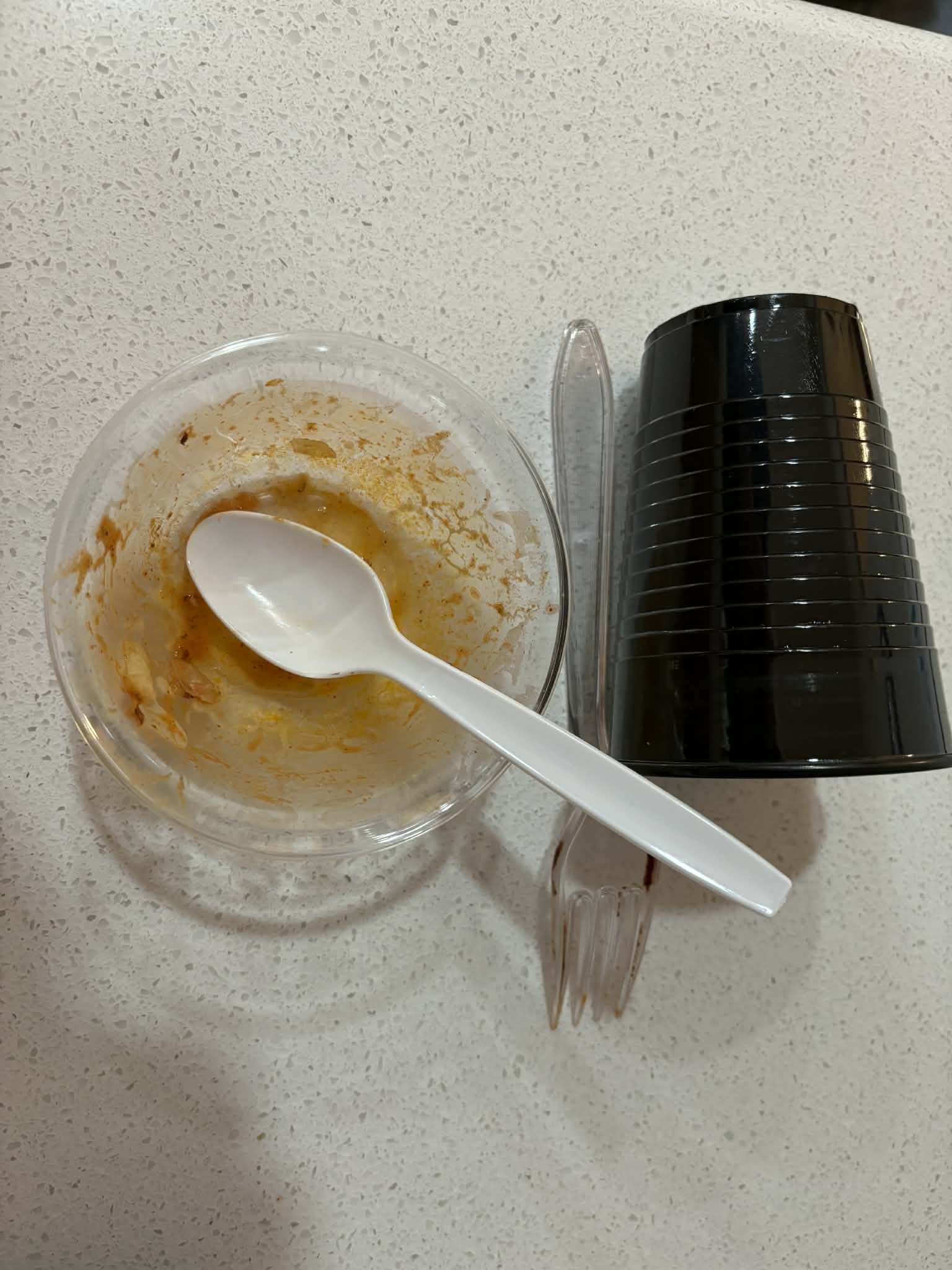
I dropped the empty peanut butter jar into the trash can, and covered it carefully with banana peels and used paper towels. I had decided the natural resources required to clean the plastic jar sufficiently to be recyclable (e.g., a gallon of hot, soapy water) were worth much more than the plastic’s value. Besides, I didn’t want to wipe the peanut butter remnants from the jar. But for my hiding the jar, she would have pulled it from the garbage and cleaned it for recycling. After I tossed in the trash a sandwich baggie containing bits of salmon, mostly scaly skin, I found the bag wet and smelly drying next to the clean dishes. “Mom,” I called across the room, “nobody wants to recycle this fishy sandwich bag. They don’t want it.” She huffed as I tossed the bag again into the garbage can. One evening we returned from a church chili social. My son, Brian, pushed her wheelchair from the church building next door. Back at home, I found on her desk her plastic chili dish, her plastic cider cup, and her plastic fork and spoon. “Mom, why are your dirty chili dishes here at home,” I called across the room. She huffed and told me she wanted to recycle them. I knew none of the items were acceptable for recycling, and used her trick in reverse by later pulling the items from the recycling bag and hiding them amongst the trash.
 Rabbit Lane
Sorry, I’m on Mom’s side, Roger. Recyclers don’t need stuff sparkling clean, just rinsed off, and they do the rest. I do it all the time. (so there!) lol
LikeLike
Our recyclers are picky here. If recyclables are too dirty, they reject the whole can/truck and send the recyclables to the landfill.
LikeLike