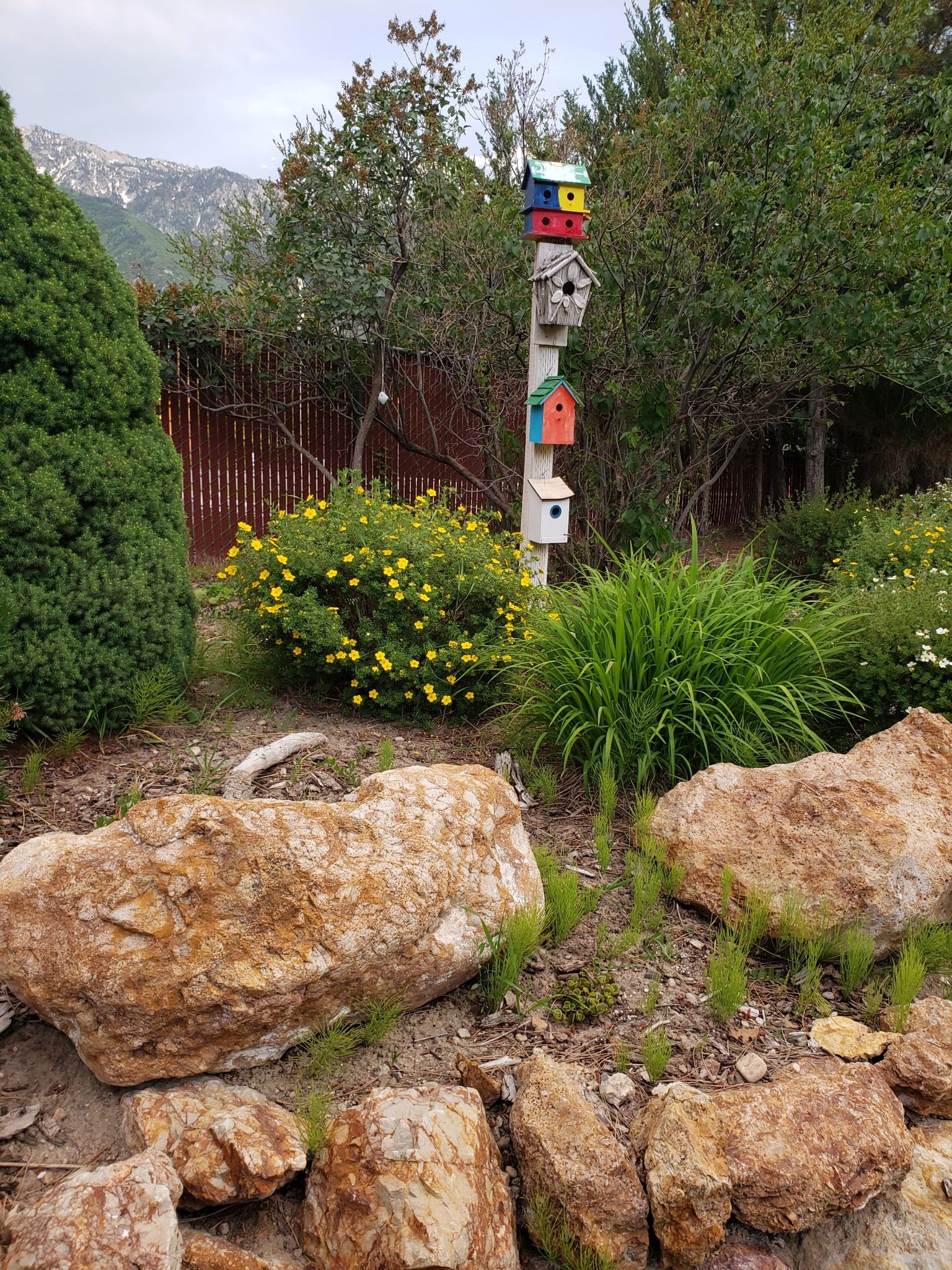
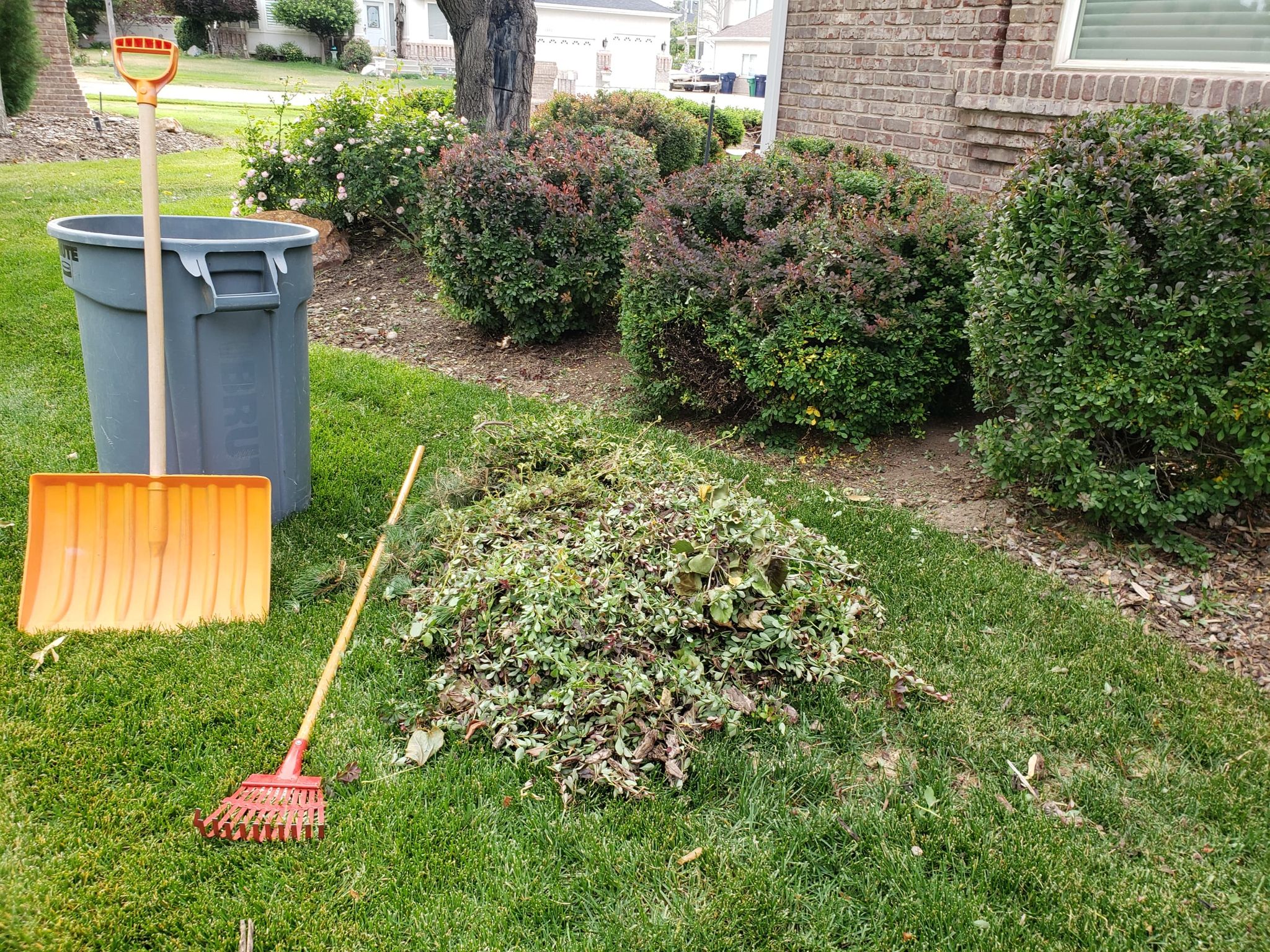
Among the green blades of Japanese Iris I found a scattering of soft-gray Mountain Chickadee feathers, the chitting chiding black-striped bird who came and went from her birdhouse in spite of my irksome gardening presence. Her house is empty now. But the Wilson’s Warbler hops and pecks through the shrubs and flits up to the birdhouse Gabe painted last year. I hated to trim the shrubs, but several had grown to engulf sprinkler heads, hogging water. Mom looked askance when I came to dinner in shorts and flip-flops, and I answered her unasked question over cheesy tuna-noodle-green-pea casserole that I had resolved to audit the automatic sprinkler system, ten stations, perhaps a hundred heads, after dinner. I adjusted the angles and flows and station times and arcs and entered the house completely soaked and dripping and wanting fresh-brewed cacao on the nearly-July night. Dad rolled down the ramps the next night, still anxious he might tip off the side and crash for his unsteady hands on the controls, and followed me as I cut back the shrubs. I stopped frequently to ask if I was shaping the bushes how he wanted. “Just cut off the spikes” of new growth, he instructed, then “use your own best judgment.” Several times I looked over at him, to receive his smiling thumbs up. The trimmings filled a 50-gallon can. Neighbors comment that I must like yard work as much as Dad, which may be true, but my main motivation is not the yard’s beauty so much as his happiness with the beauty of the yards and beds he can no longer garden. I offered him the hedge trimmer, but he observed what we both already knew: “I can’t do it.” In his momentary grief, I let myself be his hands and feet and strength, and together we did the job, and together we were proud. My recent commuter reading has included books on parenting styles, marriage relationships, emotion coaching, community race culture, shame resilience, vulnerability, wholeheartedness, forgiveness, grief and grieving, outward mindset and outward inclusion, active bystandership, American history, mass incarceration and justice equity, the Bible, and I think I detect a common thread: empathy, the act of sitting with someone in their pain, without judgment—empathy, the boiled-down essence of human happiness and success. “Empathy isn’t about fixing” anything, Brené declares. Empathy is “the brave choice to be with someone in their darkness [and] not to race to turn on the light so we feel better.” Empathy is “using our own experiences to understand others’ thoughts, feelings, and behaviors from their perspectives without judgment” (quotes from Brené Brown). I believe what Megan and Brené and others say, but to be honest, I need lots of practice. I’m an old student on his first day at their school, and I am striving at my homework, wanting to pass the tests, hoping to earn my degree.

 Rabbit Lane
Thank you for introducing me to Brene Brown, Roger.
LikeLiked by 1 person
She is really wonderful. I have read her books, and they have made a big difference in my life. Her audio recordings and TED talks are marvelous.
LikeLike