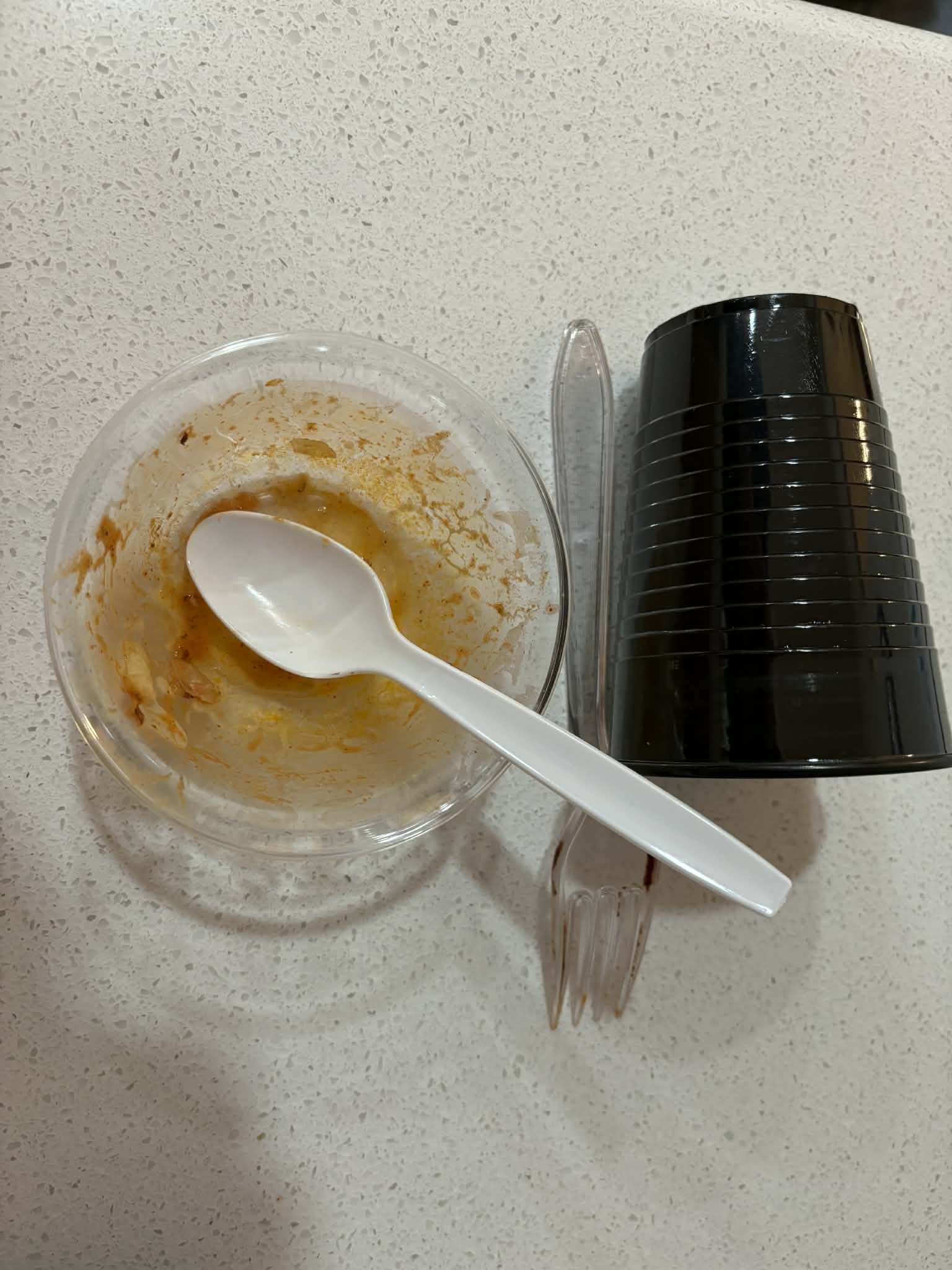
I dropped the empty peanut butter jar into the trash can, and covered it carefully with banana peels and used paper towels. I had decided the natural resources required to clean the plastic jar sufficiently to be recyclable (e.g., a gallon of hot, soapy water) were worth much more than the plastic’s value. Besides, I didn’t want to wipe the peanut butter remnants from the jar. But for my hiding the jar, she would have pulled it from the garbage and cleaned it for recycling. After I tossed in the trash a sandwich baggie containing bits of salmon, mostly scaly skin, I found the bag wet and smelly drying next to the clean dishes. “Mom,” I called across the room, “nobody wants to recycle this fishy sandwich bag. They don’t want it.” She huffed as I tossed the bag again into the garbage can. One evening we returned from a church chili social. My son, Brian, pushed her wheelchair from the church building next door. Back at home, I found on her desk her plastic chili dish, her plastic cider cup, and her plastic fork and spoon. “Mom, why are your dirty chili dishes here at home,” I called across the room. She huffed and told me she wanted to recycle them. I knew none of the items were acceptable for recycling, and used her trick in reverse by later pulling the items from the recycling bag and hiding them amongst the trash.
Tag Archives: Recycling
The Dementia Dossier: Toss It
Mom and I remain proud co-recyclers, filling our kitchen recycling bin with cans and bottles and newspapers, and emptying the bin into the two giant green street cans sitting in the garage. Stepping down the two stairs into the garage is getting harder for Mom, even with the railing and grab bar. Instead of carrying a 12-pack Coke Zero box to the green cans, or a shoe box, or a cereal box (which don’t fit well in the kitchen bin), she merely throws the box toward the green cans, where the boxes sit on the garage floor waiting for someone—I can’t imagine who—to pick up. “Mom,” I remonstrated, “just put the box on the kitchen counter, and I’ll take it out. Don’t just toss it into the garage.” She apologized sheepishly, explaining that she just “got lazy.” I do acknowledge the sheer carefree liberation of tossing a box toward the can, released from the effort and duty of depositing the box in the can, and the moral certainly that someone will place the box in its proper place for street curb pickup and saving the rainforest.
Image by Clker-Free-Vector-Images from Pixabay
Courage at Twilight: Do I?
“Close these blinds, will you?” Mom asked. Her habit has always been to stand, lean over her recliner, and push the slats closed with an old wooden yardstick. But now she waits for me to stand up from the couch or to enter the room, and asks me to do little things she no longer feels like doing. “Bring your Dad’s medicine, will you?” “Put your Dad’s checkbook in his office, will you?” My opinion is that I should not being doing for her things she is perfectly capable of doing for herself. Do I draw that boundary and risk hurting her feelings? No, I guess not, at least not tonight. Dad takes his turn, too: “Lucille, would you get my checkbook from my office?” I interpret “Lucille” as meaning “Lucille, Roger, anyone?” It is true that Dad obtaining the checkbook (or anything else) for himself is nearly impossible. “Your hair is beautiful,” Mom called to me after I delivered the checkbook to Dad. “That’s not possible, Mom,” I hissed. “I don’t have any hair.” She guffawed, “Yes, you do! And anyway, it’s the shape of your head that’s beautiful. I just love the shape of your head.” She cannot see my eyes rolling inside that beautiful hairless head, or my jaw muscles working in my face, or the energy it takes for me not to growl and bark. More and more I’m her perfect first-begotten bald baby boy in some weird Benjamin Button skit. On the counter lay a bag of moldy bread, which I threw into the kitchen garbage can. Throwing something else away later in the evening, I noticed the moldy loaf but not the plastic bag. Mom had salvaged the bread bag to recycle at Smith’s grocery with the blue newspaper bags and the brown shopping sacs and packing bubble-wrap and various other bits of bag plastic. Another day I discarded several mold farms growing on the forgotten cheese inside quart-size baggies hiding at the bottom of the cheese bin. And again I later found the molding cheese swimming bagless in the garbage can. Do I tell her how insulting it feels to have an old lady following after me and digging in my garbage, implying I should not have thrown this and that away, that I ought to be a more diligent recycler, that I should do things differently? Do I tell her Smith’s grocery does not want our moldy bread and cheese bags, our greasy leftover pizza zip-locks, our frozen vegetable bags? Do I point out how many gallons of heated treated water she uses to wash the bags out with dish detergent, the cost of the water far outweighing the damage of a sandwich baggie in the city dump? Do I tell her how annoying it is having all these wet washed baggies doing their damn best to dry scattered on the kitchen counters? Do I tell her the moldy cheese bag was in the garbage because I wanted it in the garbage, not because I’m lazy or apathetic or belligerent? I guess not. It should be easy for me to swallow that much pride, to let an old lady have her little quirks, for Mom to be cheered at the thought of helping to rescue the planet from plastic. I have drawn the line, however, at the gallon-size baggies that held raw chicken and raw fish and raw beef. “Mom. It’s just not possible to sanitize them,” I insisted. “Smith’s doesn’t want our raw-meat bags. Nobody wants them. And we might kill some innocent store clerk with salmonella-infested bags.” She reluctantly agreed to leave the raw meat bags where they belong, in the trash can, her feelings mostly intact.
Courage at Twilight: A Motley Assortment
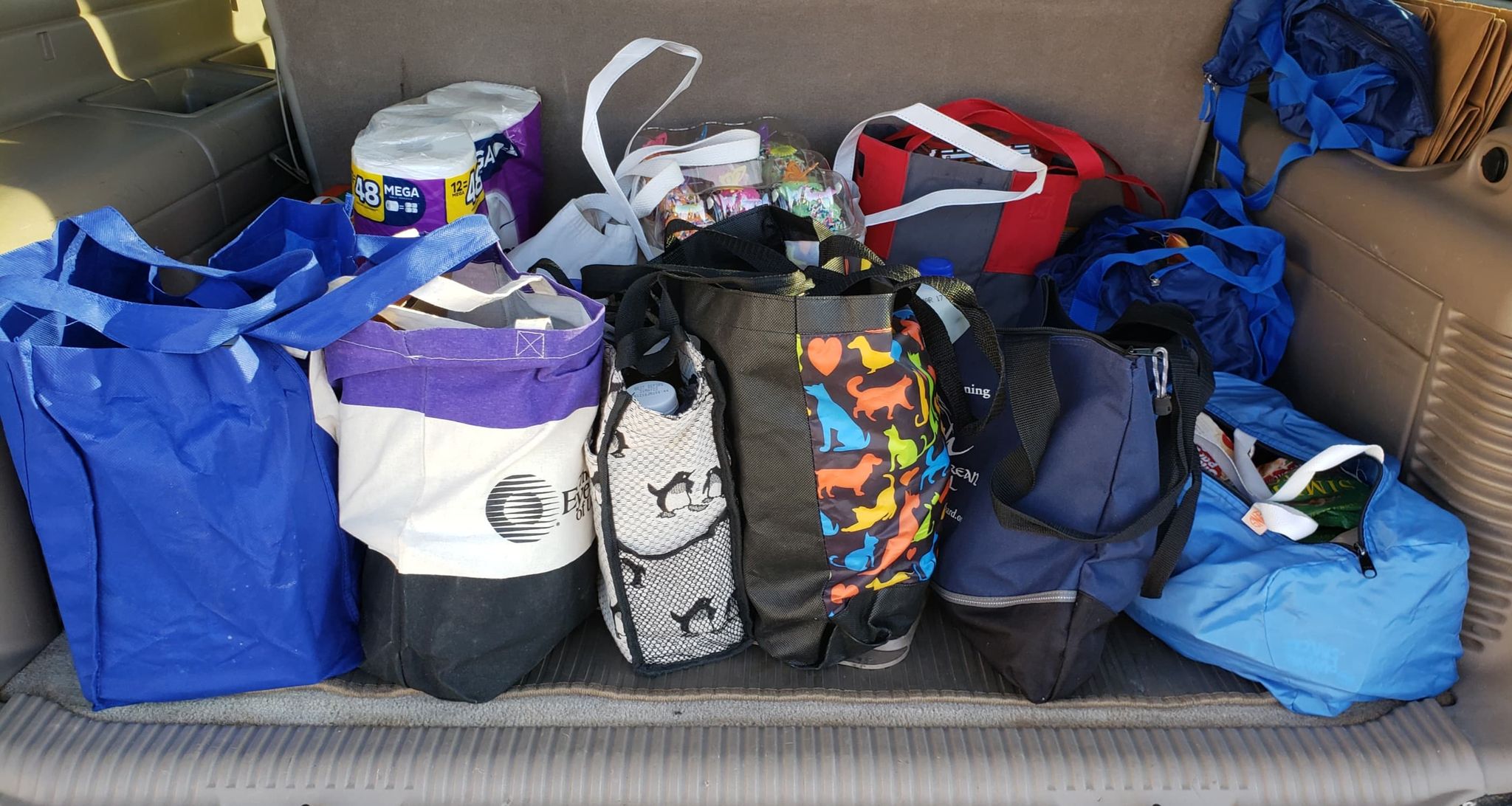
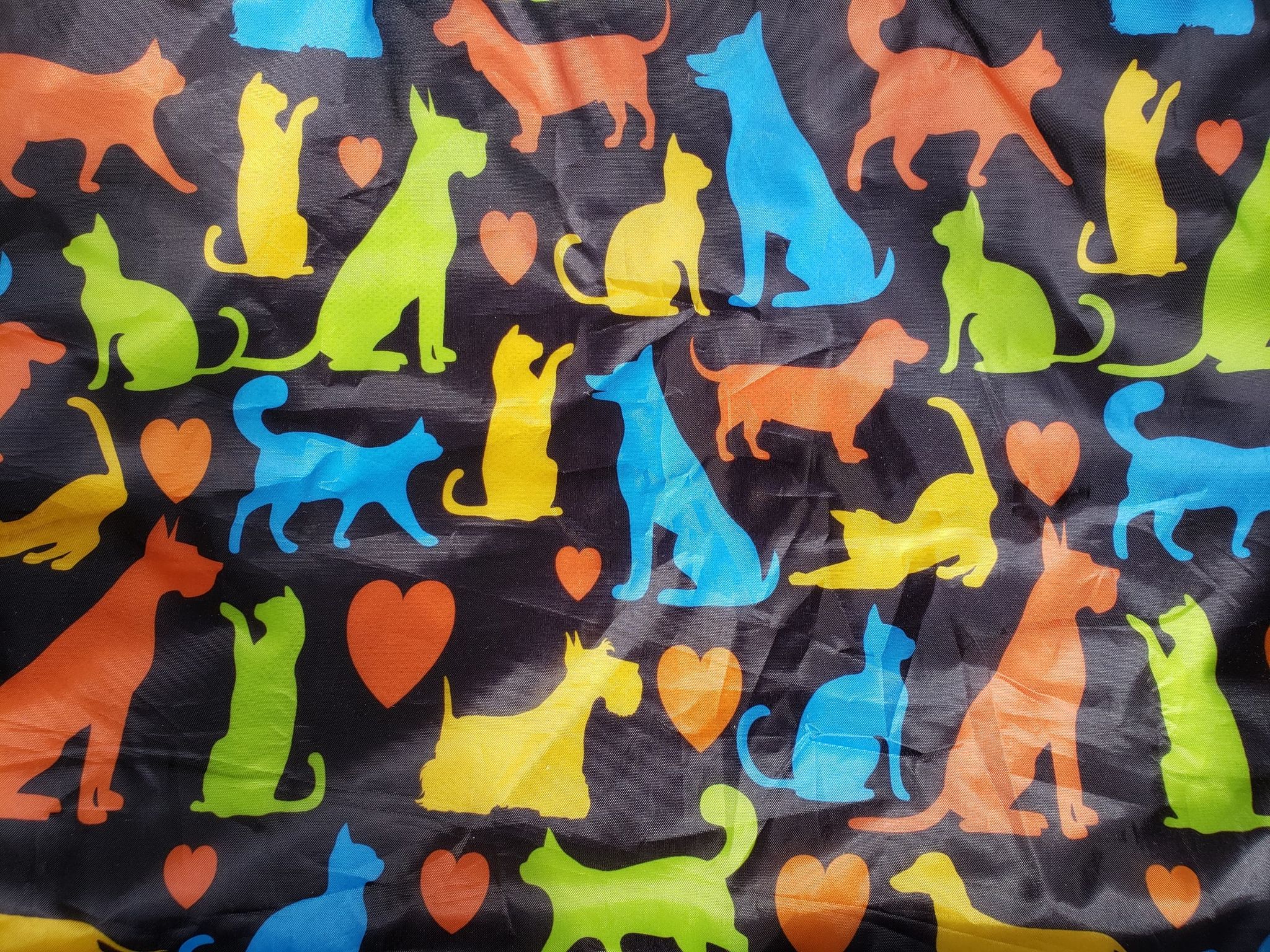
Home from the grocery store each week, I am appalled at the number of plastic grocery sacks that enjoy single-use lives of less than one hour, only to be discarded. Sometimes the baggers put only one item in a bag. At least we take them back to the grocery store to be recycled instead of sending them to the county dump. Penn State says Americans throw away 100 billion plastic grocery bags per year! “You know, Mom,” I ventured, “we could take reusable bags.” She quickly warmed to the idea, and remembered her stack of such bags on a shelf in the garage, where they had sat for 20 years waiting to be useful. Mom grabbed the stack and threw it in the back of the faithful suburban so we would not forget them the next time we shopped. At the grocery store the following week, she filled my cart with the dozen sacks, a motley assortment, from Intermountain Hospitals, Public Broadcasting System (Mystery!), Utah Shakespearian Festival, Consumer Reports, and an old canvas bag from Dad’s employer Johnson & Johnson. Several were small unmarked duffels, and one was printed with red hearts and an assortment of colorful cats and dogs. These dozen bags held as much as thirty or forty plastic bags would have held, and were easier to carry. “I’m so proud of us,” Mom crowed as we unloaded the groceries at home, having used not a single plastic grocery sack. Back to the faithful Suburban I took the bags, ready for shopping next week and every week thereafter.
Courage at Twilight: Recycling Buddies
Mom and I are recycling buddies, distressed by the thought of recyclable paper, cardboard, plastic, and metal cans being dumped by the billions into landfills. Aluminum cans are 100% recyclable: each can recycled results in a new can. We fill two large green recycling containers throughout the week, and set them by the curb on Sunday night for Monday morning pickup. Even the toilet tissue tube is remembered. If the wind is blowing on Sunday, we wait for early Monday, because during one storm all the containers on the street blew over, sending recyclables sprawling across the neighborhood. E.P.A. reports that Americans discard more than 2,000,000 tons of aluminum cans each year—that’s 40 billion pounds, enough aluminum to rebuild the nation’s entire commercial airline fleet every three months. I am astounded that we dig the stuff up out of the earth, refine it, shape it into packaging—all at huge cost—and then use it and throw it away so more of it can be mined at huge cost. About 30,000,000 tons of plastic go to U.S. landfills each year. To me, it makes so much sense to reuse these materials. I choose to stow my cynicism about the American recycling industry, hoping it becomes more robust instead of diverting our recyclables to the landfill. Anyway, Mom and I have fun saving our clean recyclables for the weekly recycling truck. My sister Megan takes our glass bottles to a glass recycler. We like to believe we are doing something good for our planet.