Tag Archives: Grief

Courage at Twilight: The After Words (Grief)

Three years ago, the thought of my father’s death terrified me.  Today, his death seems natural and necessary.  I feel no grief, only weariness, the fatigue of daily trauma settling deeply in, the after-crisis drain.  The desire to sleep and sleep and never wake up.  I have studied grief, and taught grief, and workshopped grief.  I have grieved my father’s dying for the three-and-a-half years before his death: an anticipatory grief; a preparatory grief; a preemptive grief.  Lorry reminded me, however, that the grief will come, in all its aspects, the anger, the regrets, the deadening sadness, the looking around wondering why he is not in his recliner reading the encyclopedia, the wishing we could talk again and the wondering about why our talking was so hard, reminded me that I need to give myself the permission and the space to feel every part of it.  I am not sure such wrenching grief will come.  For now, I am balancing the compassion fatigue and saturation trauma of caregiving against the fact of loss, wanting just to sleep, and finding a sort of macabre triumph in knowing that I stepped into the battle: I responded to every need, every day, for one thousand two hundred sixty-two days, imperfections and weaknesses and all.  And I am deeply grateful for all of you who helped.

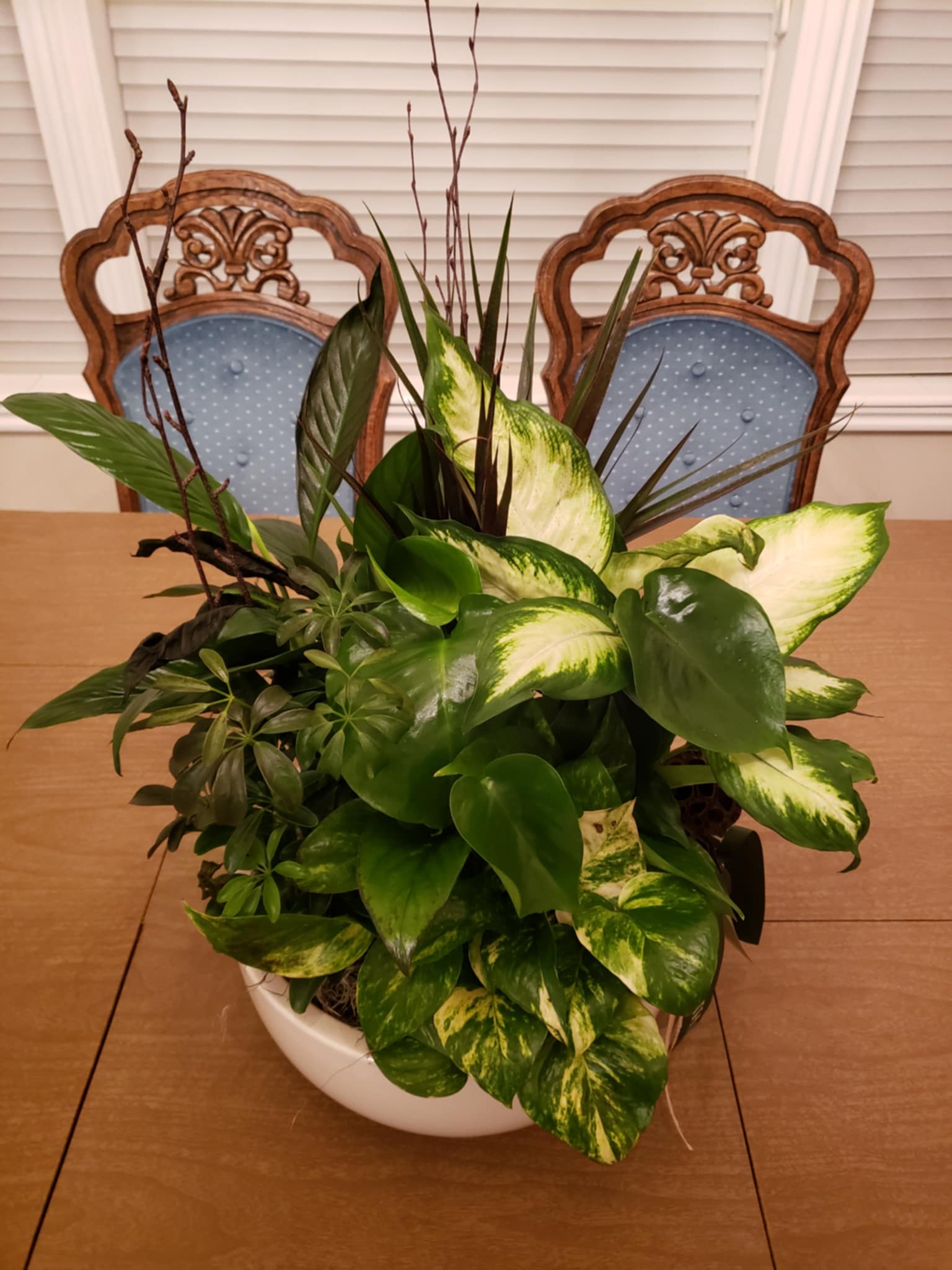
(Pictured: a funeral planter from the church choir.)

Courage at Twilight: Holes

Prone in the dentist chair, Dad held up four fingers: “The last time I was here,” he misremembered, “the dentist pulled four teeth.  Four!”  The experience had been traumatic for him, and the pulling of two teeth may have indeed felt like four.  Both yanked from the right side of his mouth, one was an old implant connected by a bridge to an artificial tooth, so the number of new holes felt like three.  Dad winced as the hygienist cleaned the empty gums where a year ago had been teeth.  “Is that sensitive?” she asked with unrhetorical kindness.  “Uh-huh,” he managed.  She explained that the empty pockets where the teeth had been can capture bits of food, and encouraged him to focus his water pick in those areas.  The cleaning completed, and waiting for the cursory dentist check, Dad remembered how he had approached his mother repeatedly about the unbearable pain in his mouth, and how she finally took him to a dentist, and how his molars were full of decay, and how the dental solution of the mid-1950s was simply to pull the 14-year-old’s teeth: four of them.  “I really felt violated,” he said sadly, looking far off into memory, a tinge of feal resentment still lingering these 75 years later.  “Four teeth,” he lamented.  Fourteen years after, “Doc” Nicholas constructed and implanted the bridge that would span the next 60 years until infection abscessed into the anchoring bone.  My own mouth contains Doc’s excellent work from when I was 14 with decaying molars.  Back at home, I invited Dad to coach me from his power wheelchair as I used his DeWalt trimmer to shape his three dozen bushes.  “Do you want them flat-topped or rounded?” I asked, knowing already he would say “Rounded.”  I paused frequently with the questions, Is this okay? and How’s that?  A smile and a “perfect” were his consistent answers.  The bushes had merged with spring growth, and I carefully reasserted the separations needed for the individual bushes to manifest, not unlike a row of clean but crooked teeth.  Perfect.  We both sat exhausted in the family room after our exertions.  I commented again how glad I was he enjoyed the framed photo of Sarah surrounded by her nieces and nephews.  “Yes,” he said, slipping into sadness.  “I still feel some painful hole inside me that won’t be filled.”  I feel that hole, too, Dad.  He wrote to one grandson this week, “I still cannot cope with Sarah’s death, that she is gone.  When I think about it, I feel overwhelmed with some dread feeling.  I do not know what to call it, but ‘sadness’ is not enough.”  He went on to write that he is by nature a happy man, blessed in many ways, and expressed his determined belief that we create our own happiness when we follow the principles of happiness, the greatest being love.

Courage at Twilight: Many Firsts

March 31: the first Easter since Sarah died. May 12: the first Mother’s Day since Sarah died.  May 27: the first Memorial Day since Sarah died, and a visit to clean and decorate the grave.  June 5: a first birthday with no air-gasping hug from my sister.  The firsts will continue to come: Tracy’s birthday, sons’ and daughters’ and grandchildren’s birthdays, Independence Day bar-b-q, Thanksgiving dinner, Dad’s 89th birthday, Christmas with its matching pajamas and Lego sets, banging on dented New Year pans with dented ladles, Sarah’s 52nd  And January 17: the first anniversary of her death.  I have felt dissatisfied with how the cemetery workers filled her grave, leaving large low spots and rocky grassless patches.  Tracy and Gabe (5) met me graveside, where we filled the low spots with new soil and sprinkled fescue and rye grass seed, and decorated the grave with American flags and plastic flowers, and a border garland of red, white, and blue stars.  Gabe hefted the watering can and moistened the new grass and soil, refilling from the five-gallon bucket I held.  After finishing our work, we sat on a blanket, at first saying nothing, then describing matter-of-factly how Sarah was buried nine feet down, and how someday Tracy would be buried above her, and how when it was his turn to go, Gabe would be buried in the adjacent grave, possibly with me nine feet deep and him above me, since I am 55 years older than he.  The conversation felt natural and comfortable, like assigning seats at the Sunday dinner table, or dividing up the new batch of steaming chocolate-chip cookies amongst the children.  I had assumed Mom would want to come to the grave with me, as she had done before, but she flatly declared, I’m not going.  I offered to take Dad, despite the difficulties of transporting him, and he echoed sadly, I’m not going.  He has not seen Sarah’s grave yet, and may never, and I respect his feelings of preferring to see the framed print of his living smiling daughter.  No matter: when I returned, spent, I cast the photos to their old TV, and they were glad.  “That was a good thing you did, Rog,” said Dad.  And I thought I guessed it was.

Courage at Twilight: Cousin Party

Jeanette has come to visit.  She came to lighten my load.  She came to visit and to love and to talk with her beloved ancient parents.  She came to lift and be lifted.  Before she came, she organized a cousins party.  “Come on Friday March 15 for pizza and brownies and lots and lots of games!”  And they came: the autistic, the trans, the straight, the atheist and the priest, the gluten-free and the vegan and the red-meaters, the married and the single and the living-together—they all came, and demolished five extra-large Costco pizzas and devoured an enormous platter of raw vegetables and cleaned off three heaping plates of frosted brownies, and they told stories and played a game matching clever memes with ridiculous photos and laughed and laughed and laughed, red-faced and crying and together, a group of cousins with several things in common, like the presence of their aunt Jeanette, and the absence of their aunt Sarah, and their love for one another.  One hermit-like cousin commented for only me to hear, “It’s so nice to be with people I actually like.”  Jeanette’s energy was electrically ebullient and conductively contagious, at the center of the circle, catalyzing their inertia into uproarious fun.  As the older uncle, I stood back and observed and rejoiced quietly in the transpiring of this knitting together of this grief-split generation.  I felt keenly the sting-throb of Sarah’s violent departure.  I saw no defect in the power of Jeanette’s presence, but merely the soft hole of Sarah’s absence.  The gathering, happy and healthy and hilarious, nonetheless occupied the crystalline comet-tail haze of Sarah’s gone-ness.  Dad motored into the room to bask in his posterity’s energy and mirth, but could not hear or understand the pop-culture drollery, and retreated to his recliner to rest and create his own quiet humor with Rumple of the Bailey and the Reign of Terror.  I followed, to help his rise and pivot and point and fall, hearing loud echoes of hilarity from across the house.  I felt sad for him, and I think he felt sad and lonely and resigned, but family is to him life’s great mandate, and I knew he felt mostly joy at the loving laughter of twenty cousins.  Mom accompanied Jeanette to pick up the pizzas, giving directions as she had done (without need) a hundred times, but this time Mom could not remember how to get there, and led Jeanette the wrong way, and the Costco was no longer in its tried and true location, and Jeanette showed her the map, and Mom looked up and cried because she could remember no longer that which she always has known, and she knew she was old and she knew she was losing her faculties, and there was nothing she could do about it.  We did find Sarah’s grave, though, and left in a crease of winter grass a brilliant bejeweled owlet with a poem inside, declaring “Do not look for me here.  I am not dead.”  Yes, actually she is.  But her essence, indeed, is not there buried under nine feet of dirt, but in my heart and my hope and my faith, and I will believe—tell me, why shouldn’t I?—that she sees and hears and cares and will welcome me that day when my turn comes.

Courage at Twilight: The Bad Guy


On his way to help me peel potatoes for our dinner, Dad crashed his tank of a power wheelchair into his walker and snapped a walker leg. First came subdued cursing.  Then came open self-deprecating laughter.  “I crashed into my walker!” he grumble-chuckled, then began peeling.  With only three people, we needed only five small potatoes.  Back in his recliner for a dinner of Costco meatballs, mashed potatoes, and steamed broccoli, he pointed to the framed 8×10 of Sarah surrounded by her nieces and nephews, his grandchildren.  “I love this photo, Rog,” he explained.  “I find it quite comforting.”  I felt relieved, since I had given him the photo, and I felt a glimmer of enlightenment about his turning the portrait of Sarah and him face down on the table: perhaps he simply does not like looking at his 88-year-old self; or, just as likely, perhaps he does not like seeing Sarah with only himself, being reminded of the “giant hole” he still feels and likely will always feel.  Sarah stays with me, at least, in the sense of having her portrait on my desks at work and at home.  Still, the family feels smaller to me.  We were six sibling and now we are five.  I had four sisters and now I have three.  We were two Brazilian-born babies and now we are one.  Sarah is simply irreplaceable.  But I can say the same about my four living siblings: each is unique and remarkable in their own ways.  Munching on meatballs, we watched the tenth episode in an animated science-fiction series rated TV-Y7.  “Is he the bad guy?” Dad asked, and I said simply, “Yep,” but continued soto voce: and he’s the same bad guy we’ve seen in every episode.  As the 24-minute episode ended, Mom queried, “Explain to me what happened?” so I elucidated the plot and character basics.  After understanding the show, they asked to see another episode.  “Is he the bad guy?”  “What happened?”


(Photo used under the Fair Use Doctrine.)

Courage at Twilight: Our Shattered Hearts

Mom and Dad are suffering.  Quietly.  Since Sarah’s death, Mom whimpers and swallows a red-faced sob whenever Dad complains that his vision is blurry today or that he is weaker than ever today or when he calls her to help him hike his trousers (I spare her when I’m home).  Her anxiety is severe and pent up, seeping out in little choked up whimpers.  She buries herself in her needlepoint: brightly multi-colored tulips in a baby blue background: working it day and night.  Dad reported to me that his two weeks of nightly terror dreams had stopped harassing him for the last two nights—I had known nothing of his nightmares until he told me they had stopped.  He would not tell me what they were, though he remembers them in disturbing detail.  He has boasted for years that he has no idea what pills he takes because Mom sets them out and fills his pill boxes—and he just takes them.  And Mom confessed to me with a worried grin that she had slipped a melatonin tablet into his p.m. pills for the last two nights, no doubt contributing to his less fitful sleep.  And me, I’m just numb, and weary, and worried about many matters large and small, and I try to control what is within my control, and to release what is not, accompanied by my hope and faith and prayers, and labor, for good outcomes.  Whispering “yes” instead of screaming “no” as grace slowly seeps into the spaces of my shattered heart.  (See It’s OK that You’re Not OK, at p.106.)

Courage at Twilight: Keeping Time

My calendar proceeds from Wednesday to Wednesday: City Council meeting day. Sometimes I wish for Friday-to-Friday weeks, marked by rom-com pizza-and-salad nights; or restful Sunday-to-Sunday Sabbaths.  Today, I am thinking, Her funeral was last Saturday, and for a while, at least, I will measure my weeks from Saturday to Saturday.  Wednesdays, however, will continue to dominate, for news of Sarah’s death clobbered me just as City Council meeting began, and I bolted before the pledge of allegiance without offering explanation or excuse.  Now I face the long heavy haul of life without her.  I have moved from feeling sad and tender and loved and lifted by a million prayers to feeling plain pissed off.  “You might as well know,” I told them, “I am so angry she is gone!”  “Me too!” chimed in Mom.  Sarah was my cheerleader!  (She was everyone’s cheerleader.)  She left us!  Anger, too, is part of grief.  For the first time, Dad put his own grief into words: a huge hole; a void; an emptiness; a great longing and loss.  Neither he nor Mom can look at her picture.  Mom begged me to take her for a drive “around the block,” and when we drove out into the sun, she said “Thank you!” and cried.  “I really needed to see the sun!”  After, I hiked five fast miles in icy Dimple Dell, trying to work off my anger and anxiety.  The depth of my grief may be an expression of the depth of my love, but I was just fine loving her here!  Dad has been hopping from one consuming anxiety to another.  We need more flowers for the funeral.  We need to make room for anyone that wants to stay at our house.  We need to send the funeral details to everyone that doesn’t have a Facebook, because not everyone has a Facebook, you know.  We need to make a menu, like spaghetti, or chili, or meatballs, and go shopping for all the family coming.  Roger, you must speak at the funeral.  How will they pay the mortgage, the tuition, the grocery bills, the premiums?  We need to know if there is a will.  We need….  We have reasoned and to reassured, and have tried to preempt his worries with solutions, or at least diligent efforts to find solutions.  Still, he perseverates about everything outside his control, precisely because everything is outside his control.  He has always been the great family patriarch, the fixer, the benefactor, the provider, the safety net.  Now, his physical world has shrunk to a brown corduroy recliner from which he cannot fix anything, and his brain bounces from worry to worry, increasingly muddled by dementia.  The other night he awoke with a great searing pain racing across his brain, left to right: “It felt like a spear had been thrown through my head!”  Since Sarah’s death, and since the great pain, his memory has worsened—even he notices—and he is weaker than ever.

Courage at Twilight: The Long Slog

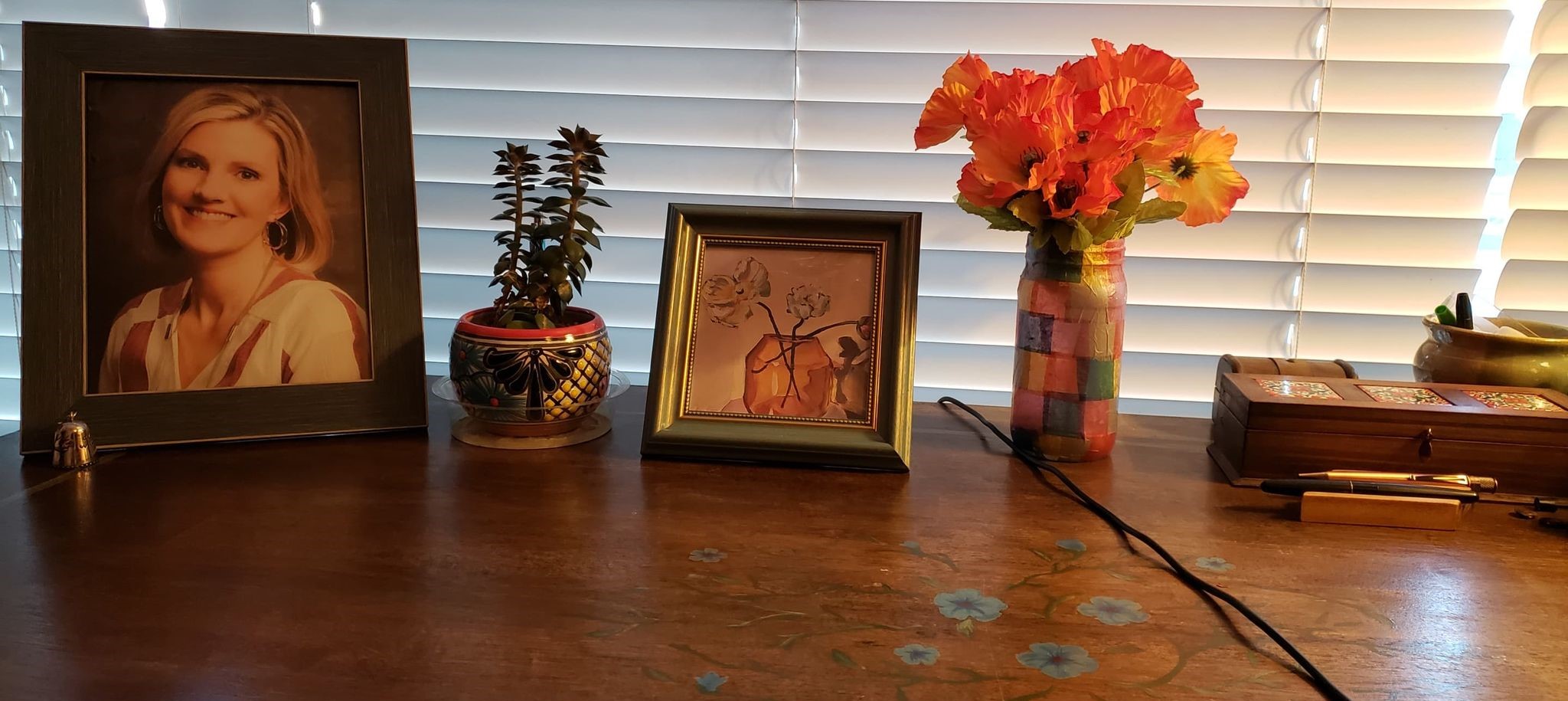
The Richter 8 that crushed me has stilled, and I have clawed my way back to the dust, just.  The Tsunami that broke me against the rocks has receded, and the dripping blood has dried.  The funeral has passed—she is buried nine feet down.  The bouquets and casseroles and cards have ended, and the hugs and I’m so sorrys, though the looks of concern linger.  Life in this house again is back to just Mom and Dad and me and the occasional visitor.  Now begins the long hard slog through ankle-deep pitch, dragging my feet exhaustedly through my returned routines of emails and deadlines and insoluble problems, and cooking and paying the bills and spending just enough time and energy with people so they know I care for them still, ever hiking with the pack of preemptive grief for losses yet to come.  And all I want is to sleep, to rest my eyes and ears from the blare.  I have entered the stage of grief characterized by an uncontrollable strangling desire to scream.  I am too old and injured to hit the weights or the jogging trail, and movies bring a drug-high that drops abruptly with the credits.  On Death and Dying.  The stages of grief.  Denial—Anger—Bargaining—Depression—Acceptance.  Did you know that Dr. Kubler-Ross did not intend to prescribe a sequential series of steps for normal grieving?  Her studies of grieving people discovered five realms of grief emotion: people grieving death experience denial, anger, and depression, and eventually, one hopes, an integrating acceptance.  Any grieving person may experience any one or more of these emotional realms, sometimes overlapping, or all at once, in comings and goings of degree.  American pop psych culture has twisted her sets of discreet grief emotions into a linear progression of mandatory stages, imposing on 500 million people a “correct” way to grieve.  Bull shit.  Horse hockey.  How absurd to cram the human heart, big as a galaxy, into a soda straw of grief normalcy.  That ain’t how grief works.  And so, Mom and Dad and I muddle through our days of grief, with years still to come, clashing the impossibility with the actuality of what happened, chuckling at life’s banalities while choking on screams of rage at the dirty dish in the sink, laying my exhausted head on my desk at 2 p.m., caring about nothing, throwing a go-to-hell look at the first person who dares to suggest I get to work, looking at Sarah’s smile framed, impossibly, inexorably, on my desk.  I will grieve how I must, not knowing beforehand what it will look like or how it will feel, and I will be kind to myself in grief’s non-formulaic messiness.  In random steps here and there down the road of time, I will find ways to integrate into myself the experience of death and loss, for they are, inseparably, part of my being.

Courage at Twilight: An Enormity of Love

Dad insisted I speak at my sister’s funeral. Logical, of course, but impossible.  I had met her husband at the funeral home, at his invitation, where we spent three numbing hours making impossible decisions about vaults and caskets and flowers, payment plans and printed programs and Zoom links, fingernail polish and lipstick and hairstyle, rings or no rings, makeup to cover her wounds.  Feeling dead ourselves, we wandered through the casket showroom, and slowed before the Virginia Rose maple-wood casket, gently grained and softly carved in roses, lined with Easter pink fabric embroidered with a flower spray.  Tracy looked at me and choked, This is where she wants to rest, and I turned my face to the corner and sobbed and knew he was right.  The viewing became a bizarre reunion of a corpse and family and friends, with hundreds of hugs and thousands of tears.  “How’s Nelson holding up?” an uncle asked Mom.  Pierced.  That is the word she used.  Dad was crushed and broken and pale—and pierced through.  He has whispered revelations of his agony every day: I may not survive this.  I thought I might just go with her.  And he told us all of loved ones he looks forward to meeting on “the other side,” his grandmother Natalia Brighamina, a sweet-hearted Swedish beauty who infused the little boy with love and worth, his grandfather and namesake Nelson who rescued the mine’s company town when he detected the odor of almond in the water, his grandpa William T who lived in an unheated unplumbed shack and taught him to snag trout barehanded from the brook—and Sarah, who beat him there.  Every morning I wonder if Dad has survived the night.  The viewing room was hot and crowded and happy-sad, and I could not face my sister, meaning, I could not go to her and gaze at her and hold her hands or even glimpse her unliving body.  One little boy felt like I did, avoiding her “creepy” “plastic” visage.  I averted my eyes and said good-bye a million times in my heart, resolute on remembering her living laugh and her tight embrace, and her I love you dearest brother.  And the inevitable moment came when they closed the lid and clicked it shut, and I sank clear to the earth’s core.  The utter finality of that muffled click…  Her casket came rolling by, and I touched it, and I turned to the corner and sobbed.  Do I really have to speak?  Can I?  In my terror of the task to talk, a lovely friend eight states away softly suggested: Just speak to her.  And that is what I did: “Sarah, you are beautiful to me.  You share normal human imperfections, but to me you are a perfectly delightful, forgiving, super fun, uber smart, good, kind, hard-working, lovely, and loving woman.  You are one in a billion.  I adore you.  And I will miss you sorely for a long, long time.”  Standing at the congregational pulpit, there was no corner to weep in, but I wept anyway.  And I cannot deny that, in that fiery crucible of grief, I felt an enormity of love, and a universe of prayer, wrapping me warmly and holding me aloft and carrying me gently forward to tomorrow.  I love you dearest sister.


The maple-wood Virginia Rose.

Courage at Twilight: Tending to Grief

Her story was not supposed to end this way. She was supposed to win, to vanquish her adversities, to ride the rising tide of her professional and personal success.  She was not supposed to be taken out by some random tree.  But here we are.  Supposed-to-bes are not realities.  Sarah’s last text to me asked for my reassurance that she was strong enough and brave enough.  I called her and told her she was the strongest bravest woman I know.  My last text to Sarah told her I loved her and wished her a happy birthday, and included a photo of my brother and I hiking in Bell Canyon’s deep snow.  She answered with a red heart emoji.  Sarah’s last words in this life came astride a snowmobile on a mountain top, where she declared, “This is one of the best days of my life!”  Just minutes later, she was gone.  But it was, in fact, one of the best days of her life, perched high upon the planet with the cold clean air on her face and God’s beauty all around.  She loved her work at Draper Rehab, and she loved her coworkers and patients.  She helped lift her facility to be one of the company’s top performers.  It took her months to win over the most reluctant, but she came to be adored and respected for her outsized strength and intelligence and tenacity, and her love.  Her gift was to look into any person and to understand what she saw deep inside, and then to love them.  These people included her sad and lonely big brother, her Black friends struggling in a white-slanted culture, her gay and queer and trans family whom she saw as beautiful champions of love and courage and integrity, her children whom she rightly bragged about for their intelligence and their insistence upon truth and their lovingkindness, her elderly and disabled patients who could not swallow or speak or use their faces or hands to communicate, but she heard them and understood them anyway.  In my kitchen on Saturday January 14, Sarah and Steven and I talked for an hour about the complexities of life, and she declared to us how happy she was.  After wading through 50 years of adversity, she had arrived at the point where she had no fear of the consequences of honesty, truth, accountability, and love.  She would say her truth, come what may.  She had arrived at a point where she had no tolerance for manipulation, anger, dysfunction, lies and half-truths, pride and territoriality.  She had come to the point where her mind and spirit were perfectly aligned with her sense of truth and virtue, and nothing could move her from it.  She had arrived.  And then she was taken.  And we are left broken and grieving.  I have learned that “the way we deal with grief in our culture is broken…”  We see grief “as a kind of malady,” something to get over, to put behind us, something broken to be fixed, a sickness to be healed.  But grief is none of these.  Grief simply reveals the part of me that is hurting and wants to be tended and nurtured, to be held, showing me the new episode of life experience to be integrated into my being.  “All that we love deeply becomes a part of us” (Helen Keller).  Our culture says that “the goal of grief support…is to get out of grief, to stop feeling pain.”  But “there is nothing wrong with grief.”  Grief “is a natural extension of love.  It’s a healthy and sane response to loss.  Grief is part of love.  Love for life, love for self, love for others.”  Love for Sarah.

(Other quotes from It’s OK that You’re Not OK by Megan Devine.)

(Pictured: Yours truly with Sarah and little Gabe camping in June 2023 in the Uinta mountains of Utah.)

Courage at Twilight: Good-bye, Love

The texts tumbled in just as City Council meeting began. “911!  Please call right away!”  “It’s an emergency!”  “Can you excuse yourself?”  I needed to know more before I walked out on the City Council and Mayor, but I got more than I bargained for: “Sarah just died in a snowmobile accident.”  My sister.  My beautiful, energetic, ambitious, kind, and loving sister.  My sister who saw me and loved me just as I am.  “What the hell is going on?” I barked when he answered the phone, barked out of terror, not anger.  Indeed, his wife, my sister, had passed away after a freak accident.  In the previous months, she had led her teams of nursing directors and therapy directors to new levels of excellence, surpassing company aspirations, and the boss had treated them to a mountain lodge retreat where, after the celebratory gathering, the twentyish directors chose between three company-provided activities: snowmobiling, four-wheeling, or massaging.  Sarah chose a massage, then ran to join her boss and co-workers on snowmobiles: why settle for one fun activity when you can cram in two?  She zoomed across snowy trails with her boss and five colleagues.  She missed a turn and flew over an embankment.  She hit a tree.  Her helmet broke open.  She died on impact.  My sister.  Sarah.  My sweet, accepting, no-nonsense, intensely fun, forgiving, and loving sister.  And the bottom of my world abruptly dropped away and I began a freefall of terror and panic and deadening dread.  This could not be!  This was not possible!  Never a crier, I sat at my desk and sobbed.  As the older brother, I knew what I had to do.  I rushed home, had Mom and Dad sit together, and began the impossible: Something terrible has happened.  Something terrible has happened to Sarah.  Through heaving sobs, I related what little I knew.  To my stunned parents.  To my only brother.  To my three weeping sisters.  To my seven adoring children.  To my far-flung nieces and nephews.  One by one.  And with each telling I bawled anew.  I am not a crier, but I cried more during that night than I had in my previous 59 years combined.  This simply could not be!  But it was.  She was gone.  Everyone experiences grief differently, in their own ways and times, and every grieving is genuine.  To Mom (so far), the tragedy seemed like just another random fact, like running out of milk.  Dad moaned for hours: “I don’t know if I can survive this.  Truly.  I’m 88 years old!  I’m already frail, and I can feel what little strength I have left breaking and melting away.”  But with visitors and talking through his shocked incredulity again and again and again he survived the evening and the night and the next day.  I retreated to a dark room and cried in convulsing waves.  Not Sarah!  Her story was not supposed to end this way.

Courage at Twilight: Greetings and Good-byes

The needling traumas of covid and ambulance and hospital and worry and the prolonged proximity of death have sapped away my strength.  I mope around feeling weak and muddy, freeze dried and vacuum packed.  The numbing emptiness is syncopated with gun shots of rage, often over nothing, like a spot of greasy mayonnaise oozing from the jar rim to the butter knife to my clean fingers.  When I spilled a tall glass of chocolate milk on the shag, the explosion lasted more than a mere moment, but there was nothing for it but to fill the tank with soap and hot water and shampoo the spot 613 times until it was cleaner than clean.  Mom watched me from her recliner, mute, helpless to comfort.  Dad has phoned her several times a day from his rehab room the next town over.  “Hello, good lookin’!” she cheers.  He complains to her about his lumpy hot cereal, the maddening miserable itching from his Grover’s disease, how he simply can’t do what the physical therapists are working with him to do—knees straight! butt in! chest out! you can do it! one more step!—what we keep telling him he must be able to do if he is to return home.  He tells her how lonely and bored he is, with little to do and no one to see, and how badly he just wants to come home.  At 87, he is again the neglected little boy wanting to be comforted, by his 63-year sweetheart, his darling girl.  “Well, you just have to do it,” she chastened.  There is little comfort in chastening, and little progress in coddling.  I have nothing for him, no words of compassion or encouragement, no enthusiasm, no “You can do it!”  Dad wants more than anything to be independent, and he wants to be tended and nursed.  He is desperate to go where he feels safe and loved, to go home, but he knows he cannot go to that blessed place in his condition—and changing his condition may require more strength of mind and body than he can muster.  We brought a bit of home to him, in his room, with yellow balloons, with vases of flowers, with wrapped gifts from her children, with pizza and salad and fruit and German chocolate cake, celebrating Mom’s 84th birthday with him, and we ate and sang and opened gifts and cheered and took pictures.  And then we said good-bye and left, because that is how life goes.  Every party ends, and every good-bye looks forward to the next getting-together.

Courage at Twilight: How Does Your Garden Grow?

The man died fully four years ago, at just 28, and yet she keeps coming every day to his grave, where the flat headstone bears only a first name, but does contain a carved silhouette of him holding two named children by the hand.  Remember: there is no wrong way to grieve.  Mourn loud and long if you wish, or quick and quiet, mourn until the love and the loss and the anguish seep into your soul as you stagger on.  On Sundays, Dad and I sing the hymns with the televised congregation, holding our hymnals, and he is either ahead or behind the tempo, finishing the words too early or quite late, and often on the wrong verse.  But he is singing, and I with him, and he still reads the bass part well.  On Wednesdays, Mom has gone with the Church sisters on little outings, to Trader Joe’s grocery store, to Deseret Industries thrift store, to Pirate O’s import store, to Hobby Lobby craft store, for nothing in particular, but some little thing always catches her fancy and comes home with her, like secondhand colorful plastic cups, like O’Henry bars from Canada, like the round artist sponges she likes in the shower, like two small terra cotta pots to replace the ones I gifted to Solange with volunteer blue junipers to transplant to her yard, if she wants.  What could I do for the young woman grieving daily at her dead lover’s grave—what could I do that would not be frightening or unwelcome or weird?  And on Sundays while Mom sits with her friends at church, I pronounce the prayers upon the morsel of bread and the swallow of water, sacred emblems of sacrifice and hope, and stretch them out to my father, and he accepts them with quaking hands.  As customary in my Church, he received the priesthood and was ordained a priest at the age of 16, in 1951, a priest who is not a pastor or a reverend but a youth who pronounces the prayers upon the bread and the water and reaches them out to the covenanting congregants, promising to mourn with those who mourn, to comfort those who need comfort, and to always remember Him.  Dad always found his priesthood participation meaningful, as have I, being part of something holy and transforming.  His mentor, the Bishop (who in my Church is the unpaid pastor or reverend), passed him a scrap of a note that read, “that is exactly how the sacrament should be blessed,” which praise never did leave his heart, from years 16 to 88.  The simple note I wrote to the woman at the grave, tucked under her windshield unnoticed while she slept wrapped in a blanket on the dewy grass, read “a gift for you in your grief,” and in a bag Megan’s book about grieving for as long and however is right for you as you pull the anguish into you and hold it and sit with it and rock it until it becomes forever part of who you are.  Then I knew I had done enough and should leave her be.  Dad asks me often about my pumpkins, needing me to be his eyes, and I answer I don’t know because I have not checked them in weeks and do not seem to want to check them, preferring they grow or wither without me knowing, but I tell him one plant seems to be very happy and climbs each day a bit higher up the chain link fence, and today reached the top, and perhaps in some weeks some little pumpkins will have turned from green to orange and be plucked from dead vines to sit squatly on the porch for the neighbors and us to enjoy.

Courage at Twilight: Pulling Teeth

A young woman has been sitting by a grave every morning at 8:00 as I commute past, and I cannot help wondering about her story, and her grief, and her devotion.  Fresh flowers appear weekly in the vase, this week white and passion purple.  The bright warm colors of the mums I planted have brought me happiness each morning and evening I leave from and return to my parents’ home, which they keep telling me is my home, too.  Color is happiness, I think.  Fushcia.  Yellow cream.  Tangerine.  Scarlet blending to barn red.  Dad effused as I maneuvered his wheelchair for him to see them.  Color is happiness.  And color is grief, and color is comfort.  The hardest aspect of having the basal cell cancer scraped from Dad’s left nasal fold was the effort of the trip with its great strainings into and out of the Faithful Suburban.  Every aspect of the next day’s visit to the dentist, or should I say the oral maxillofacial surgeon, who pulled and yanked and twisted at the infected tooth which finally came forth with it enormous roots half again the size of the tooth, proved arduous.  Mom asked for the tooth.  “I don’t want to see it,” I announced, but at home she wanted to show me anyway.  “Why would I possibly want to see that bloody tooth!” I retorted.  I quease at blood and everything else that belongs on the body’s inside.  Sarah, though, will find it fascinating: she has a strong stomach and an eager medical mind.  Poor Dad had to deal with a bleeding mouth and an anesthetized face and bloody gauze and salt water rinses and feeling beat up.  Waiting for the surgeon, Dad told me had been in lots of fights in high school, but his fights involved stepping in to stop other fights and to rescue the bullied, and his toughness intimidated the tough guys, even though one punch did break his nose, and the doctor rammed two rods up his nostrils and lifted the broken bones and set them back where they belonged.  Despite the tooth extraction trauma, the pain never came, which astonished me for the depth of the abscess and the size of the gape left behind.  Grandpa Wallace had lost all but his front teeth before Mom outgrew girlhood.  She remembers his slightly sunken cheeks, and she remembers standing by his side as the dentist pulled what teeth he had left—she had insisted on being there, a little girl defending her dad.  Dentures followed healing, and Wally was so happy with his full cheeks and full mouth of teeth, for now he could eat everything he loved but had been denied him for years, including apples, carrots, and corn on the cob.  And Mom was happy for his happiness.  The family, as it grew, had no money for dentists.  “Thank God for Harvey!” Mom sighed.  Uncle Harvey had married into the family and become a dentist, and forever after gave the children free dental care, including many fillings.  His jolly laughter resounds in my memory these decades after his death.  This morning the young woman lay in the wet grass wrapped in a blanket against the cold and slept on the grave, and I felt a blend of admiration for her great love and of sadness for her great loss.

Courage at Twilight: Veils Black and White

Eight family guests flew in Friday night for the next morning’s wedding, the beds set up and clothed with sheets and blankets and the towels stacked and the groceries bought. And the water heater broke, so the wedding day brought cold showers all around, and no one grumbled and everyone smiled and looked beautiful at the temple, radiant and soft as the light through the stained glass and the zinnias and roses on the grounds.  The officiator instructed the groom and bride after vows to cleave to each other and to labor together in love, and that the groom may now communicate his love with a kiss, and the bride quipped grinning that he was a good communicator.  Soft laughter rolling through the temple.  My predominant emotion at weddings is doom, for marriage has brought so much sadness and pain and grief to me and to so many I love, the termination of built hopes and the loss of future memories the absence of whispers and touch, and I struggle to want to celebrate.  I wished them luck and congratulations, wanting to believe theirs could work.  My children have chosen well, and I encourage them often to just keep talking and giving, come what may.  This white-veiled wedding has brought the family together in hope and love, at least, and that is a good thing.  I have noticed a young woman sitting graveside in the green expanse of Larkin cemetery, morning after morning.  Sometimes she is lying on the patch of new sod, a white bouquet in the vase, and I sense her black veil of mourning.  You know you have a gift for her, came the thought, and I slid Megan Devine’s book into a zip loc bag with a note: A gift for you in your grief… to leave by the bouquet for her to find, but she lay there again, sleeping wrapped in her blanket against Fall’s chill, so I secreted my gift under the windshield wiper of her blue Jetta and tiptoed away, glad for the anonymity that might ease the gift-giving and avoid the awkwardness of a stranger’s strange approach.  The man had died at 28, leaving behind two children and, presumably, this grieving young woman.  I wonder if I will see her again sitting graveside.  Not today, as I returned from the happy wedding, stuffed with Brick Oven pizza, returning to do what I do best, eradicating weeds and pruning dead wood, the blooming geraniums belying my aching arthritic hands.  Their infirmities did not allow Mom and Dad to attend the wedding festivities, but Mom called and pleaded and Scott came on this Labor Day Saturday and brought a new water heater when he could have not cared and made us wait until Tuesday, but he came, and the water heater was under warranty, saving us $2,200, so he said.  And $900 later everyone is happily but tiredly home, enjoying sprays of warm water, languid on the couch, munching Oreos, the couple married off, off on their adventure, having stepped into the mystery of marriage.

Courage at Twilight: Apron Strings

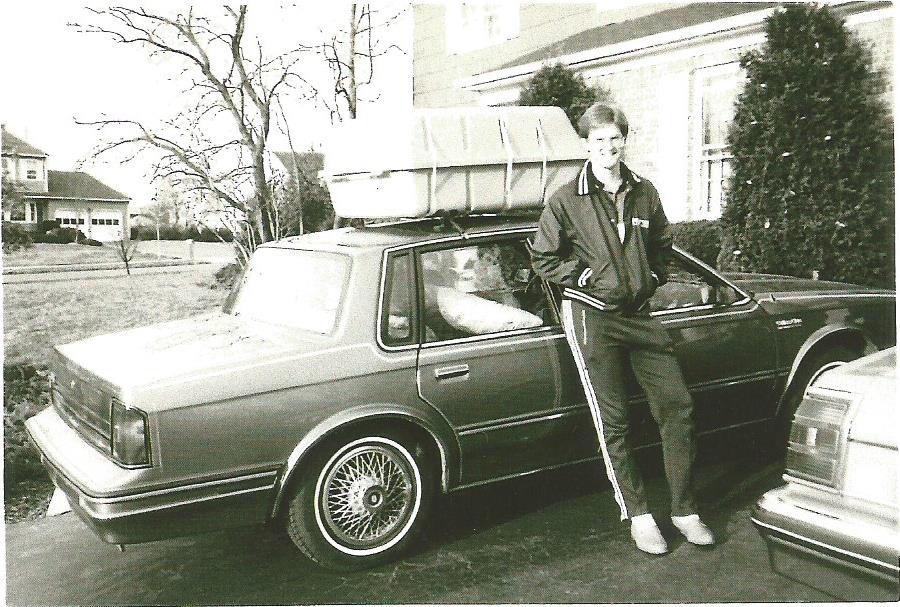
When I moved out in 1982 and drove 2,200 miles from New Jersey to Utah and to Brigham Young University, her first child to leave home, Mom walked the house for weeks feeling an aching emptiness, looked in my room to find me gone, missed my voice and my laugh and my presence at the dinner table and in the church pew and at Sunday afternoon games of raucous Pit. “Where Roger?” two-year-old Steven queried, lacking the experience with space and time and life to understand Mom’s answers about me being “at school.”  I was simply and suddenly gone, and she experienced a mourning like for the dead.  We had no internet, no mobile phones, no unlimited data plans, no email, no texting, no Facetime or Zoom or Messenger or WhatsApp for video calling, no Snapchat or Instagram or Marco Polo.  We had hand-written letters that took a week or two each to cross the country.  And we had exorbitantly expensive long-distance calls on chorded telephones.  That old apron string had been cut clean through.  And I did not give it any thought, had no awareness of her grief, did nothing to fill the hole.  And now at age 60 I am home again, and Mom sees me in the hall and finds me in my room, and hears me practice piano, and waves good-bye from the porch when I drive away, and like a relieved chick she raises her hands and her chin and her expectations for her dinner.  I am learning that apron strings come in myriad colors, patterns, hefts, lengths, and strengths.  And they are never fully cut, but merely injured and stretched and tearing.  Some mend.  Others strangle.  All scar.  On Friday night at 8, after another late dinner, Mom asked if I would please take them for a walk in their wheelchairs, and we loaded up and rode down the ramps and rolled up the street, jogging out into the road around the neighbor’s big blue spruce.  A sprinkler caught us, and Mom reveled in cool wetness with a squeal and her arms stretched to the sky.  I announced at 9, with bedtime at 10, that my day was done and that I needed to wrap things up and move toward bed.  Disappointment showed on her face, exhaustion dragged at mine, and she squeezed out, “Just know that I will miss you!”


(Pictured above: Yours Truly about to drive away from home.)

Courage at Twilight: Thank God for Megan

Left unchecked, dandelions can proliferate and kill the grass with their broad, flat leaves anchored to thick stems.  But Dad has the best tool for purging the lawn of dandelions, and I pluck the weeds mostly for the pleasure of utilizing the tool: a forked steel poker on the end of a long wooden stick.  A thrust into the turf cuts the weed at the root, and a flick tosses the severed plants away to die and dry.  I don’t even have to bend over.  I almost feel sad when I cannot find anymore dandelions, and have to stow the forked tool in the garage.  As I wander the yards, I sometimes slide into the sadness of mistakes made and opportunities lost: taking a week to patch a child’s bike tire; grumbling at the boys wanting new wooden swords because last week’s have already broken; not knowing my child was hurting inside, or knowing but not knowing what to do or say; being stretched and stressed and overwhelmed and unpresent when she wrecked my car and wanted reassurance but I was empty and numb and could not come out of my darkness, and she silently walked away.  And I anxiously foresee losses yet to come, portended by deteriorating strength and health and means and memory.  And I slip into seeing life as a series of sadnesses strung together.  Of course, I could choose to see my life as a collection of connected joys—but while I live for these joyful moments, I tend to gravitate toward grief, to swirl in the emotional eddies of mourning.  Megan, however, is teaching me that grief is not an illness to be cured, not a problem to be solved, not a process to be rushed through, not an incident to put behind me, but a natural human pain, a pain that is an inseparable part of love and loss, a human pain to be tended with tenderness and carried with compassion.  Thank you for teaching me.  So, now, I want to sit with my grieving neighbor dying of cancer, and to sit with her grieving spouse; I want to sit with my children in their sicknesses and joblessnesses and injustices and lonelinesses; and I will sit with my mother and my father as they approach the end of this phase of their life-existence.  I will sit with myself in my own pain, tending to it gently and patiently.  And as I wandered the yard, Sarah hugged me and praised me for the beauty of the dandelion-free turf and bragged to Dad about how hard I had worked in the yard and how beautiful the landscaping looked, and insisted he come and see, right now.  And he motored around the yard in his wheelchair, looking at everything, studying the yellow and orange marigolds, the red geraniums, the reviving arborvitae with new poking green, the weedless beds, and thanked me with, “Everything looks really nice, Rog: just perfect.”

(Pictured above: Mom’s and Dad’s back yard with the backdrop of the Wasatch mountains.  Notice the wheelchair tracks in the lawn.)

Courage at Twilight: Solar Winds

The sun spews huge masses of atomic particles in loops and flares and flashes a million miles above its seething four-million-degree (F) surface into a stellar corona. And the sun shoots immense volumes of cosmic rays and subatomic particles at nearly the speed of light, a solar wind that picks apart human DNA when given the change.  But the earth’s molten iron-and-nickel core sloshes spherically around inside, generating a massive magnetic field that deflects most of the solar wind.  What this all means, Dad explained to Cecilia, is that we can live, here, safely on earth.  “Without the magnetic field….”  His cosmology lesson came from volume “C” of the encyclopedia: corona; core; cosmology: this morning’s reading.  Cecilia reminded Dad about his shower, and his breakfast of a whole wheat English muffin and two slices of pre-cooked bacon and a tall glass of cold milk (and 19 pills).  The chair lift shook and boomed at the bottom of the stairs, and I worried he or Mom would tumble onto the tile.  Accessible Systems came the next morning to repair it, under warranty, so now I need not worry, as much.  “Do you think we might cut the grass today?” Dad asked me after work, and I felt sad that he felt he needed my permission, though certainly he needed my help.  6:00 p.m.  I reminded him about how frightening and difficult it was for him to mount the mower last time, but could not say “no.”  Don’t rob him of what little he has left, I thought.  But this time we managed impressive transfers to and from the mower, and he motored around the yard, sun hat askew, all the jogging neighbors waiving and smiling their astonishment.  Pull weeds and trim bushes.  7:00 p.m.  Cook dinner and serve.  8:00 p.m.  Clean up kitchen.  9:00.  Listen to thoughts and stories.  10:00 p.m.  I am just too tired to read or to pray or to clean my teeth (though I do the latter anyway).  No time for TV, for 6:00 a.m. comes early, and I am too old to go without sleep.  And I self-assess: Why am I so irritable?  Mom thinks of me wistfully as her little boy, her first baby pulling pots out of cupboards and crawling, cloth-diapered, across the floor, smiling and untroubled.  When, troubled, I say good-night: “I will miss you.”  When, troubled, I arrive at home: “I’m so glad you’re back.”  But I am almost 60, too prickly, less cuddly and cute.  It would be better for them if I visited here rather than lived here: the visits would be more joyful and less chore-full.  But they need me, and a visiting life cannot be the agenda.  As I said good-night, I wondered aloud to Dad: How is it that the moon is just the right shape and size and distance and orbit to just block out the sun and reveal its beautiful chaotic million-mile hot hot corona?  And he shrugged with like wonder.

Courage at Twilight: Crêpes Frangipane

They did not know what to say, so they said nothing, and I suffered alone.  When I separated and divorced almost seven years ago, not one neighbor, not one congregation member, not one ministerial leader approached me with friendship or compassion or support.  They did not know what to say, apparently, so they stayed away and said nothing at all, and I anguished utterly alone.  (Thank God, Mom and Dad and Sarah and Jeanette and Carl and Paul and Megan and Don and Carolyn and Steven—parents, siblings, and three friends—they loved me through.)  I think that “I don’t know what to say” is a hideous excuse for pretending not to see, and for withdrawing and withholding, and for saying nothing.  I reject it.  How easy it would have been for anyone to say, “I am so sorry!” or “What can I do to support you?” or “You will get through this, and I want to be there with you as you do.”  I reject it: actually, we do know what to say, but we are reluctant to feel another’s pain, afraid to do the emotional work of empathy.  Just: say anything kind.  That ought to be easy.  When our neighbor’s infant grandson died in his crib in their house this week, constricted by a blanket laid there to warm and comfort the baby boy, dozens of men and women rushed to the house and kept coming every day for weeks, with meals, with hugs, with encouragement, with loving silence, with tears, and with other assurances of love and hope.  I did not know what to say, and I did not go, right away.  But I had rejected that justification, and I had determined never to stay away for the lack of the right words.  Instead of words, I took over a plate of hot crêpes stuffed with chocolate almond frangipane (French pudding) and handed the goodie plate over with a smile and said the words “You might want to use a fork—they are a bit messy” and “This is an authentic French dessert” and “I don’t know what words to say” and “So many people love you and care for you and mourn with you and have hope for your healing and happiness.”  And he embraced me and said, “Thank you.  I can’t wait to give them a try.”  After church today, a group of women surrounded the grieving grandmother and talked and cried and hugged and counseled—they loved.  Dad observed to me, “That is more than just a group of women talking.  Christ is there with them, healing.”  And I knew Dad spoke truth.

Courage at Twilight: Echoes of Anguish

Snow fell and temperatures plunged as I stood before the Planning Commission into the night instructing on the Utah laws of conditional uses and open and public meetings.  Brian and Avery had offered me their guest room should I decide to stay the night, sometime.  Well, sometime was tonight.  I texted Mom and Dad, and drove the three miles from City Hall to Brian’s apartment, which had been my apartment for the six years preceding his arrival, the apartment to which I moved when divorce drove me from my home.  The walls of that apartment watched six years of pain and coping and enduring and learning to live instead of aching to expire—of figuring out how to flourish.  Entering that home tonight and making my bed and eating and bathing and sleeping there felt surreally strange.  My little girl was nine years old when I moved out.  I told her mother that our divorce would rip the little girl’s heart out.  “She’ll be fine.”  No, she won’t be fine: this will tear her heart out.  “She’ll be fine….”  A young woman now, her little girl heart still yearns for reconciliation, and I am unable to tell her why it cannot be—she has lost those dreams, compelled to make her own.  Brian and Avery were so kind to me, with dinner and conversation, bedding and a towel, and snacks.  And little Lila rejoiced as I stepped through the door and hugged her and read books and played blocks and Hot Wheel cars and watched Mr. Rogers snorkel and tell the world why we need to protect our oceans, both for the exquisite ocean life, and for ourselves.   Driving the short distance to work the next morning, in ice and snow, I realized how much I preferred my one-hour commute with its biographies and histories and meditations over these familiar three miles with their echoes of anguish.

(Pictured above: my apartment, a blessing, built for the manager, but rented to me.)

Beyond

Is it cliche to say that the life of every individual is filled with many disappointments?  Perhaps.  But one’s experience of disappointment, and the grief that goes with it, is never cliche, but is very personal and real.  This poem is about not giving up when life gets hard, about accepting divine assistance that can feel like diving deprivation, and about keeping going, however weak we feel we have become.

BEYOND

My crude raft swirled,
slow and rudderless,
and I, Emaciated,
trembling with hunger-
lust, I clutched
a suddenly-appearing bowl,
steaming gruel, to devour.
Refrain, chided the white
cloud, crimson-laced,
kindly:
Your feast awaits beyond;
beyond the mountains.
“Ahhii-aii!” was my wail, choked.
“But I am . . . so . . . hungry!”
I collapsed with convulsions,
upsetting my salvation, spilling
all through the cracks
to salt water.
“It is finished,” I death-groaned,
as the sky echoed Beyond,
and a breeze picked up,
with a current
I could not see,
toward the mountains.

Roger is the author of Rabbit Lane: Memoir of a Country Road.  The book tells the true life story of an obscure farm road and its power to transform the human spirit.  The book is available in print and for Kindle at Amazon.  See Rabbit Lane reviewed in Words and Pictures.

Africatown

Near Mobile, Alabama, sits Africatown, founded by the last group of West African slaves, in 1860, aboard the Clotilda, brought to America.  National Public Radio recently spoke to town residents, historians, and leaders about the town today, its economic, demographic, and environmental challenges, the fight for the town’s survival and identity in spite of 150 years of prejudiced politics, institutions, policies, and people, and the continuing struggles of the founders’ descendants to heal from the scars of enslavement and abuse.  Hearing the story, I ached with the heavy weight of the pains of generations.  I can only hope, and pray, and act for healing, and write.

AFRICATOWN

If you tell me
I will hear
your stories,
your stories of molestation
your stories of starvation
your stories of enslavement.
Tell me of your injustices
tell me of your griefs
tell me of your pinnacles of joy and your chasms of struggle and loss and longing.
For I will sit with them
all
here
and I will press them into my eyes
and I will strap them round my chest
and I will load them upon my back:
I will weep with your weeping.
Then what shall I do?
What shall we do
together
with your stories
all
told
with your pains
all
exposed?
How shall we sit
together
with this history,
how shall we use it and mold something new,
how shall we heal, and mend
now that you have told me,
and I have heard?

Roger is the author of Rabbit Lane: Memoir of a Country Road.  The book tells the true life story of an obscure farm road and its power to transform the human spirit.  The book is available in print and for Kindle at Amazon.  See Rabbit Lane reviewed in Words and Pictures.

Coming Home (1940)

How often I have wondered about my grandfather, when he came home from work to find his family gone and his house empty.  Having recently experienced divorce myself, I could not help wondering about his grief as I wallowed in my own.  He died before I was born, so I know him only through stories.  I think I would have liked him.  I knew and loved my grandmother.  I do not judge or blame either one.  I am sure they each did their best.  Now it is up to me to do mine.

COMING HOME (1940)

The man came home
from his lab at Utah oil
to find
an empty house.
The rooms stared,
bare, open-mouthed.
She had left,
taken with her
his own little tribe:
Weezy—6
Sonny—5
Wiggy—3
Gone.
The man sat
against a wall—
it does not matter which wall—
he sat and
he cursed and
he roared and
he sobbed and
he rocked and rocked and rocked and rocked
as he sat
on the floor
against a wall,
looking at the white walls,
looking at rectangular patches
on the white walls
where portraits and landscapes and mirrors had hung,
looking at white textured cobwebbed ceilings,
looking at the fixture with the bulb burnt out,
looking at the worn tan shag,
worn except where the sofa had been,
where he sat,
against a wall,
wondering how, and where, and why
everything
had vanished.

Roger is the author of Rabbit Lane: Memoir of a Country Road.  The book tells the true life story of an obscure and magical farm road and its power to transform the human spirit.  The book is available in print and for Kindle at Amazon.  See Rabbit Lane reviewed in Words and Pictures.