Tag Archives: Gardening

Courage at Twilight: Garden Dreams

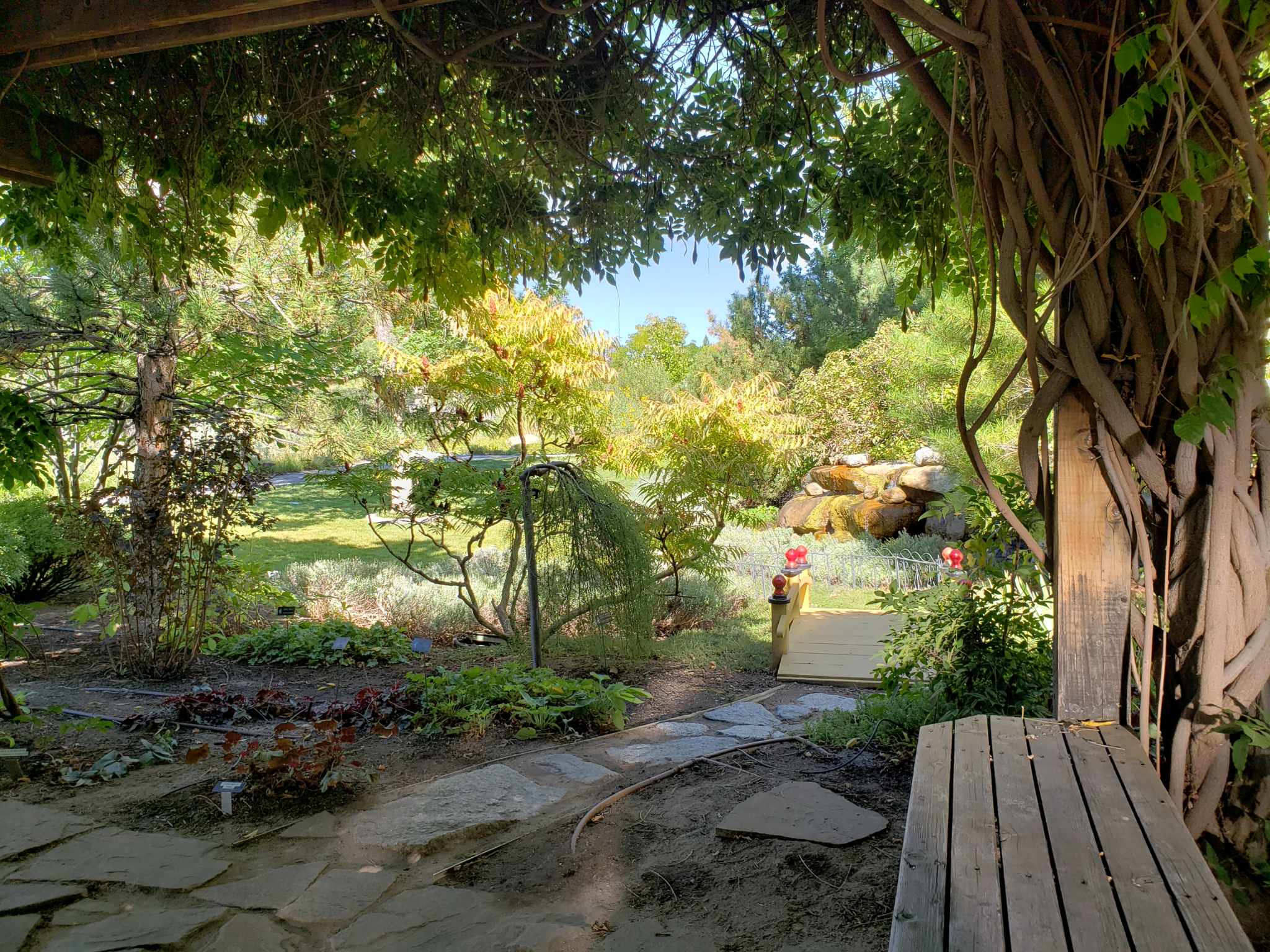
The Facebook event, I found out, showed the wrong address and the wrong map for the tree planting activity. I searched for over an hour, growing furiously upset to an extent unusual even for me and out of proportion to the circumstance.  All my focused mental strength brought me slowly to self-talk and deep breathing and prayer, and the dissipation of rage, and acceptance of the disappointment and failure.  Driving home from being lost, I saw a sign for Sego Lily Gardens, and pulled in.  Decorative rock covered an enormous round buried drinking water reservoir, and the waste strips and corners had been turned by the city into pleasantly meandering paths within groves of pines, and grassy gardens with blooming flowers, and creeping groundcovers.  A downy woodpecker did not mind me standing only three feet beneath his piney perch as he pecked.  This sudden immersion into quiet living beauty counterbalanced my earlier distress, and I felt almost grateful at having gotten lost.  In these gardens, my dreams reawakened, of a pollinator garden buzzing with bees and graced by lilting butterflies, birds singing overhead, flagstone paths winding among tangled native flowers, a bench here and there.  I love the beauty of Dad’s and Mom’s manicured yards and turf lawn, and I work hard to keep them immaculate.  But I yearn for more natural surroundings, unmanicured and authentic, not forced into shape, but emerging from evolution’s own DNA, with some gentle shaping of garden form from me.  A week later I brought Mom to the garden, and pushed her in her wheelchair around the garden paths, twice.  We soaked in this suburban jewel, unknown to us before, touched by it now, feeling for the moment blessed and graced and whole.

Courage at Twilight: Someone Else to Push the Chair

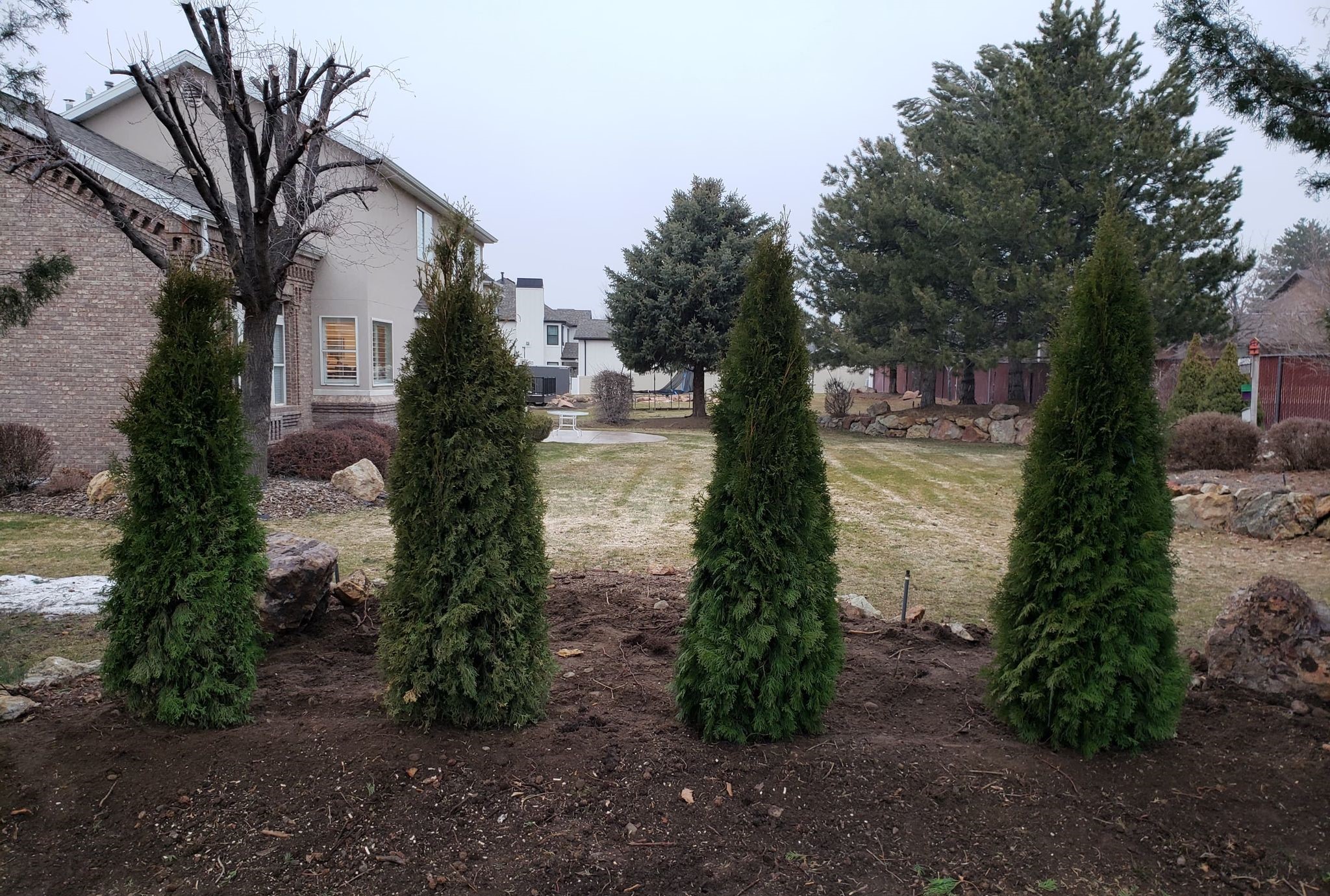
Jeanette has come, and I have left her with the work and fled to my upstairs office to read Brian Doyle’s humorous penetrating moving essays, and have escaped to the yards to trim low shrub runners and pluck crab grass and spray the arborvitae with putrescent eggs spiced with clove oil that mule deer despise, and I beg off from the evening walk to the end of the street and back, my feet aching from a bloody self-pedicure and the day’s hike, content that someone else has come to push the wheelchair. I want to heave at the odor of commercialized rot—I am desperate to deter the deer—and decide to follow a neighbor’s suggestion to cut in half bars of Irish Spring soap, drill a hole in each half, and drape a green perfumed necklace to each faltering arborvitae tree.  Nearly half of the trees’ greenery was eaten by deer, and nearly the other half froze and dried and sluffed away, but new green, darker than the soap, richer, is peaking out from what I thought were dead twig ends.  A new day, and Sarah has come, and she has rousted Dad from his reading lethargy to come watch the cousins play cards and to coax the cousins out the front door and down the homemade ramps, and Jeanette and Sarah have struck off to the end of the street, Amy aahing at divinely gorgeous flowers.  I had followed, too, and waived at Greg, the thirty-three-year veteran retired police officer whose garage walls are speckled with five thousand police agency shoulder patches from all over the U.S. and the world, though he used to have six thousand patches and has sold one-thousand on e-Bay to self-fund a missing dental plan.  I shoved off and caught up, and we ended the walk in the back yard on Memorial Day and encouraged Mom and Dad to tell stories of their long lives.  Dad’s first memory of his mother came when he shut his finger in the screen door and sprouted tears and a purple blood blister, and Dora cooed and chortled over him and kissed his finger and comforted and promised he would be okay, and Dad decided at that moment in his life that he would be okay.  Dad’s first memory of his father came from working outside in the yard, where Owen had a bucket of dirty transmission oil, and where Owen and Owen Jr., the latter only three, each dipped a paint brush in the black oil and slathered it darkly onto the thirsty sun-bleached wood-fence slats, an inexpensive waterproofing stain.  Dad’s first memory of Mom was of the church dance when he was 25 and she was 21 and they met and he asked her for her phone number and she willingly gave him her number, and over the coming months he gazed at her often and thought how kind and smart and beautiful she was, and how nice it would be to live a long life together.  They have moved inside for ice cream, and I have watered my pumpkin-seed mounds, waiting for sprouts to emerge, upon which I will shave flakes of green soap against the deer.

Yours Truly with sweet sisters Jeanette and Sarah.

Courage at Twilight: Booby-Trapped


In the three weeks since Steven and I planted the four emerald green arborvitae, I have watched them disintegrate before my eyes, each day more pieces of green leaf littering the ground. I emailed the nursery pleading for help to keep them alive—we had worked too hard and brotherly to let them die—and the nursery’s diagnostician replied that the trees looked alive but badly eaten, and he wondered if we had deer in the neighborhood.  Boy do we, I fumed to myself for the thousandth time.  Mule deer roam the neighborhood by the dozen, nipping at tulip sprouts and lily petals and other flowers and shrubs and garden produce, transforming from wild novelty to neighborhood bane—but I had not thought they would eat evergreens full of resins.  I drove to Lowes immediately and purchased two deer repellent products, the first a powder of dried blood (the package did not say whose) that would trigger the instinctual flight response in deer (so the package promised), and the second a liquid concoction of putrescent egg solids graced with garlic.  Eager for the trees to begin their recovery, I sprayed them liberally with putrescence, and discovered instantly why deer and rabbits—indeed any sane creature—would stay away.  Then I spent an hour manicuring the tree moats and surrounding grounds, skunked and gagging the while.  I would have done well to reverse the order of things.  But by the time I had finished, the revolting stench had become strangely comforting: if it worked, our trees would recover and fill out, emerald green and evergreen fragrant (except for the days of repeated treatments).  After my report to Dad, he explained how he has had increasing trouble rising from his shower chair after bathing.  He thought he must be getting fatter because the arms of the chair hugged his hips tighter and tighter.  Today he could not free himself of the chair, but stood with the chair clinging to his backside like in The Bishop’s Wife.  Surely, he thought, he could not have gained that much weight in just a few days.  He asked Elie to take a look at the chair.  After turning the chair over, Elie announced that the chair’s metal supports had cracked, allowing the chair to bend and the arms to squeeze, and that if Mom and Dad kept using the chair it would soon snap in half and collapse beneath them.  Sarah lost no time sending over a newer, stronger chair, a pleasant blue color.  I have contemplated many times, in fact constantly, the value of the help and service my siblings have gifted to our parents, and how the gifts are in turn mine, lessening the weight of burdens, making room for a break, unstringing the bow.  And I am grateful.  After dinner Dad declared, “Roger, it is so nice of you to get home late from work and make us a dinner of roasted vegetables.”  The sweet potato and butternut squash wedges, roasted in olive oil and salt, had indeed been delicious.  But the odor of putrescent garlicky eggs remains arrogantly in my nostrils.

Courage at Twilight: Flower Garden

Field grass had grown up through the thick ice plant groundcover in the front flower bed. Dad had sprayed with a product that avowed “kills grass, not flowers,” which did not kill the grass and did kill the flowers, just not the plants.  He had spent hours poking at the grass with a long weeding tool, from a seated position.  But he finally gave up.  “Rog, I have made a decision.  I want to dig all the ice plants out.”  I began to dig in the dense matt.  “Make sure to shake out the soil,” Dad instructed.  I did so (and would have done so), tossing the dirtless plant clumps in his direction.  I did not look as I tossed them, and was confident I was not hitting him with the clumps, but did toss them in the vicinity of his feet, where the remnant soil filled his shoes.  “Roger’s revenge,” I quipped playfully.  “Did you know you dig with your left foot?” Mom asked randomly.  No, I did not know.  I am fairly confident my long life of garden digging has been ambidextrous (or as the local newspaper recently headlined, “amphibious”), but for some reason my left boot liked this job.  Dad had stumbled out with all his hand tools, but sat in his chair talking to me as I strained at the earthy tangles.  Several times he enthused, “I’m enjoying just visiting and watching you work.”  As long as he is happy, I am happy.  Using a leaf rake, he pulled the clumps together and lifted them into the garbage can, which I had positioned near his chair.  The filled bags were very heavy, and the wheeled can, with four filled ice-plant bags, felt full of rocks.  After two hours, we had an 8×9 open space, penned in by old bushes, with soft sandy soil, an empty pretty, space.  “I like it just like that,” Mom insisted.  “I don’t want any more bushes that you have to take care of.”  But Dad and I really wanted to decorate the space with new flowering plants.  We took ten-year-old Amy to the nursery, and carefully selected the plants based on tolerance of full sun and low water, plant height, and especially color and beauty of flower.  The empty space is now decorated with beautiful flowering plants, seen by every car that passes—a thousand a day, easily—and every person that walks by.  They all know: That’s Nelson’s yard; look how nice he has made it.  “You did a big job today, Rogie.  I didn’t think we would even start this job, let alone finish.”  Truth be told, neither did I.  Both my back and my attitude held out.  We finished at dusk, and I felt too tired to cook, so out came the leftover whole-wheat lasagna Sarah sent over days before, with canned corn and peas, warmed in the microwave.  Remembering the ravenous mule deer roving the neighborhood, I ventured into the dark and chill to grate Irish Spring bar soap on and around the plants.  Though we like seeing the deer, having our plants eaten overnight would have made us very sad.  But the next morning, the plants were intact and happily boasting their blossoms.

(Pictured above: Dad’s ice plants, before the non-killing spray killed them.)

(Pictured below: our new flower garden, before and after.)

(The string is not to keep out the deer, which would easily step over it, but rather the neighborhood children congregating at the corner bus stop who always traipse through.)

Courage at Twilight: Wild Asparagus

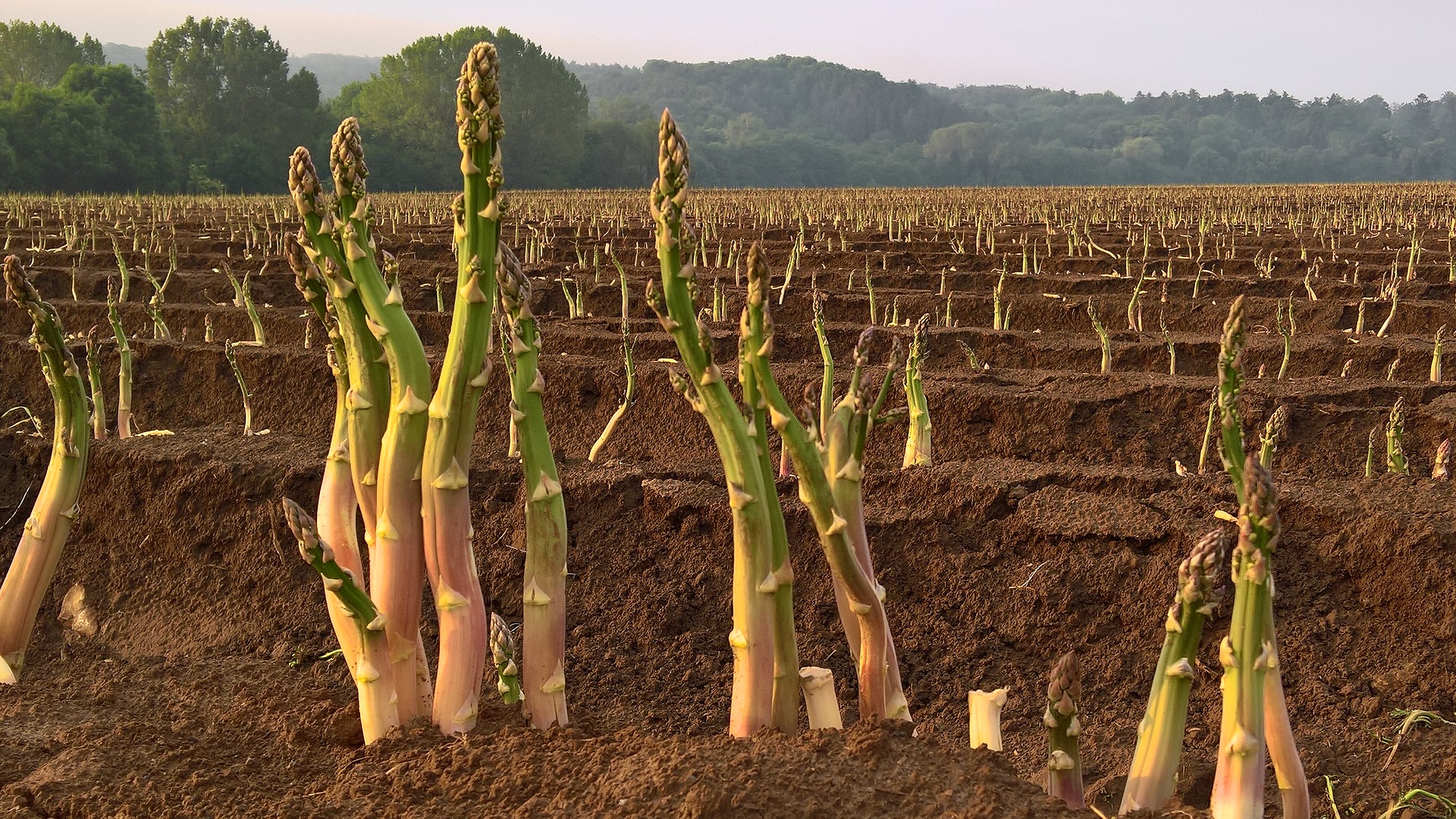
Dad stood hunched over the kitchen sink snapping the bases off the thick asparagus stalks, tossing them in the pan.  I cannot see asparagus without remembering the walk through the woods to the grassy field between the forest and the highway in New Jersey where the wild asparagus grew.  Mom carried the basket.  We children searched randomly for the thin green three-foot monoliths and snapped the stalks at the base and laid them tenderly in her basket.  Mom had trained our eye.  And I cannot remember that asparagus field without remembering the thick blackberry thickets along the same highway in New Jersey where we picked blackberries by the bucketful and took them home to boil with sugar and pectin, straining out the infinitude of stony seeds, pouring deep purple goo into pint jars, topping each with a quarter-inch of hot paraffin wax to seal the jars against pathogens.  That black blackberry jam tasted so delicious on crispy English muffins toasted brown in the broiler.  And I cannot remember that blackberry jam without remembering the asparagus walk and how we came home covered in ticks and never again took that wild asparagus walk.  I still love blackberry jam.

(Image above by Christian Bueltemann from Pixabay.)

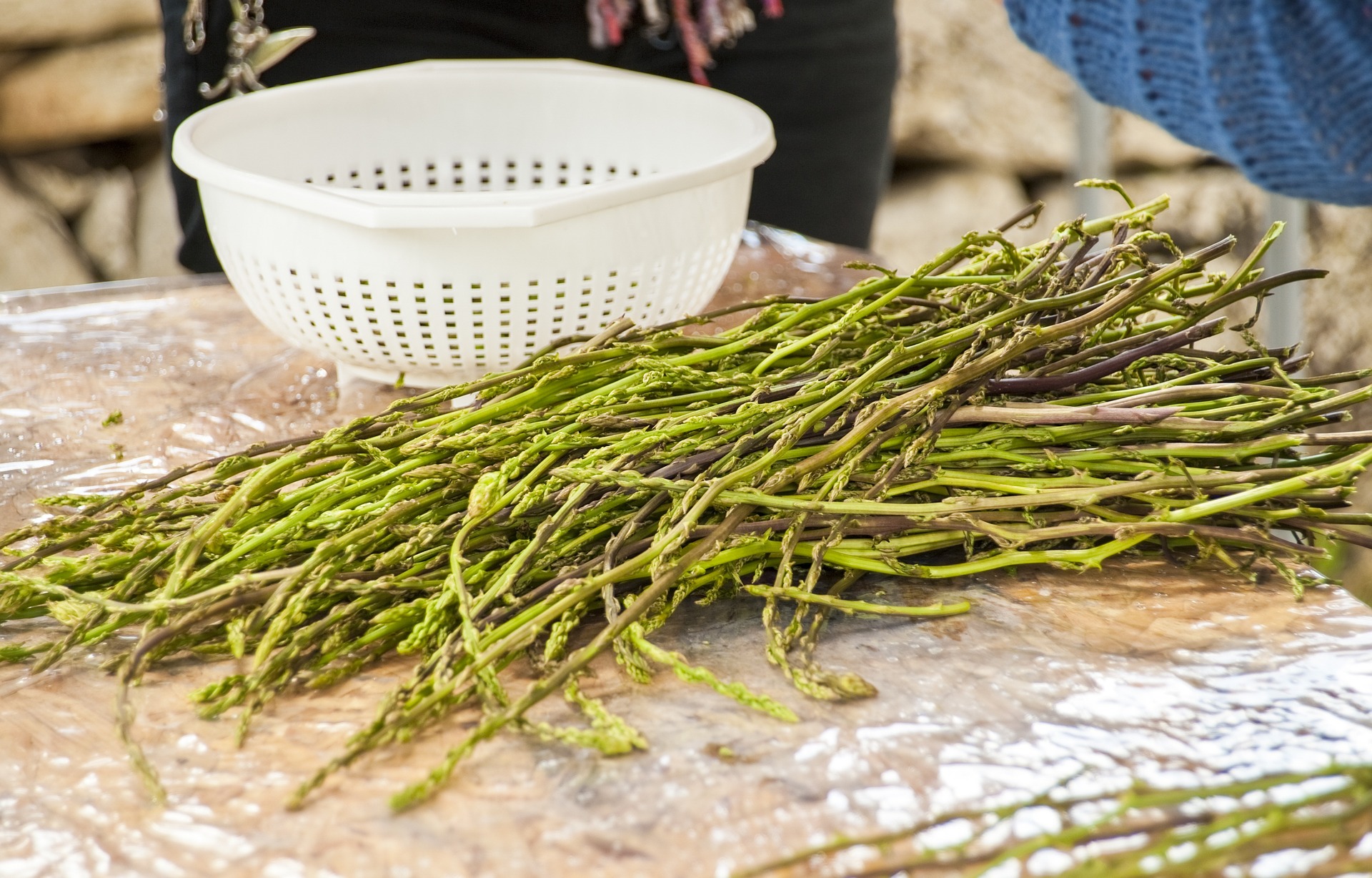
Wild asparagus in long and spindly:

(Image by DianaRuff from Pixabay.)

Courage at Twilight: Milkweed and Monarchs

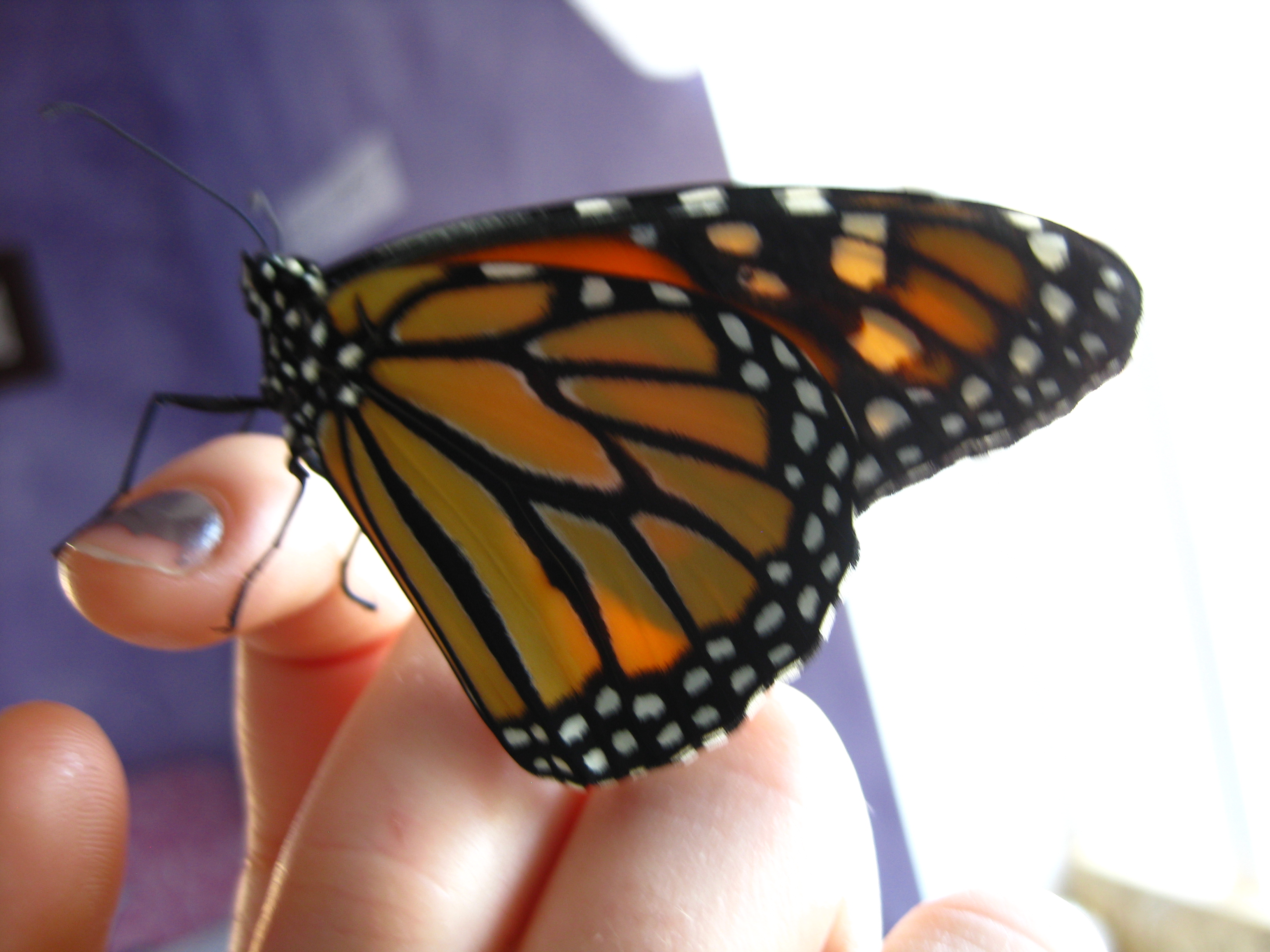
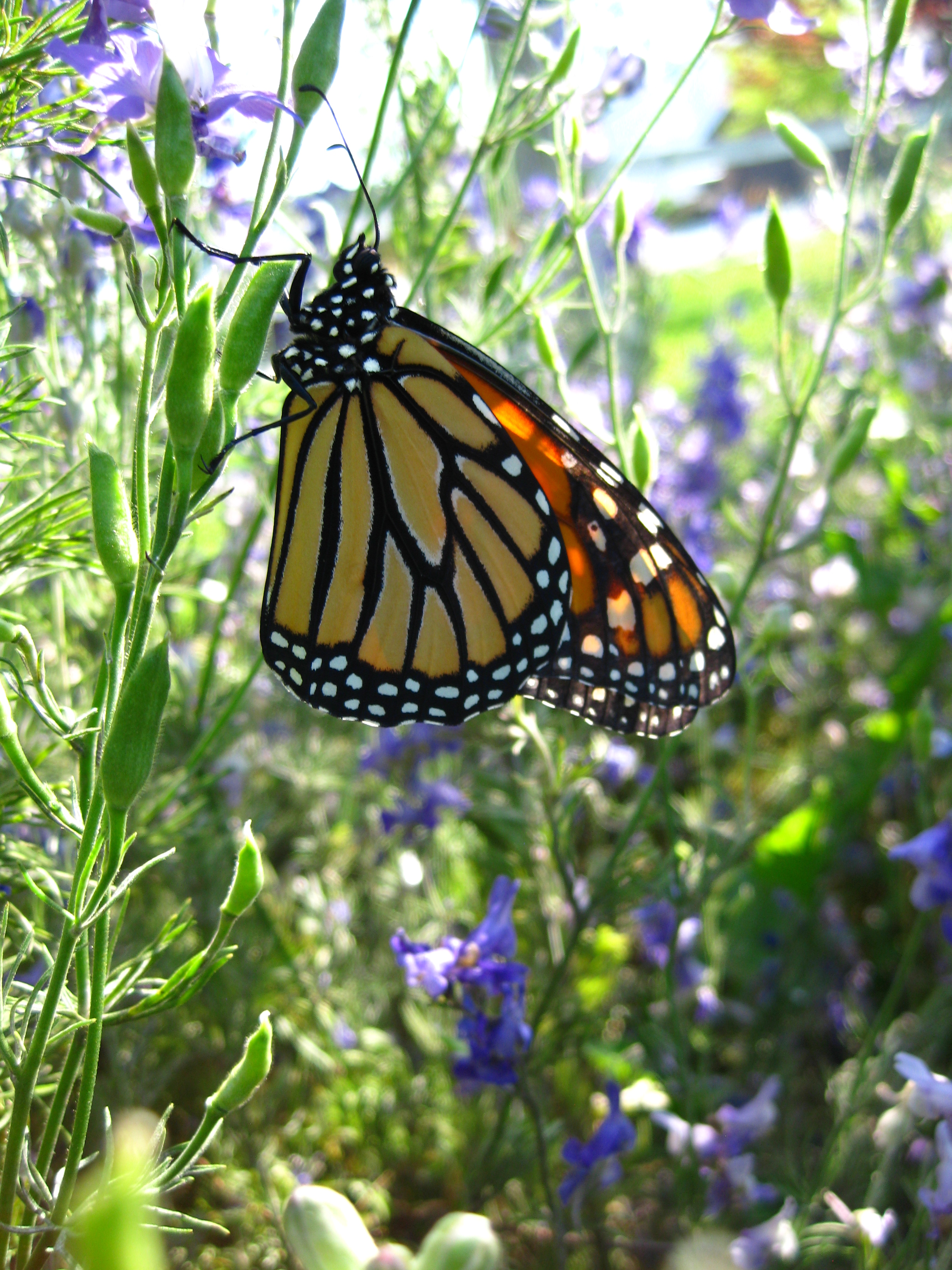
Monarch butterfly on my daughter Hannah’s hand

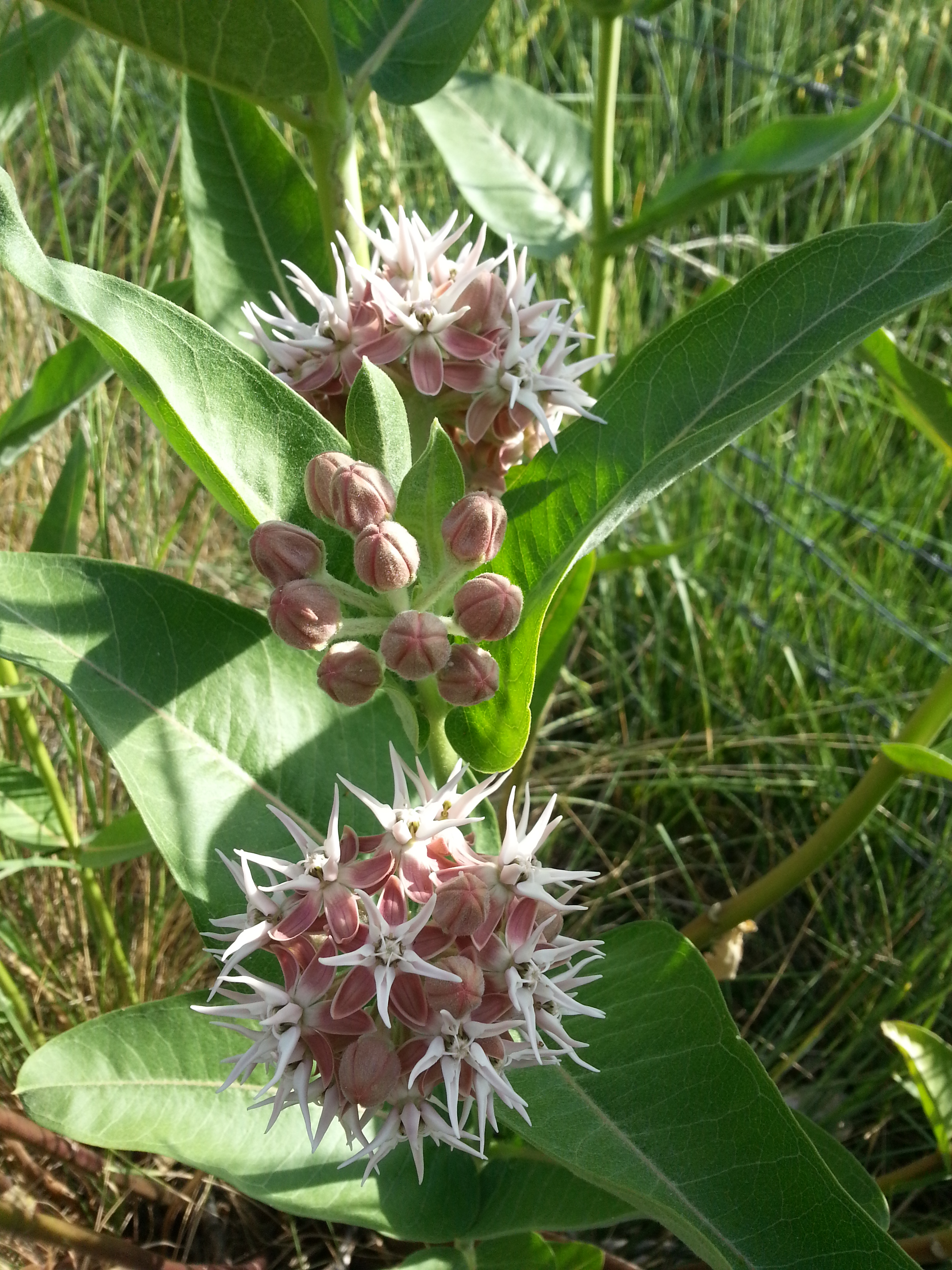
Years ago Mom planted milkweed seeds in a patch of open dirt under the Austrian Pine.  The plants are difficult to establish, but once established proliferate and dominate their territory.  She likes the shapes of their leaves, the heads of pretty perfumed pink starlet flowers, and the conical green seed pods that brown and break open and spread thousands of fluff-laden seeds on the breeze.  But the real reason she grows the milkweed is to attract Monarch butterflies.  As a child in Brazil and New Jersey, I gathered Monarch caterpillars and fed them to maturity, watched them pupate and finally break free as butterflies with wet wrinkled wings that vibrate and spread into black-webbed fiery flapping sails.  As an adult in Utah, I have helped my children do the same.  The Monarch chrysalis is like no other, a soft powdery green with stripes of gold: a living jewel.  Although Mom she has not yet seen a Monarch floating above her milkweed plants, still she hopes one will flutter by someday and stop to lay its eggs.  I believe it will.  For Mom, her milkweed patch has become a symbol of hope: hope for beauty and hope for successful growing up and taking off, a hope and trust in life.


Courage at Twilight: Shaping Bushes

Dad loves his yard care tools, especially the power tools.  The only power tool we owned growing up in East Brunswick, New Jersey was the push mower, with no power drive, for the half-acre corner lot at 2 Schindler Court (named by the developer-friend of Mr. Schindler of Schindler’s List).  Now Dad enjoys a set of DeWalt battery-powered tools, including one of his favorites, the hedge trimmer.  He often trims the bushes nicely round.  But the trimmer cannot grab and cut the shoots along the ground, and bending and kneeling is out of the question.  I, on the other hand, can (barely) bend and (barely) kneel, and I like the small hand pruner.  So while Dad shapes the bushes, I kneel on a cushioned pad and reach under the bushes to cut their runners and shoots, leaving a collection of uniquely and pleasantly shaped orbs.  The hard-to-get-to places are the ones longest neglected, but turning attention and effort to them yields pleasing results.  There’s a metaphor there somewhere.

Smashed

20161026_082342

I have lived alone for 1 year now: 52 weeks: 365 days.  The highlight of my life is to see my children.  They grew a gorgeous garden this year, and shared with me their harvest: sweet corn; swiss chard; cucumbers.  And a pumpkin.  Their front porch is adorned with two dozen perfect orange pumpkins.  Hyrum and Hannah offered me one, perfectly round, with a spiraling stem. The pumpkin reminded me of them each night when I came home from work.  It looked so cute sitting by the front door, until one evening I found it smashed on the rocks.

SMASHED

To Whoever
smashed my pumpkin:
I wondered
how long
my pumpkin would survive
you.

Not long.

My little daughter
raised this pumpkin
in her garden.

I love her.
I do not get to see her much.
I miss her.

So, I set by my door
her pumpkin, my pumpkin.
It reminded me of her.

I dared to hope
you would let it be.
But you smashed
my little girl’s
pumpkin.

(PS.  She gave me another yesterday.  One can hope.)

A Spot of Soil

2013-05-28_19-03-37_332

With Spring come thoughts of gardening.  I would not say that gardening is blissful.  In fact, gardening is work.  But working with the soil and tending to plants bring rewards both within yourself and for your dinner table.  The earth is my garden.  I am both the seedling and gardener.  The soil is mine to work, to nourish, as I determine.  I will grow, with twists and knots and bends, to be sure, deformed here and there, but whole.  I will grow and become myself, as I was in the beginning, as I will be when I move on.  I am me, after all, and you are always you.  You will know me, by the fruit I bear.  And thus will I, too, know you.  (This poem relates to the post entitled Chapter 29: Gardens of the Rabbit Lane: Memoir page of this blog.)

A SPOT OF SOIL

A spot of soil:
a patch of earth:
a garden.
It draws me, pulls me in,
to bend and kneel,
to press my fingers into
the cool, moist, humic ground,
to lift out handfuls—
like a child
in a sandbox or the seashore surf—
and let it sift through slowly opening fingers.
I plunge again, retrieve, release.
Again.
And again.
I am overcome with wonderment.
From this seemingly inert substance
springs all leafy life,
that sustains animal life—
my life.
With sharp steel implements
I dig and hoe and till and rake,
work the soil,
giving it what strength I can with
compost and manure and care.
With innocent expectation
I place the seeds,
so small,
like lifeless gravelly grains,
in furrows and mounds,
wishing for immediate fulfillment,
but understanding that
hope requires patience, that
faith rests in an abiding stillness, that
I cannot force the course of life,
but only prepare the way,
bring together a few essential ingredients,
and allow life to live,
as it determines,
while I attempt to nourish.


Look Out the Window

IMG_8429

In a safe environment, a child can see the world with wonder.  He or she encounters the smiles and waves of a parent, loose garden soil between the toes, butterflies on flower blossoms, and being tucked into bed with a story or a lullaby.  I wrote the song “Look Out the Window” after one of my children called to me from an upstairs window while I worked in the garden.  She was happy to see me–“Hi Daddy!”–and raced down the stairs to join me in the garden.  Every child deserves to be safe and to be loved, and to see the world with wonder.  Here is the link to the sheet music to Look Out the Window.

Chapter 29: Gardens

2013-05-28_19-03-37_332

–Knock, knock.–
–Who’s there?–
–I got up.–
–I got up who?–
(Hyrum-4 with Dad)

Despite the bright blue sky and the sun’s brilliance dazzling from millions of ice crystals in the fresh skiff of snow, I felt crushed by life’s burdens as I trudged alone along Rabbit Lane.  The burdens of being a husband and provider and father to seven children.  The burdens of being legal counsel to a busy, growing city.  The burdens of maintaining a home, of participating in my church, and of being scoutmaster to a local boy scout troop.  The burdens of being human.  While the sky above me opened wide to space, these responsibilities bore down heavily upon my heart.  They seemed to darken my very sky. Continue reading

Summer Corn

100_4742

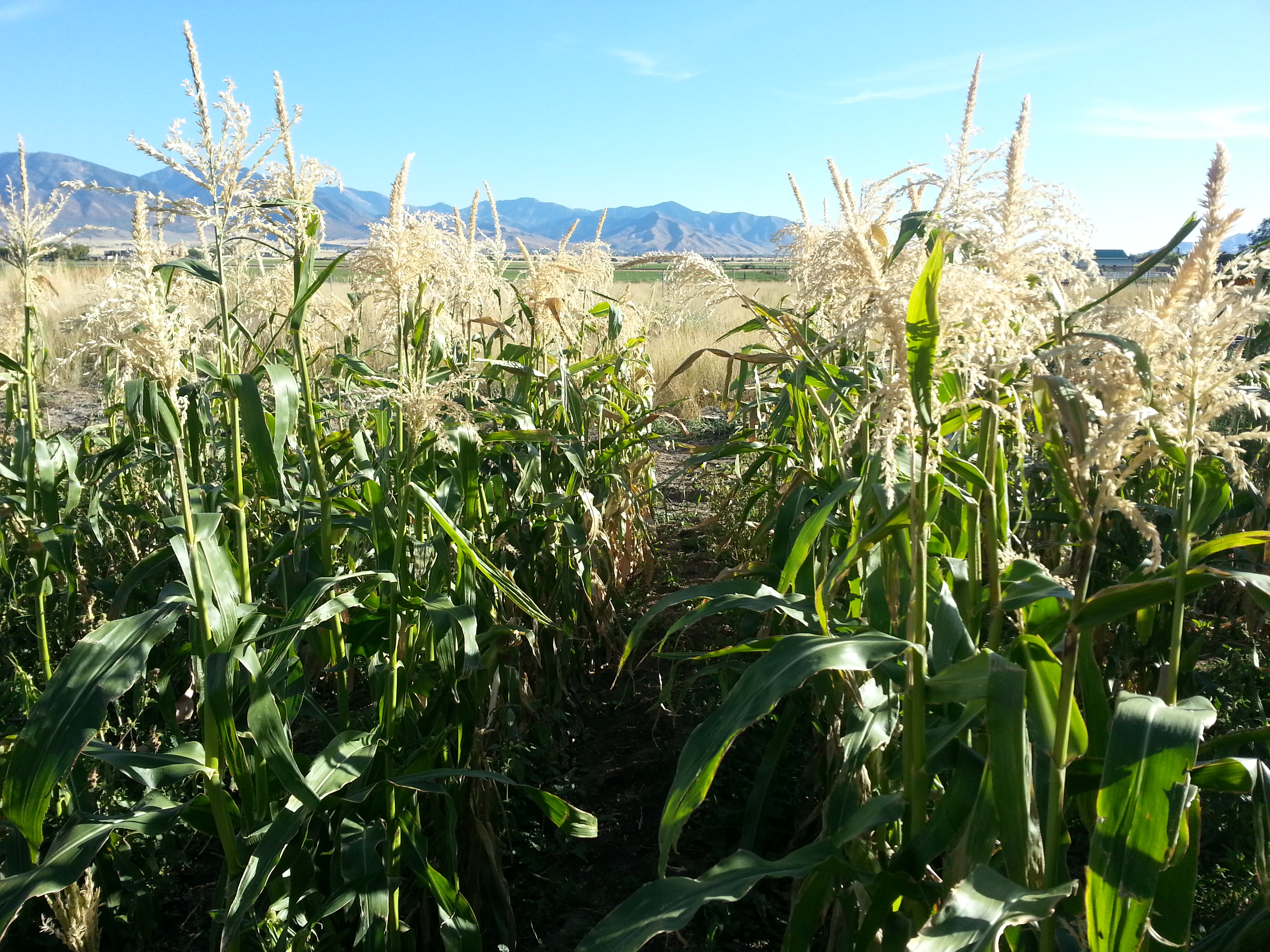
On many a summer evening, as the dry air began to cool, the children found me in the garden sitting on a picnic chair hidden between rows of corn stalks, munching on cobs of raw sweet corn.  That is as close to bliss as I’ve ever come.  One day I yielded to the impulse to lie on my back in the dirt between the corn rows, close my eyes, and just listen.  It took me years to put the experience into words, but I finally managed (hopefully) with “Summer Corn.”  As the poem seeks to share with an anonymous companion, so now I share with you.

20150919_172240

Summer Corn

Lie with me between the rows of summer corn.
Don’t speak, yet.
Listen:
to the raspy hum of bees gathering pollen from pregnant, golden tassels,
to the hoarse soft rubbing of coarse green leaves in the imperceptible breeze,
to the plinking rain of locust droppings upon the soft soil.
Listen:
to the neighbor’s angus wieners bemoaning their separation,
to the pretty chukars heckling from the chicken coop,
to the blood pulsing in your ears, coursing through your brain.
Don’t speak, now.
Reach to touch my hand.
Listen to the world
from within the rows of summer corn.