Tag Archives: Family

The Dementia Dossier: The Victim

“You see yourself as a victim,” she said, “and as long as you see yourself as a victim, you’ll be trapped in anger and resentment.”  Exactly where I have been.  The suggestion stung.  I did not want to hear it.  But I heard it.  And I studied it, and turned it over, looking at all sides, and I asked myself, Is that what I do?  A victim of my mother’s dementia.  A victim of my father’s dementia and diabetic paralysis.  A victim of a spiteful boss.  A victim of frequent illness.  A victim of an unhappy marriage.  A victim of an unhappy divorce.  A victim of loneliness and isolation.  I have been wanting to find a way through, if not a way out, of my challenges.  I have even been willing to see life differently, to acquire another perspective, and to pay the price for that wisdom—but I could not see how to get there.  My sister Jeanette showed me how.  Stop suffering under the weight of your victimhood.  Choose where you have choice.  Submit where you do not.  Laugh.


(Pictured above: my backyard view of fall.  Sandy, Utah.)

The Dementia Dossier: Basement

My new sweetheart joined in Father’s Day celebrations, conversing easily with my sons and daughters in law, munching on bacon burgers with all the fixings, tossing corn hole bean bags, and tickling my grandchildren.  Mom had insisted on my darling sitting on her lap for hugs and kisses and conversation, and my dear one cheerfully submitted.  (Mom asks the same of me, and I persistently refuse.)  Needing a few minutes of privacy to discuss some sensitive couples questions, I took my new love’s hand and led her down the stairs into the cool basement great room.  In a few minutes came a knock on the wall, from Hannah, looking for me, and chuckling with a blush that “Grandma” had suggested she knock in case my pretty one and I were “making out.”  She laughed and my sweetheart laughed and ogled and I did not laugh or ogle but shook my head for the severalth time that day.

(Image by Rudy and Peter Skitterians from Pixabay)

The Dementia Dossier: Watching

Do you know the feeling of being watched, but when you turn around, no one is there? As it turns out, in my case, someone is there, though often out of sight.  Mom watches me.  Her eyes follow me around the kitchen as I cook or bake or clean up.  She watches me from the kitchen window, or from my bedroom window, or from her recliner-side window, as I do the yardwork: “I saw you pulling so many weeds!”  Serving dinner to her in her tv-watching, needlepoint stitching, word puzzle circling recliner takes several trips—first the mango juice in a glass with ice, then the salad or fruit or toast, then the main dish—and her eyes seek to fix upon mine with each approach, as if begging me to beam back the affirmation and connection she craves in her new loneliness.  And I just cannot do it.  Like staring into a bright light, I turn my discomfited gaze away and perfunctorily do the duty of delivery.  I have told her, gently, that I cannot be the antidote to her loneliness.  Jeanette, Carolyn, Megan, Barbara, Deanna, and others do their best to fill that function.  I serve her meals, make home repairs, answer correspondence, keep the yards beautiful, shampoo the carpets, resolve her computer and internet difficulties, manage the finances, fill the pantry and fridge, and generally problem-solve.  But I am here.  And I am doing my best.  And we do talk some.  And we watch tv together.

(Image by Michaela 💗 from Pixabay)

The Dementia Dossier: Jobs

“You three boys empty the dishwasher for me, will you?” called Mom, from her recliner, to my brother and his son, who were beginning a week-long visit, and to me.  “You bet, Mom!  Come on, son!” my brother answered with his usual enthusiasm.  I, however, grumbled, and a bit too loudly.  “But Mom, emptying the dishwasher is, like, your only job!”  I confess to the sin of annoyance at being instructed to do a job she is perfectly able to do, and does regularly, quickly and efficiently, all by herself.  Steven did a quick and cheerful pivot: “Come on, Mom, we’ll help you!”  And Mom and her son and grandson emptied the dishwasher together, with Mom, of course, instructing her visitors on the correct location of each item.  I did not help them, not out of stubbornness or principle or pride, but rather from practicality: four adult bodies huddled around and reaching into the Bosch and adjacent cabinets clearly would be too many.

(Image by Natasha G from Pixabay)

The Dementia Dossier: Four-Leaf Clovers


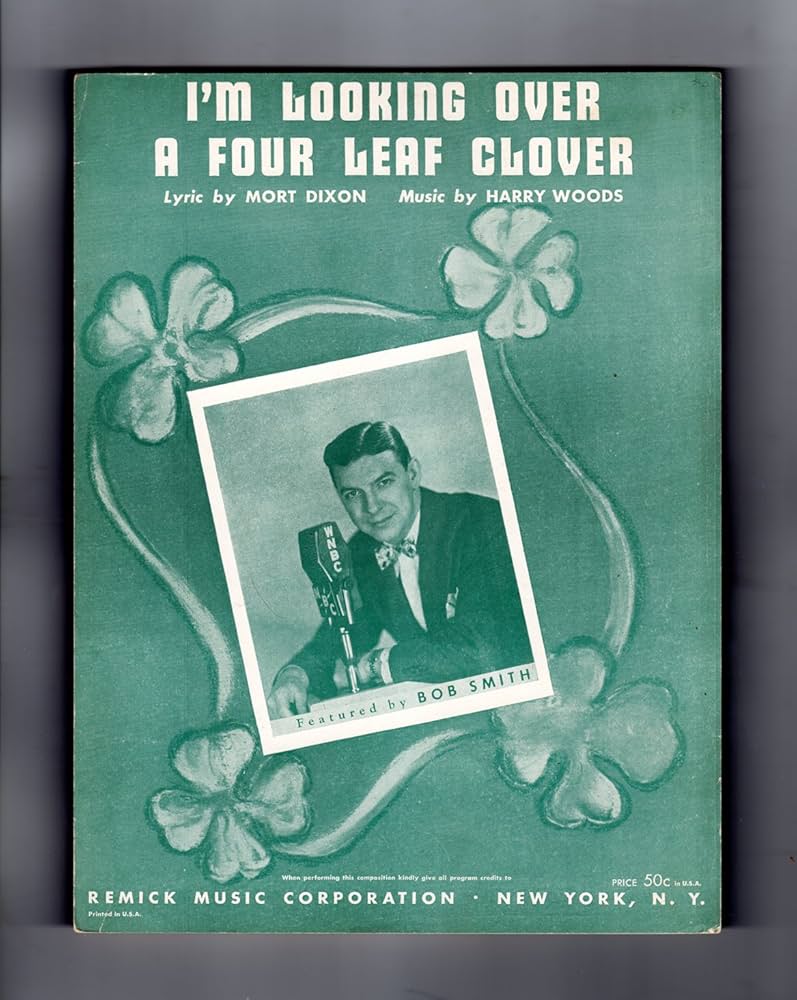
I'm Looking Over A Four Leaf Clover", 1927 Vintage Sheet Music, Bob Smith  Cover. Mort Dixon, Harry Woods. Remick Music Corporation. Music Ephemera  and History: Mort Dixon (lyric), Harry Woods (music): Amazon.com:

My date and I sat on the sofa with a sibling and a nephew wondering how to spend the evening, whether to watch a movie or play a game or just talk. “We could sing songs!” Mom piped up. “Do you know ‘I’m Looking Over a Four-leaf Clover’?” And she launched into the 1927 song with the unsteady tin of old voice:

I’m looking over a four-leaf clover that I overlooked before.
One leaf is sunshine the other is rain. Third is the roses that grow in the lane.
No need explaining the one remaining is somebody I adore.
I’m looking over a four-leaf clover that I overlooked before.

At first, I felt mortified, but my date knows and loves my mother and didn’t mind the cute oddity. I even found myself joining in, since I, too, know the old song. Still, I felt relieved when the verse ended. We quickly moved to casting family photos to the TV. When I voiced a frustration that I couldn’t manipulate the casted photos from my “Samsung,” Mom brightened: “You want to sing more songs?”

The Dementia Dossier: The Calendar

Mom’s weekly hand-drawn poster-sized calendar is taped to the pantry door. I have learned to take quick initiative each Sunday evening to write my commitments on her calendar in order to avoid her gentle badgering to write my commitments on her calendar.  She is smart to keep this calendar, because my explanations of events and dates and times quickly confuse and overwhelm her.  As I wrote on this week’s calendar, she called from her recliner, “What did you put on the calendar?”  I wanted to answer, What’s the point of me writing on the calendar if you’re just going to ask me what’s on the calendar? Why don’t you come and take a look for yourself at your calendar?  She persists: “What did you write in green?”  I opened the pantry door to show her, but she cannot read her poster from that far away.  I sighed.  “Tomorrow.    7:00 p.m.  Planning Commission meeting.”  That’s tomorrow?  Wednesday?  “Yes, Mom.”  And the next night is the police department awards banquet, so I’ll be home late two days in a row.  That one is written in fuchsia.  I am slow to understand that her mundane uneventful daily routine means everything to her sense of stability and calm.  Disruptions in daily the routine destabilize and frighten her.  Add to this her loneliness.  “I’m sad you’ll be gone,” she laments.  “I will miss you.”  And this time I actually do verbalize to her how inadequate a roommate I am for her, and how sometimes she becomes so clingy that I want to pull away.  “I’m sorry, dear,” she whispers, defeated.  Not only have I disrupted her routine with my green and pink events, but I have made her feel small and ashamed in her loneliness.  She needs a better roommate.

The Dementia Dossier: Introduction

Many of you followed Courage at Twilight as I recounted my experience living with dying parents.  With this page, I am launching a new exploration.  As my father’s mental abilities diminished, I naturally attributed the loss to senility, or more broadly and accurately, to dementia.  He read for hours and hours a day until the final week, and he still comprehended and remembered more than I do when I read the same books.  But his ability to comprehend, synthesize, apply, and remember the information began to suffer.  The decline was mostly masked by his great intellect, but gradually became more noticeable.  Where nine years ago he easily followed Word’s “accept” and “reject” functions while reviewing my suggested edits to his book Process of Atonement, in his last year he could not manage the power button, mute button, or any other button on the television remote.  Alone with Mom now, I am observing on a daily basis her decline in mental function, short-term and long-term memory, and the ability to process new information and work through new problems.  And I am pondering the spectrum of mental normalcy.  I am well-known at work for remembering the details of 30-year-old incidents, but I notice my own mid-term memory fading, like forgetting that the City Council increased its golf course fees six months ago (I wrote the fee resolution).  I am wondering: where does sanity end and senility begin?  But that is the wrong question, presupposing that senility is the loss of sanity.  It isn’t.  Senility is the loss of memory.  And don’t we all experience memory loss for once-remembered people, places, dates, and occasions?  So, by becoming more forgetful, am I, myself, drifting into dementia?  Where does dementia begin?  On what date is my memory and cognitive function loss sufficient to say, “That’s when my dementia began”?  I doubt such a date can be determined.  But episodes characterizing dementia can be humorous, sad, or maddening (etc.), or all combined.  In these posts I will record my mother’s little oddities, pointing together toward dementia and decline.  I mean no disrespect in finding an aspect of humor in her decline.  But humor often derives from the little human oddities of life, whether happy or sad.  I am merely observing, and trying to make sense, again, of the ending of life.  Each post here will be much shorter than this one—I promise—and will relate a small vignette illustrating the nature of inevitable human decline.  I love and respect my mother—and she also drives me batty!  Hopefully these entries will make you smile at, and ponder on, those we love whose earthly lives are winding down.  I look forward to continuing my journey through life with you.

Courage at Twilight: The After Words (Forgiveness)

My final (and 500th) entry in Courage at Twilight touches on forgiveness, which I hold to be the most powerful transformative life force in the universe.  As awesome as are the creative cosmological forces of nature, like black holes and supernovae and spiraling galaxies and evolution, the force of forgiveness is what exalts the human soul, both in the giving and in the receiving.  Living 1,262 days with caregiving and hospice provided ample opportunities for hurt and misunderstanding all around, and hence for forgiveness.  My siblings have been extraordinarily kind and forgiving as I have cared sincerely but imperfectly for their beloved father and mother.  They love and accept me even in the midst of my missteps.  They forgive.  My mother forgives me when I lose patience with her deafness and confusion, seeing me always as her darling boy.  In my father’s new life sphere, he understands me fully and pierces the mists of my depression and fear: he forgives me all my trespasses.  For you to whom I have been insensitive and for whom I have not been fully present in love, I desire your forgiveness.  This life is not designed for perfection, but for struggle and growth.  In any event, perfection I cannot do.  But I can do the work of life, and I will, forgiving myself along the way.

(Pictured: flower meadow beneath Mount Timponogos, Utah, a favorite hike of Dad’s and of his children and grandchildren.)

Courage at Twilight: The After Words (Loneliness)

We, my brother and sisters and I, navigated a week of days too filled with tasks to feel much grief—writing an obituary that attempted to summarize in two pages the long life of a great man—preparing a funeral program involving dozens of family members—writing a funeral talk I did not want to write—the mortuary checklists—settling affairs of estate—hundreds of texts and emails and messages to and from those who knew and loved him—the trickles and gushes of people through the house—all the standard tasks, which we were determined to perform in an exceptional manner.  Mom will be lonelier now, without her husband and friend of 65 years.  She will not hear him say as she sidles past his hospital bed, “You’re just the most wonderful wife, Lucille.  I love you.  We’ve been married 62 years.  When you walk by, I’ll give you a hug.”  I will not hear him exclaim “Roger!  Welcome home!” and “What a gorgeous dinner, Rog!  I just love steamed vechtables!”  Walking the grocery store aisles, I passed the zero sugar mint patties, the deluxe mixed nuts, the lidocaine foot lotion, the Brussels sprouts (Mom hates them), and no longer put them in the cart.  And, I felt the wrench of good-byes anew when I handed to the thrift store attendant the bags stuffed full of shoes and socks and shirts and sweats and suit coats and hoodies.  But our grinding struggle is over, and Mom will experience her widow’s aloneness with a new measure of calm.  A neighbor asked Mom how she was feeling, and she declared, “I’m so happy for my husband.  He’s not paralyzed or sick anymore.  He can run and jump and play.  He’s with Sarah, and with his mother, his father, his sister Louise, and all the rest.”

Courage at Twilight: A Long-stemmed Rose

We all believed it, my mother and sisters and I, that my father clung to his last heartbeats and breaths until Steven could arrive to bid farewell.  We enthusiastically expressed our belief to Steven and to each other.  Whether factual or no, we wanted to believe it; we wanted this mystic affirmation of a narrow sliver of hope in the midst of death.  Indeed, that Steven arrived before his father’s death seemed miraculous, despite the coma and death rattle.  But I soon discerned the unfairness to Steven of this testimony, which required of him wonder and faith in the face of haggard death, which broached the unanswerable question of why our father’s lucidity could not have been prolonged a mere 36 hours to allow a two-way farewell, which raised the painful reality of this last good-bye.  So, I kept my belief, or my wanting to belief, silent, and sought merely to accept the circumstances we were given and to find satisfaction in having done our best with them.  Steven’s trip was planned months before, but he arrived just prior to our father’s passing and left just following the funeral.  After our father’s passing and our family prayer, when our small assemblage felt ready, I called the on-call hospice nurse, Monica, to report the death: Tuesday January 14 at 11:03 p.m.  The official time of death, however, became the time of her certification of death: Wednesday January 15 at 00:26 a.m.  She performed her coroner’s functions, wasted the remaining morphine (mixing with dish detergent and pouring down the sink drain), and called the funeral home.  At about 2 a.m., the mortician rang the doorbell, bowed at the waste, expressed his condolences for our loss, entered the house, crossed the room to our mother, and delivered to her a very-long-stemmed red rose, bowing again and whispering again his condolences, which he repeated at a higher volume after Mom said, “What’s that?”  After speaking comforts, he and his junior associate, dressed in black suits and burgundy bow ties, shrouded our father in white and transferred him to a wheeled gurney, where they enclosed our father’s body in a blue velvet bag with a sturdy brass zipper, and draped the whole with a blue patchwork quilt, a nice touch I did not anticipate but appreciated.  And then they rolled our father’s body away and out the front door and down my wood ramps and into their Larkin van.

Courage at Twilight: I Will Not Let Him Drown

For two days family members have trickled in to visit with each other and to tell my father they love and admire and appreciate him, and to say good-bye.  Those living farther away video called to do the same.  But my father has been in a coma.  Today he has begun to show the signs of death: a rising core temperature (at times 104 degrees F); cooling extremities; sweating and clamminess; inability to swallow (he has not eaten or drunk for six days); healthy color fading to cadaver gray; producing very little, very dark urine; not registering pain or reacting to any stimuli; gurgling on liquid in his lungs; no bowel movements.  The day was calm and filled with tender expressions, and I imagined he would slip away quietly into death, his body and mind finally shutting down.  The rattling and gurgling in his ragged breathing seemed to worsen.  I learned later this breathing is called the “death rattle.”  Finishing the hundredth phone call of the day, I could hear from across the house a concerning increase in the raggedness of his breathing, and hurried to his side, where I was horrified to find his mouth filled with a thick creamy liquid.  How is he even breathing through all this goo? was my first thought, quickly followed by a frantic He’s going to drown!”  I remembered seeing a rubber bulb used to suck a sick baby’s nose, and ran to retrieve it.  He might be on the verge of death, but he would not meet his death by drowning, not while I was here to do something about it.  Please, God, help me know what to do.  Somehow, my father was managing to convulsively breath despite the liquid, and I set to sucking it out with the bulb, squeezing the contents out onto a sheet.  Please, God, help me to keep him alive until Steven gets here.  Ten panicked squeezes, twenty frantic squeezes, fifty fearful squeezes with the bulb.  My hand began to ache, and the phlegm piled up on the sheet.  His mouth now clear, I called the on-call hospice nurse, who explained the goop was a normal accumulation of mucous in an unconscious person with congestive heart failure who could no longer swallow.  I felt chagrined, that this were so normal, why did a hospice nurse not tell me to watch for it, prepare me to deal with it?  She ordered the delivery of a suction machine.  The motor suction wand helped me remove more mucous, though much of the underwater gurgling lay deeper in his throat where I was afraid to jam the wand.  While he could no longer swallow, he could also no longer gag, and I probed as aggressively as I dared to clear his throat of phlegm.  I did not want to injury him or cause him pain.  My sister Carolyn took over suction duty while I raced to the airport to get my brother Steven, about to arrive from North Carolina on a trip planned months previous.  I apprised him of the condition in which he would see his father, hoping to soften the experience.  He stood over Dad, offering his silent and whispered good-byes.  Carolyn, Steven, and I began to plan the night, resolving on hourly suction shifts.  I would take 11 p.m., midnight, and 1 a.m.; Carolyn would take 2, 3, and 4 a.m.; Steven 5, 6, and 7 a.m.; and I would resume at 8:00.  At 11:01 p.m., as I wrote this entry, pushing one minute past my shift start-time (what harm could one measly minute do?), Carolyn came to my room and whispered that our father’s breathing had changed, had calmed and slowed.  We descended the stairs and found our father not breathing at all.  I cleaned his face of the last thrown-up mucous and felt for breath and stared for a moving chest, but all I saw were slack muscles and a ghostly greening face.  I ran for Steven, and Carolyn ran for Mom, who descended the staircase slowly on the lift in her long white cotton nightgown.  We stood around our father and husband, not quite believing he was gone, his body still hot, his body unmoving, his body covered with a white flannel sheet stenciled with blue sheep.  Peace and tenderness and loss and relief and sadness permeated our own bodies, together with the one last unexpected trauma of preventing his drowning, and we said nothing until I somehow knew I need to say something, not just anything, but something sublime and holy and apropos, so I offered to pray, and I thanked God for this great man, this powerful intellect, this generous heart, thanked God for giving him to us, thanked God for having each other, thanked God for ending my father’s years of daily suffering, thanked God for a family filled with love and devotion for one another.  And we let him go.

Courage at Twilight: What Will the Morning Bring?

I expected this entry to begin and end with “Dad is dead.”  The night before, I turned off all the lights except for my father’s night light, a small wild-wood lamp made by my son Hyrum, and said good-night to my unconscious father who lay in the lamp’s low glow.  After sunrise, I lay awake in bed with a tired father’s Christmas-like morning mix of anticipation and dread, sneaking down the stairs ahead of the children for one last check on the piles of gifts before the onslaught of squeals and flying paper, in this case ahead of my mother, in this case for one last check on my father, who I anticipated finding cold and dead.  But, again, he defied my expectations of certain life’s end to flicker his eyelids and responded “Hi Rog” to my good-morning greeting.  The vivid yellow urine of yesterday dripped an angry opaque red.  Rosie said the red could be blood from the catheter insertion, but more likely meant failing kidneys.  He drank nothing yesterday, after all.  I swabbed his dry open mouth with a wet sponge-on-a-stick.  I smoothed Vaseline on his flaking lips.  I syringed a small dose of morphine in advance of the CNA roughing him up with rolling and changing and bathing and rubbing.  From the kitchen sink I heard him mumbling, and I hurried back for him to look at me sleepily and exhort me to “Be good, Rog.  Be good.”  I will, father, as if I know to do anything else.  Then I settled in to do what any other normal land-of-the-not-dead person does: I washed last night’s soaking pots and pans, and I set the garbage and recycling cans at the curb.  Mom asked me to pray with her last night, asked me to pray with her every night.  But what she really wanted was to tell me that she wants to stay in the house and not go to an assisted living facility after my father dies.  I told her there was no reason not to stay at home if she were healthy and mobile.  But I told her that I could not be her companion or comforter, that she would mostly be alone.  She liked being alone, she said, doing her simple activities, she said, her needlepointes and word puzzles.  I did not talk with her about what my own life might have in store.  It’s too soon.  The time for that will come, but is not today.

Courage at Twilight: Sweet Moments

The family starting calling and coming over, and undeniably sweet moments began to surround Dad and to fill the house.  My sister Megan leaned over him, in tears, and gently wiped his cheeks and chin and brow, talking sweetly to him, and he awoke enough for several lucid minutes of whispered conversation as she related old memories of growing up in New Jersey.  When he slipped back into unconsciousness, she summarized to him some of the more interesting stories in the day’s New York Times.  Niece Afton stood by and rubbed his arms for an hour and sang to him his favorite family song, “Sweetheart of the Rockies.”  My son Caleb spoke out with “Love you, Grandpa!” and Dad’s eyes fluttered and he whispered back, “Love you, too.”  Caleb joined his siblings on a Messenger call, and they all took turns saying good-bye, or to wave and cry.  Rosie and Veronica, two CNAs, deftly rolled him over and back in order to install a draw sheet, disposable chucks (pads), and a new brief, and swabbed his mouth with a wet sponge, and installed pillows beneath his calves to keep his heels off the mattress to avoid pressure sores.  My daughter Erin expressed her love and sadness from the other side of planet Earth, and my sister Jeanette and her husband Craig and Dad’s brother Bill called me to tell me they loved me and appreciated my efforts and pledged their support.  Friends Ana and Solange sang Brazilian lullabies to him, and Ana told me how she had the strongest impression when entering the house that Sarah, who died exactly a year before, was there in the house with us, with Dad, along with other loving spirits—Ana could feel their presence so strongly—and how their presence remained until just after the CNAs had finished caring for Dad and Dad had finished crying out in pain as they rolled him to and fro and we had given him more lorazepam and morphine to ease his pain and anxiety and he slipped into soft snores—then Sarah left.  And I told Ana I was glad she could feel such beautiful mystical things and tell me about them because I am both utterly empty and completely saturated and can feel nothing but only flow from one task to the next to the next—there are so many tasks—and in between I can but withdraw into myself and sit curled up in an emotional corner unable and unwilling and unready to feel.  The last person awake in the house, I looked at Dad in the nightlight glow and knew he was dying and would be dead within hours and saw his passing as just another fact among an infinity of sterile facts, like the ripening of the green bananas, like making mashed potatoes and sausages so I had something useful to do, like the glow of the reading lamp and the squeak of the rocking chair, and Megan’s teary eyes, and Mom’s veneer of cheer thinly covering a universe of grief and fear, and the stars shining coldly in the winter sky.

Courage at Twilight: Unspoken Apology

Before I understood Dad’s pain, he shouted at me as I lifted gently under his left arm to help him stand and turn for bed, and I shouted back at him to not shout at me, making sure to shout louder than he. Lying panting in his bed, he explained the horrible pain he was having in his chest.  Understanding his pain helped me find more compassion and patience, helped reduce my resentment, helped me speak softly and forgivingly, and I thought in the night of the apology I would offer him the next morning.  I’m sorry I shouted at you, Dad.  Can explain something to you?  Just let me get through it, and then you can respond.  I have always felt afraid of you and intimidated by you.  You were always so smart and so strong and so successful, a superstar to so many, and I wanted to be all you are but knew I would never be.  I have always wanted to make you proud, but you never told me you were proud of me.  I have always wanted your love, but you never told me you loved me.  I always felt afraid of your disapproval and disappointment.  And so, I feel destroyed and annihilated when you shout at me or become angry or disappointed with me.  And now, at age 60, I shout back or become defensive, only to stay alive.  Always in my life I have shrunk to be as small as possible, I have shrunk into shame, I have sunk into depression, for I am a man who has depression.  But, I don’t want to die, Dad, and to not die when you are disgusted with me or disappointed with me or angry with me, I fought back.  That’s what is happening.  I’m trying to survive, to stay alive, to not die.  But I can see that you weren’t angry with me last night; you were in severe physical pain, and so I apologize to you for shouting back at you when you shouted at me, because you really weren’t shouting, you were just crying out in pain.  I’m sorry.  But in the morning, I found him too feeble and in pain and ashen-faced and miserable and weakened, and could not bring myself to add to his suffocating burdens.  My apology may have brought understanding, but would have added to his heaviness and suffering.  Instead, I listened to his troubles and called for the hospice nurse to come, on a Sunday, and administered the morphine, and did what I could to safeguard his comfort.

(Pictured: boot hill grave in Peoche NV, the small mining town of my father Nelson’s grandfather Nelson.)

Courage at Twilight: Television Tyrant

“Is this asparagus?” Dad called out after I served him his dinner plate. “It tastes like a stick.”  The only words my mind would form were profane, and I clenched my jaw against their audible escape.  Perhaps he was trying to be funny?  Or, perhaps his dementia really is that bad?  The asparagus was very skinny, after all.  But mighty tastily cooked.  After the dinner-time Next Generation rerun, I retrieved the empty dinner plates—all the sticks on his plate were gone—and Mom began surfing the channels.  Oh, the power.  “We could watch ‘Superman’,” he suggested, catching a glimpse of the name on the screen.  “No.” Mom answered simply.  “We could watch ‘Pirates of the Caribbean’,” he ventured again.  “NO!” she hollered.  She was in total control.  He was helpless, defeated, and he knew it.  I fled the kitchen, weary of the too-frequent tyrannical television exchange.  At 10:00 p.m., when I wanted to be in bed, I descended the stairs to the family room, the scene of a terrible nightly struggle.  Dad’s task was simply to stand, to hang onto the walker handles while he turned, and to sit his bare bottom on the towel-covered walker seat.  No steps required.  A good thing, since he has no steps in him to take.  He pushes, and he rocks, and he pushes, and he trembles, and he slowly rises from his recliner, his body bobbing convulsively from arms and legs that will no longer bear his bulk.  His swollen feet shift an inch or two at a time in the 120-degree pivot.  And there it was—I could see it: he was going down, and once he went down there would be nothing I could do but dial 9-1-1 and be up half the night with adrenaline and worry.  So, I pressed a fist into his hip and shoved, and he groaned and slumped precisely into position and exploded angrily, “DON’T PUSH ME!”  I had no patience for the petty power posturing, as if he could have positioned himself.  I recognized that he was reacting to my maneuvering with the only power he had left: the attack.  But I was having none of it.  “DON’T YELL AT ME!” I retorted.  “If it weren’t for me, you’d be on the floor!”  I pulled the walker, Dad’s back toward the direction of travel, to his bedroom, his feet dragging uselessly behind, swollen and deformed.  I will not give him the meager dignity of pushing the walker with him face-forward, not because I am spiteful, but because of his difficulty in inching his feet forward and my difficulty in not running over his hideous toes.  So, I drag him.  And I position him facing the bed for the last agonizing transfer of the day.  “I don’t want any help, because I can do it myself, even though I’m slow.”  Be my guest.  I must be there anyway, just in case, and to spare Mom the labor and worry.  And, somehow, every night, he pivots just enough to land his butt on the edge of the bed, barely.  But I want to scream at him that he shouldn’t be here, at home, scaring everyone and bossing everyone and narrating the news in real time, a delayed echo competing with David Muir at volume 45, and complaining about eating sticks for dinner, and making Mom lift his butt.  But, of course, he should be here: that is the whole purpose in my being here, so that he can be here, until his end.  Though not wanting him to die, that purpose has exhausted me and left me angry and resentful despite my every effort to be the good, dutiful, patient, faithful son.  At the Thanksgiving dinner table two days before, we sang one of our favorite family songs, “Swing Low, Sweet Chariot,” and Dad explained how it was an old slave song, the enslaved Black Americans supplicating God to send his fiery chariot to end their suffering and convey them to a merciful heaven.  We have sung that song since I was a little boy, at home, around the campfire, at reunions.  “One day, soon, that chariot will swing low for me,” he sighed.


(Pictured: fall leaves on an arched wooden bridge over a dry creek in Dimple Dell, Sandy, Utah.)

Courage at Twilight: You Don’t Answer

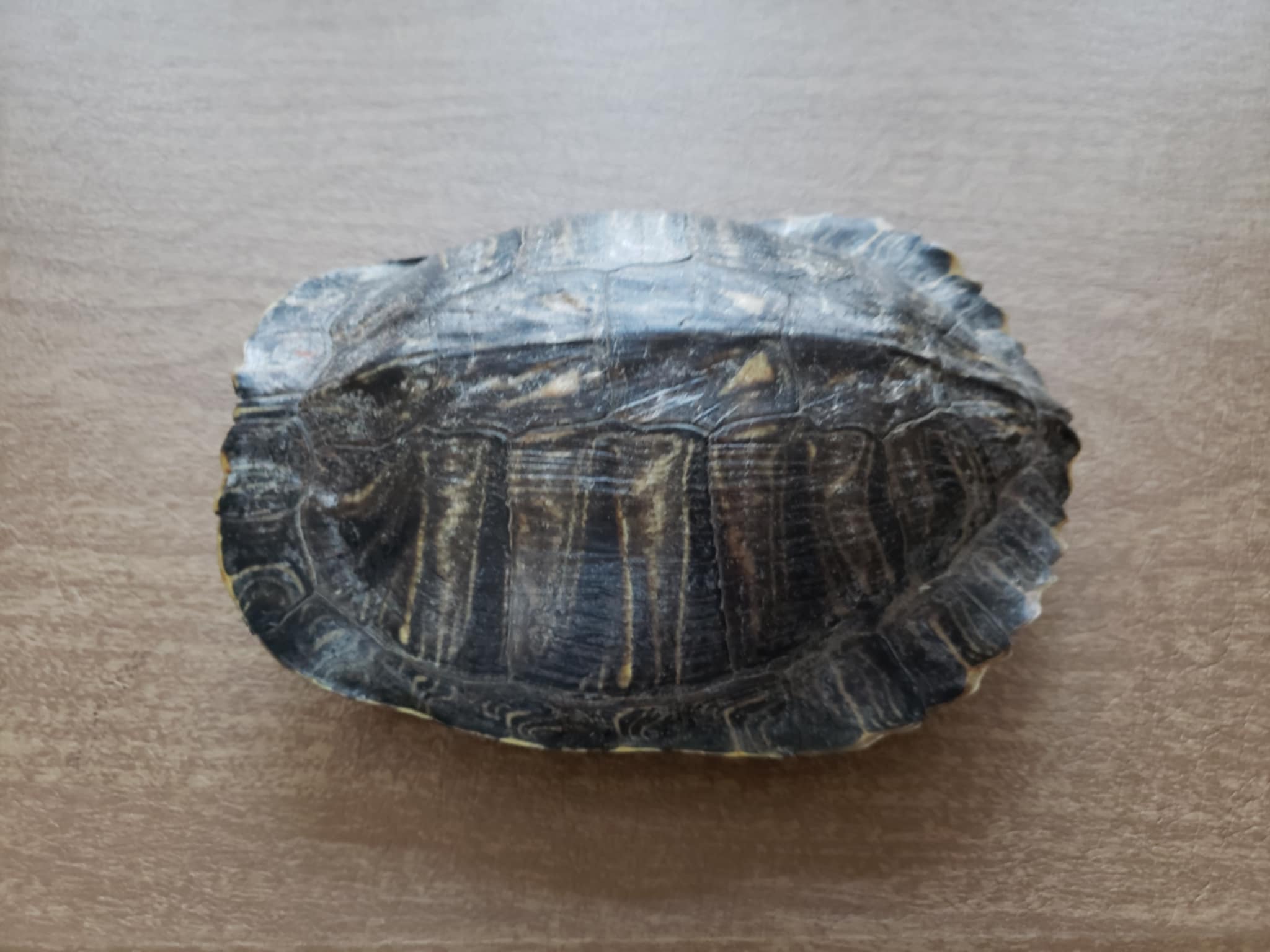
Mom came home with a dead turtle. A cleaned and varnished carapace.  Barbara had taken her for an outing to the Native American Trading Post on Redwood Road, a favorite haunt.  I myself have enjoyed browsing there, bringing back southwest-themed pottery, woven wool blankets, and the heavy sense of vast peoples’ loss and pain.  On this particular day, Mom struggled to choose an object of interest, bringing home the turtle shell.  She placed it on the dining room table.  Sarah’s headstone has been ordered, the spot marked by a temporary plaque, and I am still pissed (as in the American angry, not the British drunk).  The stone will be a burgundy marble.  Pissed, and attempting to carry a heavy unwieldly sense of loss and pain.  Guilt compelled me to invite Mom and Dad on a walk, not having done so since Dad collapsed a month ago and lost all ability to walk.  I aided him in his struggle to stand enough to transfer his weight to his walker and then to the seat of his power wheelchair, taking nary a step, his entire mortal energies consumed, burned up, in a hunching stationary pivot.  I threw a towel under his bare bottom and tucked a blanket under every inch of buttocks and legs to shield his nakedness from the wider world.  Now I can boast that my dad took a walk in the nude around the block.  Back at home, he received the driver license division supervisor with his usual cheer.  A DLD letter had arrived advising Dad to appear in person to renew his driver license.  I called the DLD office and explained that Dad did not need to renew his driver license, and could not have come to the office even had he needed a driver license, but that nonetheless he would appreciate an official Utah ID card, and what could they do to help.  The supervisor and a clerk came to the house with their computers and cameras and cords and got the job done.  “Don’t tell anyone,” they enjoined.  “People will take advantage—everyone will want us to come to their house just because they don’t feel like coming in.”  We assured them their secret was safe with us.  That evening, Mom sat by Dad’s hospital bed where he lay, undressed for the hassle of clothing twisting around his torso and obstructing the urinal and generally keeping him uncomfortable and frustrated and awake.  Sleeping naked is simply easier.  They held hands in the glow of Hyrum’s homemade wooden night light as Dad began his long gravelly prayer.  “Dear Father,” he began as usual.  Then my faith-filled mystic of a father surprised me.  I have heard him tell dozens of stories of having heard and felt and seen the voice of his Lord instructing him on whom to bless and how.  Now, he plied his God: “Father, it is strange: You tell us to pray. And You promise to answer.  But You don’t answer.”  He went on a long while, praying anyway for the family’s needs, but I did not stay to listen—what was the point?  This is the day of Dad’s endurance.  Enduring a collapsing body.  Enduring a dementing mind.  Enduring the aloofness of his Invisible Divine.  My own faith urges upon me a mythology of God’s ever-active love and nurturing, a faith that They undergird and protect and teach and strengthen in all moments of endless time, all moments, though Their reality is inscrutable and undiscernible and vague.  Ultimately, I choose to believe They exist and care—infinitely—because the alternative is insuperably sad.    And I do not want to be always pissed off.  The dead turtle watches over us stolidly from the dining room table.

(Pictured: Hyrum’s little wooden lamp named Joia (gem or jewel, in Portuguese), which Dad uses for a night light in his downstairs hospital bed office/bedroom.)

Courage at Twilight: Night Lights and Shadows

“Help him pull up his pants,” Mom instructed.  I responded that I would help Dad if Dad needed help, but I wasn’t going to stand there waiting for him to need me, standing and waiting for something bad to happen.  “I can’t just stand there waiting to see if he needs me, hovering, waiting, waiting, worrying for the next hard thing to happen.  I can’t do it anymore.  I can’t.”  Twenty minutes later, Dad finally needed help pulling up his pants, and I was there to help.  But I hadn’t hovered and waited and worried and worn myself out over it.  I have to say, I don’t care, which, of course, means I care a great deal, but am weary of the worry of caring.  After three accidents the next day, Dad admitted to me that he might have to start wearing a brief.  The only way he will wear a brief is if the brief idea is his idea.  I don’t bother suggesting.  “Whatever you think you need, Dad.”  So tired, I’m often in bed by 10 p.m., and often wake up at 11 or 12 feeling hungry, or I awaken for no apparent reason.  To get past the master bedroom, I must traverse the light field cast by the outlet night light, sending daddy-long-legs shadows into their room, and as Dad lies in bed rehearsing to Mom the family’s challenges and blessing, he never fails to detect my quick passage, calling out without fail, “There goes Roger down the stairs to get a snack,” and I roll my eyes in the dark.  Some nights I stand at light’s edge, wondering if the snack is worth being discovered and commented on, again.  This morning, Dad rose from bed and strained to stand at his walker, at 8:30, and he immediately collapsed to the floor, too weak to move.  Mom was in the shower.  When she discovered him lying on the floor, she put a blanket over him and waited for an hour for the CNA to arrive.  She phoned no one, not even me—she said Dad would not let her call.  Instead, she sat in her chair watching her husband immobile and paralyzed on the bedroom floor.  At 11 a neighbor texted me, “Hi, my wife mentioned that she saw some activity at your house this morning.”  Some activity?  What the hell did “some activity” mean?  “Some activity” meant an ambulance and a fire truck pulled up to the house with flashing lights.  The paramedics and firefighters—it took five of them—managed to hoist Dad off the floor.  Dad will sleep is his recliner tonight.  He is too weak to get himself to the chair lift.  I have set him up with large absorptive pads underneath him and on the floor, with a urinal, with a portable toilet that he likely is too weak to reach, with blankets, with his feet raised and his body laid back, and with the very real question in his mind of how he will get through the night.  Well, I can’t piss for him, or stand up for him, or walk for him.  I can just give him what he needs, or try to, and respond to whatever happens.

Courage at Twilight: Family Reunion

Dad’s brothers and sister decided to host a family reunion, the first in perhaps 20 years. I barely had energy to show up for the event.  But I love my Baker-Formisano aunts and uncles: Bill, Louise (deceased), Howard, and Helene.  I warmed to the occasion, happy to see my cousins and their families after so many years.  One cousin I once knew well approached me and hesitated, “Now…you’re….”  In fairness to him, I had a full head of hair the last time he saw me.  When it came Dad’s turn to speak to the assembled hundred family members, I winced at the incoherent story-ramble that might emerge.  Perhaps that was unfair of me, because he delivered a string of delightful stories about his direct ancestors, starting with Niels Bertelsen.  Niels was a Danish fisherman who converted to our Church in the 1850s, a scant two decades after its founding in Palmyra, New York.  The Bertelsens had no money to emigrate as a family, so Niels and ___ sent their children across the Atlantic Ocean, across the North American continent, one child at a time, without chaperone, as they could afford.  Nicolena, only 10 years old, crossed the ocean without family, and worked as a maid in New York City for two years, without a family, until she had enough money to join a company of Church members walking the thousand miles west to Utah Territory.  Needing to support herself in Richfield, a married Lena opened a store selling beautiful dresses she sewed.  Her son Nelson became the engineer and foreman of the Prince silver mine in Pioche, Nevada.  Nelson’s mining machinery manufactured steam, and he invented a clothes-washing system attached to the machinery, washing all the family’s laundry.  His wife Natalia Brighamina, from Sweden, baked bread weekly, and fried sugar doughnuts from the extra dough for the mining town’s children.  Natalia was Dad’s grandmother, and he knew her and loved her.  She played a pump organ and sang the old cowboy songs with the family.  Her doughnuts, her organ, and her lovingkindness made her popular and well-liked by the community.  As a small child, Dad whispered to her one day that he was hungry and would like a slice of bread with jam.  “Speak up, Sonny,” his father mocked, embarrassing the boy.  “We can’t hear you, and we all want know what you have to say.”  Natalia stood up her full 5-foot 2-inches and said sternly to her son, “I heard him perfectly well,” and led little Dad into the kitchen for his bread and jam.

Courage at Twilight: Holes

Prone in the dentist chair, Dad held up four fingers: “The last time I was here,” he misremembered, “the dentist pulled four teeth.  Four!”  The experience had been traumatic for him, and the pulling of two teeth may have indeed felt like four.  Both yanked from the right side of his mouth, one was an old implant connected by a bridge to an artificial tooth, so the number of new holes felt like three.  Dad winced as the hygienist cleaned the empty gums where a year ago had been teeth.  “Is that sensitive?” she asked with unrhetorical kindness.  “Uh-huh,” he managed.  She explained that the empty pockets where the teeth had been can capture bits of food, and encouraged him to focus his water pick in those areas.  The cleaning completed, and waiting for the cursory dentist check, Dad remembered how he had approached his mother repeatedly about the unbearable pain in his mouth, and how she finally took him to a dentist, and how his molars were full of decay, and how the dental solution of the mid-1950s was simply to pull the 14-year-old’s teeth: four of them.  “I really felt violated,” he said sadly, looking far off into memory, a tinge of feal resentment still lingering these 75 years later.  “Four teeth,” he lamented.  Fourteen years after, “Doc” Nicholas constructed and implanted the bridge that would span the next 60 years until infection abscessed into the anchoring bone.  My own mouth contains Doc’s excellent work from when I was 14 with decaying molars.  Back at home, I invited Dad to coach me from his power wheelchair as I used his DeWalt trimmer to shape his three dozen bushes.  “Do you want them flat-topped or rounded?” I asked, knowing already he would say “Rounded.”  I paused frequently with the questions, Is this okay? and How’s that?  A smile and a “perfect” were his consistent answers.  The bushes had merged with spring growth, and I carefully reasserted the separations needed for the individual bushes to manifest, not unlike a row of clean but crooked teeth.  Perfect.  We both sat exhausted in the family room after our exertions.  I commented again how glad I was he enjoyed the framed photo of Sarah surrounded by her nieces and nephews.  “Yes,” he said, slipping into sadness.  “I still feel some painful hole inside me that won’t be filled.”  I feel that hole, too, Dad.  He wrote to one grandson this week, “I still cannot cope with Sarah’s death, that she is gone.  When I think about it, I feel overwhelmed with some dread feeling.  I do not know what to call it, but ‘sadness’ is not enough.”  He went on to write that he is by nature a happy man, blessed in many ways, and expressed his determined belief that we create our own happiness when we follow the principles of happiness, the greatest being love.

Courage at Twilight: Postcards

Steve wrote to Mom on a Banff postcard that they saw lakes and waterfalls and mountains, and elk, and a porcupine, and two bears.  “A porcupine!” Dad laughed.  “If you use its real name porcupine nobody knows you’re talking about a porcupine!”  Mom and I looked askance at one another.  “Um, Dad, could you clarify about porcupines?” I ventured.  “You know,” he explained, “everybody knows what a porky-pine is, but nobody knows what a poor-KYOO-pine is.”  I felt marginally better that his joke’s punchline made some sense.  “Is today a holiday?” Dad asked, and I told him it was Juneteenth.  “Explain to me the significance of Juneteenth,” he inquired sincerely, and I explained that Union armies had arrived in Texas on June 19, 1865, to find that the Black American slaves of Texas did not know that they had been emancipated, two-and-a-half years earlier, on January 1, 1863.  They were the last African-American slaves to join the ranks of the newly free.  This newest federal and Utah state holiday celebrates the end of slavery, Black manumission, and the continued struggle for racial and class equality in America.  “I’m glad we have that holiday,” he said soberly.  An hour later Dad asked me, “Is today a holiday?” and I sighed, discouraged.  I also felt discouraged by the reality of taking Mom and Dad to the dentist on the holiday afternoon.  I kicked irascibly against the brick wall of my duties.  Interrogating myself about my anger, I realized I was not being petty or selfish; instead, I was afraid: afraid of the grueling car and wheelchair routines, afraid of repeating our near falls from the wedding day outing, afraid of so much of what is living life with ancient disabled parents.  I have been sharing with Dad my impressions of Frederick Douglass, John Lewis, Martin Luther King, Jr., and Harriet Tubman, from their biographies.  “So much has changed for Blacks, for the better,” Dad offered as I drove across the Salt Lake valley.   “Much has changed,” I agreed, but expressed my discouragement about my country’s regressions on voting rights.  One hundred years after the first Juneteenth, almost to the month, President Lyndon Baines Johnson maneuvered the Voting Rights Act of 1965 through Congress, riding the spiritual momentum of President John F. Kennedy’s assassination, the unconscionable police brutality at the foot of Selma’s Edmund Pettus Bridge, and the shocking television images of Bull Connor’s squads turning fire hoses and furious dogs upon more than one thousand of Montgomery’s Black school children.  Since its passage, politicians have fought against the Act’s protections, passing many hundreds of laws to restrict the Black vote.  And after 50 years of leveling the voting field, the Act’s key provisions were ruled unconstitutional by the Roberts Court, overturning decades of Supreme Court precedent and Congressional support.  “That is discouraging,” Dad agreed.  We returned home by way of JCW’s for celebratory burgers, Mom and Dad so glad to have their teeth thoroughly cleaned, relieved to have no new cavities or infections, and thrilled to have Mom’s escaped crown glued back on.

Pictured above: the cover of the late Congressman John Lewis’ award-winning graphic novel March, Book 1.  The book (and its sequels) reawakened interest in the Civil Rights Movement among 21st-Century Black youth.

Courage at Twilight: Living Through Me

Some people need to talk—a lot.  Some people prefer to listen.  A match of these two is fortunate.  I have already described how Dad talks and tells his stories and expounds upon religion and history and morality and family and the contents of the encyclopedia, and how I am more of a listener who at 60 is weary of listening.  Gloria, however is another talker.  She cares for Dad several mornings a month, and the conversations begins rapid fire the moment she calls “Good morning!” from the top stair.  When Gloria talks, Dad listens.  When Dad talks, Gloria listens.  Yet, somehow, they both seem to talk continuously.  Today I caught snippets about Gloria’s sick cat and how the dry cat food and wet cat food each affect the cat’s weight and health and energy and general demeanor, and how the cat is slowly getting better with good cat food and care.  Dad took his turn about the cosmic character of the universe with its gravity and dark matter and fusion and electromagnetic energy and relativity physics vis a vis quantum physics.  Both are vaguely sympathetic to what the other is saying, but mostly they each appreciate being able to talk and being listened to.  Did you know that a mere 20 years ago, the consensus among cosmologists and xenobiologists was the impossibility of intelligent life anywhere in the universe but on our Goldilocks Zone earth, but that today, with the James Webb telescope’s discoveries, the consensus has shifted to the statistical impossibility that intelligent life does not thrive among the trillions of habitable planets orbiting in the trillions of solar systems orbiting in the trillions of galaxies or our vast universe.  Her cat prefers the wet food.  We will never know because even light takes one hundred thousand light years to travel to us.  The vet’s treatments are helping.  Time for your shower, Nelson.  I returned from my ten-mile Jordan River paddle long after Gloria had gone for the day.  The olive-brown water ran at a 15-year high and swept us pleasantly downriver.  The toughest stretch of the paddle was the half-mile portage through head-high thistles with mean mean thorns and willowy willows and sage brush, so aromatic, daisy-chain carrying our kayaks single-file to where we could cross the private hydroelectric dam that also splits the river into two enormous irrigation canals, the river itself suddenly shrinking by two-thirds.  Weary and blistered and scratched upon arrival home, Dad called out with his usual cheer: “Roger! Welcome home!” followed by “Sit down and tell us all about it.  The people.  The river.  The wildlife.”  And so I told them about the thistles and dams and slow high olive-brown water, and the people, and the birds: the Clark’s grebes, cormorants, pelicans, belted kingfishers, Bullock’s orioles, avocets, ibis, phalaropes, terns, stilts, Canada geese, mallard ducks.  I did not tell them how I was so eager in the twilight to show my friend Stephen a beaver and saw one in the shadows and called to Stephen “There! Beaver!” only to have the beaver sprout wings and take flight.  “I think that’s a duck,” he dead panned, “or maybe a duck-beaver.”

Courage at Twilight: Fiercely Red

Northern Goshawk | Northern Goshawks are impresive when you … | Flickr

Mom stood. Up from her recliner.  During a commercial break.  “Are you going to the bathroom?” Dad asked with a touch of accusing panic, for the urge had struck, and he gets so little notice, and every second counts on the 12-foot journey. “Yes,” she spat.  “Don’t worry, Dad,” I assured him, “she’ll be out by the time you’re up.”  Dad sat, stymied.  Sunk in his recliner.  During the commercial break.  He still had not stood when Mom came wandering into the kitchen, her business done, to check on my cooking.  The Jeopardy buzzers buzzed.  “Are you finished, Lucille?” Dad barked after the commercial break.  “Yes,” she called.  “Why didn’t you tell me?” he lobbed, struggling and shaking to stand and stoop over the walker, his time perilously past.  “I’M FINISHED!” she hissed.  “Didn’t you hear the flush?”  A streak of white flashed in my periphery and something bounced hard against the kitchen window, two feet from me.  I knew, of course, what it was, sort of, a bird, but my heart pounded anyway.  We hustled outside to find the bird sitting in the dirt, a gray falcon or hawk of some kind, sitting awkwardly, wings askew, head rocked back on its neck.  Its red eyes glared fiercely at us, and it panted rapidly with parted beak.  Well, that’s the end of this bird.  Its neck is broke.  Such a startling beautiful creature.  I was powerless to make a difference for the hawk, and let it be, returning sadly to my cooking.  The children and grandchildren remained, marveling and sad.  Then Lila screamed, and Brian poked his head through the door to tell me the bird had stood up and pushed off in flight.  Well, I’m sure glad to be wrong.  Audubon informed me the bird was a Northern Goshawk.  The kitchen window had vinyl grids that I thought would have averted the bird.  But from its vantage point outside, I could see the window was filled with a glare reflecting the mountains and trees and sky behind.  And the goshawk had been flying like a line-drive baseball after a sparrow.  Days and weeks later, the goshawk’s scarlet boring ferocity still flashed in memory.  The bird had dared me to underestimate her, and had defied the neck-breaking brick and glass of humanity, and had flown off above the house and trees and everything into its freedom sky.  The red-headed house finch was not so fortunate.  She landed on the arborvitae, on the bird netting wrapped around, and became irretrievably enmeshed, dying before I knew, before I could scoop her out and set her free.


(Photo from Flickr.com and used pursuant to the fair use doctrine.)

Courage at Twilight: Many Firsts

March 31: the first Easter since Sarah died. May 12: the first Mother’s Day since Sarah died.  May 27: the first Memorial Day since Sarah died, and a visit to clean and decorate the grave.  June 5: a first birthday with no air-gasping hug from my sister.  The firsts will continue to come: Tracy’s birthday, sons’ and daughters’ and grandchildren’s birthdays, Independence Day bar-b-q, Thanksgiving dinner, Dad’s 89th birthday, Christmas with its matching pajamas and Lego sets, banging on dented New Year pans with dented ladles, Sarah’s 52nd  And January 17: the first anniversary of her death.  I have felt dissatisfied with how the cemetery workers filled her grave, leaving large low spots and rocky grassless patches.  Tracy and Gabe (5) met me graveside, where we filled the low spots with new soil and sprinkled fescue and rye grass seed, and decorated the grave with American flags and plastic flowers, and a border garland of red, white, and blue stars.  Gabe hefted the watering can and moistened the new grass and soil, refilling from the five-gallon bucket I held.  After finishing our work, we sat on a blanket, at first saying nothing, then describing matter-of-factly how Sarah was buried nine feet down, and how someday Tracy would be buried above her, and how when it was his turn to go, Gabe would be buried in the adjacent grave, possibly with me nine feet deep and him above me, since I am 55 years older than he.  The conversation felt natural and comfortable, like assigning seats at the Sunday dinner table, or dividing up the new batch of steaming chocolate-chip cookies amongst the children.  I had assumed Mom would want to come to the grave with me, as she had done before, but she flatly declared, I’m not going.  I offered to take Dad, despite the difficulties of transporting him, and he echoed sadly, I’m not going.  He has not seen Sarah’s grave yet, and may never, and I respect his feelings of preferring to see the framed print of his living smiling daughter.  No matter: when I returned, spent, I cast the photos to their old TV, and they were glad.  “That was a good thing you did, Rog,” said Dad.  And I thought I guessed it was.

Courage at Twilight: Do I?

“Close these blinds, will you?” Mom asked.  Her habit has always been to stand, lean over her recliner, and push the slats closed with an old wooden yardstick.  But now she waits for me to stand up from the couch or to enter the room, and asks me to do little things she no longer feels like doing.  “Bring your Dad’s medicine, will you?”  “Put your Dad’s checkbook in his office, will you?”  My opinion is that I should not being doing for her things she is perfectly capable of doing for herself.  Do I draw that boundary and risk hurting her feelings?  No, I guess not, at least not tonight.  Dad takes his turn, too: “Lucille, would you get my checkbook from my office?”  I interpret “Lucille” as meaning “Lucille, Roger, anyone?”  It is true that Dad obtaining the checkbook (or anything else) for himself is nearly impossible.  “Your hair is beautiful,” Mom called to me after I delivered the checkbook to Dad.  “That’s not possible, Mom,” I hissed.  “I don’t have any hair.”  She guffawed, “Yes, you do!  And anyway, it’s the shape of your head that’s beautiful.  I just love the shape of your head.”  She cannot see my eyes rolling inside that beautiful hairless head, or my jaw muscles working in my face, or the energy it takes for me not to growl and bark.  More and more I’m her perfect first-begotten bald baby boy in some weird Benjamin Button skit.  On the counter lay a bag of moldy bread, which I threw into the kitchen garbage can.  Throwing something else away later in the evening, I noticed the moldy loaf but not the plastic bag.  Mom had salvaged the bread bag to recycle at Smith’s grocery with the blue newspaper bags and the brown shopping sacs and packing bubble-wrap and various other bits of bag plastic.  Another day I discarded several mold farms growing on the forgotten cheese inside quart-size baggies hiding at the bottom of the cheese bin.  And again I later found the molding cheese swimming bagless in the garbage can.  Do I tell her how insulting it feels to have an old lady following after me and digging in my garbage, implying I should not have thrown this and that away, that I ought to be a more diligent recycler, that I should do things differently?  Do I tell her Smith’s grocery does not want our moldy bread and cheese bags, our greasy leftover pizza zip-locks, our frozen vegetable bags?  Do I point out how many gallons of heated treated water she uses to wash the bags out with dish detergent, the cost of the water far outweighing the damage of a sandwich baggie in the city dump?  Do I tell her how annoying it is having all these wet washed baggies doing their damn best to dry scattered on the kitchen counters?  Do I tell her the moldy cheese bag was in the garbage because I wanted it in the garbage, not because I’m lazy or apathetic or belligerent?   I guess not.  It should be easy for me to swallow that much pride, to let an old lady have her little quirks, for Mom to be cheered at the thought of helping to rescue the planet from plastic.  I have drawn the line, however, at the gallon-size baggies that held raw chicken and raw fish and raw beef.  “Mom.  It’s just not possible to sanitize them,” I insisted.  “Smith’s doesn’t want our raw-meat bags.  Nobody wants them.  And we might kill some innocent store clerk with salmonella-infested bags.”  She reluctantly agreed to leave the raw meat bags where they belong, in the trash can, her feelings mostly intact.

Courage at Twilight: I Do

The gurgling in my intestines sounded underwater like wall hangings clanging to the floor and wandering off wounded. Lying sick in the tiny tub, my legs stood straight up against the tiled wall.  Only half of my body fits in the tub at one time.  My head underwater but for my nose, I relaxed into the soft heat of the Epsom water cradling my face and head, awash in the experiences of yesterday.  Dad wanted to attend the wedding, and I agreed: the three of us should go.  I have avoided taking Dad anywhere, for the strain on us both, but loading him into the high front seat of the Mighty V8 proved a simple execution of our detailed loading routine.  I guess we could do this more often, after all, I mused.  Turning the key brought only the click click click of a failed starter.  “Not to worry!” I preempted Mom’s panic.  “I’ll have us jumped and on the way in five minutes!”  And it was so.  But I did not tell Mom and Dad how when I jump start a car battery I am terrified of blowing up the cars and killing everyone within a city block.  Perhaps with good reason: I read the instructions three times and still connected the cables backwards.  A lurking dyslexia?  We rejoiced to see my cousin David and his wonderful family at his son McKay’s wedding.  The officiator was a tall slender fetching tatted woman in a sleeveless summer dress, her hair a pleasing mess of multi-colored dreads running four feet down her back.  The men read their vows, both sweet, and the colorful woman pronounced them “Husband and Husband,” words I had not heard before.  I always feel happy and wistful when two people find love and each other in this vast complicated world.  It is quite a miracle, really.  May their loving union long endure.  Leaving the venue, I helped raise Dad from his wheelchair.  Weak and shaky after three hours in his chair, he grasped the handholds and struggled to straighten.  But his left foot was positioned under the running board, and his right foot too close to the left, and his feet stuck to the asphalt as if with buckets of cured epoxy.  He could not lift his legs to shift his feet, and hung grunting from the handholds, his whole body trembling.  I could not move his feet either: all my effort was devoted to keeping him from collapsing to the parking lot.  Dad surprised me with a move he had never made before: “Help me lift my right leg!”  I capitulated, to tired to argue, but his right foot on the running board created an impossible tangle of legs and feet and hanging arms and belly and arthritic artificial knees that wouldn’t bend but were bending anyway to his howls.  In a last desperate move with my remaining ounce of energy, I pulled the chair to him with my left hand and yanked him backwards by the waistband with my right.  With some luck, backside and seat met squarely.  Parched and panting and sick, I pulled David and Jason from the wedding lunch with a plea for help, and with four strong arms and legs they hoisted Dad handily into his seat like he were a feather duster.  Relieved to be on our way to the sanctuary of home, I turned the key and heard only a click click click.

(Image by MasterTux from Pixabay.)

Courage at Twilight: Spring Rolls

“Will I see you tomorrow?” Mom asked as I turned toward the stairs and bed.  I stared at her, uncomprehending.  “You see me—every day—after work,” I finally stammered out, and she could tell from my tone I thought she had done something bad, though she could not fathom what and muttered I’m sorry, and I felt bad that she felt bad that I might be annoyed, and assured her I would see her tomorrow.  When I brought vegetable spring rolls home from Costco, she cheered with both arms raised, “Spring Rolls!” and Dad quipped pleasantly, “Spring rolls is her middle name.”  Dorothy Lucille Spring Roll Baker, I thought with a chuckle, and then said the name aloud: “Dorothy Lucille Spring Roll Baker.  Has a nice ring.”  She laughed nervously, not sure if I were making fun, but hoping I wasn’t, and thinking I probably wasn’t, because I never do.  After displaying the various prepared meals I had purchased for those days I do not feel like cooking, I stacked the boxes and headed for the basement stairs and fridge.  “Don’t fall down the stairs,” Dad called after me, and I stopped in my tracks, uncomprehending.  Not wanting to challenge or enjoin or even demure, I called back cheerfully, “Thanks Dad.  I won’t fall down the stairs.”  My reaction was less humoring when, attending an out-of-town conference, I received an email from Mom, “Hi dear Roger, Your dad wanted me to email you that he is afraid for you to go hiking somewhere where you could fall over the edge of the trail.  He wants you to be careful to not go where the trail might be high up and too close to the edge of a cliff where you might fall.  He was worried about you and wanted me to tell you that immediately!”  I scowled at the computer screen and email after a long walk on a flat paved urban trail, uncomprehending.  And I sighed.  Like I often do when dinner is almost cooked after an hour in the kitchen: a long loud sigh.  Dad’s hearing is deteriorating.  I visited Erek the audiologist to have Dad’s hearing aids checked—they were working fine—and he offered kindly to come to the house to clean Dad’s ears and check his hearing.  I gawked, astonished and uncomprehending, as Erek slowly pulled a three-inch string of wax from one ear, certain what I was seeing was impossible.  No wonder Dad could not hear.  The hearing test confirmed that Dad had “severe hearing loss,” no doubt due to his early unprotected years working the house-size ore tumblers at the Utah Copper smelter.  Erek offered to purchase a pair of high-quality hearing aids for a reasonable price, through his physician’s group manufacturer discount.  “You will hear lightyears better,” Erek promised, and my brain strained at applying a photonic analogy to ears and hearing.  I decided “lightyears” simply meant “lots and lots,” and let the teaser go.  Though Dad cannot hear me from three feet away, he can hear me sighing from thirty feet away, and without fail calls out to me, in a kindly tone, “How are you doing, Rog?”  And he praises the meal as a “once in a lifetime best in the universe dinner.”  I will keep shouting until his AGX Omnia 7s arrive, after which Dad should hear my conversational tone.  I hope so.  “Good-night Mom and Dad,” I yelled.  “Knock if you need anything.  See you tomorrow.”

(Pictured above, a view of Snow Canyon, Utah, one of my favorite beautiful places in the world.)

Courage at Twilight: What a Reunion

Fifty years.  These men and women, all in their 70s now, graying and wrinkling, limping and slowing, still loving and laughing, traveled in their 20s to Brazil, sent by their Church to be proselyting missionaries, to share a gospel message of love and spirit and Christ, of pure living and eternal families and love of God, with the people of 1970s Brazil.  Dad began his three-year unpaid tour of duty as their 36-year-old leader, mentor, and president, Mom by his side, their oldest child (me) only eight, with Sarah’s infant arrival imminent.  Now these mature men and women gathered at Mom’s and Dad’s house, sixty of them, seated in tight rows and listening, and Dad did not disappoint them.  I sat in the back with Megan, with my head in my hands, weary from the day’s setting-up, listening to all his old stories for the three-dozenth time, and looked up to see his audience enrapt, admiring, joyful, reliving the old stories, which are true, after all: the story of Maria who during World War II kept her tithing in a glass jar buried in her back yard, delivering the coins to Dad, himself a young missionary in 1957, and receiving from him a receipt for her widow’s mites; the story of Dad translating for a living prophet of God who greeted, became acquainted with, prayed for, laid his hands gently upon, and quietly healed each of the twenty sick and distressed Church members, one at a time, who awaited with faith his blessing; the story of Dad’s impression that all persons he contacted on this particular street would answer, “Yes—please come back and share your message with my family,” and they did; the story of priests who had Dad arrested in 1958, and through the iron bars his cell Dad told the prison guard he had arrested a minister of Christ, and the guard growled, “Prove it,” and Dad replied, “Pull up a chair,” and preached of Christ and his ancient Church restored in our day, with living prophets and apostles, preached for three hours until the prison guard had to confess Dad was, indeed, a minister, and released him from his cell, and committed to reading holy modern scripture; another story of Maria, who cooked in an outdoor oven made of loose bricks and sheet metal, feeding the fire with straw, her thermometer the back of her hand, Maria who baked a cake for the missionaries on the first day of every month, and invited them to visit on that first day if they wanted a fresh cake, or later in the month if freshness was not a priority; the story of a second arrest, Dad again behind bars, the prisoner in the adjoining cell screaming as the guard wacked him with a rubber hose, and the voice of God whispering to Dad, Do and say exactly as I instruct, and you will be safe and let go. This is not a joke, and Dad followed that voice and demanded to see the warden and instructed the warden on the doctrine of Christ and on his calling as a missionary ambassador of Jesus, instructed further on unlawful imprisonment and bad press and police duty until the warden relented and released him and promised him the police would not harass the young missionaries again; and the story of persons who dreamt of church buildings they had never seen until accompanying Dad and his missionaries to Sunday services in the very church buildings of their dreams, be they a rented room or a remodeled house or a regular Church meetinghouse; the story of Arthur, an Italian giant, whose hard heart softened from flint to flesh over Dad’s fifteen years of gentle shepherding until Arthur finally went grudgingly to a Church meeting and cried like a baby and demanded baptism, now, not in two weeks—tomorrow—and who remained a meek and faithful Jesus disciple to the last of his long days.  Though I had heard these stories many times, Dad’s retelling was expert and touching, compelling even, as if this mission reunion might be his last, his final tender testimony of God’s miracles and of Christ growing his latter-day Church and changing hearts and lives.  Sixty sets of eyes moist with memories and the love of God and the love of sisterhood and brotherhood and Christ community.  I led the group in Dorival Caymmi’s classic 1956 swinging hit “Maracangalha” ending with “…eu vou só, eu vou só, sem Anália, mas eu vou…”  The reunion ended with plates of coxinha chicken croquettes and kibe beef croquettes  and pão de queijo cheesy bread balls and bom-bom candies and cups of cold guaraná soda and catching up on grandchildren and jobs and health and passings away and sufferings and joys and handshakes and backclaps, visiting until near midnight, the happiest of gatherings.


(Yours truly with my dear sister Megan)

Courage at Twilight: The Standard Four

Just before midnight came Mom’s anxious rapping at my bedroom door. “Can you help us?  The lift won’t work, and Dad’s stuck downstairs in the chair.”  Worry dripped from her sagging face.  I knew instantly the trouble.  Little Owen, 18 months, carries around an irresistible curiosity about buttons and switches and the wondrous things that happen when he pushes them.  His favorite is the light button on my Aero Garden: he taps it rapidly and repeatedly to make the bright multi-colored LEDs flicker off and on and off and on and off and on.  A toddler’s delight!  A close second is the illuminated cherry red switch on the back of the stair lift chair, installed at perfect toddler height and with just the right color to attract his attention.  Owen and Lila, his four-and-a-half-year-old big sister, two of my six prodigious precocious grandchildren (number seven arrives in May!), had joined Mom and Dad and me for an Easter Eve dinner of traditional Polish pirogi, homemade potato cheese dumplings, expertly fashioned by their generous mother.  Lila’s first and familiar impulse was to pull out the old wooden blocks Mom and Dad brought back from Brazil, dump out the box of dominoes, lay out Connect Four, and spill the enormous tote of Legos, the standard four go-to great-grandchildren games, which she invited me irresistibly to play with her.  Dinner segued into the hunt for plastic eggs filled with chocolate eggs and jelly bean eggs and malt ball eggs.  At age four, Lila knew exactly what to do, and chased out the not-so-inconspicuous bright ovals.  Owen, at just one, gripped one colorful egg in each hand, dancing thrilled and contended with his prizes.  Mom and Dad watched on from their respective arm chair and wheelchair, wearing the peaceful smiles of the gentle joy of young posterity.  “We just love having you here, Brian,” Dad called as the little family bundled out the door at evening’s end for the long drive to Stockton.  And sure enough, Owen’s last curious-child deed was to switch the red toggle to “off.”  Mom had completely forgotten her panic of a month ago when the lift would not work, from precisely the same guileless cause.  I flipped the red switch, and, with Mom feeling much relieved, up Dad rode to his bed.

Courage at Twilight: Welcome Home, Roger

Though Dad often cannot hear me shouting to him across the living room, he manages to hear the key turn the dead bolt, and before I have finished latching and locking the door, he is calling out to me, so cheerfully, “Rog! Welcome home, Roger!  It’s good to have you home!”  I’m not the brightest bulb in the box, but I’m pretty good at the light going on and showing me patterns and changes.  Dad has always welcomed me pleasantly home, but his greetings have cheered and lengthened noticeable almost three years into this caregiving experience.  And it is just like me to worry about the cause, and the meaning.  Might he be sensing the nearing of his end, and be making an extra effort to be kind and close and grateful?  Or is that just my mild paranoia?  On a Saturday morning, ratchet set in hand, I set about checking all the stair lift bolts for tightness; the bolts securing the brackets to the lift structure were tight, but the bolts anchoring the same brackets to the stairs were appallingly loose, and the sound of my ratchet doubling them down reached Dad’s ears.  What reached my ears was his worried complaint, “I hope he doesn’t break the lift.”  Poor Mom walked into the trap as she tottered over to me and reported, “Your dad wants you to know he’s worried you’re going to break the lift,” and I barked back at her, “I don’t care.  I know exactly what I’m doing.”  In tears she returned to Dad and ordered him to shut up, reminding him that I was a “big boy” and knew exactly what I was doing.  Of course, I soon apologized to her for barking at her, gnashing at the guileless messenger.  She smiled and teared and invited me to bark at her anytime I pleased (sweet thing), to which I retorted, “Never!  You deserve better.”  During dinner I explained to Dad what I had done to the lift, and he smiled weakly and seemed unconcerned, and he thanked me for dinner: “Roger, we are so lucky to have you make us such beautiful, delicious food for our dinners.”  All smoothed over, I guess.  My New Jersey friend Bruce was his mother’s caregiver for the better part of a decade, running up the stairs at her beckoning or at the slightest unusual sound.  He knows the life of sleeping with one eye and one ear open for anything out of the ordinary that might signal a need or a fall or a crisis or…  My eyes feel particularly tired this evening, and I think I’ll shut them early, though part of me will be on the alert until Mom and Dad are safely in their bed after midnight.  I am not a skilled caregiver, but I do live here with them and do cook and clean and fix and answer to their needful beckonings as best I can, and enjoy being welcomed home by my old mom and dad: “I’m sure glad you’re home, Roger.”

Courage at Twilight: Cousin Party

Jeanette has come to visit.  She came to lighten my load.  She came to visit and to love and to talk with her beloved ancient parents.  She came to lift and be lifted.  Before she came, she organized a cousins party.  “Come on Friday March 15 for pizza and brownies and lots and lots of games!”  And they came: the autistic, the trans, the straight, the atheist and the priest, the gluten-free and the vegan and the red-meaters, the married and the single and the living-together—they all came, and demolished five extra-large Costco pizzas and devoured an enormous platter of raw vegetables and cleaned off three heaping plates of frosted brownies, and they told stories and played a game matching clever memes with ridiculous photos and laughed and laughed and laughed, red-faced and crying and together, a group of cousins with several things in common, like the presence of their aunt Jeanette, and the absence of their aunt Sarah, and their love for one another.  One hermit-like cousin commented for only me to hear, “It’s so nice to be with people I actually like.”  Jeanette’s energy was electrically ebullient and conductively contagious, at the center of the circle, catalyzing their inertia into uproarious fun.  As the older uncle, I stood back and observed and rejoiced quietly in the transpiring of this knitting together of this grief-split generation.  I felt keenly the sting-throb of Sarah’s violent departure.  I saw no defect in the power of Jeanette’s presence, but merely the soft hole of Sarah’s absence.  The gathering, happy and healthy and hilarious, nonetheless occupied the crystalline comet-tail haze of Sarah’s gone-ness.  Dad motored into the room to bask in his posterity’s energy and mirth, but could not hear or understand the pop-culture drollery, and retreated to his recliner to rest and create his own quiet humor with Rumple of the Bailey and the Reign of Terror.  I followed, to help his rise and pivot and point and fall, hearing loud echoes of hilarity from across the house.  I felt sad for him, and I think he felt sad and lonely and resigned, but family is to him life’s great mandate, and I knew he felt mostly joy at the loving laughter of twenty cousins.  Mom accompanied Jeanette to pick up the pizzas, giving directions as she had done (without need) a hundred times, but this time Mom could not remember how to get there, and led Jeanette the wrong way, and the Costco was no longer in its tried and true location, and Jeanette showed her the map, and Mom looked up and cried because she could remember no longer that which she always has known, and she knew she was old and she knew she was losing her faculties, and there was nothing she could do about it.  We did find Sarah’s grave, though, and left in a crease of winter grass a brilliant bejeweled owlet with a poem inside, declaring “Do not look for me here.  I am not dead.”  Yes, actually she is.  But her essence, indeed, is not there buried under nine feet of dirt, but in my heart and my hope and my faith, and I will believe—tell me, why shouldn’t I?—that she sees and hears and cares and will welcome me that day when my turn comes.

Courage at Twilight: Reframing Life

Across 30 months, and through 445 chapters in this memoir, I have been laboring to express the nature of my experience living with dying parents, how they have loved and irritated and blessed and taxed me, and how I have worked to keep them in their home and to care for them as they wane.  Sarah’s death was the most suddenly catastrophic and painful event of my 60-year life.  She looks at me kindly from her pastel blue-gray frame sitting on my desk, from behind the glass, always soft, always beautiful, always kind, to me.  Her traumatic passing has caused me to reevaluate my approach to love and family relationships, not in the shallow patronizing Western platitudes like “It must have been her time,” as if there were anything divinely ordained in her snow-blindness and bashing her helmeted head against a tree, or “You will grow from this, and become a better person,” implying I wasn’t a good enough person already, and somehow her death was for me.  Sorry—I don’t buy it.  What I do buy into is the pain and the sorrow and the memories and the dogged desire to be everything she believed I was and could be.  Something about sudden bone-crushing flat-smashing breath-sucking loss has a way of revealing stupidity and error, pointing me to a truer reflection of my life and myself.  And the notion occurred to me that I have travelled across 30 months and through 445 chapters in this memoir with perspectives that beg for reexamination.  And the thought distilled upon me that my purpose here is not to care for my parents until they die, a shuddering inevitability filled with extended anticipatory griefs, but instead to care for my parents so they can live, live everyday with comfort and companionship and compassion, even joy.  So, I am reframing the narrative.  Sarah’s family came over for Sunday dinner today, our first without her, and we sat around our pot roast and potatoes and told stories and related challenges and laughed and loved, and forgave, and it was a happy day for Mom and Dad to be with their children, grandchildren, and great-grandchildren, all beloved and beloving.  We will do it again, and again, and again, not dreading a death but celebrating a life, and it will be hard and wonderful.

(Pictured above: my snow-filled trail in Bell Canyon, Sandy, Utah, where I pondered the concept of reframing.)

Courage at Twilight: The Bad Guy


On his way to help me peel potatoes for our dinner, Dad crashed his tank of a power wheelchair into his walker and snapped a walker leg. First came subdued cursing.  Then came open self-deprecating laughter.  “I crashed into my walker!” he grumble-chuckled, then began peeling.  With only three people, we needed only five small potatoes.  Back in his recliner for a dinner of Costco meatballs, mashed potatoes, and steamed broccoli, he pointed to the framed 8×10 of Sarah surrounded by her nieces and nephews, his grandchildren.  “I love this photo, Rog,” he explained.  “I find it quite comforting.”  I felt relieved, since I had given him the photo, and I felt a glimmer of enlightenment about his turning the portrait of Sarah and him face down on the table: perhaps he simply does not like looking at his 88-year-old self; or, just as likely, perhaps he does not like seeing Sarah with only himself, being reminded of the “giant hole” he still feels and likely will always feel.  Sarah stays with me, at least, in the sense of having her portrait on my desks at work and at home.  Still, the family feels smaller to me.  We were six sibling and now we are five.  I had four sisters and now I have three.  We were two Brazilian-born babies and now we are one.  Sarah is simply irreplaceable.  But I can say the same about my four living siblings: each is unique and remarkable in their own ways.  Munching on meatballs, we watched the tenth episode in an animated science-fiction series rated TV-Y7.  “Is he the bad guy?” Dad asked, and I said simply, “Yep,” but continued soto voce: and he’s the same bad guy we’ve seen in every episode.  As the 24-minute episode ended, Mom queried, “Explain to me what happened?” so I elucidated the plot and character basics.  After understanding the show, they asked to see another episode.  “Is he the bad guy?”  “What happened?”


(Photo used under the Fair Use Doctrine.)

Courage at Twilight: Bad Dreams

Mom phoned me from the first floor to where I worked on the second floor: she was too dizzy to get up and prepare lunch for herself and Dad, and would I please help. It was 4:30 p.m.  Dad complained at 7:00 p.m. that the bratwurst I served for dinner had upset his stomach.  I gave him an antacid.  Aide Jenifer texted me a photo of the bed sore on Dad’s bottom, and aide Diana texted that he almost fell getting out of the shower.  Nurse Chantelle brought calmoseptine cream for the sore and ordered a corrugated cushion.  Dad forgot aide Gloria’s name, and his head-crushing spells have returned.  Mom cries at his complaints.  And I can no longer seek Sarah’s counsel and support with a quick text or call.  Every day seems to bring compounding ailments, none of them small to my elderly parents, Dad 88 years old, and Mom 84.  It is what it is, and my job is simply to address the moments as they come.  “I still have a huge hole inside,” he laments.  To these griefs and ailments, add Dad’s worsening dreams.  Last night in his dream he was with Sarah as she snowmobiled along the obscured trail, her visor snow-streaked, was with her as she left the trail and crested the berm, was with her as she hit her head against the tree, saw her lying dead in the snow, watching and feeling and being present as the terrible event unfolded and finished, helpless and bereft.  He awoke and struggled to sit on the edge of his bed, where he sat until the full light of morning, afraid to lie down and go back to sleep for fear the very real dream would return.  Knowing what happened is bad enough.  Watching it happen is one-hundred-fold worse.  Experiencing it with her was infinitely more painful.  How awful, I thought, and served him with all the compassion and tenderness of which I am capable.


(Pictured above: my office credenza, with law books and portrait of Sarah.)

Courage at Twilight: Dearest Brother

Hospice nurse Chelsea conducted her weekly visit with precision timing, arriving as Dad sat uncharacteristically pale and panting and nauseated. The e-kit furnished a dose of promethazine, and he stretched out in his recliner, covered in a fleece throw, and settled in for a long sleep.  I left work early so I could be nearby, in my home office, should he need help, should he collapse.  My hair was too long, about a quarter-inch, so I clipped on the No. 1 comb and set about my buzz.  But the chord caught on the countertop and tore the clippers from my hand, and they bounced hard on the toilet lid and into the (dry) enamel bathtub.  I cursed.  Sliding the switch, the normally buzzing clippers sounded like a chainsaw, and I was afraid to put the thing to my head.  Instead, I cursed again and yanked the plug and threw the clippers disgustedly into the garbage can, combs and chord and all.  During dinner, Mom asked me to help Dad organize his tax papers, then started to cry.  “I’m worried about your father,” she choked.  His undiagnosed spells have returned despite the historically-and-mysteriously-effective regimen of gabapentin, and the hospice doctor authorized a significant dosage increase.  Which should help.  Mom and Dad still have their portraits of Sarah lying flat, print-side down.  I don’t blame them.  I have two framed 8×10 prints on my desks at work and at home.  Sometimes I can look at them, appreciate her smile, see her eyes look into mine from every angle, and sometimes I cannot look at them.  The prints seem decidedly too large, almost life-size.  Sometimes I demand of her: “God damn it, Sarah!  Why did you have to go?”  Sometimes I ask her to help me sort things out.  Mostly I look into her eyes, soak up her smile, admire the attractive tilt of her head, and remind myself that she loved me and called me “dearest brother.”

Pictured above: one of dozens of a variety of potted plants sent by caring friends in our grief, this one by Solange and Ana.

Courage at Twilight: Our Shattered Hearts

Mom and Dad are suffering.  Quietly.  Since Sarah’s death, Mom whimpers and swallows a red-faced sob whenever Dad complains that his vision is blurry today or that he is weaker than ever today or when he calls her to help him hike his trousers (I spare her when I’m home).  Her anxiety is severe and pent up, seeping out in little choked up whimpers.  She buries herself in her needlepoint: brightly multi-colored tulips in a baby blue background: working it day and night.  Dad reported to me that his two weeks of nightly terror dreams had stopped harassing him for the last two nights—I had known nothing of his nightmares until he told me they had stopped.  He would not tell me what they were, though he remembers them in disturbing detail.  He has boasted for years that he has no idea what pills he takes because Mom sets them out and fills his pill boxes—and he just takes them.  And Mom confessed to me with a worried grin that she had slipped a melatonin tablet into his p.m. pills for the last two nights, no doubt contributing to his less fitful sleep.  And me, I’m just numb, and weary, and worried about many matters large and small, and I try to control what is within my control, and to release what is not, accompanied by my hope and faith and prayers, and labor, for good outcomes.  Whispering “yes” instead of screaming “no” as grace slowly seeps into the spaces of my shattered heart.  (See It’s OK that You’re Not OK, at p.106.)

Courage at Twilight: Keeping Time

My calendar proceeds from Wednesday to Wednesday: City Council meeting day. Sometimes I wish for Friday-to-Friday weeks, marked by rom-com pizza-and-salad nights; or restful Sunday-to-Sunday Sabbaths.  Today, I am thinking, Her funeral was last Saturday, and for a while, at least, I will measure my weeks from Saturday to Saturday.  Wednesdays, however, will continue to dominate, for news of Sarah’s death clobbered me just as City Council meeting began, and I bolted before the pledge of allegiance without offering explanation or excuse.  Now I face the long heavy haul of life without her.  I have moved from feeling sad and tender and loved and lifted by a million prayers to feeling plain pissed off.  “You might as well know,” I told them, “I am so angry she is gone!”  “Me too!” chimed in Mom.  Sarah was my cheerleader!  (She was everyone’s cheerleader.)  She left us!  Anger, too, is part of grief.  For the first time, Dad put his own grief into words: a huge hole; a void; an emptiness; a great longing and loss.  Neither he nor Mom can look at her picture.  Mom begged me to take her for a drive “around the block,” and when we drove out into the sun, she said “Thank you!” and cried.  “I really needed to see the sun!”  After, I hiked five fast miles in icy Dimple Dell, trying to work off my anger and anxiety.  The depth of my grief may be an expression of the depth of my love, but I was just fine loving her here!  Dad has been hopping from one consuming anxiety to another.  We need more flowers for the funeral.  We need to make room for anyone that wants to stay at our house.  We need to send the funeral details to everyone that doesn’t have a Facebook, because not everyone has a Facebook, you know.  We need to make a menu, like spaghetti, or chili, or meatballs, and go shopping for all the family coming.  Roger, you must speak at the funeral.  How will they pay the mortgage, the tuition, the grocery bills, the premiums?  We need to know if there is a will.  We need….  We have reasoned and to reassured, and have tried to preempt his worries with solutions, or at least diligent efforts to find solutions.  Still, he perseverates about everything outside his control, precisely because everything is outside his control.  He has always been the great family patriarch, the fixer, the benefactor, the provider, the safety net.  Now, his physical world has shrunk to a brown corduroy recliner from which he cannot fix anything, and his brain bounces from worry to worry, increasingly muddled by dementia.  The other night he awoke with a great searing pain racing across his brain, left to right: “It felt like a spear had been thrown through my head!”  Since Sarah’s death, and since the great pain, his memory has worsened—even he notices—and he is weaker than ever.

Courage at Twilight: The Long Slog

The Richter 8 that crushed me has stilled, and I have clawed my way back to the dust, just.  The Tsunami that broke me against the rocks has receded, and the dripping blood has dried.  The funeral has passed—she is buried nine feet down.  The bouquets and casseroles and cards have ended, and the hugs and I’m so sorrys, though the looks of concern linger.  Life in this house again is back to just Mom and Dad and me and the occasional visitor.  Now begins the long hard slog through ankle-deep pitch, dragging my feet exhaustedly through my returned routines of emails and deadlines and insoluble problems, and cooking and paying the bills and spending just enough time and energy with people so they know I care for them still, ever hiking with the pack of preemptive grief for losses yet to come.  And all I want is to sleep, to rest my eyes and ears from the blare.  I have entered the stage of grief characterized by an uncontrollable strangling desire to scream.  I am too old and injured to hit the weights or the jogging trail, and movies bring a drug-high that drops abruptly with the credits.  On Death and Dying.  The stages of grief.  Denial—Anger—Bargaining—Depression—Acceptance.  Did you know that Dr. Kubler-Ross did not intend to prescribe a sequential series of steps for normal grieving?  Her studies of grieving people discovered five realms of grief emotion: people grieving death experience denial, anger, and depression, and eventually, one hopes, an integrating acceptance.  Any grieving person may experience any one or more of these emotional realms, sometimes overlapping, or all at once, in comings and goings of degree.  American pop psych culture has twisted her sets of discreet grief emotions into a linear progression of mandatory stages, imposing on 500 million people a “correct” way to grieve.  Bull shit.  Horse hockey.  How absurd to cram the human heart, big as a galaxy, into a soda straw of grief normalcy.  That ain’t how grief works.  And so, Mom and Dad and I muddle through our days of grief, with years still to come, clashing the impossibility with the actuality of what happened, chuckling at life’s banalities while choking on screams of rage at the dirty dish in the sink, laying my exhausted head on my desk at 2 p.m., caring about nothing, throwing a go-to-hell look at the first person who dares to suggest I get to work, looking at Sarah’s smile framed, impossibly, inexorably, on my desk.  I will grieve how I must, not knowing beforehand what it will look like or how it will feel, and I will be kind to myself in grief’s non-formulaic messiness.  In random steps here and there down the road of time, I will find ways to integrate into myself the experience of death and loss, for they are, inseparably, part of my being.

Courage at Twilight: An Enormity of Love

Dad insisted I speak at my sister’s funeral. Logical, of course, but impossible.  I had met her husband at the funeral home, at his invitation, where we spent three numbing hours making impossible decisions about vaults and caskets and flowers, payment plans and printed programs and Zoom links, fingernail polish and lipstick and hairstyle, rings or no rings, makeup to cover her wounds.  Feeling dead ourselves, we wandered through the casket showroom, and slowed before the Virginia Rose maple-wood casket, gently grained and softly carved in roses, lined with Easter pink fabric embroidered with a flower spray.  Tracy looked at me and choked, This is where she wants to rest, and I turned my face to the corner and sobbed and knew he was right.  The viewing became a bizarre reunion of a corpse and family and friends, with hundreds of hugs and thousands of tears.  “How’s Nelson holding up?” an uncle asked Mom.  Pierced.  That is the word she used.  Dad was crushed and broken and pale—and pierced through.  He has whispered revelations of his agony every day: I may not survive this.  I thought I might just go with her.  And he told us all of loved ones he looks forward to meeting on “the other side,” his grandmother Natalia Brighamina, a sweet-hearted Swedish beauty who infused the little boy with love and worth, his grandfather and namesake Nelson who rescued the mine’s company town when he detected the odor of almond in the water, his grandpa William T who lived in an unheated unplumbed shack and taught him to snag trout barehanded from the brook—and Sarah, who beat him there.  Every morning I wonder if Dad has survived the night.  The viewing room was hot and crowded and happy-sad, and I could not face my sister, meaning, I could not go to her and gaze at her and hold her hands or even glimpse her unliving body.  One little boy felt like I did, avoiding her “creepy” “plastic” visage.  I averted my eyes and said good-bye a million times in my heart, resolute on remembering her living laugh and her tight embrace, and her I love you dearest brother.  And the inevitable moment came when they closed the lid and clicked it shut, and I sank clear to the earth’s core.  The utter finality of that muffled click…  Her casket came rolling by, and I touched it, and I turned to the corner and sobbed.  Do I really have to speak?  Can I?  In my terror of the task to talk, a lovely friend eight states away softly suggested: Just speak to her.  And that is what I did: “Sarah, you are beautiful to me.  You share normal human imperfections, but to me you are a perfectly delightful, forgiving, super fun, uber smart, good, kind, hard-working, lovely, and loving woman.  You are one in a billion.  I adore you.  And I will miss you sorely for a long, long time.”  Standing at the congregational pulpit, there was no corner to weep in, but I wept anyway.  And I cannot deny that, in that fiery crucible of grief, I felt an enormity of love, and a universe of prayer, wrapping me warmly and holding me aloft and carrying me gently forward to tomorrow.  I love you dearest sister.


The maple-wood Virginia Rose.

Courage at Twilight: Tending to Grief

Her story was not supposed to end this way. She was supposed to win, to vanquish her adversities, to ride the rising tide of her professional and personal success.  She was not supposed to be taken out by some random tree.  But here we are.  Supposed-to-bes are not realities.  Sarah’s last text to me asked for my reassurance that she was strong enough and brave enough.  I called her and told her she was the strongest bravest woman I know.  My last text to Sarah told her I loved her and wished her a happy birthday, and included a photo of my brother and I hiking in Bell Canyon’s deep snow.  She answered with a red heart emoji.  Sarah’s last words in this life came astride a snowmobile on a mountain top, where she declared, “This is one of the best days of my life!”  Just minutes later, she was gone.  But it was, in fact, one of the best days of her life, perched high upon the planet with the cold clean air on her face and God’s beauty all around.  She loved her work at Draper Rehab, and she loved her coworkers and patients.  She helped lift her facility to be one of the company’s top performers.  It took her months to win over the most reluctant, but she came to be adored and respected for her outsized strength and intelligence and tenacity, and her love.  Her gift was to look into any person and to understand what she saw deep inside, and then to love them.  These people included her sad and lonely big brother, her Black friends struggling in a white-slanted culture, her gay and queer and trans family whom she saw as beautiful champions of love and courage and integrity, her children whom she rightly bragged about for their intelligence and their insistence upon truth and their lovingkindness, her elderly and disabled patients who could not swallow or speak or use their faces or hands to communicate, but she heard them and understood them anyway.  In my kitchen on Saturday January 14, Sarah and Steven and I talked for an hour about the complexities of life, and she declared to us how happy she was.  After wading through 50 years of adversity, she had arrived at the point where she had no fear of the consequences of honesty, truth, accountability, and love.  She would say her truth, come what may.  She had arrived at a point where she had no tolerance for manipulation, anger, dysfunction, lies and half-truths, pride and territoriality.  She had come to the point where her mind and spirit were perfectly aligned with her sense of truth and virtue, and nothing could move her from it.  She had arrived.  And then she was taken.  And we are left broken and grieving.  I have learned that “the way we deal with grief in our culture is broken…”  We see grief “as a kind of malady,” something to get over, to put behind us, something broken to be fixed, a sickness to be healed.  But grief is none of these.  Grief simply reveals the part of me that is hurting and wants to be tended and nurtured, to be held, showing me the new episode of life experience to be integrated into my being.  “All that we love deeply becomes a part of us” (Helen Keller).  Our culture says that “the goal of grief support…is to get out of grief, to stop feeling pain.”  But “there is nothing wrong with grief.”  Grief “is a natural extension of love.  It’s a healthy and sane response to loss.  Grief is part of love.  Love for life, love for self, love for others.”  Love for Sarah.

(Other quotes from It’s OK that You’re Not OK by Megan Devine.)

(Pictured: Yours truly with Sarah and little Gabe camping in June 2023 in the Uinta mountains of Utah.)

Courage at Twilight: Good-bye, Love

The texts tumbled in just as City Council meeting began. “911!  Please call right away!”  “It’s an emergency!”  “Can you excuse yourself?”  I needed to know more before I walked out on the City Council and Mayor, but I got more than I bargained for: “Sarah just died in a snowmobile accident.”  My sister.  My beautiful, energetic, ambitious, kind, and loving sister.  My sister who saw me and loved me just as I am.  “What the hell is going on?” I barked when he answered the phone, barked out of terror, not anger.  Indeed, his wife, my sister, had passed away after a freak accident.  In the previous months, she had led her teams of nursing directors and therapy directors to new levels of excellence, surpassing company aspirations, and the boss had treated them to a mountain lodge retreat where, after the celebratory gathering, the twentyish directors chose between three company-provided activities: snowmobiling, four-wheeling, or massaging.  Sarah chose a massage, then ran to join her boss and co-workers on snowmobiles: why settle for one fun activity when you can cram in two?  She zoomed across snowy trails with her boss and five colleagues.  She missed a turn and flew over an embankment.  She hit a tree.  Her helmet broke open.  She died on impact.  My sister.  Sarah.  My sweet, accepting, no-nonsense, intensely fun, forgiving, and loving sister.  And the bottom of my world abruptly dropped away and I began a freefall of terror and panic and deadening dread.  This could not be!  This was not possible!  Never a crier, I sat at my desk and sobbed.  As the older brother, I knew what I had to do.  I rushed home, had Mom and Dad sit together, and began the impossible: Something terrible has happened.  Something terrible has happened to Sarah.  Through heaving sobs, I related what little I knew.  To my stunned parents.  To my only brother.  To my three weeping sisters.  To my seven adoring children.  To my far-flung nieces and nephews.  One by one.  And with each telling I bawled anew.  I am not a crier, but I cried more during that night than I had in my previous 59 years combined.  This simply could not be!  But it was.  She was gone.  Everyone experiences grief differently, in their own ways and times, and every grieving is genuine.  To Mom (so far), the tragedy seemed like just another random fact, like running out of milk.  Dad moaned for hours: “I don’t know if I can survive this.  Truly.  I’m 88 years old!  I’m already frail, and I can feel what little strength I have left breaking and melting away.”  But with visitors and talking through his shocked incredulity again and again and again he survived the evening and the night and the next day.  I retreated to a dark room and cried in convulsing waves.  Not Sarah!  Her story was not supposed to end this way.

Courage at Twilight: Turn Up the Heat

“Is it cold in here?” Dad lobbed the question into the middle of the family room.  Mom and I looked at each other and shrugged.  Dad pulled his favorite soft burgundy fleece up around his neck.  I moved to Mom’s kitchen desk to affix a return label to their quarterly tax return envelope, leaving the kitchen can lights in the non-blaring off position.  Mom, bless her, struggled to her feet and tottered over to the kitchen, switching on the blare: “Don’t you want more light?”  This is what I heard: “I know better, son, and I love you, so I’m turning on the lights you don’t think you need.”  And I decided to try drawing a teeny-tiny itty-bitty boundary: “Thank you, Mom, but please don’t hover.  I know how to turn the lights on, and if I wanted more light, I would turn the lights on.”  “Alright, dear,” she bit, her face shrouding, and she tottered back to her chair with that arthritic hip-knee-ankle stagger.  I know she had acted from a place of love, but perhaps love could have observed that I was happy in the daytime dim and trust that I will act in my own best interest, and let me be.  “I’m cold.  Should we turn on the fireplace?” Dad ventured from his chair.  Brother-in-law Mike had come to repair the wound to the bathroom tile resulting from installing a wider door, prompting me to get in gear and calk around the door molding and frame and fill the nail holes.  After two months, the project is nearly finished.  “I think maybe I’ll turn on the fireplace,” said Dad, the hint growing more apparent.  The night before snow fell and the temperature dipped.  Dad had emailed me at work: “Roger, the weather report says a strong storm will come through this afternoon.  Snow, wind, white-out conditions.  They recommend persons leave work early.  Dad.”  It’s nice to be loved and cared for and worried over.  But I am 59 years old, and am always cautious driving in snow.  And, yes, when snow is coming, I leave work early.  “Yep, I’m going turn on the fireplace,” and I finally took the hint and flipped the switch to ignite the gas so he could warm up.  Before he had ridden down the stair lift that morning, I had heard him scream, “Owieow!!” from his shower.  Mom had started the dishwasher, which diverted alternatingly scalding and freezing water from his shower stream.  “I’m scalded,” he complained an hour later.  “My skin is still red and sore.”  And mom promised not to run the dishwasher in the mornings anymore.  Sometimes it can be hard to get the temperature of things just right.  The fireplace burned with yellow flame, and the fan coursed hot air into the family room.  “Is it hot in here?” Dad lobbed.

Courage at Twilight: Comfort Kit

“How was traffic?” Heavy.  “How were the roads?”  Dry.  “Was it hard to drive in the snow?”  There was no snow, Mom—the roads were dry.  “Did you get to see Paul today?”  Yep—every day.  I work with my close friend the City Engineer every day.  For dinner, I served mini pizzas made from toasted English muffins topped with spaghetti sauce, chopped ham, and shredded Mexican blend cheese—a passable dinner—I have come a long way from my fine French entrees.  Dad has stopped taking the diuretic medicine because he grew tired of having to pee every hour (with the benefit of increased exercise), but his legs look like fleshy tree trunks and his feet like hot water bottles with stubby toes.  Nurse Chanetelle convinced him to wear his calf-length compression socks (he will not even talk about wearing the hip-length ones), and I dug them out of his sock drawer and laid then over the back of his bedroom sofa, where remain two days later.  The Christmas tree came down on New Years Day, leaving a green mess of fake needles, so the vacuum cleaner came out and sucked up the needles and the bits of dried food from Christmas Eve, leaving the food and foot stains behind, so the spot cleaner squirted and the carpet shampooer roared and roamed and sucked up dark water.  I take pride in my work, and left the dining and living rooms with beautiful rows of long triangular shapes, each width equal to the others.  Looks so much better, I thought with tired satisfaction, and while I was stowing the vacuum and shampooer and bottles of carpet soap Mom tottered across the wet carpet with her new dig-your-toes-in gait to put the crystal candlesticks away.  I suppose I am being silly, but I felt like someone had left prints in my new smoothed cement or dragged their fingers across my finished canvas.  No harm done, actually—none to justify my irritation.  Mom dug into the garbage to remove the mug I had thrown away, because the microwaved chocolate cake mix was gross and would take three gallons of water to wash out, and we don’t need another nondescript mug in the cupboards anyway—you see, I did have my justifying reasons for throwing the mug away, and then there are my used Ziploc bags which she pulls out of the garbage to wash with a gallon of water each and to dry over wooden spoon handles lined on the countertop, for recycling, even where they had contained raw chicken or fish—They don’t want our soiled baggies, I wanted to scream.  She has been such a dedicated recycler.  She has been such a dedicated mother.  Her dementia is worsening.  The pharmacy delivered a hospice Comfort Kit (also known as an emergency kit) and nurse Jonathan spread the contents out on the table and explained that the dozen blue oral-solution morphine micro-dose syringes are for pain or distress or discomfort or difficulty breathing (from congestive heart failure) and the dozen green oral-solution lorazepam syringes are for anxiety and distress, and they could be used together.  “I prefer not to take anything habit-forming,” Dad rebuffed, smiling righteously.  I want a Comfort Kit!! I felt like shouting.  I could use a little morphine now and again!  Another form of comfort came in Gaylen the hospice chaplain, who found Dad in great spirits and relatively great shape considering most of the people Gaylen counsels and comforts are days from death and cannot speak and do not know who anyone is and are wasted and broken and ready to go, so he assures them the afterlife is real and they have nothing to fear on the other side, where they will be free of their pains and troubles.  I wouldn’t mind a little of that comfort, too.

(Pictured above: Crossing over the suspension bridge on the Bonneville Shoreline Trail in Draper, Utah.)

Courage at Twilight: Tasting Sweetness

Grinch Candy Cane Hunt - KC Parent Magazine

Dare I dip my toe again into the dark eddies, and launch into the currents of this memoir of living with the dying?  My resolve to navigate these waters began before I embarked, and the eight hundred and seventy-fourth day is no time to beach.  Arosa raised Dad’s in-home care rates by 75%, charging a “premium” for clients who receive less than four hours of care per day—Dad receives two—but I perceive the premium as a penalty, and the company as preying on the most vulnerable. Continue reading

Courage at Twilight: Powers of Attorney

The air has cleared, and the energy has calmed, at home, and we have moved on to other matters weighty and light. Light like what’s for dinner.  Weighty like powers of attorney.  Dinner is hot deli roast beef slices left over from a family party, with mashed potatoes and gravy and steamed asparagus on the side.  On the weightier end, new powers of attorney are signed and notarized.  Mom’s and Dad’s “springing” powers of attorney from 1999 each named the other an attorney-in-fact, an agent, effective only upon the disability or incapacity or incompetence of either one.  I was named as substitute attorney upon the incapacity of them both.  These documents have fulfilled their 24-year function well, and I rested peacefully on them, that is, until my very smart brother explained their potential effect-in-fact at this point in time.  To trigger either POA, I would have to transport my incapacitated father or mother to one or more “disinterested” physicians (not their own), explain to those physicians, in my father’s and mother’s presence, the ways in which they are no longer competent, and obtain physician affidavits to that effect.  Only then could I act on my parents’ behalf in making decisions and managing affairs.  This, say the experts, is a process “destined to destroy” even the most loving and supportive of families.  With sibling support, I discussed this concern carefully and fully with Mom and Dad, and received their blessing to prepare “durable” powers of attorney, which will allow me to help them with their decisions and affairs irrespective of their competence.  Of course, I will consult first with them, and with my wonderful siblings, in so doing.  A notary came to our house to notarize Mom’s and Dad’s signatures on the new POAs.  Mom and Dad feel relieved, and I feel so relieved.  In additional to protecting them and their assets, I hope to have avoided unnecessary and uncharacteristic stress in the family.  We can focus more on caring for Mom and Dad, and each other.

Courage at Twilight: Closing and Opening Doors

On Dad’s first day home from a month of hospitalization and rehabilitation, he poked me with two questions.  First, whether I had bought any whole wheat English muffins for his diabetic breakfast diet.  Second (after I motioned to the muffins in their habitual spot on the kitchen counter), whether they had or had not been sitting there for two months.  I ignored the slight, the suggestion that even if I had remembered his whole wheat muffins, I had not managed them properly.  The rebuff after dinner, however, flamed my already roiling magma.  Sarah and I were explaining to him how, while he was away, we had studied the house in light of his challenges, and saw that we needed to replace the 28-inch bathroom door with a 36-inch door, opening into the hallway instead of into the tiny bathroom, and how our cousin David was bringing his tools the next day to do the job.  I thought he would be happy with our ideas and efforts on his behalf.  He was not.  He walked us through every minute detail of his maneuvering around the bathroom, like a hundred-point K-turn, including using the doorknob as a handhold before hand-surfing heavily across the sink counter toward the grab bars and toilet.  I promise you I was patient and calm as I explained: “I know that has worked for you in the past, Dad, but relying on a round rotating nob is not safe anymore.  Don’t worry, we’ll install new grab bars.  You will be able to follow a similar but safer transferring routine.  I promise, it will be better.”  And he looked at me with that omniscient omnipotent head-tilted smolder of his and demanded, “When you are making plans for my future, you will speak to me first,” tapping his chest.  And this long dormant volcano, which has seethed and smoked for decades, suddenly spewed out its lava heat.  “You weren’t here!  You’ve been hospitalized.  And we had to move fast when we found out you were coming home so you could move around as safely as possible.  Dad, I have given my whole life to taking care of you and keeping you safe and healthy for more than two years, and you have criticized and fought me since the day I moved in!”  As I hollered at him, I pounded the granite countertop with my fist, “since the day [pound] I moved [pound] IN (pound)!”  (Have I broken my hand? I wondered vaguely as it began to tingle.)  I abandoned the beginnings of my Christmas party chocolate mousse and fled to the dark living room, sitting in the glow of the Christmas tree lights, trying to calm myself.  I had never ever erupted, boiled over, blown up, confronted like that, not in all my life, not with my dad, not with my mom, not with my wife, not with my siblings, not with my children, not with anyone, ever.  I was not proud of myself for what had just happened, but neither did I feel ashamed or guilt-ridden.  I could hear Dad complaining to Mom in the next room, “Why is Roger so furious with me?”  “Because you don’t listen,” she responded.  “Why can’t you just be quiet and listen.  And be grateful.”  I cherished her firm meek support.  “And I don’t want to talk about it anymore!”  He complained again: “The older I get, the more everyone just tells me what to do.  Why is everyone ordering me around?”  “Just listen to people and be grateful for what everyone is trying to do for you!” she countered.  “And I said I don’t want to talk about it anymore!”  Dad pouted, “Well, I guess I’ll just add you to the list of people who won’t speak to me.  It’s a long list.”  My heat rose again, but more controlled and focused, and I approached him and challenged, “Do you really think this is about me wanting to tell you what to do?  To control you?  Really?”  He covered his eyes with his hand: “I can’t listen to you when you’re angry.  I can’t take it.”  “Oh, that’s rich: everyone has to listen to you, but you don’t listen to the people who are trying to care for you and keep you alive.  You just complain that they’re bossy and telling you what to do.”  (Eyes still covered): “I just can’t listen to people who are angry.”  Me: “I’m not angry, but I am very frustrated, because I can’t listen to people who are ungrateful and disrespectful.”  Dad: “Is that what you think I am?”  Me: “Absolutely.  Everything I do here I do to help you and Mom be safe and comfortable.  I’m not interested in telling you what to do.  But instead of appreciating it, you judge it.”  A full Ambien, twice my typical one-half, got me through the night.  David and I worked all the next day to install the new door, a 36-inch-wide left-hinged door turned inside out to be a right-hinged door opening into the hallway.  The bathroom looks twice the size and is so much easier to get into and move around in.  A grab bar has replaced the rickety doorknob.  Dad enjoyed keeping tabs on the construction, chatting amiably with David.  In the end, he enjoyed the bathroom’s inaugural visit, emerging to remark on how nice the new bathroom was.

Courage at Twilight: Long Ago Letters

For months Mom has approached me in the kitchen or in my home office to read to me snippets of her old letters recounting my birth in Brazil in 1964.  “…they laid him on my stomach…he sure has a big cry…he has very long fingers and feet…he does not have poky-out ears…he is very funny looking (as all newborns are)…he is beautiful to me.”  Then follows the historical material for their favorite family stories about me, which Dad delights to tell the assembled family on my birthdays: “We seem to be living in a jungle of diapers.  We have no laundry facilities [and] do all our laundry by hand.  We hang [diapers] in the kitchen, bathroom, over chairs and tables…we iron them dry and put them away.”  How can I divert her attention to something else, I wondered.  And I recalled having a stack of a hundred letters she wrote to me from 1983-85 when I served my Church as a volunteer missionary in Portugal, letters which I saved but which no one has read in 40 years.  With Dad in a hospital and care facility for a month, I have taken to reading aloud one of her 1980s letters each evening after dinner.  She chuckles at the busyness of life as a mother of young children, the piano lessons, allergy shots, band concerts, basketball games, school snow days, choir rehearsals, prom disappointments, bouts with the flu, reading Newberry books, Sunday church meetings, and watching the bats at dusk.  On October 25, 1983, Mom recounted how she bought a tie for my then three-year-old brother Steven.  “He wears it to church every Sunday.  He looks very grown up.  He said…last night, ‘When I was a little boy, I was big!’  After church he went around the house singing ‘Jesus wants me for a Sun Bean!’”  On March 6, 1984, she sympathized with my homesickness and discouragement, wishing she could “make things easier” for me, and reassuring me that “everything here at home is fine.  We get tired and discouraged just like everyone else, but we keep going, we bounce back.  I’m always at it.  I have to make sure that I create the right feeling here at home with EACH child as much of the time as possible.  That is really not easy.  I never give up, though.  I have to keep trying.”  She was 44 years old.  On November 15, 1983, she reminisced, “There are so many things a mother feels for her children.  They are just very dear to her.  She remembers nursing them as tiny infants, carrying them around as little children, making cakes and going on walks with them as they get bigger, taking care of their things, helping them in school, etc.  Then, when the children leave, it is hard for her.  The empty bedroom, the missing place at the table, all the little things that were fixed or made better [by the child].  At the same time, it is right that children leave.  They grow and become independent and contributing adults.  That’s the way of it.  It’s right.”  And she ended that now 40-year-old letter with the sweetest of sentiments: “You will always be a part of me and I will always love you without limit.”  At age 59, as I again live with her and help care for her, her feelings for me (and my five siblings) are just as tender, and she looks at me still as her little boy.  I cannot be that little boy, that infant.  I am a grown man with my own life and children, and grandchildren.  But I am still her son, and she deserves in return the same sweetness she has given to me all of my life.

Courage at Twilight: Pushing Buttons

Mom greeted me as I walked through the door, anxious because the stair lift would not work. She checked the chair and receiver power chords, replaced the remote batteries, and still the chair would not move for her.  As I suspected, my curious grandchildren had pushed the red power button to the off position during our Thanksgiving festivities.  Turning the power button to the on position brought the lift back to life, and embarrassed Mom a bit.  “I’m so dense,” she whispered.  I reassured her she was not at all dense.  We grabbed our coats and keys and left for the rehabilitation center.  She had promised to give Dad a break from rehab food with a “treat,” code for a combo meal of hamburger, large fries, and Diet Coke.  Indeed, he was pleased, though still full from his rehab dinner.  For our big family Thanksgiving turkey and smoked ham dinner, Sarah was allowed to bring Dad home for three hours—the most United Health Care would allow without jeopardizing his coverage (i.e., if UHC thought he were well enough to be home all day, UHC might think he didn’t need in-patient rehab).  He sat hunched in his wheelchair, smiling weakly, introducing his old standard stories with, “That reminds me…,” and sad for the too-short stay.  At three hours’ end, he again had to leave his wife and family and home and comfort and return to his hated rehab room.  Seeing that he was still unable to care for himself, I shuddered with terror at the thought of him returning home in just one week.  I hoped he would be strong enough, but knew that if he were not strong enough, the burden would fall to Mom and me to make up the difference, to fetch this and that, to launder and mop and shampoo, to winch him up with a gate belt, to sit stiffly on my mental seat’s anxious edge.  Where is this big bitterness of anger coming from? I quizzed myself, and quickly perceived that the anger did not mean I did not love him and admire him and want to care for him.  Instead, my anger derived from my fear of the coming all-but-certain burdens, and of wishing they were not mine to carry.  With this realization, I turned to face my realities, and the anger left.  But the anxiety and the fear did not.  They remained, obstinately entrenched.  Time for more diaphragmatic breathing.

Courage at Twilight: Kiss Me, Dear


Columnist David Brooks posits in his Second Mountain that conversation is critically foundational to successful marriage.  If so, I am doomed.  Conversation has always come hard: I expend so much energy measuring my audience and tailoring my comments for self-safety that talking is exhausting.  I did not chat much in marriage, and after eight years living alone, I sometimes wonder if I can converse at all.  Draper Rehab held a resident Thanksgiving dinner. Mom and I were Dad’s guest quota, and we sat quietly at our table watching all the other residents with their respective disabilities and guests, waiting for more than 150 people to be served their turkey and potatoes and stuffing and yams and green beans and gravy, all meted with ice cream scoops.  We had little to say to one another.  Dad drooped and seemed so old.  But we were there, giving quiet loving support.  As I knew he would, Dad eyed my cranberry-sprite cocktail and wondered if he could have some.  Too much sugar, Dad.  But when José brought the cart around, Dad motioned for a cup.  I said nothing.  Various residents rolled by: Mark the mechanic who loves all things cars; Mitch from Brooklyn with whom we felt an affinity as an east coaster; others who could not speak or could not move and had daughters feed them and grandchildren wipe their mouths with white towels.  “The food is wonderful,” I ventured, and I might as well have commented on the weather: rain was in the forecast.  The next day, Mom and I asked Dad for a report on his physical therapy—he had walked “a hundred feet” to the exercise room and practiced standing up and sitting down six times, and was thoroughly wasted.  I showed him how to operate the television remote—hold the remote in your left hand and push the channel up or down button with your right index finger, like this.  We talked about springing powers of attorney and how they needed durable powers of attorney because I did not want to have to testify in Mom’s and Dad’s presence to a doctor about their future incompetence to make decisions for themselves—they agreed.  And I had Dad sign a letter I wrote to Bank of America asking to reverse late fees and interest charged on the same day his payment posted.  “We’ll see you tomorrow, Dad,” I reassured him.  That is the hardest part of living in a rehabilitation center: not the briefs and bed pans, not the food you don’t like, not the lack of interesting television, but the utter loneliness of living alone in viewless room away from your beloved home and sweetheart.  “I’m not leaving without a kiss!” Mom exclaimed, juggling a smile from his smooched face.

Courage at Twilight: Greetings and Good-byes

The needling traumas of covid and ambulance and hospital and worry and the prolonged proximity of death have sapped away my strength.  I mope around feeling weak and muddy, freeze dried and vacuum packed.  The numbing emptiness is syncopated with gun shots of rage, often over nothing, like a spot of greasy mayonnaise oozing from the jar rim to the butter knife to my clean fingers.  When I spilled a tall glass of chocolate milk on the shag, the explosion lasted more than a mere moment, but there was nothing for it but to fill the tank with soap and hot water and shampoo the spot 613 times until it was cleaner than clean.  Mom watched me from her recliner, mute, helpless to comfort.  Dad has phoned her several times a day from his rehab room the next town over.  “Hello, good lookin’!” she cheers.  He complains to her about his lumpy hot cereal, the maddening miserable itching from his Grover’s disease, how he simply can’t do what the physical therapists are working with him to do—knees straight! butt in! chest out! you can do it! one more step!—what we keep telling him he must be able to do if he is to return home.  He tells her how lonely and bored he is, with little to do and no one to see, and how badly he just wants to come home.  At 87, he is again the neglected little boy wanting to be comforted, by his 63-year sweetheart, his darling girl.  “Well, you just have to do it,” she chastened.  There is little comfort in chastening, and little progress in coddling.  I have nothing for him, no words of compassion or encouragement, no enthusiasm, no “You can do it!”  Dad wants more than anything to be independent, and he wants to be tended and nursed.  He is desperate to go where he feels safe and loved, to go home, but he knows he cannot go to that blessed place in his condition—and changing his condition may require more strength of mind and body than he can muster.  We brought a bit of home to him, in his room, with yellow balloons, with vases of flowers, with wrapped gifts from her children, with pizza and salad and fruit and German chocolate cake, celebrating Mom’s 84th birthday with him, and we ate and sang and opened gifts and cheered and took pictures.  And then we said good-bye and left, because that is how life goes.  Every party ends, and every good-bye looks forward to the next getting-together.

Courage at Twilight: I Hid My Face

Mom and I munched on Chicago-style deep-dish pepperoni pizza (which my miracle children had delivered from a Costoco freezer) while the two of us watched Field of Dreams, because I started a new book about baseball ballparks as fundamental features in the community fabric of American cities over nearly two centuries, and I wept at the transcendently beautiful James Horner soundtrack (not available on Spotify!) that carries me up and out fretfulness, and I bawled and bawled at Ray asking to play catch with his distant departed dad, but hiding my face from Mom for wanting to sob privately and unseen and for not wanting her to see me as her little baby boy anymore, wondering about the things we say or don’t say to our dads over the long decades and the things our dads say or don’t say to us, to me, and how some things wanting to be said cannot be said because the other’s ears have never learned to hear what I need to say and so I don’t speak or we speak in cryptic codes and we slap each other’s shoulders discuss safe subjects and we end up not saying anything at all, but wondering if we should have, and wishing we could have, in time, but understanding that no one, I think, ever says everything they wanted to say before the hearer is dead and cannot hear ever again until some goofball mystic plows under his corn and builds a ballpark in Iowa, and I’m asking him if he wants to play catch, so we play catch, tossing the ball back and forth with silly smiles, finding that, in this heaven, we don’t need to say anything at all.