Tag Archives: Covid

Courage at Twilight: Each Other’s Heroes

After days of dissolved fiber and a suppository, the hospital cleared Dad for discharge to the rehabilitation facility.  Sarah was pulled into the strange world of his hospital room for five days and nights, never leaving.  She supplemented excellent hospital care with all the little things an immobile old person in a hospital bed needs in order to not suffer too terribly: brushing his teeth, slathering his back with anti-itch cream and his bum with anti-bed-sore cream, alerting the nurses when his oxygen dipped, adjusting him so he could pee into the urinal, applying lip balm, shaving his sparse whiskers, adjusting the bed angles, changing the TV channels, ordering his meals, replacing the cannulas he kept pulling out, pulling up his compression leggings (he shed ten pounds of water, from each leg, in five days), listening to him prattle past midnight.  She hugged pillows over her face to block out the light and beeping instruments and snoring, not completely successfully, rising to his calls for help every 45 minutes of the night.  This list of little services yanked me back to the other hospital room, 14 months ago, and the other rehab, 13 months ago, and the other homecoming, 12 months ago, when I rushed to build the ramps.  “I’ll be out of here in three days!” he enthused to Sarah today with typical optimism and sudden delusion.  And just today he complained he could not do it, he could not stand up from the toilet or the bed or the shower chair or to dress, could not shuffle with a walker ten feet.  “It’s too hard.”  Well, that’s not an option, Daddio.  That’s a terminal philosophy you can’t afford.  You simply have to.  If you can’t do this, you can’t go home.  You can’t go home and burden Mom and Roger with all this because they can’t do it for you, and shouldn’t have to—you have to be able to do it for yourself.  So do it, so you can go home.  Receiving these necessary reports from Sarah, memories of 2022 began to seep in, along with their tension and terror and trauma, memories morphing into anticipations, along with new stresses and trepidations and traumas, of what awaits, of the care he will need, knowing his needs may often outpace my abilities and availabilities and resilience.  So, now, I am slowing my in-breathing and my out-breathing and reminding myself that memories are just that, impressions of things past, and that the future will take care of itself, day by day, and that Dad will work hard at rehab.  He will be ready for home, and I will be ready for him.  And we all will resume our routines to our utmost.  My lovely friend Liddy from the east shores of England, counseled me sweetly: When were babies, so small and helpless, we worried our parents.  As our parents enter their winter years, they worry us.  It turns full circle.  The feeling of exhaustion and defeat is at times unbearable.  But we find the strength because we have to.  We have to put our exhaustion to one side, if you will.  Something inside us will still fight, and we become protectors.  We do for our parents what they did for us in our time of helplessness.  We become our parents’ parents.  The experience your family is going through, and the feelings that go with it, allow you to be human.  You become each other’s heroes.  You develop a greater understanding of each other, and become wiser.  You are not, and never will be, alone.

Courage at Twilight: Sorry, But You Can’t Go

Calendar appointment: November 8: Wednesday: 2:45 p.m.: Alta View Hospital Radiology: Mammogram. “I’m looking forward to my breast squish,” Mom texted her daughters, to whom she once likened a mammogram to lying on a concrete floor and having a semi park on her breast.  Pat was to pick her up at 2:00.  Though she was symptomless, I had given her my last KN95 for the trip.  She put it on right away.  “You don’t need to wear it in the house,” I explained—I was isolating.  “I like it,” she answered, never having worn a KN95, “I think it’s sexy!”  But on the morning of: a little cough and a small sniffle and a rasp in her voice and a bit more tired than usual.  With Dad and me positive for Covid, what else could it be?  “Mom, I think you probably have Covid.  You can’t go to the hospital for your mammogram if you have Covid—you’ll infect the whole place!  You need to test before you go, and if you test negative, you can go with your sexy mask.”  “I do not have Covid!  I feel just fine.  Just a little tired.”  “Well, you can’t go unless you test negative first.”  “I’m going!  I can’t cancel on the day of!  I’ll test when I get home!”  (You’ll test after you expose everyone?)  “Believe me, Mom, they don’t want you there if you’re sick—they’ll be glad you called to let them know.”  “I’m not sick, just tired.”  (“Sarah, I need your help.  Mom won’t test and won’t let me reschedule.  Can you give me some support?”)  “Mom, you are not going unless you test negative!  ”  Sarah did not enjoy the call, but she’s good at being the bad guy, so she says.  As they talked, I prepared the testing kit.  Our two-flanked approach got her tested: Covid positive.  I rescheduled the mammogram and called off Pat and informed a disappointed Mom, who deflated into her chair, wrapped in her orange fleece sweater and blue fleece throw.  Her doctor sent in a Paxlovid prescription to our regular Walgreen’s, and we waited for the “ready to pick up” text.  During each call I made, the automated system reported the prescription had been received, and I would receive a text when it was ready to pick up.  I did not receive the text, so we drove to the store a half-hour before closing.  The drive-through was card-boarded up—“We are short staffed”—so I had no choice but to mask up and go in.  “We’ve been out of Paxlovid for a week,” said the tech, and he sent us racing to a store 20 minutes away that had some.  This drive-through was open, and at 8:58 Mom got her medicine.  The fact that my prescription never made it into the system did not matter: Mom’s was the store’s last box.  I spent the next day in bed, except to warm chicken broth, when Mom announced, “I want you to help me do some things: I need to go to the post office to mail my election ballot, and I need to fill the gas tank, and I want you to drive me past the rehab center where your dad will be.”  Saying NO to my sweet 83-year-old mother is not easy, but I needed a boundary.  “I’m sorry, Mom, I’m not up for an outing today.”  “Well then I guess I’ll go by myself,” her disappointment dripped, but, in the end, she did not feel well enough either, with now a deeper cough and a stronger sniffle and deeper fatigue.  But she’s taking her Paxlovid, and resting, and eating, and word puzzling, and needlepointing, and news and Jeopardy and N.C.I.S. and Incredible Dr. Pol watching.  On the father front, Sarah reports that Cora, a 22-year veteran CNA from Mexico City, resembles Zsa Zsa Gabor as she coos her daily “My daaaling” greetings to Dad.  With his blood glucose elevated, she gently chides, “Oh, you are just too sweet, my daaaling.”

Courage at Twilight: Round Two

Last week I worried about sucking up leaves and maple seeds with the riding mower, and the orange cup overflowing with red ketchup packets from Burger King, and why we keep it, with a half-gallon ketchup bottle in the fridge, and the shrimp I skimped on because they were cheaper but Dad could not pull the shells off with his stalling fingers and gave up on his dinner. Last week I listened to Diana sing, “There is sunshine in my soul today!” as she bathed and dried and dressed Dad and brought him downstairs for his breakfast and got him settled in.  She is always singing, bless her.  But now I lie, for the second time, shivering under my blankets with the body pains of Covid while my father suffers worse Covid pains and debilitations in the hospital where my sister Sarah stays with him round the clock 24/7 to help him shave and pee and bathe and eat his unusually delicious hospital meals and change the TV channels and brush his teeth, and to not let him grow lonely, bless her, snatching sleep in one-hour increments on the hospital room couch.  On the Sunday the ambulance drove Dad away, I sent and received hundreds of texts and emails, whole hours of messaging, keeping loved ones and friends up to date and reassured, fending off premature requests to visit for fear they would overtax the exhausted patient and infect the visitor, and I would have sent more messages but for an aunt and a daughter keeping their respective siblings informed.  Now I wait, weary and aching, for the virus to leave me, so I can resume my duties.  And in the meantime, I am isolating from Mom and at the same time watching over her, wearing a KN-95, hovering with hourly inquiries about how she is feeling, fearing she, too, will succumb.  And in the meantime, my children have delivered a week’s worth of delicious prepared meals, to ease my mind about cooking, and tonight Mom and I enjoyed chicken burrito bowls with rice and beans, a salad on the side, and are looking forward to tomorrow’s chicken alfredo, or maybe deep dish pepperoni pizza, bless them.

Courage at Twilight: One More Ride

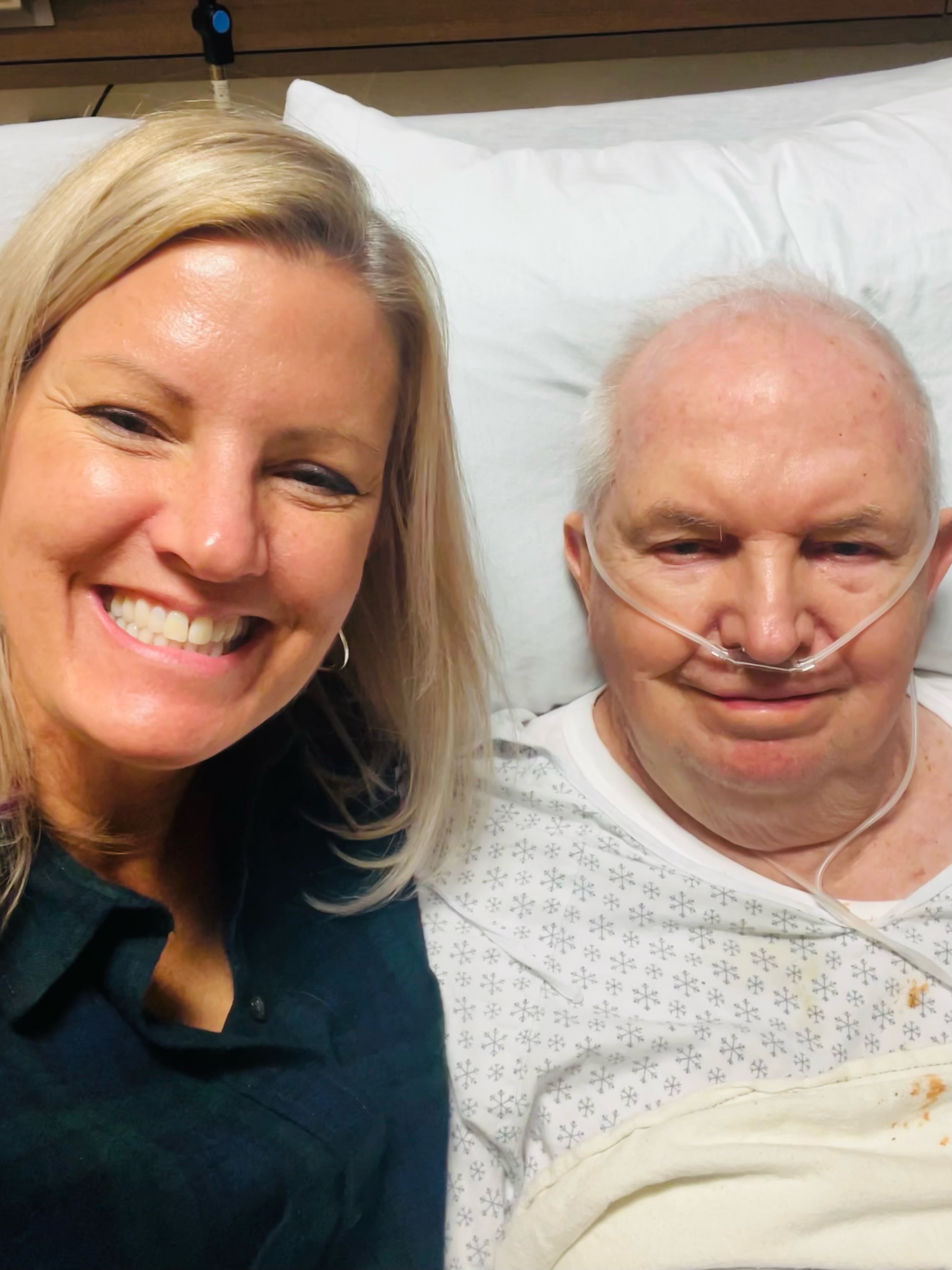
New sounds of distress sent me running in my bathrobe to Dad’s room at 2:00 a.m., where he struggled in vain to sit up on the edge of his bed (hoping to pee). I pulled on his shoulders to sit him up, and held him there for twenty minutes (unable to pee).  Mom’s 5:00 a.m. knock on my bedroom, and her cry that Dad needed my help, sent me dashing again.  Dad lay face down on the floor, wedged between the bed frame and the night stand, his face in a gallon-size garbage can.  (I am learning, too slowly, to elder-proof a home.)  He could not move, only grunt.  With difficulty, I lifted his torso enough to free his face from the can.  “Just leave me here,” he begged.  I could do nothing but leave him there, except provide a pillow to protect his face from rough carpet pile.  And I covered him with a quilt.  I stood there watching him breathe, inside me a growing fury that he was so helpless and incontinent and that I was so helpless and impotent, that I could not move his bulk, could not help him relieve himself, could do nothing but watch him struggle and fade.  (At 84, his mother Dora fell out of bed and became wedged between the bed frame and the night stand.  And that is where she died.)  In a rage disoriented by little sleep and much fear and grief and stress and acridity and a traumatized waiting for disaster, I wondered angrily why he didn’t just get it over with and die.  Take him, I demanded—put us both out of our misery.  We can’t do this anymore.  I just could not manage one more night, or one more hour, of death struggle and incontinence.  In that moment, I saw the threshold, with two helpless men on one side, and professional paramedics on the other.  My mind cleared and I saw “911” as the only answer.  But I needed some time to think through the details, and Dad was sleeping comfortably, finally, albeit on the floor, and my leaving him there snoring for thirty minutes while I prepared my mind and my plan would do him no hard.  I buzzed my stubble hair and showered and shaved and ate some Quaker granola with icy milk and packed a bag with the advance directive and the power of attorney, my books, water bottles, cash, an apple, and Dad’s glasses and wallet and insurance card.  Only then was I ready to awaken Mom and explain that I needed to call the paramedics—she did not want to have to—and to awaken Dad and explain that I needed to call the paramedics—he did not want to have to—ready to dial “911.”  Strong young men, they carted him out on a flexible stretcher and drove him away to Alta View, and I followed, convinced this was his life’s end, his final ambulance ride.  I felt grateful he would not die in my arms, that someone else was in charge now.  Eight vials of blood and three hours later, Kirk, a superb nurse, entered ER Room #5 wearing a surgeon’s mask, and announced, “Guess what, Nelson?  You have Covid.”  Covid?  Covid!  How surreal to feel a surge of giddy relief that Dad had Covid.  What Dad and I dreaded was the intractable mystery of his utter undiagnosed debilitation and his slow trajectory toward an unexplained death.  That we could not handle.  But Covid we could get our brains around.  The doctors and nurses knew exactly what to do with Covid.  And the Covid diagnosis explained his symptoms of total exhaustion and chest pain and profound weakness and a slight fever and the beginnings of a cough and cognitive disorientation.  I wanted to cheer, “Eat! Drink! Be merry! For tomorrow he will live!”  The doctor stated with nonchalance: “Yeah, this Covid variant really hammers old people, but Nelson should make a full recovery.”  After a night of anguish and impotence, a new day of hope and of better tomorrows broke open.

(Pictured above: Dad in the hospital with my sister Sarah.)

Courage at Twilight: Stopping the Spread

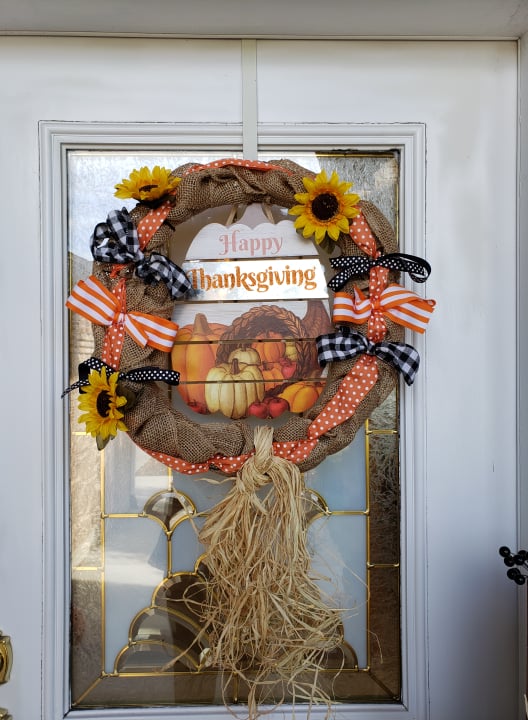
Living now with my parents, I cannot fathom the reality that we had no family gatherings with Mom and Dad for 18 months due to Covid-19. My sister Sarah grocery shopped for them every Saturday during those months.  I cooked for them on occasion.  We always wore masks and washed and sanitized our hands and kept our distance—no hugs (except for “air hugs”).  My siblings called Mom and Dad frequently, sometimes daily.  Sarah, as a speech pathologist, works at a critical care facility with people who suffer from conditions affecting their communication and swallowing.  While donning head-to-toe personal protective equipment, she watched Covid rage through her patients, ending the lives of too many.  My siblings and I all understood and respected that if Mom and Dad contracted Covid in their aged and weakened conditions, we likely would lose them, as so many thousands lost members of their families.  To keep them safe, we did our little part to stop the spread, following all the recommended precautions, putting philosophy and politics aside in the interest of safety.  Mom and Dad received their first Pfizer vaccine at a huge convention center.  Hundreds of old and infirm people stood for hours in long lines, walking from station to station around the entire perimeter of the hall—fully a mile.  Dad thought his cane would do, but shortly into the ordeal he confided to me, “I don’t think I’m going to make it.”  I had him sit down while I ran for a wheelchair.  They received their third shot this week at a local health department facility, walking 20 feet past the front door to their seats, with no wait.  What a difference between the two experiences!  But in all three cases, the nursing staff were so kind and pleasant and helpful.  After all the family members were fully vaccinated, we began to visit again.  My sister Jeanette recently came to visit from Arizona for a week.  We cooked together and played Scattergories and drove to see the fall leaves in the mountain forests.  And we broke out the fall crafts: wood pumpkins, a harvest-themed wreath, and a tall scarecrow.  My niece Amy joined in, painting the eyes black and the nose orange.  How grateful we are to be safe, healthy, and together again.

My first ever attempt at a wreath.