“Is this asparagus?” Dad called out after I served him his dinner plate. “It tastes like a stick.” The only words my mind would form were profane, and I clenched my jaw against their audible escape. Perhaps he was trying to be funny? Or, perhaps his dementia really is that bad? The asparagus was very skinny, after all. But mighty tastily cooked. After the dinner-time Next Generation rerun, I retrieved the empty dinner plates—all the sticks on his plate were gone—and Mom began surfing the channels. Oh, the power. “We could watch ‘Superman’,” he suggested, catching a glimpse of the name on the screen. “No.” Mom answered simply. “We could watch ‘Pirates of the Caribbean’,” he ventured again. “NO!” she hollered. She was in total control. He was helpless, defeated, and he knew it. I fled the kitchen, weary of the too-frequent tyrannical television exchange. At 10:00 p.m., when I wanted to be in bed, I descended the stairs to the family room, the scene of a terrible nightly struggle. Dad’s task was simply to stand, to hang onto the walker handles while he turned, and to sit his bare bottom on the towel-covered walker seat. No steps required. A good thing, since he has no steps in him to take. He pushes, and he rocks, and he pushes, and he trembles, and he slowly rises from his recliner, his body bobbing convulsively from arms and legs that will no longer bear his bulk. His swollen feet shift an inch or two at a time in the 120-degree pivot. And there it was—I could see it: he was going down, and once he went down there would be nothing I could do but dial 9-1-1 and be up half the night with adrenaline and worry. So, I pressed a fist into his hip and shoved, and he groaned and slumped precisely into position and exploded angrily, “DON’T PUSH ME!” I had no patience for the petty power posturing, as if he could have positioned himself. I recognized that he was reacting to my maneuvering with the only power he had left: the attack. But I was having none of it. “DON’T YELL AT ME!” I retorted. “If it weren’t for me, you’d be on the floor!” I pulled the walker, Dad’s back toward the direction of travel, to his bedroom, his feet dragging uselessly behind, swollen and deformed. I will not give him the meager dignity of pushing the walker with him face-forward, not because I am spiteful, but because of his difficulty in inching his feet forward and my difficulty in not running over his hideous toes. So, I drag him. And I position him facing the bed for the last agonizing transfer of the day. “I don’t want any help, because I can do it myself, even though I’m slow.” Be my guest. I must be there anyway, just in case, and to spare Mom the labor and worry. And, somehow, every night, he pivots just enough to land his butt on the edge of the bed, barely. But I want to scream at him that he shouldn’t be here, at home, scaring everyone and bossing everyone and narrating the news in real time, a delayed echo competing with David Muir at volume 45, and complaining about eating sticks for dinner, and making Mom lift his butt. But, of course, he should be here: that is the whole purpose in my being here, so that he can be here, until his end. Though not wanting him to die, that purpose has exhausted me and left me angry and resentful despite my every effort to be the good, dutiful, patient, faithful son. At the Thanksgiving dinner table two days before, we sang one of our favorite family songs, “Swing Low, Sweet Chariot,” and Dad explained how it was an old slave song, the enslaved Black Americans supplicating God to send his fiery chariot to end their suffering and convey them to a merciful heaven. We have sung that song since I was a little boy, at home, around the campfire, at reunions. “One day, soon, that chariot will swing low for me,” he sighed.
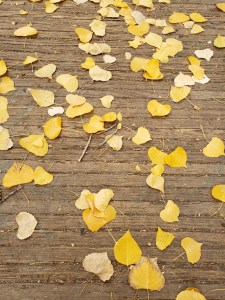
(Pictured: fall leaves on an arched wooden bridge over a dry creek in Dimple Dell, Sandy, Utah.)

























 Rabbit Lane